

Influence of Launch Depth on Ejection and Ignition Process ofUnderwater Vehicles
-
摘要: 水下发射技术是水下航行体领域的重要发展方向, 其中出筒点火过程是航行体弹射出筒与近筒口点火两阶段的耦合过程。该过程中, 高温高压燃气流与水环境耦合作用, 形成复杂多相流场, 同时航行体与发射筒壁面产生剧烈冲击, 引发载荷动态变化, 探究该过程的流动演化规律对完善水下发射理论体系具有重要意义。为探究深水环境下航行体出筒点火特性, 文中采用 Fluent软件, 结合重叠网格技术与用户自定义函数, 系统研究发射深度对该过程的影响规律。研究结果表明, 发射深度显著影响航行体出筒点火过程中的燃气射流演化及推力特性: 随着发射深度的增加, 发射筒出口燃气泡径向扩张受到抑制, 航行体离筒后筒口卷吸效应显著增强, 燃气射流易发生断裂现象, 且喷管涡流会导致发动机推力损失。文中研究可为水下航行体发射系统优化设计提供理论支撑。Abstract: Underwater launch technology is a key development direction in the field of underwater vehicles. The ejection and ignition process is a coupled process involving two stages: ejection of the vehicle from the launch tube and ignition near the tube muzzle. During this process, the coupling effect between high-temperature and high-pressure gas flow and the water environment forms a complex multiphase flow field. Simultaneously, severe impacts occur between the vehicle and the launch tube wall, leading to dynamic load variations. Investigating the flow evolution mechanism of this process is significant for improving the theoretical system of underwater launch. To investigate the ejection and ignition characteristics of underwater vehicles in deep-water environments, this paper employed Fluent software combined with the overset grid technique and user-defined functions to systematically study the influence of launch depth on this process. The results indicate that launch depth significantly affects the evolution of the gas jet and thrust characteristics during the ejection and ignition process: With increasing launch depth, the radial expansion of the gas bubble at the tube exit is suppressed; the entrainment effect at the tube muzzle after the vehicle leaves the tube is markedly enhanced; the gas jet is more prone to breakup, and nozzle vortices lead to engine thrust loss. This paper can provide theoretical support for the optimal design of underwater vehicle launch systems.
-
Key words:
- underwater vehicle /
- underwater launch /
- multiphase flow /
- overset grid /
- launch depth /
- coupling
-
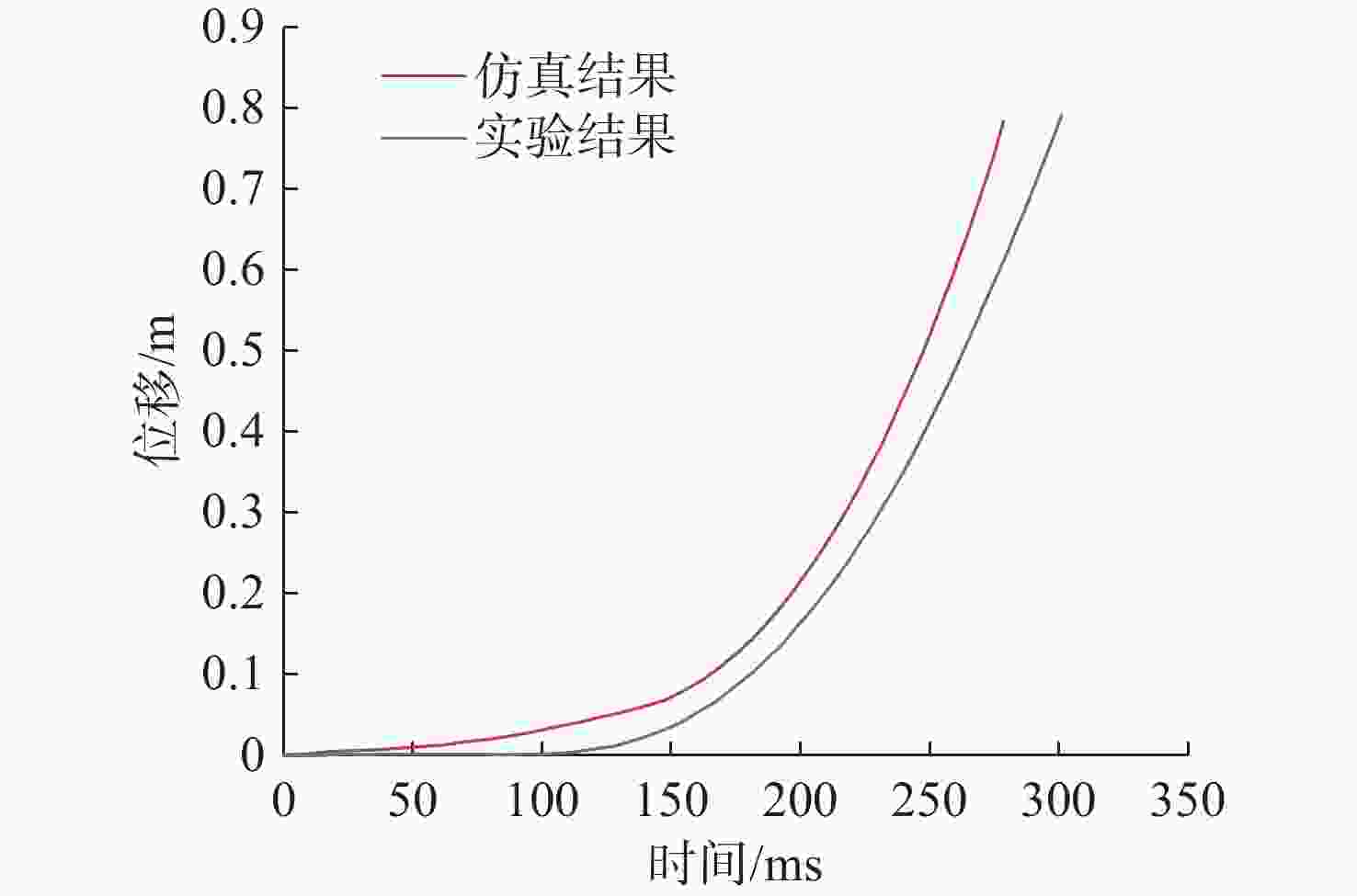
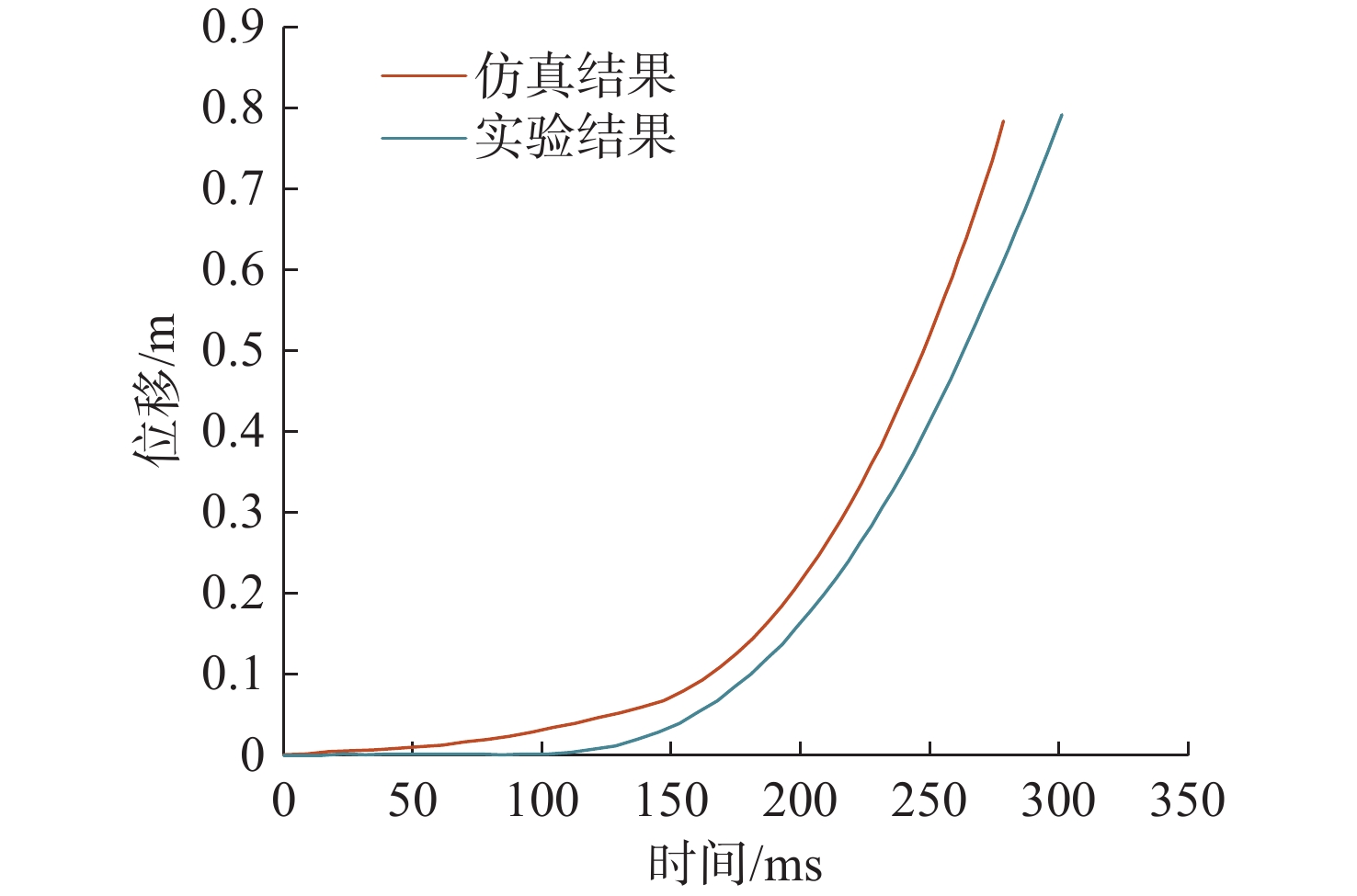
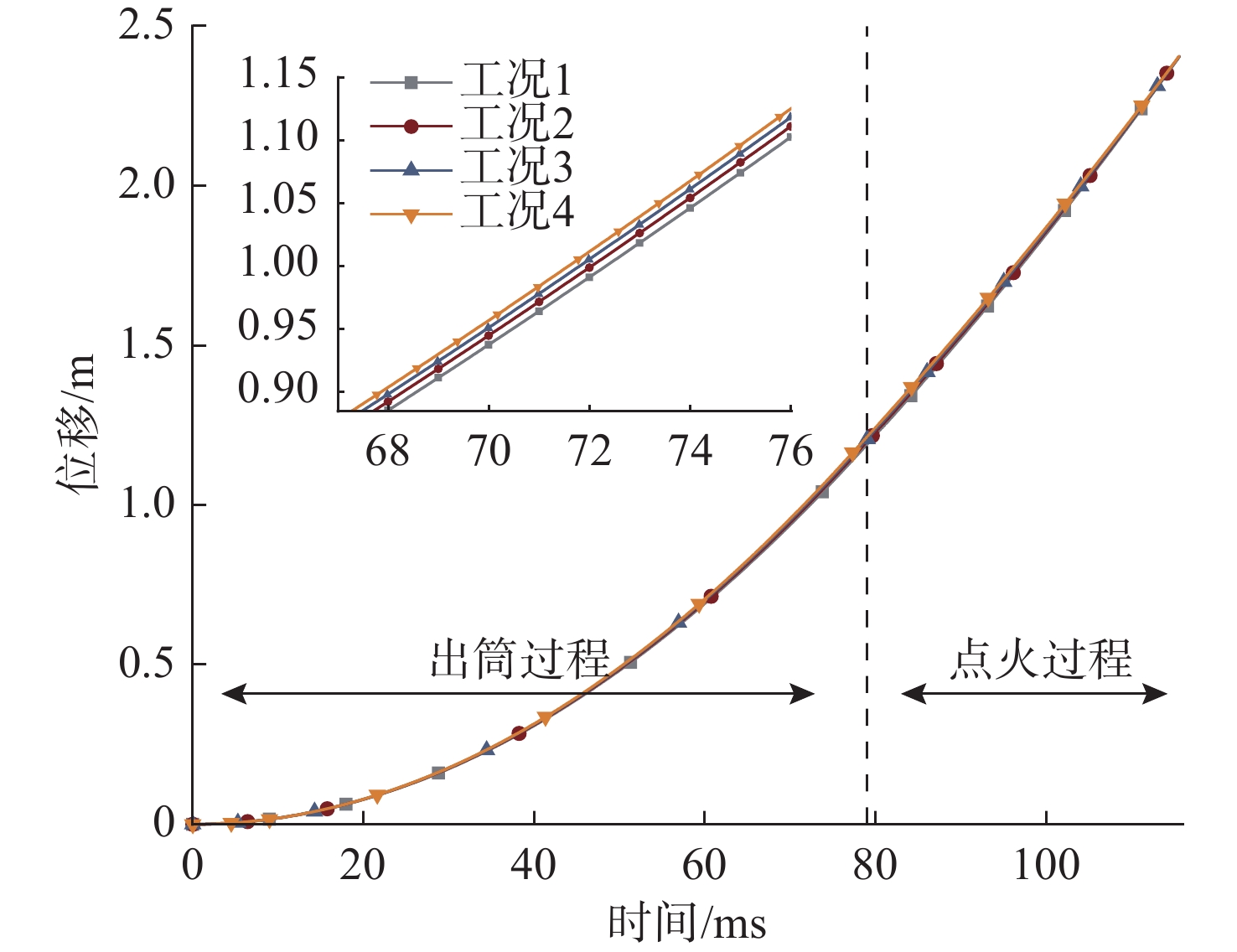
图 1 航行体出筒过程位移-时间曲线对比
Figure 1. Comparison of displacement-time curves during the vehicle ejection process
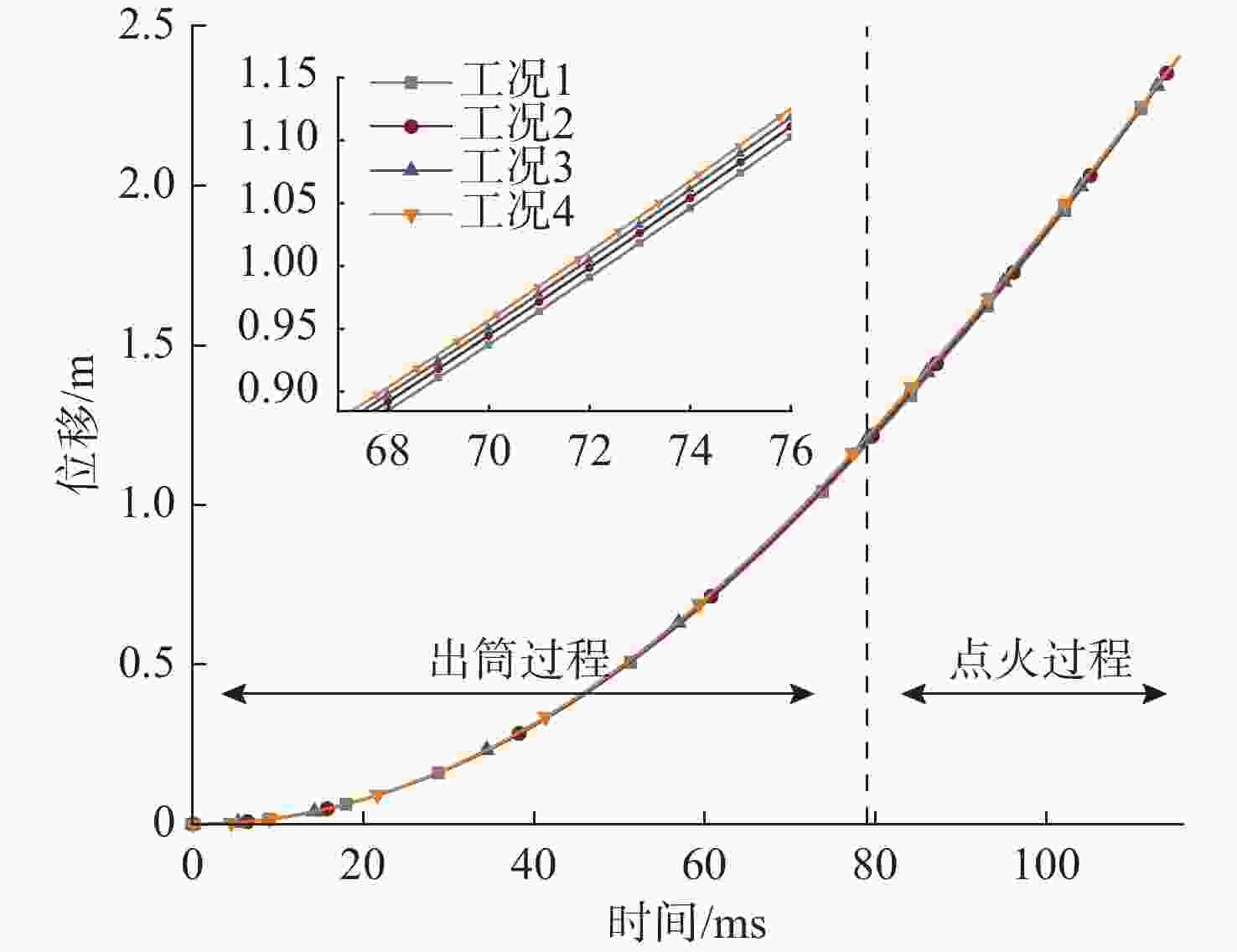
图 7 不同工况航行体位移变化曲线
Figure 7. Displacement variation curves of the vehicle under different working conditions
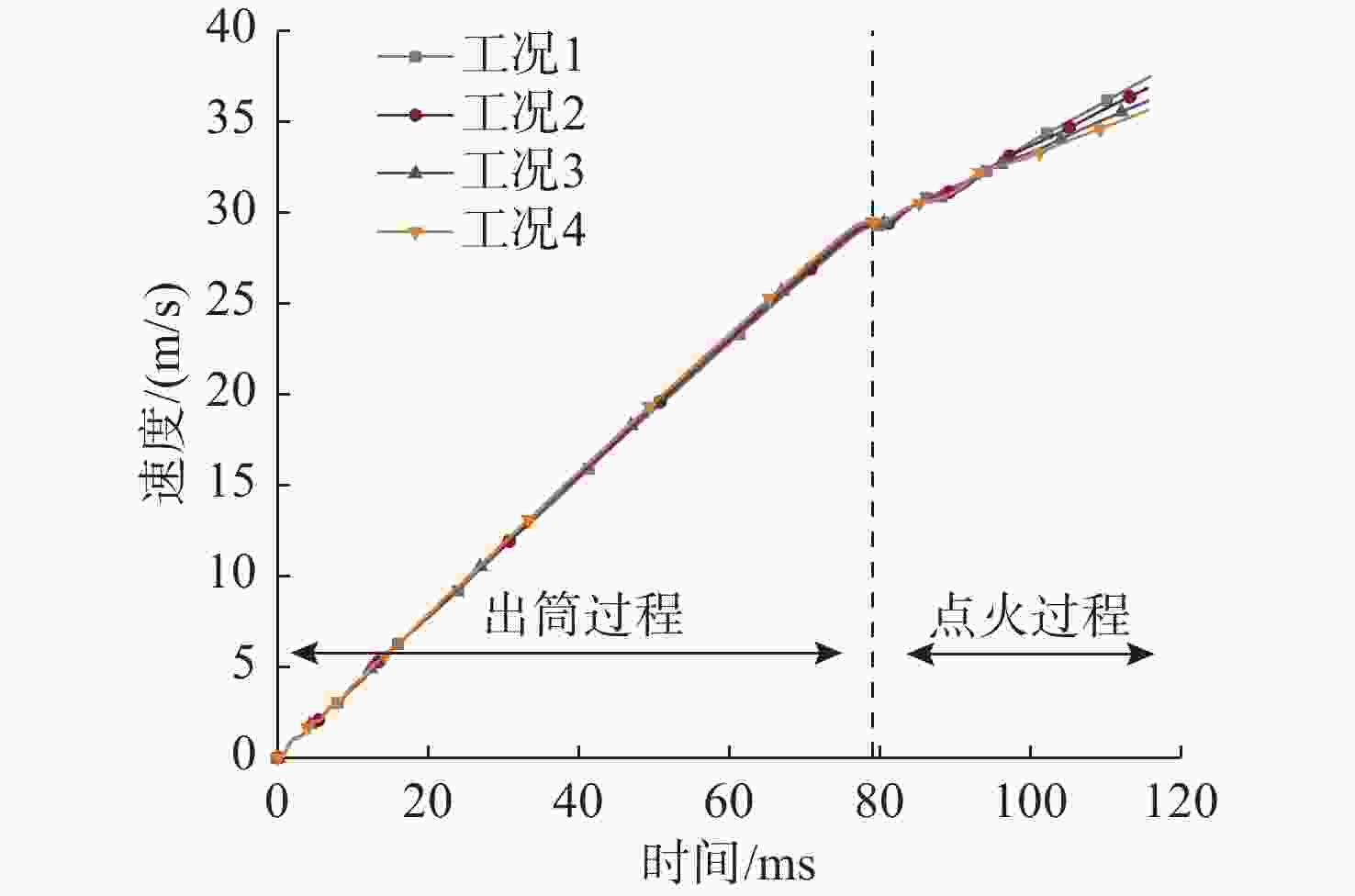
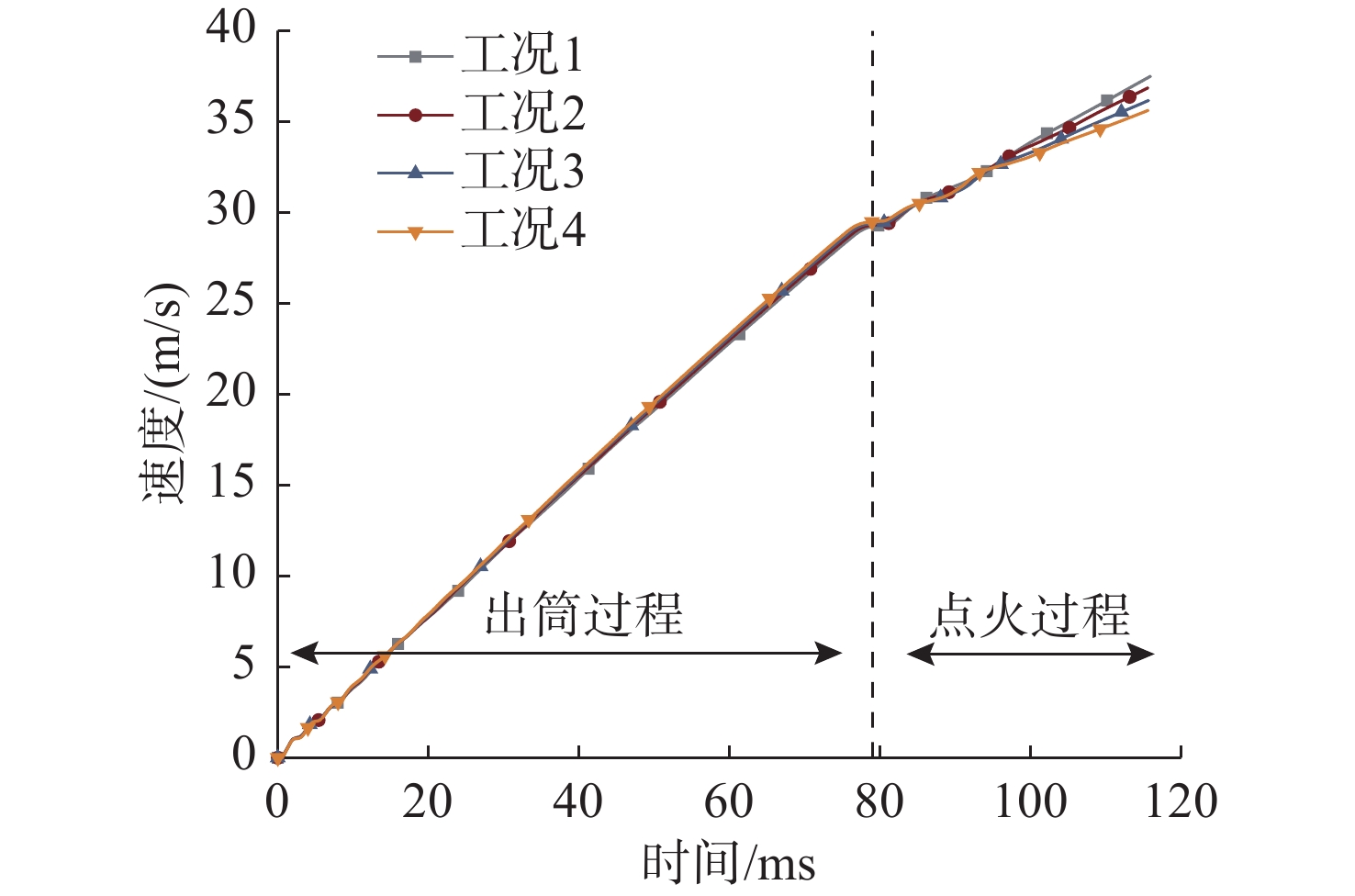
图 8 不同工况航行体速度变化曲线
Figure 8. Velocity variation curves of the vehicle under different working conditions
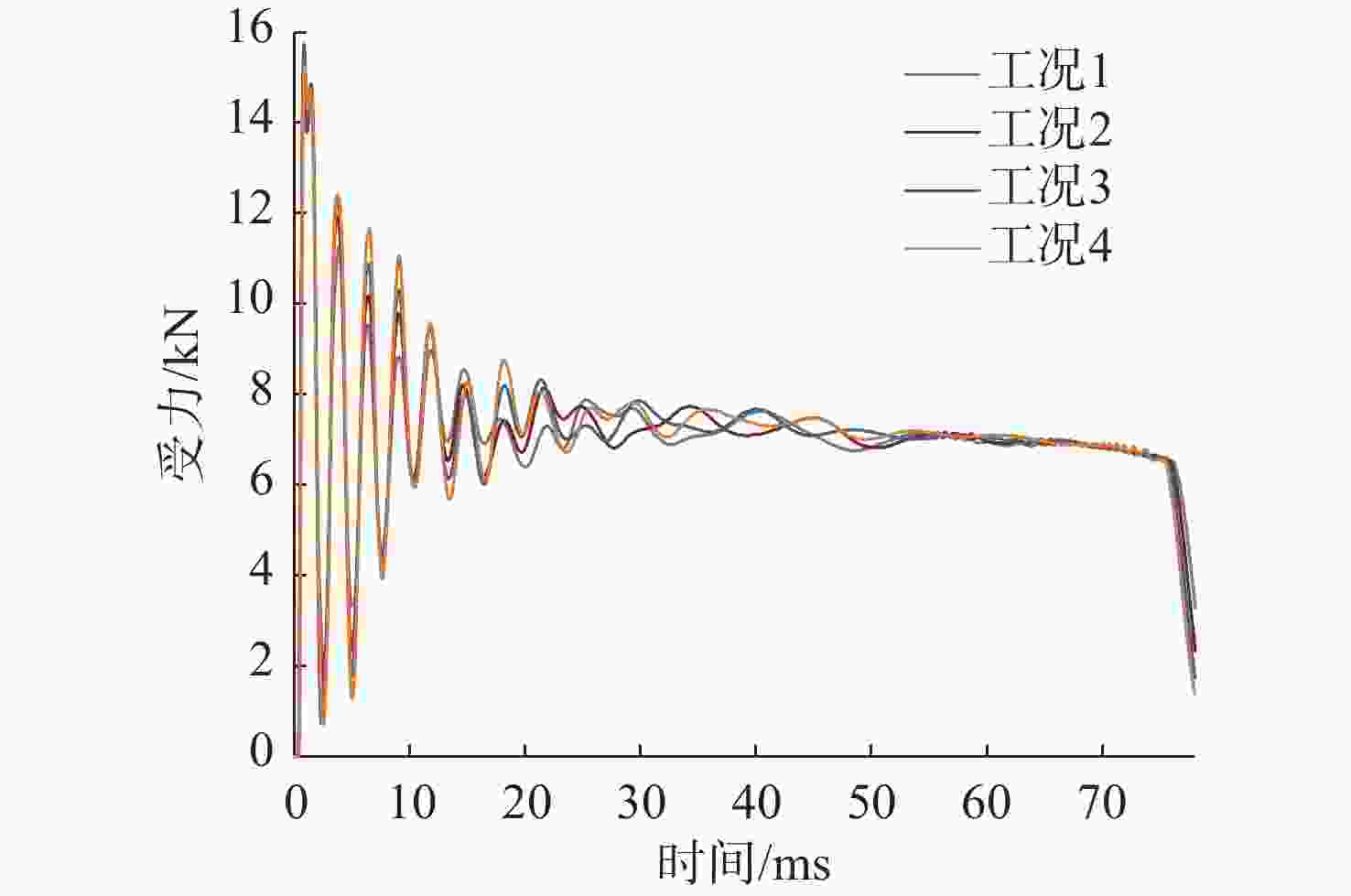
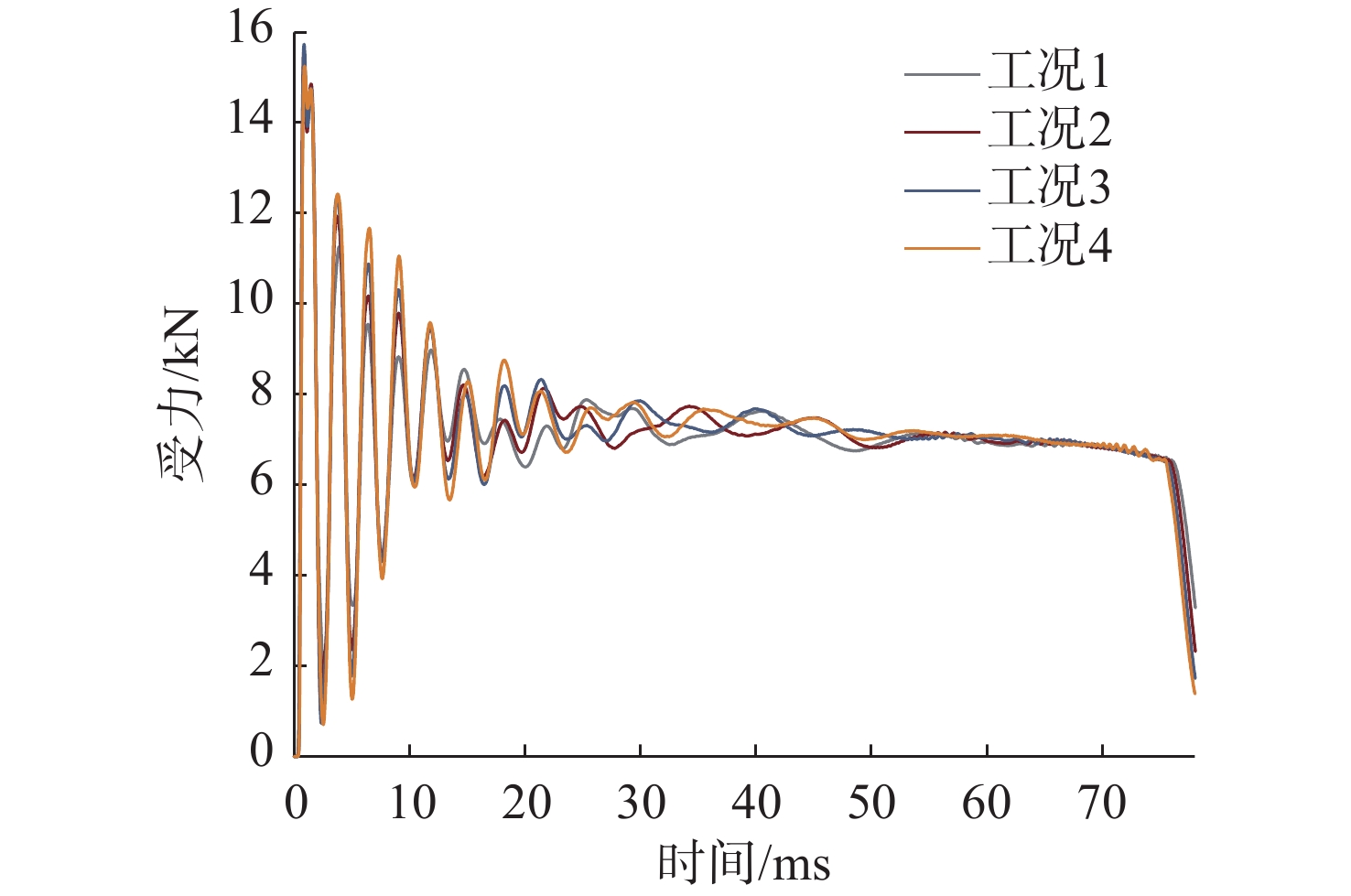
图 9 航行体出筒过程受力变化曲线
Figure 9. Force variation curves during the ejection process of the vehicle
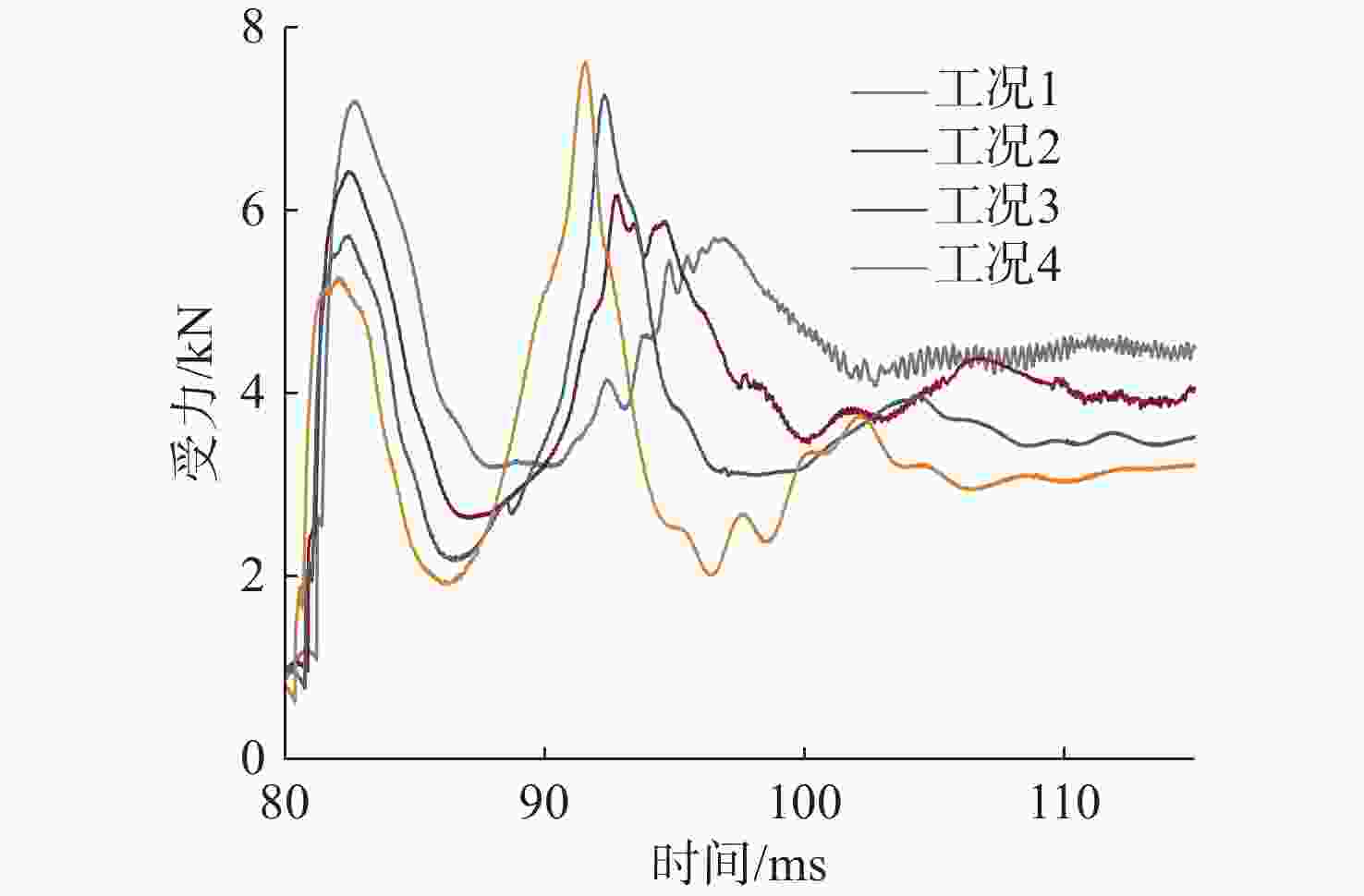
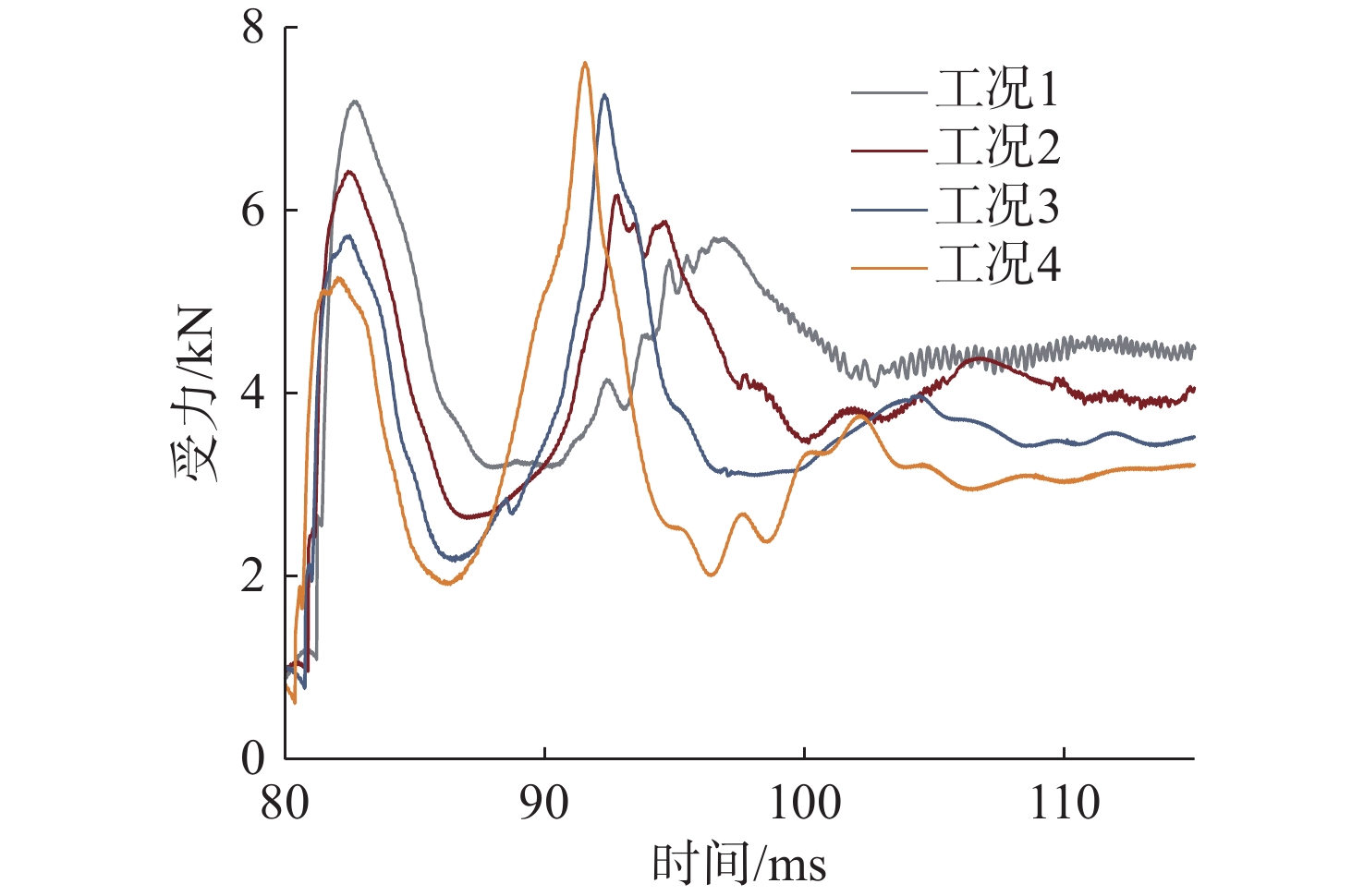
图 10 航行体点火过程受力变化曲线
Figure 10. Force variation curves during the ignition process of the vehicle
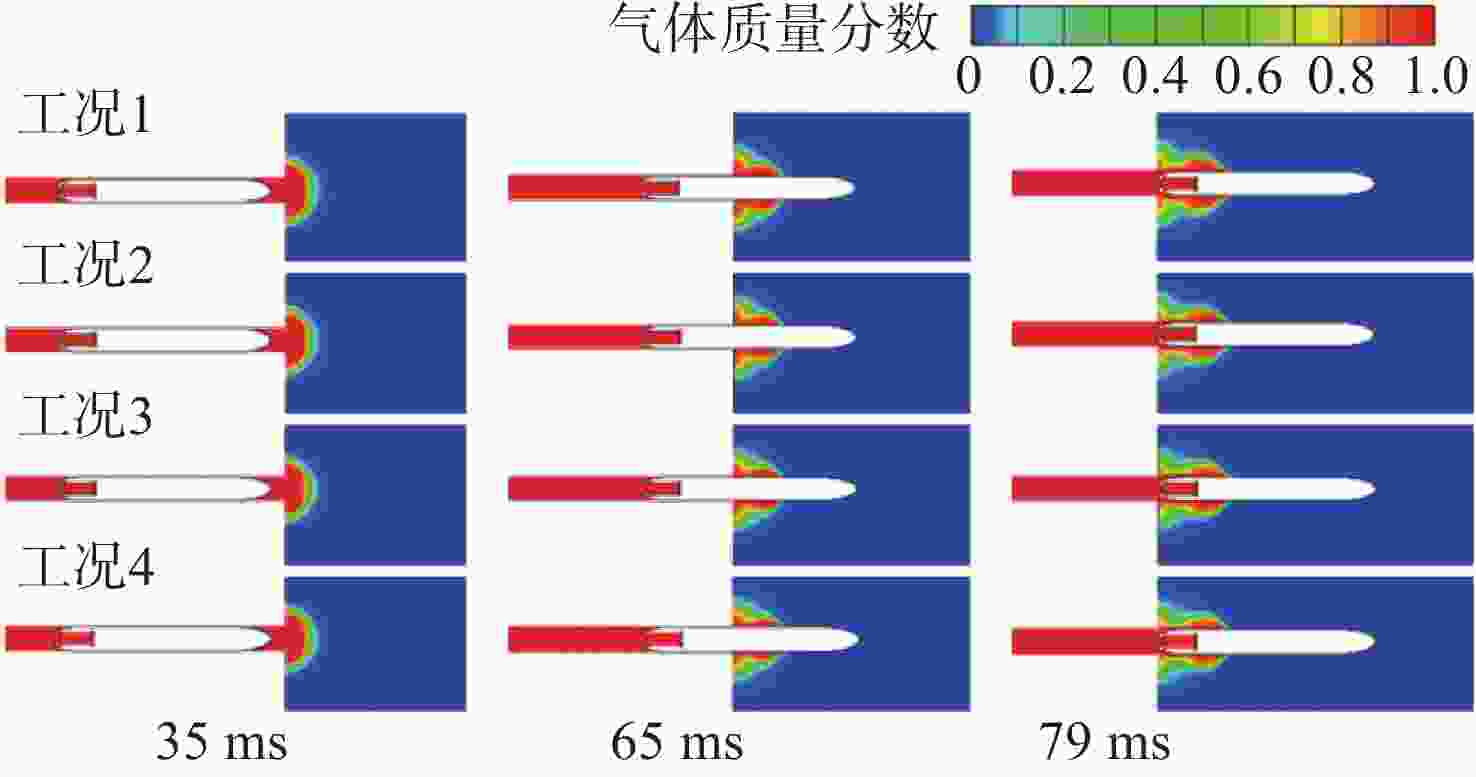
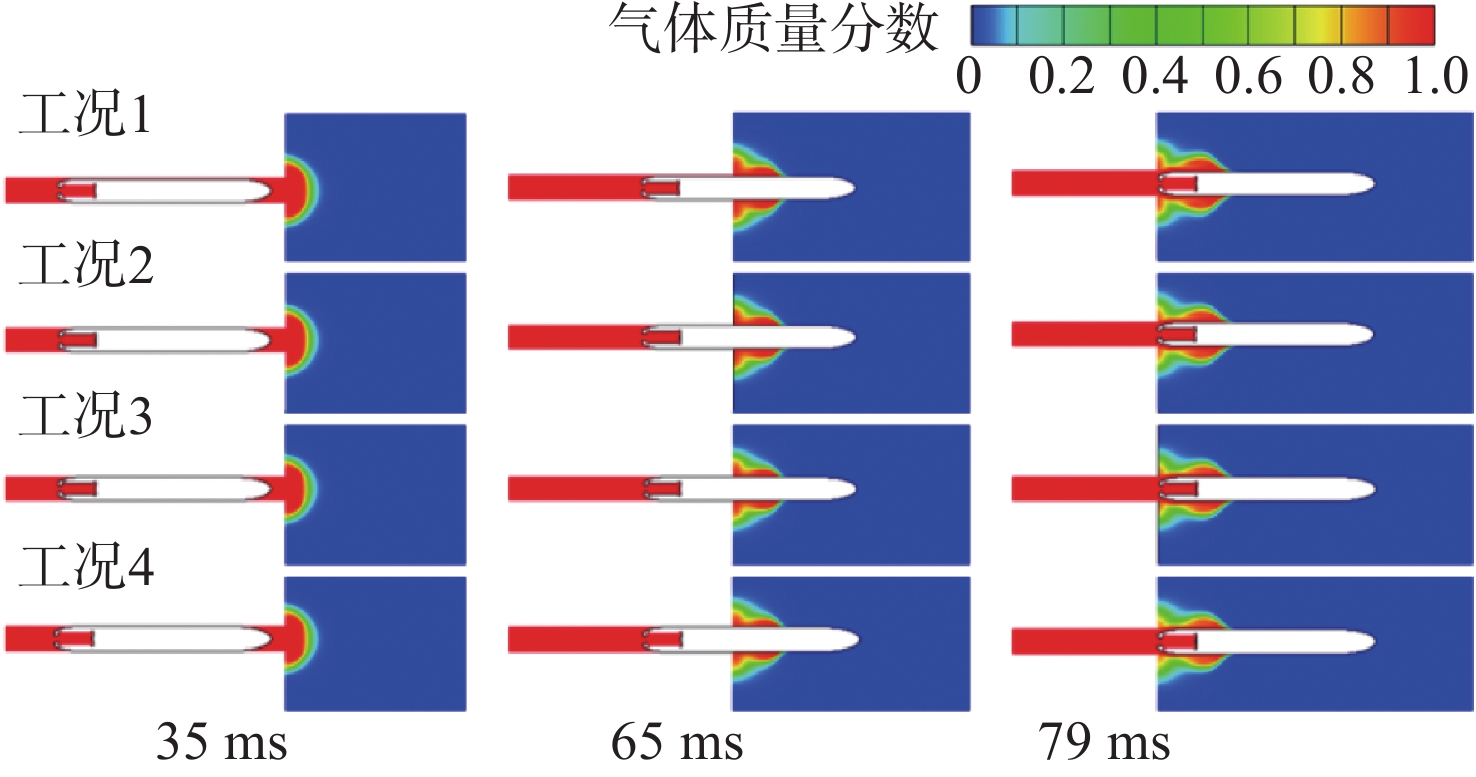
图 13 不同深度出筒阶段燃气泡发展云图(0~79 ms)
Figure 13. Contour plots of gas bubble development at different depths during the ejection stage(0~79 ms)
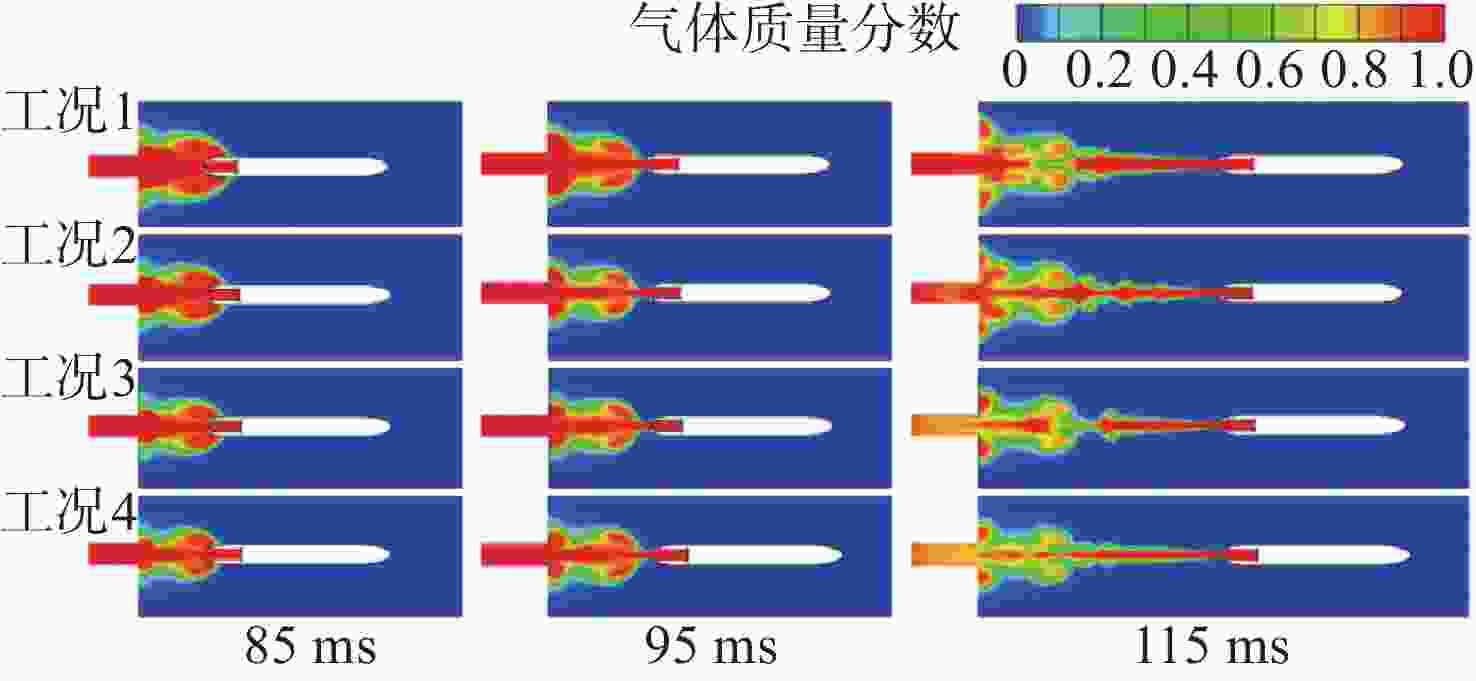
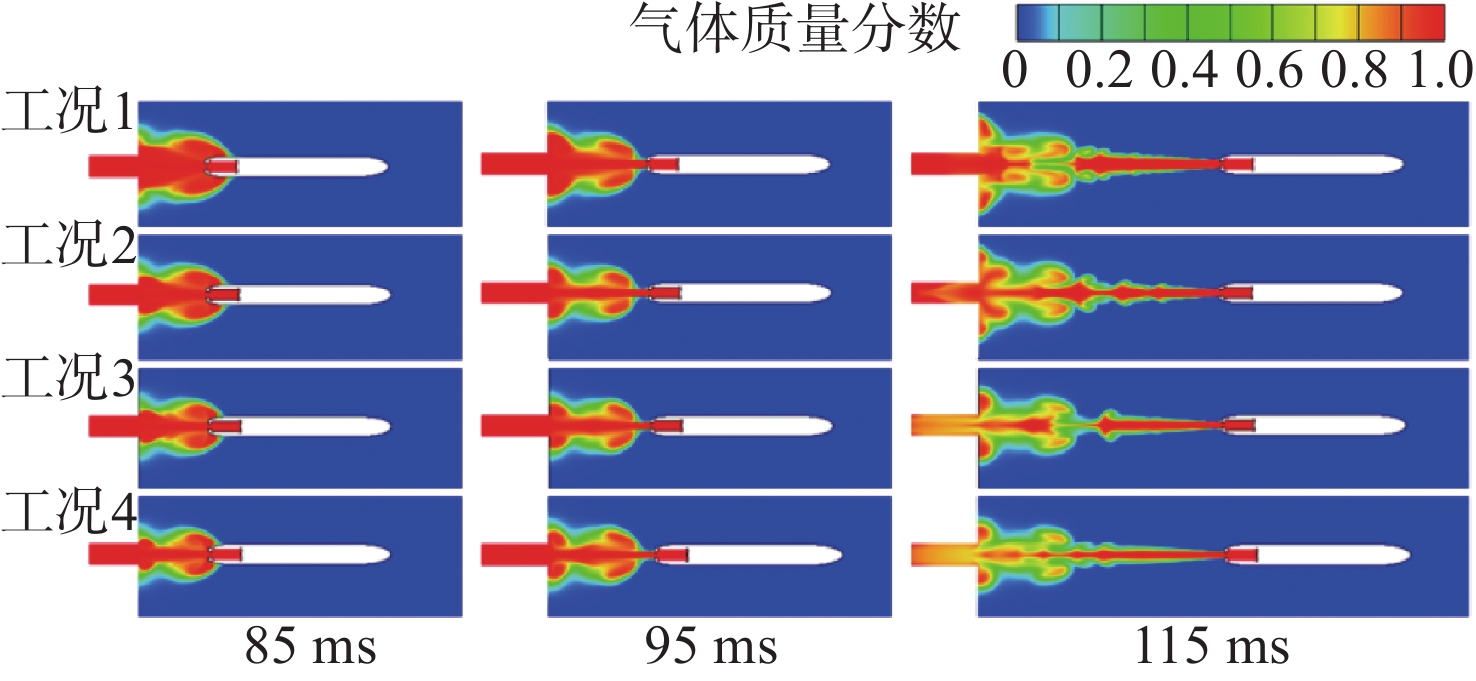
图 14 不同深度点火阶段燃气泡发展云图(79~115 ms)
Figure 14. Cloud chart of gas bubble development at different depths during the ignition stage(79~115 ms)
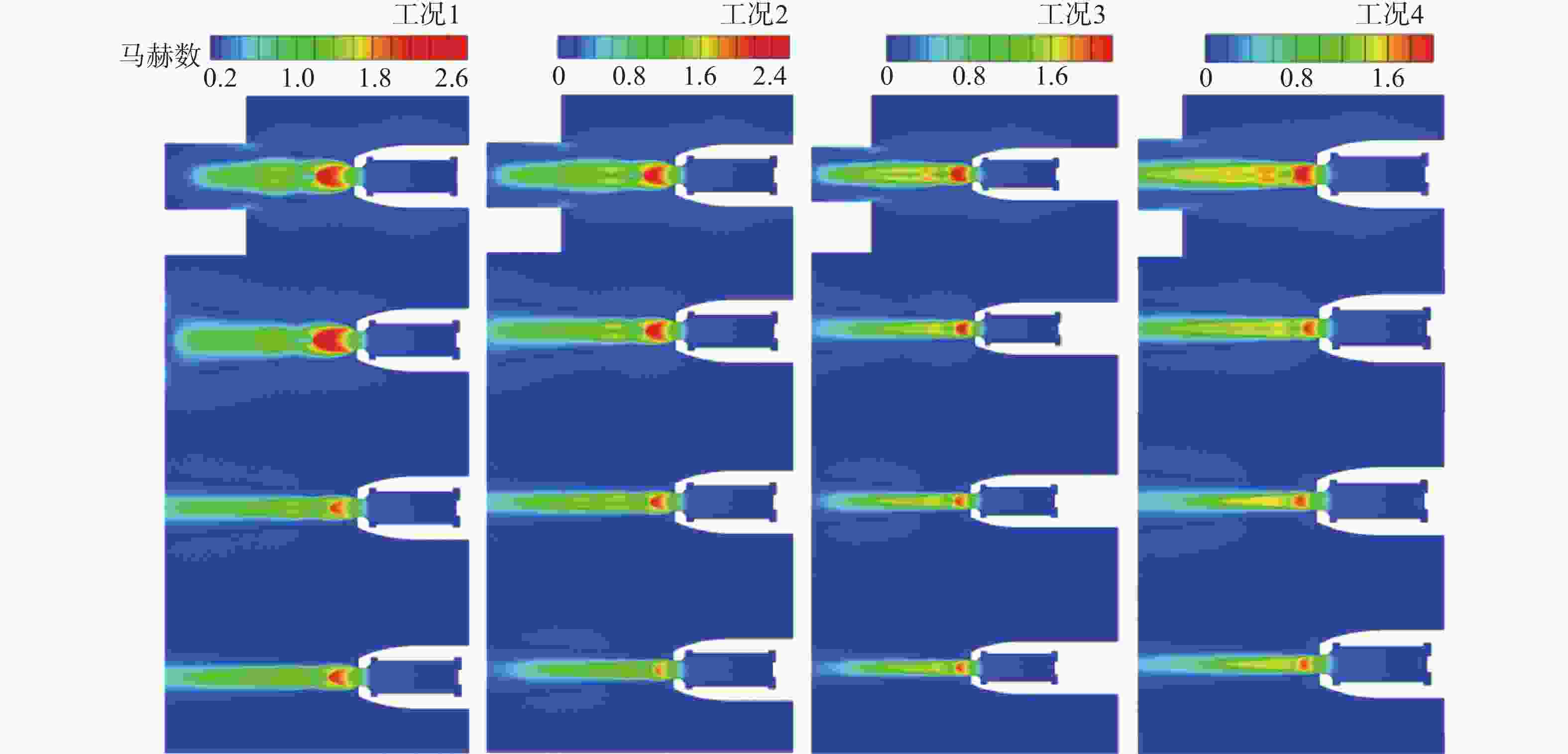
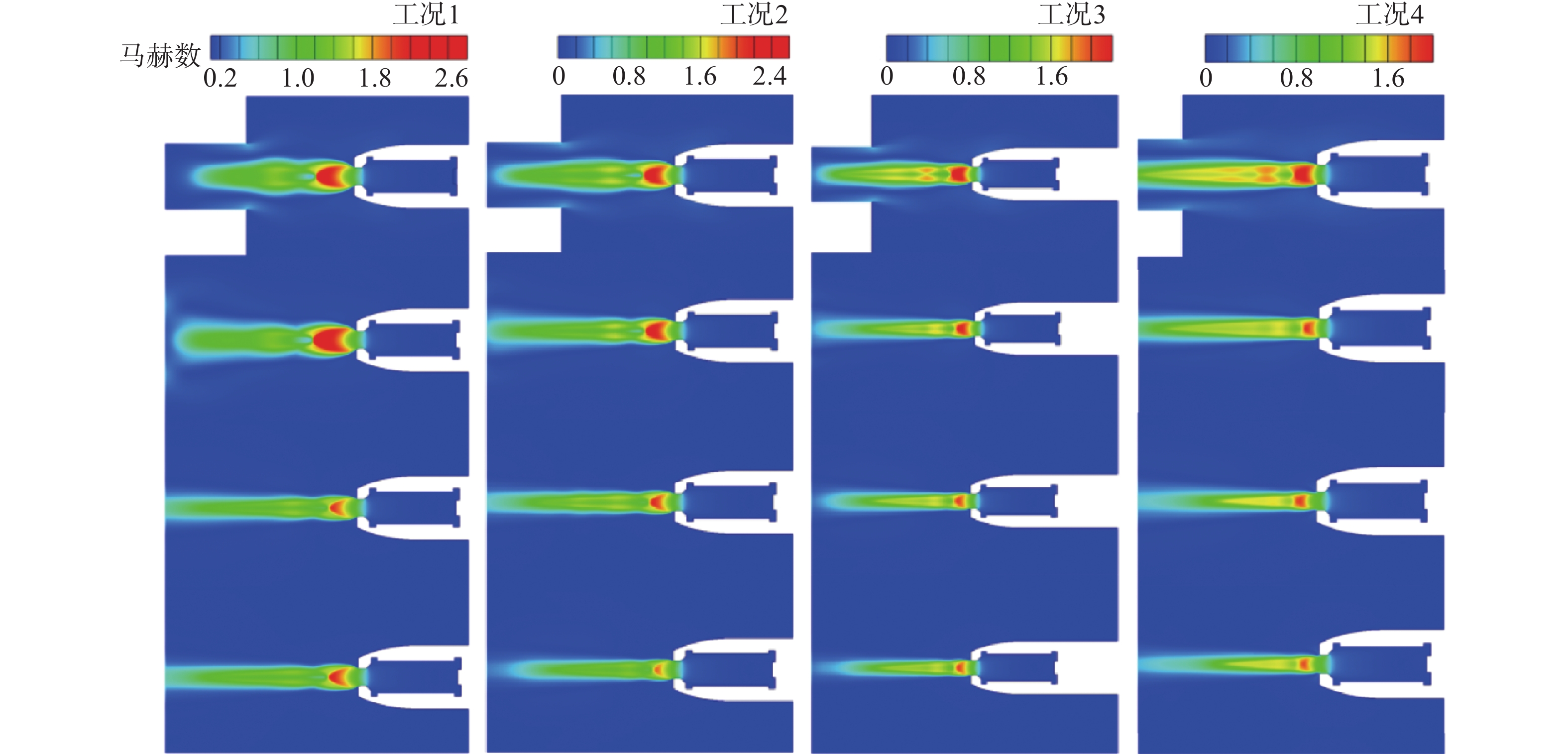
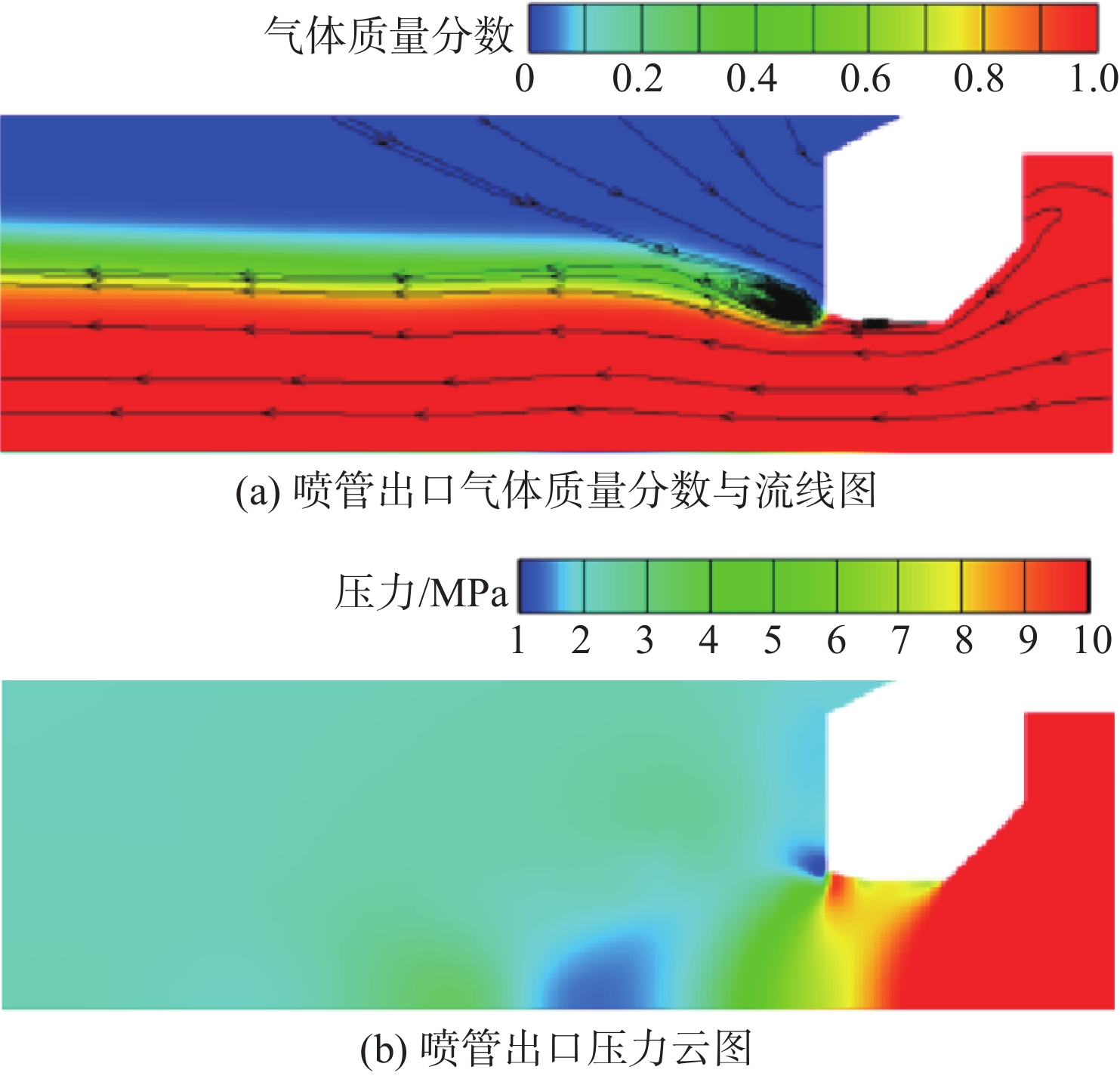
图 15 不同工况点火时刻马赫数云图
Figure 15. Contour plots of mach number at ignition instant under different operating conditions
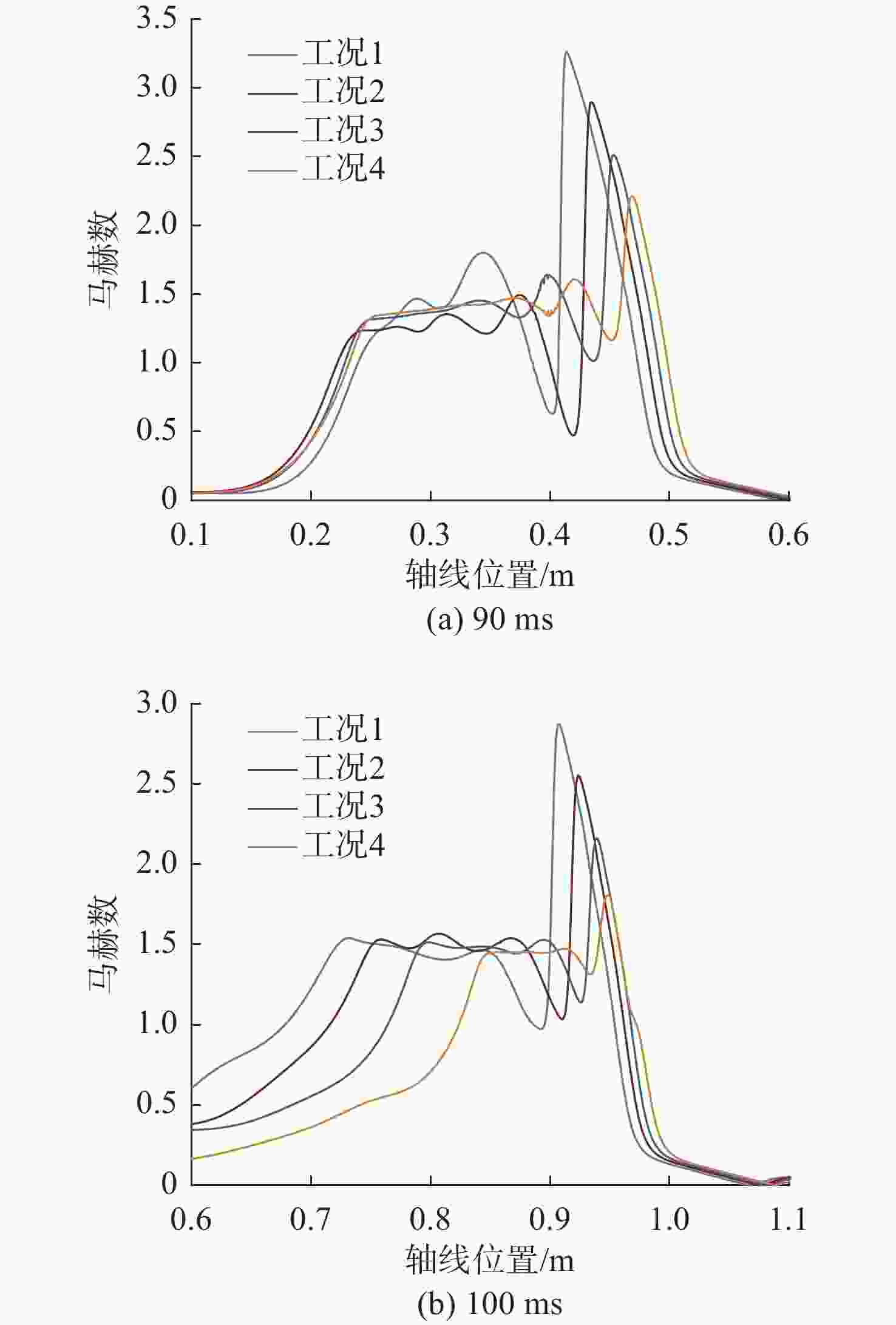
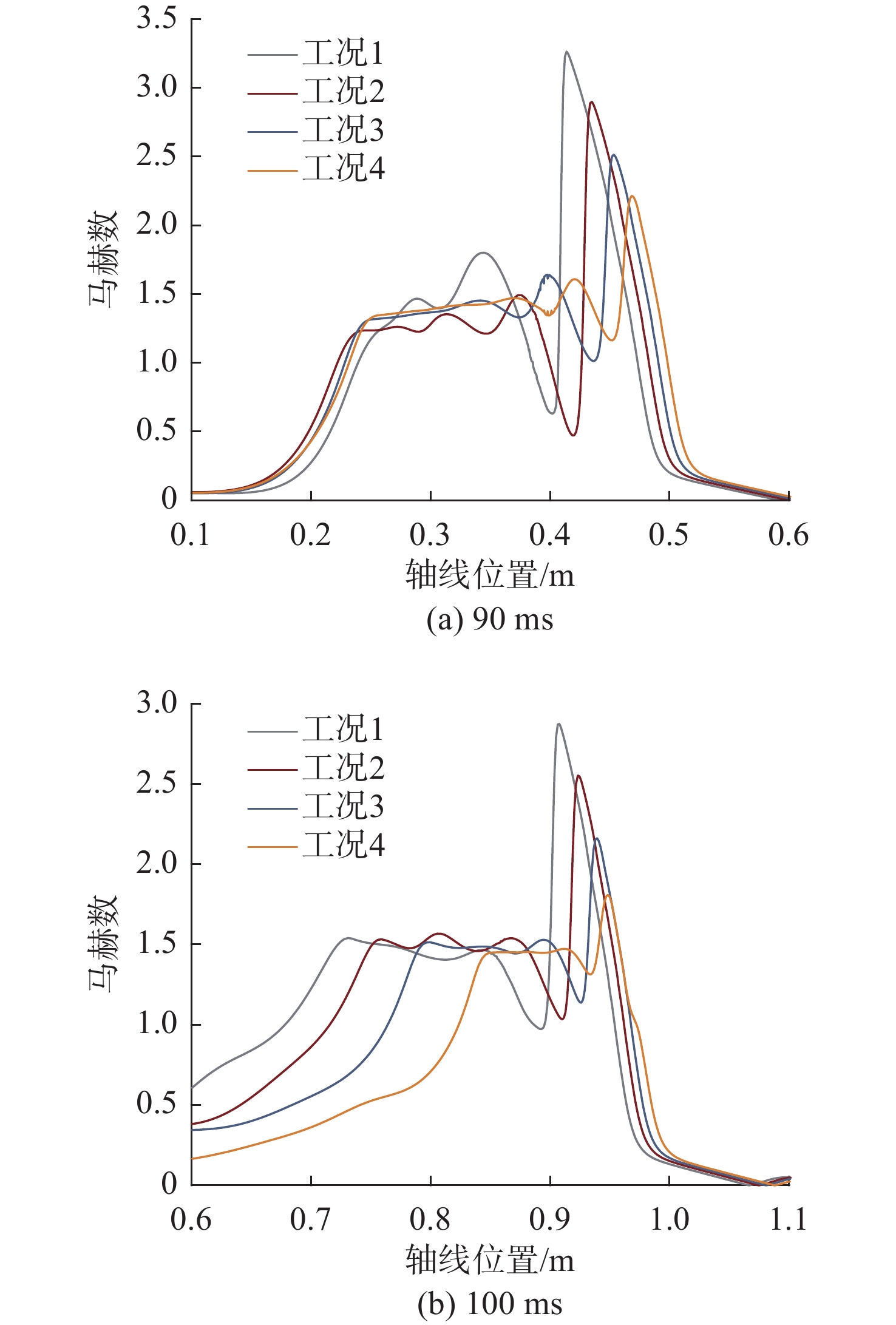
图 16 不同工况轴线马赫数变化
Figure 16. Mach number variation of axis under different working conditions
表 1 推进剂参数
Table 1. Propellant parameters
参数 数值 燃速压强指数 0.3 燃速系数 0.000 1 推进剂燃气温度/K 280 0 平均摩尔质量/(g/mol) 26 推进剂定压比热容/(J/(kg·K)) 1 598.85 燃气导热系数/(J/(m·K)) 0.16  下载: 导出CSV
-
[1] YANG Y X, WANG M J, LIU J P, et al. A novel coupled algorithm for studying the performance characteristics of water ramjet in the flight of supercavitating vehicle[J]. Ocean Engineering, 2024, 309(2024): 118609. doi: 10.1016/j.oceaneng.2024.118609 [2] 倪火才, 田秀英. 潜地弹道导弹水下发射系统的发展[J]. 舰载武器, 1996(4): 1-10. [3] 王洁, 王朕, 邓力, 等. 国外潜射弹道导弹的研究现状及关键技术[J]. 飞航导弹, 2015(10): 6-10. doi: 10.16338/j.issn.1009-1319.2015.10.02WANG J, WANG Z, DENG L, et al. Current research status and key technologies of foreign submarine-launched ballistic missiles[J]. Aerodynamic Missile Journal, 2015(10): 6-10. doi: 10.16338/j.issn.1009-1319.2015.10.02 [4] 郑帮涛. 潜射导弹出水过程水弹道及流体动力研究进展[J]. 导弹与航天运载技术, 2010, 309(5): 8-11,55. doi: 10.3969/j.issn.1004-7182.2010.05.003ZHENG B T. Overview on hydroballistics and fluid dynamics of submarine-based missiles[J]. Missiles and Space Vehicles, 2010, 309(5): 8-11, 55. doi: 10.3969/j.issn.1004-7182.2010.05.003 [5] 王瑞臣, 杨海波, 孙东平. 潜射导弹发射方式综述[J]. 舰船电子工程, 2021, 41(4): 8-12. doi: 10.3969/j.issn.1672-9730.2021.04.003WANG R C, YANG H B, SUN D P. Overview of the launch modes for submarine-launched missiles[J]. Ship Electronic Engineering, 2021, 41(4): 8-12. doi: 10.3969/j.issn.1672-9730.2021.04.003 [6] YAGLA J J. Concentric canister launcher[J]. Naval Engineers Journal, 1997, 109(3): 313-327. doi: 10.1111/j.1559-3584.1997.tb03220.x [7] LI D, SANKARAN V, LINDAU J, et al. A unified computational formulation for multi-component and multi-phase flows[C]//43rd AIAA Aerospace Sciences Meeting & Exhibit. Reno, USA: AIAA, 2005: 1-18. [8] WEILAND C J, VLACHOS P P, YAGLA J J. Concept analysis and laboratory observations on a water piercing missile launcher[J]. Ocean Engineering, 2010, 37(11-12): 959-965. doi: 10.1016/j.oceaneng.2010.03.009 [9] 高娜. 导弹水下发射内流场的数值模拟[D]. 哈尔滨: 哈尔滨工程大学, 2007. [10] 徐学文, 李恒, 白玉. 基于动网格层铺法的导弹垂直热发射数值仿真[J]. 舰船电子工程, 2022, 42(9): 98-101. doi: 10.3969/j.issn.1672-9730.2022.09.021XU X W, LI H, BAI Y. Numerical simulation of missile vertical thermal launch based on moving grid layering method[J]. Ship Electronic Engineering, 2022, 42(9): 98-101. doi: 10.3969/j.issn.1672-9730.2022.09.021 [11] 邓佳. 导弹水下热发射多相流场与动力特性研究[D]. 北京: 北京理工大学, 2015. [12] 邓佳, 毕世华, 李景须. 同心筒水下发射筒口气泡变化的数值模拟[J]. 兵器装备工程学报, 2015, 36(11): 26-28, 64.DENG J, BI S H, LI J X. Numerical simulation of change of bubble in tube opening underwater launch using concentric canister structure[J]. Journal of Ordnance Equipment Engineering, 2015, 36(11): 26-28, 64. [13] TINDELL R H. Computational fluid dynamic applications for jet propulsion system integration[J]. Journal of Engineering for Gas Turbines and Power-Transactions of the Asme, 1990, 113(1): 40-50. [14] SHAHEED R, MOHAMMADIAN A, GILDEH H K. A comparison of standard k-ε and realizable k-ε turbulence models in curved and confluent channels[J]. Environmental Fluid Mechanics, 2019, 2019(2): 543-568. [15] MIKKO M, VEIKKO T, SIRPA K. On the mixture model for multiphase flow[J]. VTT Publications, 1996: 288. [16] ANSYS I. Ansys fluent user’s guide[M]. Canonsburg: Ansys Inc, 2020. [17] CHAN W. Overset grid technology development at NASA ames research center[J]. Computers & Fluids, 2009, 38(3): 496-503. doi: 10.1016/j.compfluid.2008.06.009 [18] CHAN W, GOMEZ R, ROGERS S, et al. Best practices in overset grid generation[C]//32nd AIAA Fluid Dynamics Conference and Exhibit. St. Louis, USA: AIAA, 2002: 1-23. [19] 李强. 水下航行体连续垂直发射出筒过程多相流动特性研究[D]. 哈尔滨: 哈尔滨工业大学, 2018. [20] 李慧慧. 水下热发射航行体出筒过程的数值模拟研究[D]. 哈尔滨: 哈尔滨工程大学, 2024. [21] 孟凡策. 小型机器人水下发射装置内弹道建模与流场特性研究[D]. 哈尔滨: 哈尔滨工程大学, 2022. [22] 文俊杰. 微纳卫星固体火箭发动机点火过程及内流场仿真研究[D]. 南京: 南京理工大学, 2020. [23] 庄至栋. 固体火箭发动机水下点火过程研究[D]. 哈尔滨: 哈尔滨工程大学, 2023. -

 下载:
下载:


 点击查看大图
计量
- 文章访问数: 882
- HTML全文浏览量: 391
- PDF下载量: 162
- 被引次数: 0