

Technical Research on Underwater Piston-Type Ejection Pyrotechnic Nozzle Device
-
摘要: 随着水下航行器技术的发展, 其弹射分离装置被提出体积小、质量轻、低扰动、低噪声的更高设计要求。文中针对活塞式弹射火工喷管装置的关键技术展开了系统性研究, 通过原理分析阐明了装置的工作原理及弹射体抛射的工作流程, 基于零维内弹道模型对燃烧室的压力-时间特性进行了数值仿真计算, 采用FLUENT软件对拉瓦尔喷管流场进行二维定常数值仿真, 并通过陆上和水下抛射试验对设计方案进行了验证。研究结果表明, 采用收敛-扩张型拉瓦尔喷管的设计方案, 能显著提高能量转换效率, 有效减少装置体积、降低推进剂装药量, 从而提升系统安全性。文中通过将拉瓦尔喷管创新性地应用于活塞式弹射火工装置, 成功解决了传统水下弹射技术中能量损失大、系统体积大以及安全性不足的关键问题, 为水下弹射装置的优化设计及多平台应用提供了理论依据和技术参考。Abstract: With the development of undersea vehicle technology, higher design requirements of small volume, light weight, low disturbance, and low noise have been put forward for its ejection and separation device. In this paper, a systematic study was carried out on the key technologies of the piston-type ejection pyrotechnic nozzle device. The working principle of the device and the operational process of projectile ejection were clarified through principle analysis. Based on the zero-dimensional internal ballistic model, the pressure and time characteristics of the combustion chamber were numerically simulated and calculated. The two-dimensional steady-state numerical simulation of the Laval nozzle flow field was conducted by using FLUENT software, and the design scheme was verified through land-based and underwater ejection tests. The research results show that the design scheme adopting the convergent-divergent Laval nozzle can significantly improve the energy conversion efficiency and effectively reduce the device volume and the propellant charge amount, thus enhancing the system safety. By innovatively applying the Laval nozzle to the piston-type ejection pyrotechnic device, the key problems of large energy loss, large system volume, and insufficient safety in the traditional underwater ejection technology are successfully solved, which provides a theoretical basis and technical reference for the optimal design and multi-platform application of underwater ejection devices.
-
Key words:
- undersea vehicle /
- Laval nozzle /
- piston-type ejection /
- pyrotechnic nozzle device
-
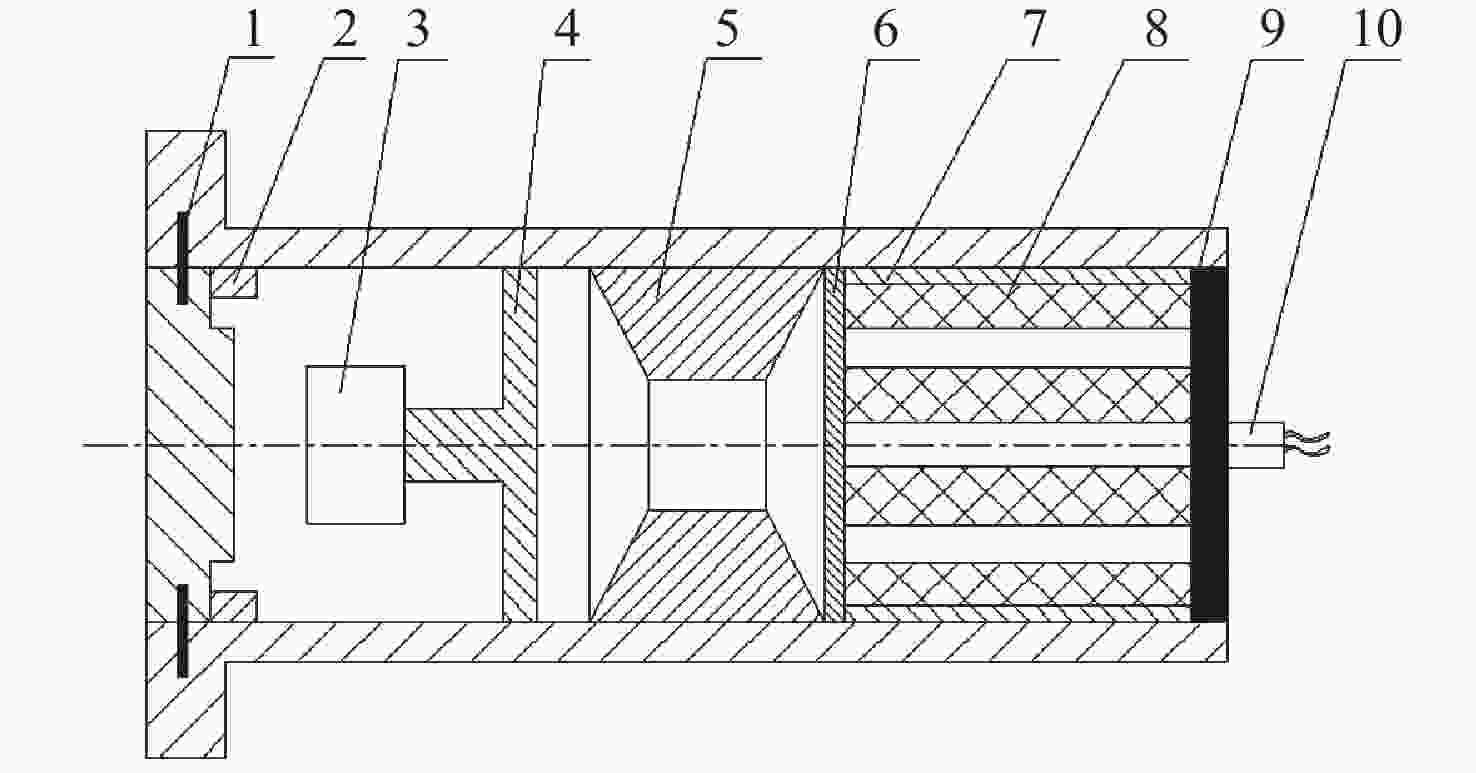
图 1 活塞式弹射火工喷管装置示意图
1—固定销; 2—止动环; 3—弹射体; 4—活塞; 5—拉瓦尔喷管; 6—挡药板; 7—燃烧室; 8—药柱; 9—点火药盒; 10—发火头
Figure 1. Schematic diagram of the piston-type ejection pyrotechnic nozzle device
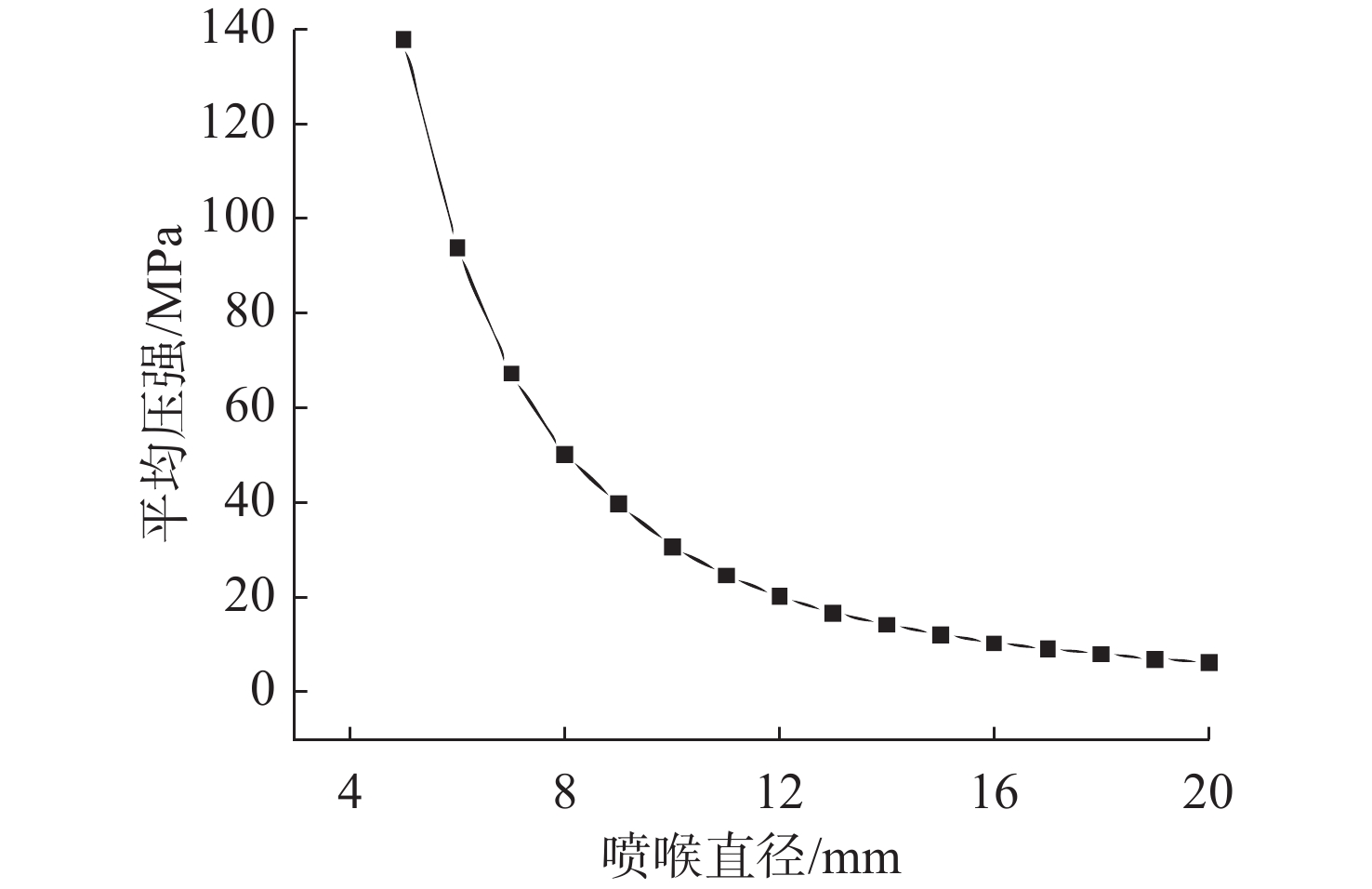
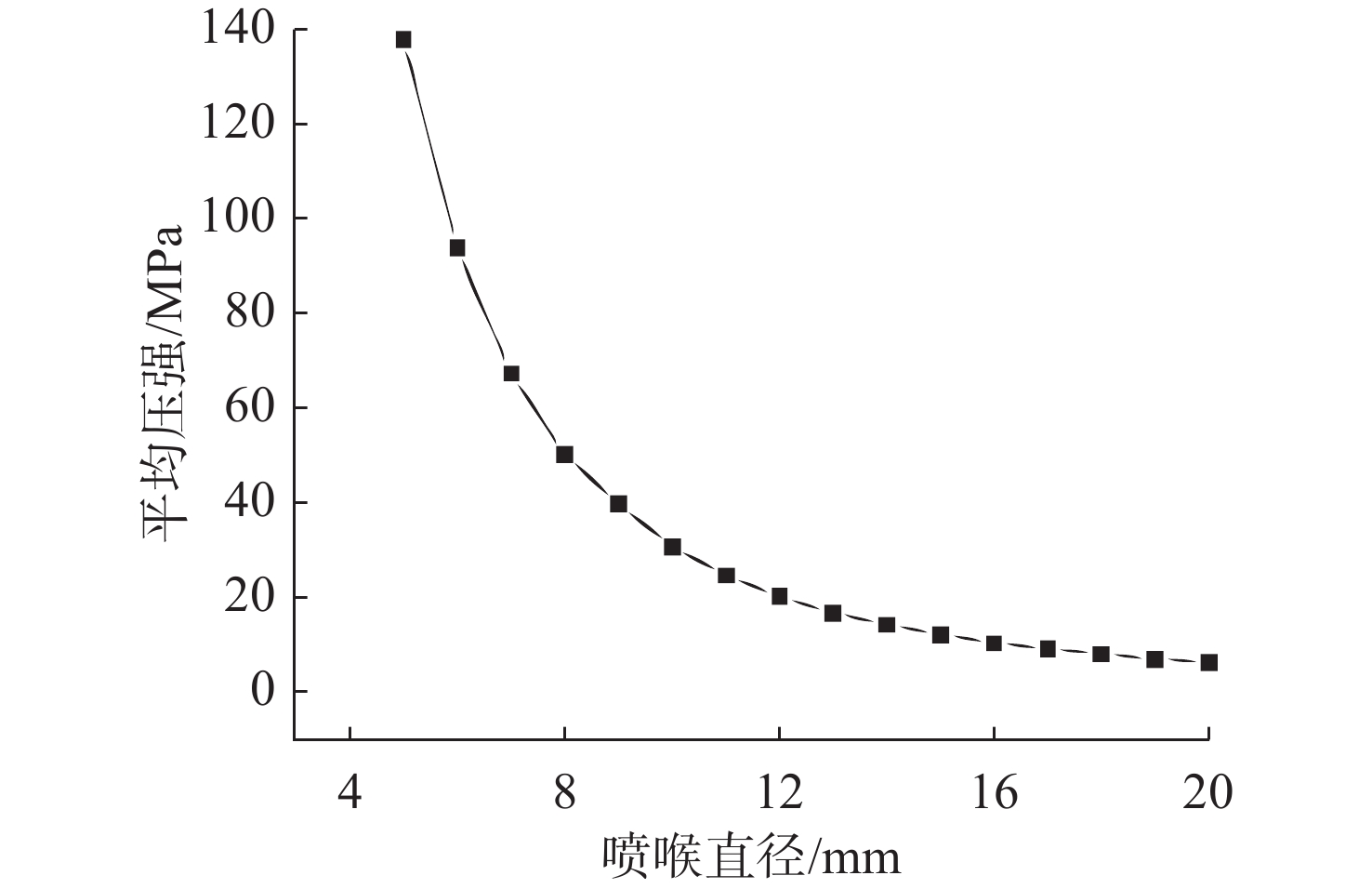
图 4 燃烧室平均压强与喷喉直径关系曲线
Figure 4. Relationship curve between average pressure of combustion chamber and nozzle throat diameter
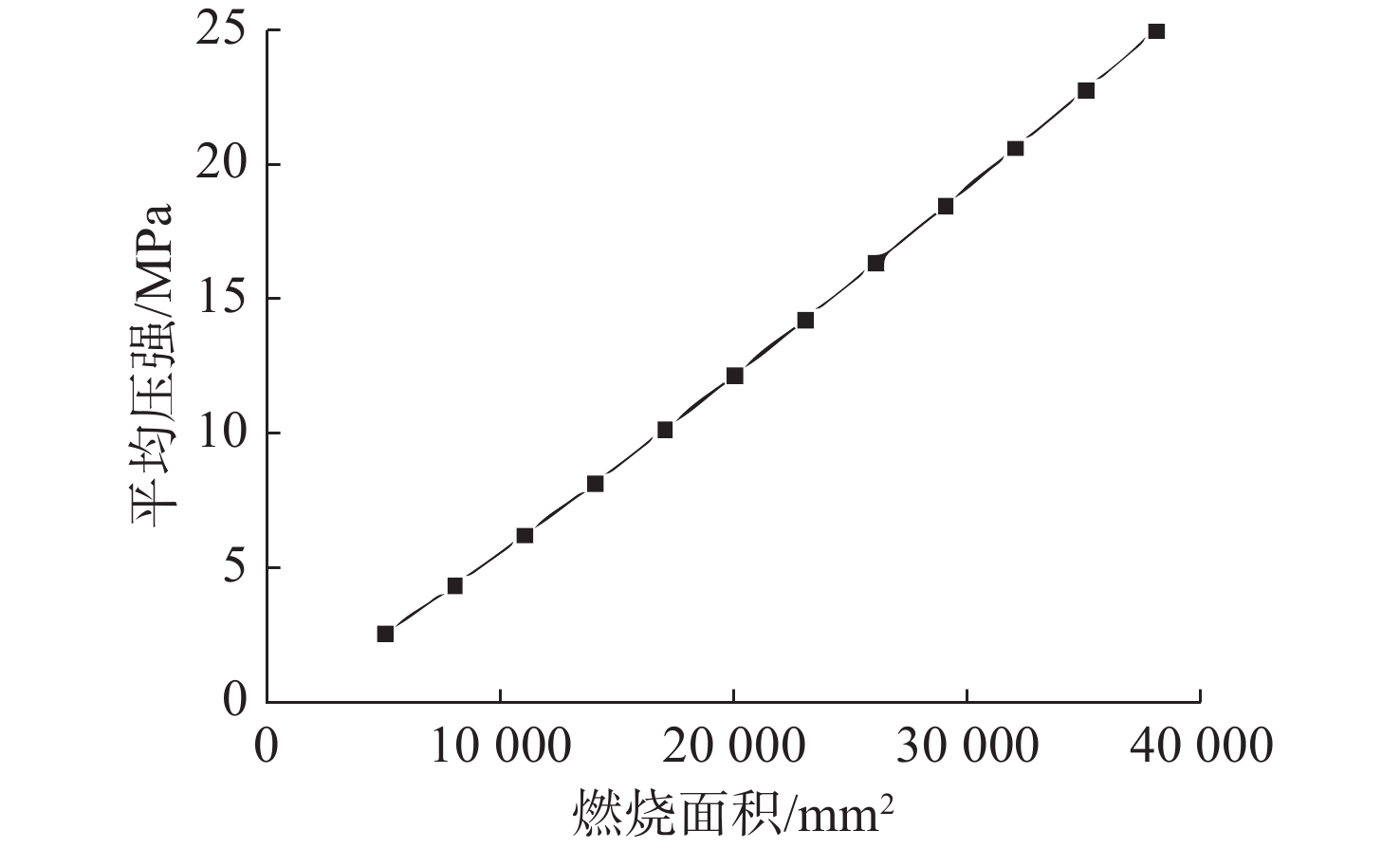
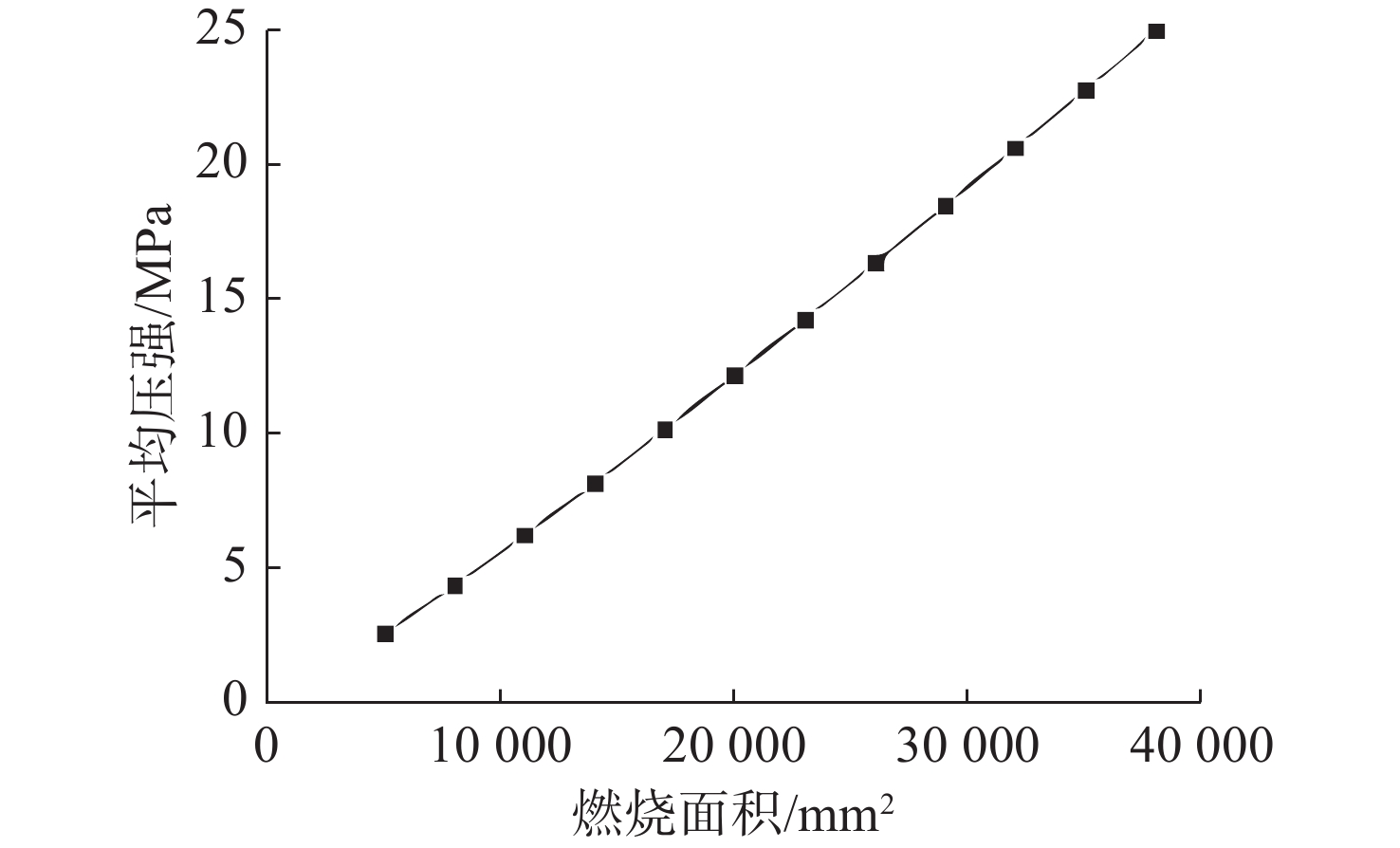
图 5 燃烧室平均压强随燃烧面积变化曲线
Figure 5. Curve of average pressure of combustion with combustion area
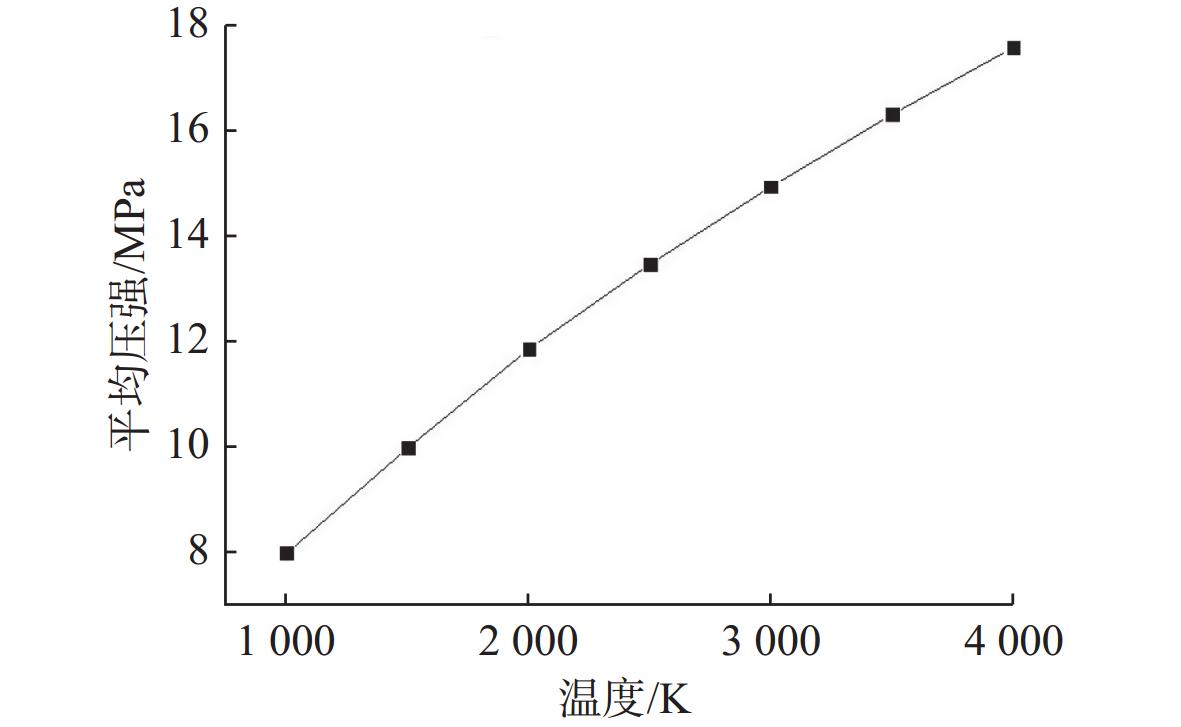
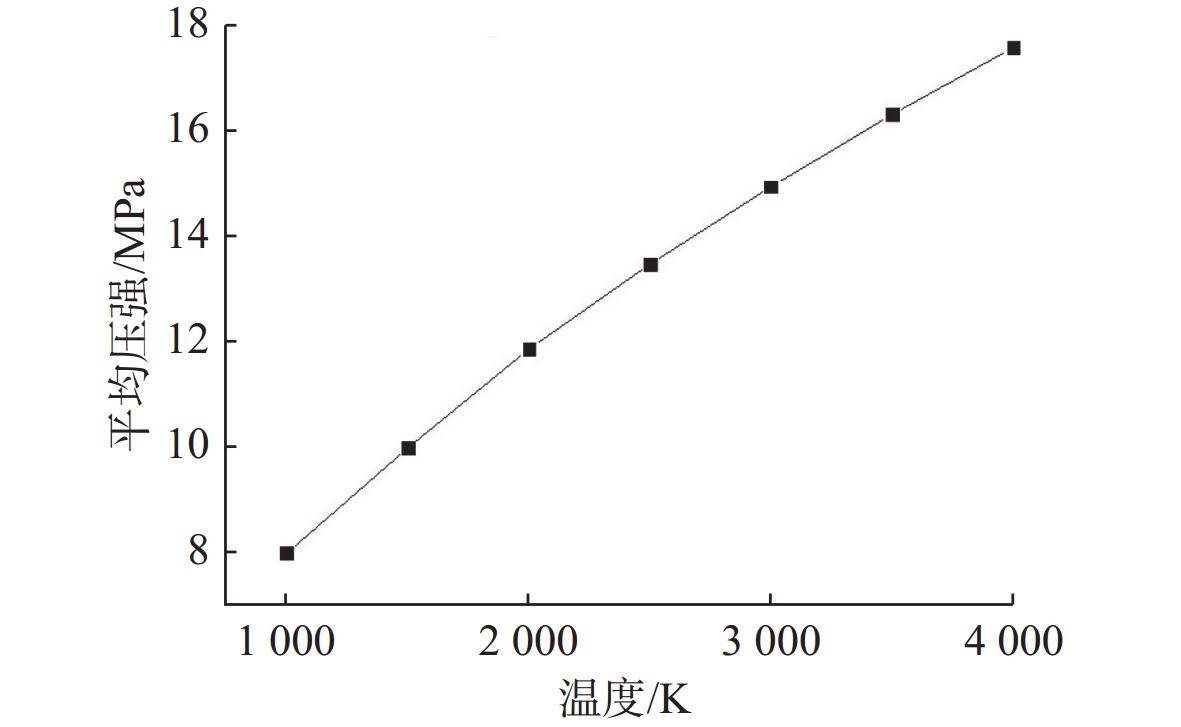
图 6 燃烧室平均压强随温度变化曲线
Figure 6. Curve of average pressure with temperature in combustion chamber
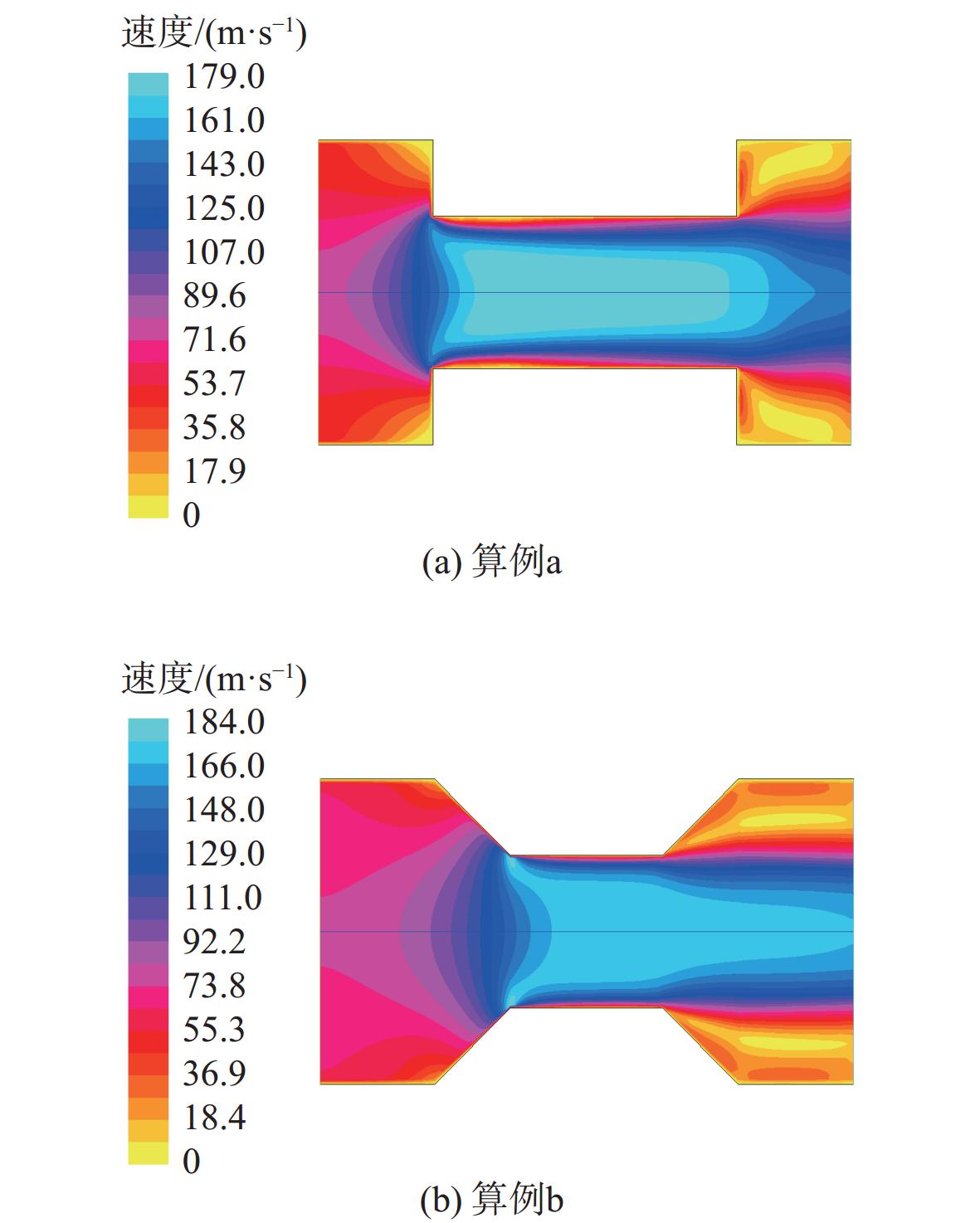
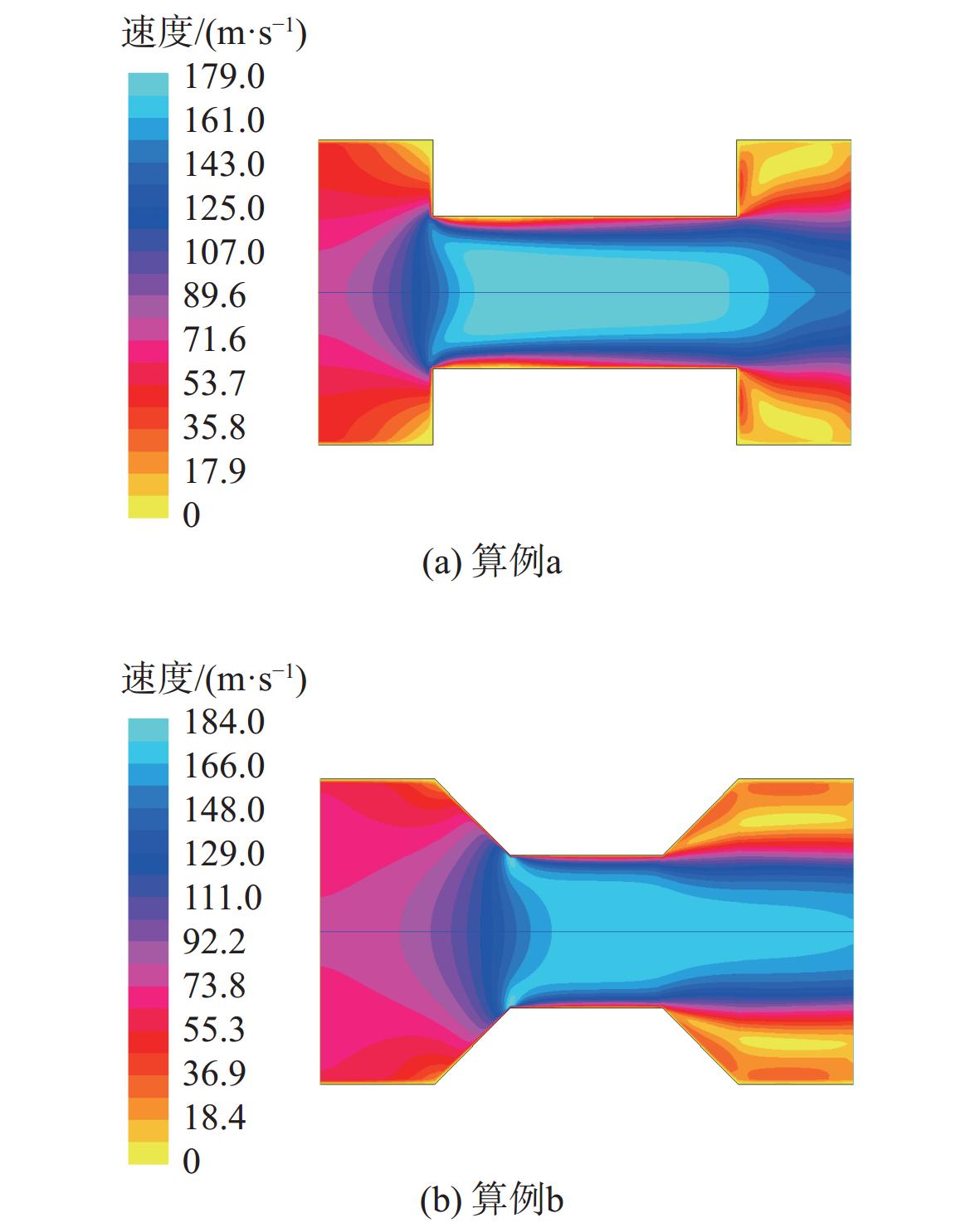
图 11 拉瓦尔喷管内燃气速度矢量分布图
Figure 11. Velocity vector distribution of combustion gas in Laval nozzle
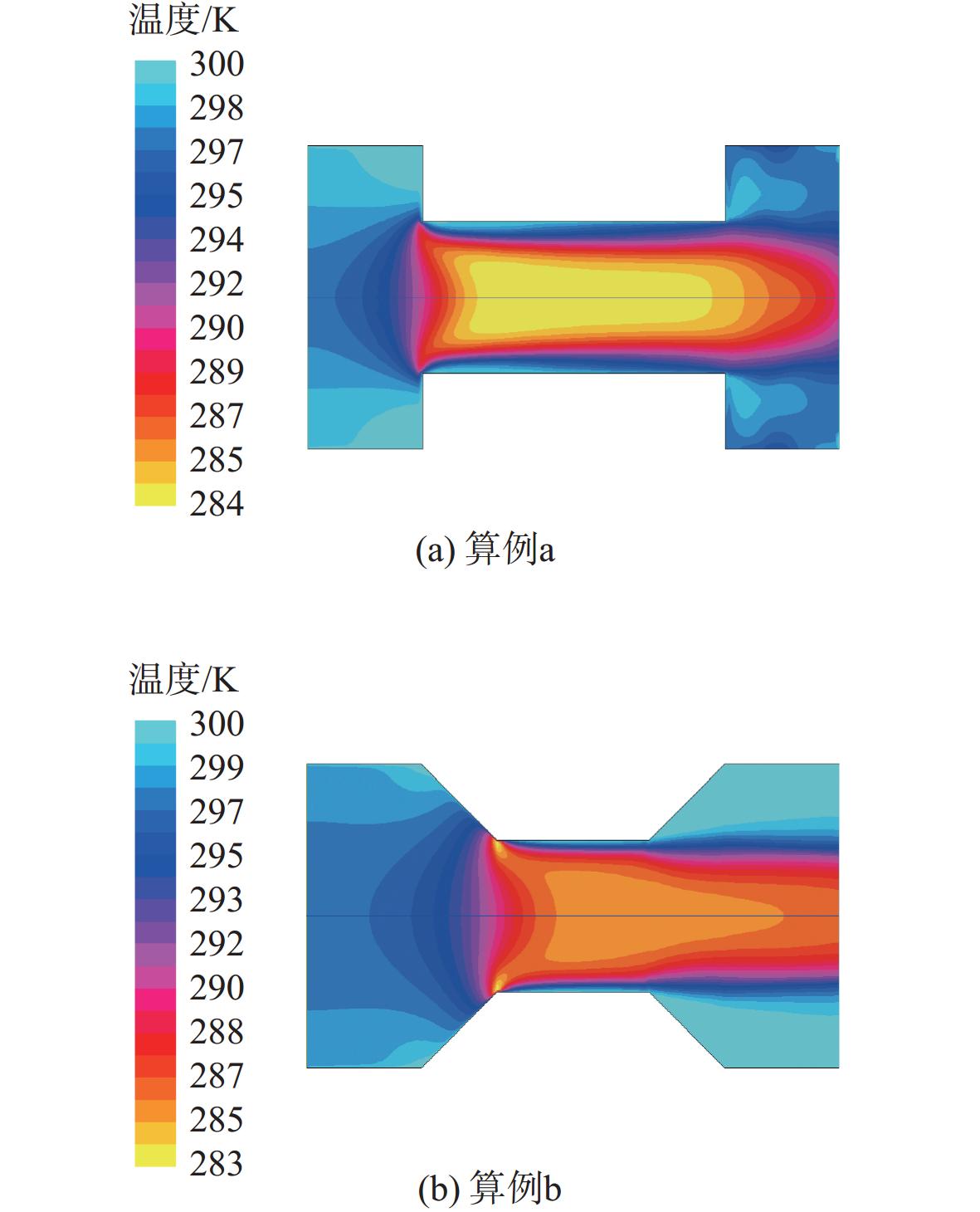
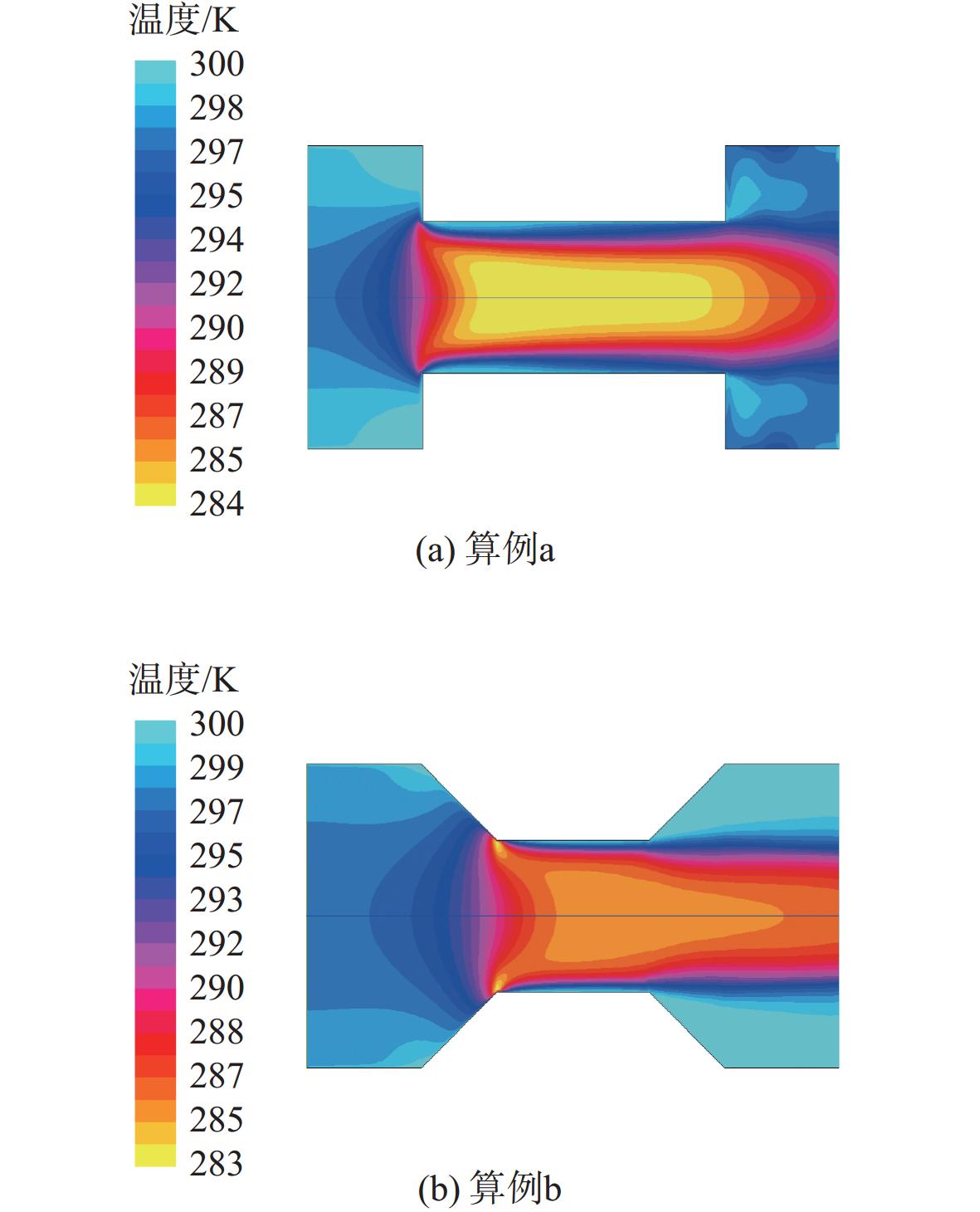
图 12 拉瓦尔喷管内燃气温度分布图
Figure 12. Temperature distribution of combustion gas in Laval nozzle
表 1 喷管内截面积变化对燃气流动参数的影响
Table 1. Effects of cross-sectional area change in nozzle on gas flow parameters
喷管段 Ma $ \text{d}P/P $ $ \text{d}\rho /\rho $ $ \text{d}T/T $ $ \text{d}V/V $ $ \text{d}Ma/Ma $ 收敛段(dA<0) <1 <0(流动膨胀) <0(密度变小) <0(温度降低) >0(流动加速) >0(随着截面变小, Ma增大) >1 >0(流动压缩) >0(密度变大) >0(温度升高) <0(流动减速) <0(随着截面增大, Ma减小) 扩张段(dA>0) <1 >0(流动压缩) >0(密度变大) >0(温度升高) <0(流动减速) <0(随着截面增大, Ma减小) >1 <0(流动膨胀) <0(密度变小) <0(温度降低) >0(流动加速) >0(随着截面变小, Ma增大)  下载: 导出CSV
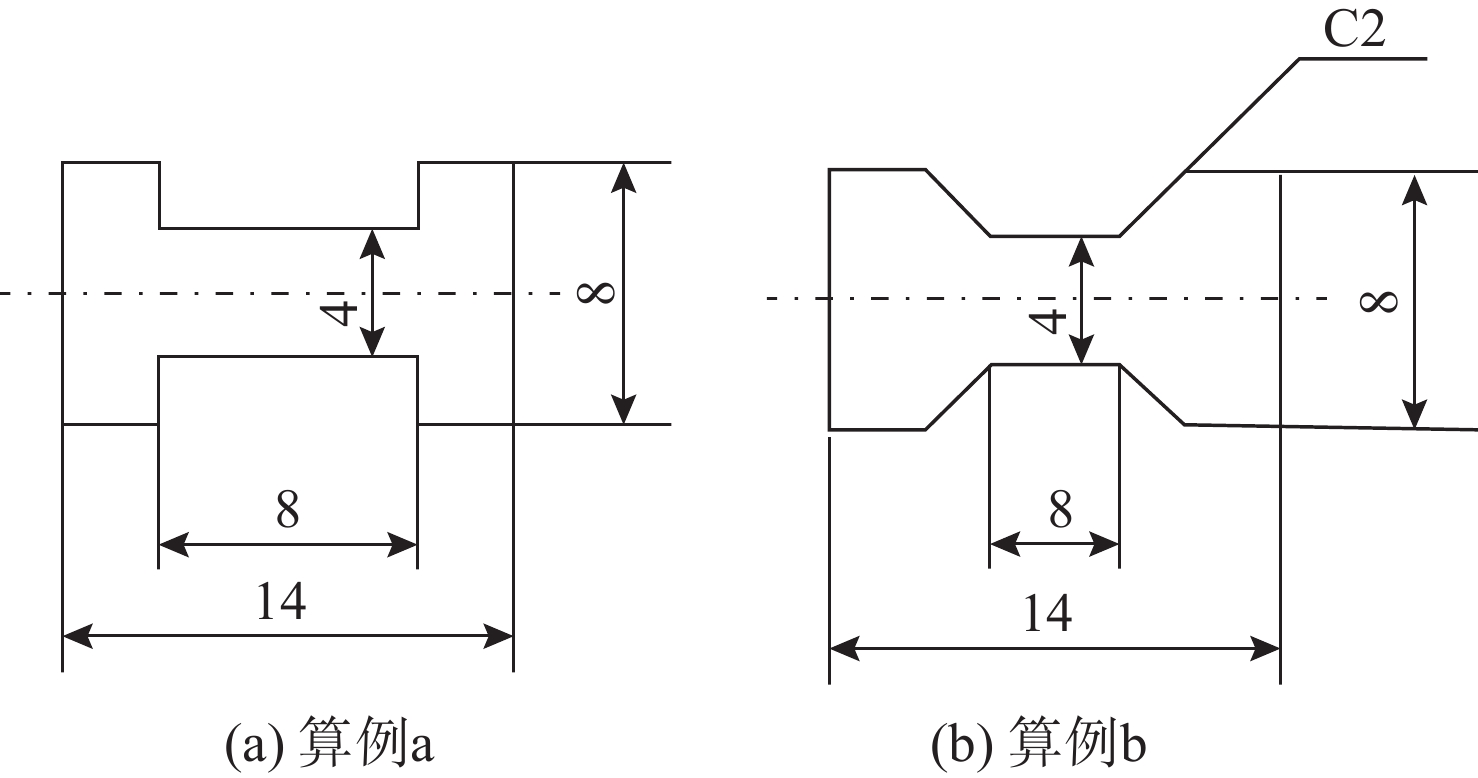
表 2 相同发火条件下的45°角陆上弹射试验结果
Table 2. Results of 45° land-based ejection test under the same ignition conditions
试验
方案试验
数量发火
情况弹射距离/m 备注 理论值 试验值 方案a 1 发火 6.4 6.3 电缆完好 方案b 1 发火 6.4 6.6 电缆完好
下载: 导出CSV
表 3 相同发火条件下的水下弹射试验结果
Table 3. Results of underwater catapult tests under the same ignition conditions
试验
方案水下弹射
角度/(°)数量 发火
情况弹射试验结果 方案a 45 1 发火 弹射体未弹出, 拆开装置可见电缆烧蚀, 表明已完成发火动作, 但弹射体未完成弹出过程 方案b 0 1 发火 弹射体弹出, 电缆完好 30 1 发火 弹射体弹出, 电缆完好 45 1 发火 弹射体弹出, 电缆完好 60 1 发火 弹射体弹出, 电缆完好 90 1 发火 弹射体弹出, 电缆完好
下载: 导出CSV
-
[1] 吴始栋, 王岳, 程德彬, 等. 鱼雷及其发射装置用新材料技术的发展[J]. 鱼雷技术, 2006, 14(2): 7-11. doi: 10.3969/j.issn.1673-1948.2006.02.002Wu S D, Wang Y, Cheng D B, et al. The development of new material technology for torpedoes and their launching devices[J]. Torpedo Technology, 2006, 14(2): 7-11. doi: 10.3969/j.issn.1673-1948.2006.02.002 [2] 周家亮, 王腾辉, 杨晨旭, 等. 适用于发射装置的新型液压缓冲器设计及分析[J]. 液压气动与密封, 2025, 45(2): 26-35.Zhou J L, Wang T H, Yang C X, et al. Design and analysis of a new hydraulic buffer for launch devices[J]. Hydraulics Pneumatics & Seals, 2025, 45(2): 26-35. [3] 李晓东, 渠弘毅, 高婷, 等. 基于高压气体弹射释放技术的载荷分离运动仿真分析[J]. 大连交通大学学报, 2020, 41(3): 46-50. doi: 10.13291/j.cnki.djdxac.2020.03.009Li X D, Qu H Y, Gao T, et al. Simulation analysis of load separation motion based on high-pressure gas ejection and release technology[J]. Journal of Dalian Jiaotong University, 2020, 41(3): 46-50. doi: 10.13291/j.cnki.djdxac.2020.03.009 [4] 马琪, 曹晓明, 魏勇. 气动不平衡式发射装置定时调节器调节对武器出管速度影响的研究[J]. 电子测试, 2021(13): 53-55,15. doi: 10.3969/j.issn.1000-8519.2021.13.016 [5] 邵鹏杰, 李万真, 孙坐福. 一种气动式发射装置的设计与分析[J]. 光电技术应用, 2024, 39(4): 84-89.Shao P J, Li W Z, Sun Z F. Design and analysis of a pneumatic launch device[J]. Electro-Optic Technology Application, 2024, 39(4): 84-89. [6] 杨琼方, 张晓平, 张明敏. 水下平台发射噪声声源排序的理论分析和试验验证[J]. 振动工程学报, 2025, 38(2): 403-410. doi: 10.16385/j.cnki.issn.1004-4523.2025.02.019Yang Q F, Zhang X P, Zhang M M. Theoretical analysis and experimental verification of noise source ranking of underwater platform launch[J]. Journal of Vibration Engineering, 2025, 38(2): 403-410. doi: 10.16385/j.cnki.issn.1004-4523.2025.02.019 [7] 马伟明, 鲁军勇. 电磁发射装置[J]. 国防科技大学学报, 2016, 38(6): 1-5. doi: 10.19323/j.issn.1673-6524.202409007Ma W M, Lu J Y. Electromagnetic launching device[J]. Journal of National University of Defense Technology, 2016, 38(6): 1-5. doi: 10.19323/j.issn.1673-6524.202409007 [8] 马伟明, 鲁军勇. 电磁发射技术的研究现状与挑战[J]. 电工技术学报, 2023, 38(15): 3943-3959. [9] 马伟明. 关于电工学科前沿技术发展的若干思考[J]. 电工技术学报, 2021, 36(22): 4627-4636. doi: 10.19595/j.cnki.1000-6753.tces.211694Ma W M. Some thoughts on the development of cutting-edge technology in electrotechnics[J]. Transactions of China Electrotechnical Society, 2021, 36(22): 4627-4636. doi: 10.19595/j.cnki.1000-6753.tces.211694 [10] 张代兵, 徐海军. 一种新型水下电磁发射装置的设计[J]. 仪器仪表学报, 2005, 26(8): 1268-1269.Zhang D B, Xu H J. Design of a new type of underwater electromagnetic launching device[J]. Chinese Journal of Scientific Instrument, 2005, 26(8): 1268-1269. [11] 杨冲. 一种水下电磁发射装置的设计思路及分析[J]. 电子测试, 2017(22): 14-15. doi: 10.3969/j.issn.1000-8519.2017.22.005Yang C. Design idea and analysis of an underwater electromagnetic launching device[J]. Electronic Test, 2017(22): 14-15. doi: 10.3969/j.issn.1000-8519.2017.22.005 [12] 马震宇, 范有朋. 潜射捕鲸叉导弹运载器的技术特性[J]. 飞航导弹, 2006(3): 13-17. doi: 10.3969/j.issn.1009-1319.2006.03.007Ma Z Y, Fan Y P. Technical characteristics of submarine-launched Harpoon missile carrier[J]. Flying Missiles, 2006(3): 13-17. doi: 10.3969/j.issn.1009-1319.2006.03.007 [13] 龙垚松, 宋毫, 吴斌, 等. 一种大潜深水下无动力飞行器发射系统及方法: CN201710193640.2[P]. 2025-06-30. [14] 郭强, 张志彦, 李健, 等. 国外舰面导弹发射装置技术发展与趋势综述[J/OL]. 现代防御技术, 2025-07-16. https://link.cnki.net/urlid/11.3019.TJ.20250716.1452.002. [15] 潘锦珊, 单鹏. 气体动力学基础[M]. 北京: 国防工业出版社, 2006. [16] 翁春生, 王浩. 计算内弹道学[M]. 北京: 国防工业出版社, 2006. [17] 秦楠, 马亮. 液压平衡式发射装置自航发射内弹道模型与仿真[J]. 火力与指挥控制, 2014(9): 87-90. doi: 10.3969/j.issn.1002-0640.2014.09.021Qin N, Ma L. Inertial navigation launching internal trajectory model and simulation of hydraulic balanced launching device[J]. Firepower and Command Control, 2014(9): 87-90. doi: 10.3969/j.issn.1002-0640.2014.09.021 [18] 张也影. 流体力学[M]. 北京: 高等教育出版社, 1998. [19] 王学智, 刘少伟, 杜振宇. 垂直冷弹发射装置装药燃烧数值分析[J]. 计算机测量与控制, 2017, 25(4): 100-102.Wang X Z, Liu S W, Du Z Y. Numerical analysis of charge combustion in U-vertical cold launch device[J]. Computer Measurement & Control, 2017, 25(4): 100-102. [20] 田耀四, 蔡国飙, 朱定强, 等. 固体火箭发动机喷流流场数值仿真[J]. 宇航学报, 2006(5): 876-879, 919. doi: 10.3321/j.issn:1000-1328.2006.05.011Tian Y S, Cai G B, Zhu D Q, et al. Numerical simulation of jet flow field of solid rocket motor[J]. Journal of Astronautics, 2006(5): 876-879, 919. doi: 10.3321/j.issn:1000-1328.2006.05.011 [21] 周忠旺. 基于空气动力学原理的气垫式割草机叶轮设计[J]. 制造业自动化, 2009(12): 91-92,117. doi: 10.3969/j.issn.1009-0134.2009.12.029 [22] 张本, 陆军. 子母弹抛撒技术综述[J]. 四川兵工学报, 2006(3): 26-29. doi: 10.3969/j.issn.1006-0707.2006.03.008Zhang B, Lu J. Review of submunition dispensing technology[J]. Sichuan Ordnance Journal, 2006(3): 26-29. doi: 10.3969/j.issn.1006-0707.2006.03.008 -

 下载:
下载:

 点击查看大图
计量
- 文章访问数: 633
- HTML全文浏览量: 395
- PDF下载量: 72
- 被引次数: 0