• 中国科技核心期刊
  • Scopus收录期刊
  • DOAJ收录期刊
  • JST收录期刊
  • Euro Pub收录期刊

Current Issue

2026 Vol. 34, No. 2

Display Method:
2026, 34(2): 207-208.
Abstract:
Influence Law of Bionic Serrated Structure on Hydrodynamic Noise Characteristics of Toroidal Propellers
MAO Xinpei, LIU Peng, LIU Jiang, KANG Ludi, JIN Hui, YIN Yibing
2026, 34(2): 209-223. doi: 10.11993/j.issn.2096-3920.2025-0141
Abstract:
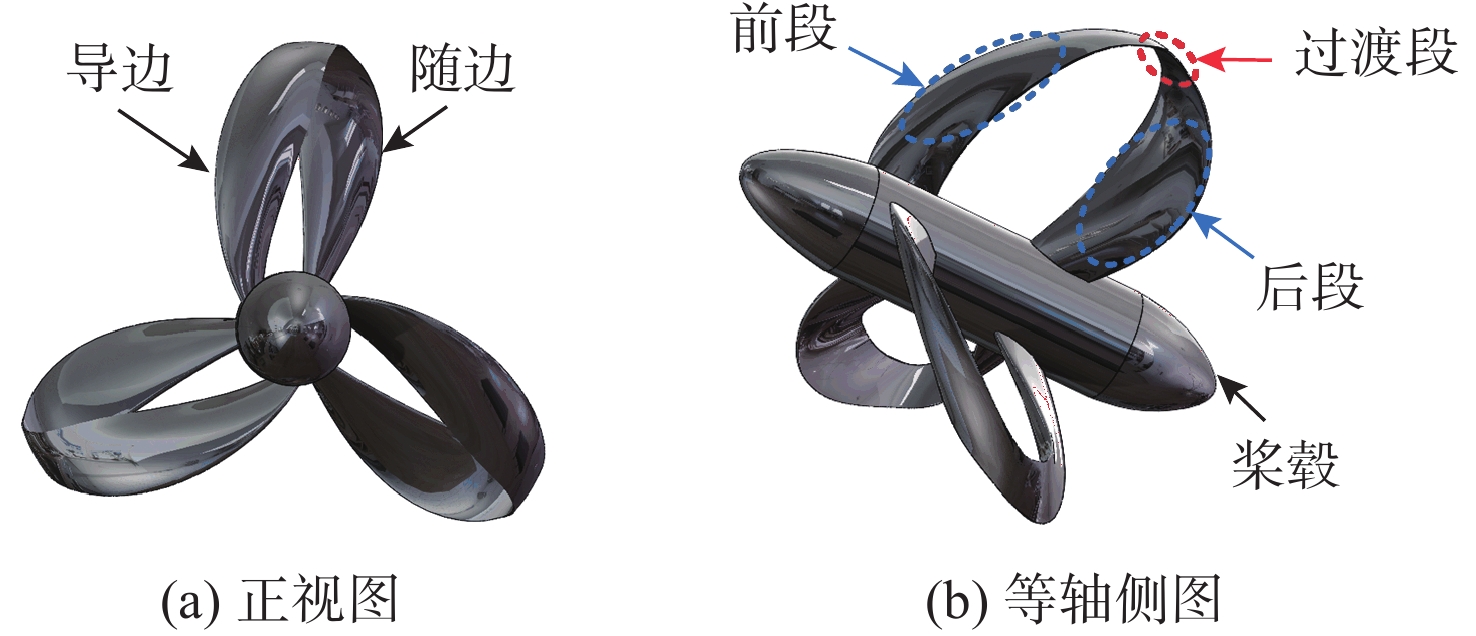
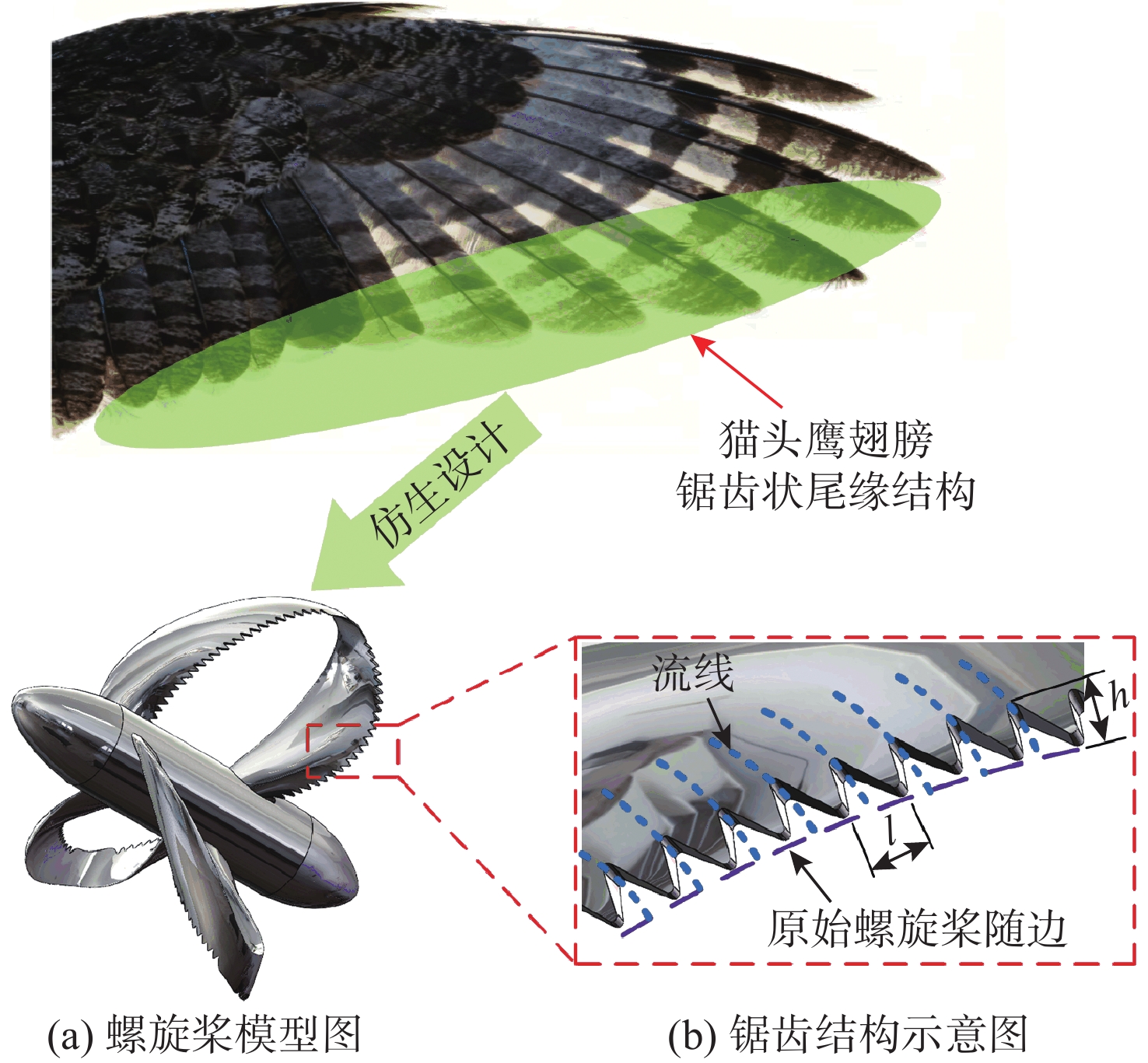
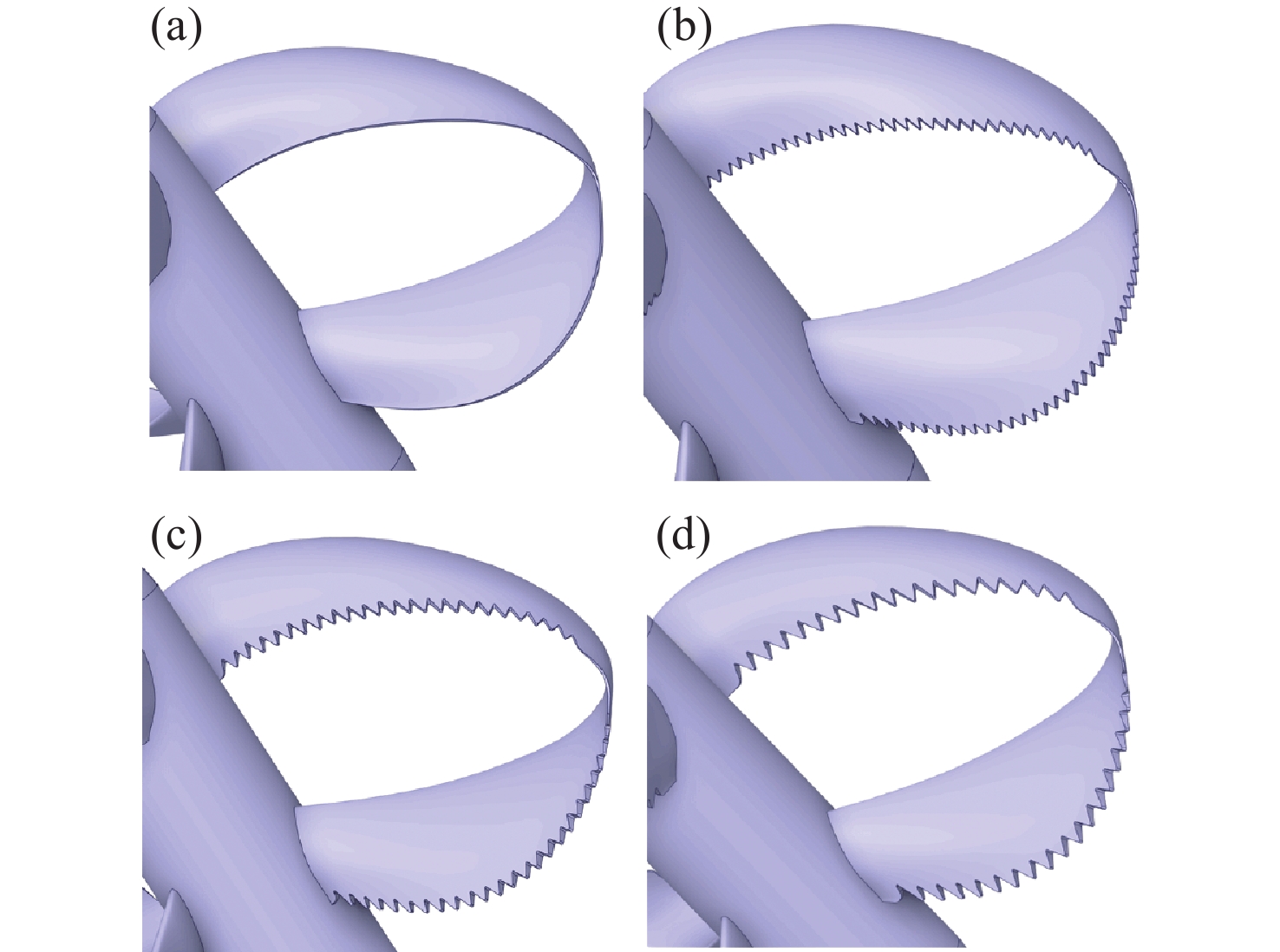
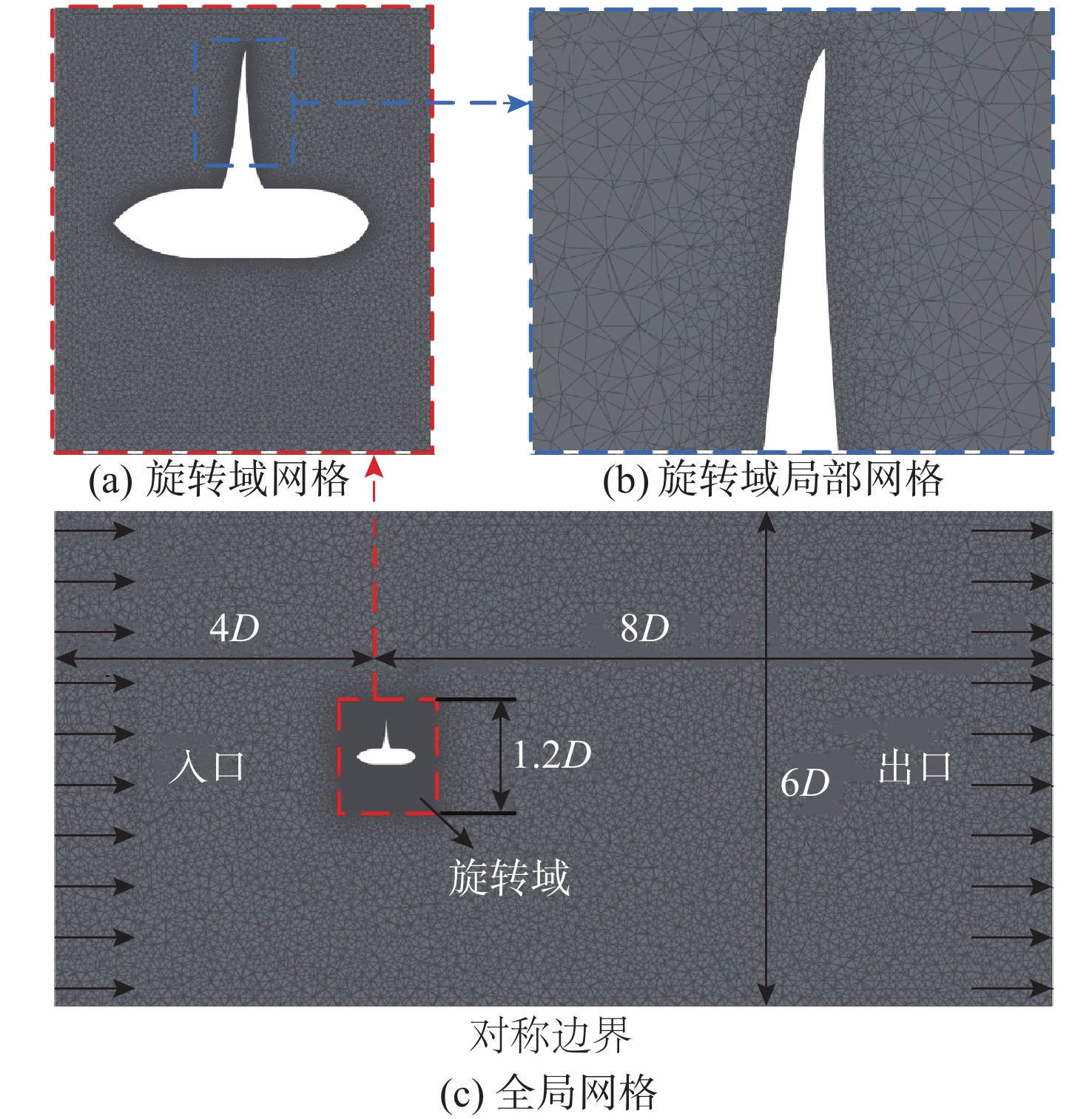
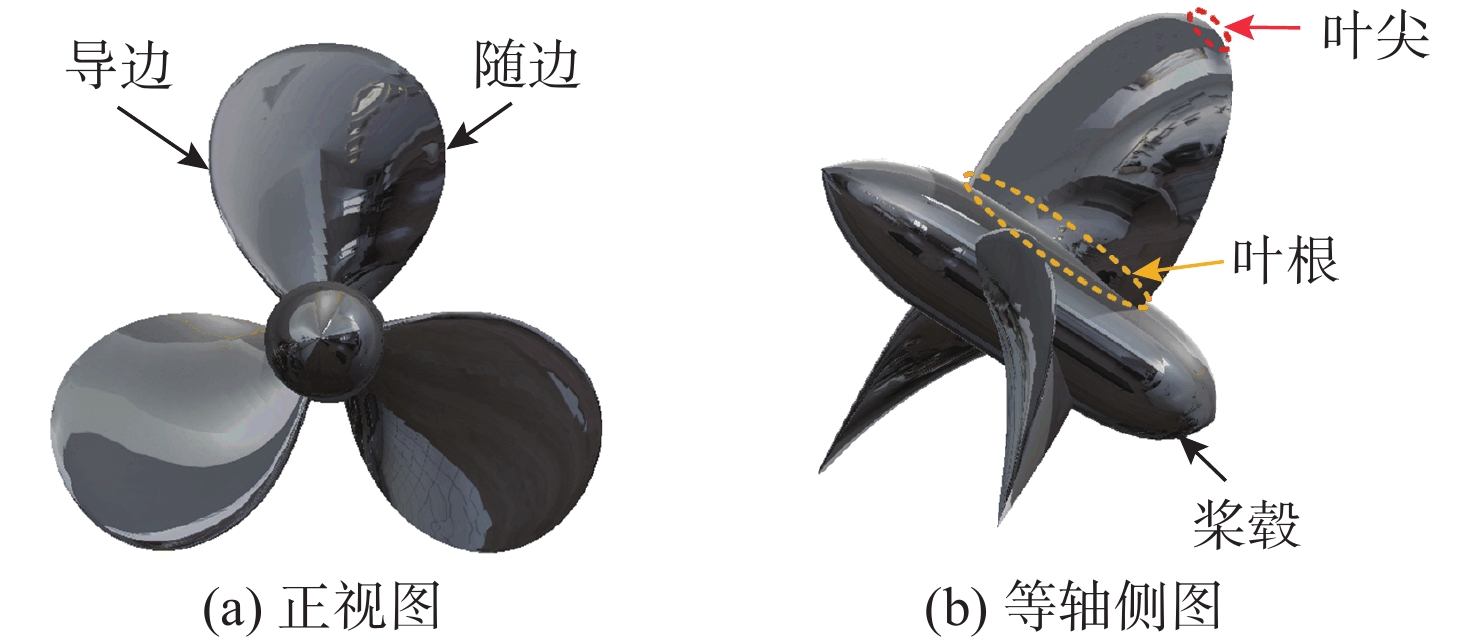
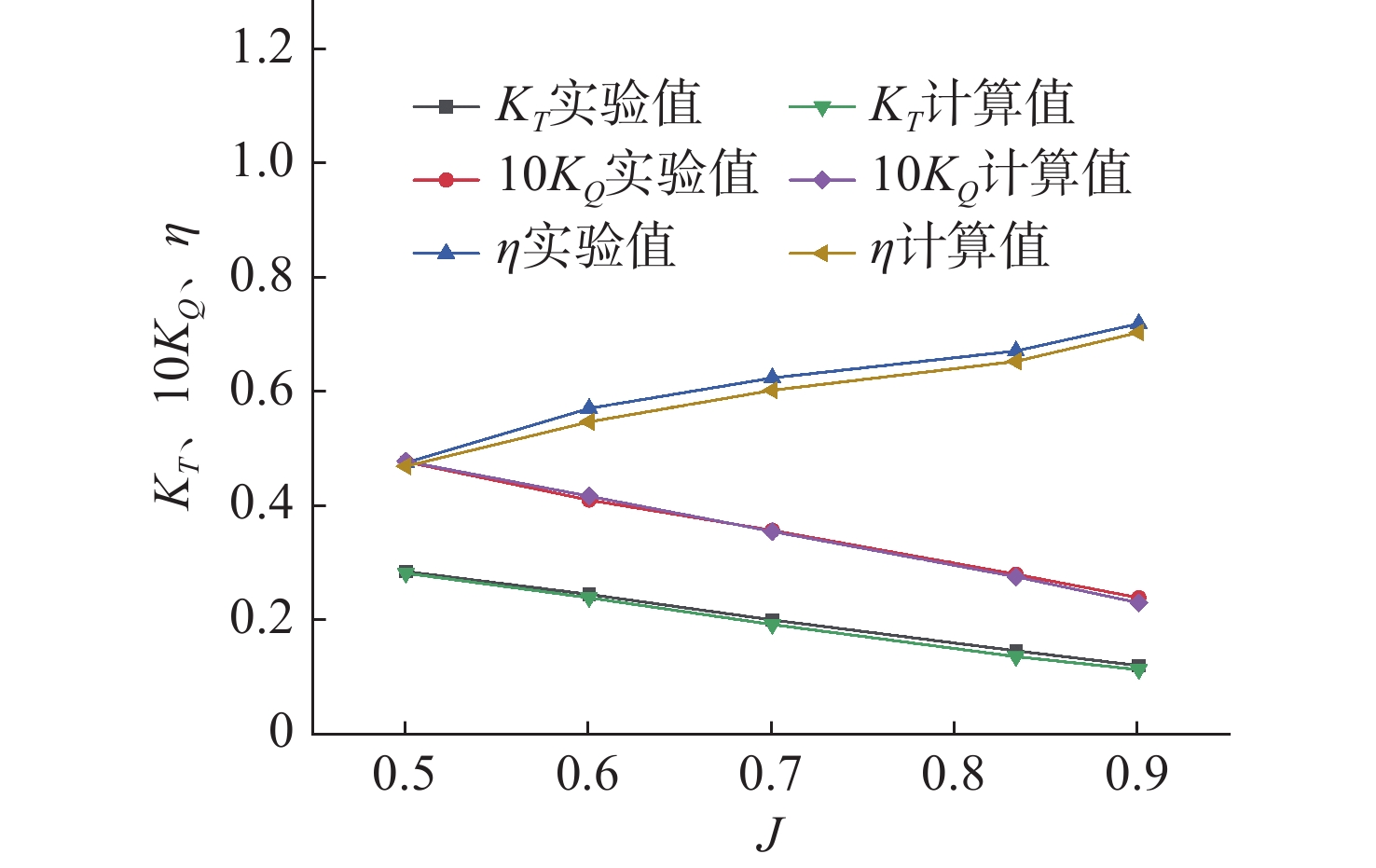
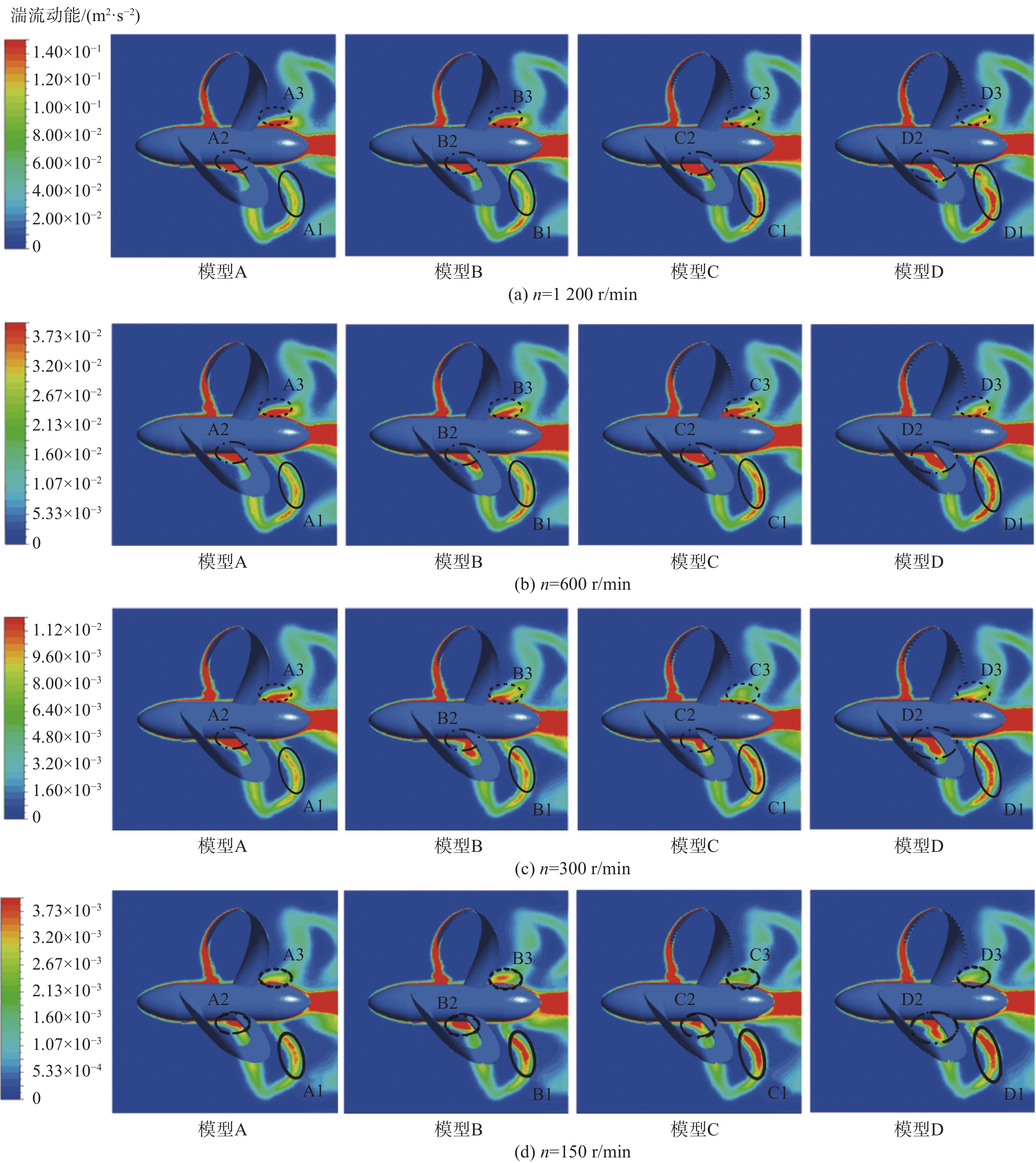
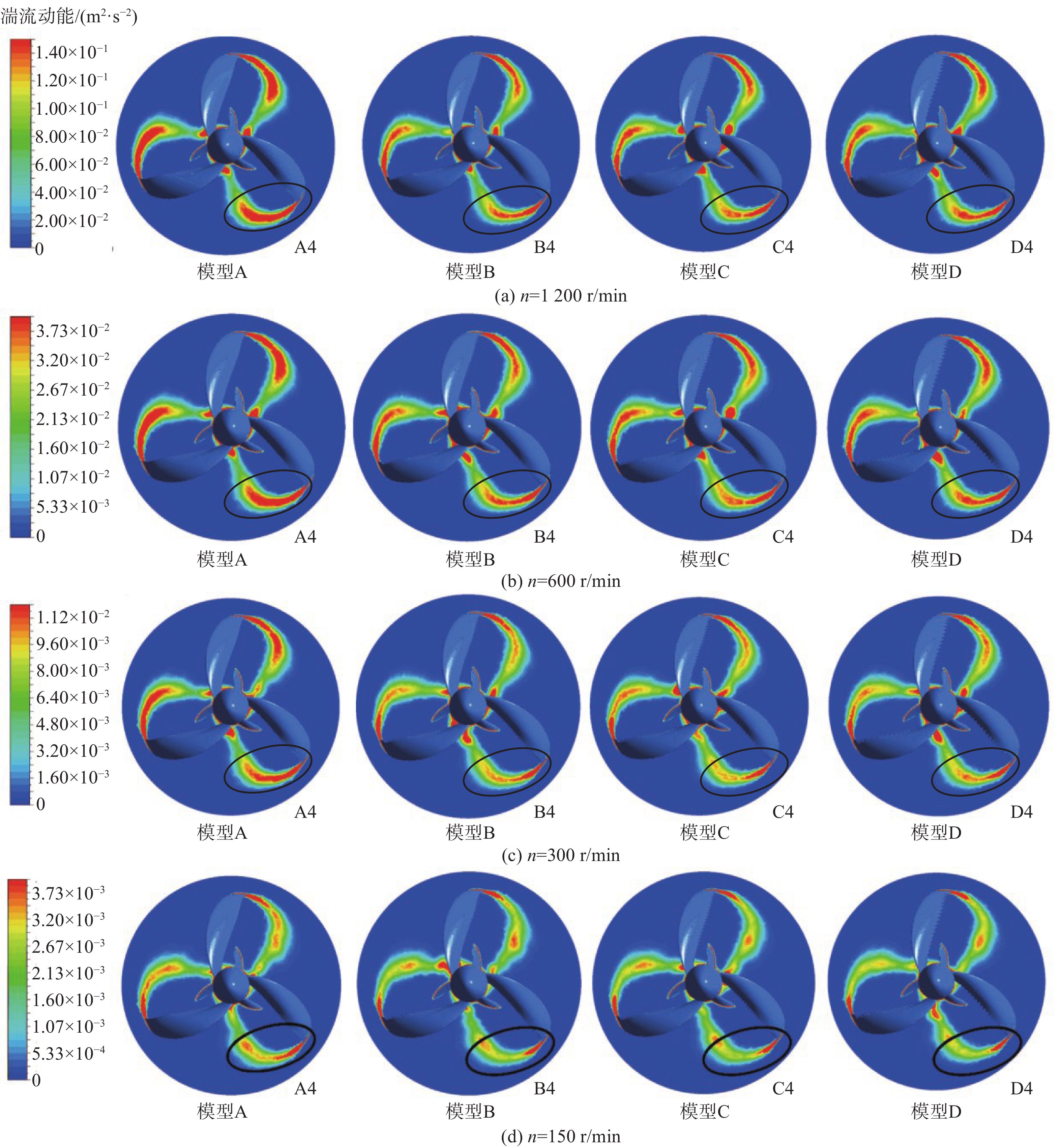
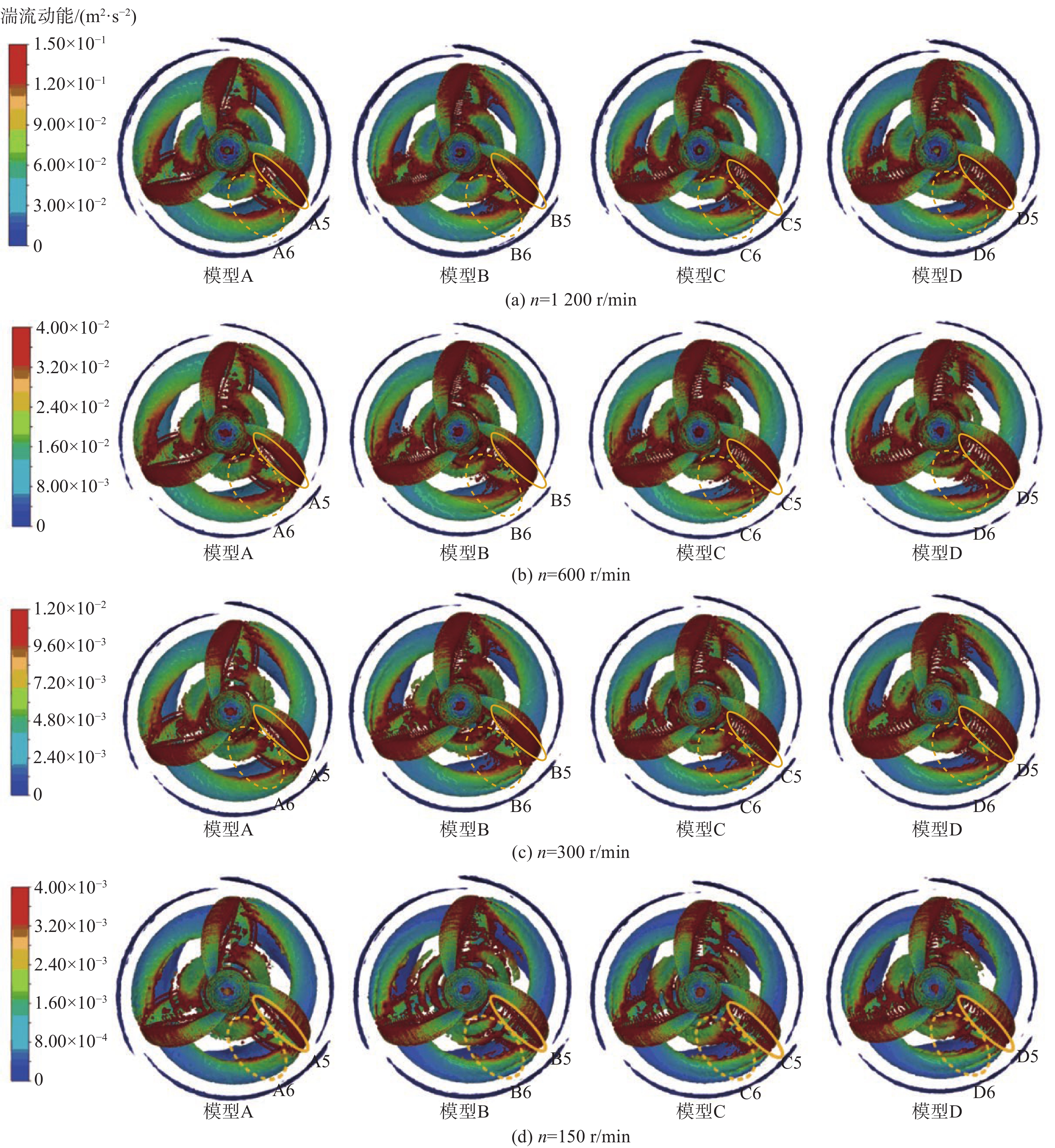
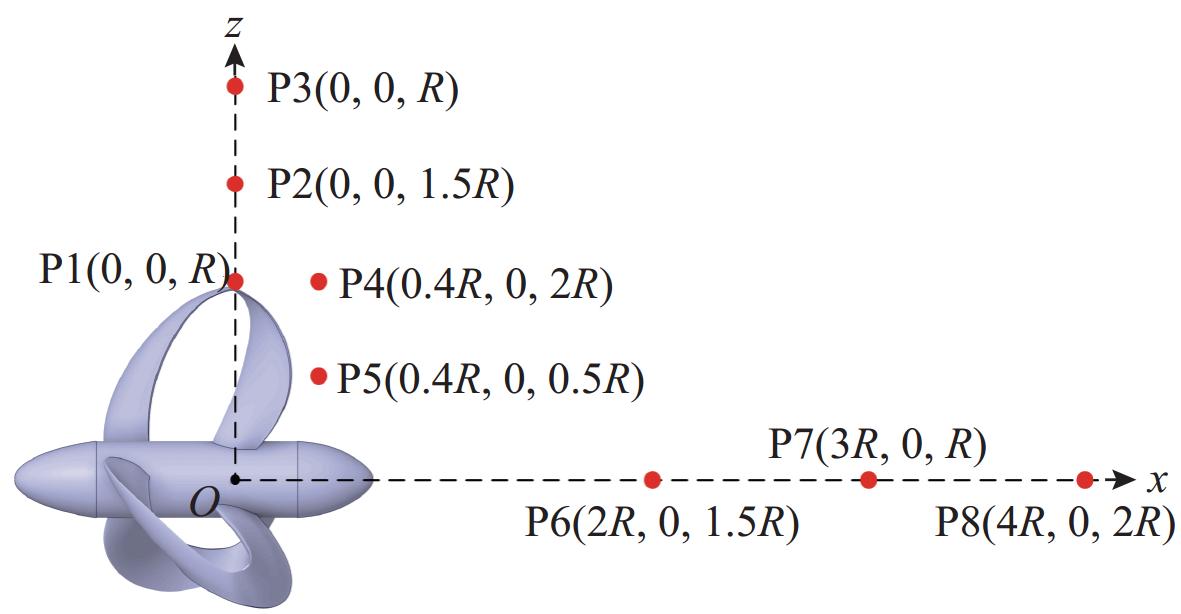
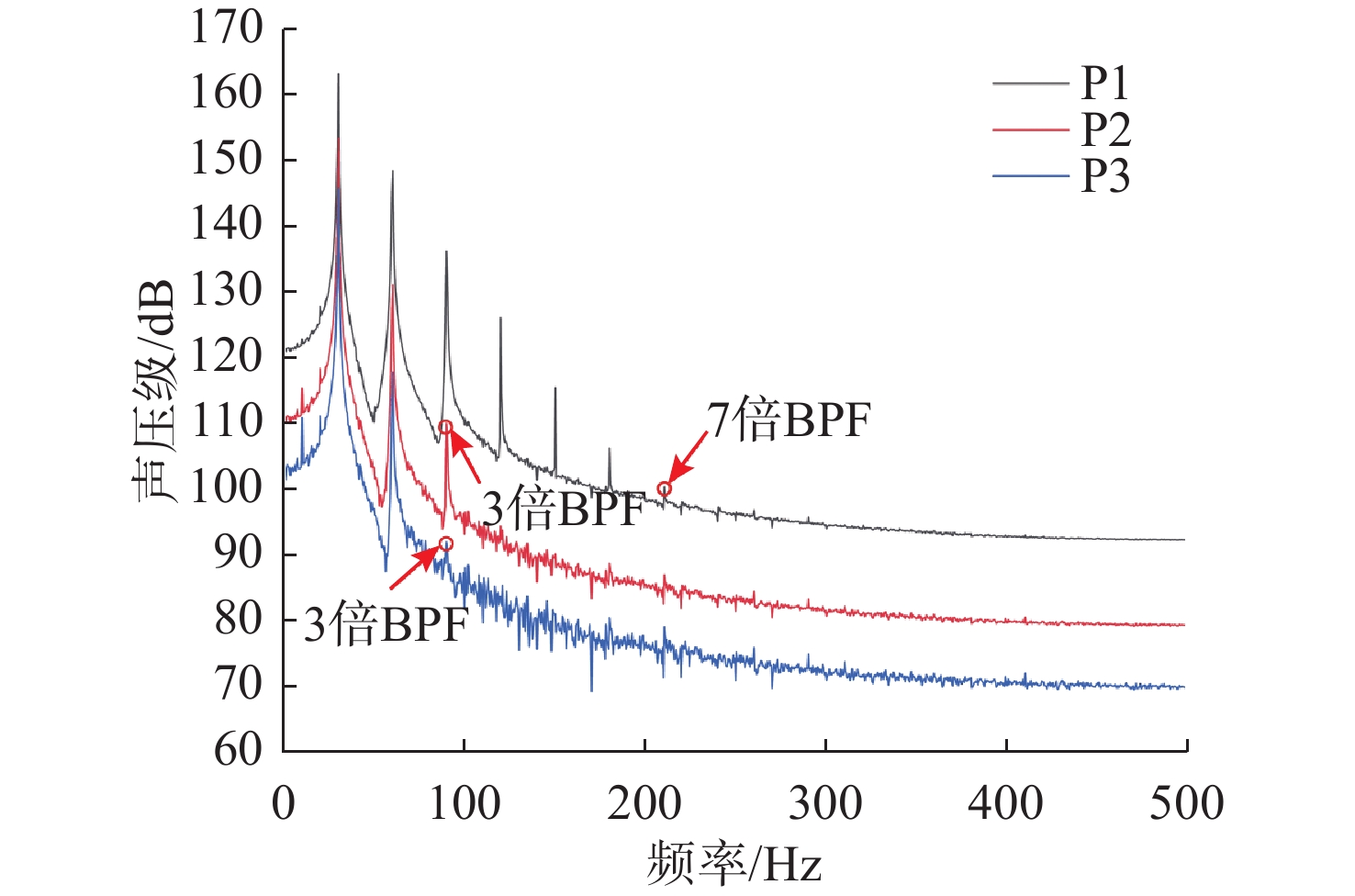
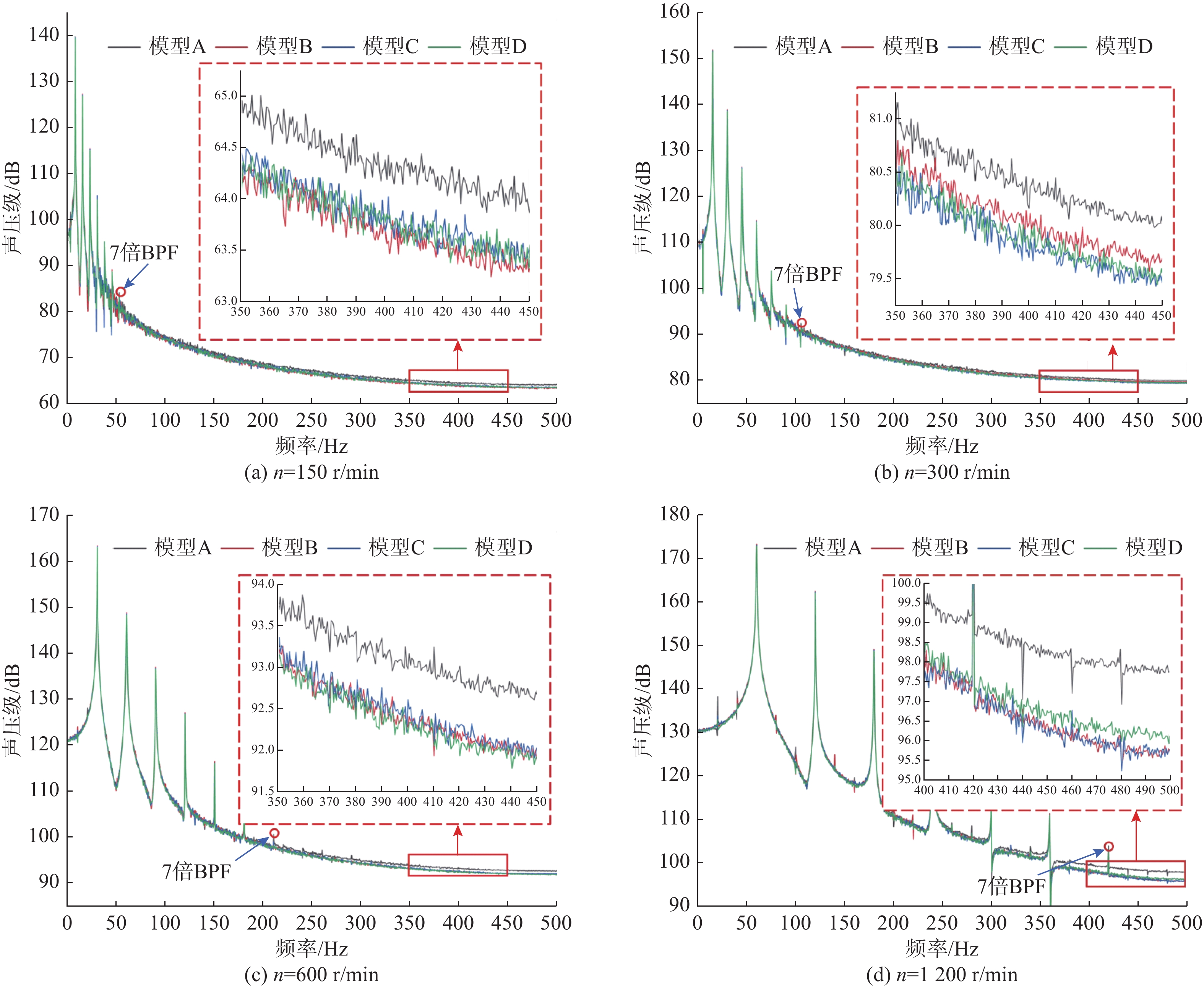
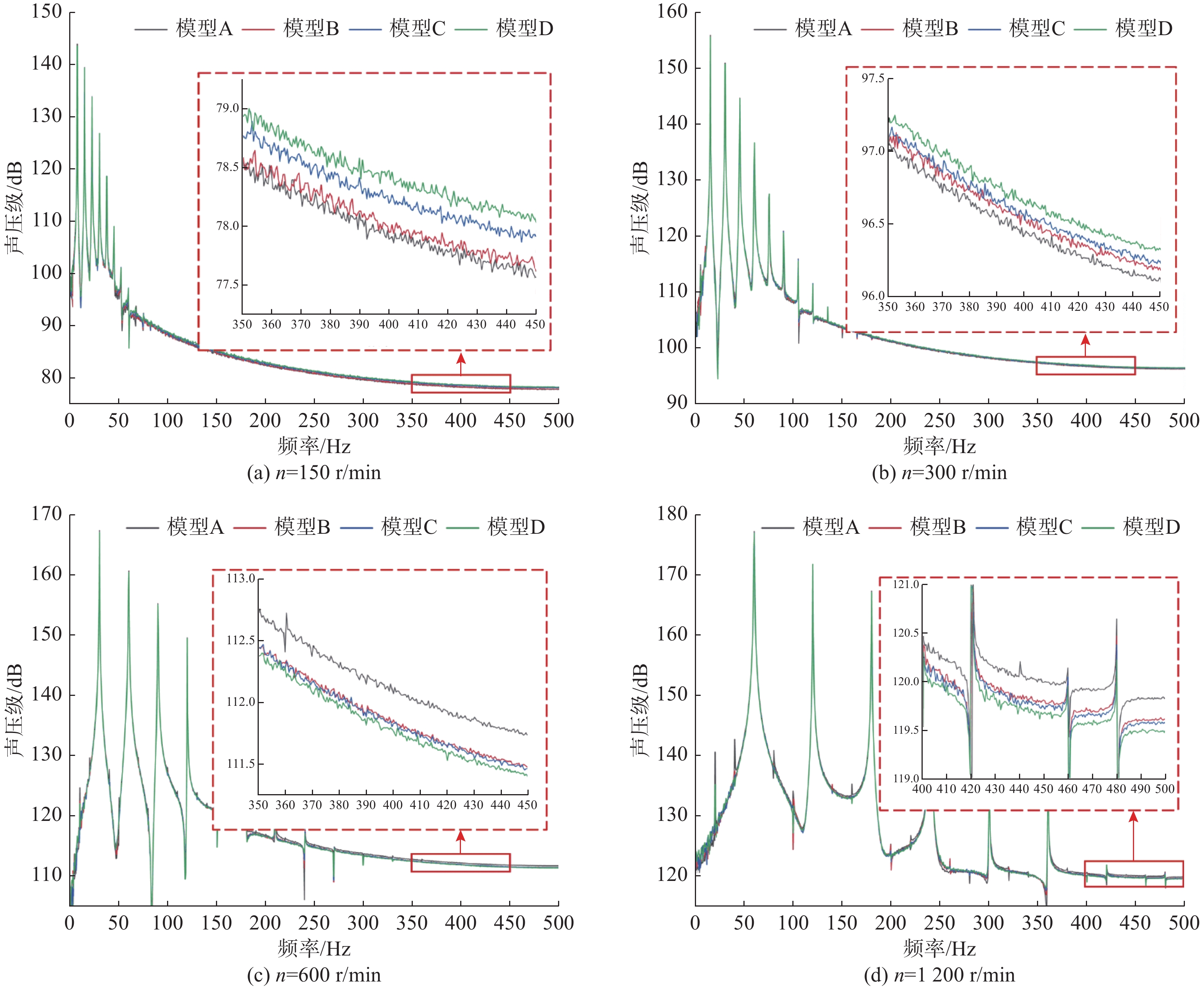
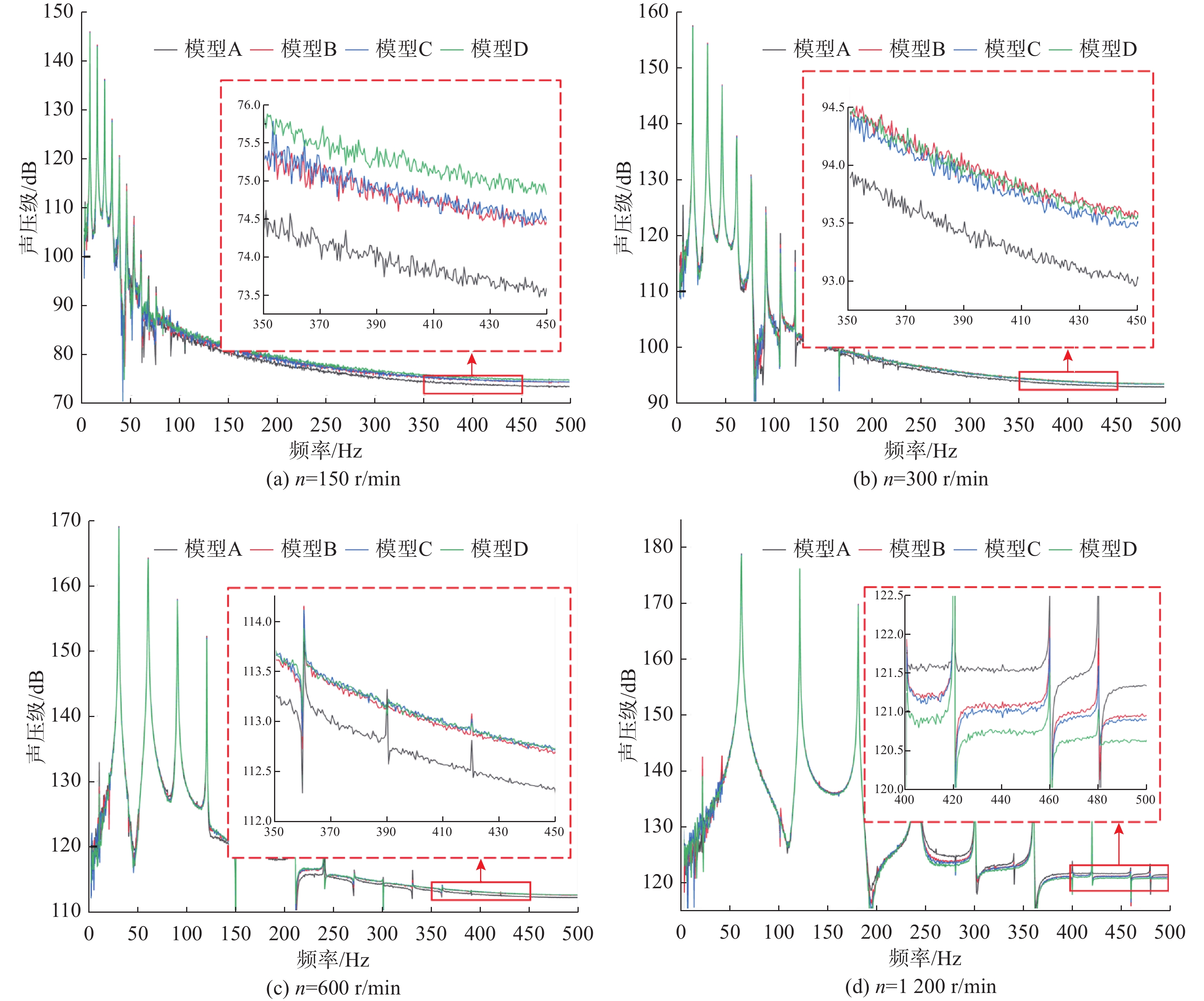
The toroidal propeller has emerged as a research hotspot in the field of underwater propulsion owing to its potential for enhancing propulsion efficiency and achieving effective noise control. Bionic principles offer a novel technical approach to noise reduction of propellers. However, the application research of bionic structures in underwater toroidal propellers is still relatively scarce. Therefore, this study aims to explore the mechanism of the influence of bionic serrated structures on the hydrodynamic noise of toroidal propellers. Inspired by the acoustic characteristics of owl wing-edge serrations and based on the parametric modeling method of a toroidal propeller, a bionic variant with trailing-edge serration features was designed. Based on computational fluid dynamics(CFD) and the FW-H acoustic analogy theory, the characteristics of the propeller flow field and the variation patterns of non-cavitation noise under different serration sizes were systematically analyzed. The research results show that the bionic serrated structure has a modulation effect on the broadband noise components of the propeller, achieving a noise reduction of 0.3~1.5 dB within the radial observation plane; in the area of the blade tip and the rear part of the middle section, the noise reduction effect is significantly dependent on the serration size and the operating speed. In other words, at high operating speeds, the noise amplitude is effectively reduced, while at low operating speeds, the noise in specific areas slightly increases. This study elucidates the influence of bionic serrated parameters on noise, providing a theoretical foundation and optimization direction for the bionic design of low-noise underwater propellers.
Underwater Vibro-Acoustic Coupling Characteristics of a Simply Supported Plate Coupled with a Quasi-Zero Stiffness Vibration Isolation
TANG Jiajing, ZOU Shaohua, WANG Qiang, ZHOU Jiaxi
2026, 34(2): 224-235. doi: 10.11993/j.issn.2096-3920.2026-0018
Abstract:
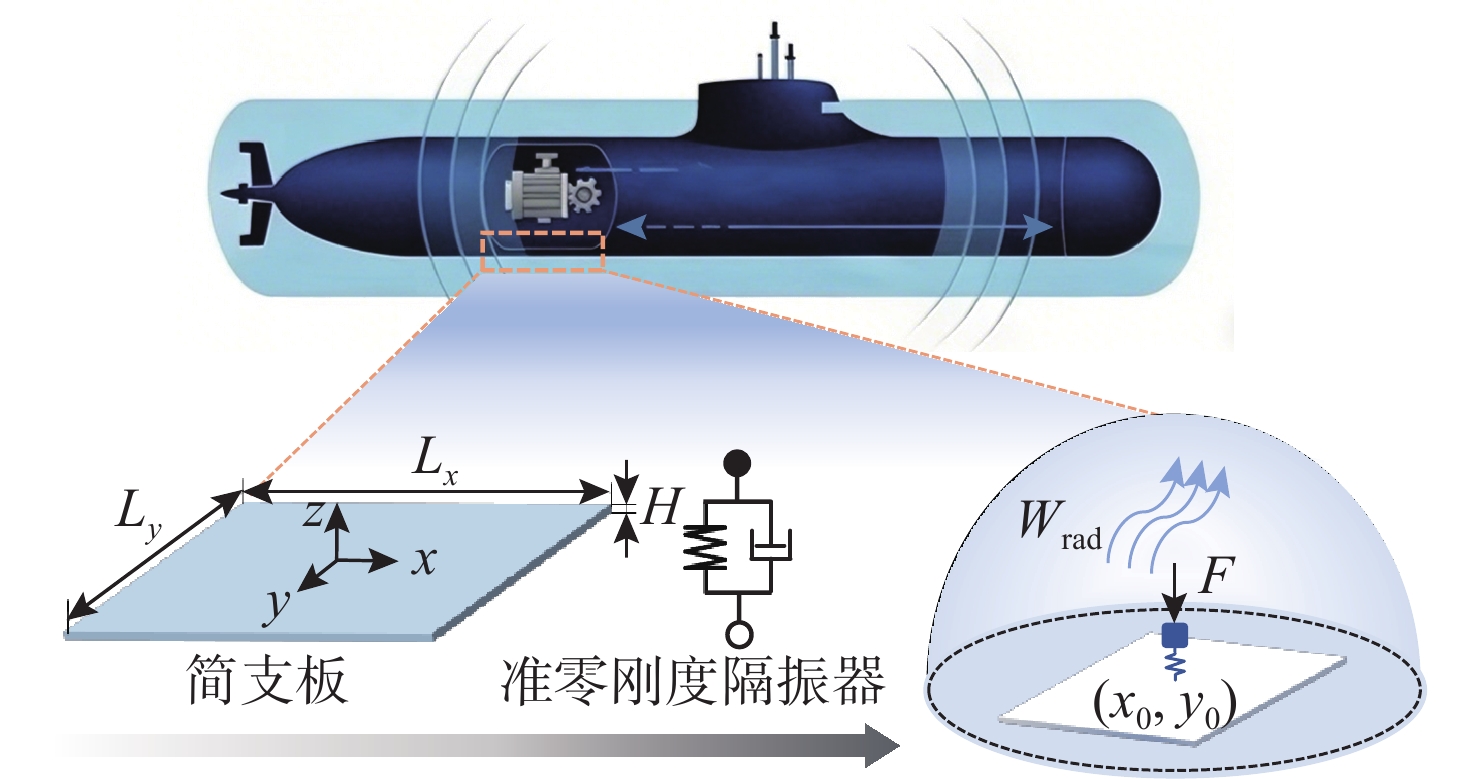
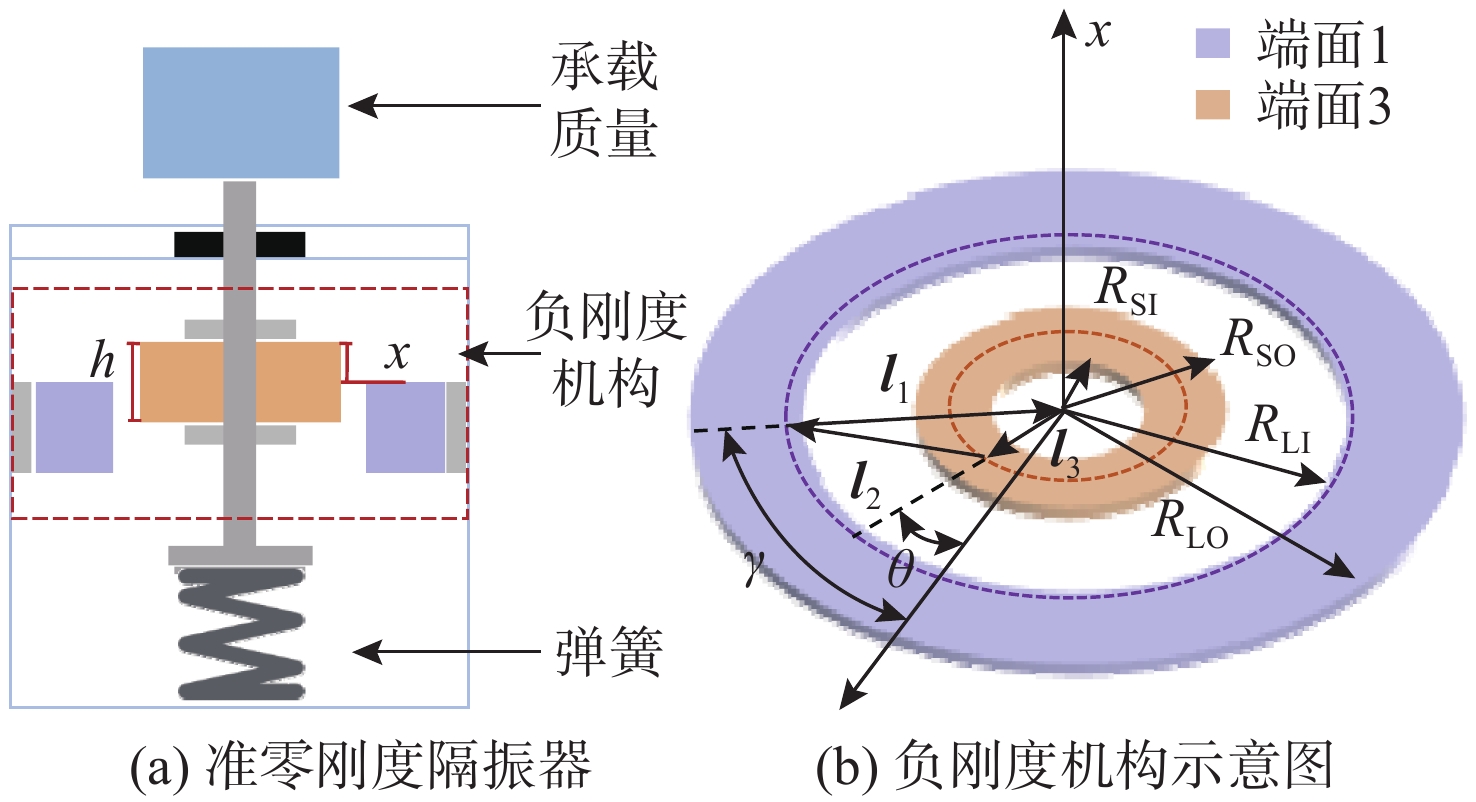
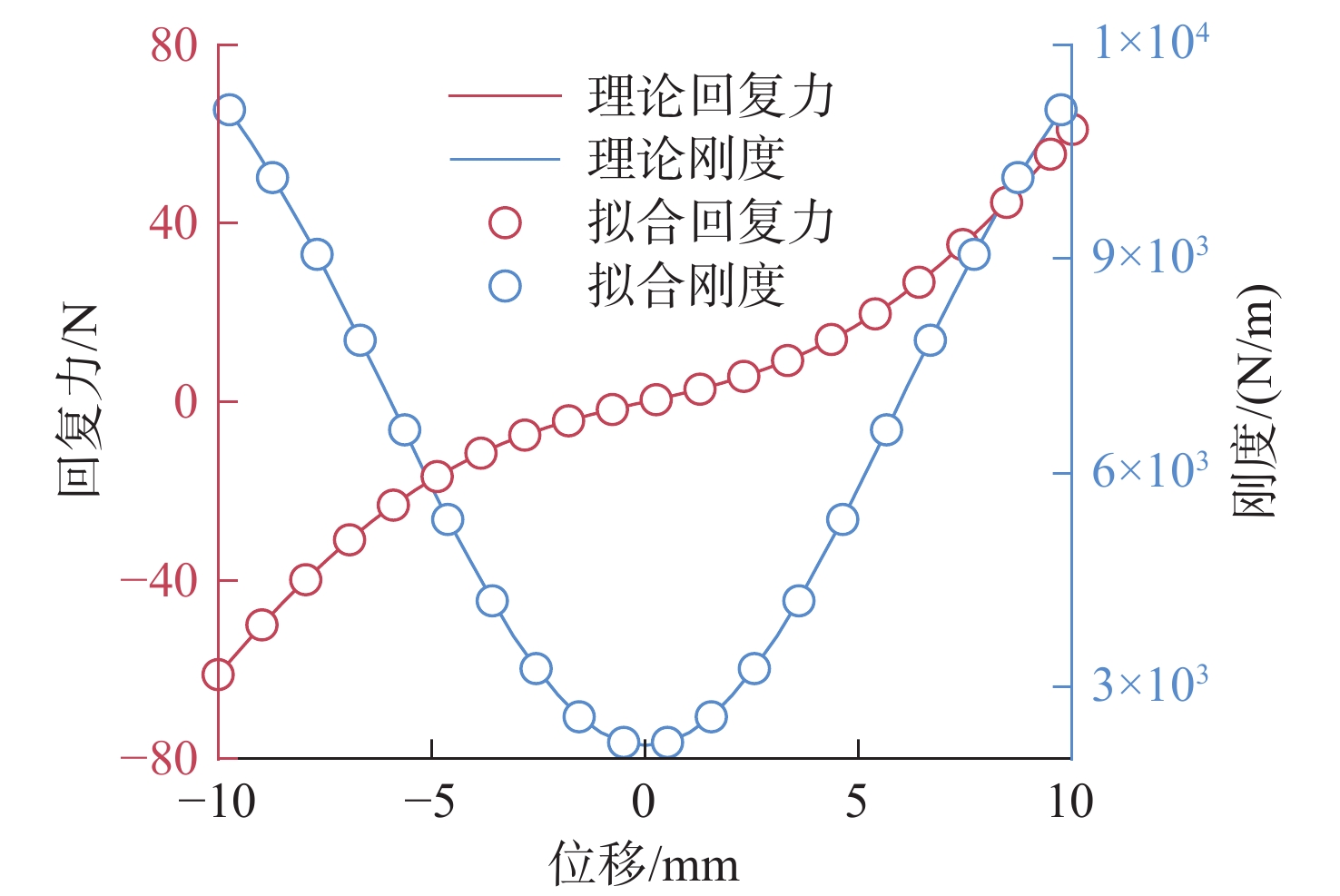
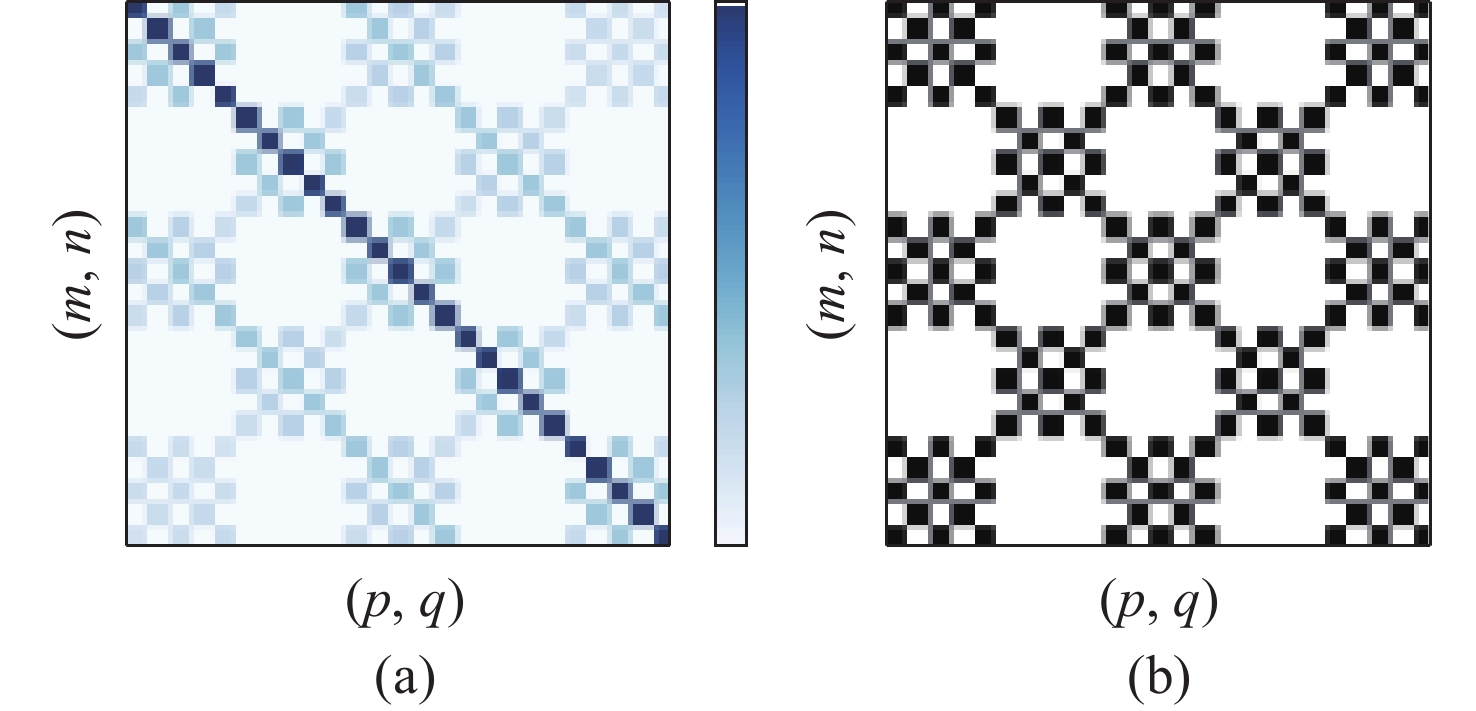
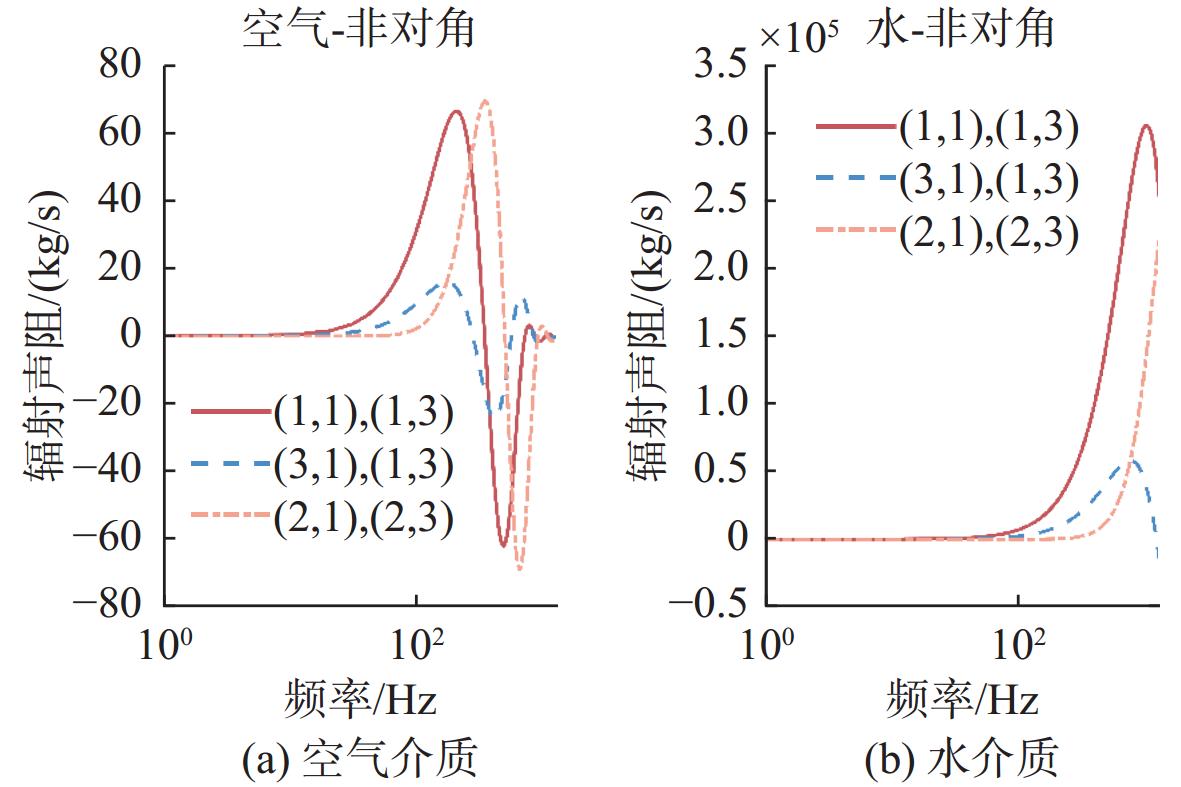
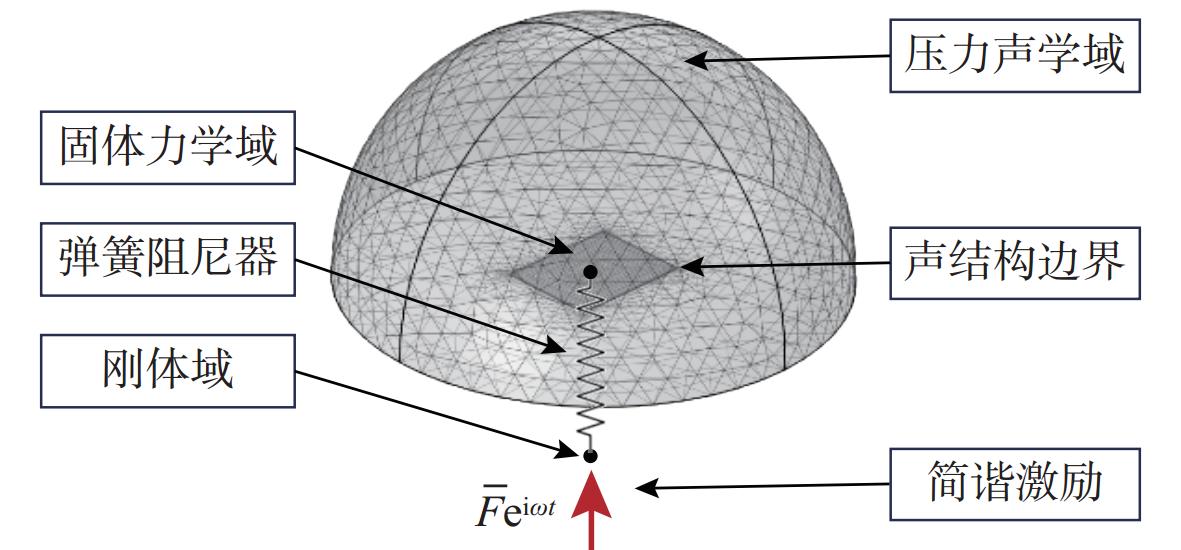
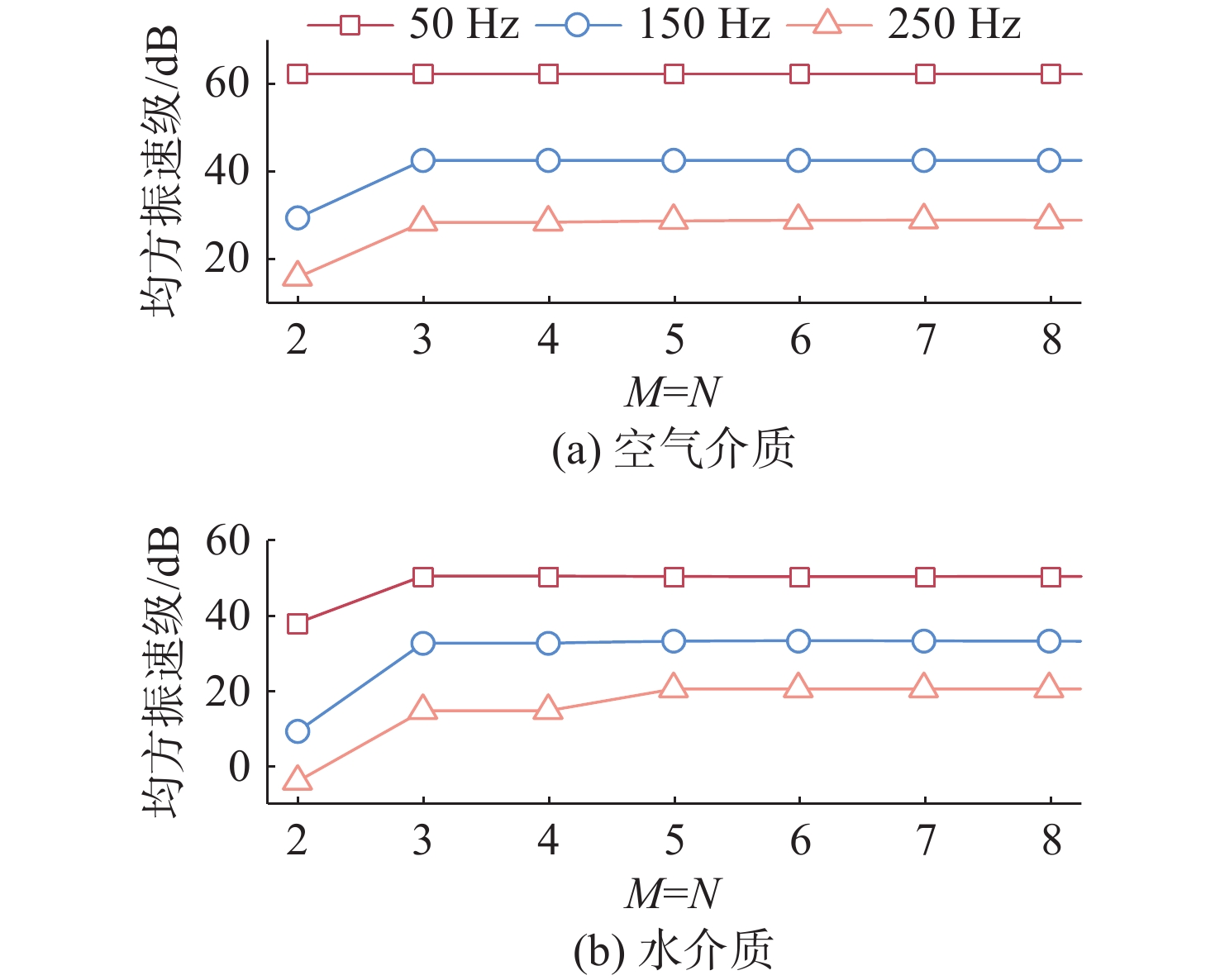
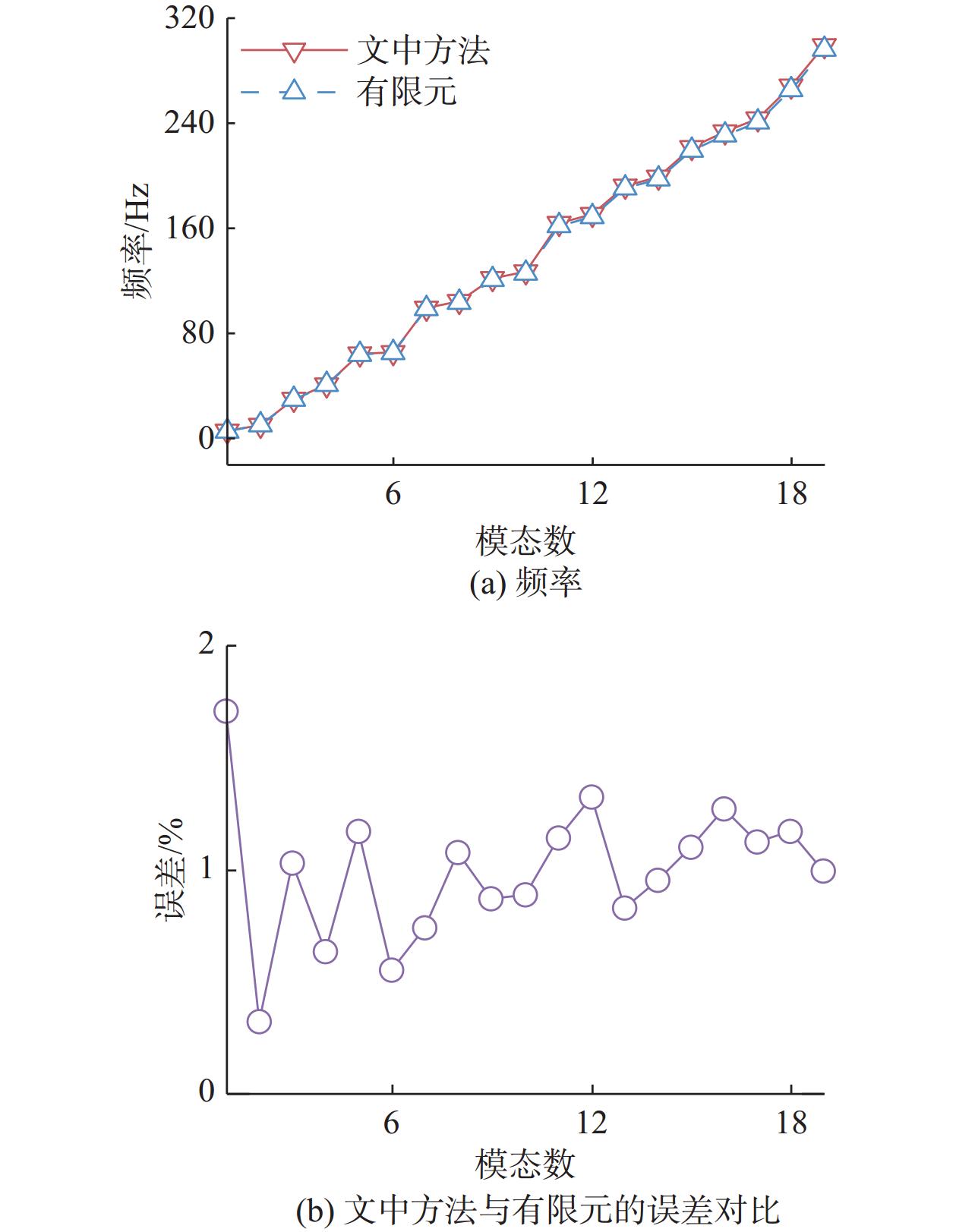
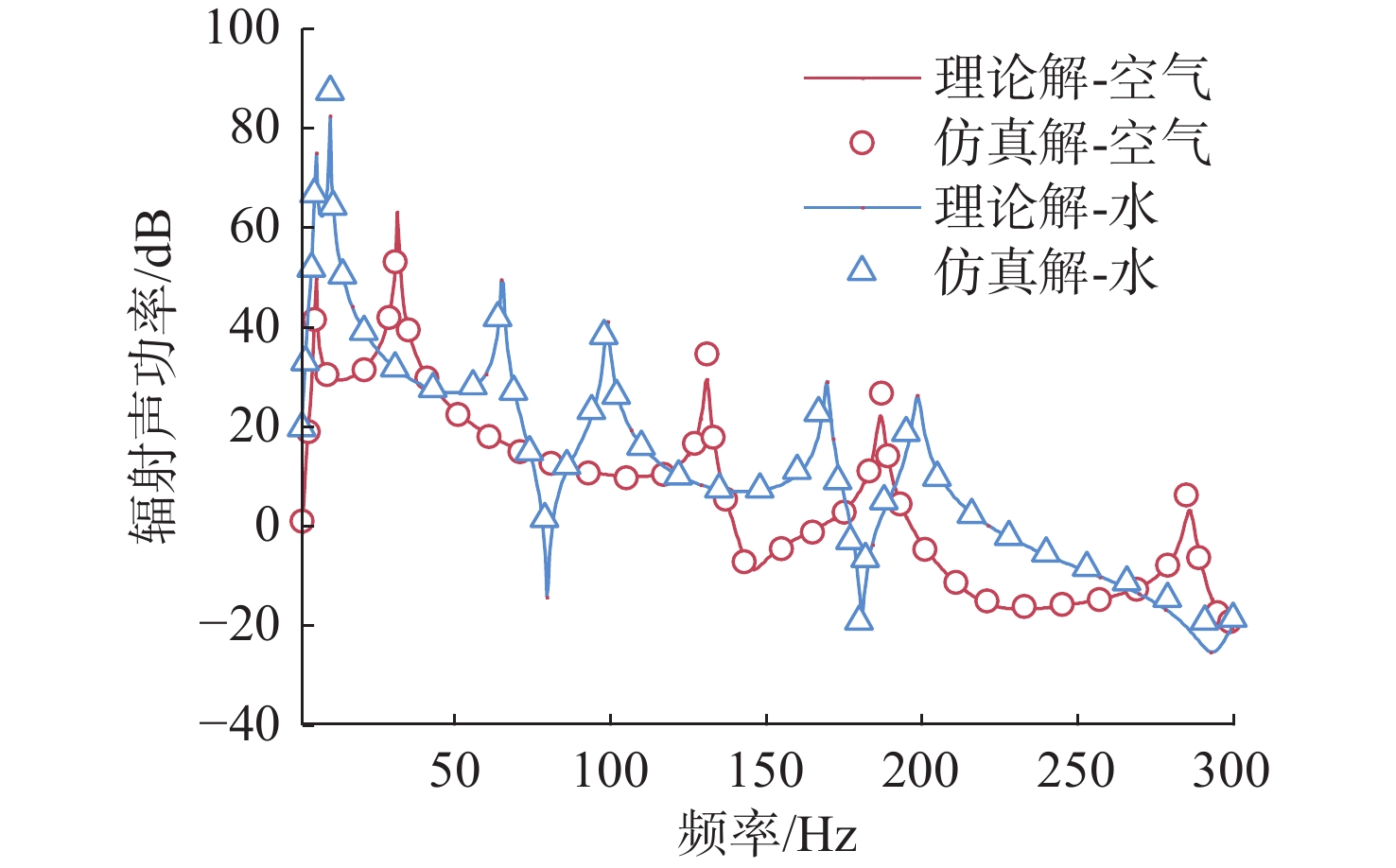
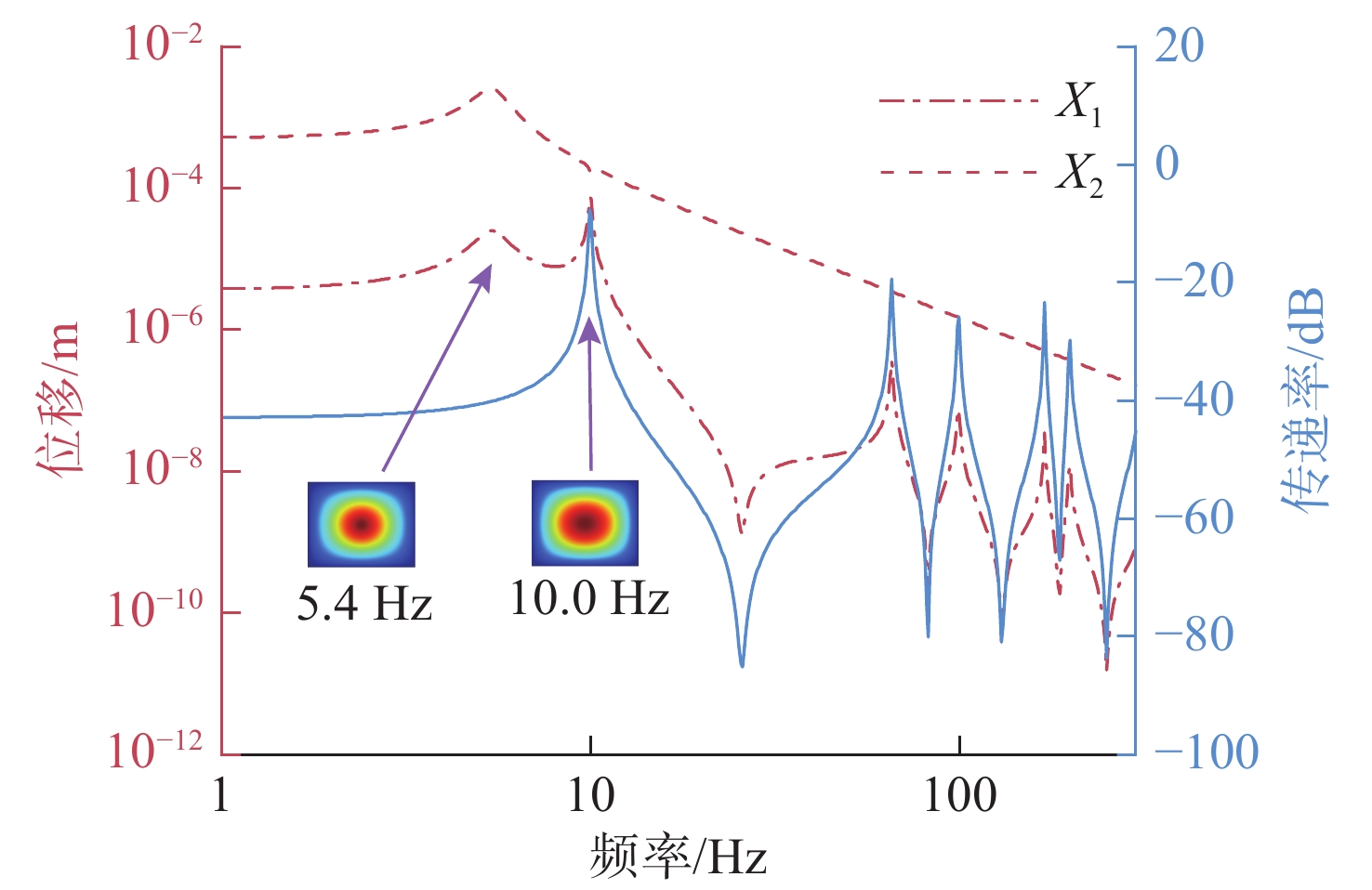
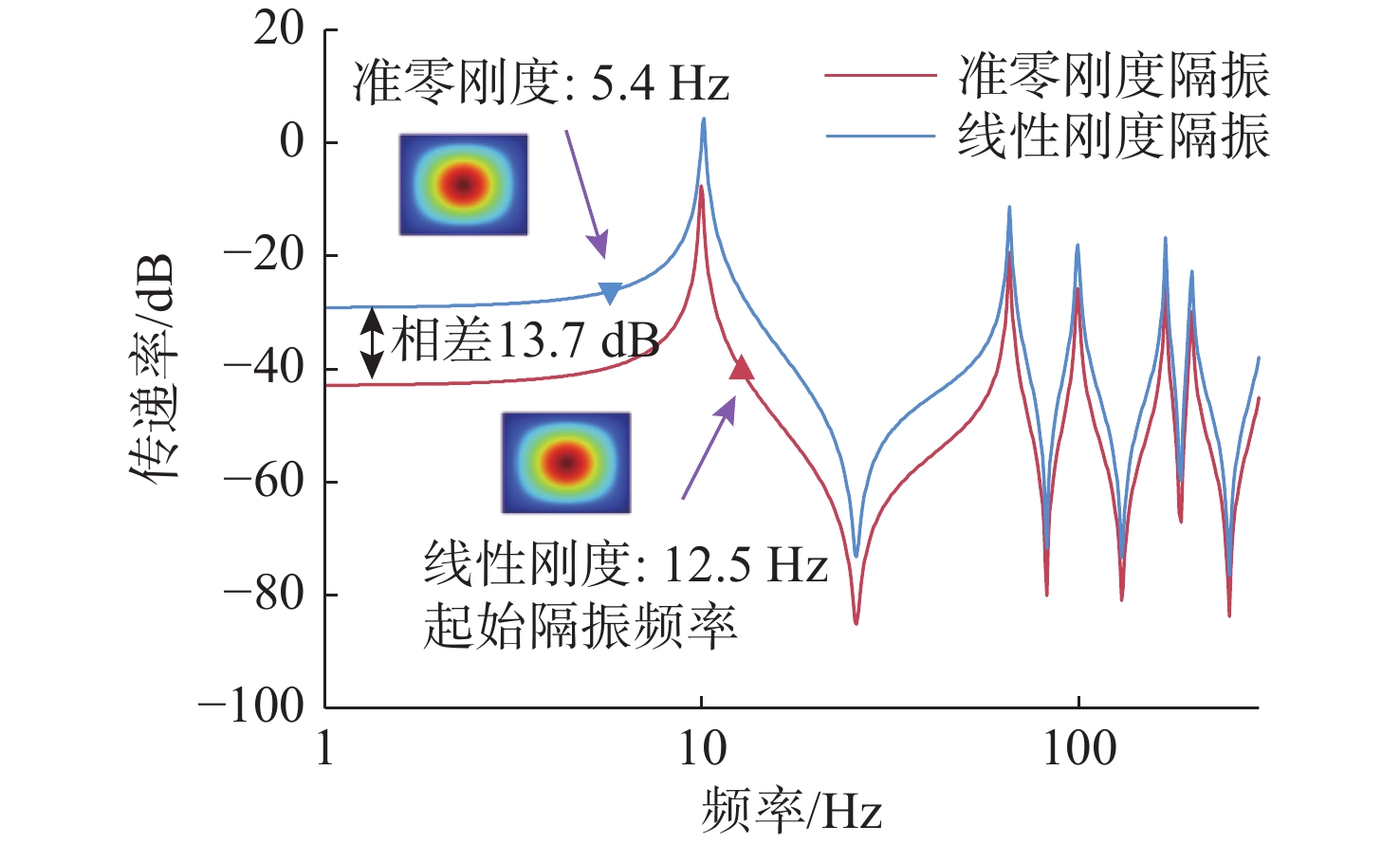
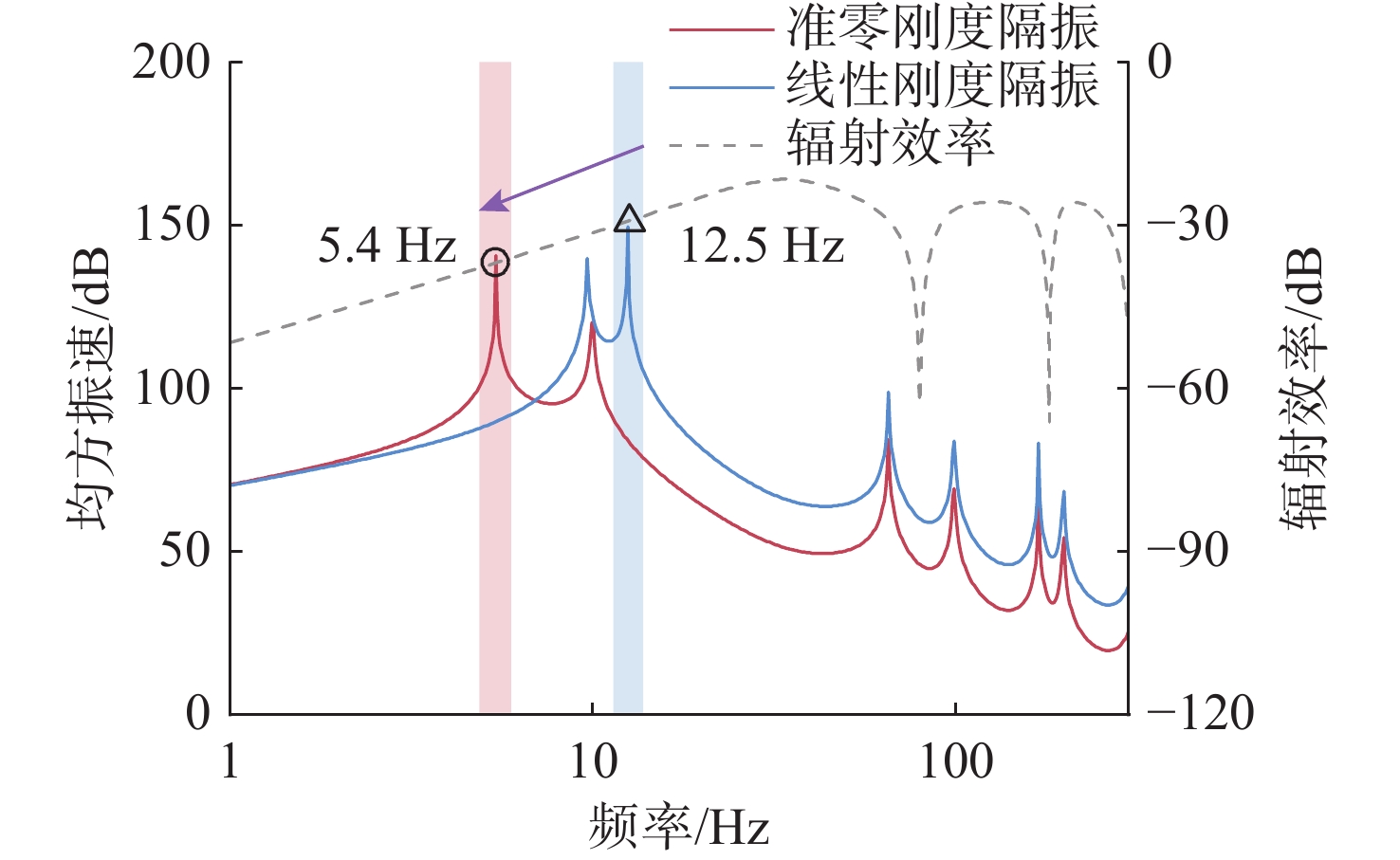
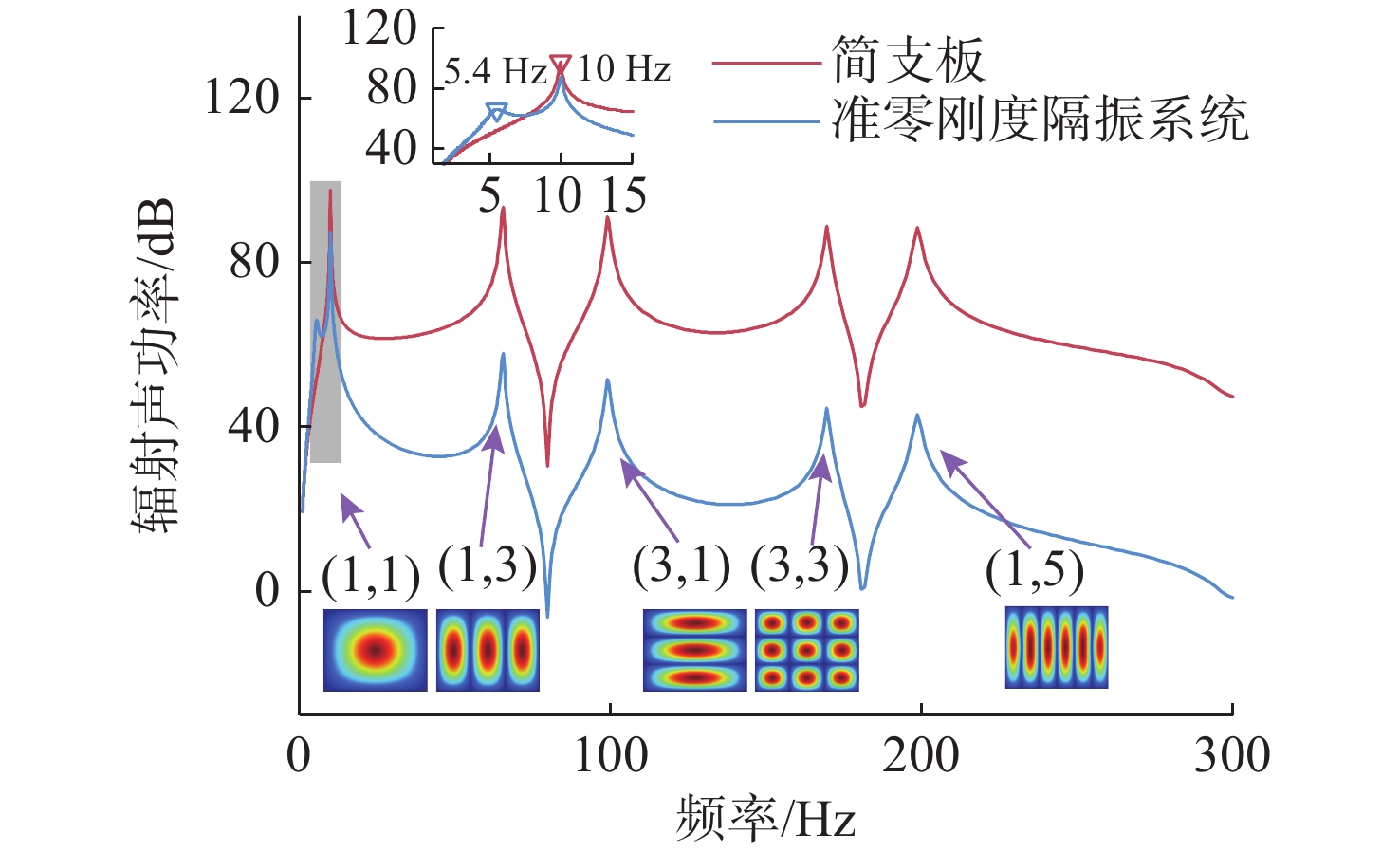
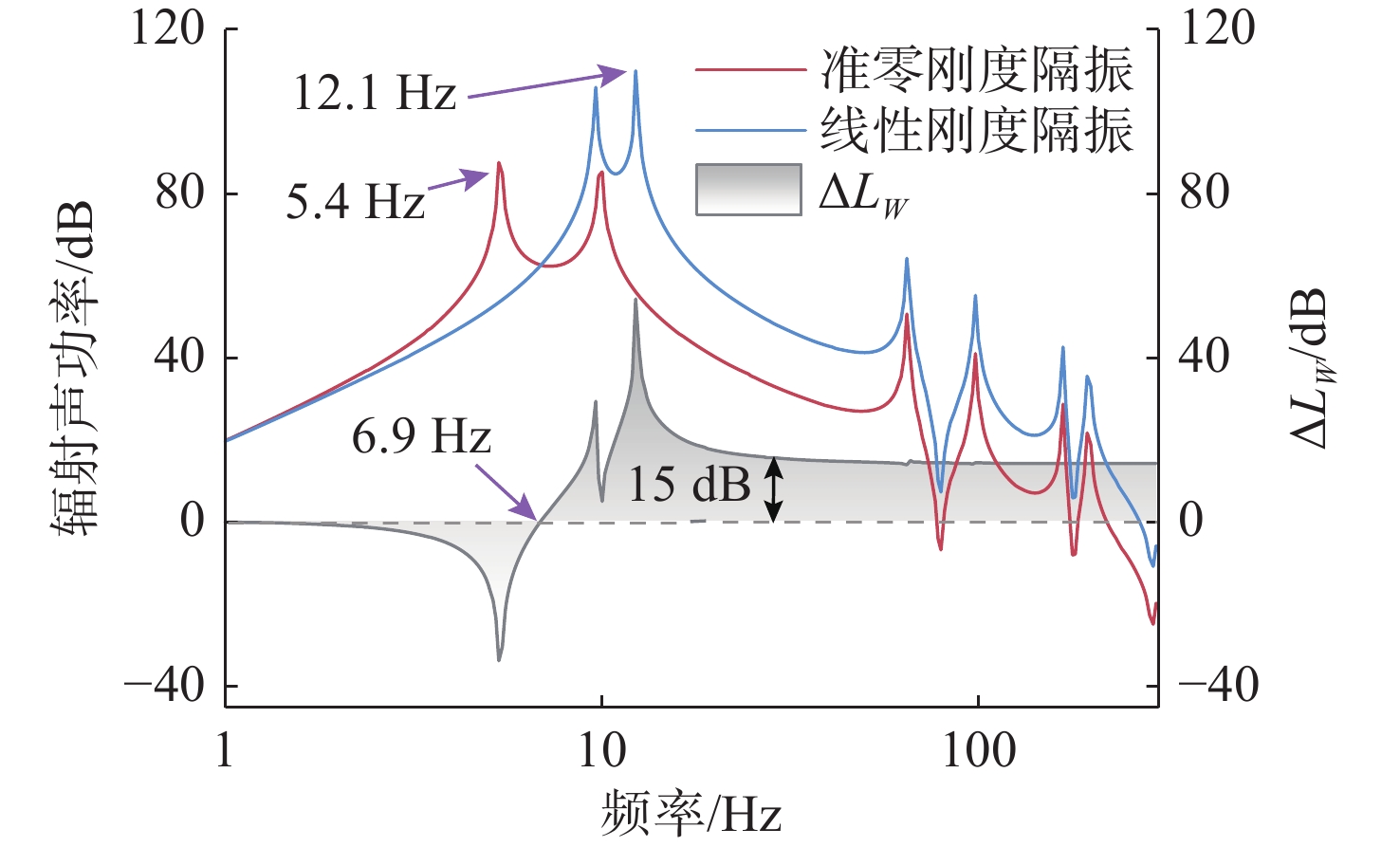
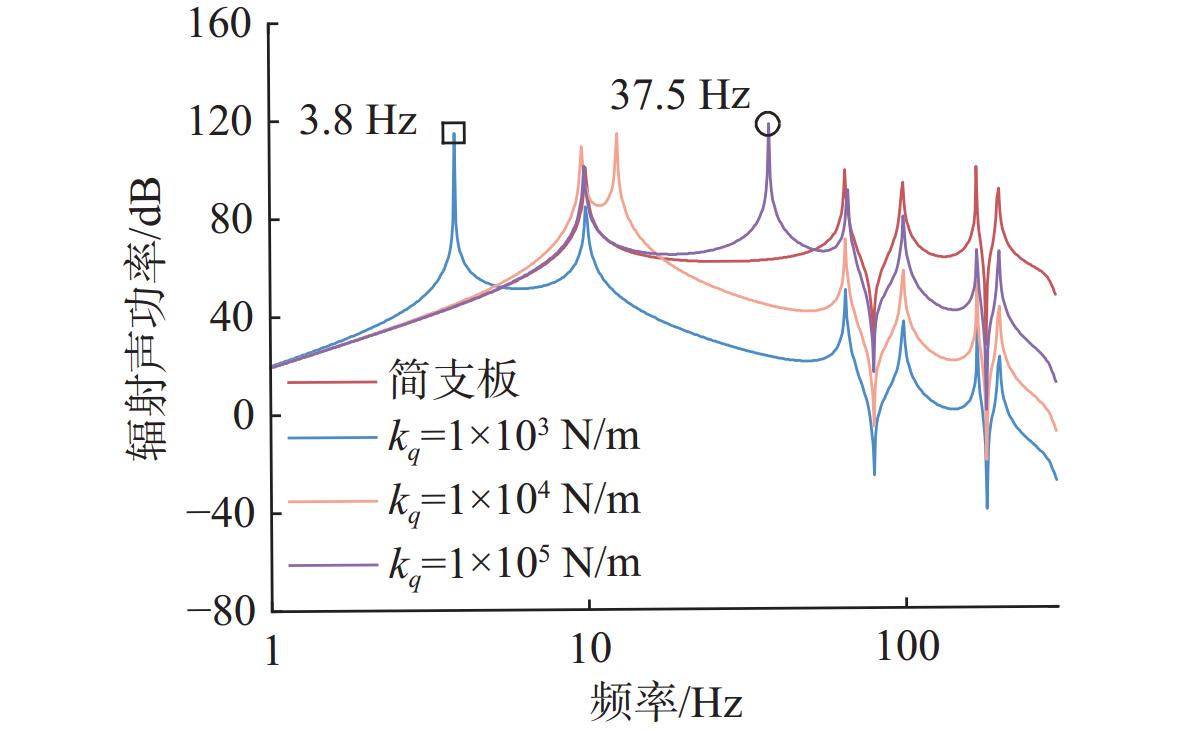
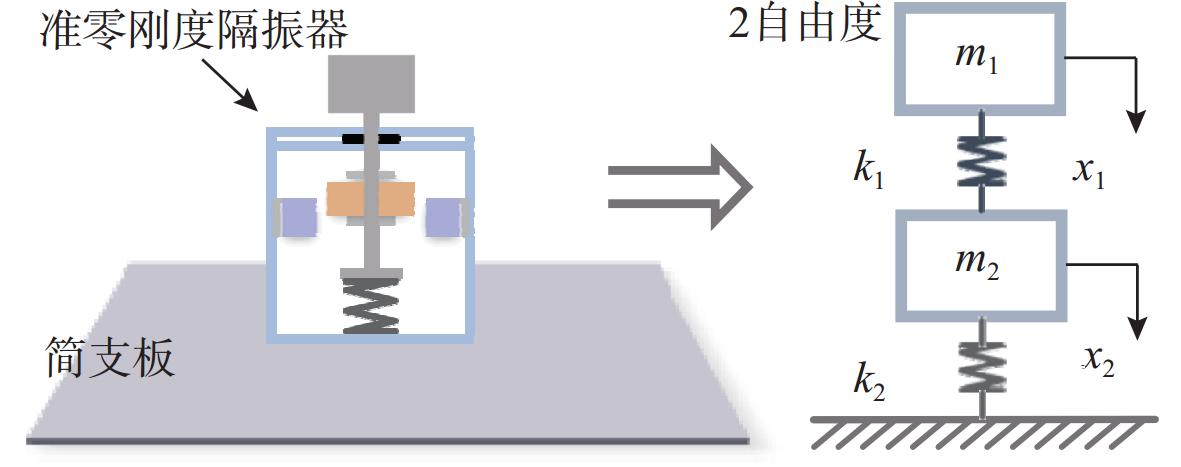
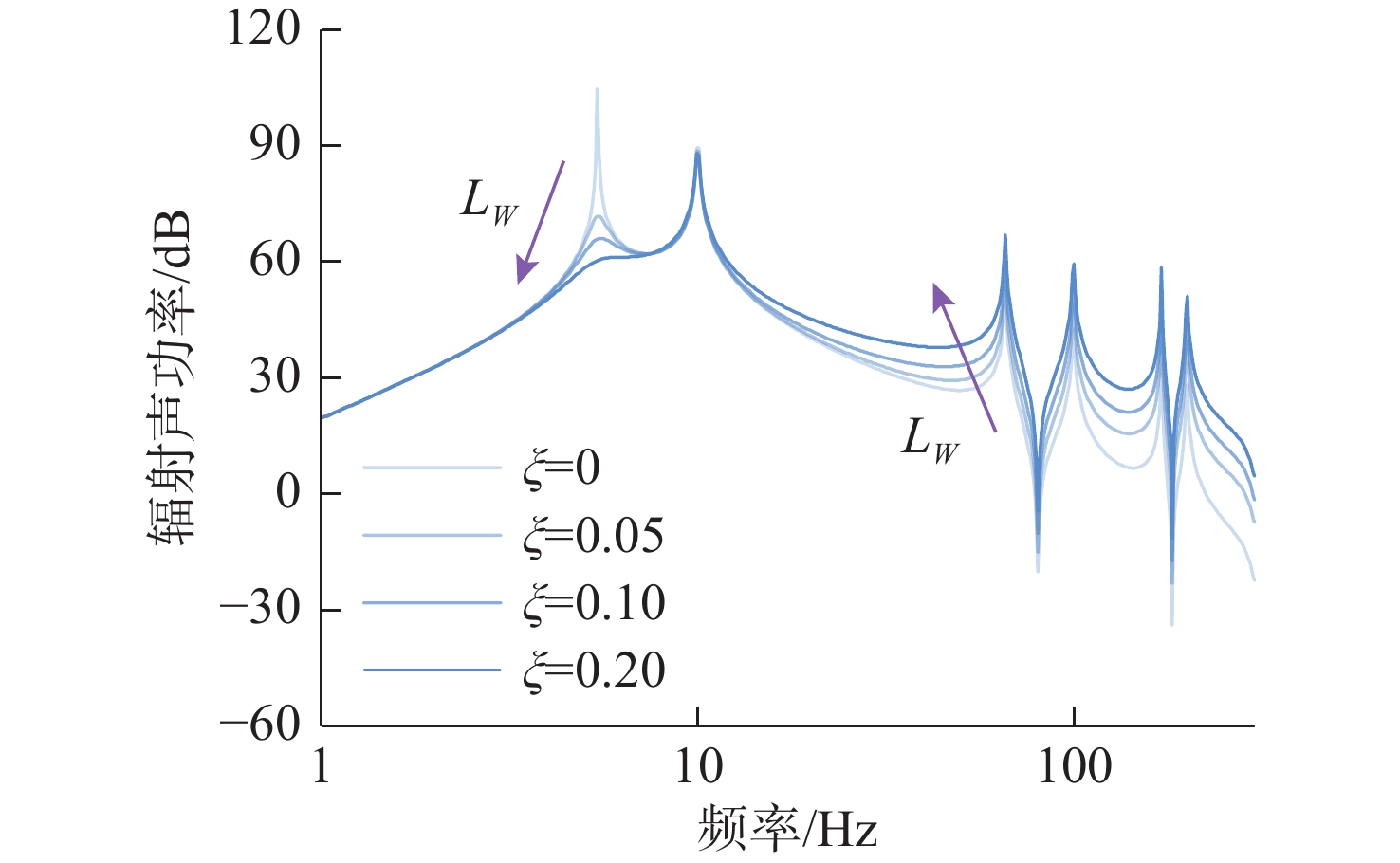
Structural vibration noise from the power compartment critically impairs the acoustic stealth performance of undersea vehicles. Utilizing vibration isolation technology to attenuate or isolate vibration transmission is an effective approach to reduce structural vibration noise. However, traditional linear vibration isolation technology struggles to achieve low-frequency vibration and noise reduction. To address this challenge, this paper applied a quasi-zero stiffness isolation method between the excitation source and the elastic structure to reduce the transmission of equipment vibration, thereby mitigating the vibration and radiated noise of underwater structures. By taking a quasi-zero stiffness isolator coupled with a simply supported plate as the research object, the vibration-acoustic coupling equations were established and solved by considering the radiation acoustic impedance matrix with mutual coupling effects. Subsequently, the accuracy of the theoretical model was validated through finite element simulations. The results indicate that compared to the linear isolation system, the quasi-zero stiffness isolation system significantly reduces the initial isolation frequency and enhances low-frequency isolation efficiency. Furthermore, the introduction of quasi-zero stiffness shifts the system’s resonance frequency far below the high-radiation-efficiency volumetric control modes of the simply supported plate. This frequency domain mismatch mechanism effectively blocks the conversion of vibration energy into radiated acoustic energy at the source, reducing the radiated sound power by 15 dB across the entire frequency band above 10.6 Hz. This study resolves the issue of low-frequency vibration and noise reduction in underwater structures, providing a theoretical reference for the acoustic stealth design of power compartments in undersea vehicles.
Fluid-Structure Interaction Vibration Characteristics Analysis of Thick-Walled Pressurized Fluid-Filled Pipes
ZHU Hongzhen, WU Jianghai, SUN Yudong
2026, 34(2): 236-245. doi: 10.11993/j.issn.2096-3920.2025-0158
Abstract:
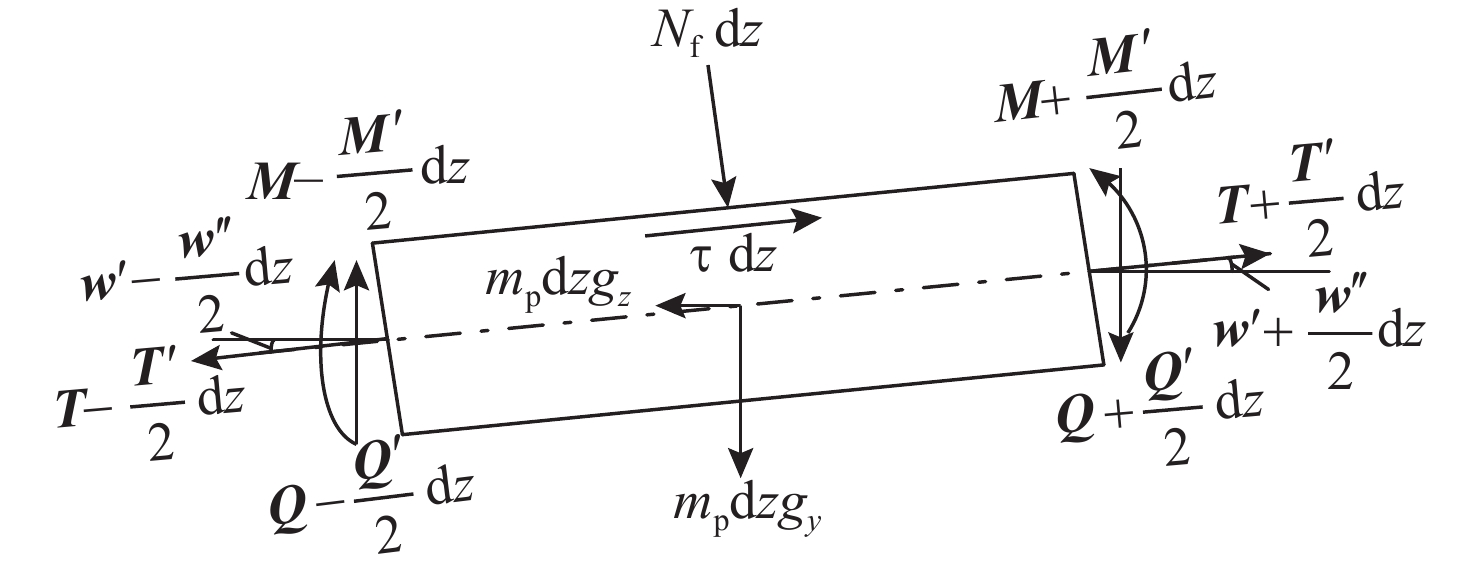
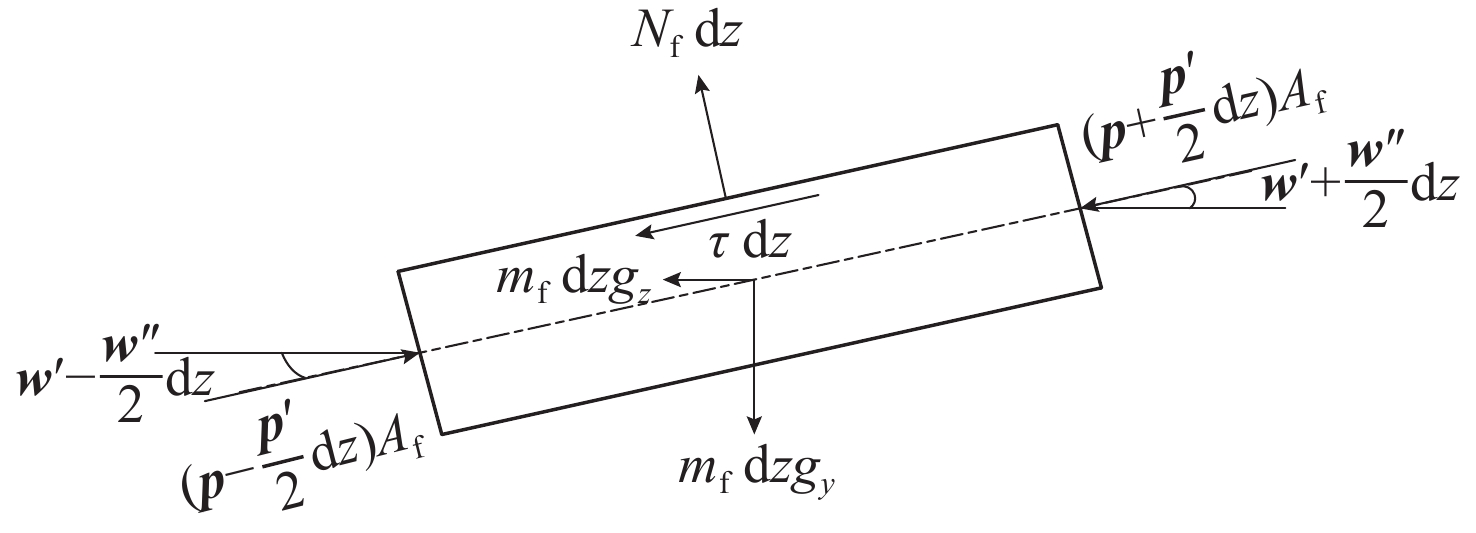
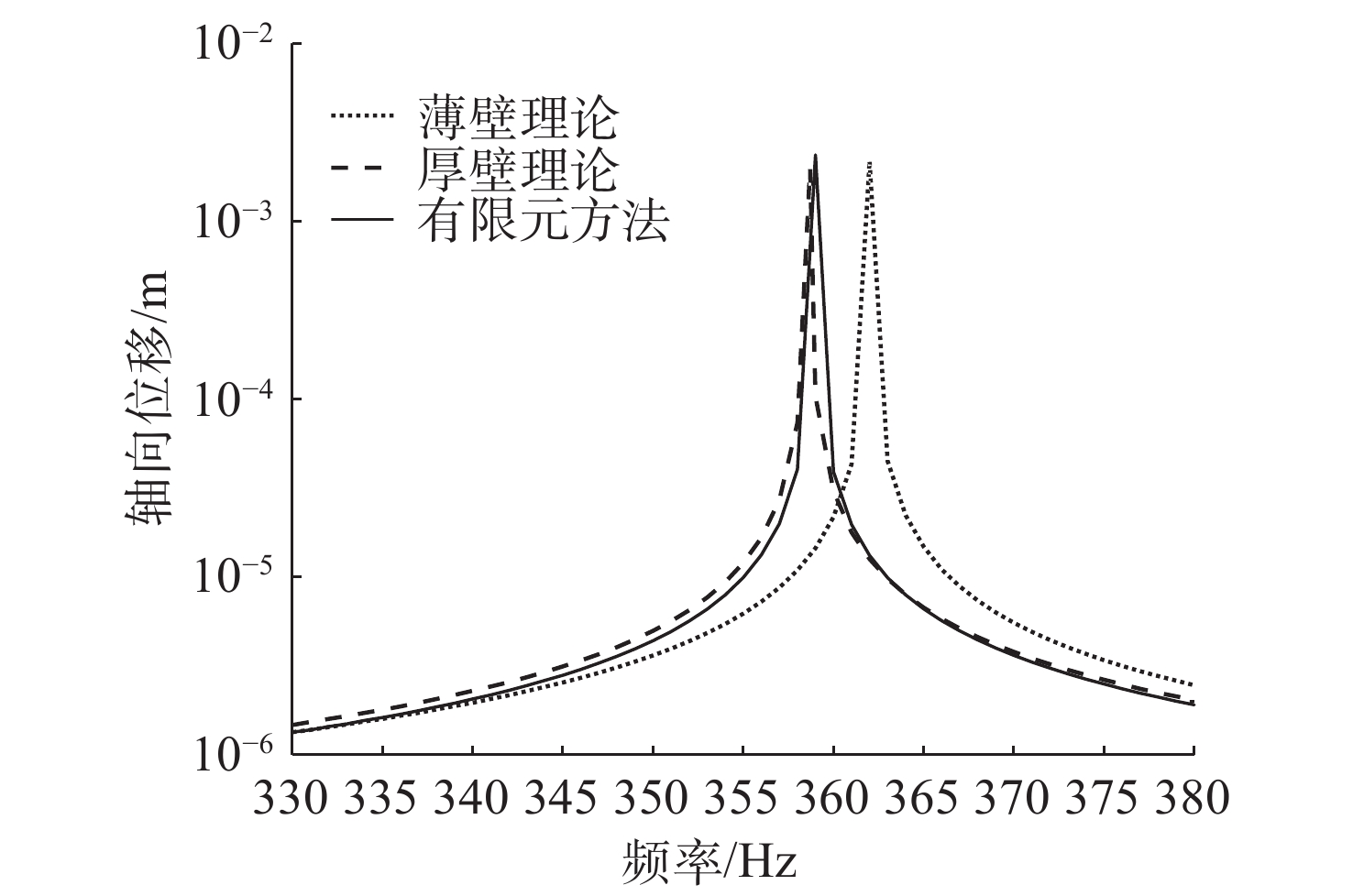
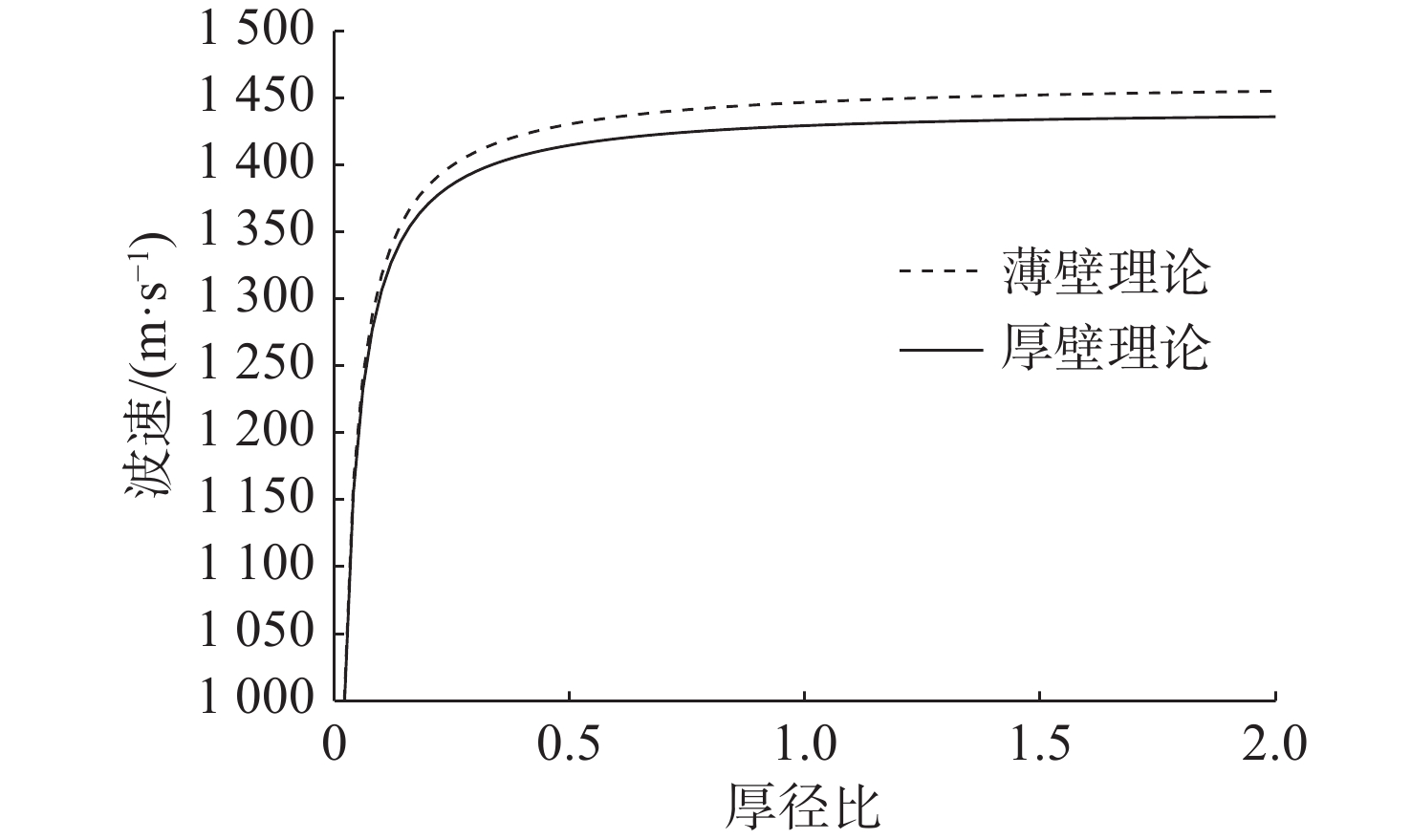
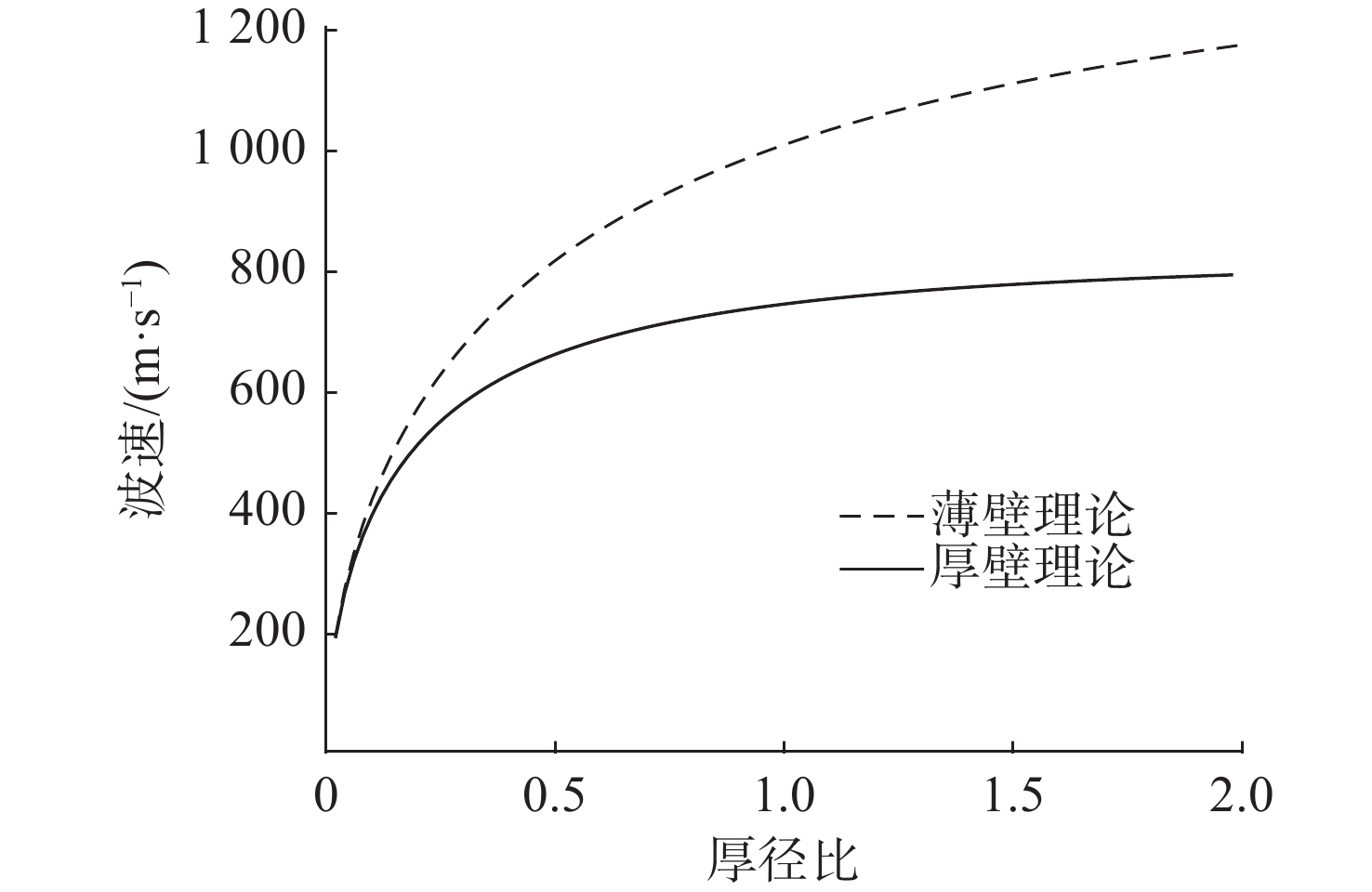
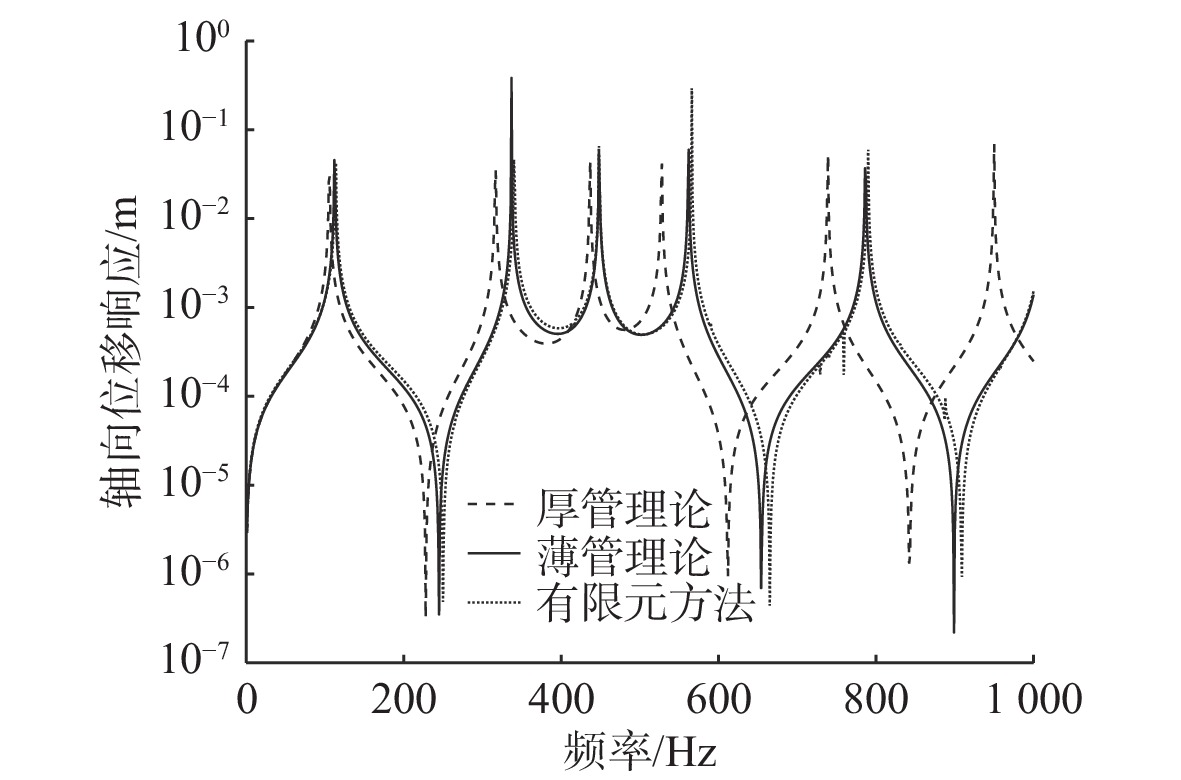
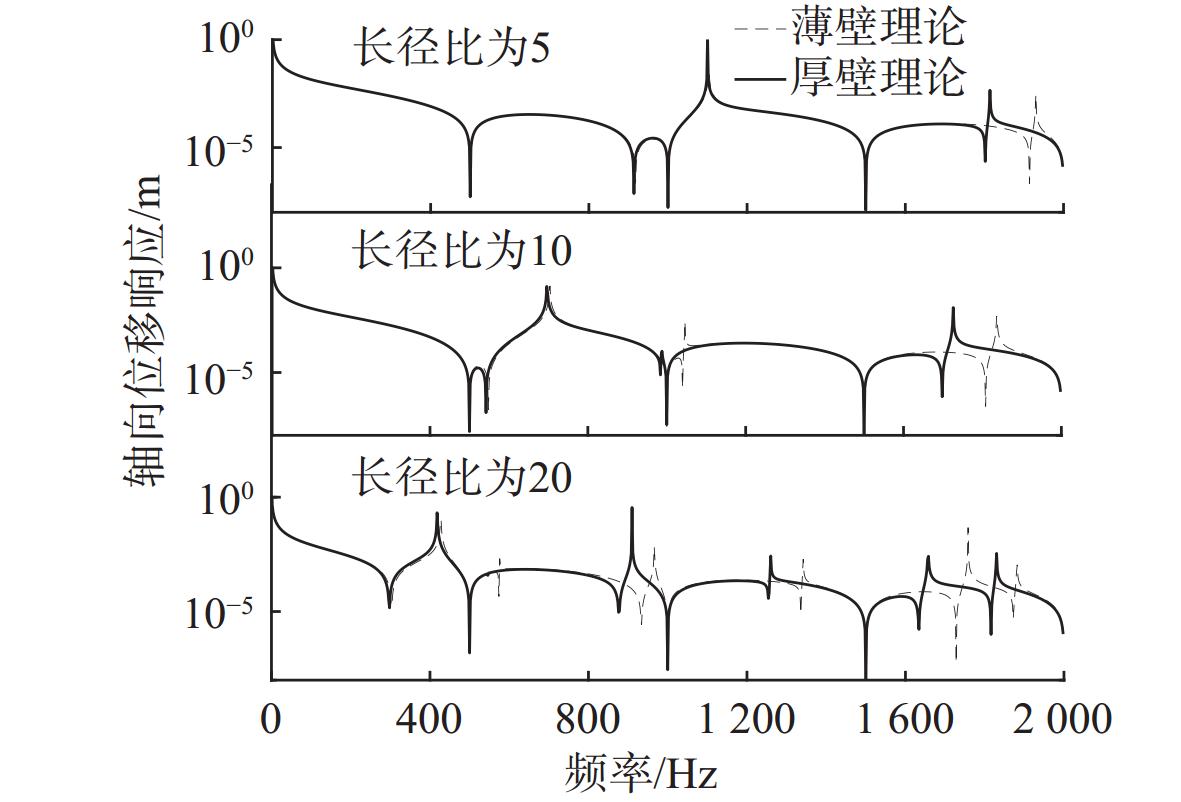
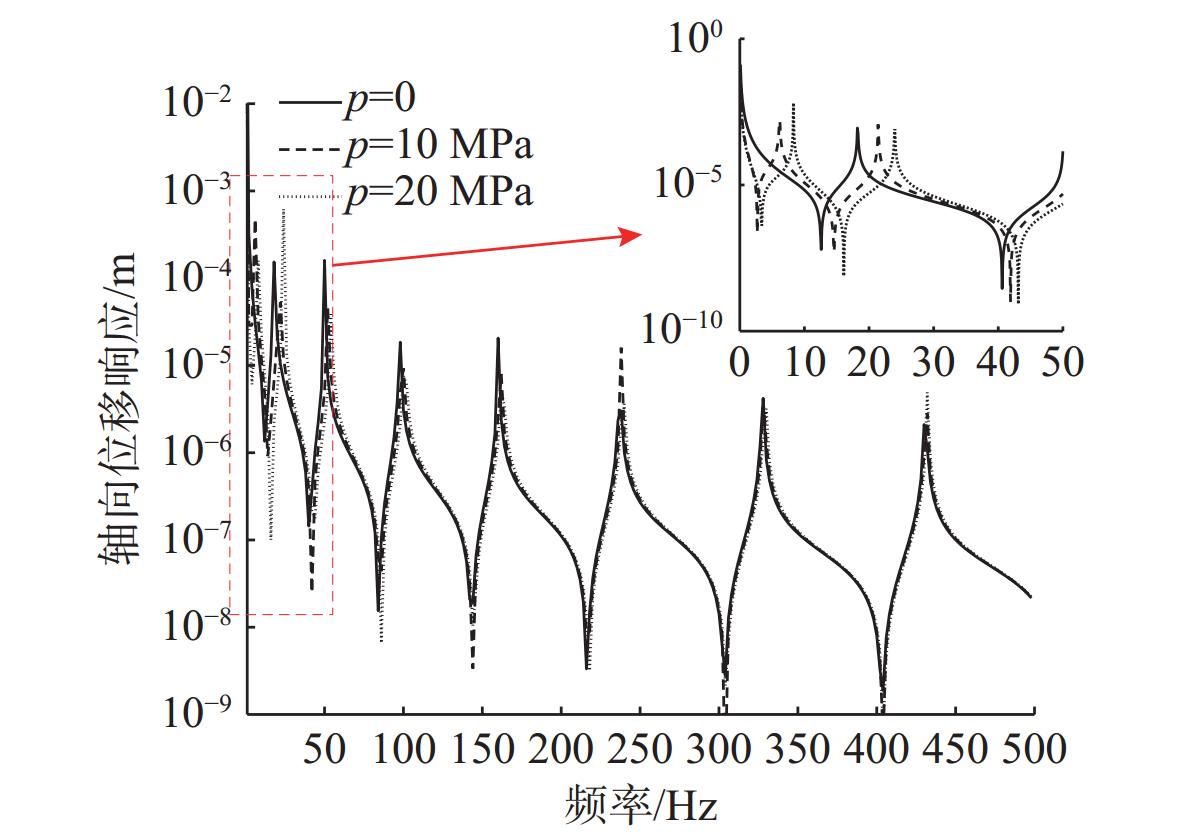
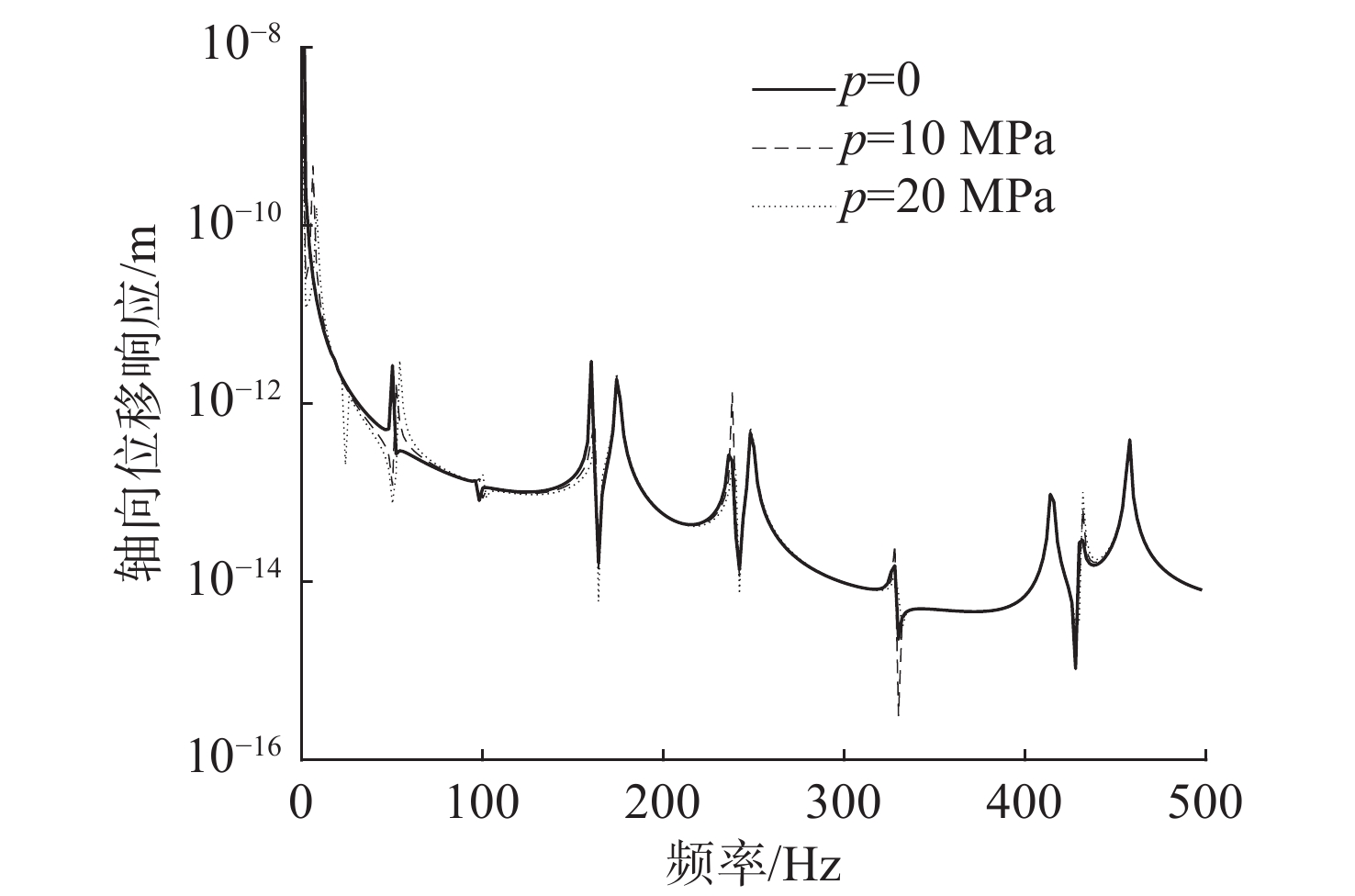
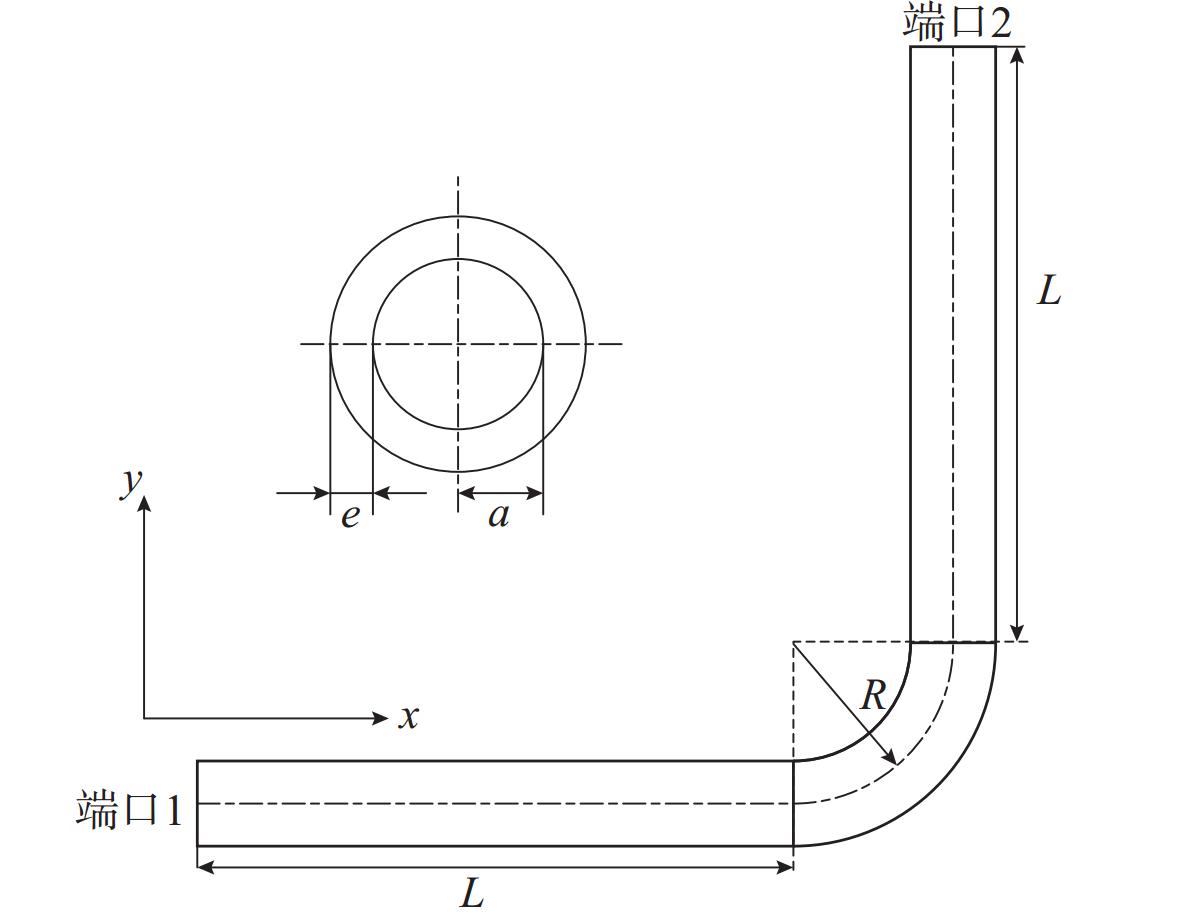
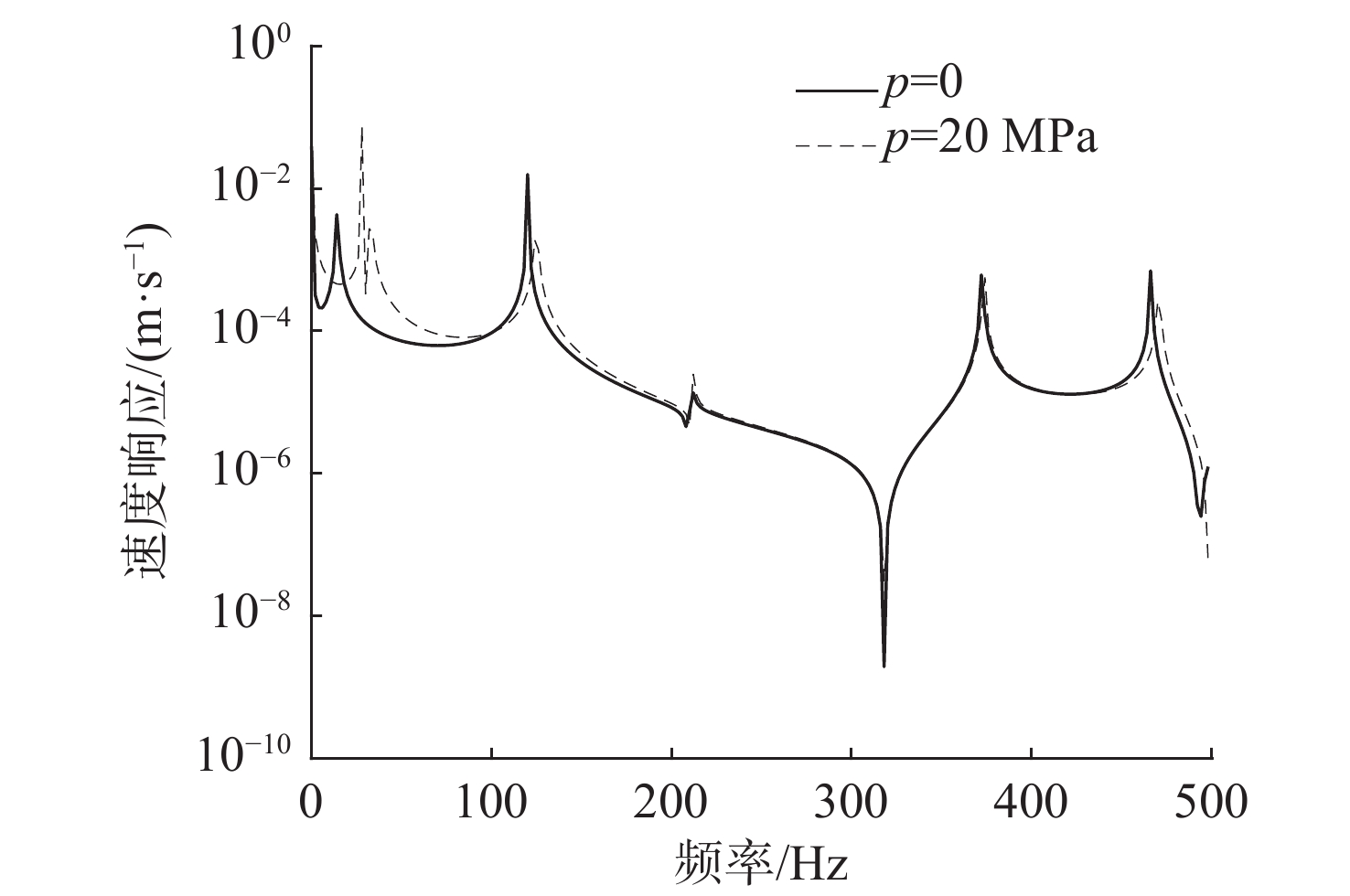
The theoretical derivation and frequency-domain solution for axial fluid-structure interaction vibration of thick-walled pressurized fluid-filled pipes in marine engineering were carried out. The proposed calculation method was validated by comparison with literature examples. The applicability of thick-walled and thin-walled theories was investigated using finite element method(FEM) calculation and axial fluid pressure wave speed analysis. The effects of flow velocity and internal static pressure on vibration and noise transmission of straight pipes and assembled pipes were discussed. Results show that the thick-walled theory is more accurate for calculating the vibration response of pipes with a thickness-to-radius ratio greater than 0.5; the axial fluid pressure wave speed is mainly affected by pipe material, sectional thickness-to-radius ratio, and length-to-diameter ratio; internal pressure mainly influences transverse vibration, especially lower-order frequencies, and enhances vibration transmission.
Study on Uncertain Vibroacoustic Characteristics of Underwater Composite Shells
LI Kexin, WANG Qingshan, ZHONG Rui
2026, 34(2): 246-255, 272. doi: 10.11993/j.issn.2096-3920.2026-0027
Abstract:
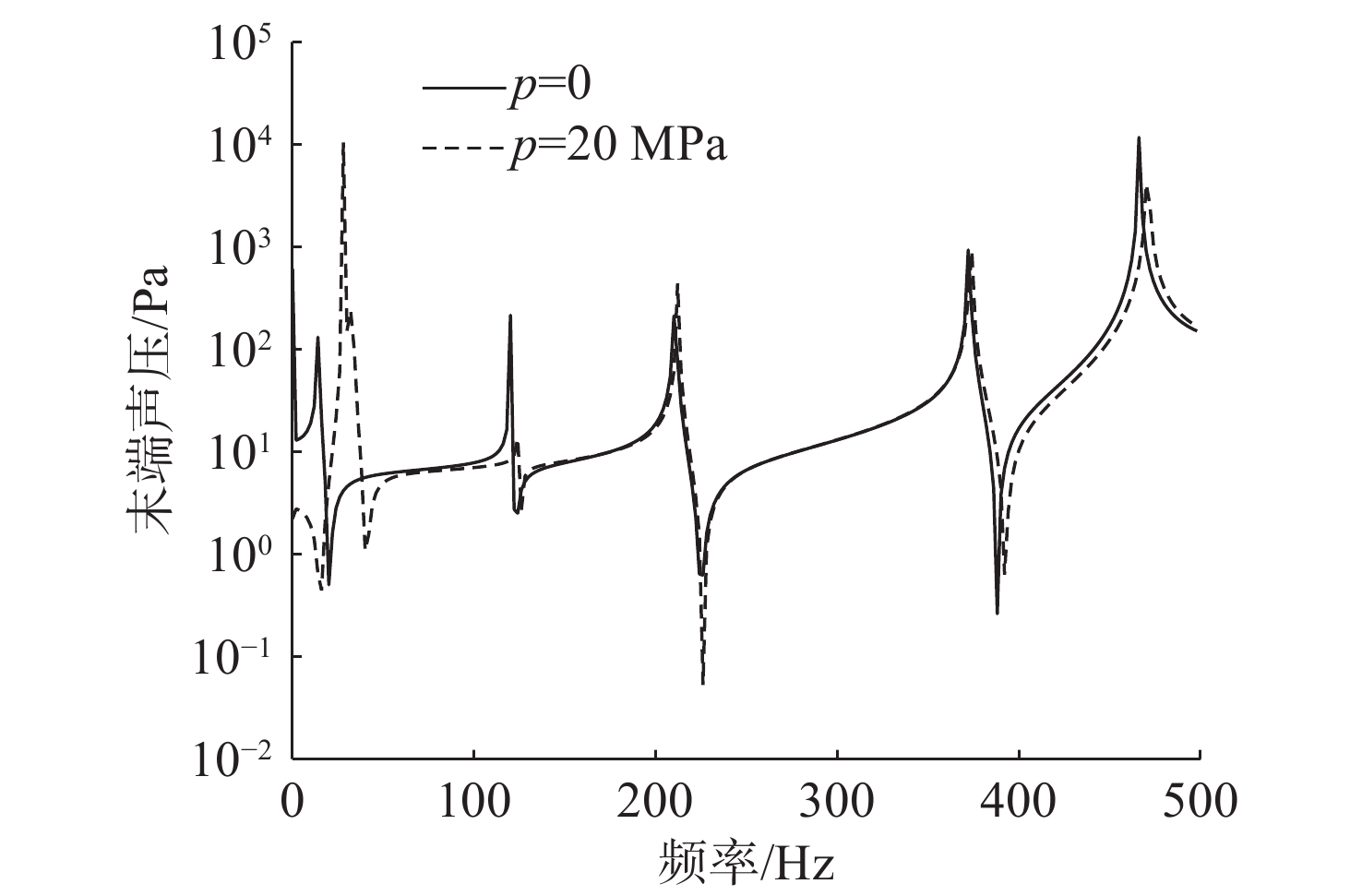
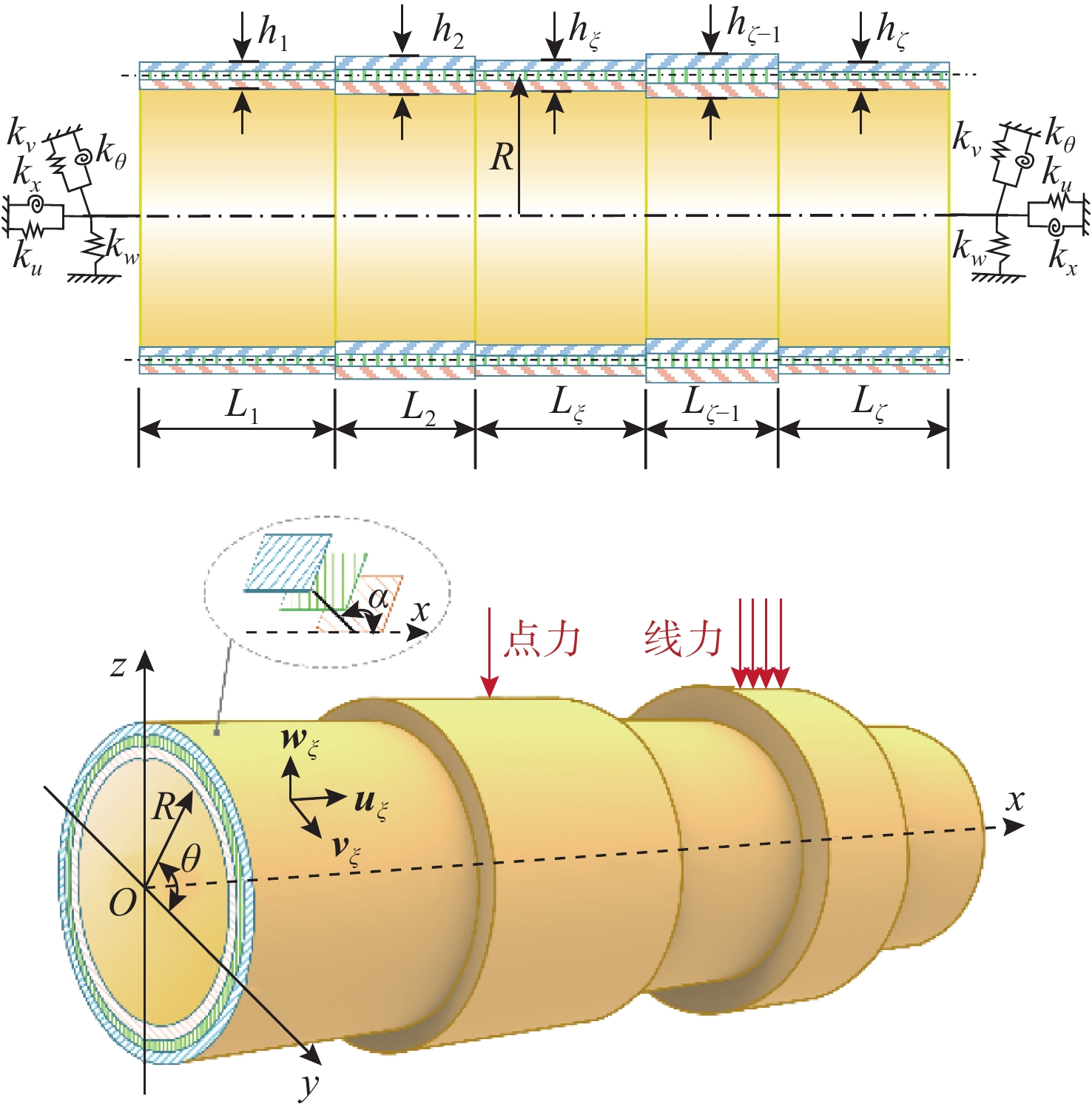
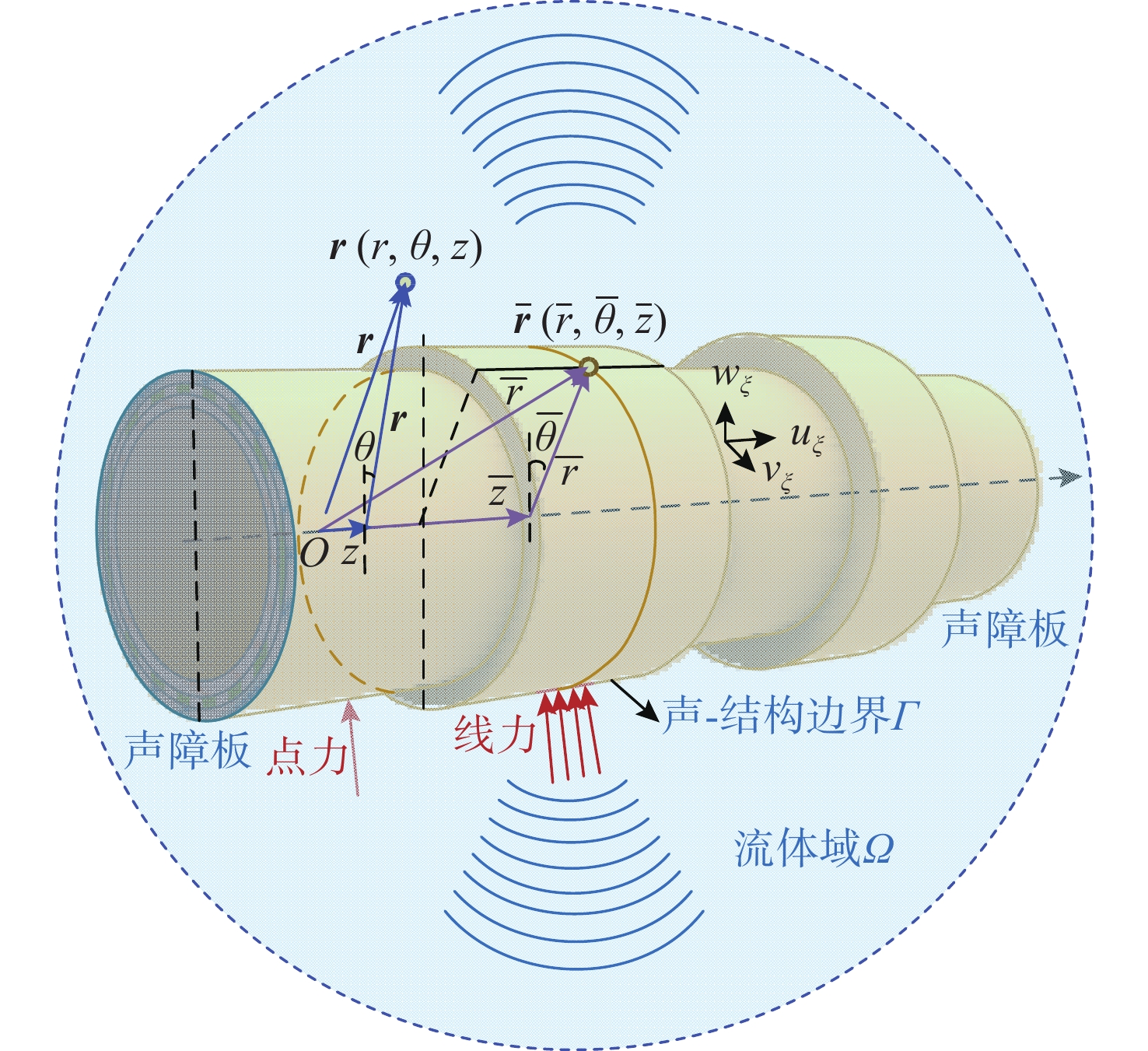
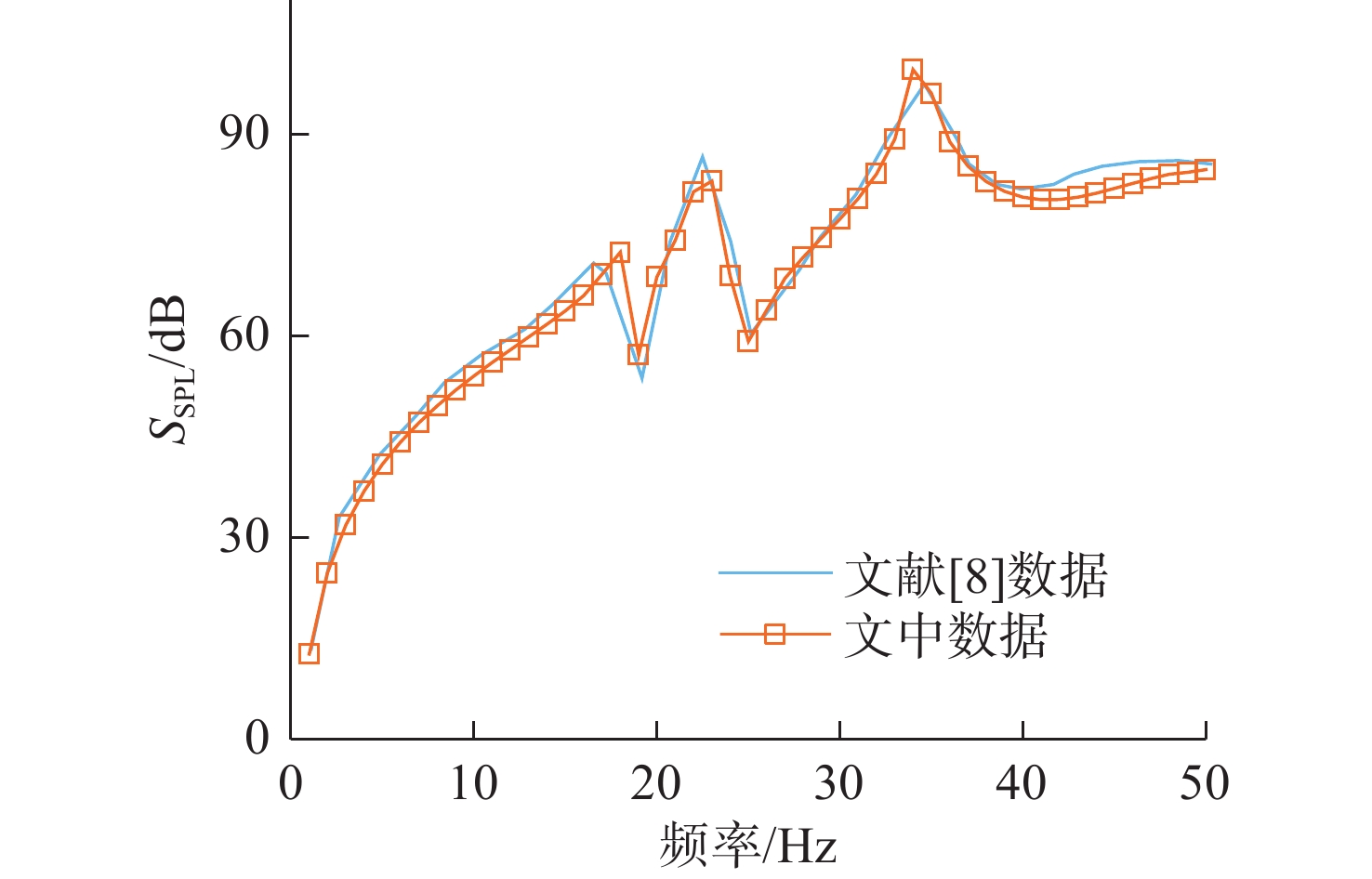
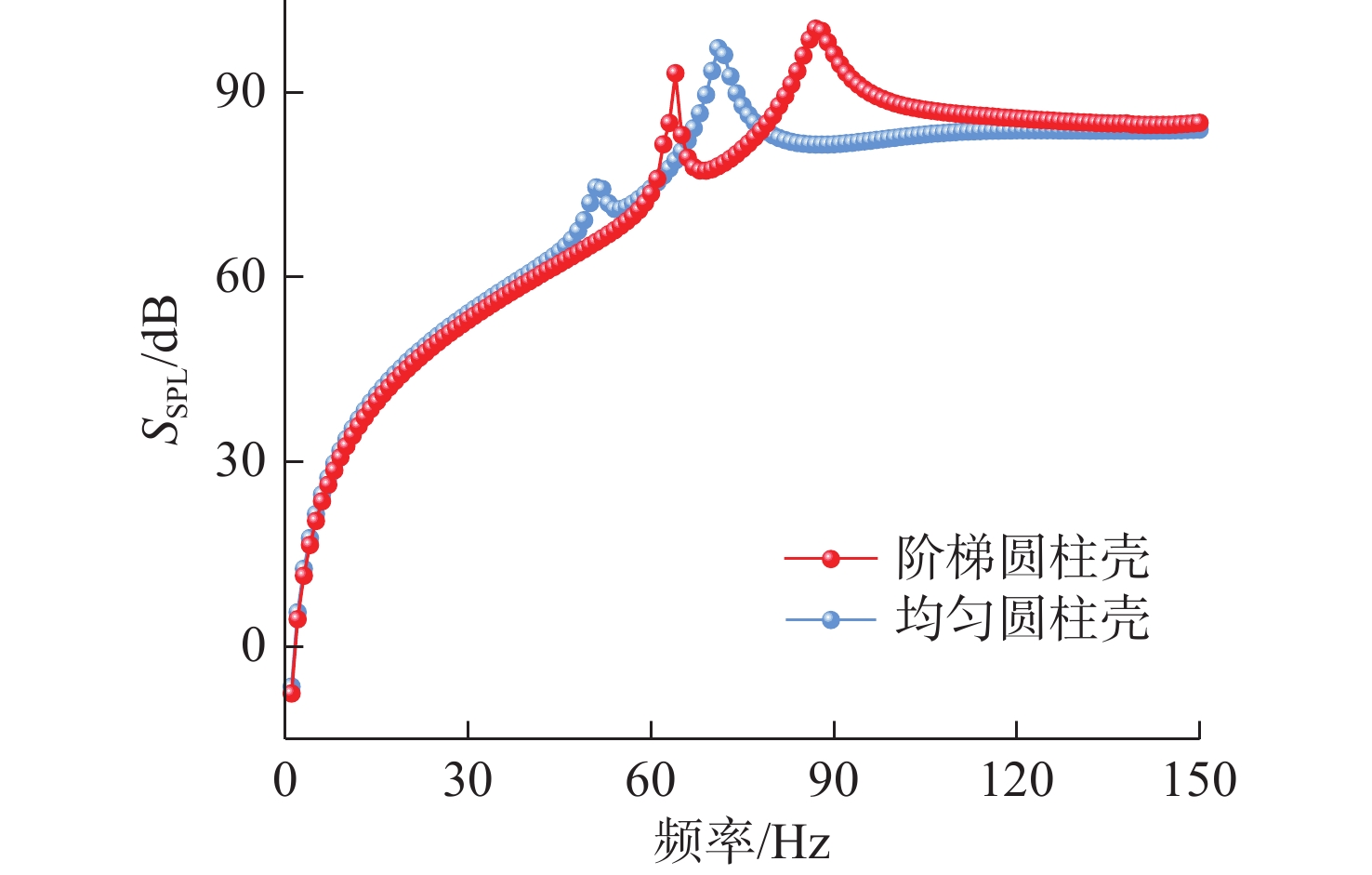
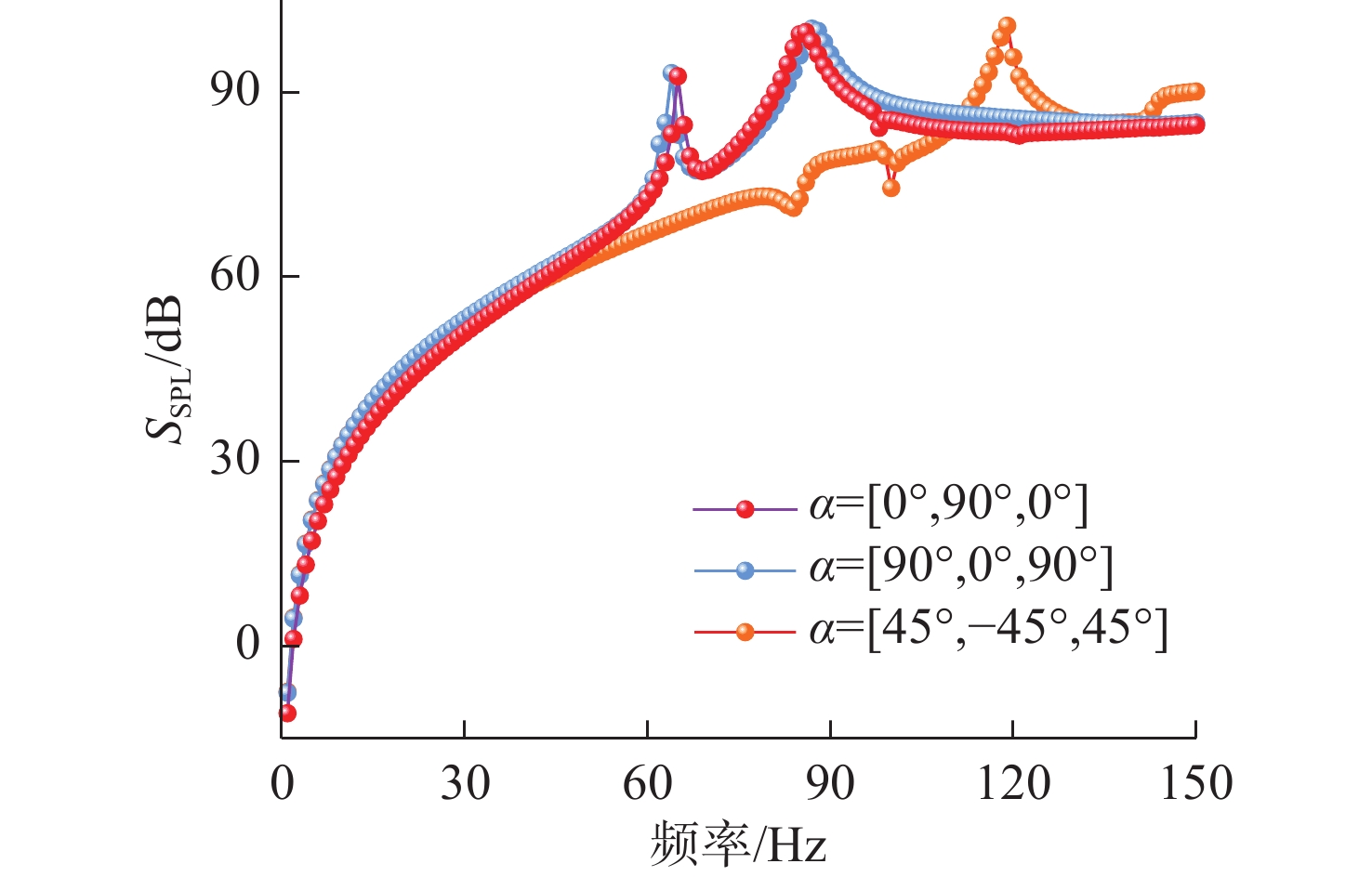
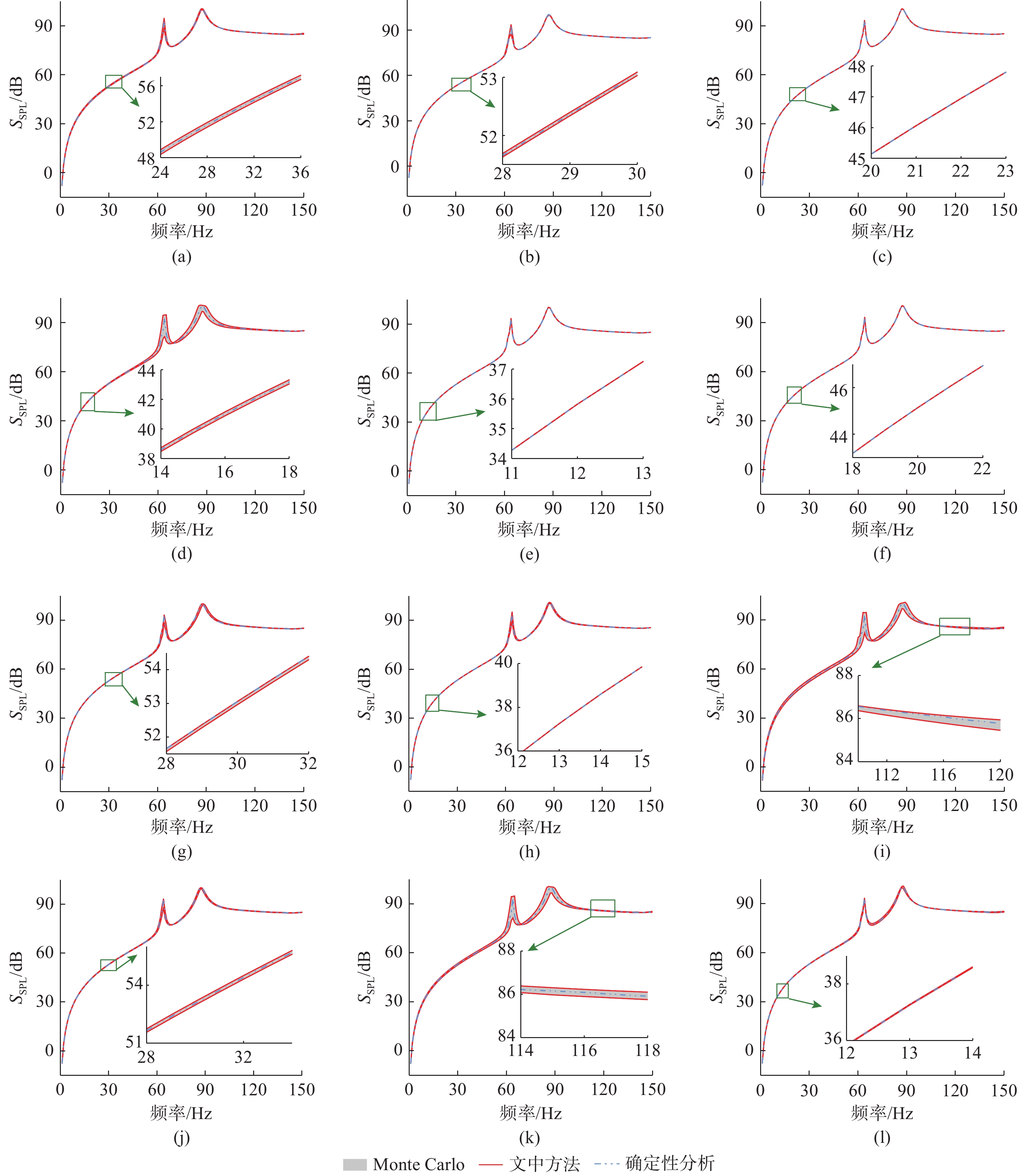
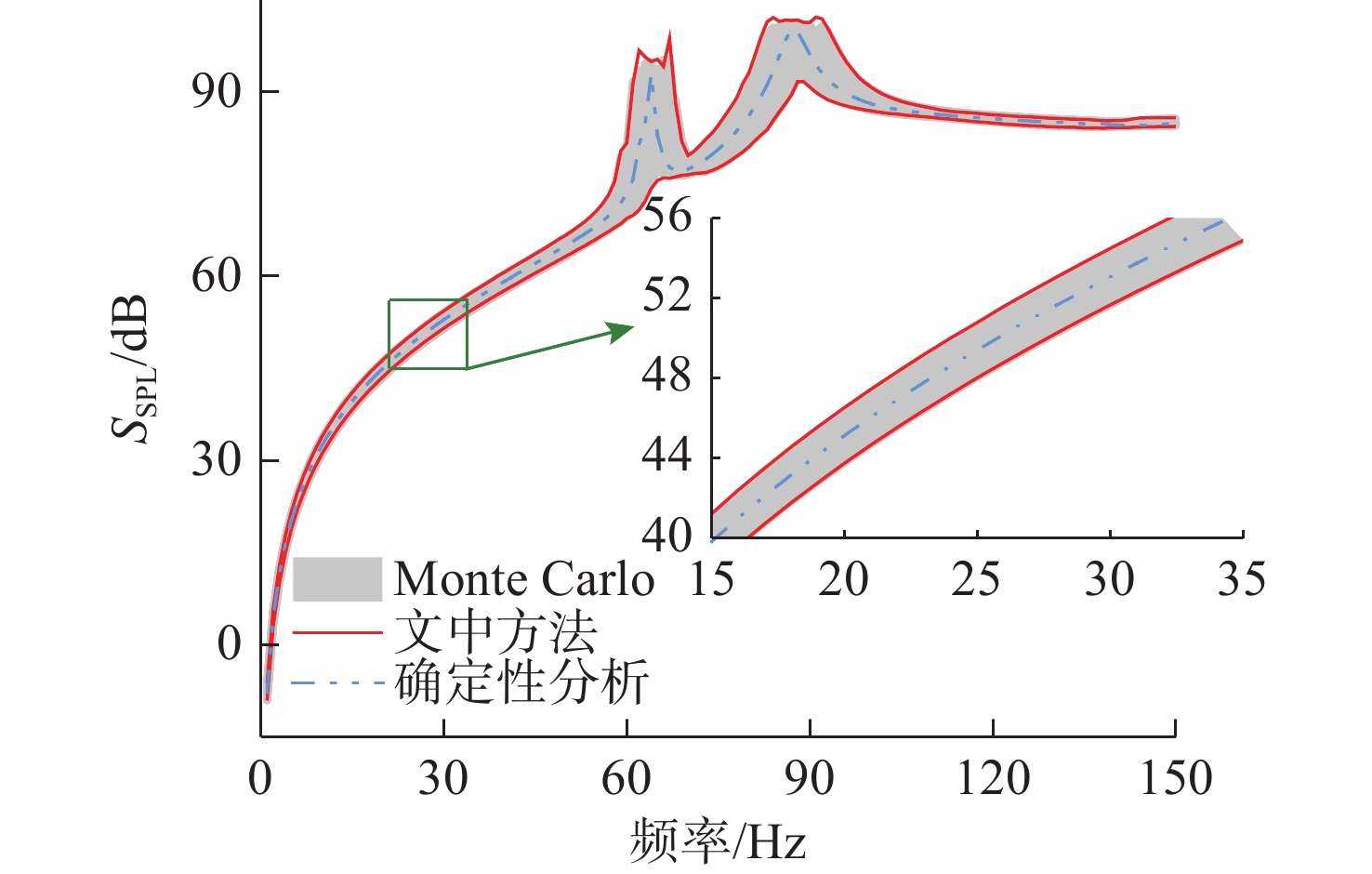
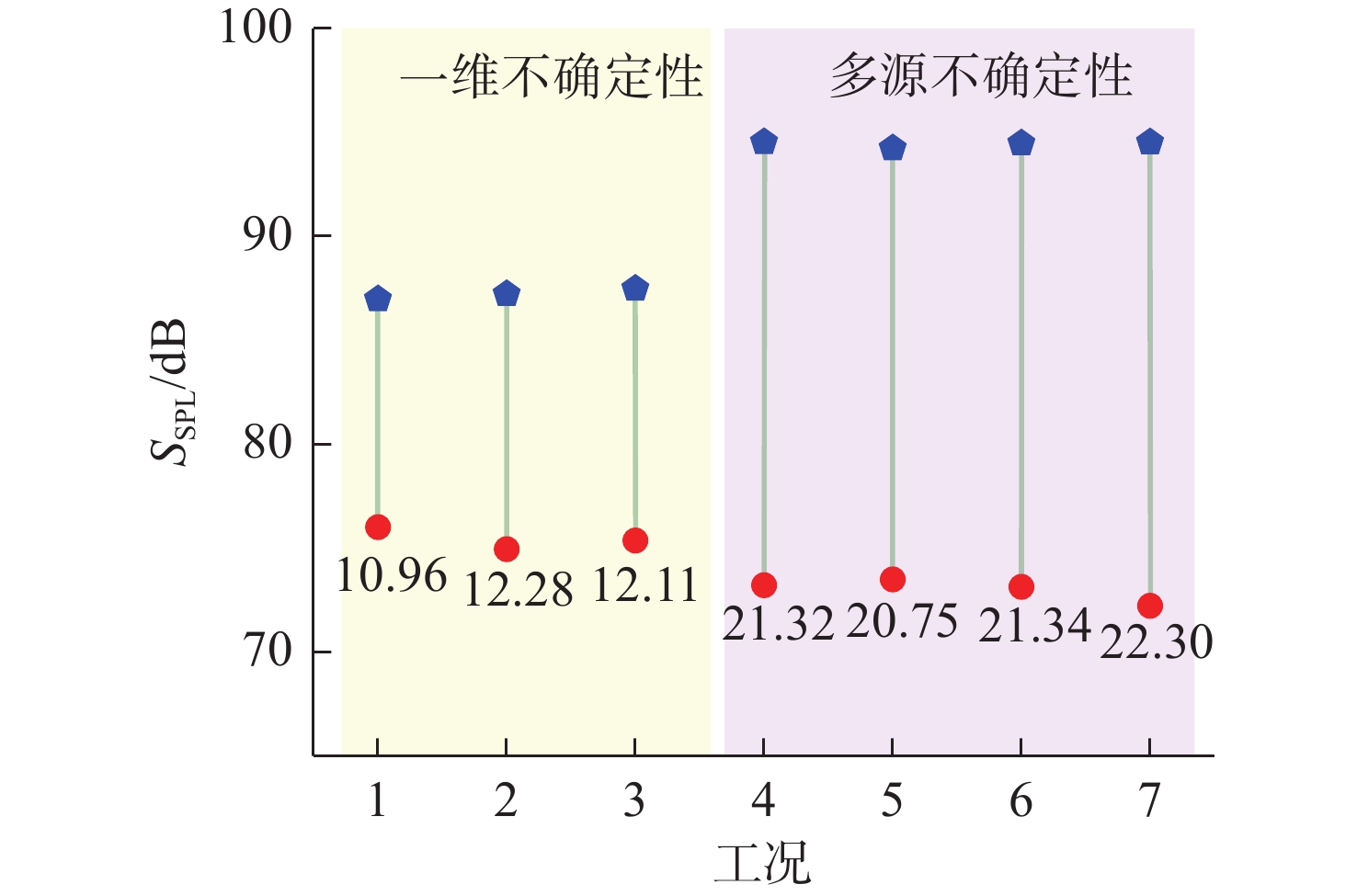
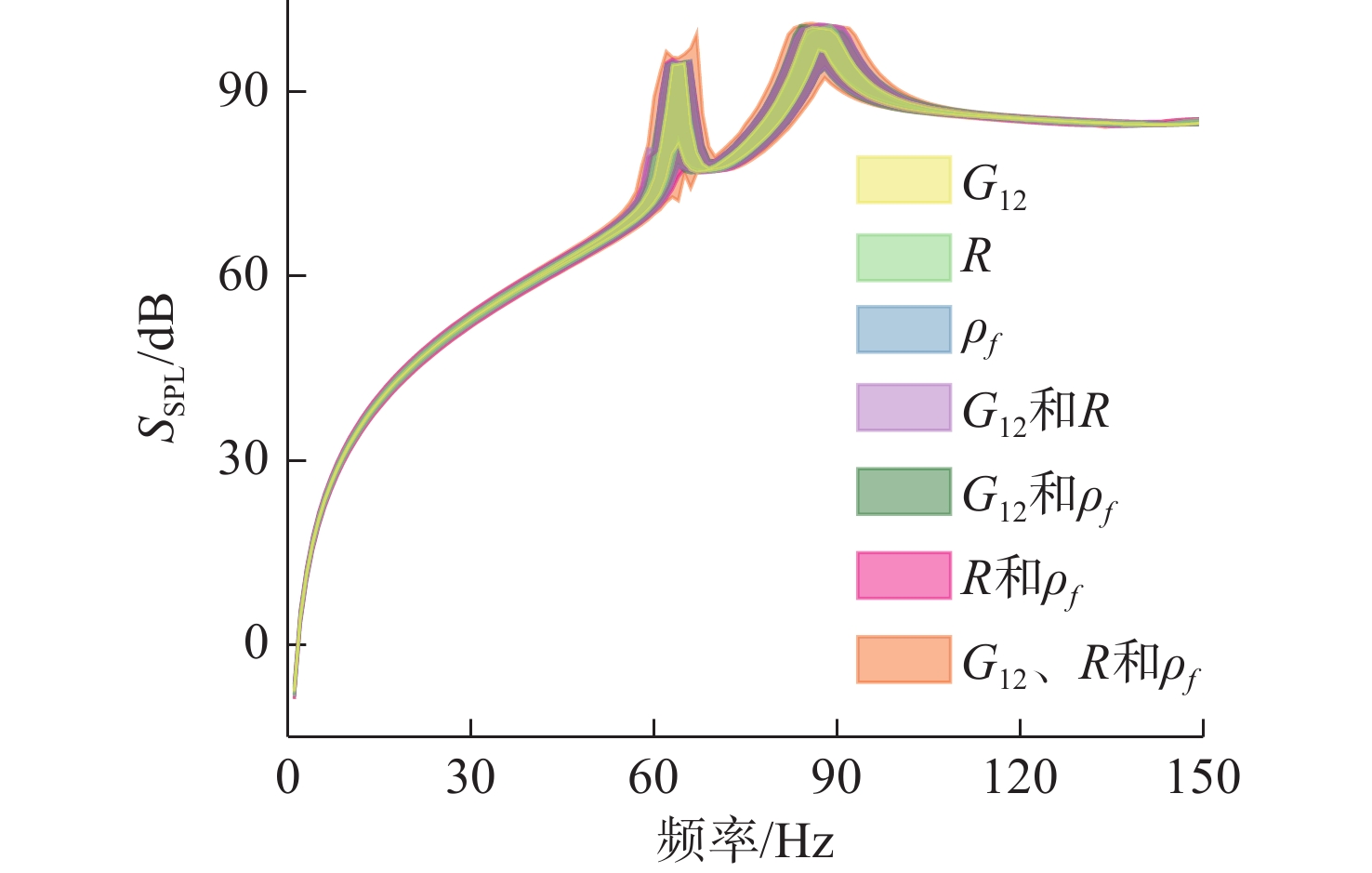
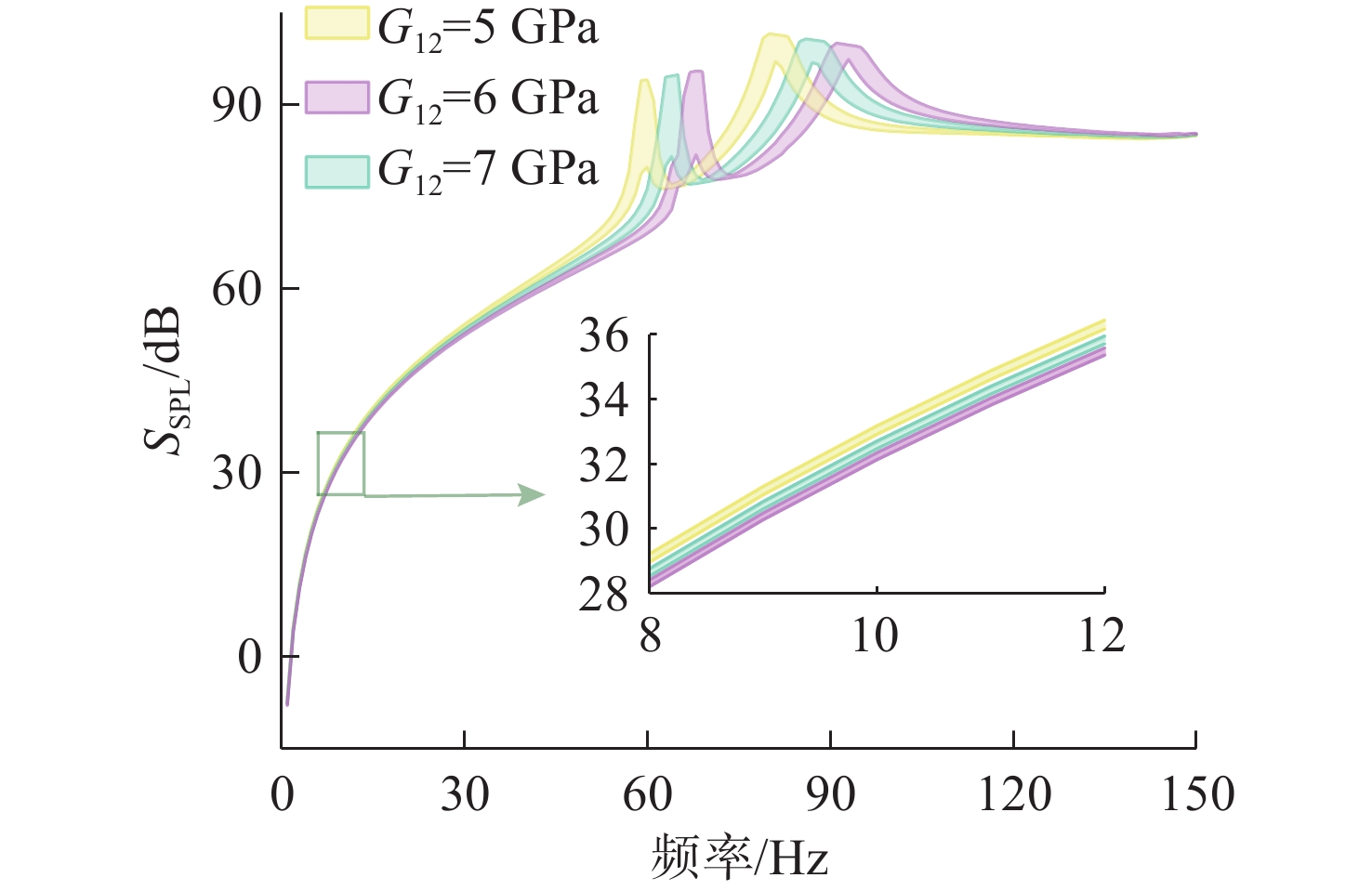
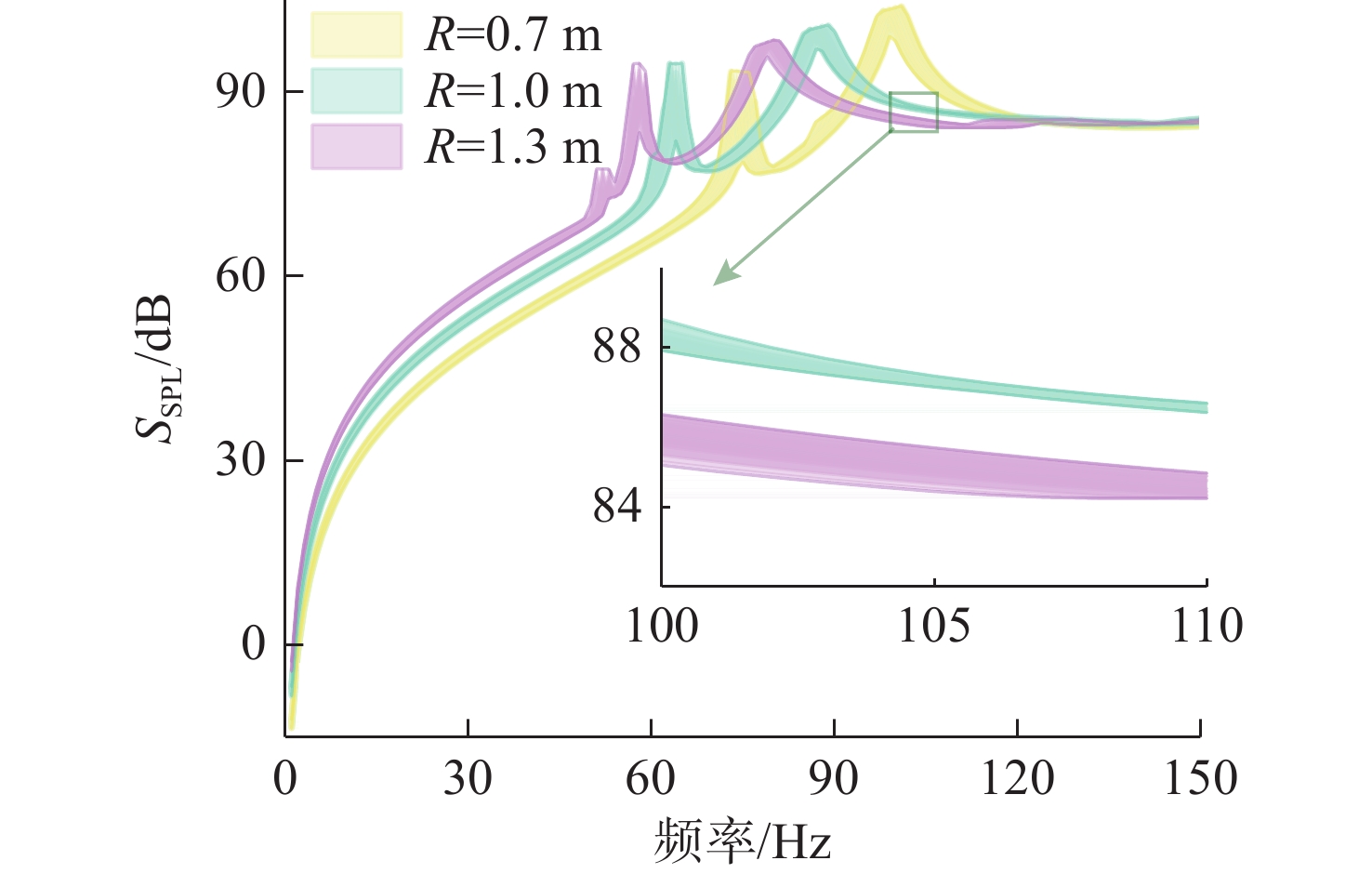
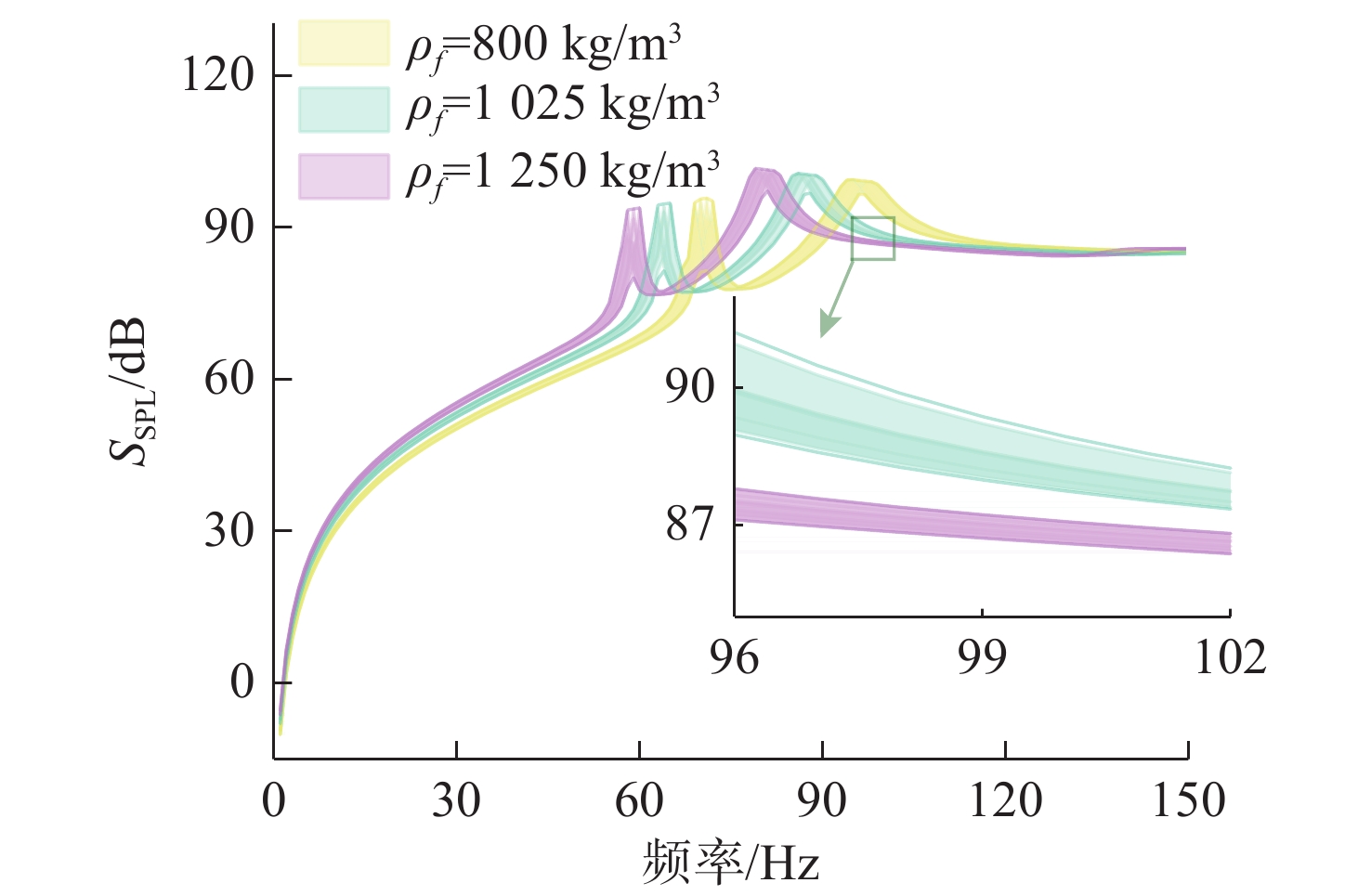
The existing studies mostly focus on the deterministic analysis of the vibroacoustic response of underwater composite shells, but the structure, material, and heavy fluid parameters in actual engineering are uncertain. Therefore, this paper presented an efficient prediction method based on interval analysis and a Kriging agent model, which is suitable for the analysis of uncertain vibroacoustic responses for composite laminated stepped cylindrical shells in a heavy fluid environment. The research object was a composite laminated stepped cylindrical shell immersed in an infinite domain heavy fluid. Based on the first-order shear deformation theory, energy method, and Kirchhoff-Helmholtz integral, a vibroacoustic coupled model was established. The interval analysis method was introduced to describe the parameter fluctuation. The Kriging agent model was used to replace the time-consuming boundary element operation. The influence of various uncertain parameters on the sound pressure level response of the composite laminated stepped cylindrical shell was studied. On this basis, the offset law of the response curve with respect to variations in the values of the uncertain parameters that have a significant influence was analyzed. The results show that the multi-source uncertainty causes significant frequency shift and response fluctuation range widening. The proposed method effectively solves the problem of uncertain vibro-acoustic analysis for complex stepped structures in heavy fluid environments, and provides technical support for the acoustic robustness design of underwater composite structures.
Research on Active Control Method of Floating Raft and Cylindrical Shell Systems Based on Fractional-Order FxLMS
CHENG Weipeng, WU Wenwei, WU Demu, YIN Zhiyong
2026, 34(2): 256-263. doi: 10.11993/j.issn.2096-3920.2026-0020
Abstract:
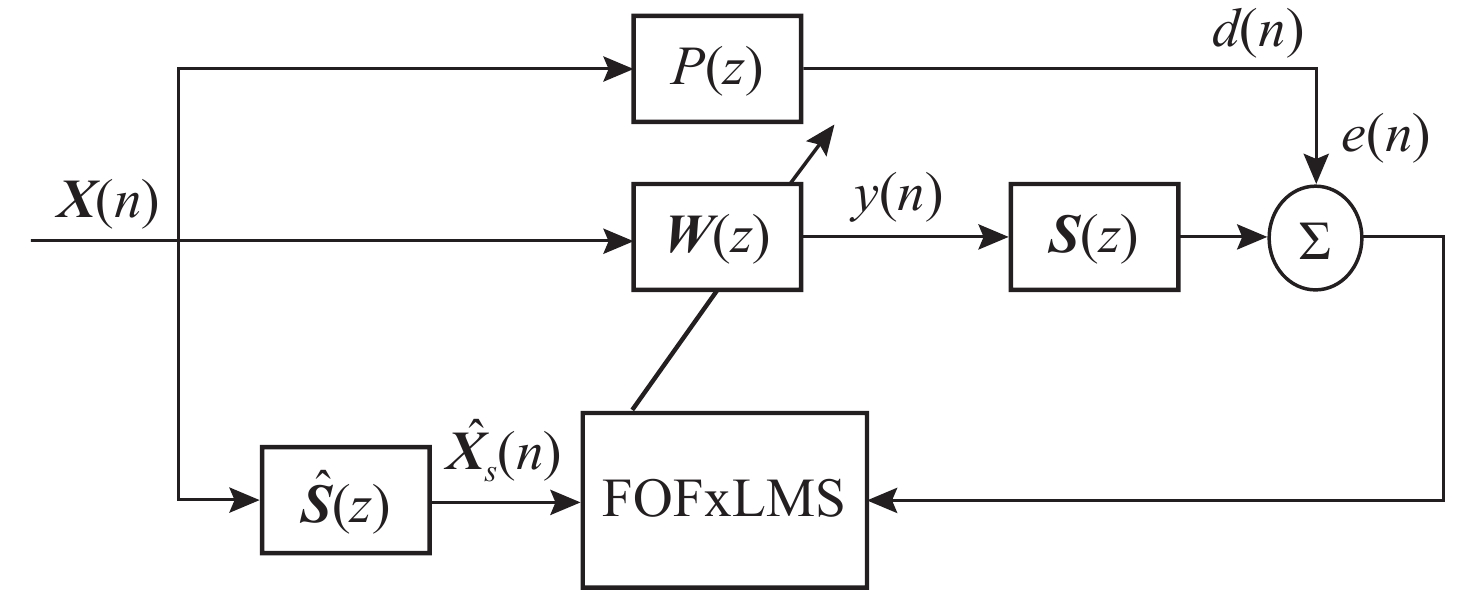
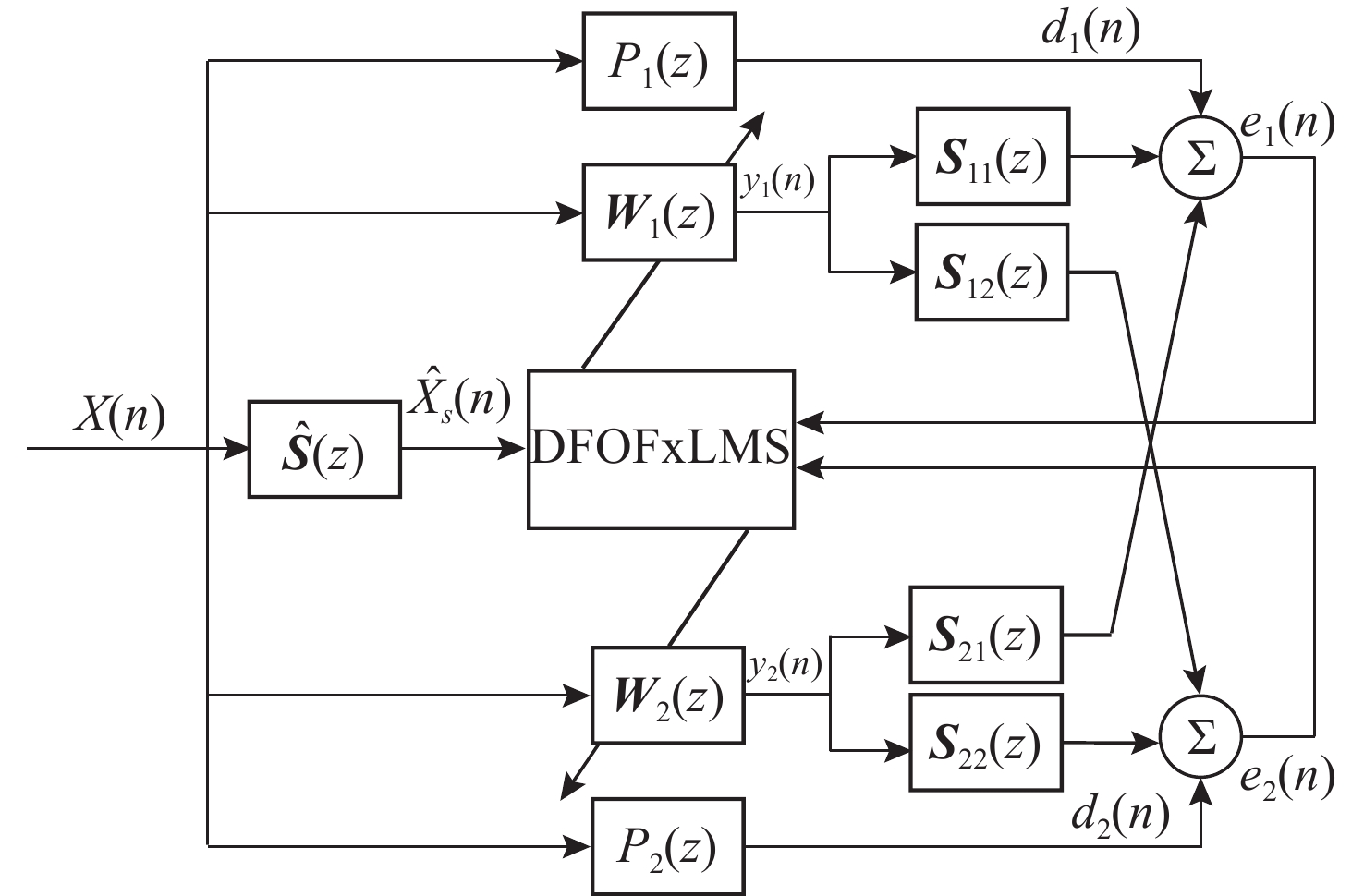
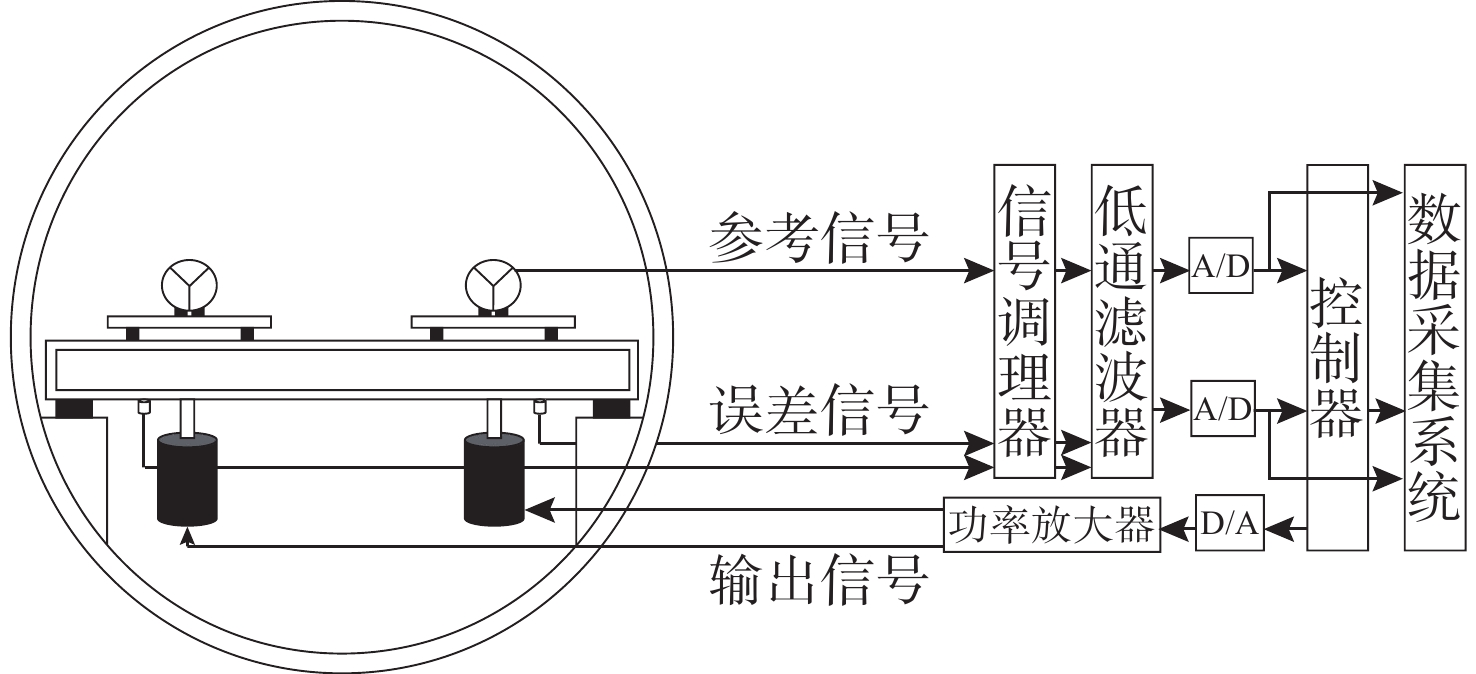
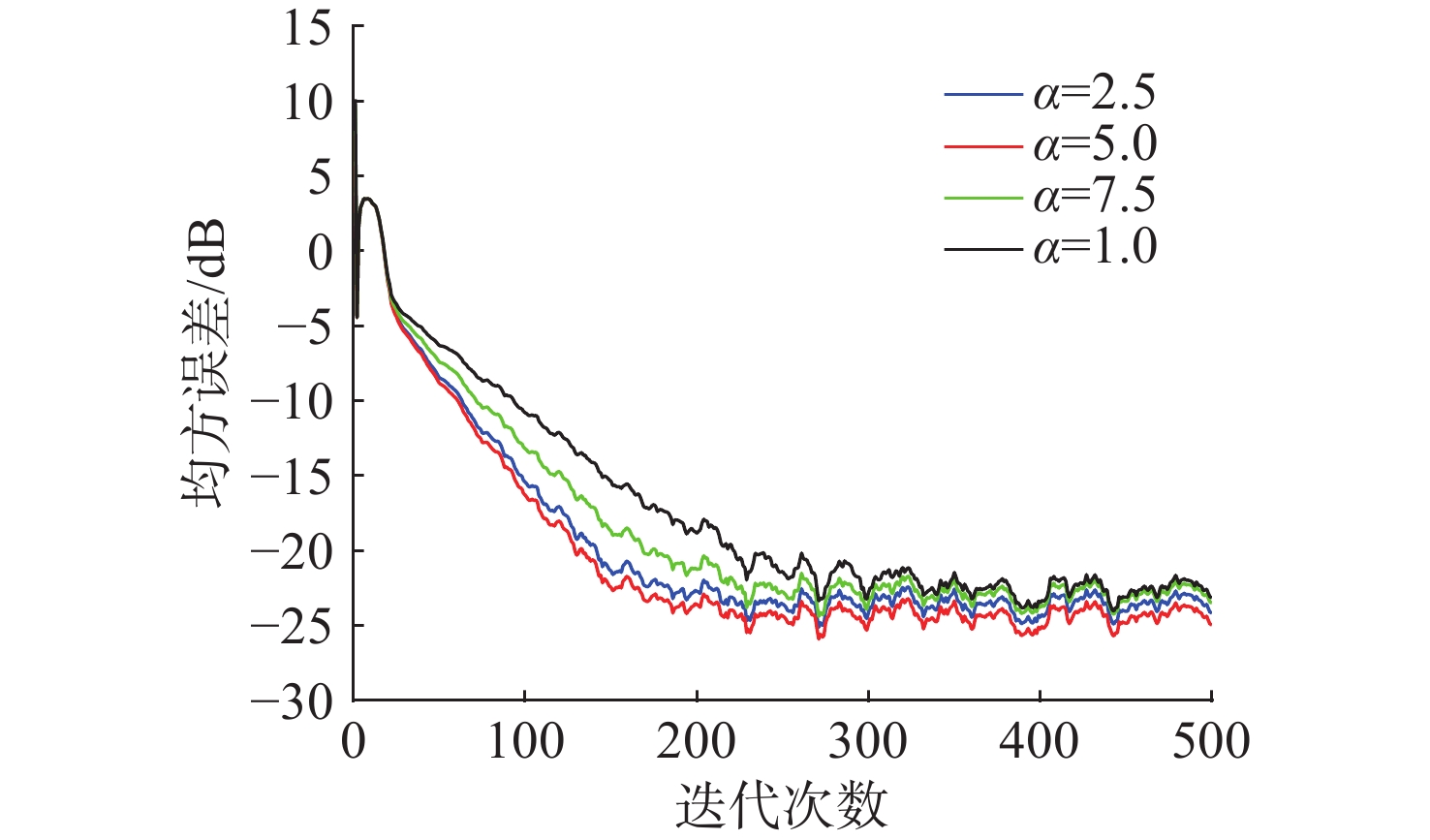
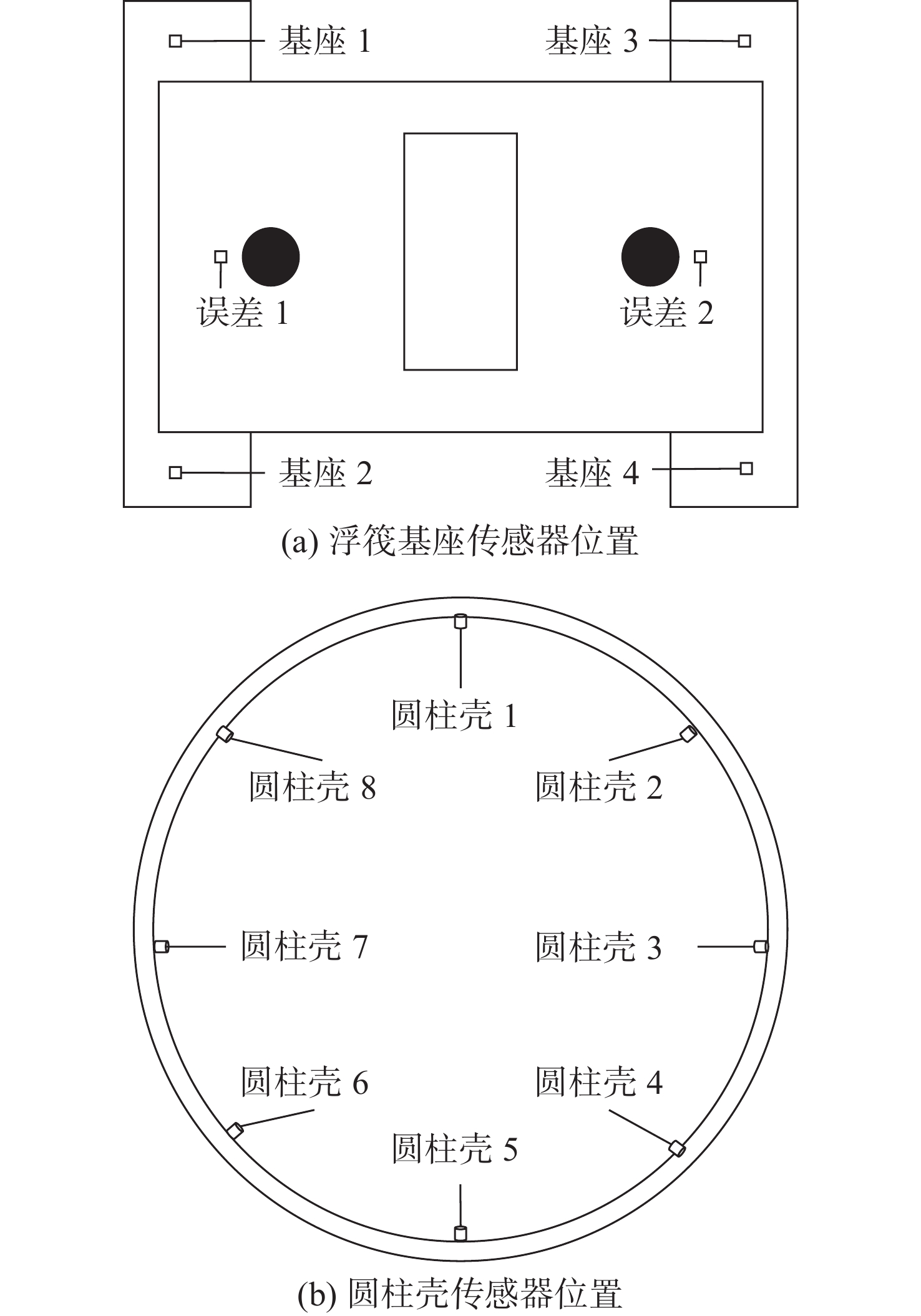
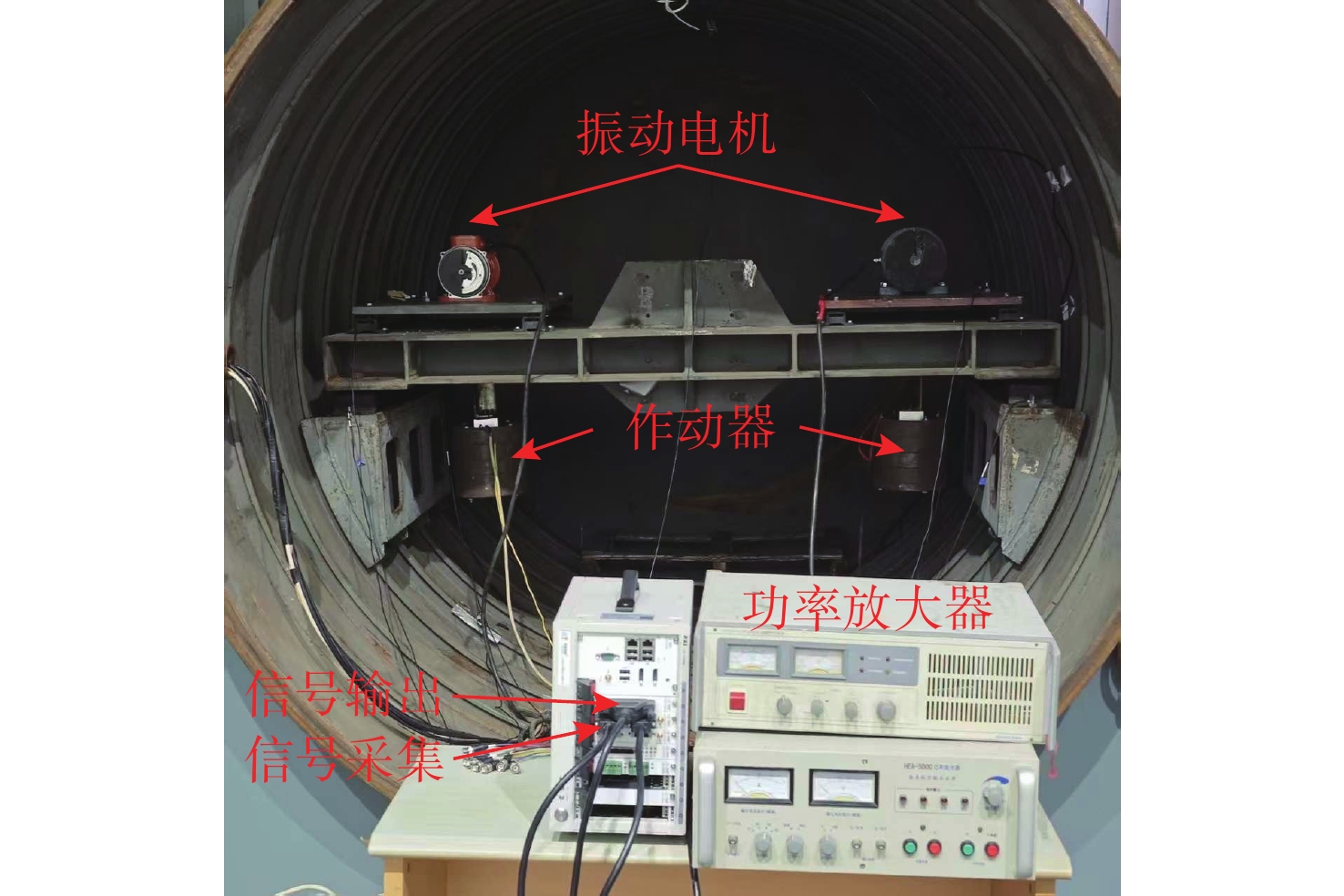
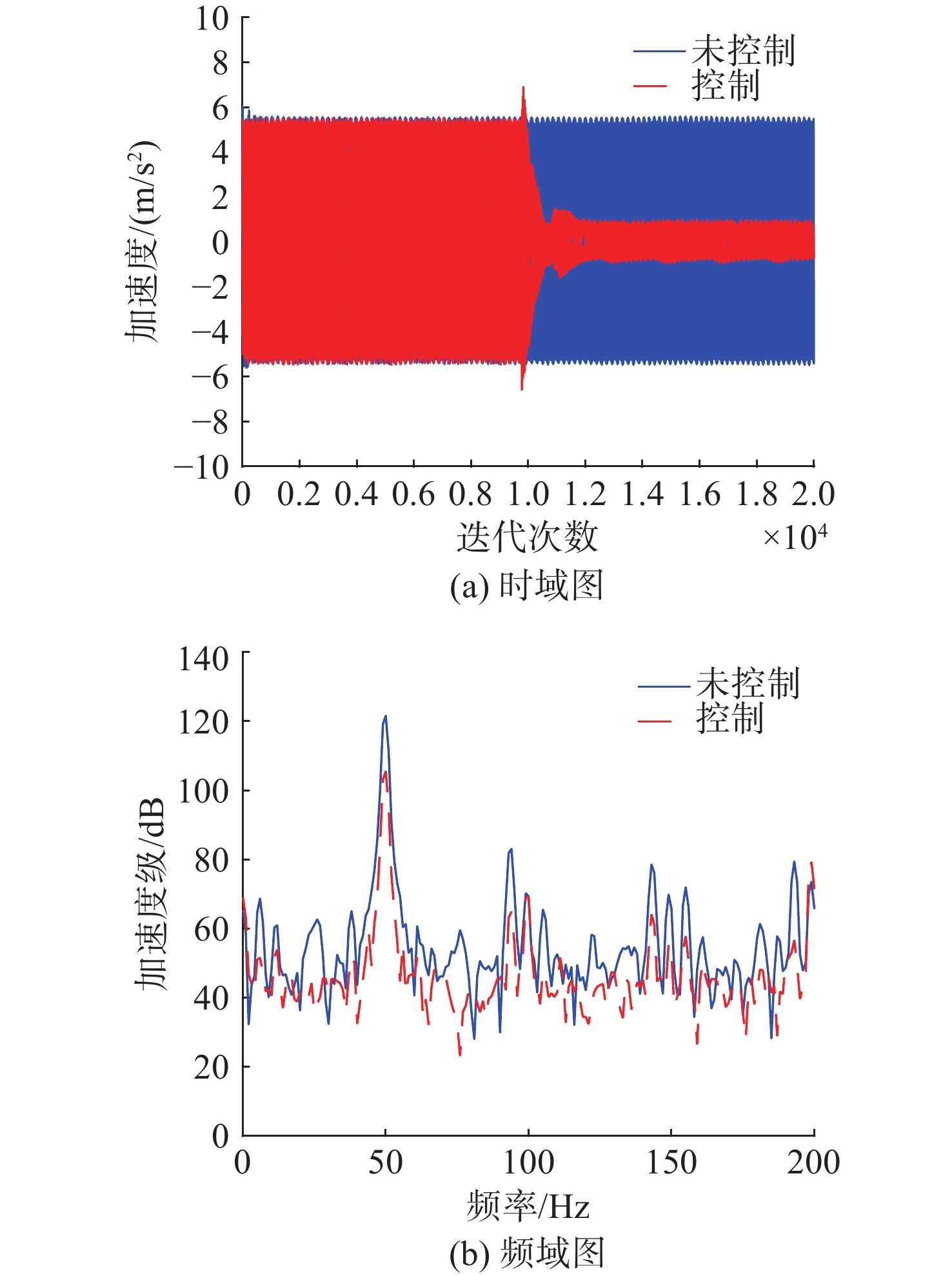
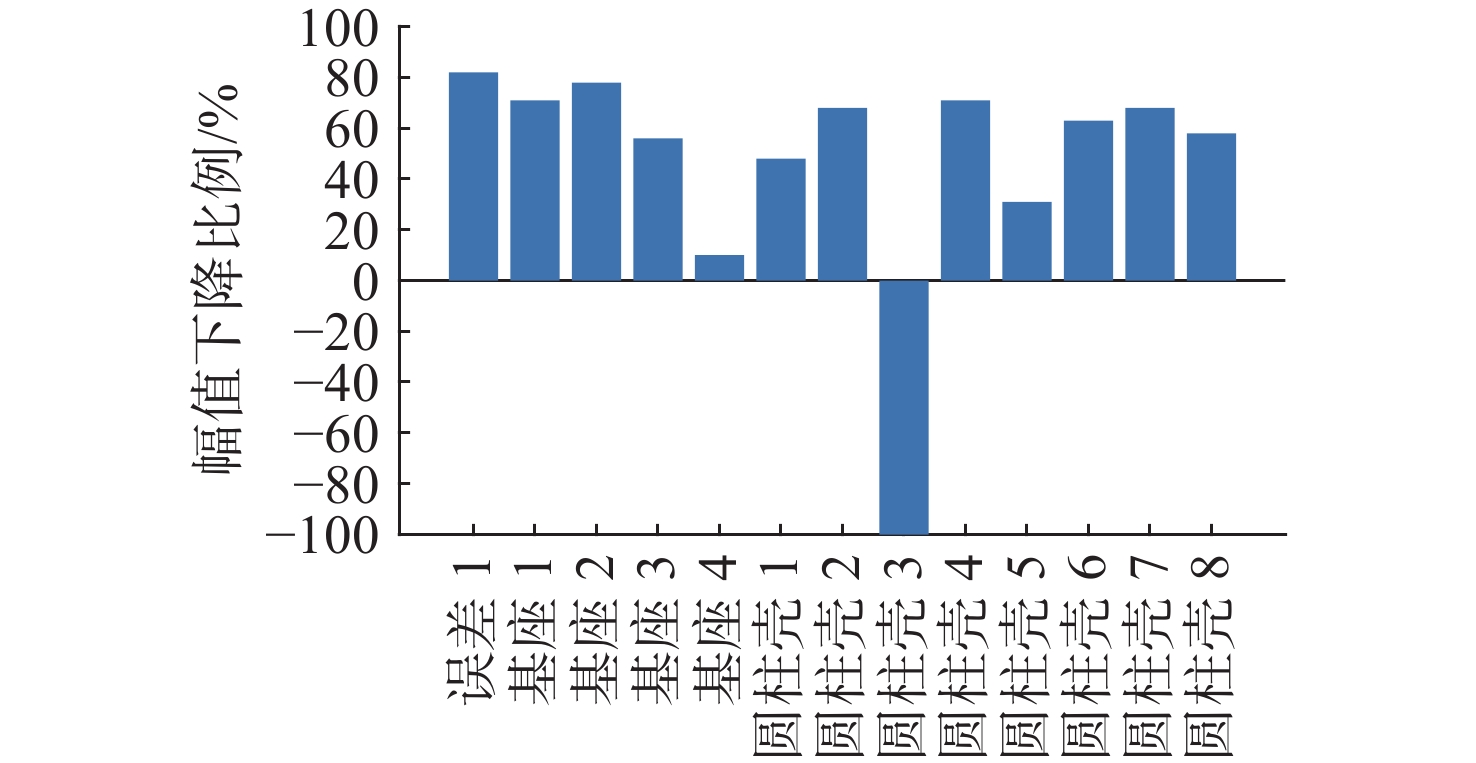
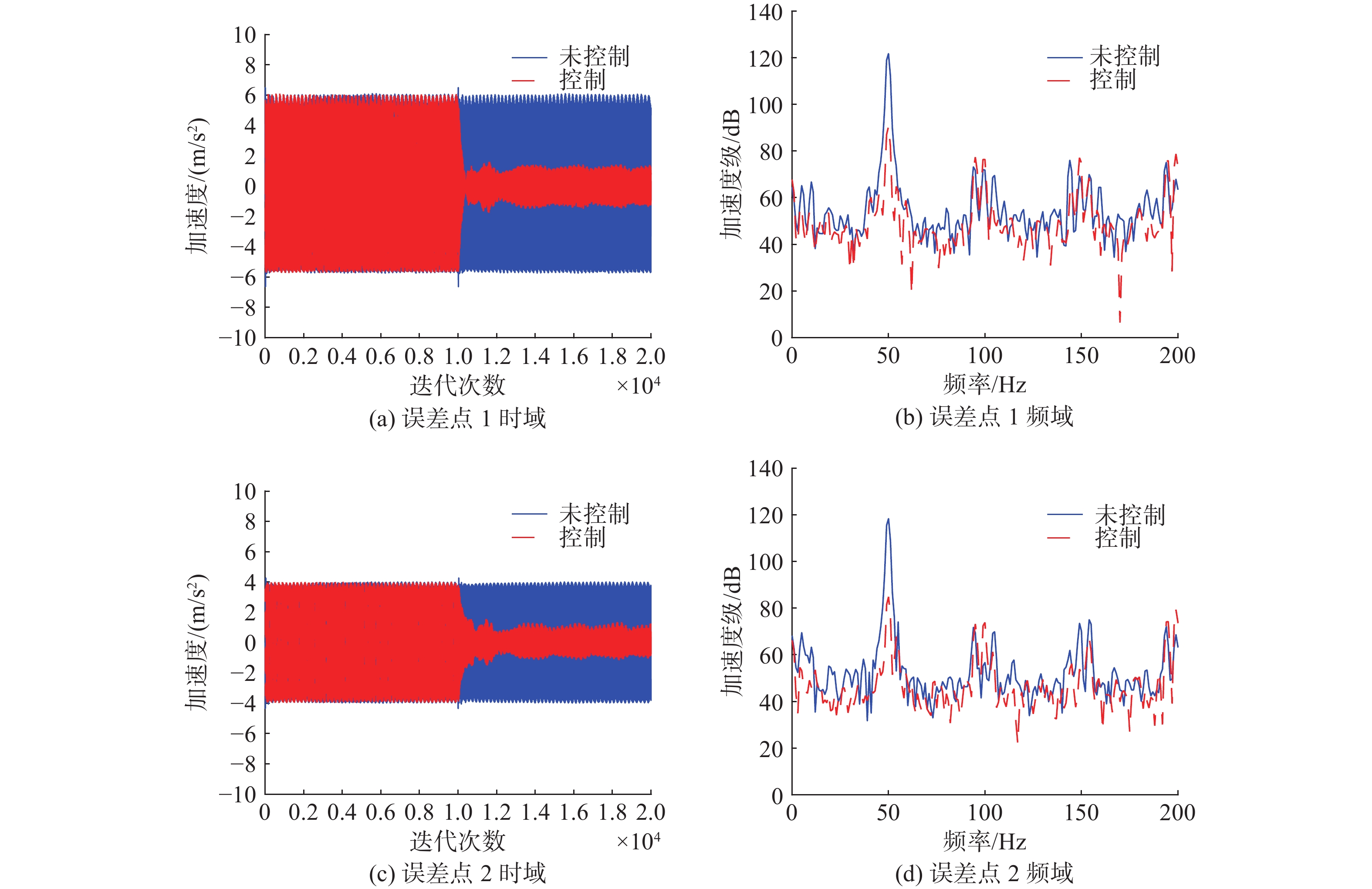
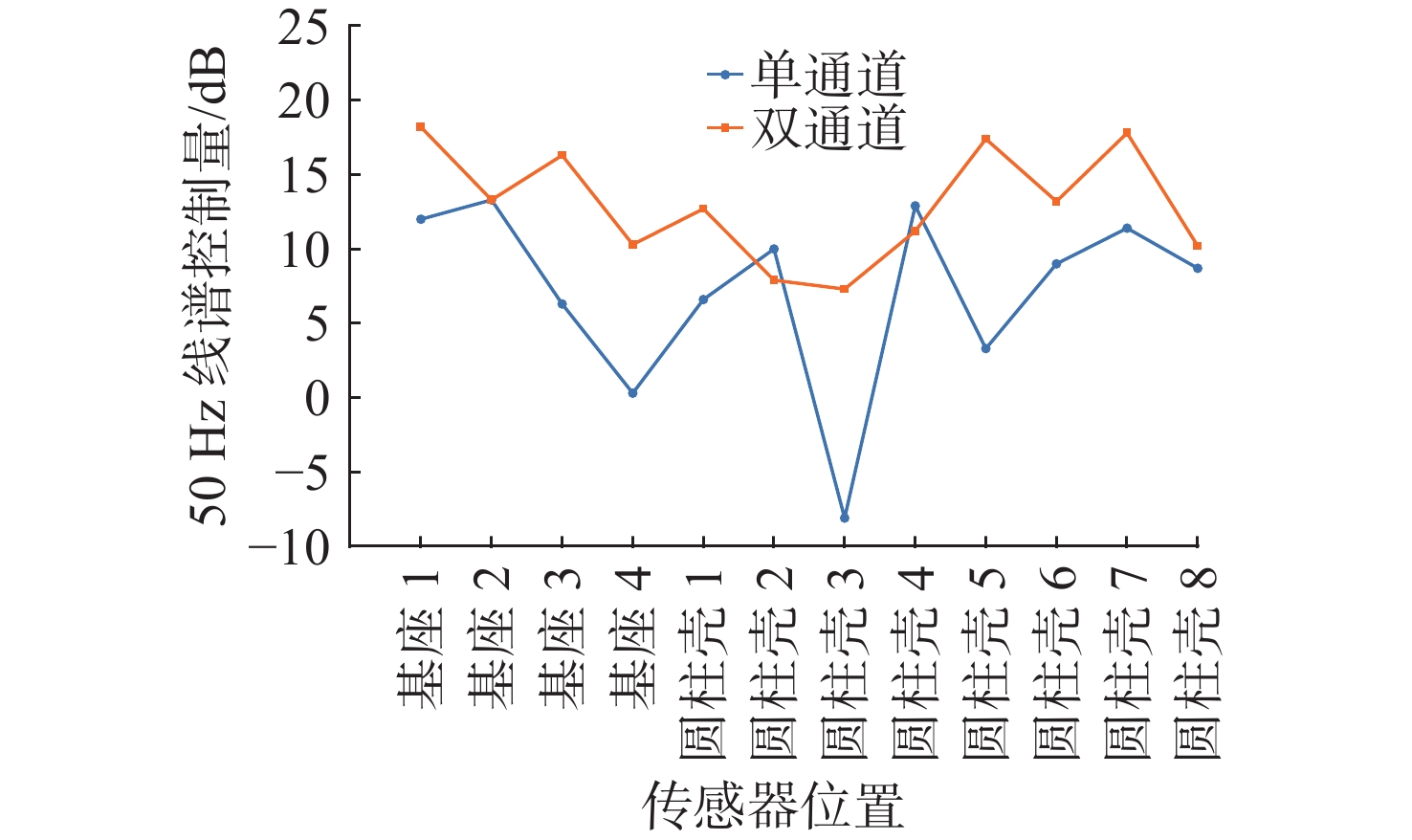
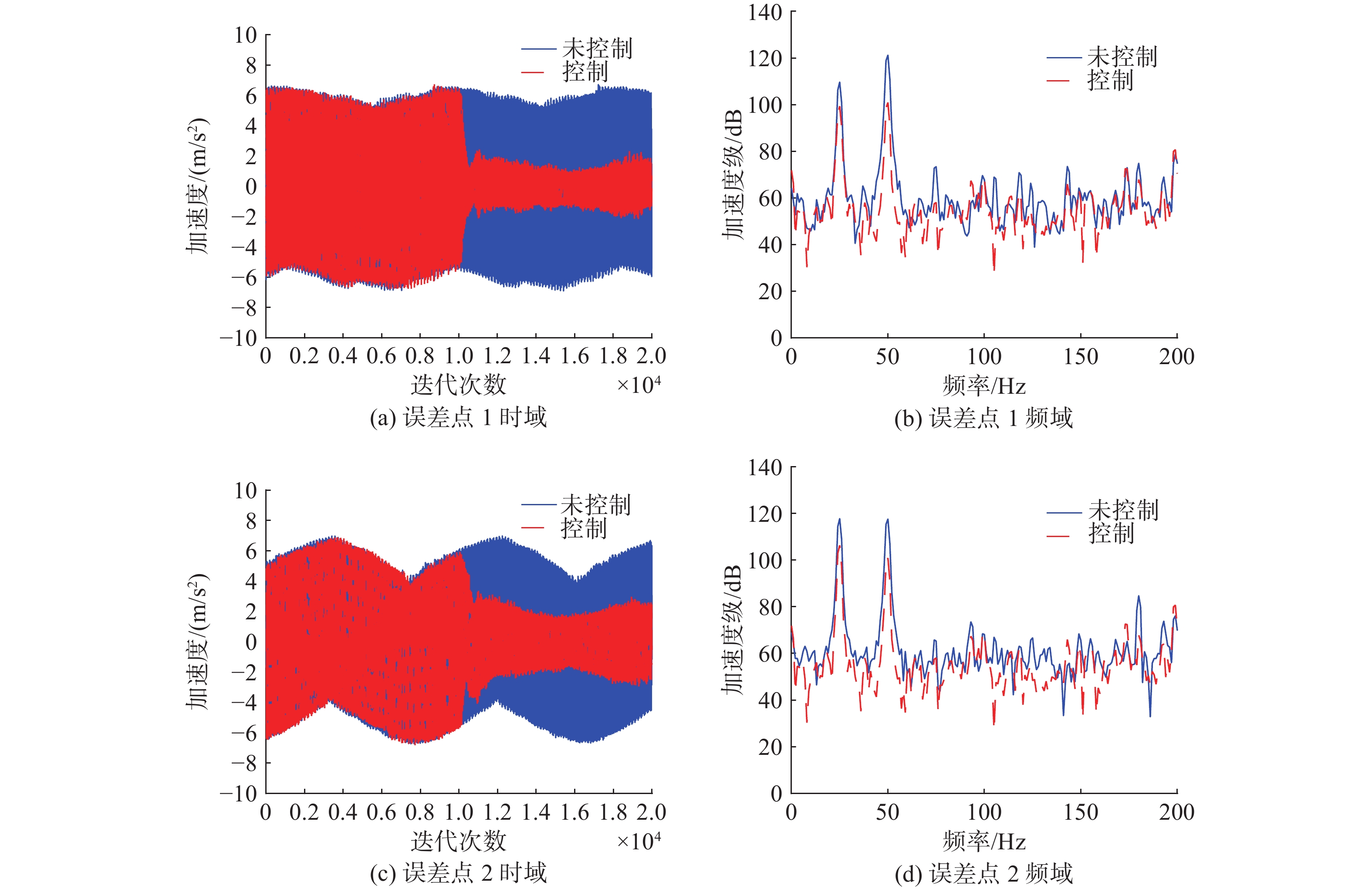
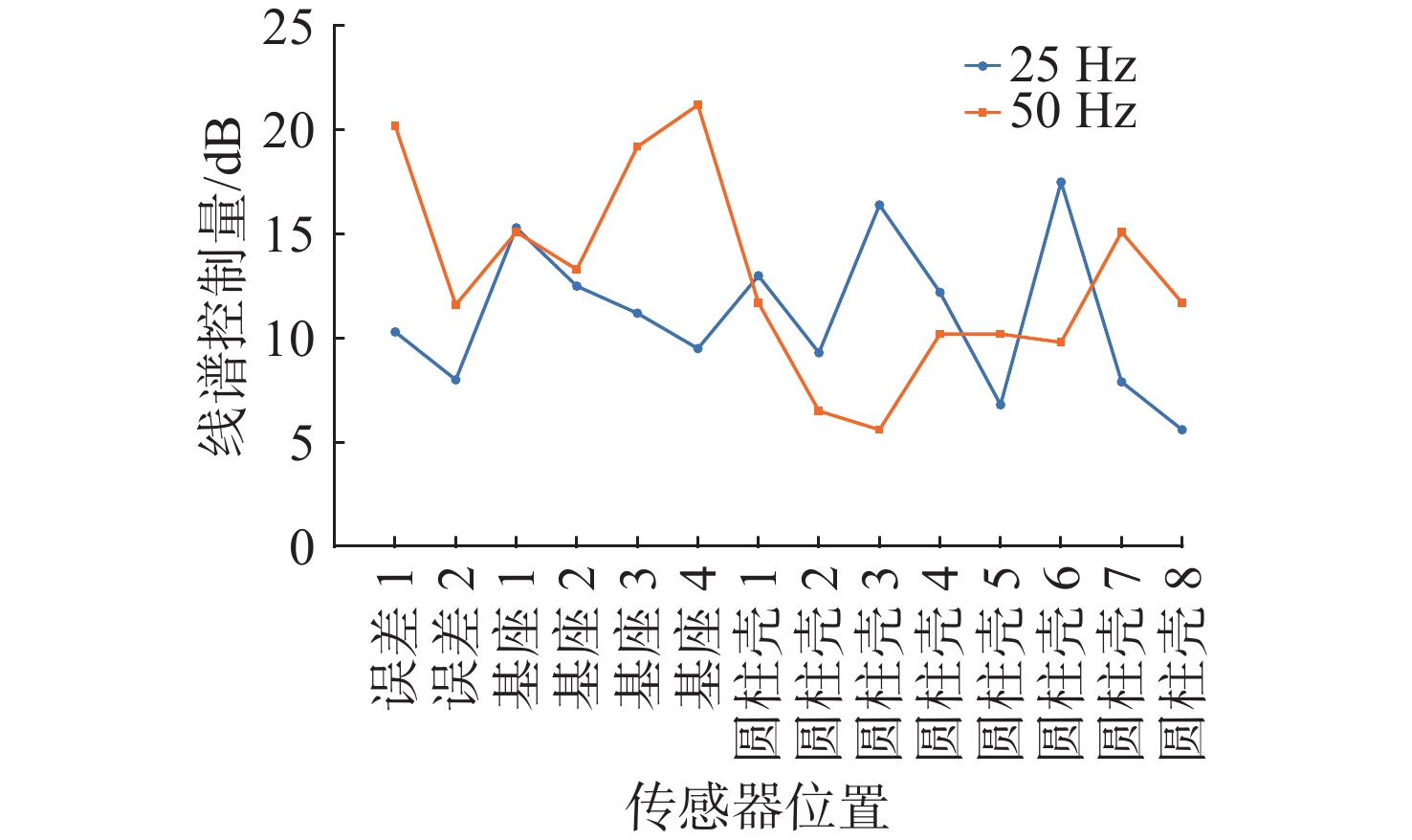
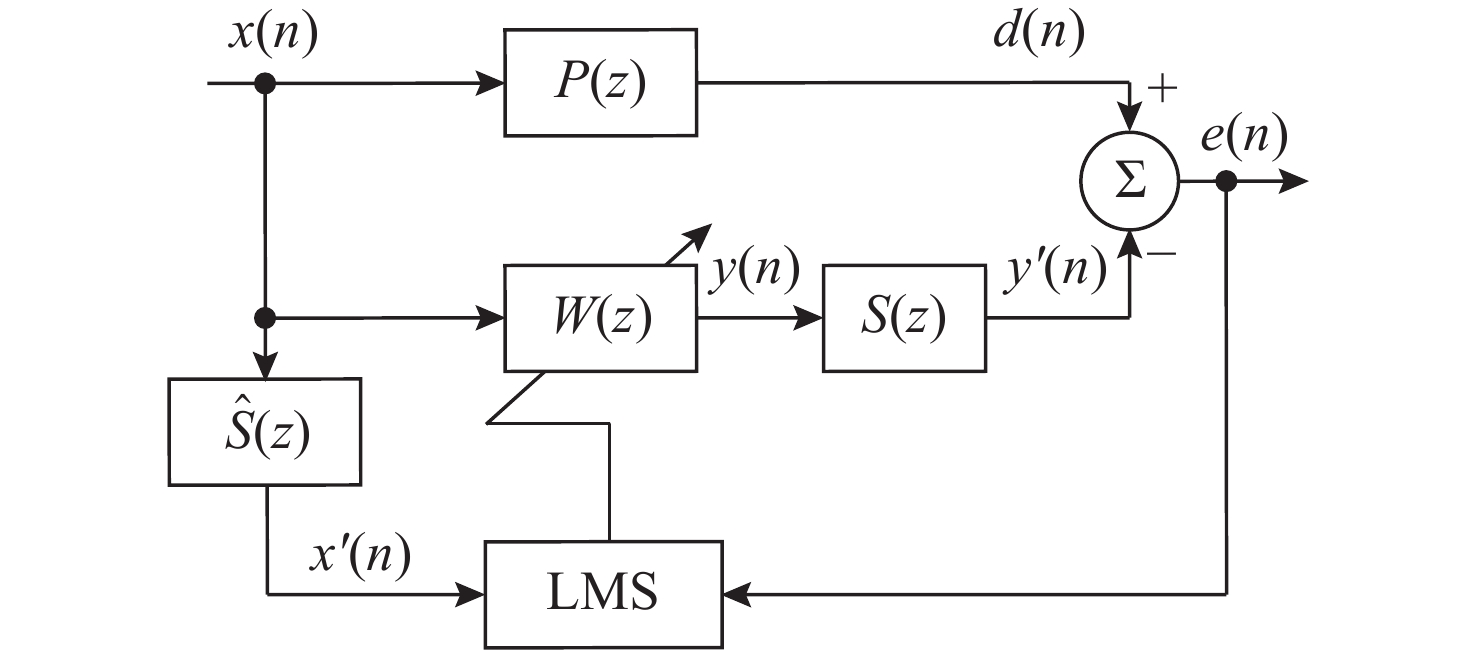
To suppress low-frequency line-spectrum vibrations in mechanical equipment such as the main and auxiliary machinery of undersea vehicles, this paper proposed a dual-channel fractional-order filtered-x least mean square(FxLMS) algorithm based on the fractional-order gradient descent method. The control performance of algorithms with different fractional orders was analyzed and compared through simulations. An experimental platform for active vibration control based on a floating raft and cylindrical shell structure was established. Comparative experiments under various operating conditions demonstrate that compared with single-channel control strategies, the proposed dual-channel collaborative control scheme exhibits significant advantages in suppressing the overall vibration of the floating raft and cylindrical shell system. It can effectively avoid the phenomenon of local vibration amplification. Under dual-frequency line spectrum excitation, this method still demonstrates good control effectiveness and engineering practicability. This study can provide reference and technical support for the active control of low-frequency vibration in ships and undersea vehicles.
Vibration Transfer Path and Characteristic Analysis of Underwater Shaft-Cone-Cylinder Double-Layer Shell
ZHU Jingyao, ZHANG Cong, TIAN Yaqi
2026, 34(2): 264-272. doi: 10.11993/j.issn.2096-3920.2025-0161
Abstract:
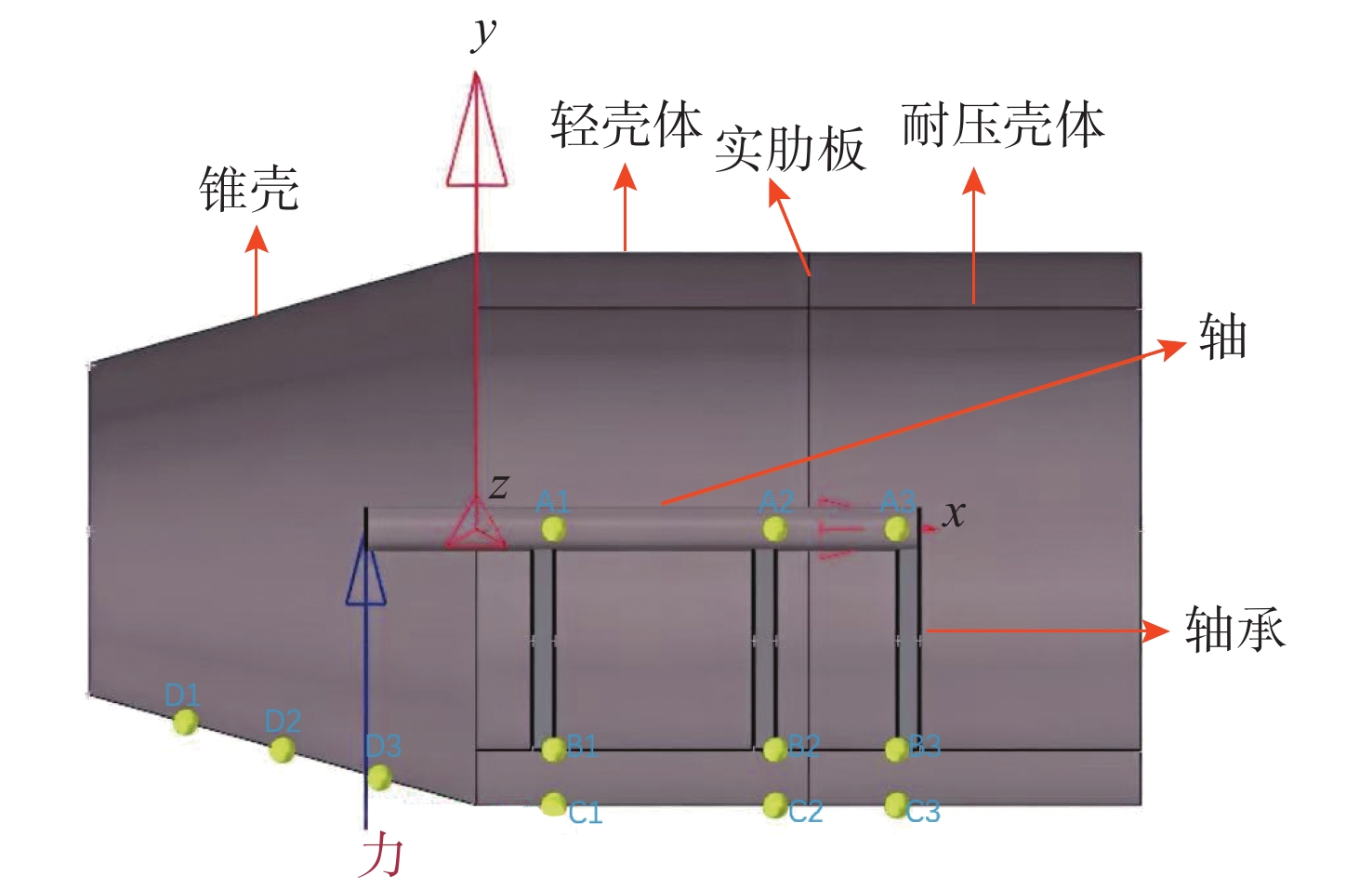
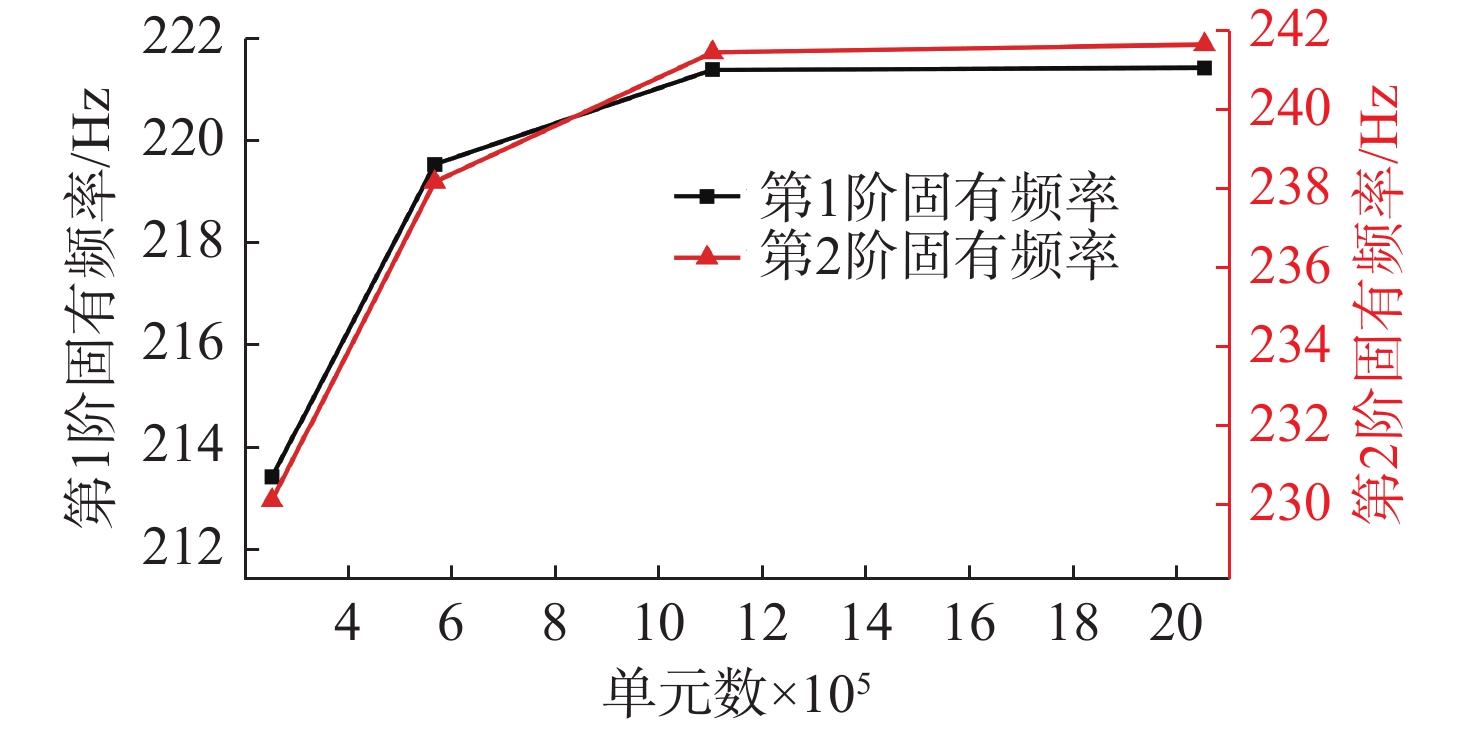
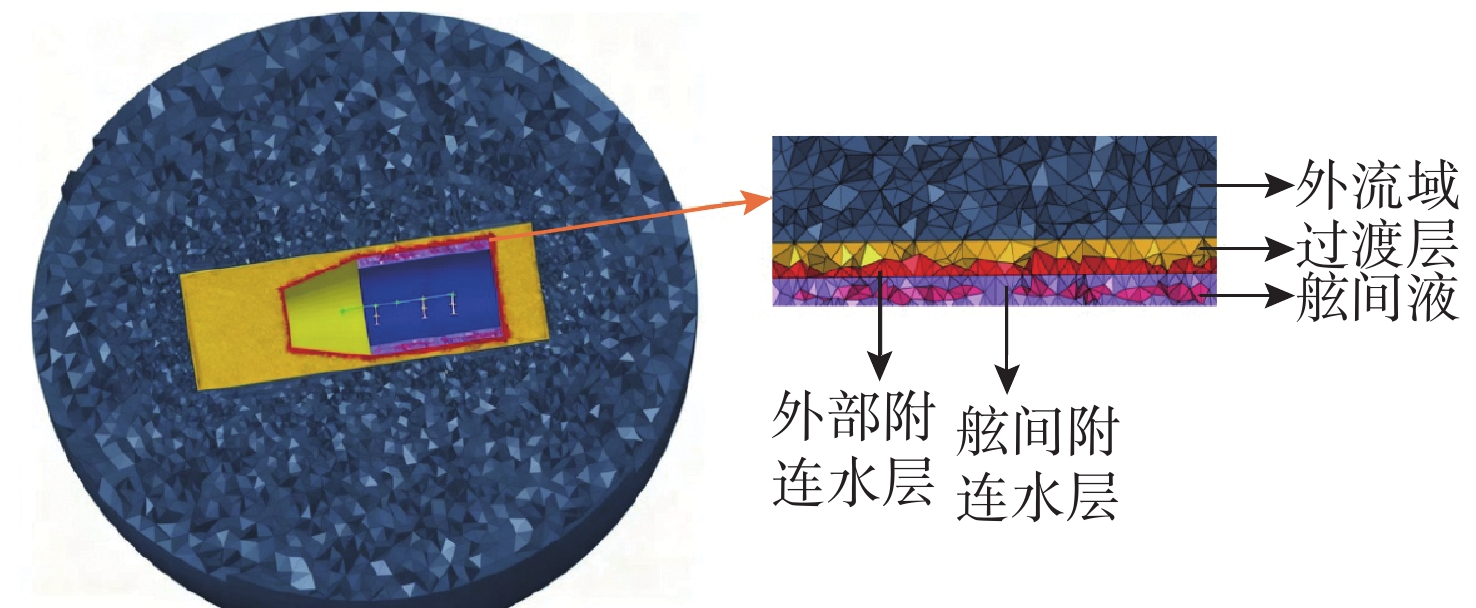
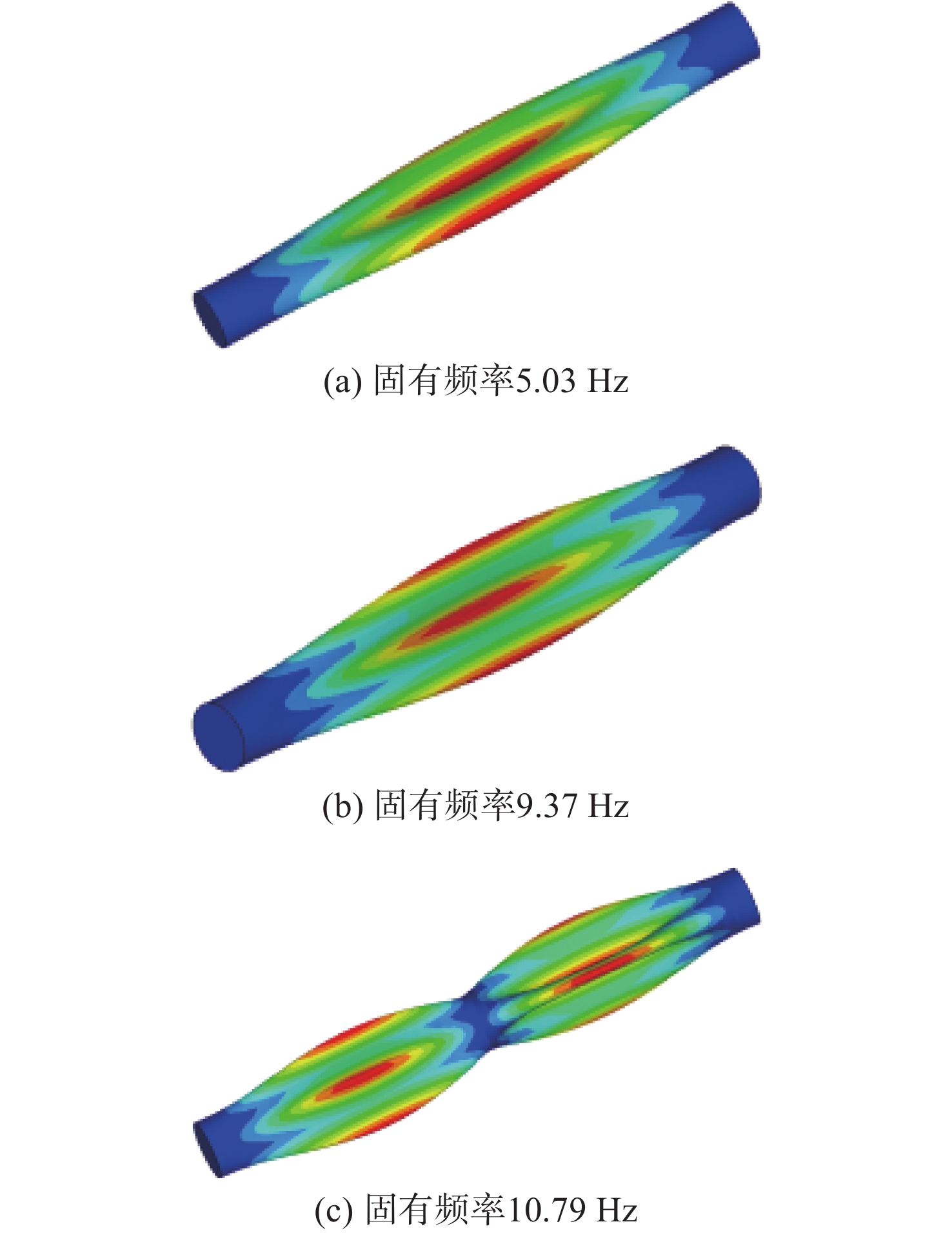
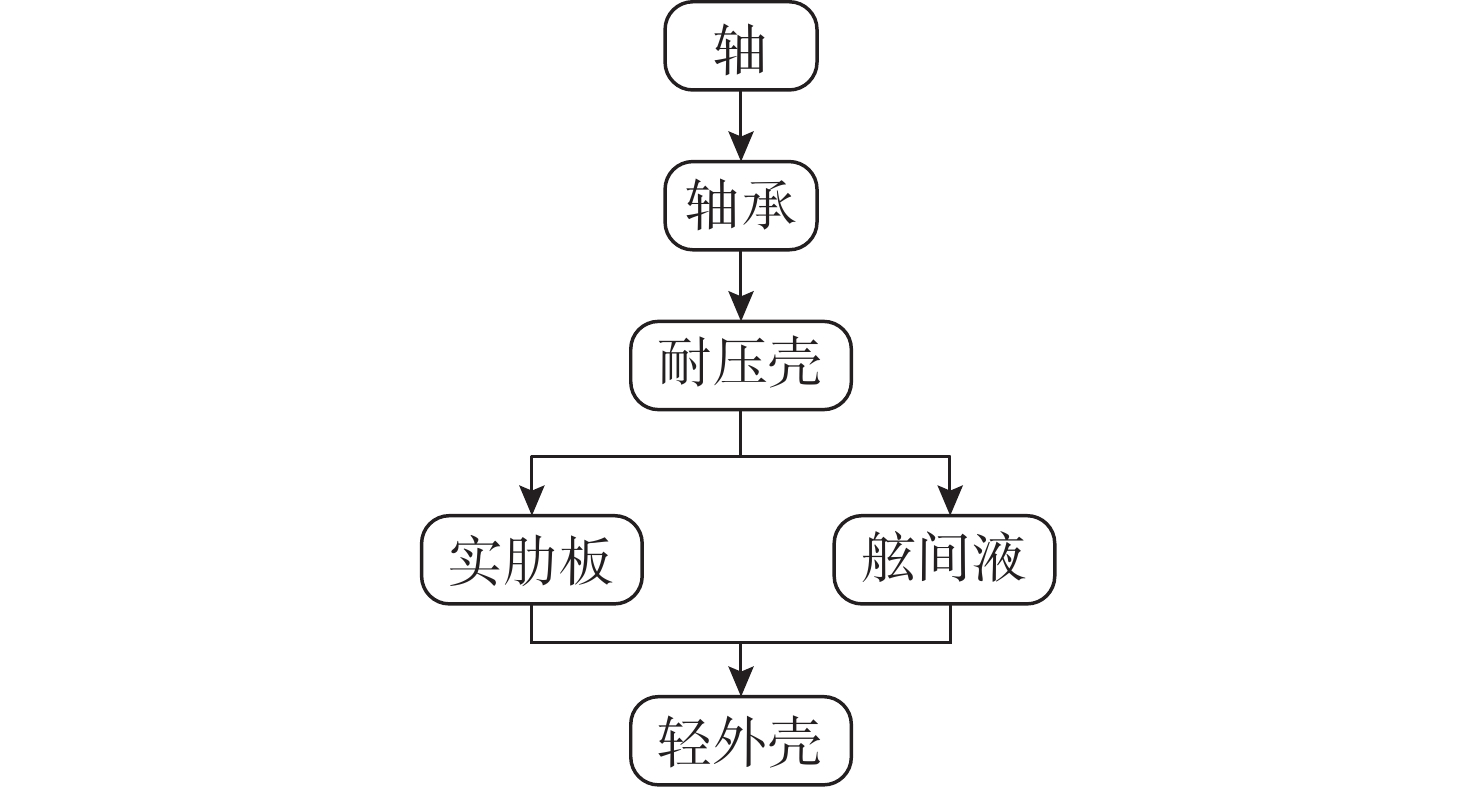
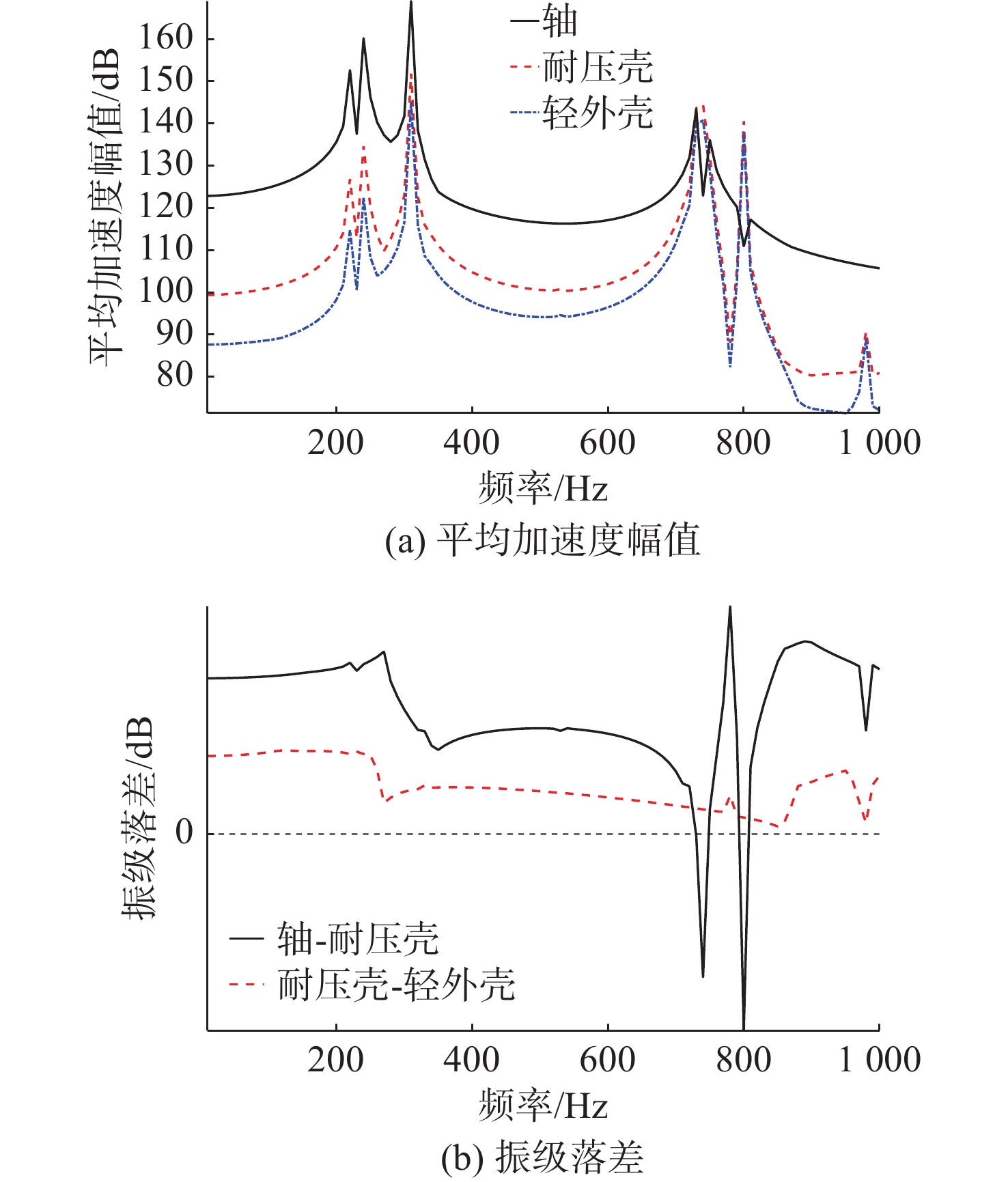
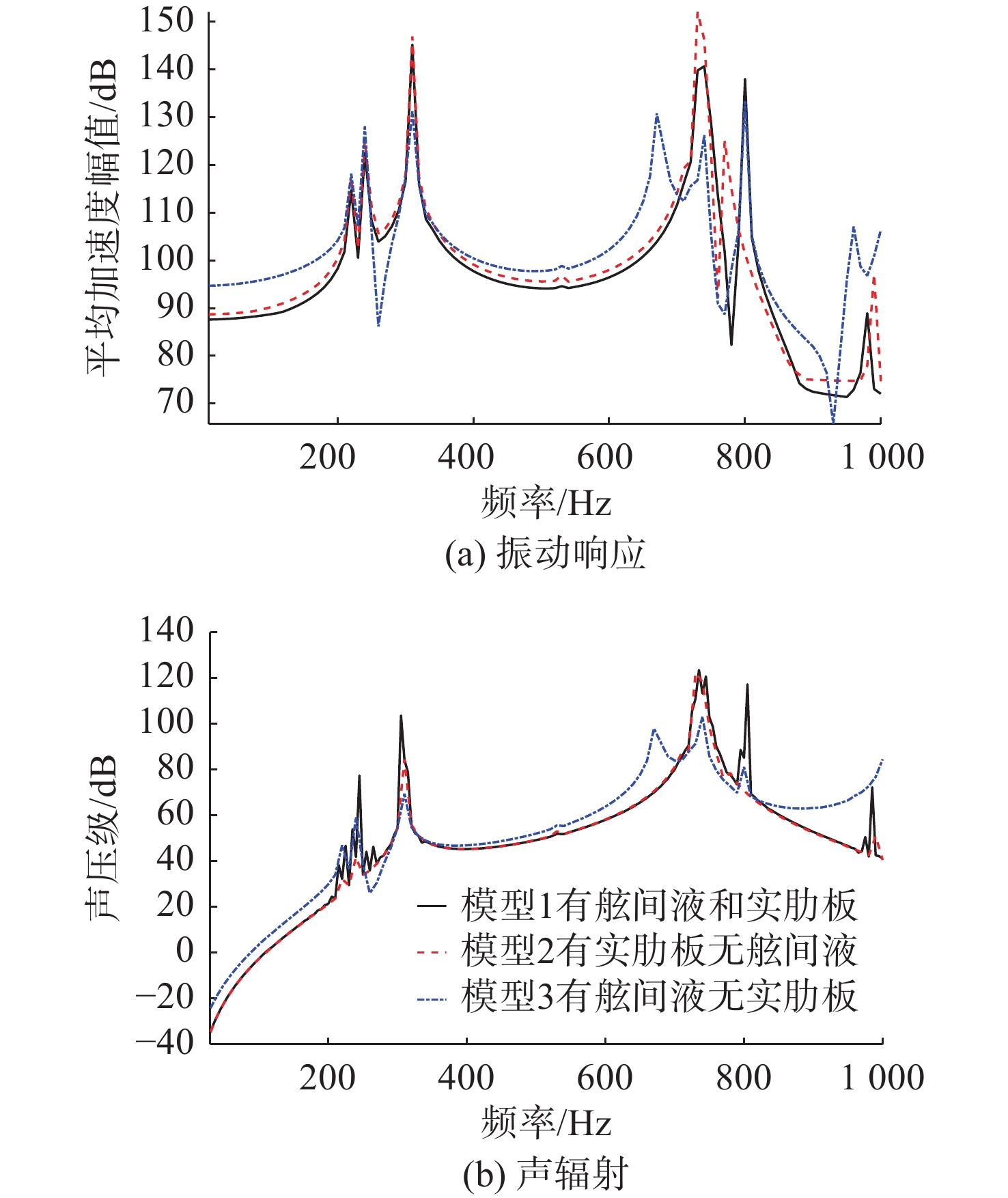
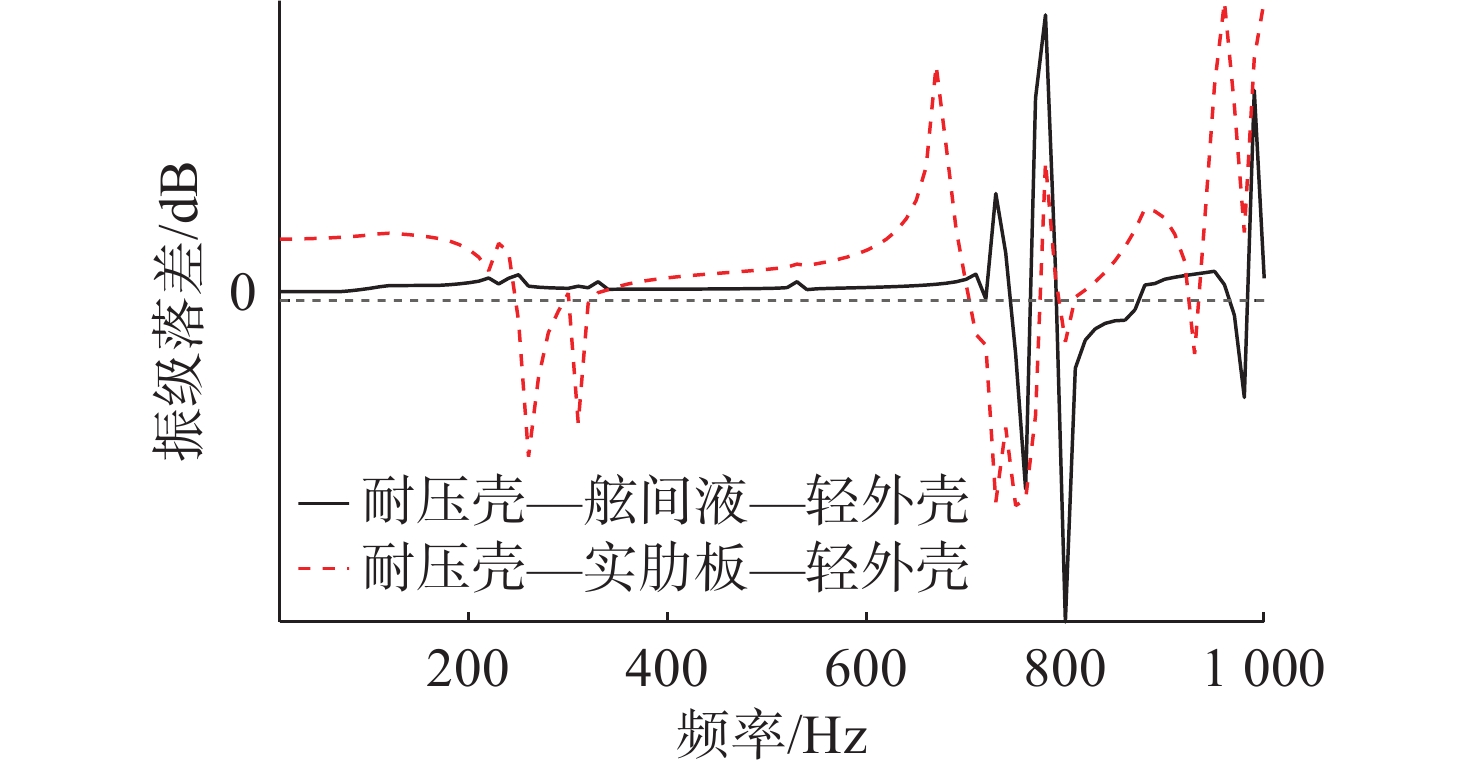
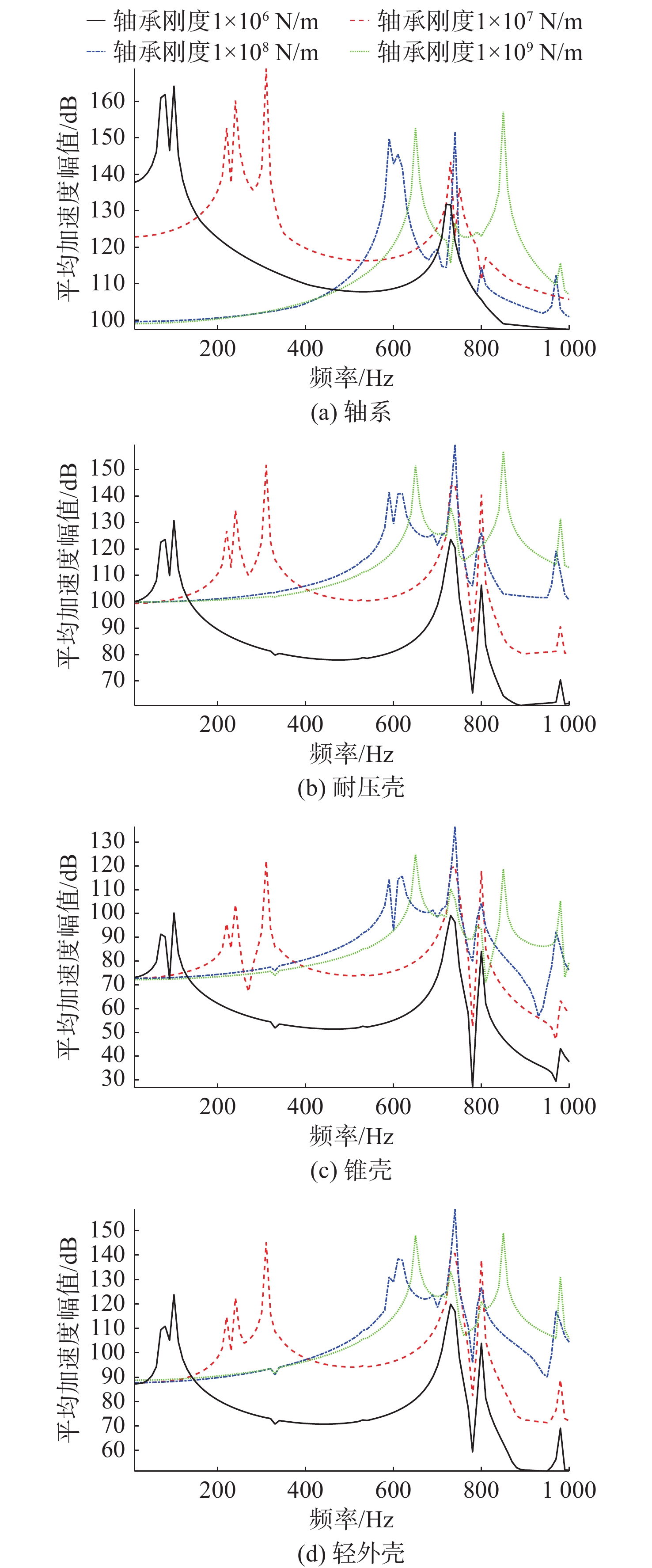
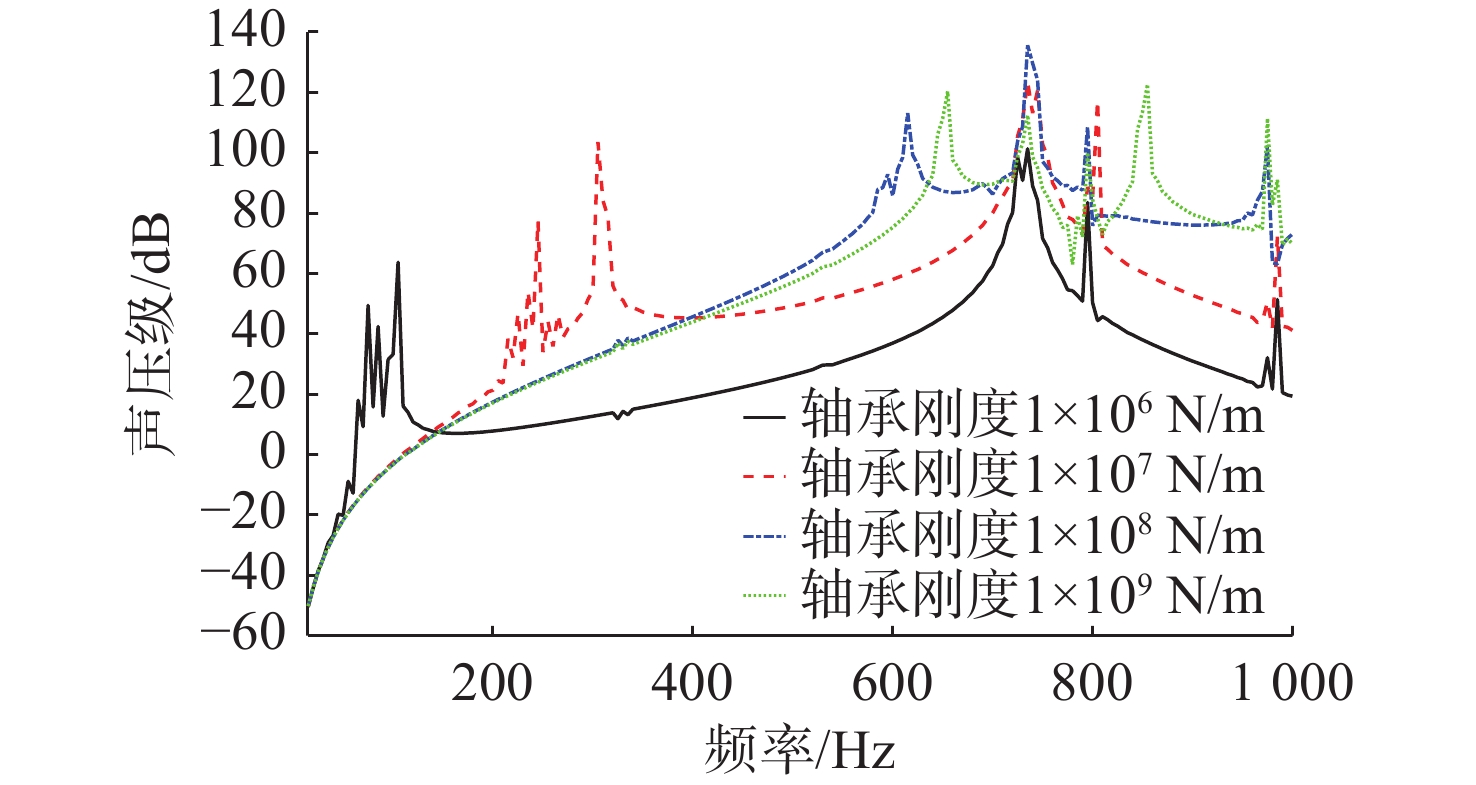
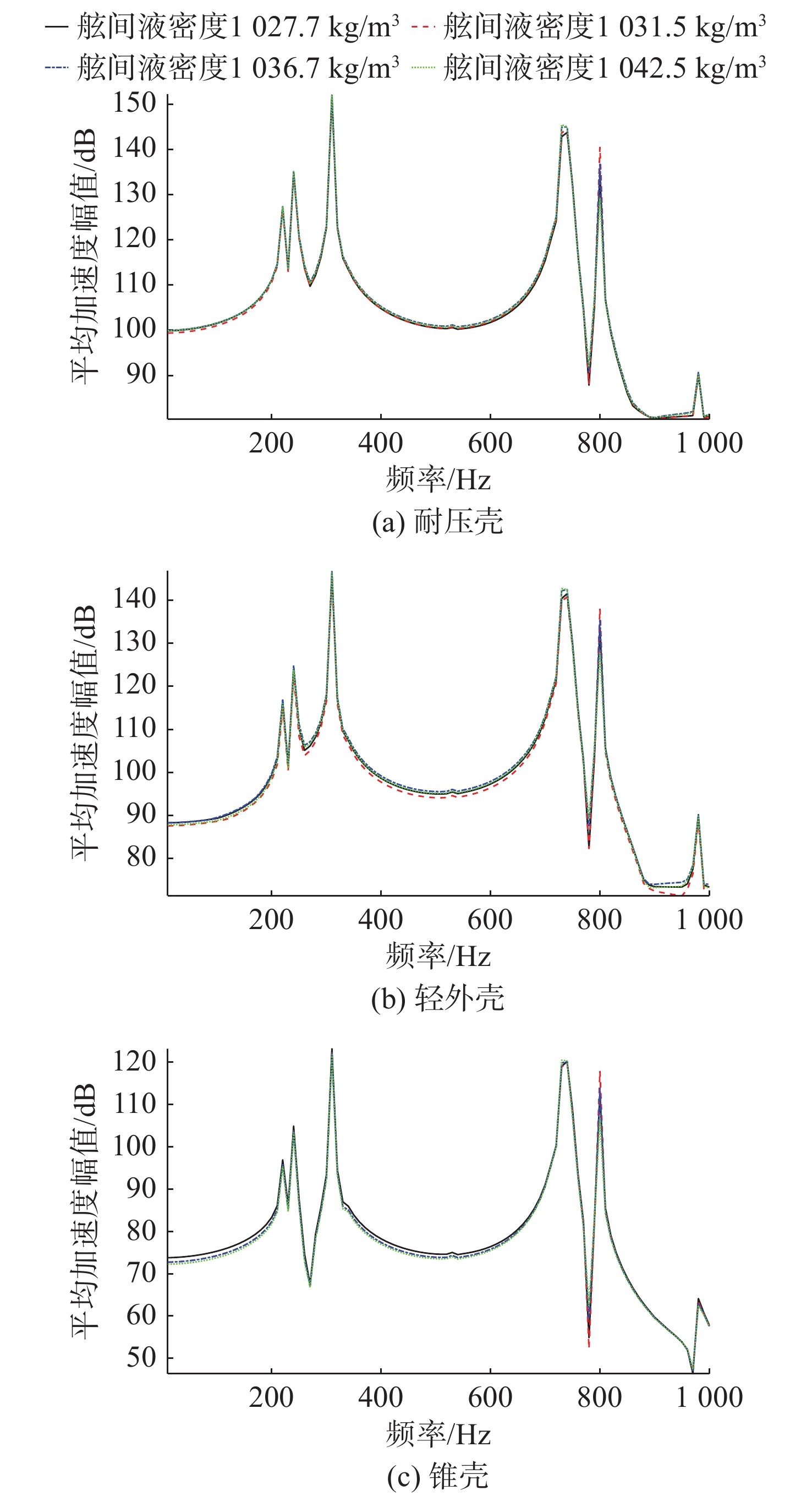
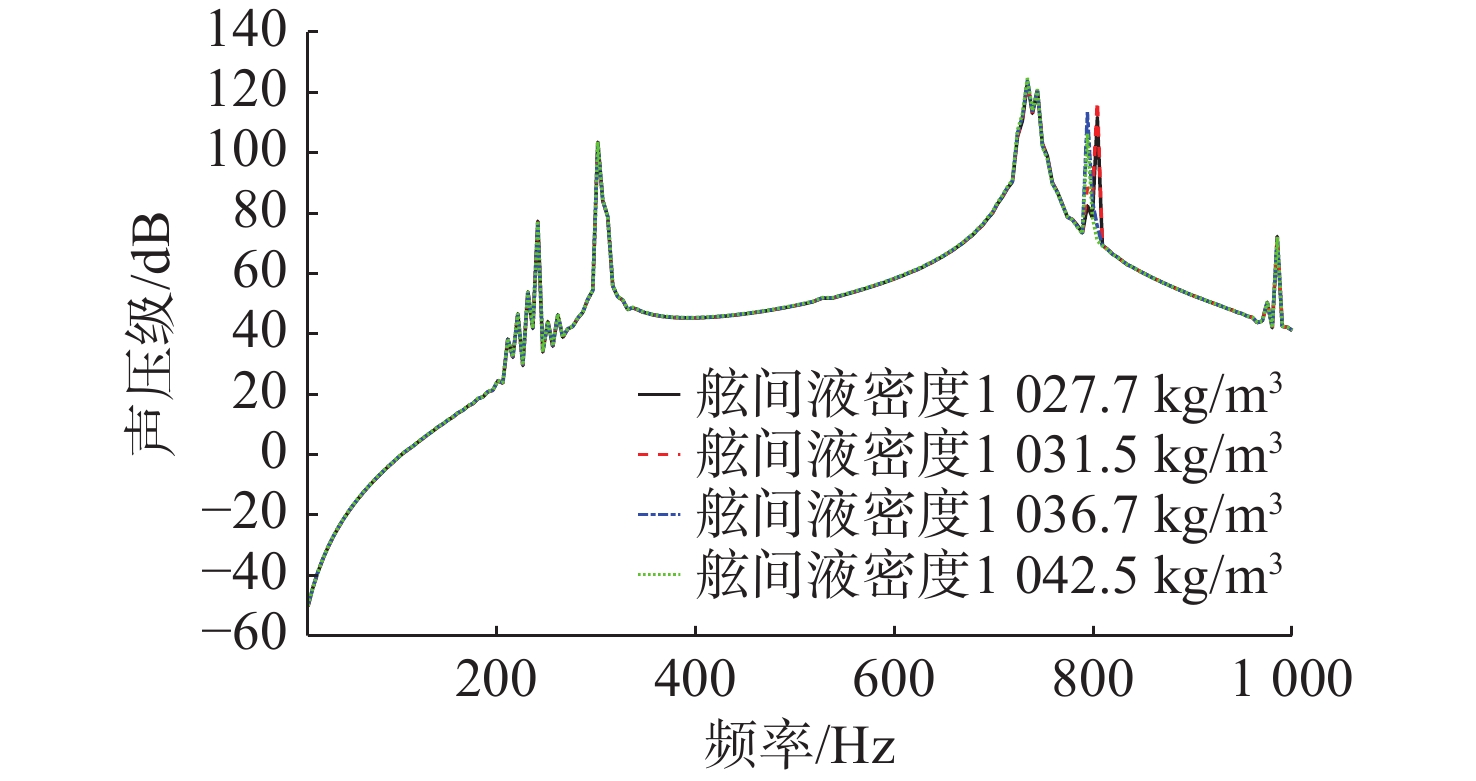
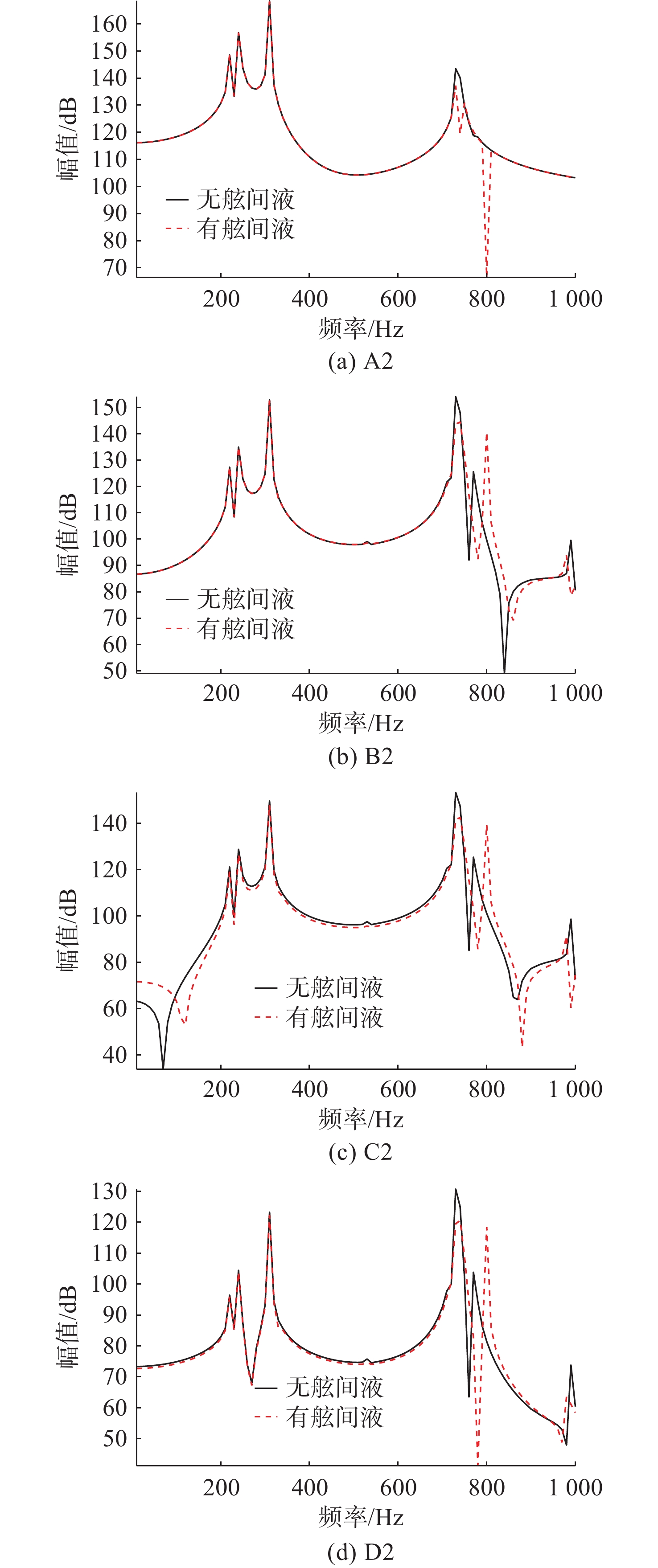
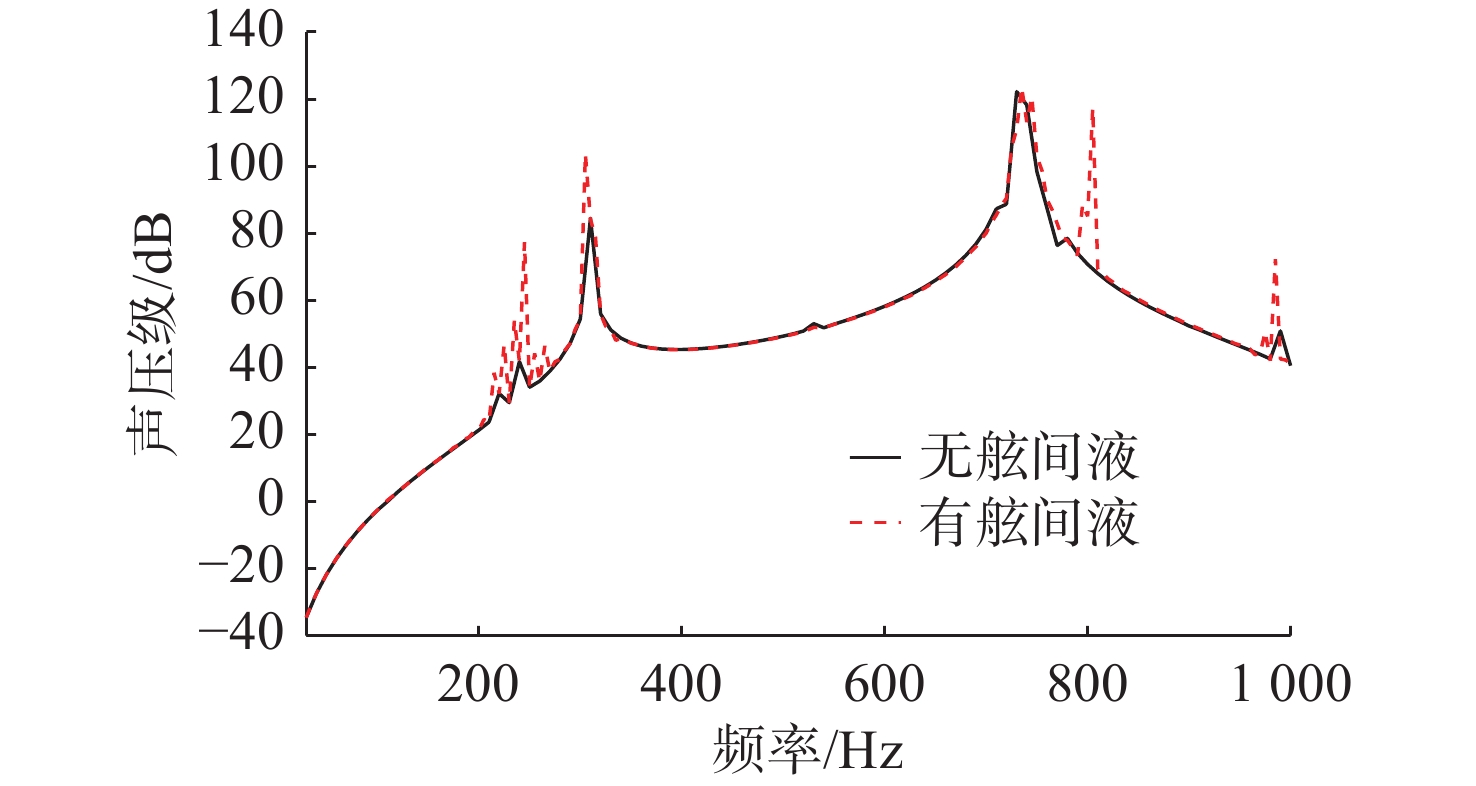
To investigate the vibration transmission characteristics of the underwater shaft-cone-cylinder double-layer shell structure, a fluid-solid coupling finite element model was constructed based on the HyperMesh-ANSYS co-simulation platform, so as to simulate the full-process dynamic behavior of shaft excitation, bearing transmission, shell, and liquid coupling. The effects of interhull fluid density, bearing stiffness, and internal and external fluids of the shell on structural vibration transfer were systematically analyzed. The results show that the interhull liquid reduces the resonance frequency of the system through the added mass effect and enhances the sound pressure level through the fluid-solid coupling effect. The increase in bearing stiffness can suppress the shaft system vibration but excites the high-frequency resonance of the shell. In the low-frequency band, the strong continuity of the interhull liquid enhances the vibration transmission between the double-layer shells, while the additional mass and damping effects block the vibration transmission in the high-frequency band. This study reveals the vibration transfer effect of the underwater shaft-cone-cylinder double-layer shell model and provides theoretical support for the acoustic vibration design and vibration and noise reduction optimization of undersea vehicles.
Operational Transfer Path Analysis with Total Least Squares Method
GUI Juntao, FAN Xiaobo, MAN Shilin, WU Song
2026, 34(2): 273-282. doi: 10.11993/j.issn.2096-3920.2025-0024
Abstract:
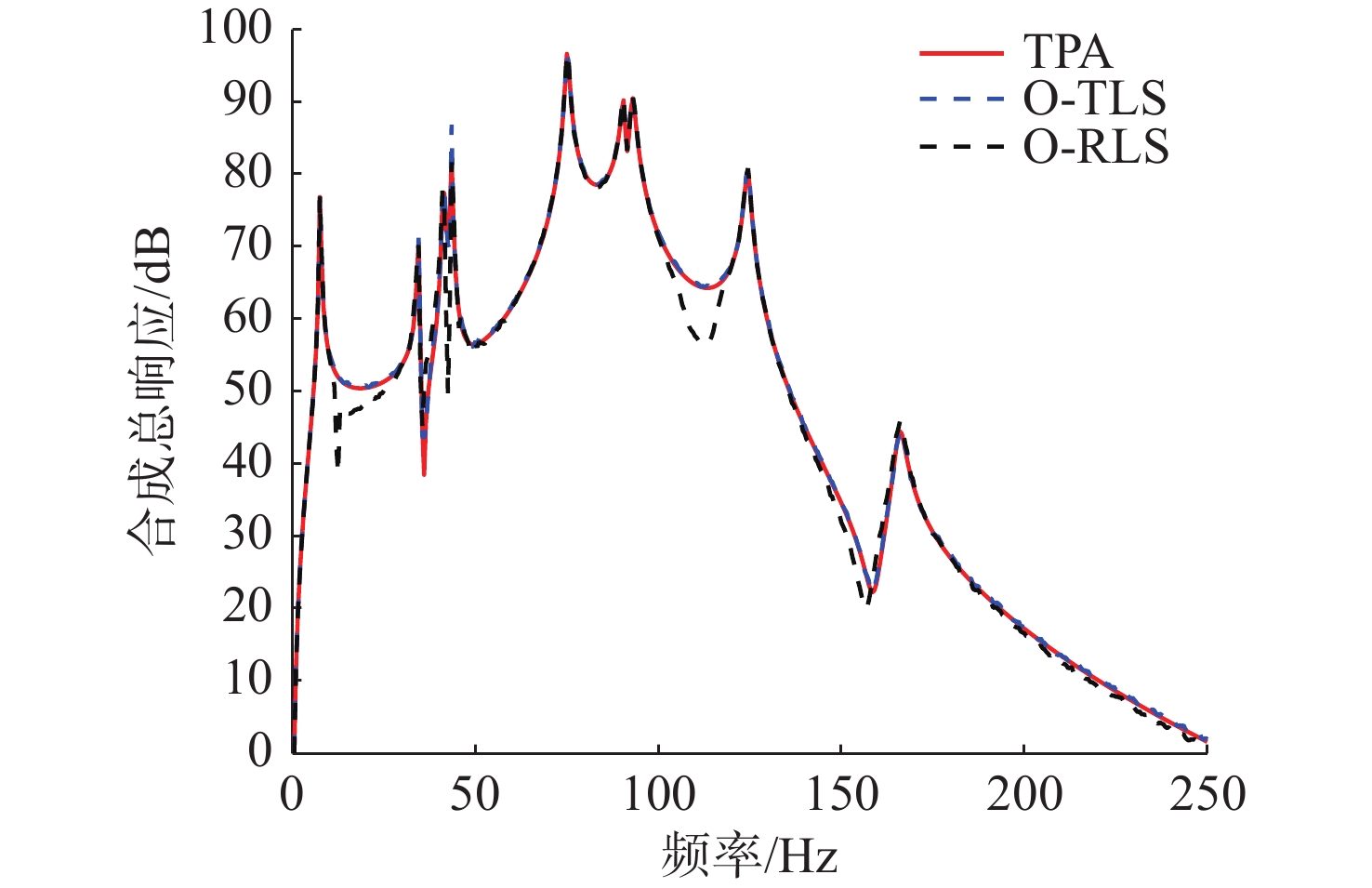
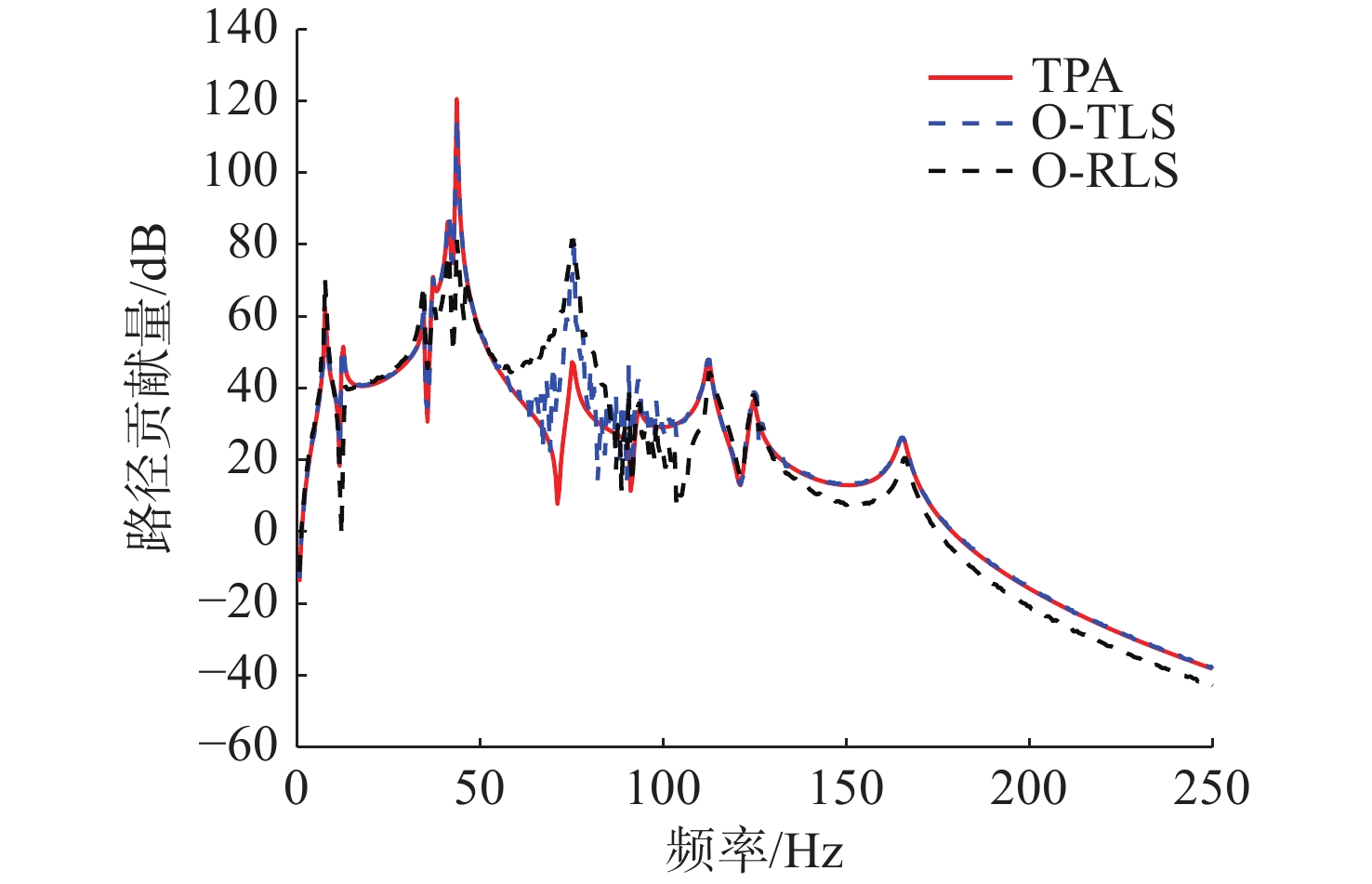
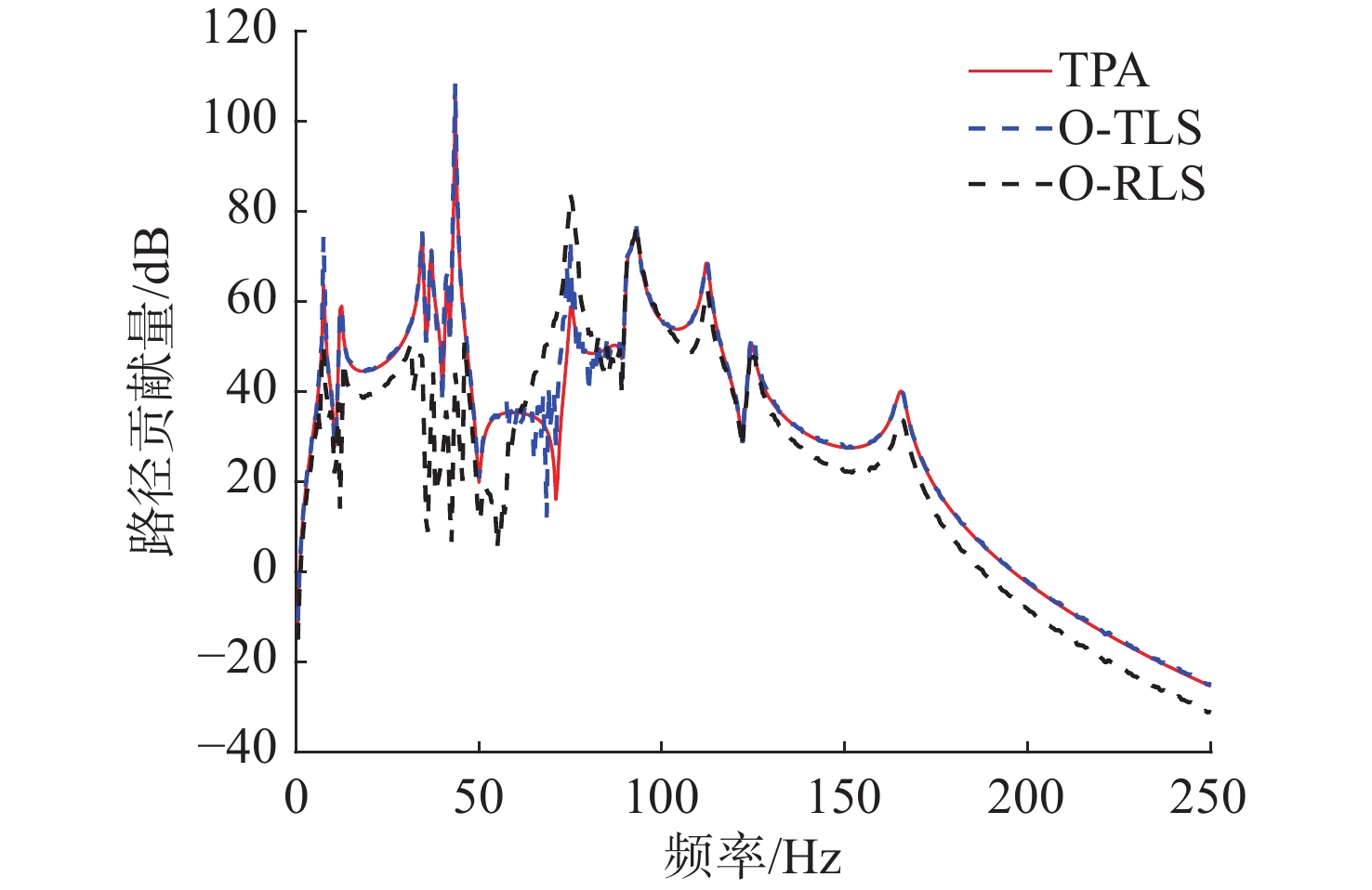
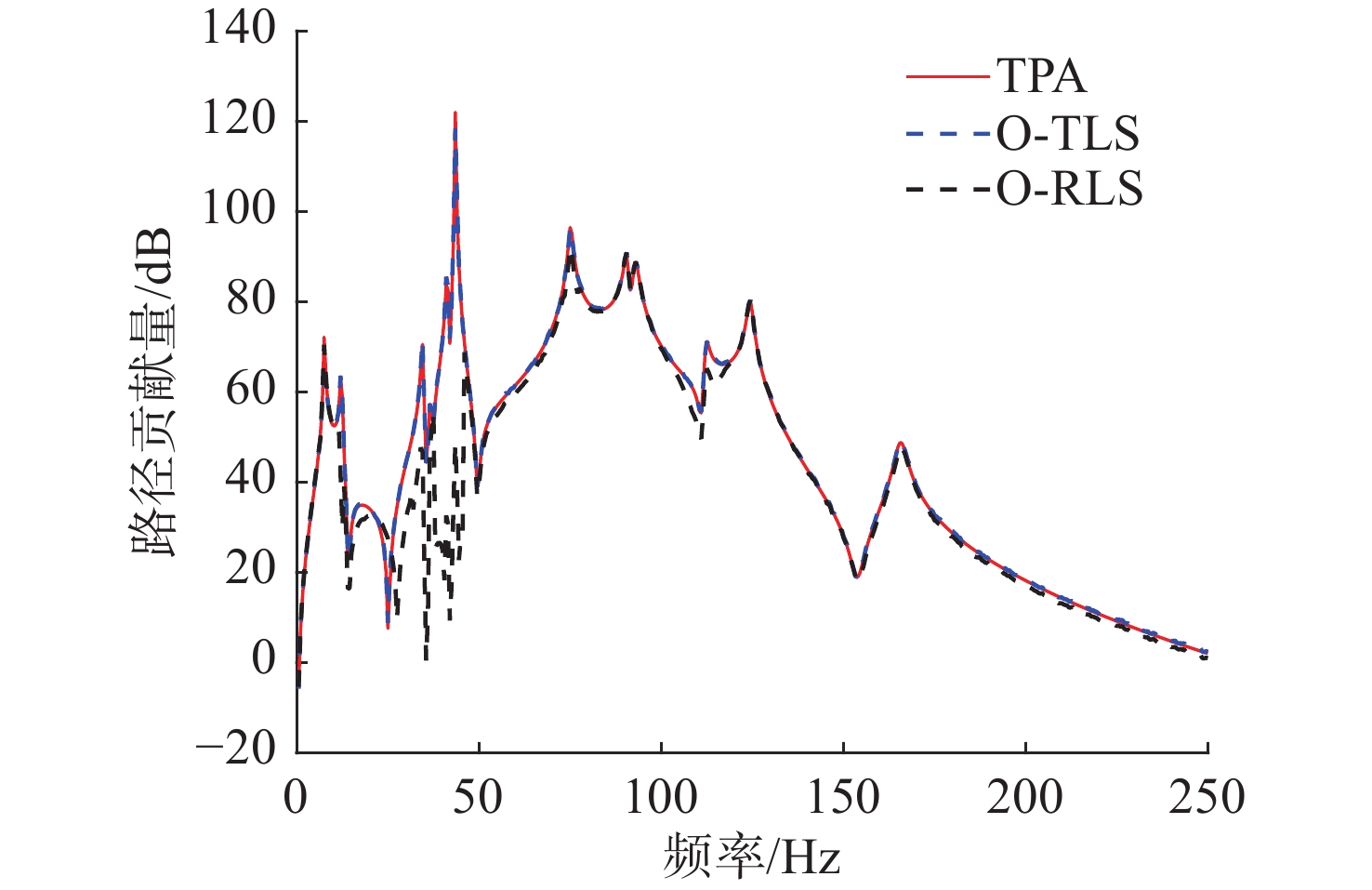
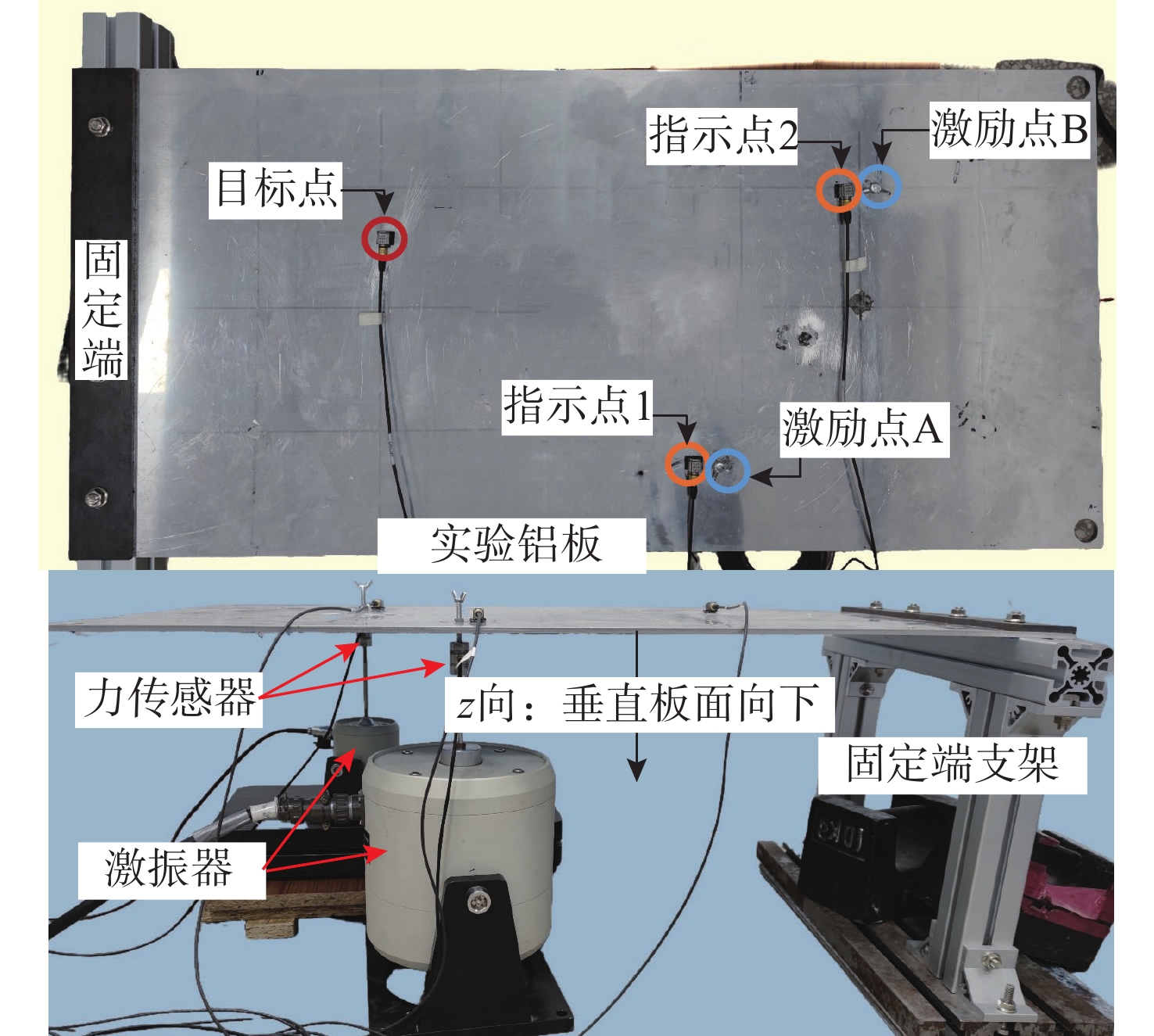
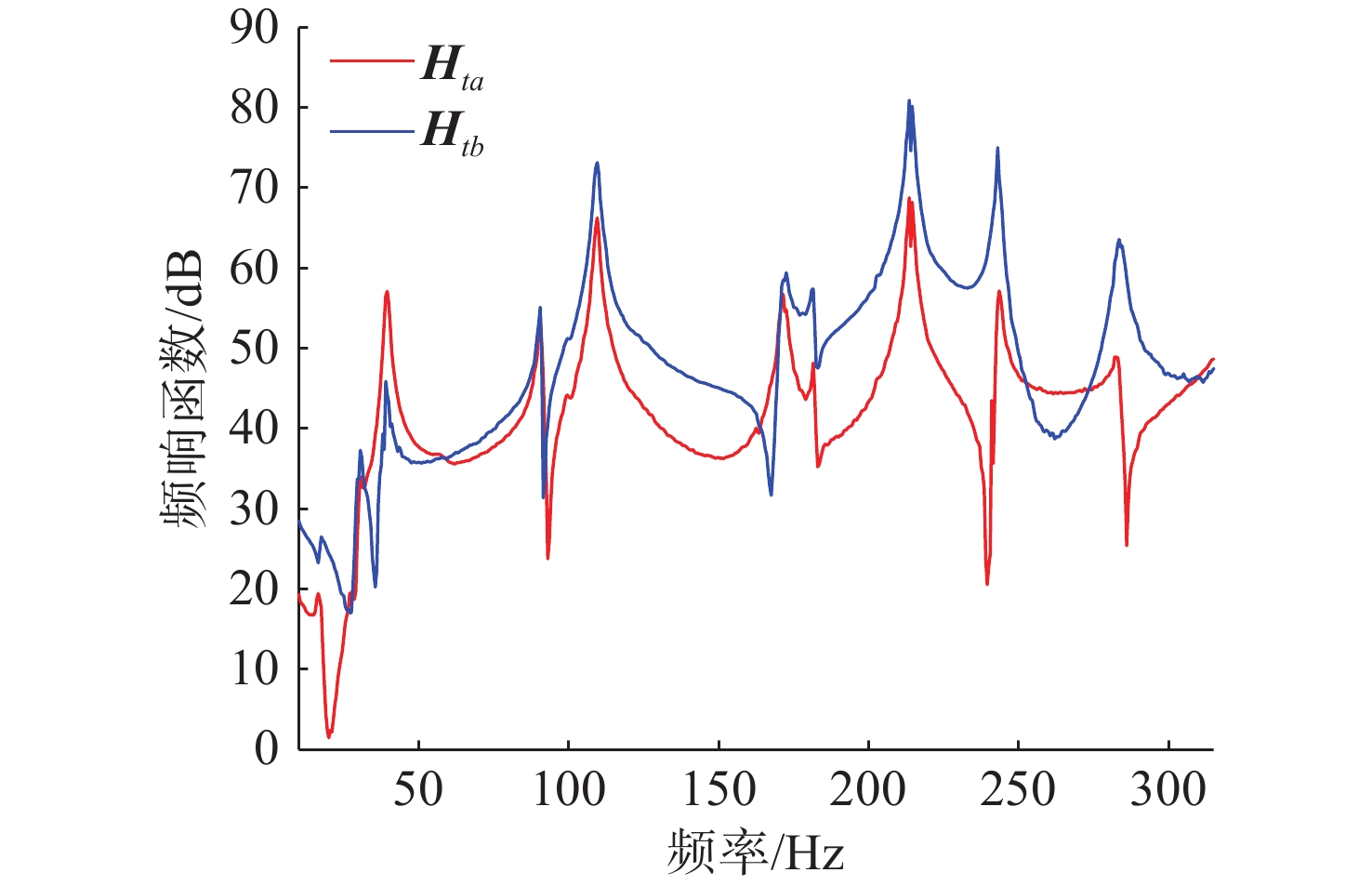
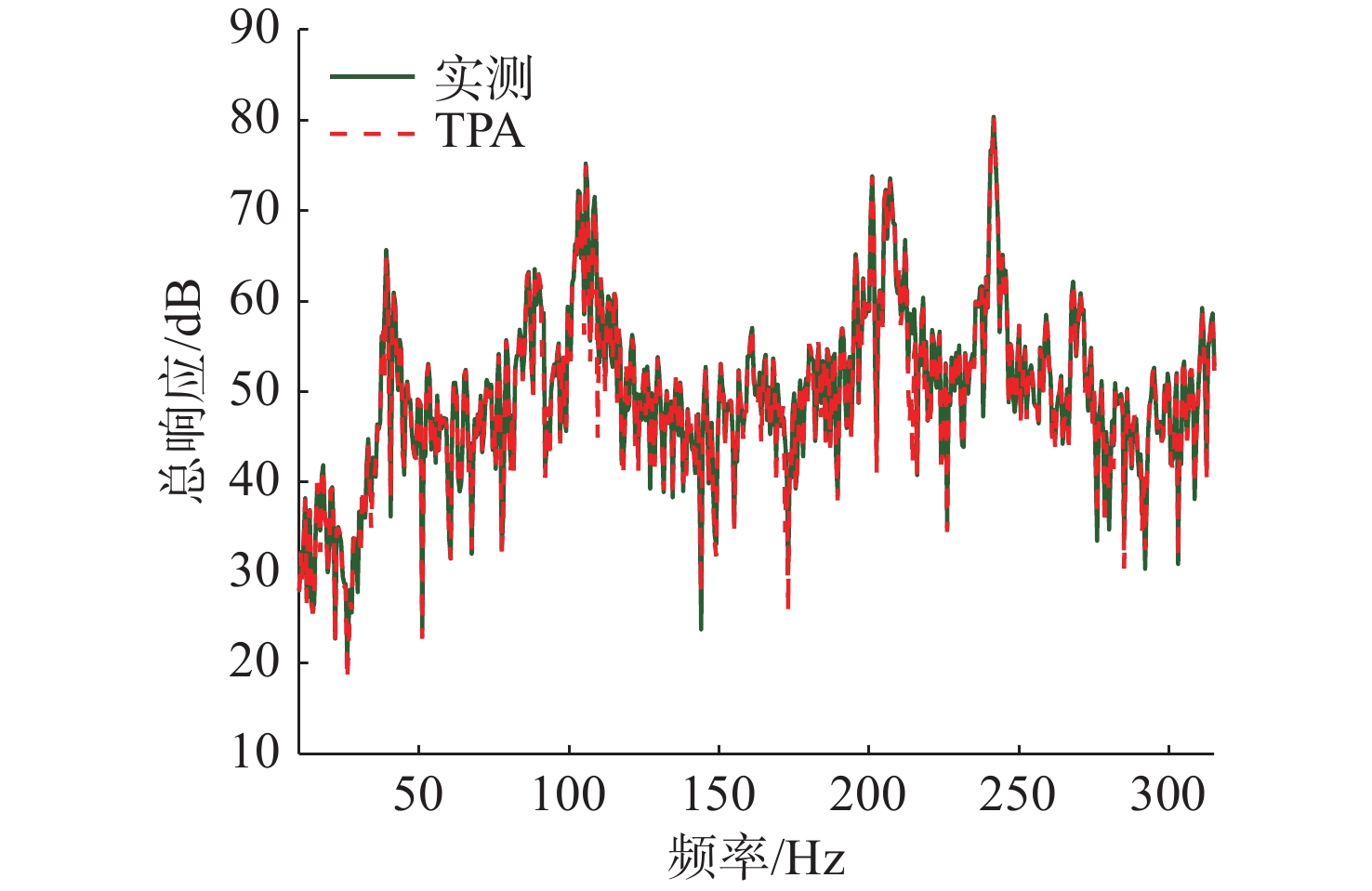
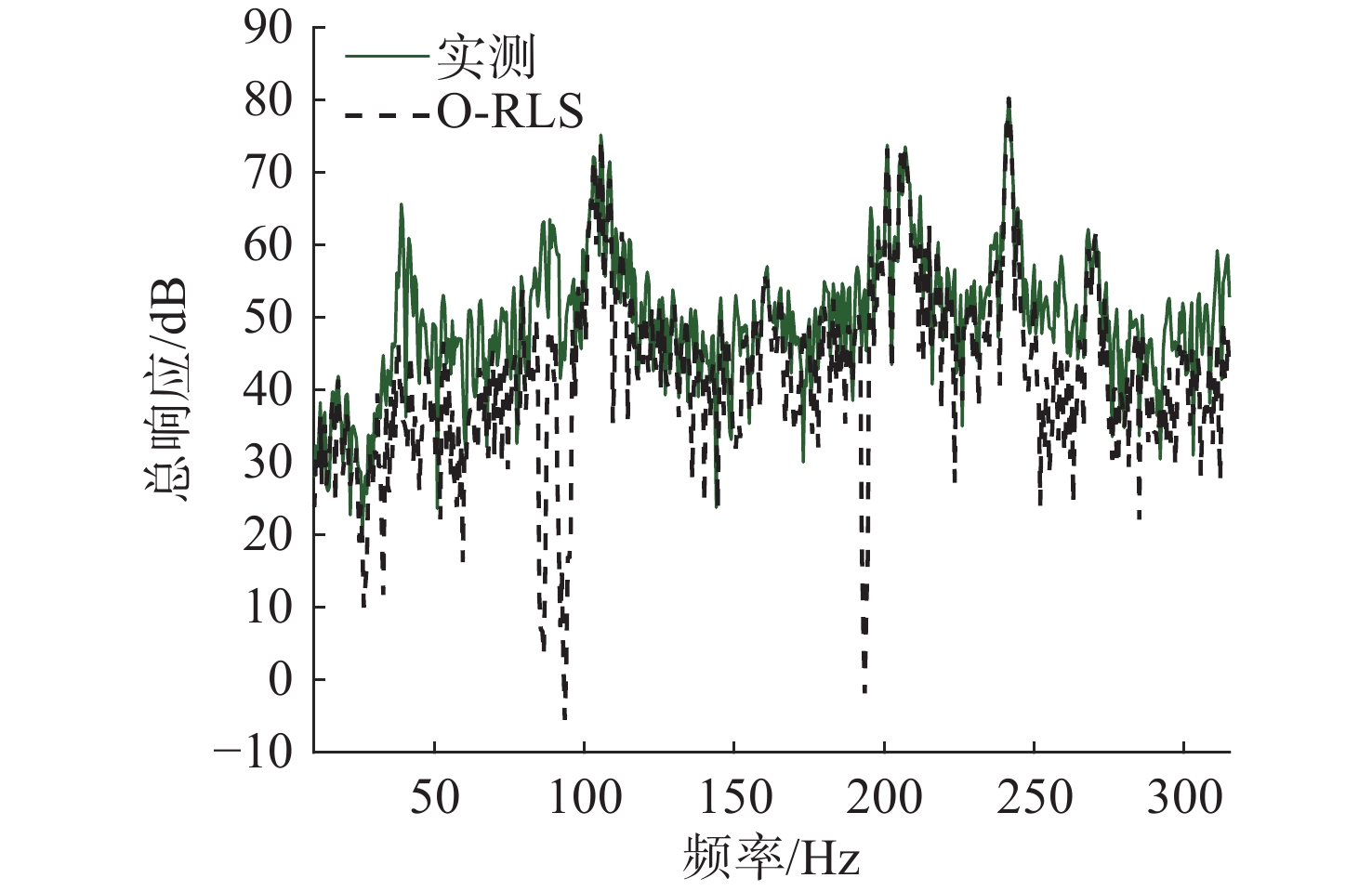
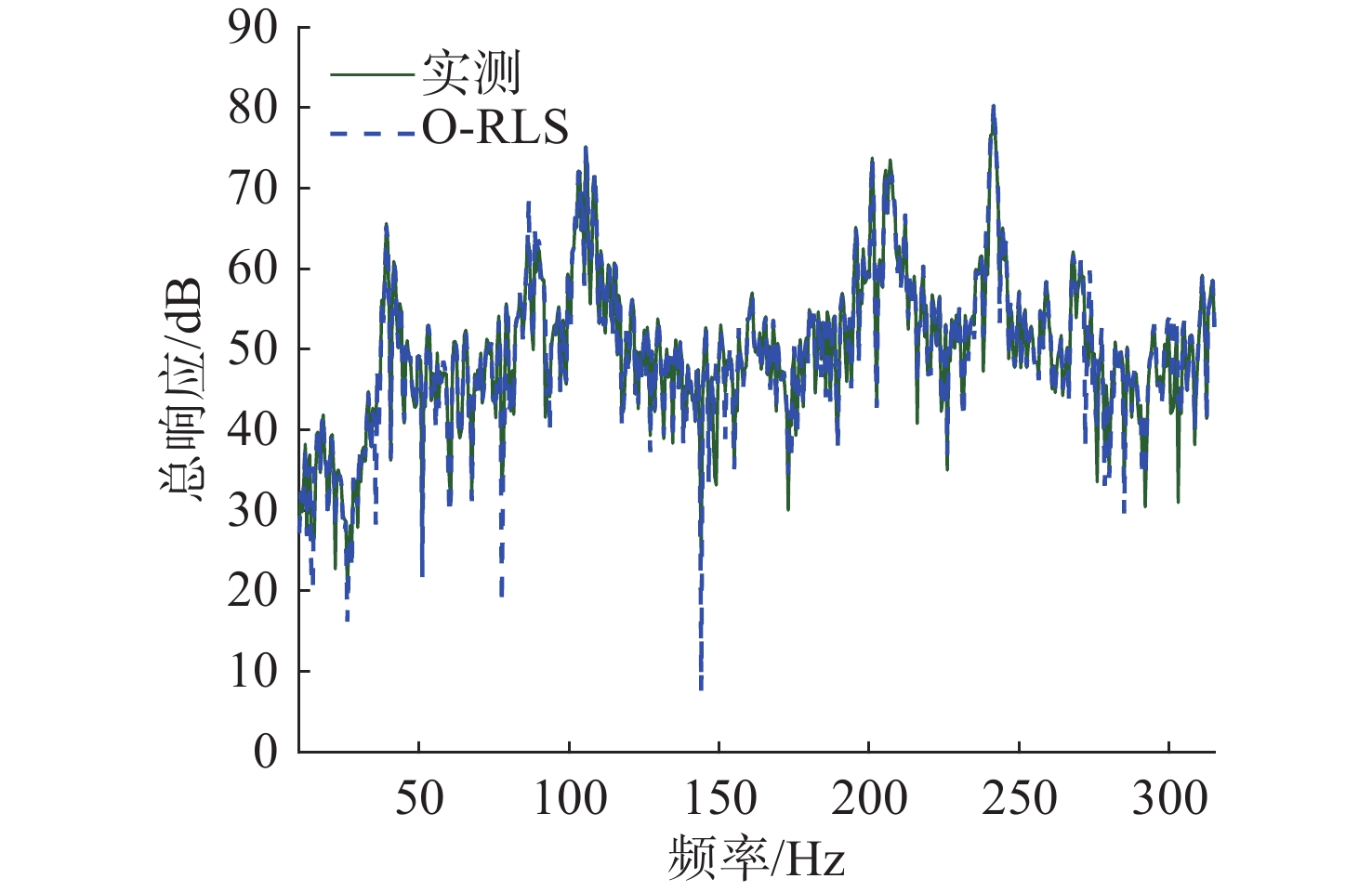
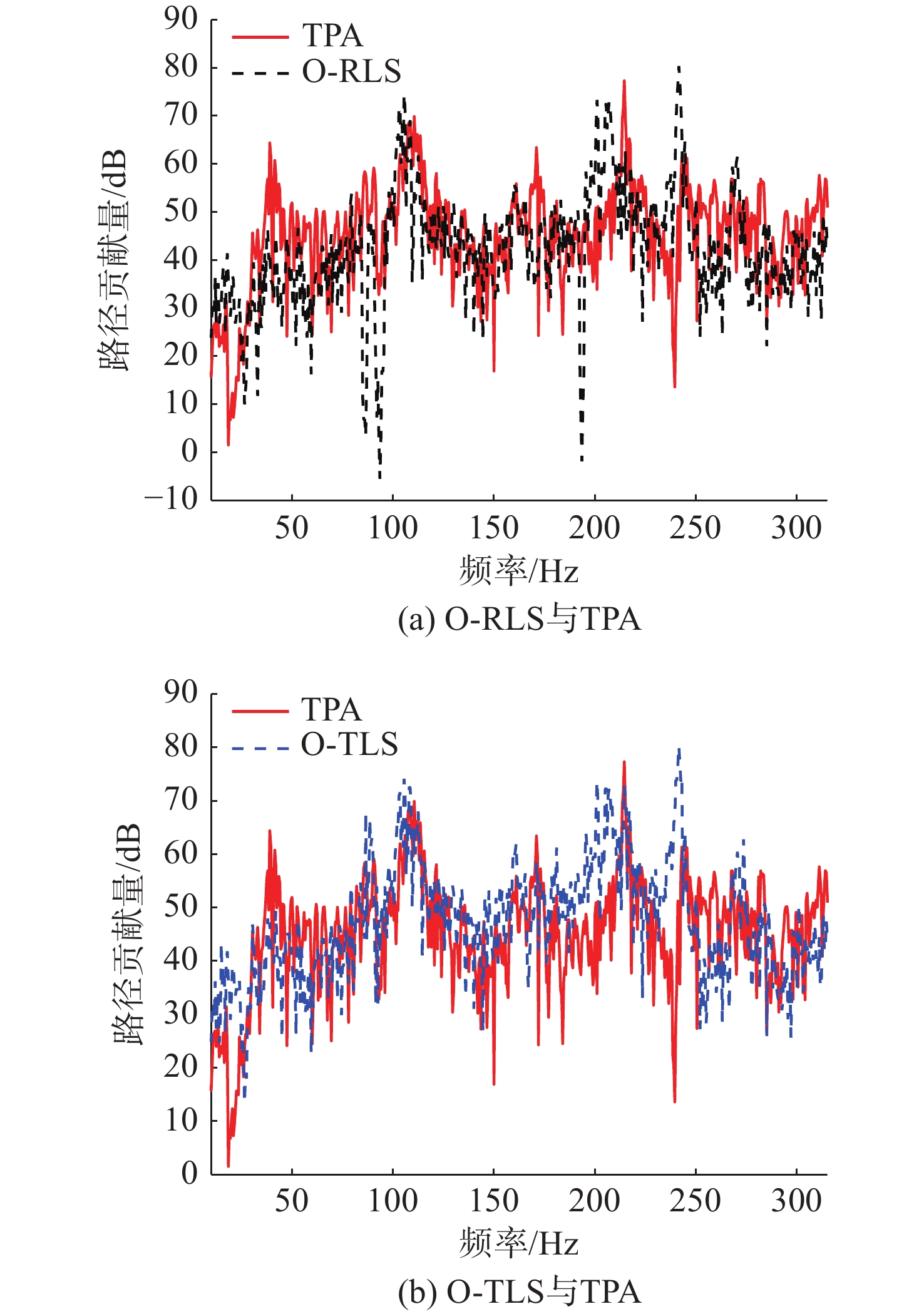
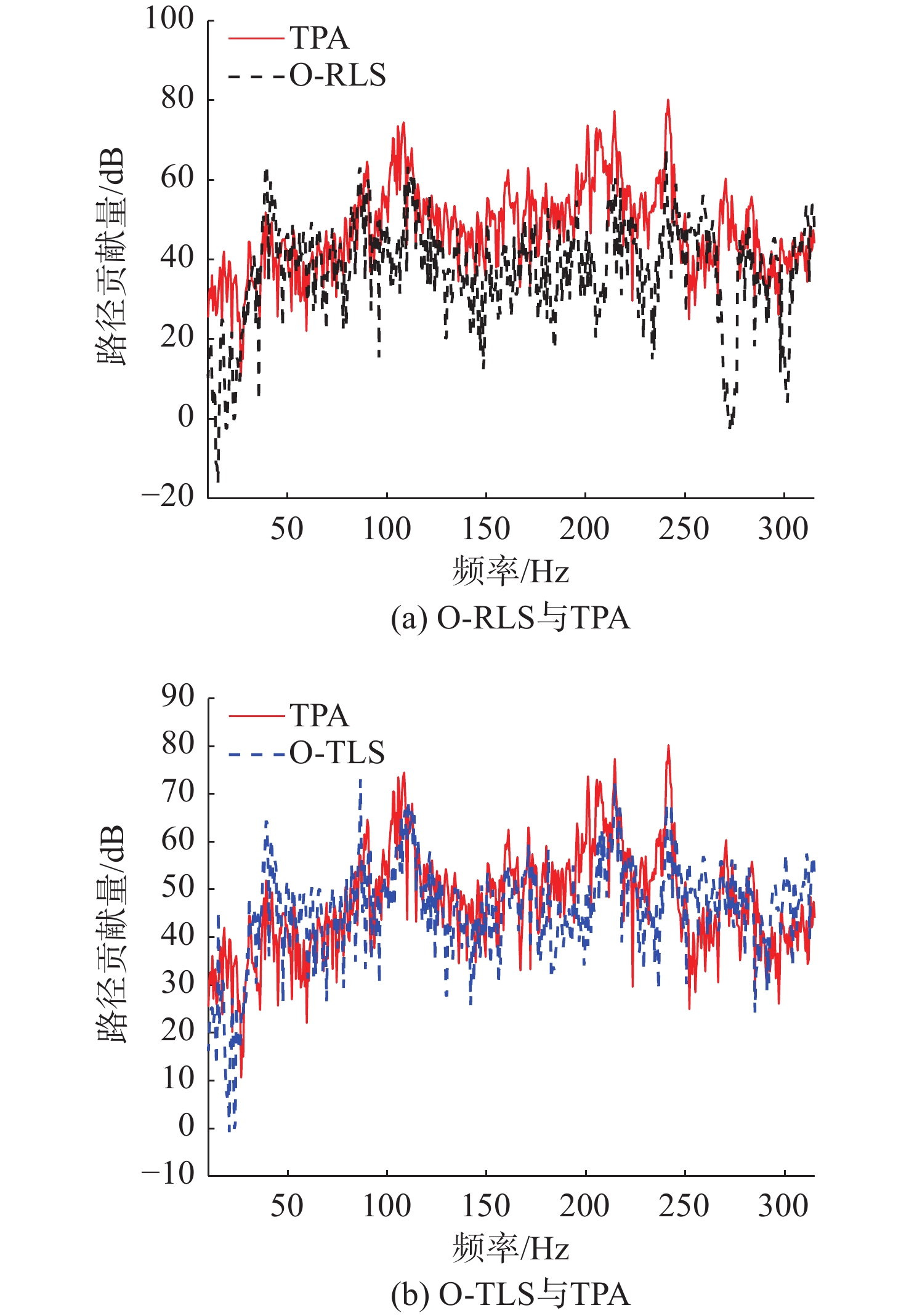
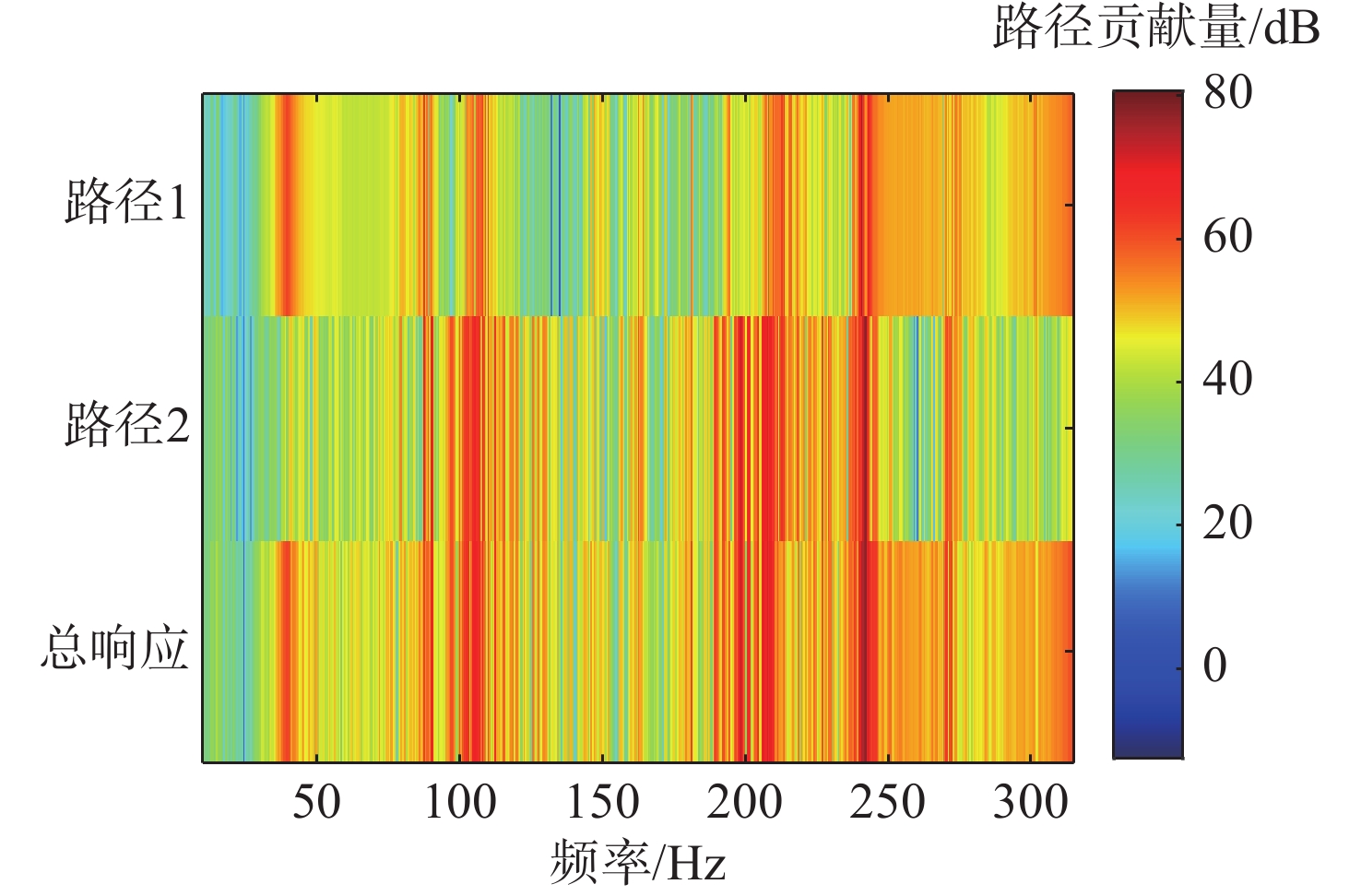
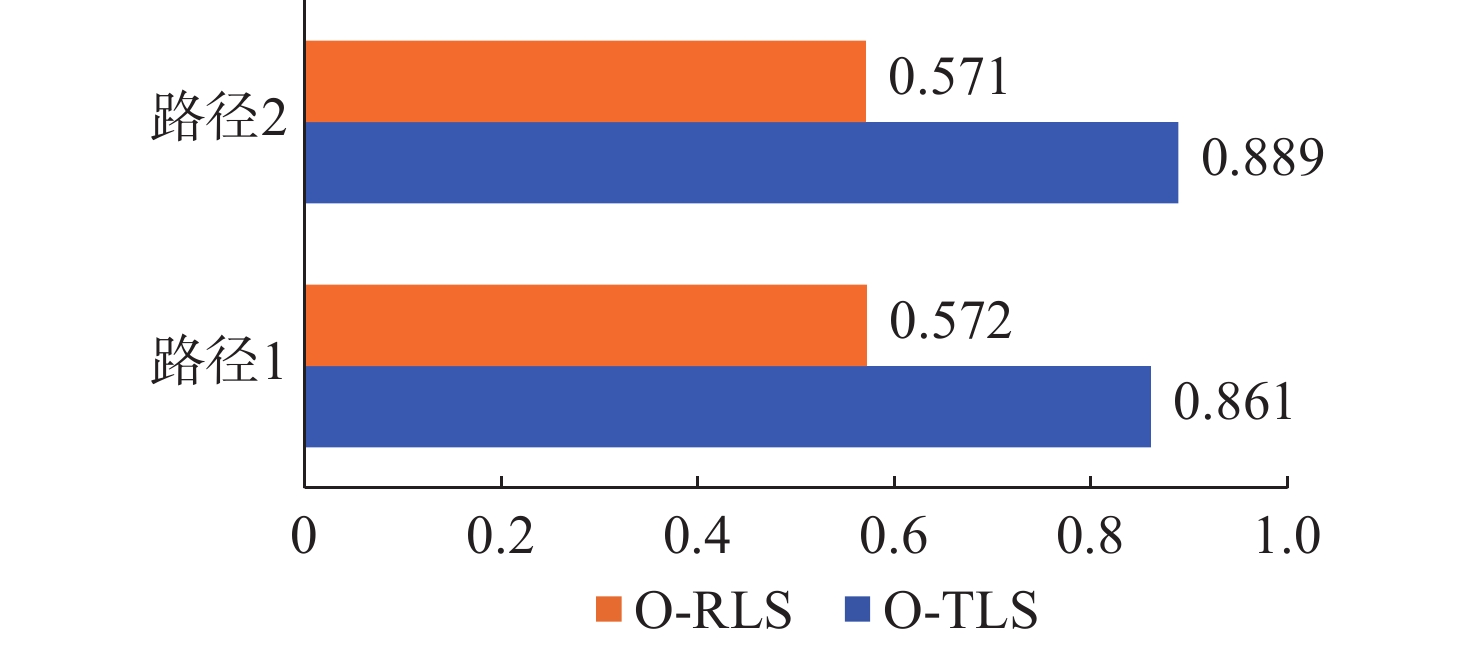
Operational transfer path analysis(OTPA) utilizes response data under different working conditions to decompose and predict vibration noise and is therefore widely used in various engineering fields. However, the response data of vibration noise inevitably contains errors, which seriously affect the accuracy of the OTPA. To reduce the impact of errors and improve the accuracy of the transmissibility function matrix, the total least squares method was used to estimate the transmissibility function matrix. Compared to traditional methods, the total least squares method takes into account the observation errors in both the target point and indicator point response data. The regularized least squares model and the total least squares model were respectively adopted to perform OTPA in both numerical models and test models, and the contribution of each path was obtained. The simulation results show that the contribution identified by the total least squares method is more consistent with the contribution of classical transfer path analysis, indicating that compared with the regularized least squares method, the total least squares method has better applicability in OTPA, effectively improving the accuracy of OTPA.
Experimental Study on Active Control for Propeller Radiated Sound Fields
LIU Kuokuo, SUN Hongling, SUN Luyang, LI Shixun, CHENG Xiaobin, LI Yuhui, CAO Rongning, WANG Han
2026, 34(2): 283-288, 325. doi: 10.11993/j.issn.2096-3920.2026-0034
Abstract:
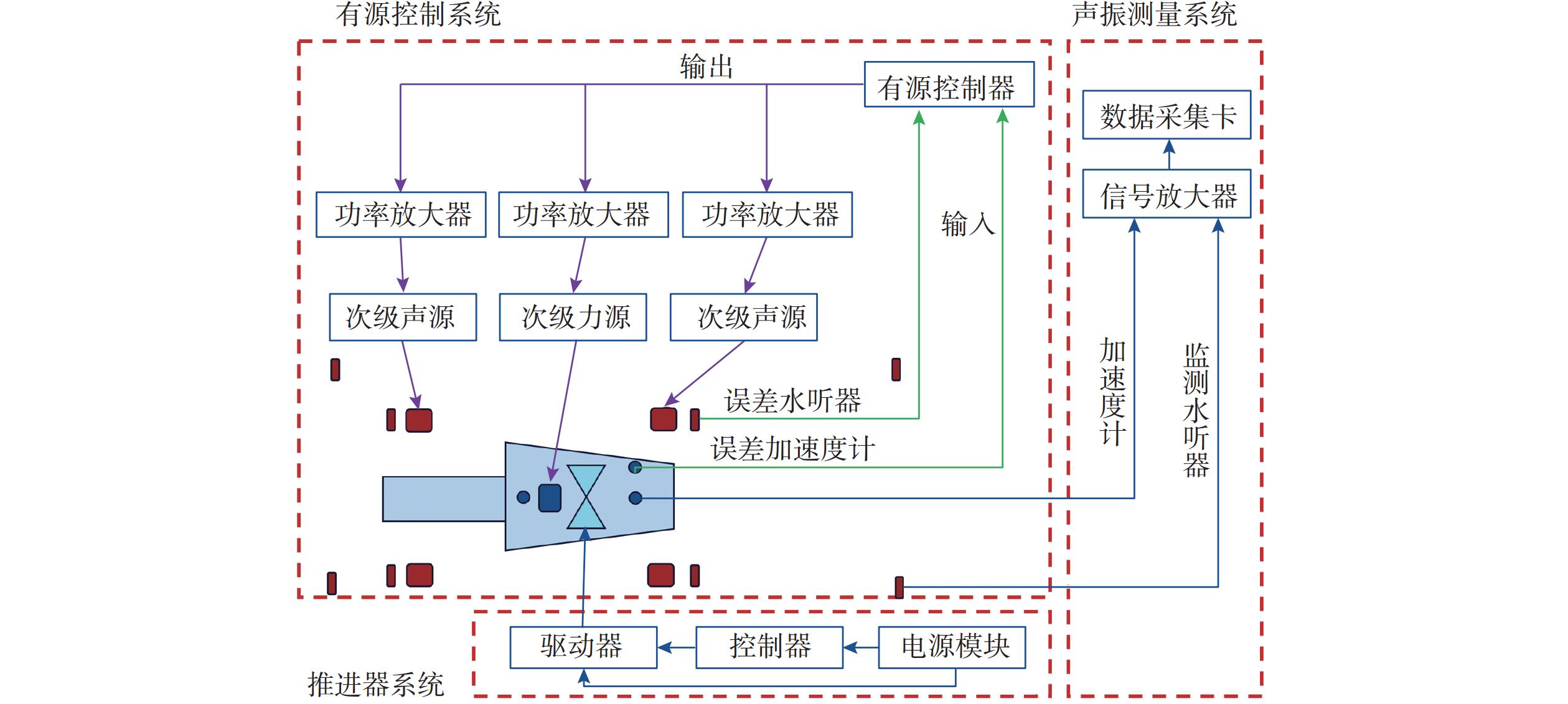
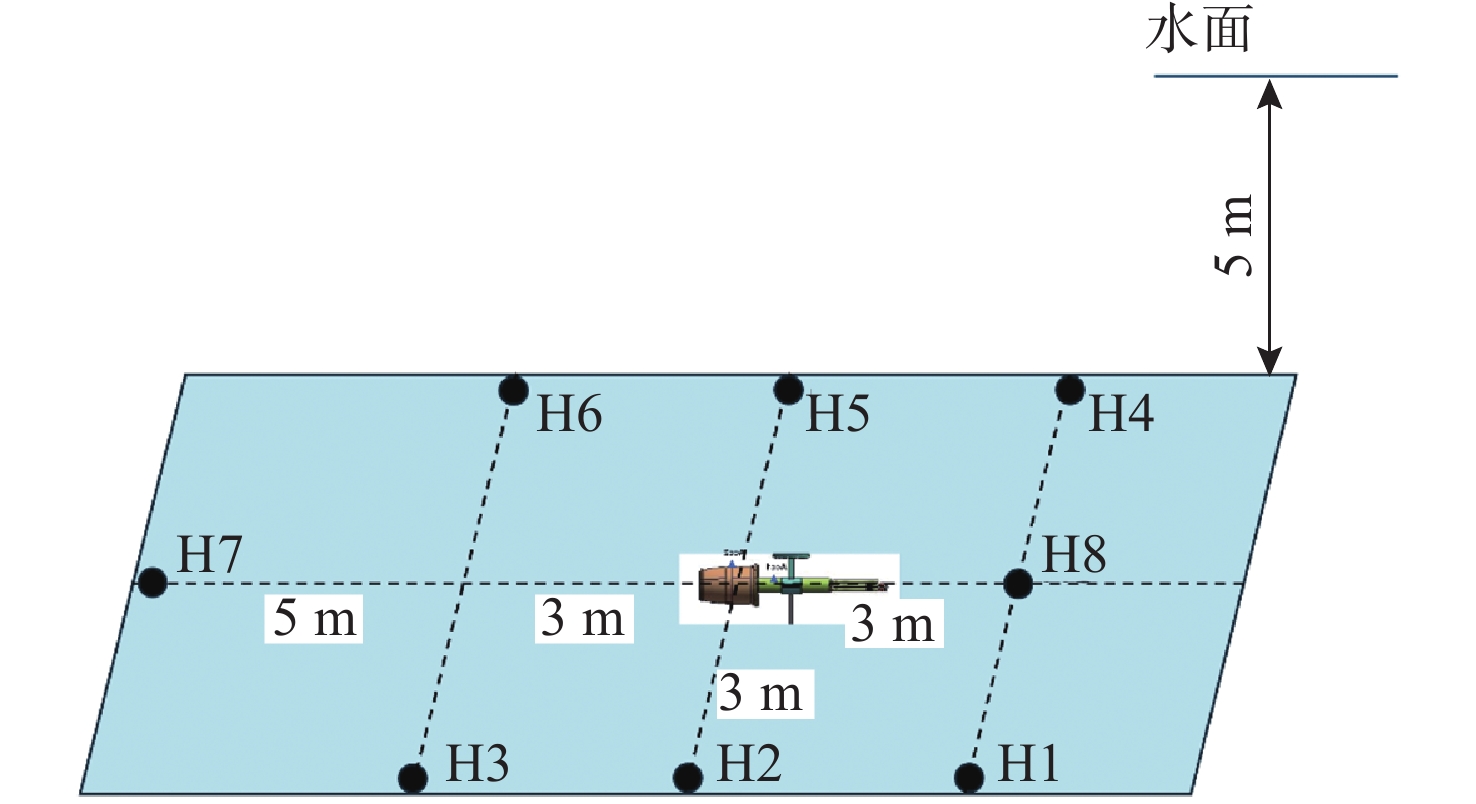
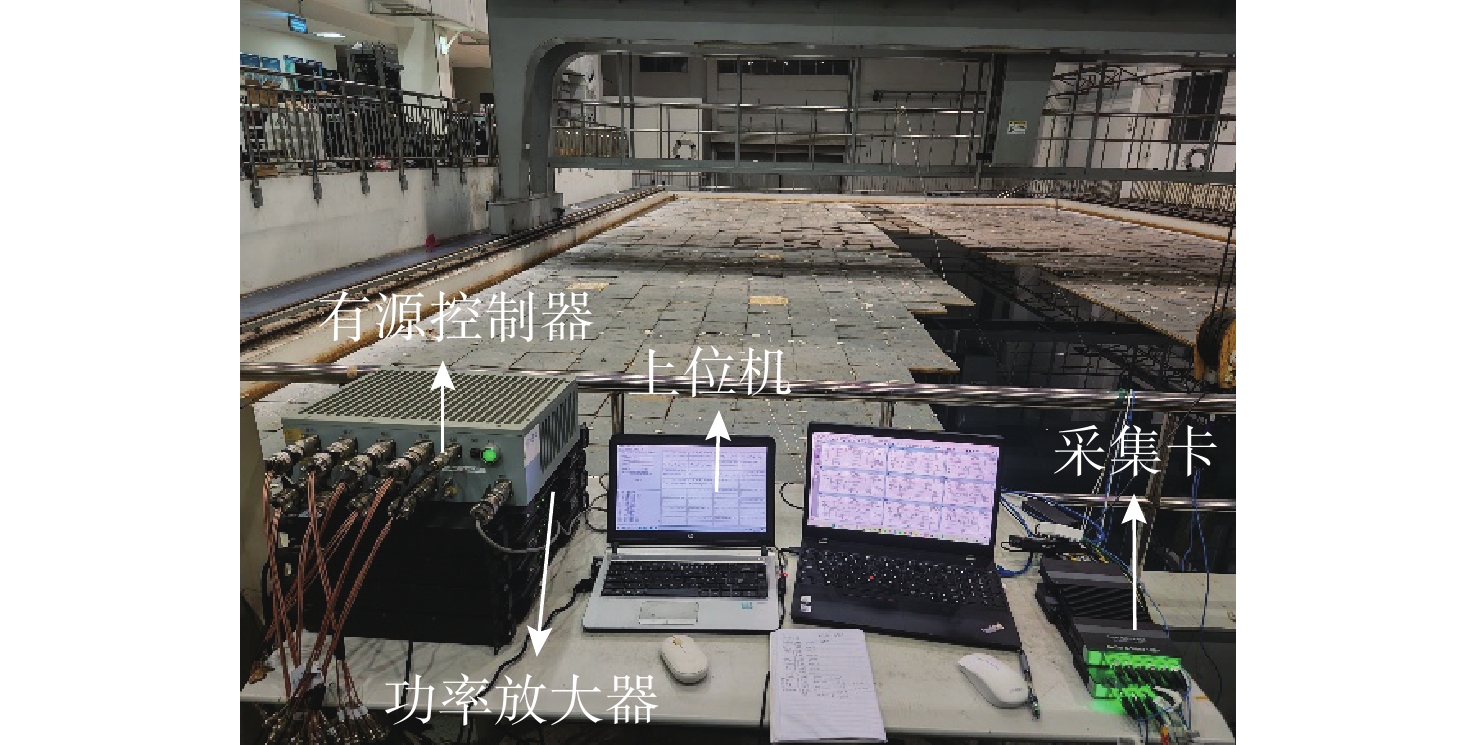
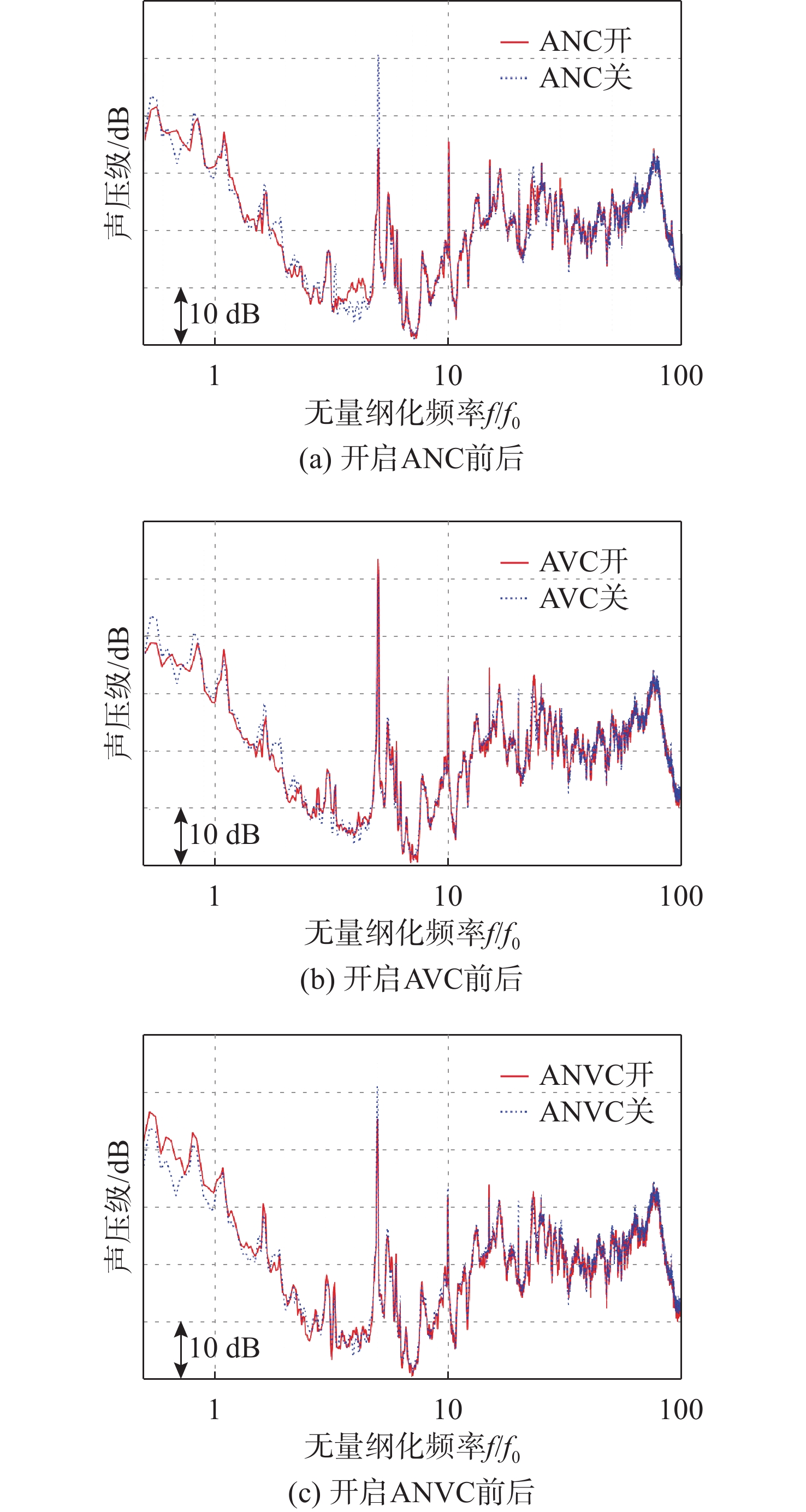
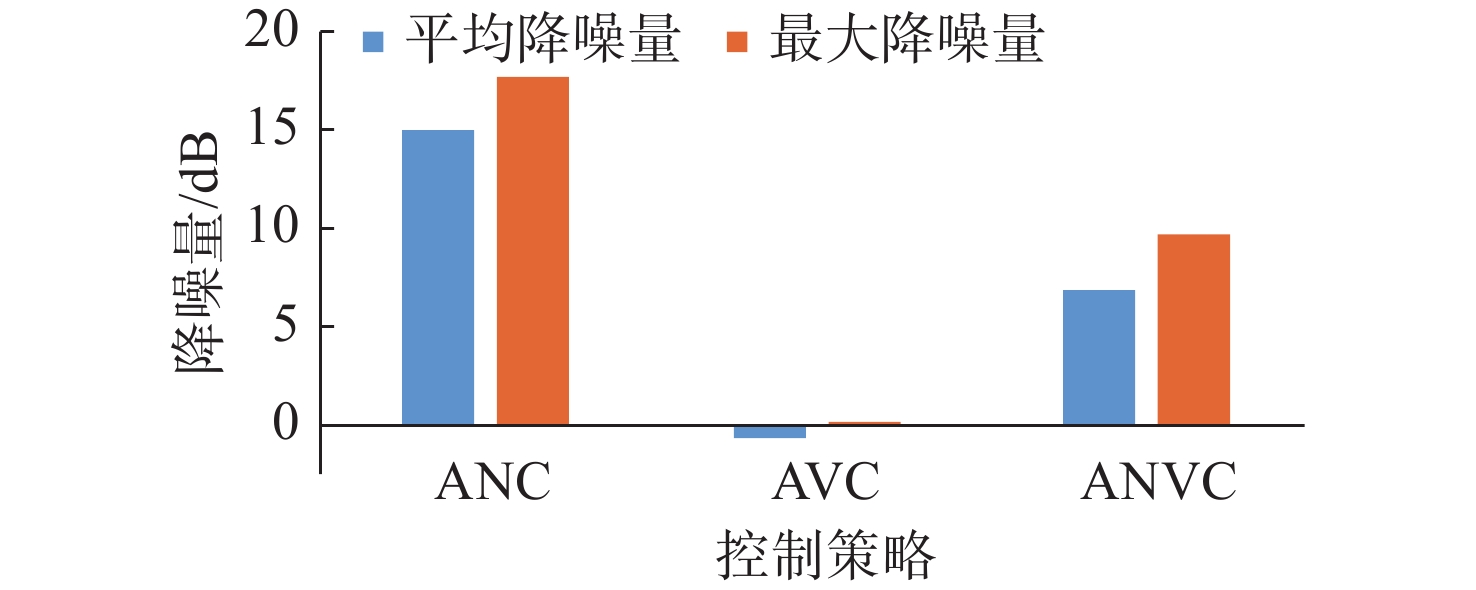
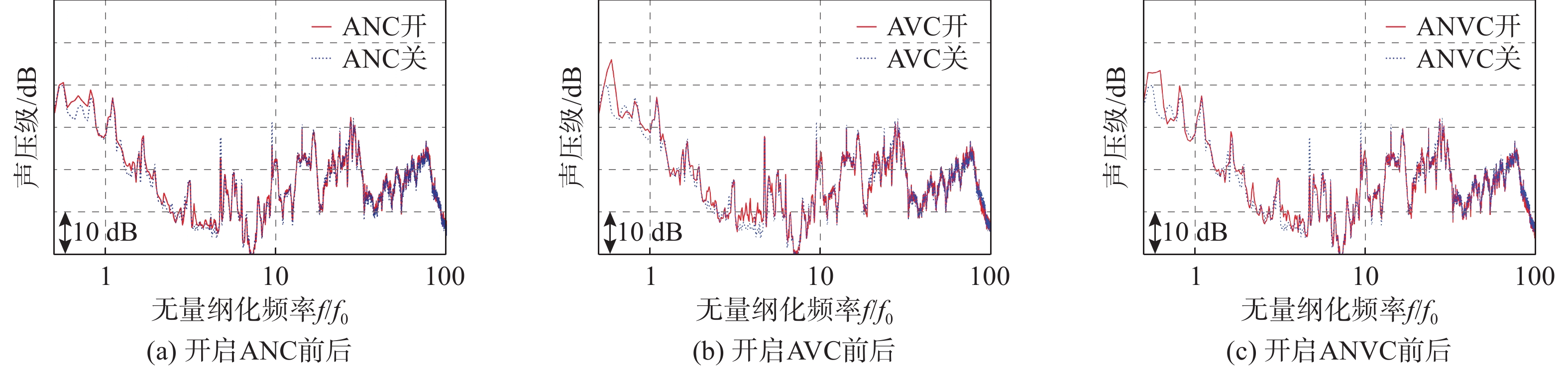
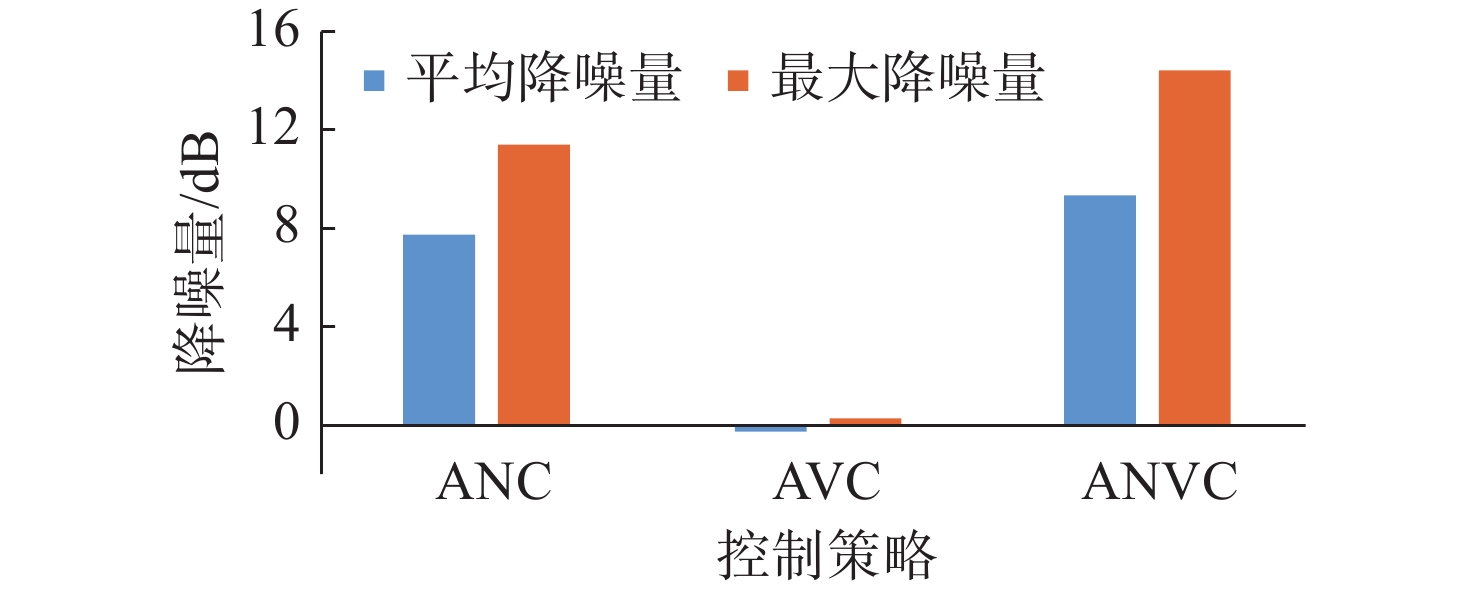
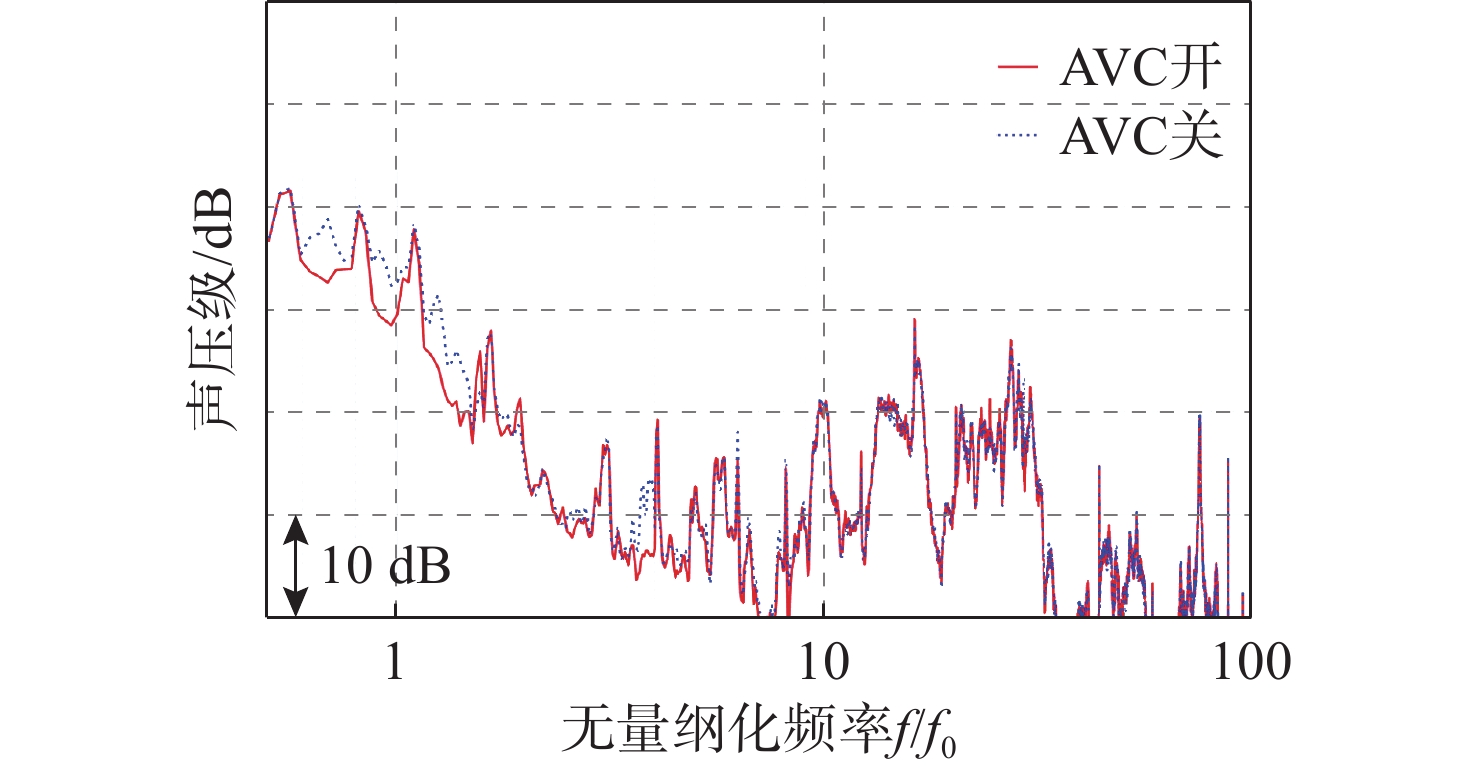
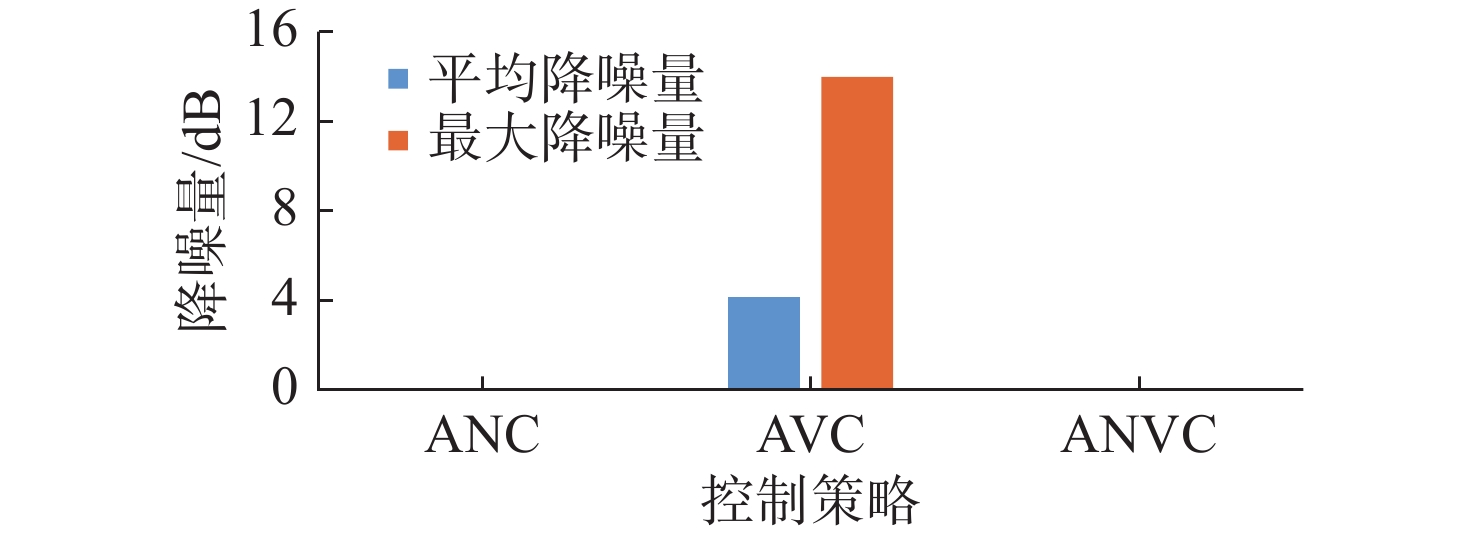
When an undersea vehicle is in motion, the propeller generates significant low-frequency line spectrum radiated noise. To verify the control effectiveness of different active control strategies on the line spectrum radiated noise, an active control experiment on the radiated sound fields was conducted for the first time on a real small-scale propeller. An underwater test platform, including a propeller, sensors, secondary force actuators, secondary sound sources, and a control system, was constructed for active noise control(ANC), active vibration control(AVC), and active noise and vibration control(ANVC) tests, respectively. By altering the working conditions of the propeller, the suppression effects of different control strategies on the radiated noise of the underwater propeller were tested. The results show that ANC has a significant and stable effect on suppressing the low-frequency line spectrum noise of the propeller, and performs best under high rotational speed working conditions; AVC has limitations and local control may lead to sound field reconstruction; ANVC shows potential for collaborative control in some working conditions, while the control strategy and collaborative mechanism need to be further optimized. The research results provide an experimental basis and technical support for the engineering active control of underwater propeller radiated noise.
A Study on Flow-Induced Noise Simulation Using SUBOFF ModelBased on Bayesian Sparse Grids
LIU Jiayu, LIU Peng, JIN Hui, YIN Yibing, LIU Jiang, LIU Guijie, WEN Zhenhua
2026, 34(2): 289-298. doi: 10.11993/j.issn.2096-3920.2026-0033
Abstract:
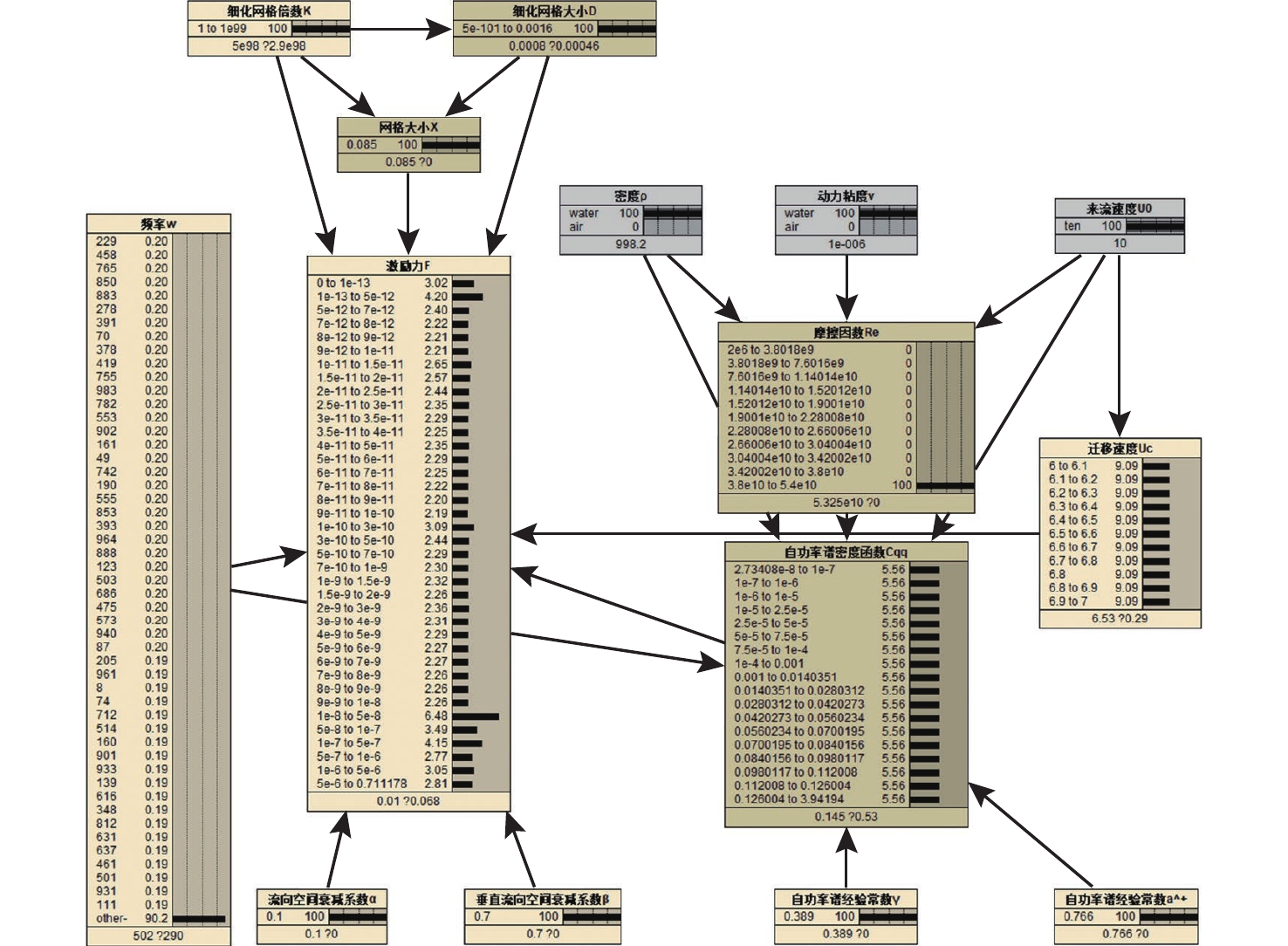
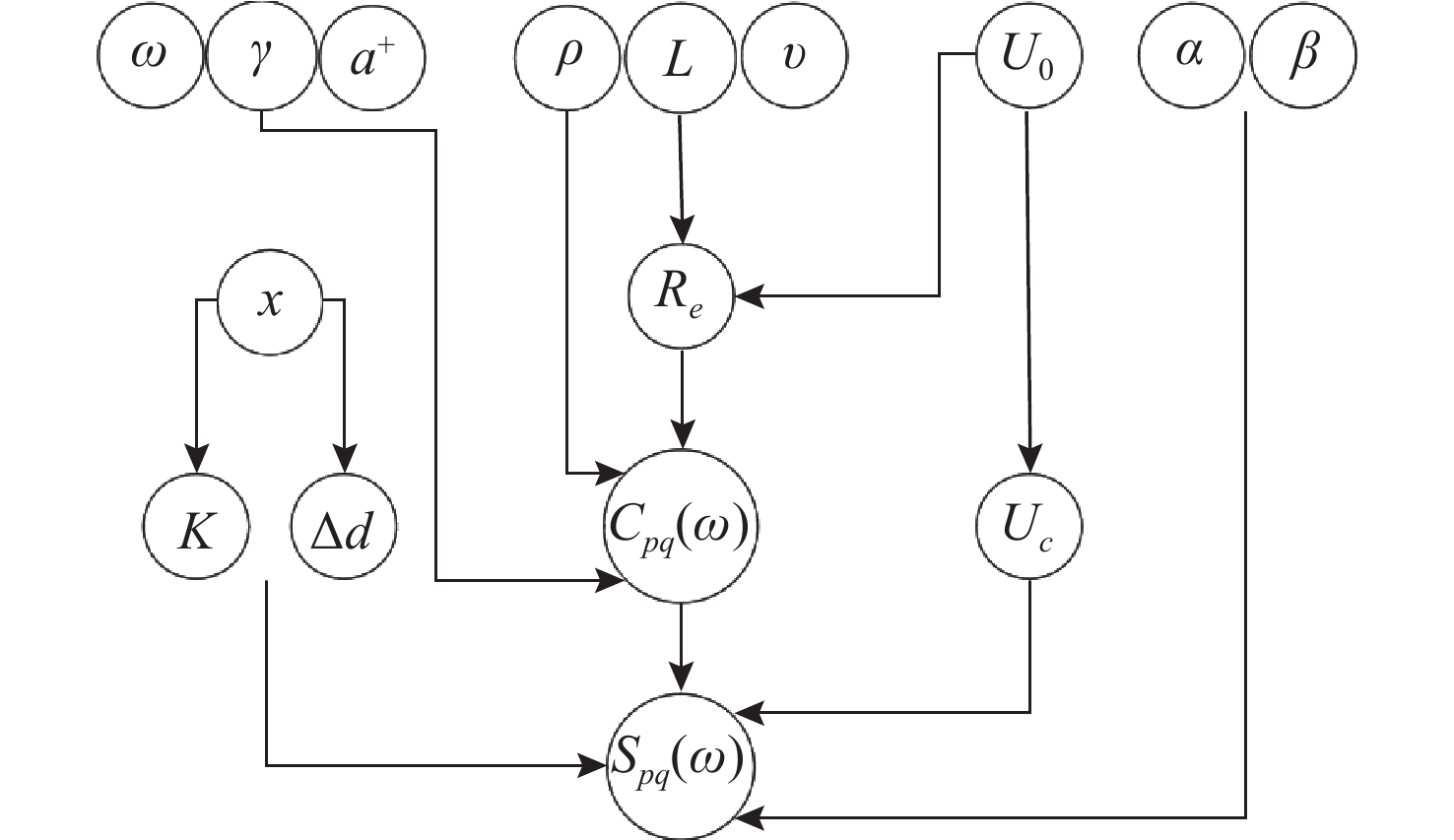
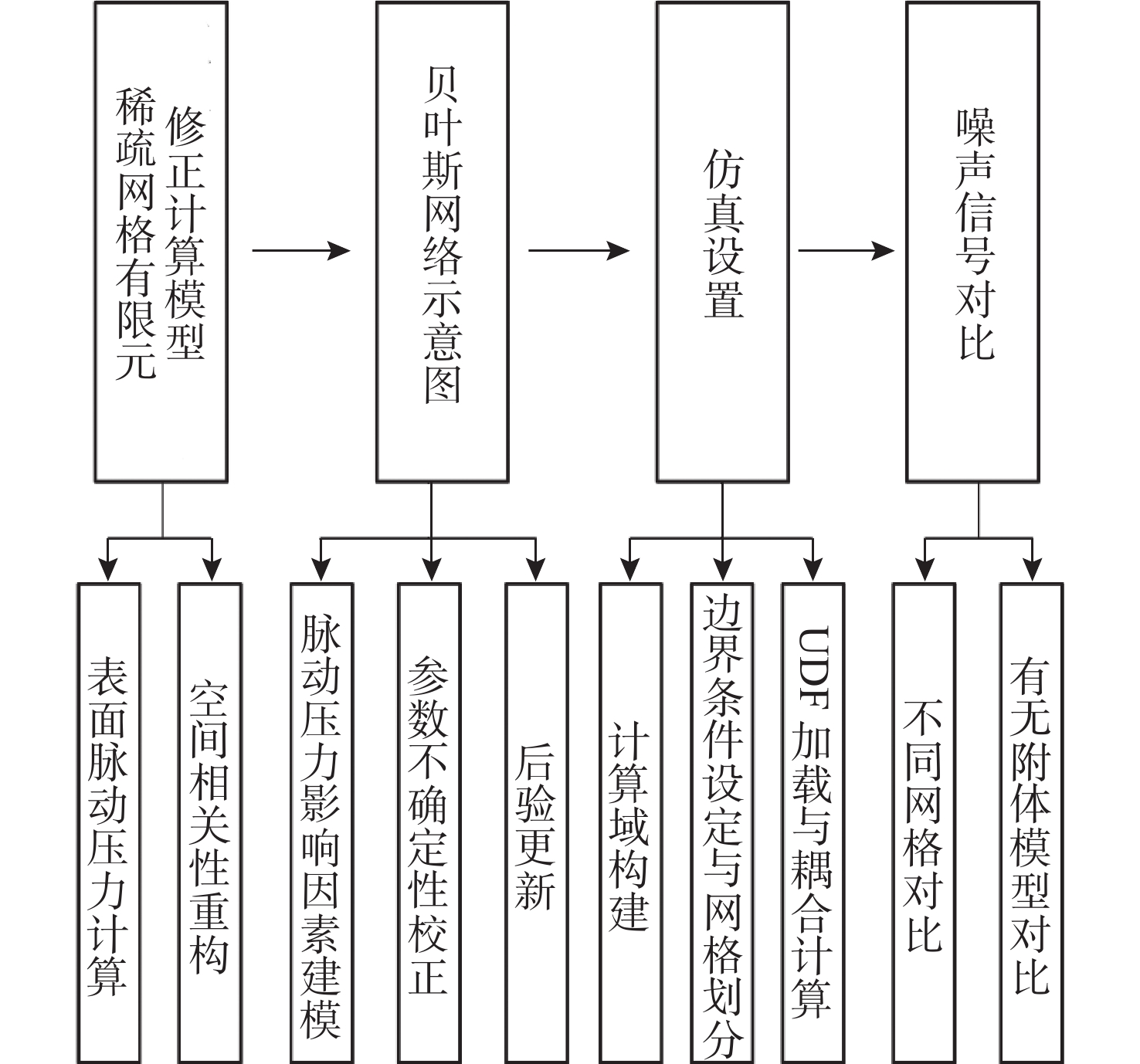
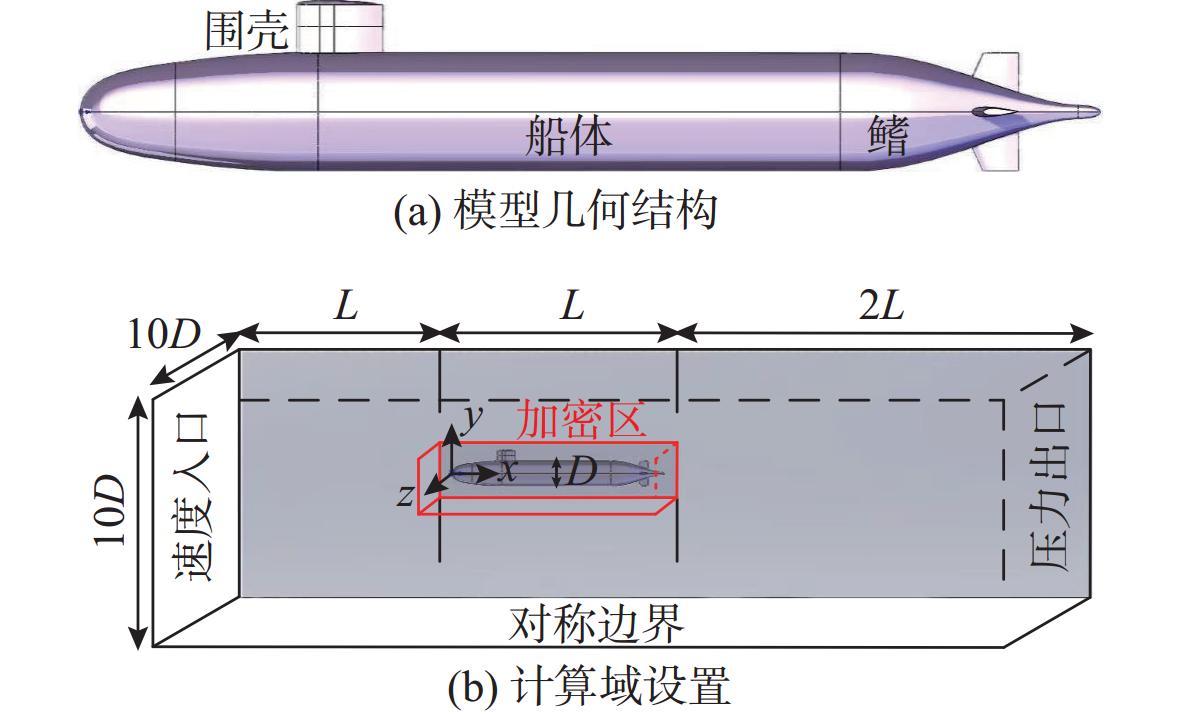
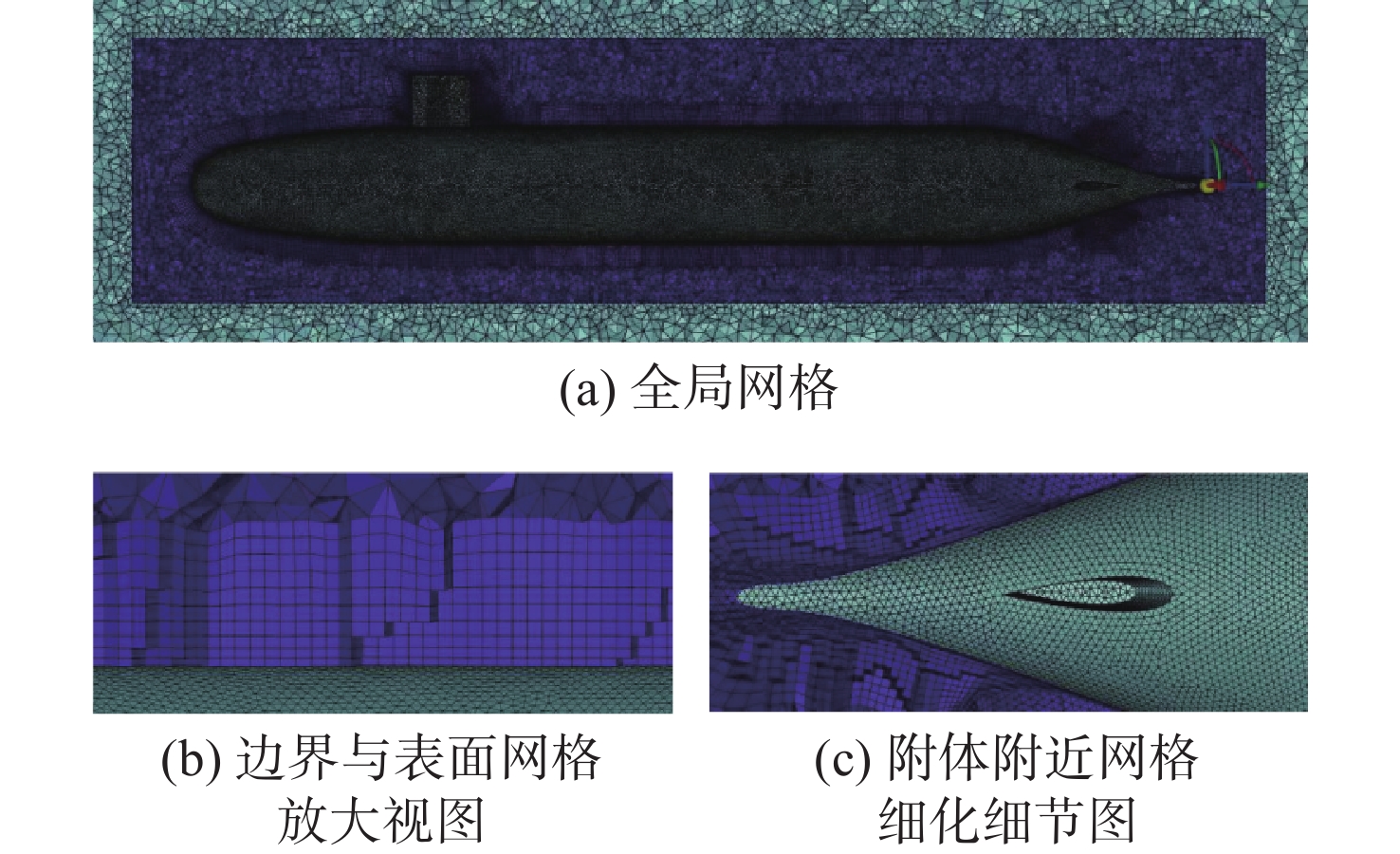
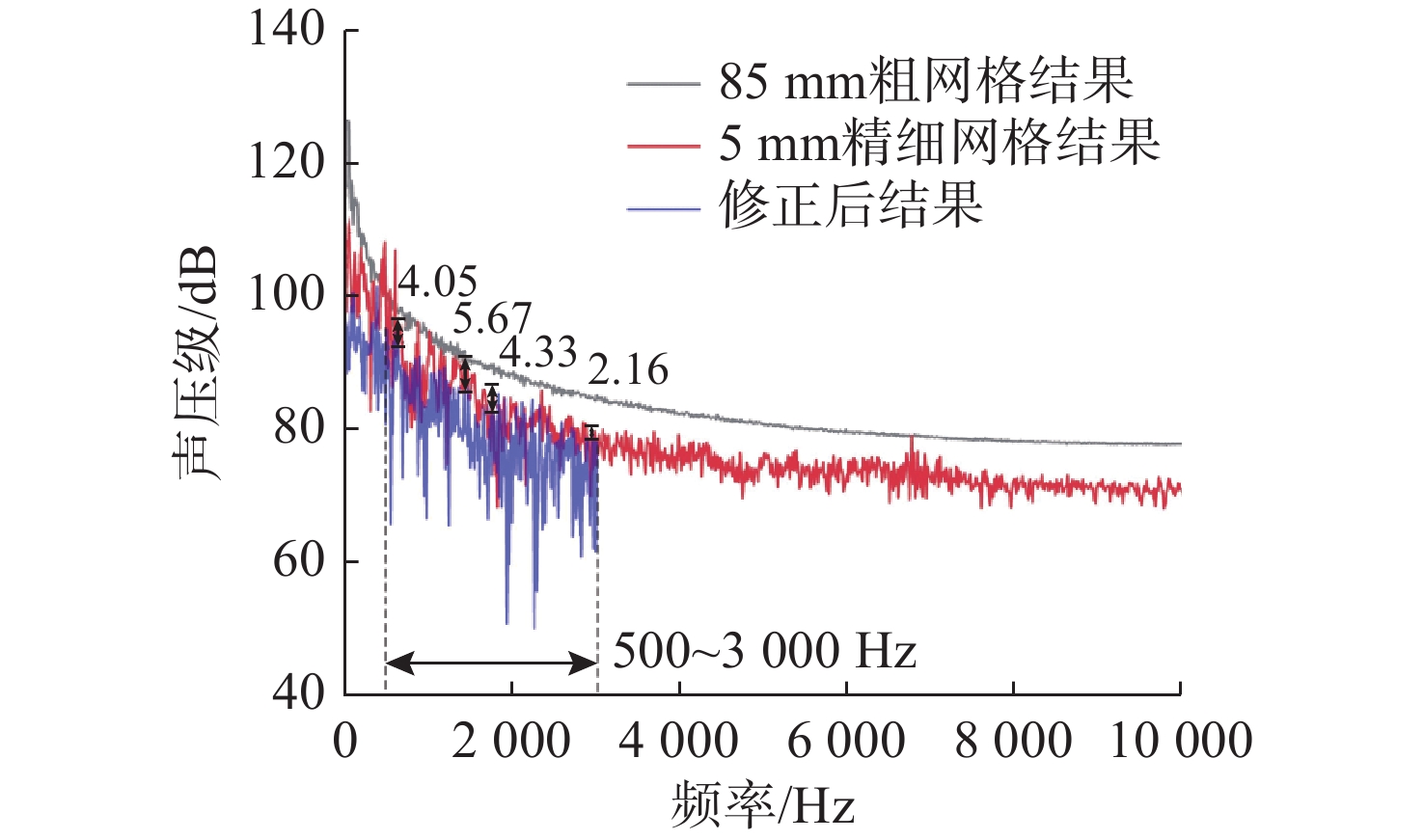
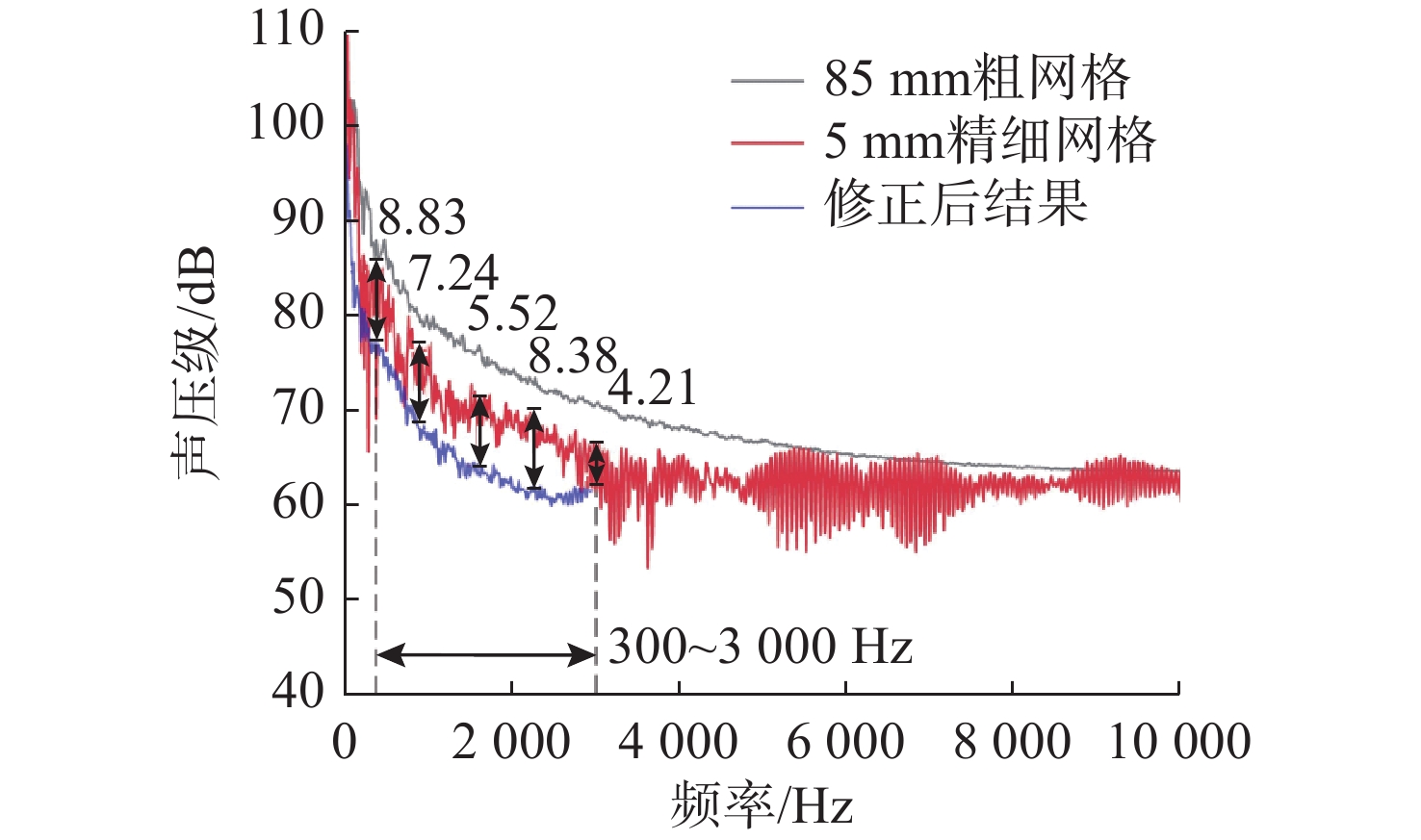
This paper proposed a Bayesian-based sparse grid correction method to address the degradation in flow-induced noise prediction accuracy arising from mismatched spatial scales between finite element model grid dimensions and turbulent boundary layer pressure in large-scale sparse grids. By using the DARPA SUBOFF 5470 submarine model as a case study, numerical simulations were conducted to investigate its applicability in predicting far-field acoustic radiation from submarine appendages. The paper employed Corcos’s self-spectrum and normalized cross-power spectral density function computational model, utilizing virtual grid refinement to compensate for the spatial correlation characteristics of low-frequency turbulent pulsation pressures. By integrating engineering characteristics and operational environments, the correlation between pulsation pressure influencing factors was extracted, ultimately constructing a Bayesian network model for flow-induced noise excitation forces. By employing wall-resolved LES(WRLES) coupled with the Ffowcs Williams-Hawkings(FW-H) acoustic analogy method, the flow-induced noise obtained from the modified simulation calculations and the results of the refined grid fluid-structure interaction simulation. Acoustic characteristics were contrasted between the SUBOFF 5470 configuration with appendages and the bare hull. Simulation experiments demonstrate that the Bayesian sparse grid correction method effectively compensates for prediction errors arising from mismatches between grid dimensions and turbulence-relevant scales, validating the method’s validity and applicability.
Tunable Underwater Acoustic Stealth Performance of Mechanically Reconfigurable Negative Stiffness Meta-structures
GONG Xiaokun, LI Qing, YANG Deqing, WANG Yingguang
2026, 34(2): 299-307. doi: 10.11993/j.issn.2096-3920.2026-0024
Abstract:
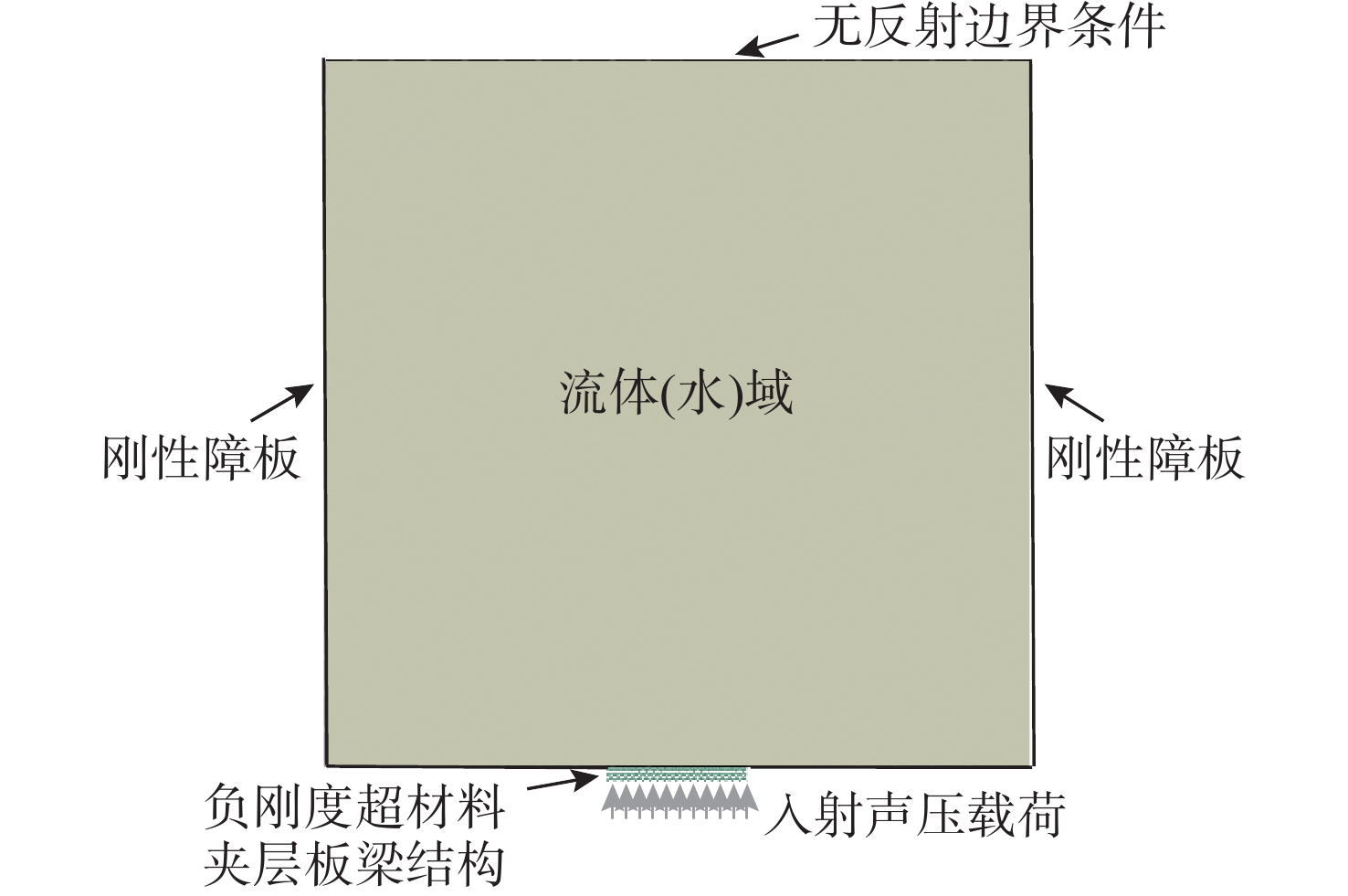
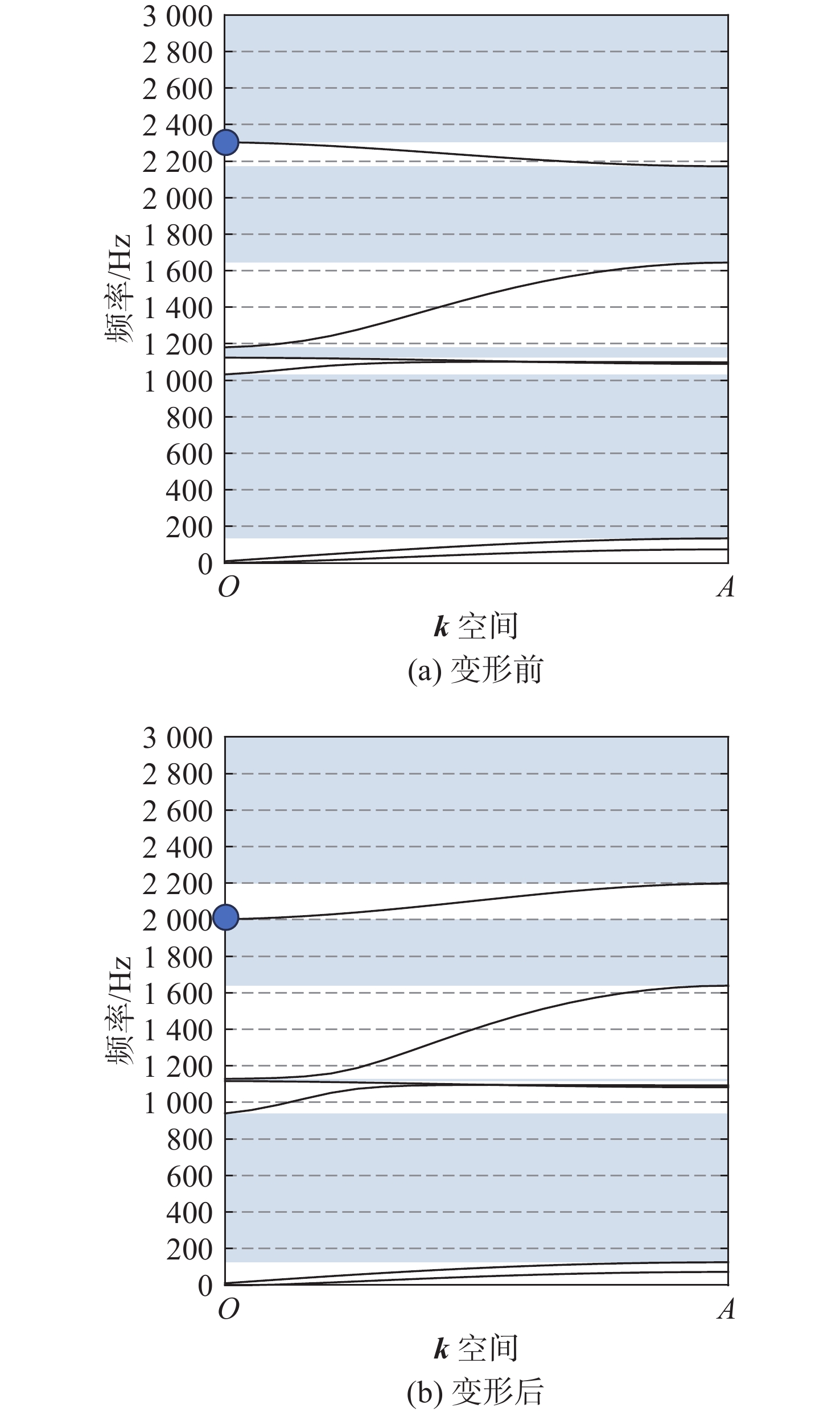
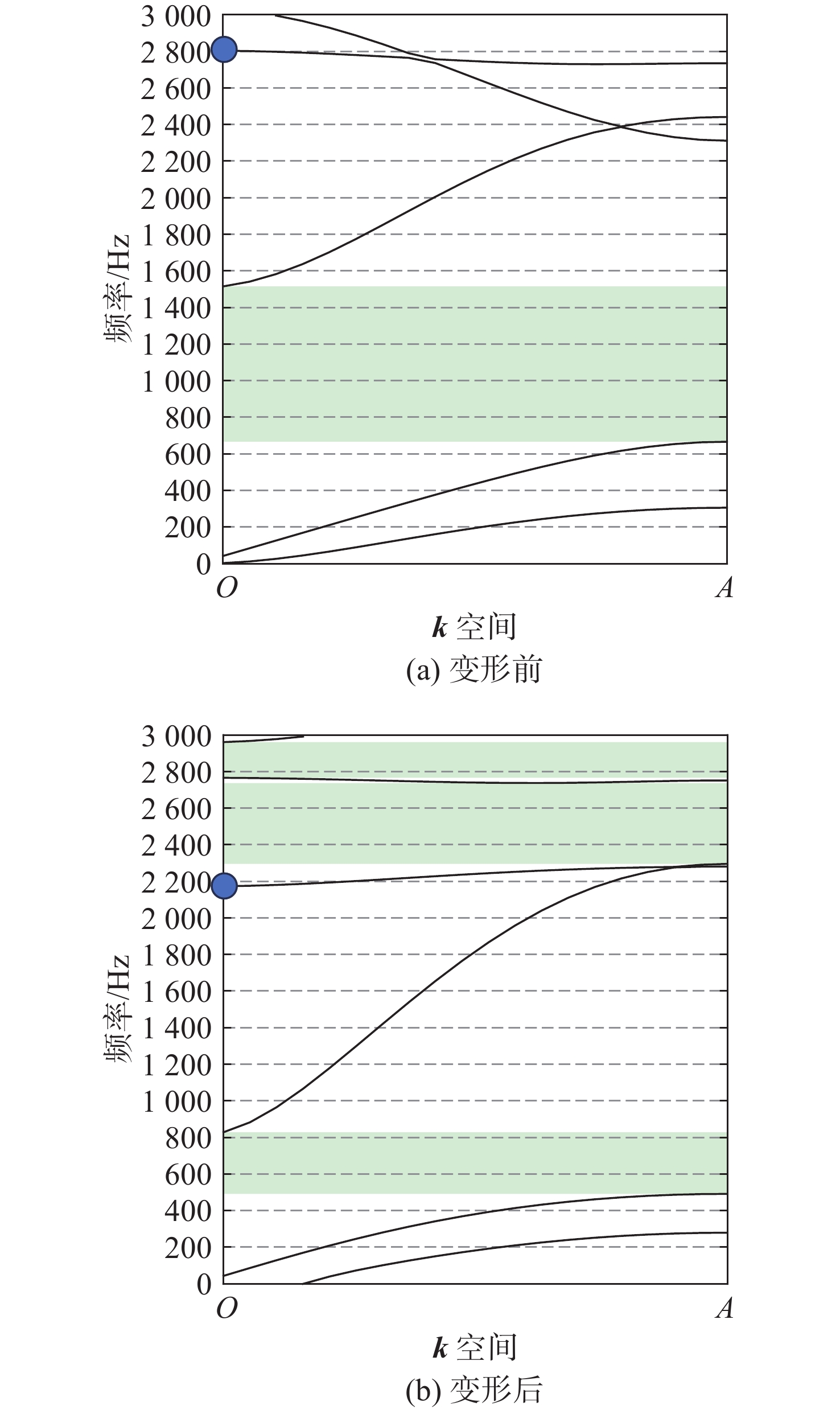
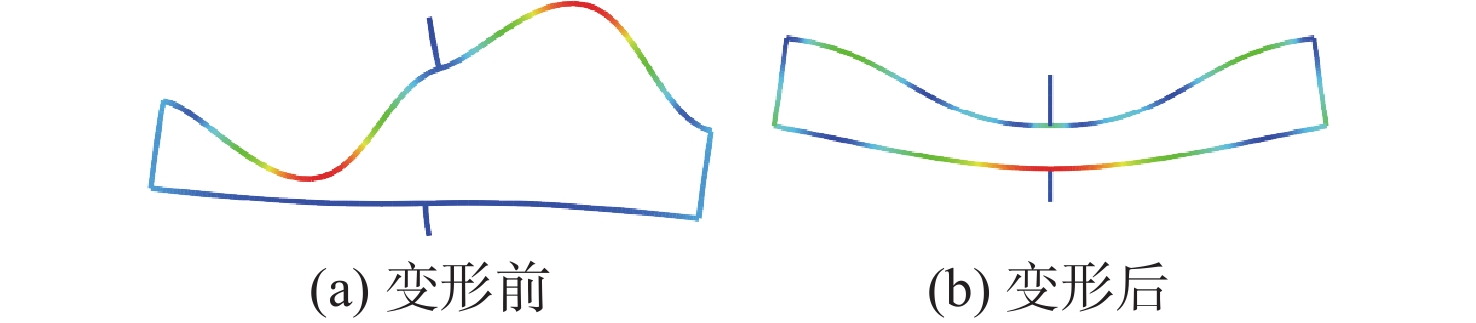
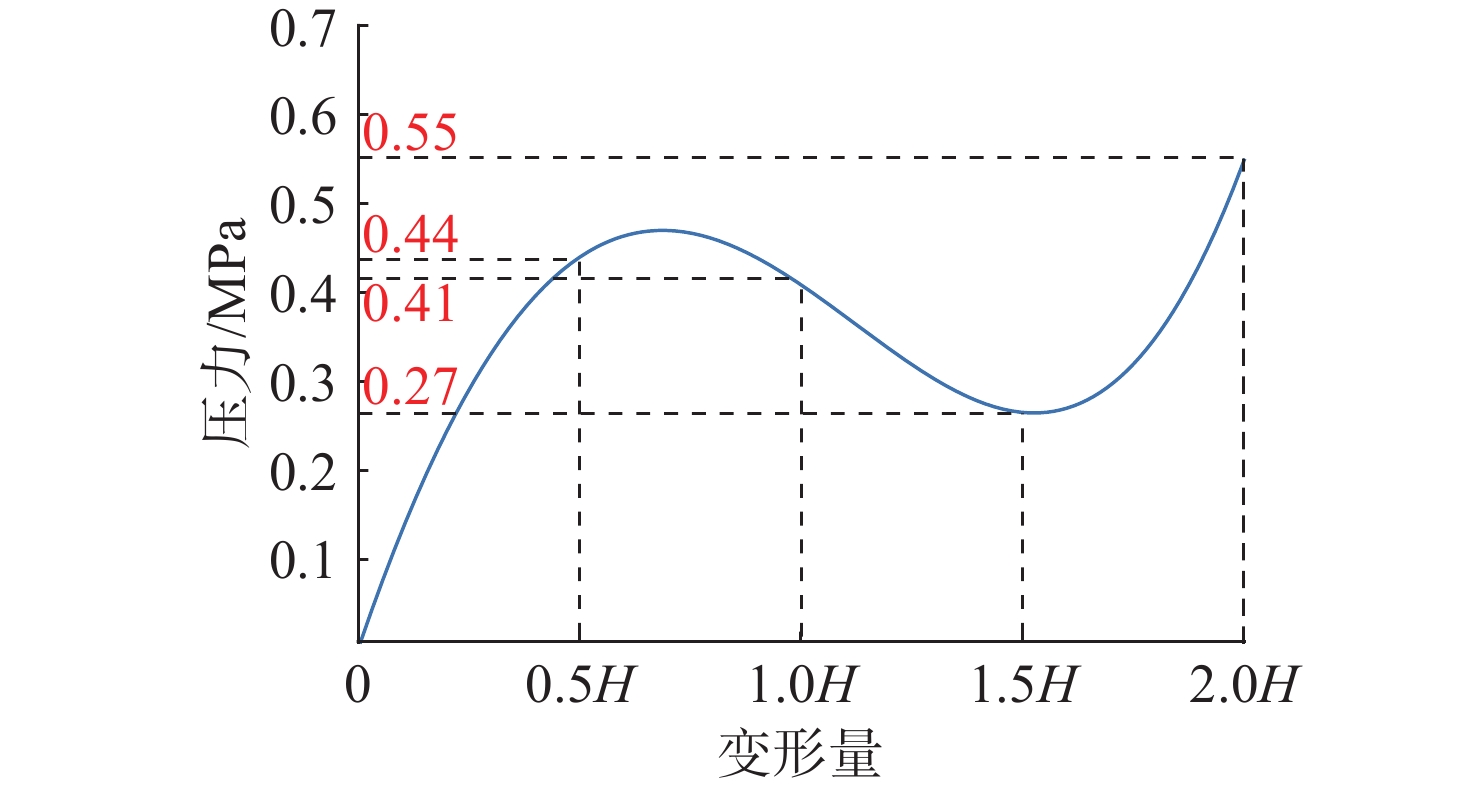
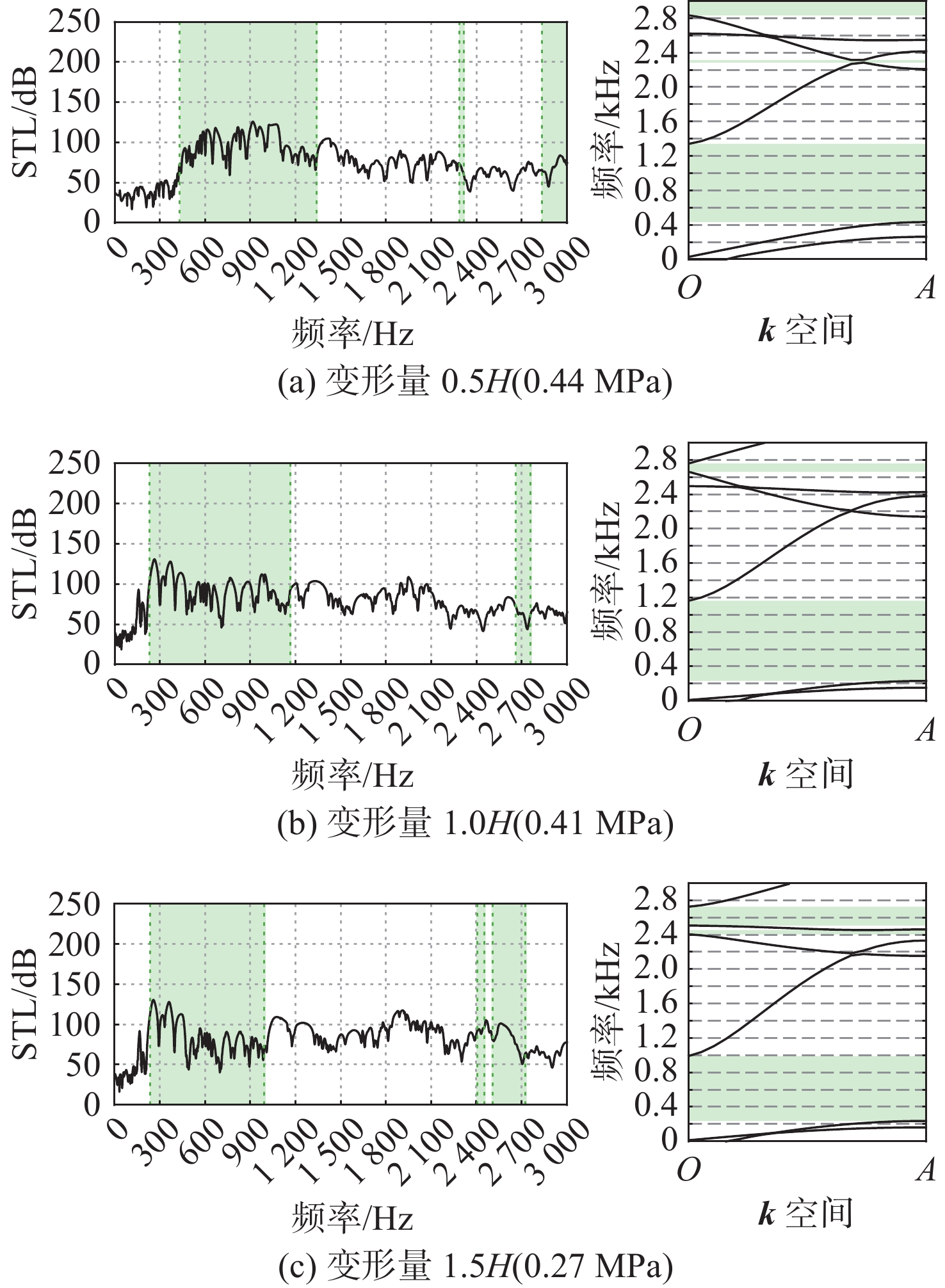
To address the urgent need for vibration and noise control and the enhancement of acoustic stealth performance of underwater equipment, a new approach was explored to achieve active regulation of the acoustic stealth performance of underwater functional structures using mechanically reconfigurable negative stiffness metamaterials. In this paper, two negative stiffness metamaterial unit cells with variations in band structure before and after mechanical reconfiguration were optimally designed. The evolutionary band characteristics during the deformation process of the unit cells were systematically analyzed. Homogeneous and graded plate/beam sandwich meta-structures with negative stiffness were constructed. Based on the structural-acoustic coupled finite element method, the underwater radiation noise’s spectral characteristics of negative stiffness meta-structures under different combined configurations and preloading conditions were analyzed. The results show that the mechanical reconfigurability of negative stiffness metamaterials enables flexible tuning of wave propagation performance in meta-structures, while gradient sequences can broaden the sound insulation frequency band. This study provides theoretical and design references for developing lightweight underwater acoustic stealth and acoustic camouflage functional structures.
Design and Performance Analysis of Integrated Pressure-Resistant and Sound-Absorbing Coating with High-Transmittance Composite
TANG Jian, JIN Zhuohao, LU Chen, CHEN Wenjiong
2026, 34(2): 308-315. doi: 10.11993/j.issn.2096-3920.2026-0001
Abstract:
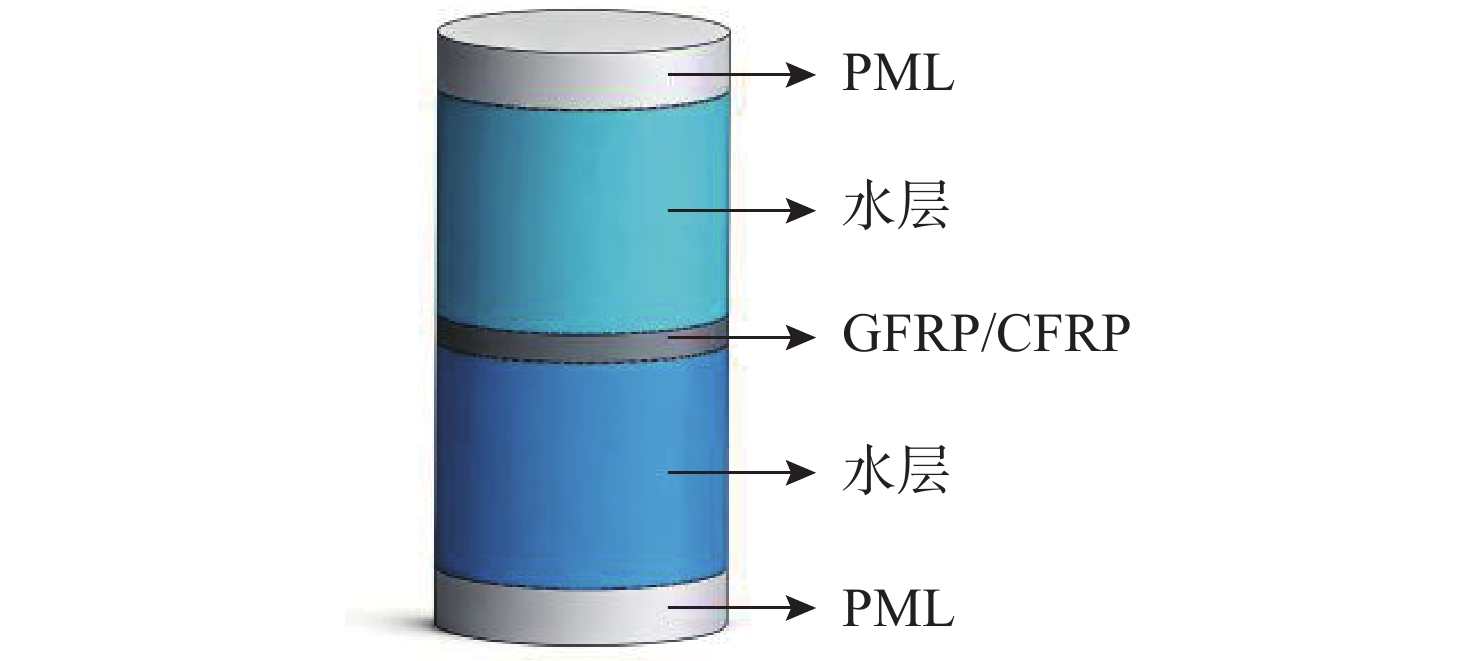
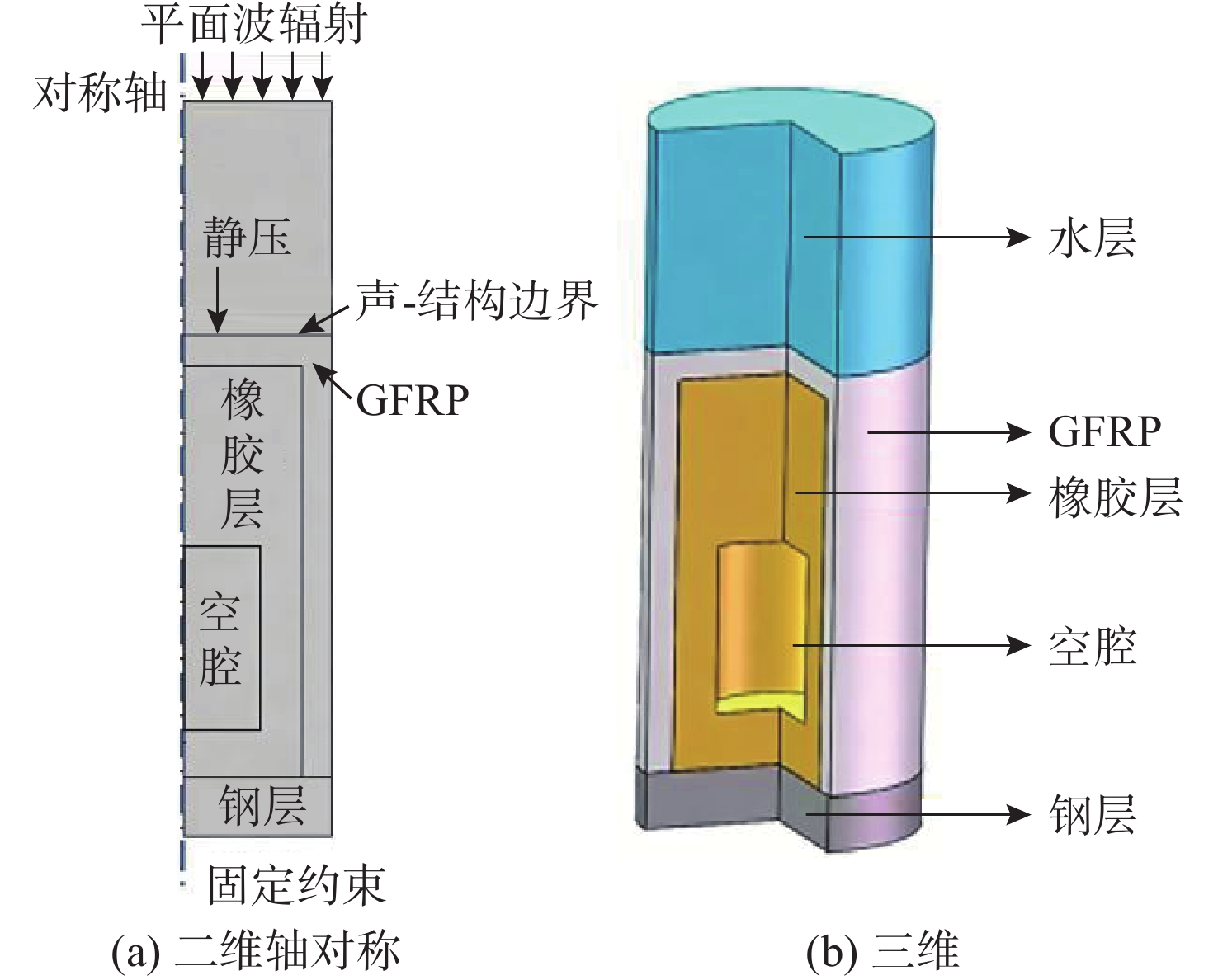
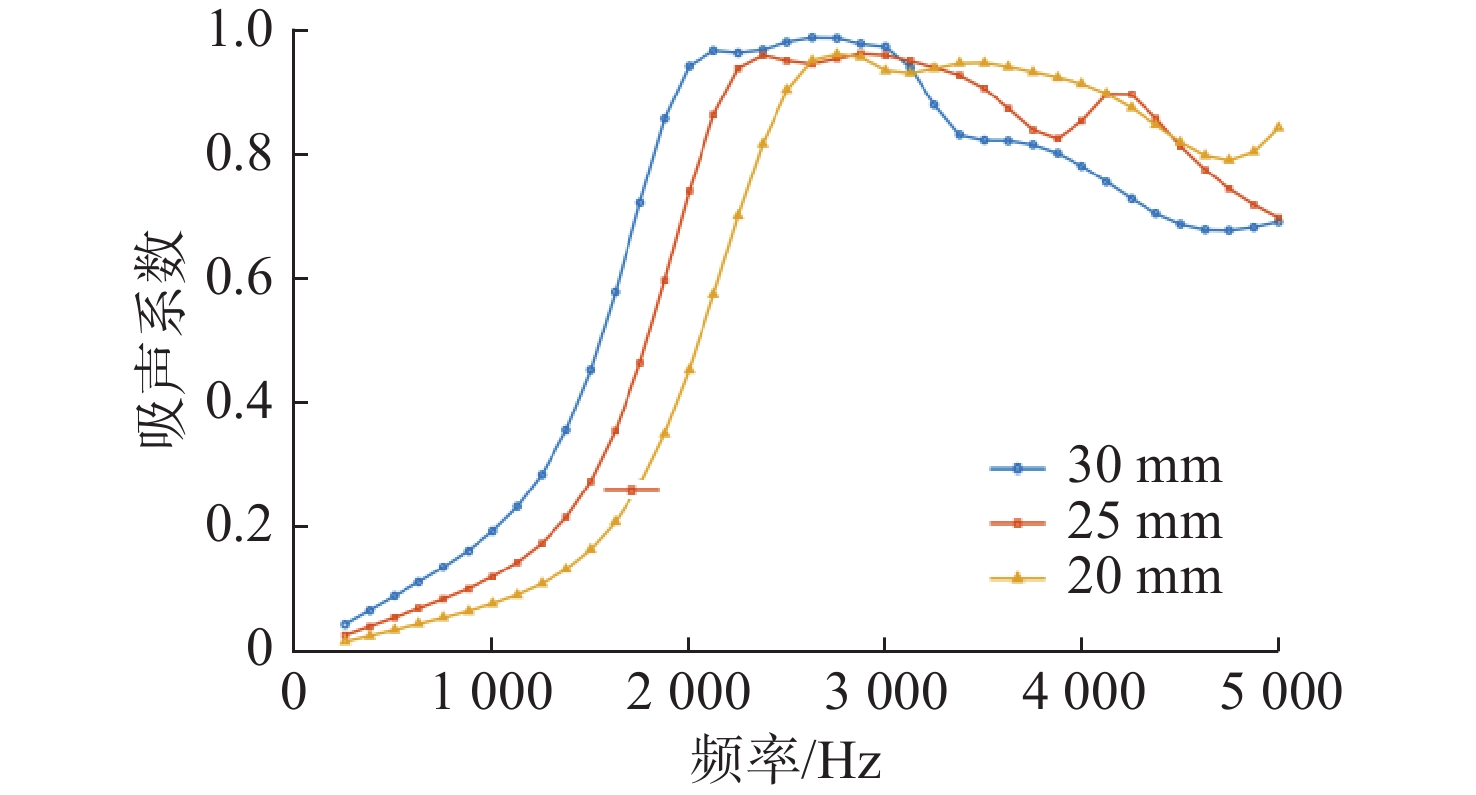
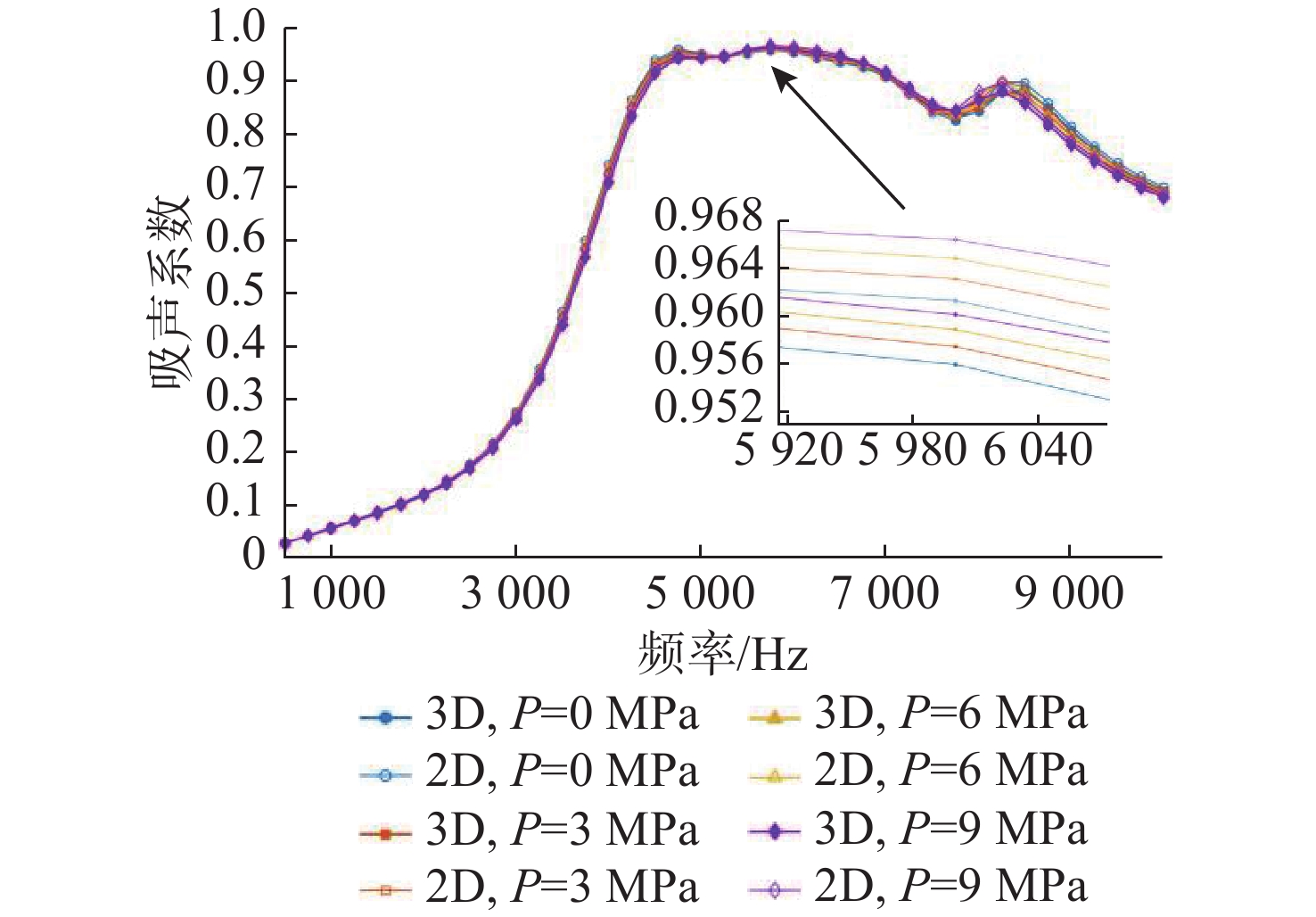
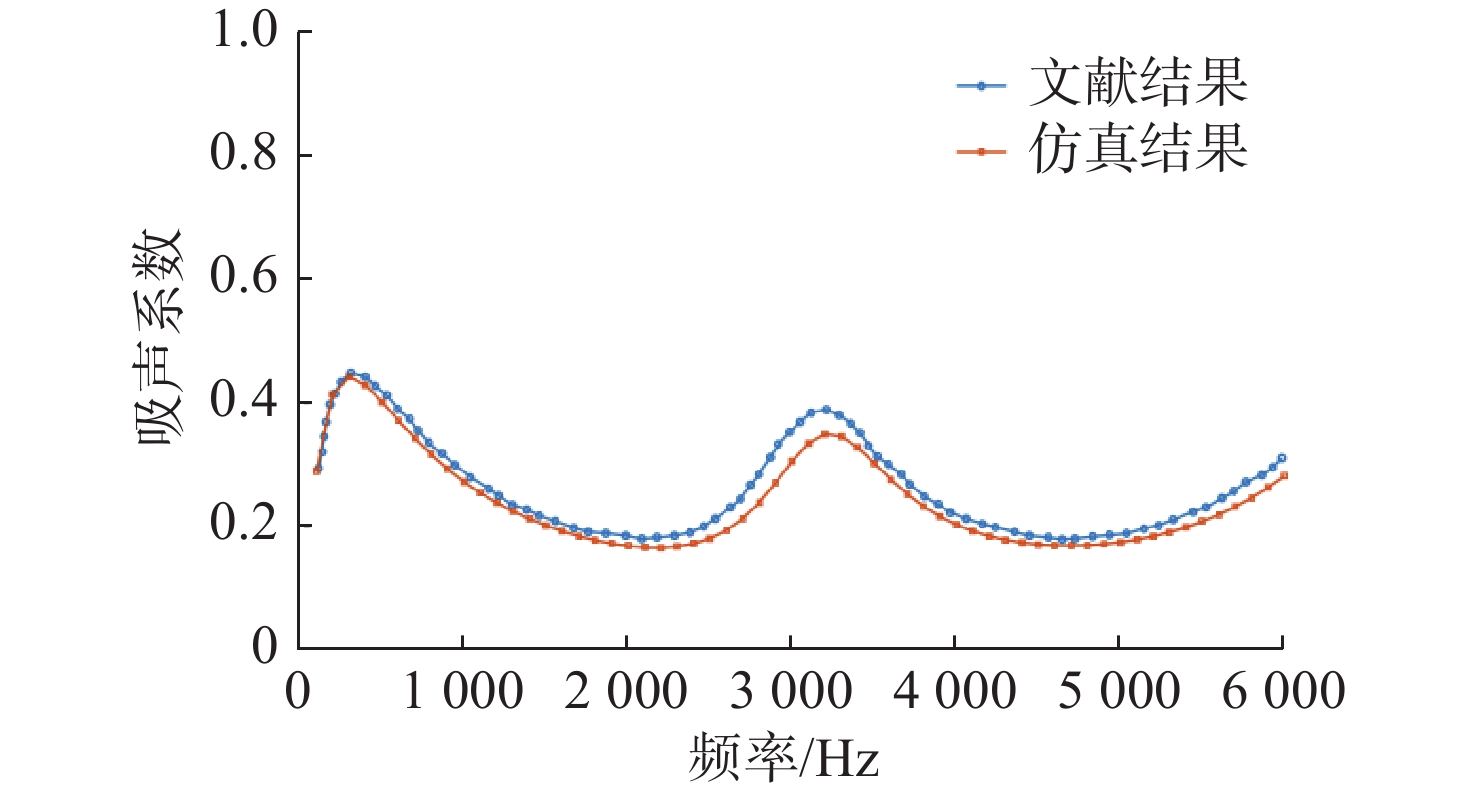
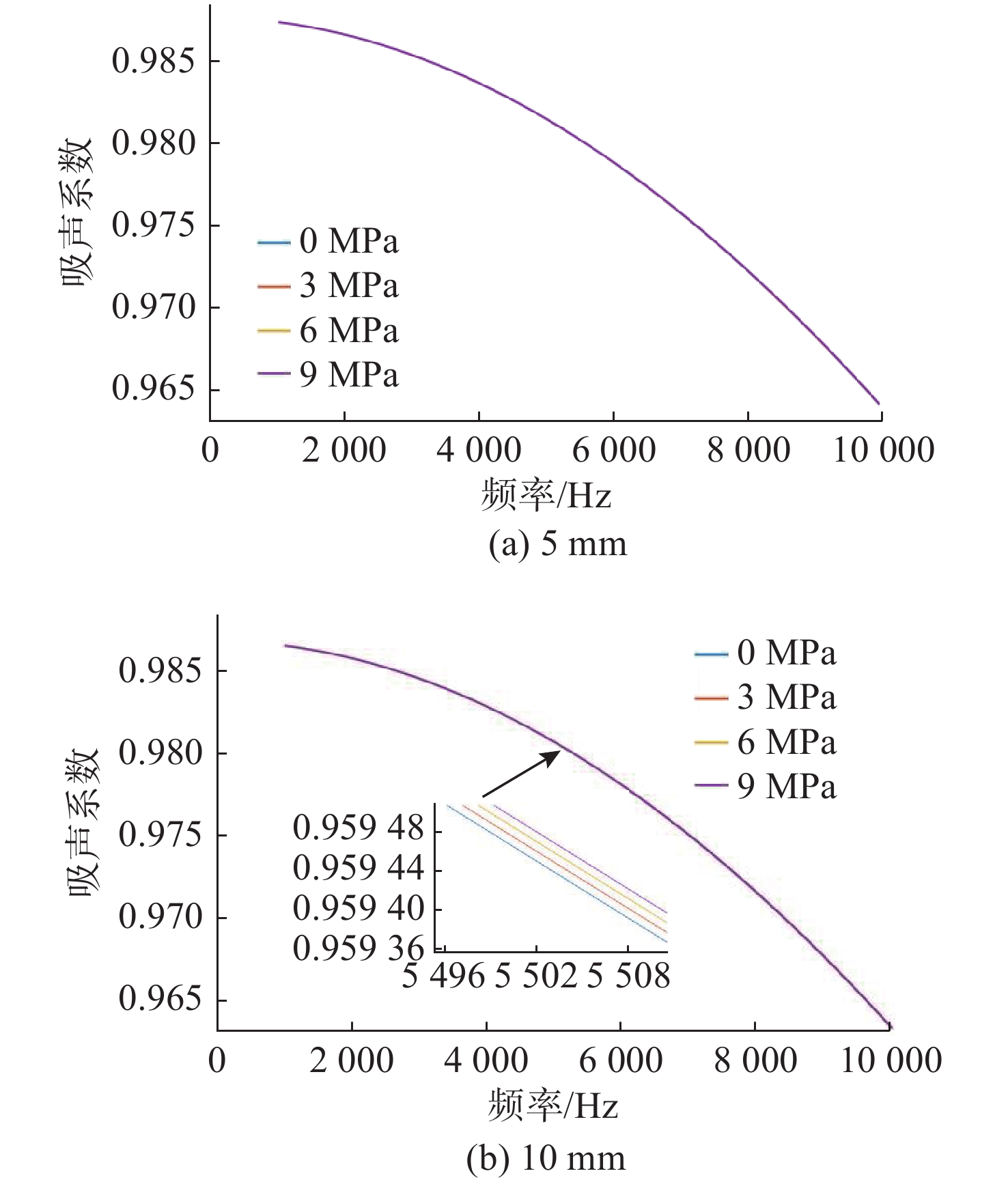
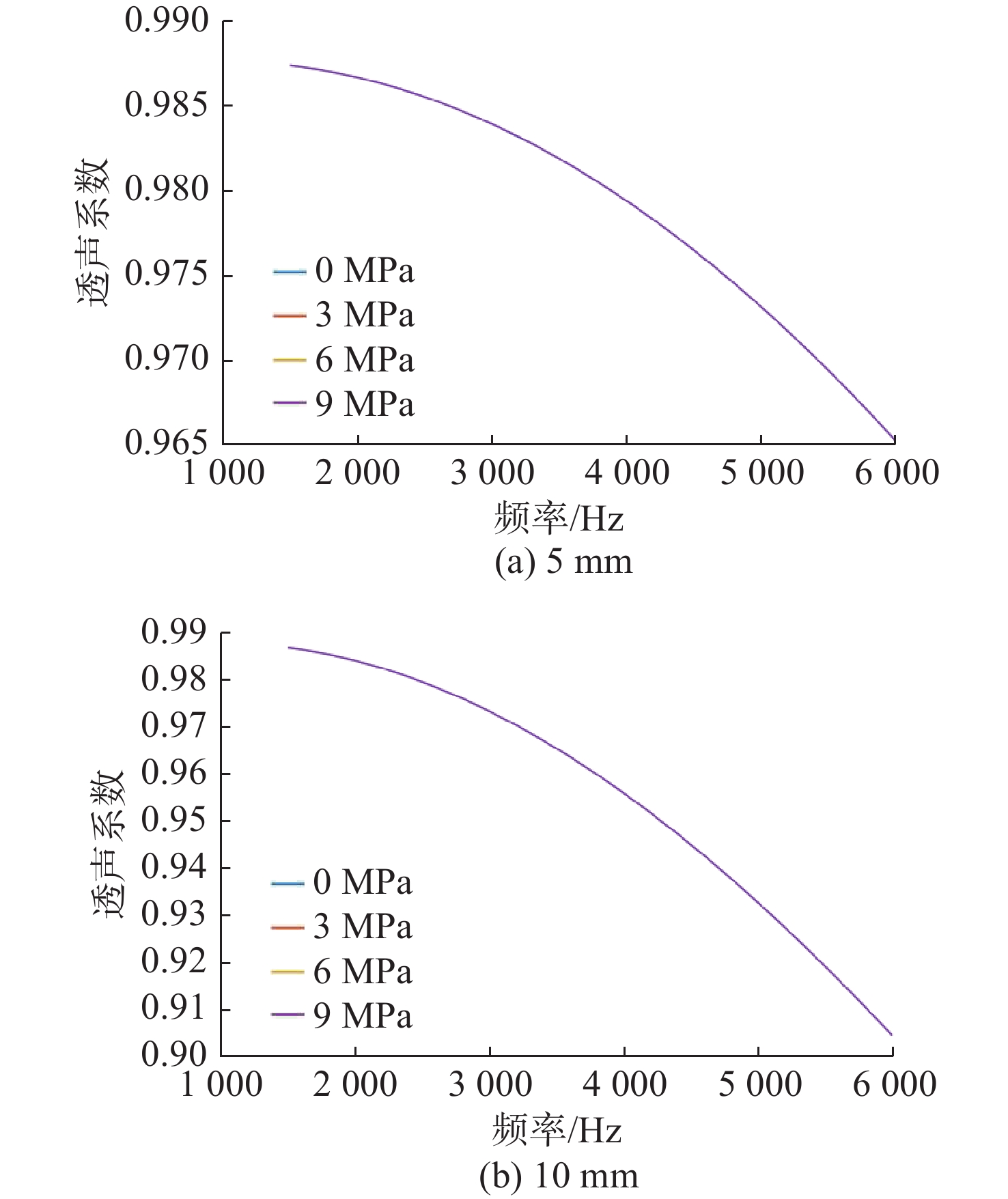
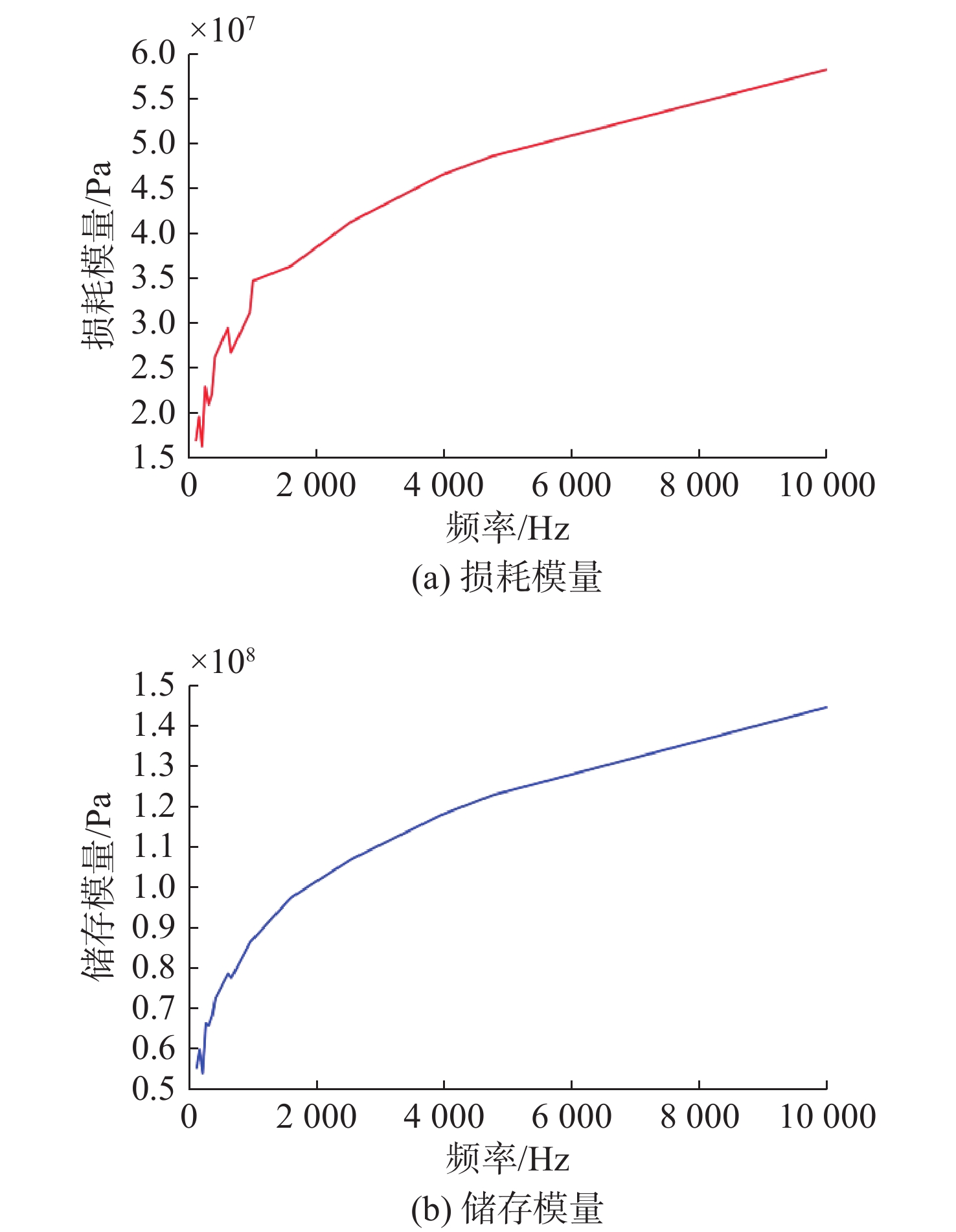
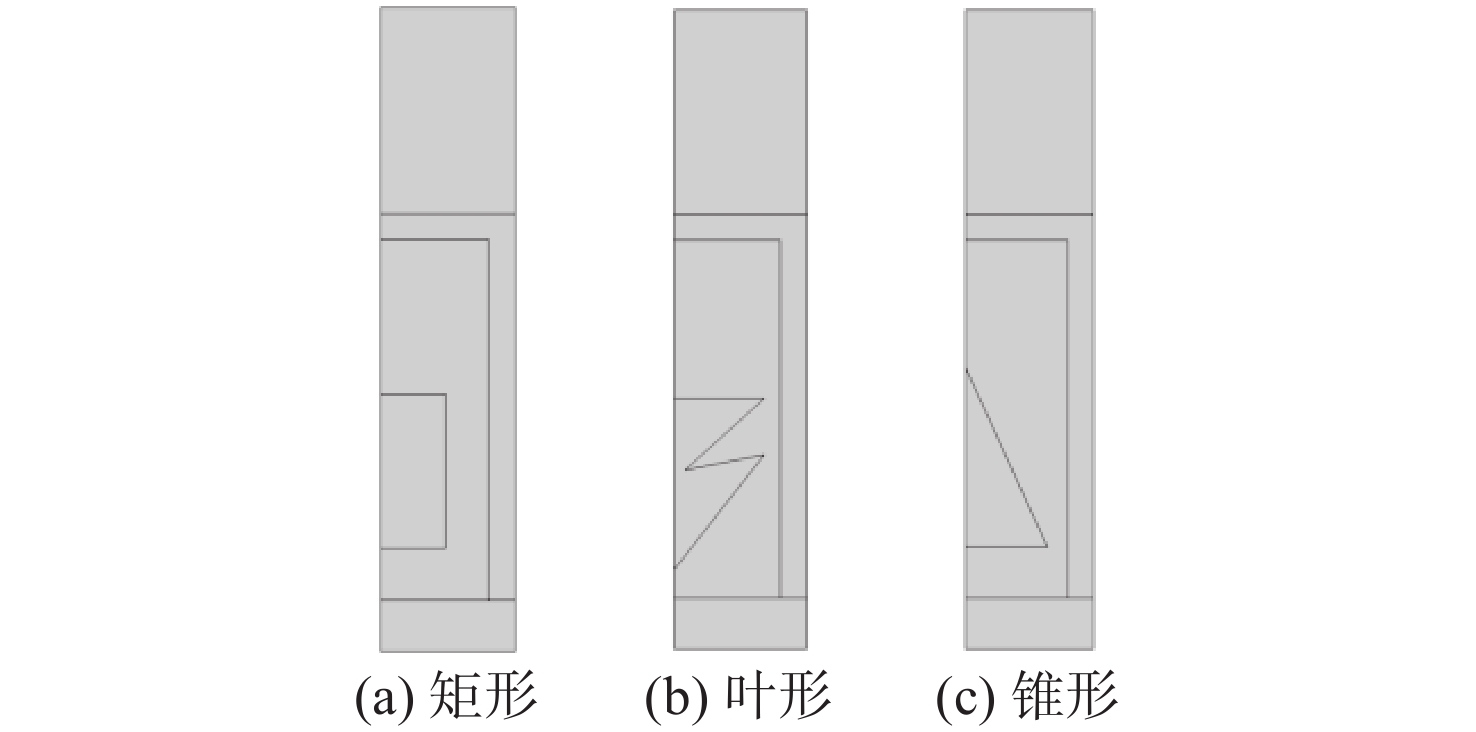
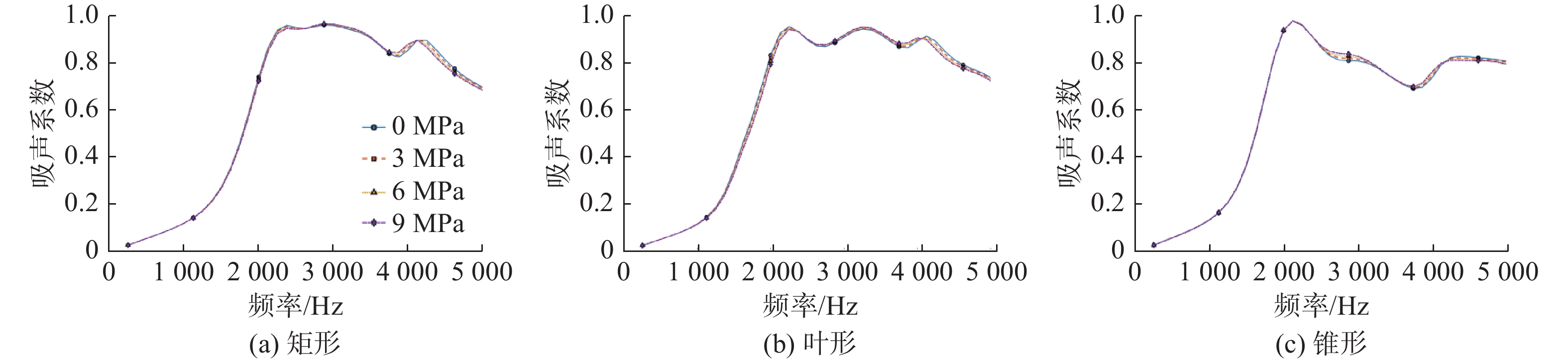
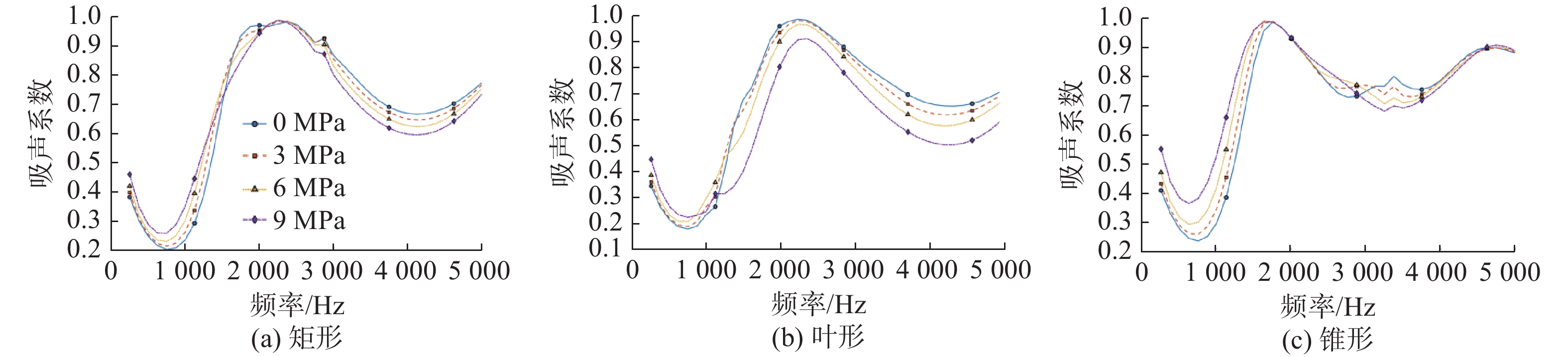
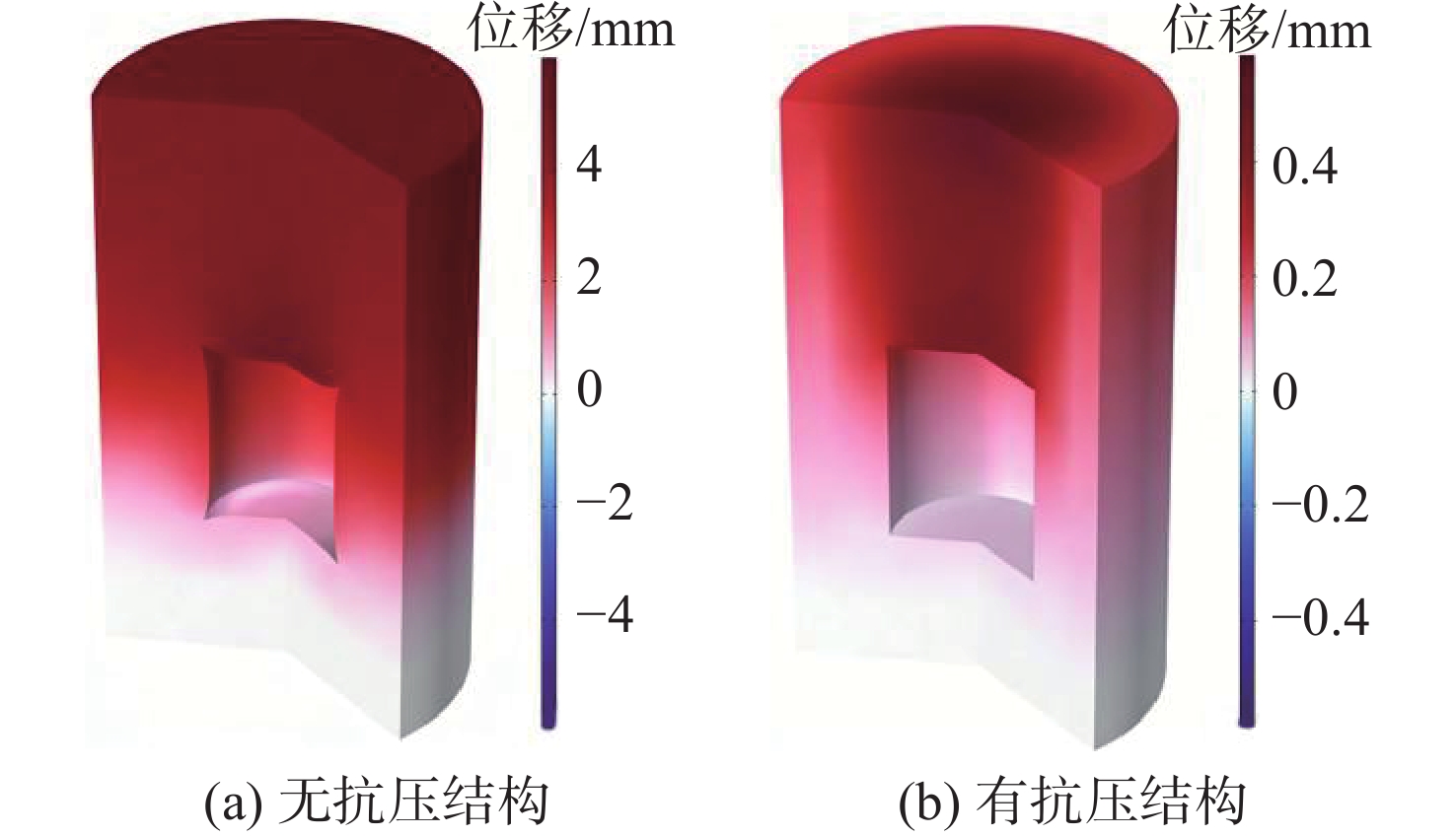
To address the significant degradation in sound absorption performance of conventional cavity-type sound-absorbing rubber coatings under high pressure environments, an integrated pressure-resistant and sound-absorbing coating with a high-transmittance composite was proposed. Based on the finite element method, a numerical model considering hydrostatic pre-stress, moving mesh, and acoustic-structure coupled frequency-domain perturbation was established to investigate the sound transmission performance of the sound transmission layer and the sound absorption characteristics of three cavity configurations under different static pressures. The results show that under hydrostatic pressures of 0~9 MPa, both glass fiber reinforced plastic and carbon fiber reinforced plastic layers maintain high sound transmission coefficients and are less affected by pressure. The rectangular, petal-shaped, and conical cavity coatings with the high-transmittance composite all achieve sound absorption coefficients generally above 0.7 in the 4~10 kHz range, with only slight variation under different static pressures. The high-transmittance composite effectively suppresses static pressure-induced deformation of the cavity structure, thereby improving the stability of sound absorption performance under high-pressure environments. This study provides a reference for the design of underwater sound-absorbing coatings in high-pressure environments.
Drag Reduction Effect of Gradually-Varying Riblet Structures on Conical Rotating Disks
WU Sen, ZOU Jiaqi, FAN Yicheng, ZHAO Dan
2026, 34(2): 316-325. doi: 10.11993/j.issn.2096-3920.2026-0005
Abstract:
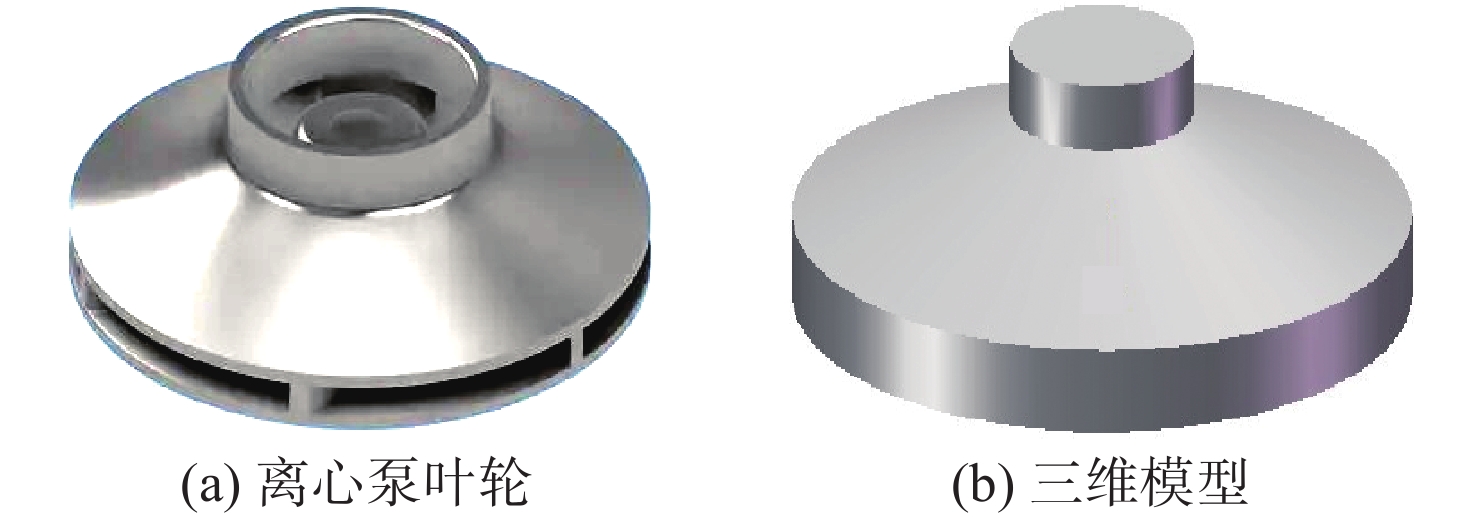
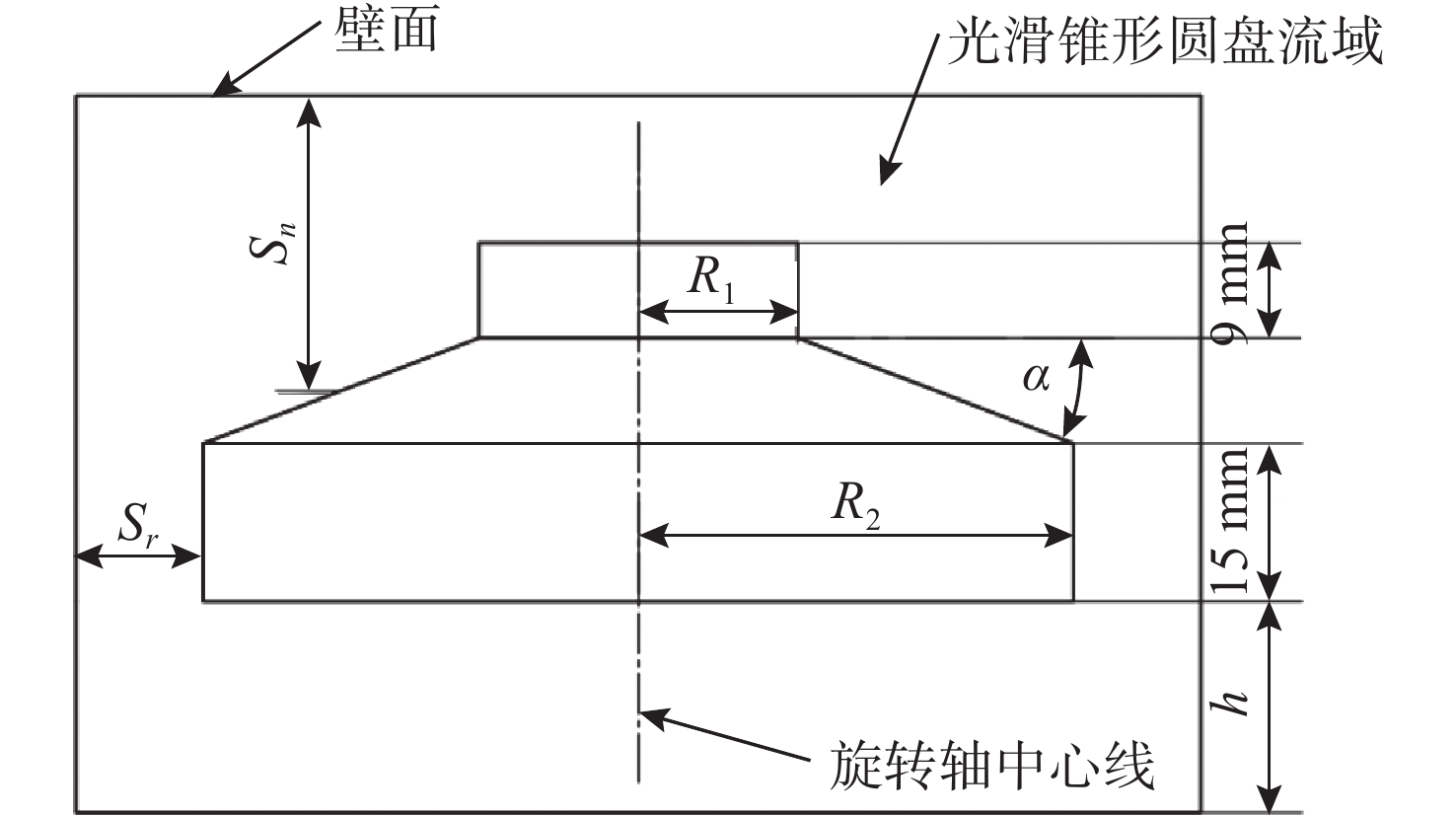
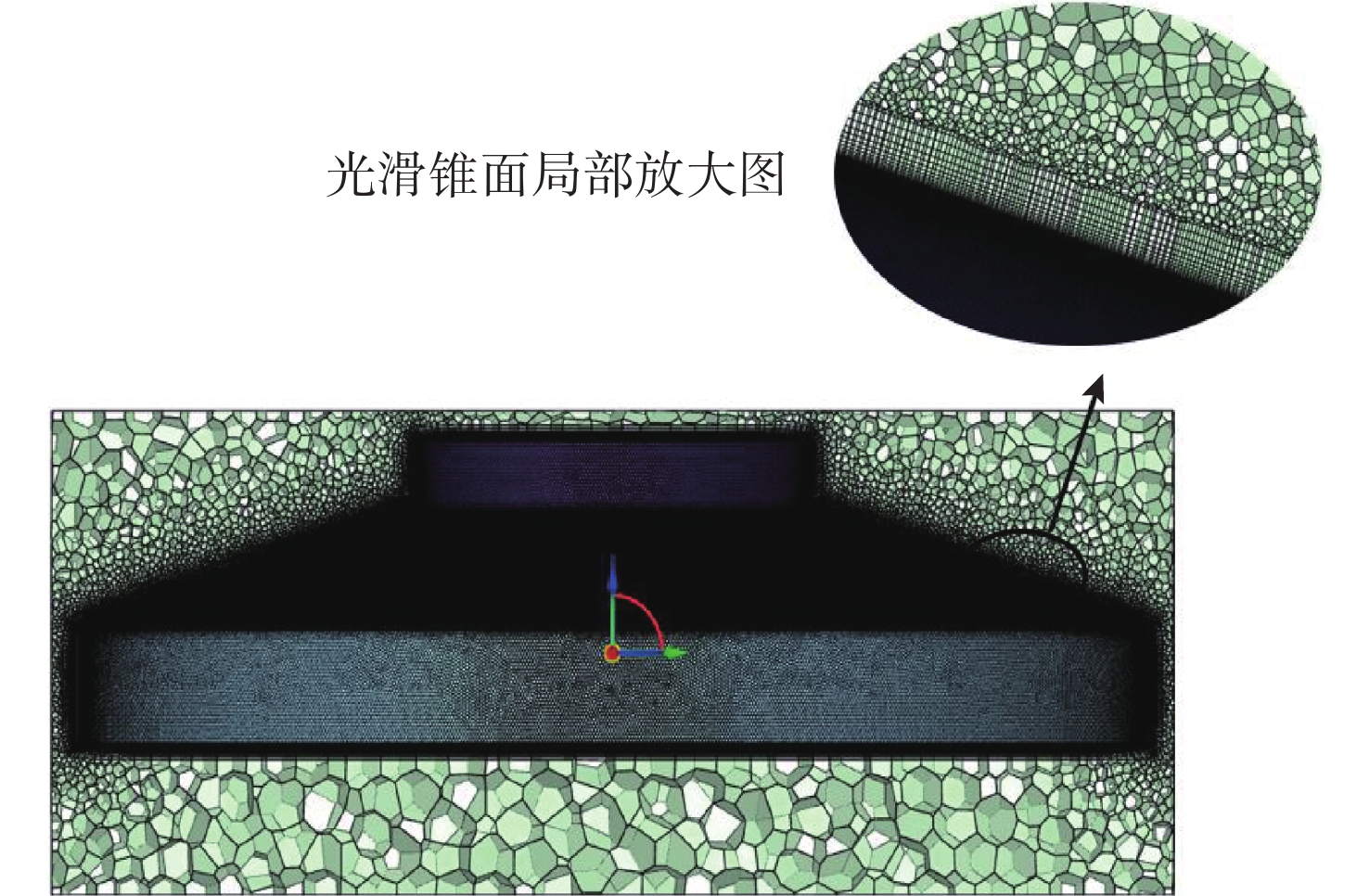
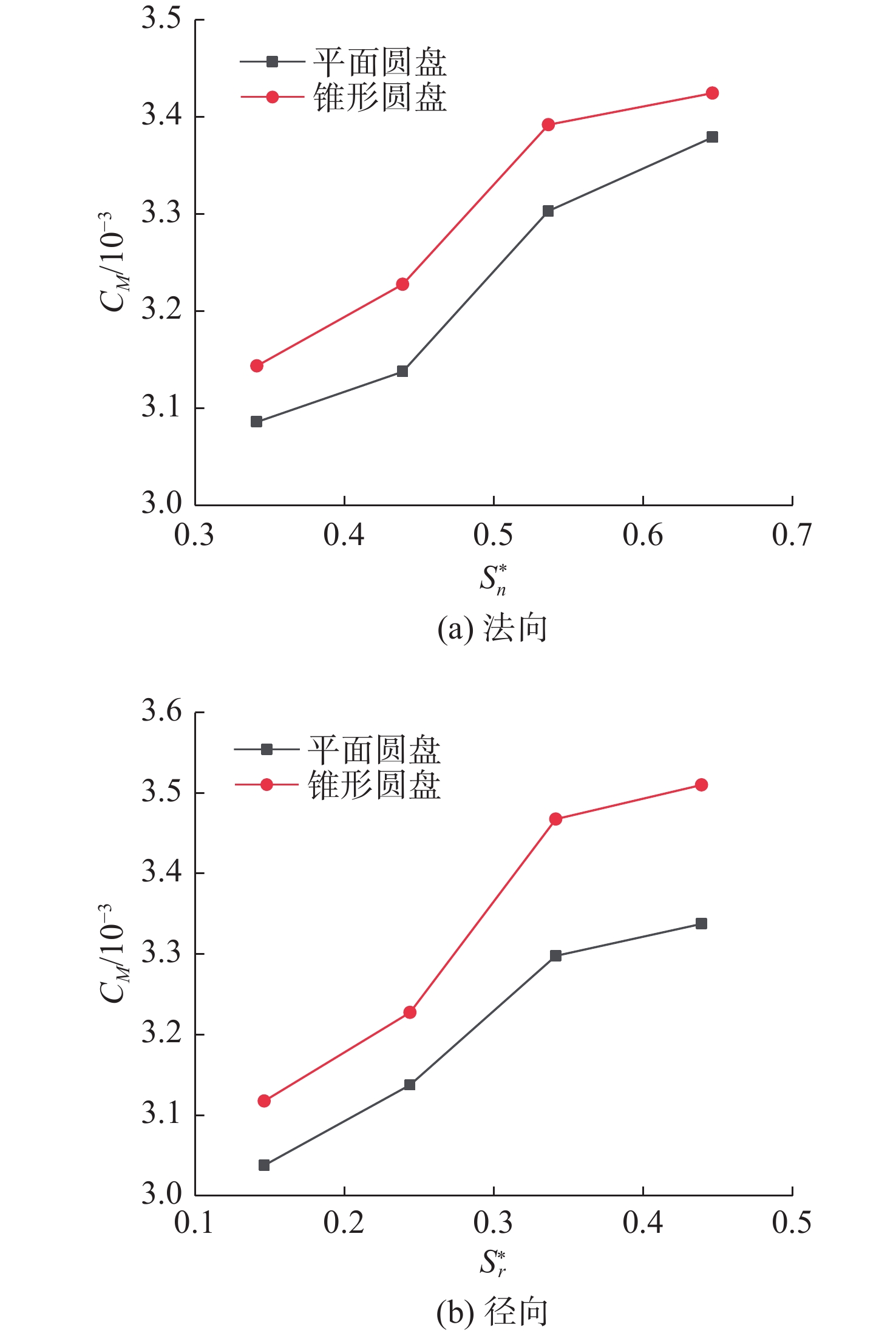
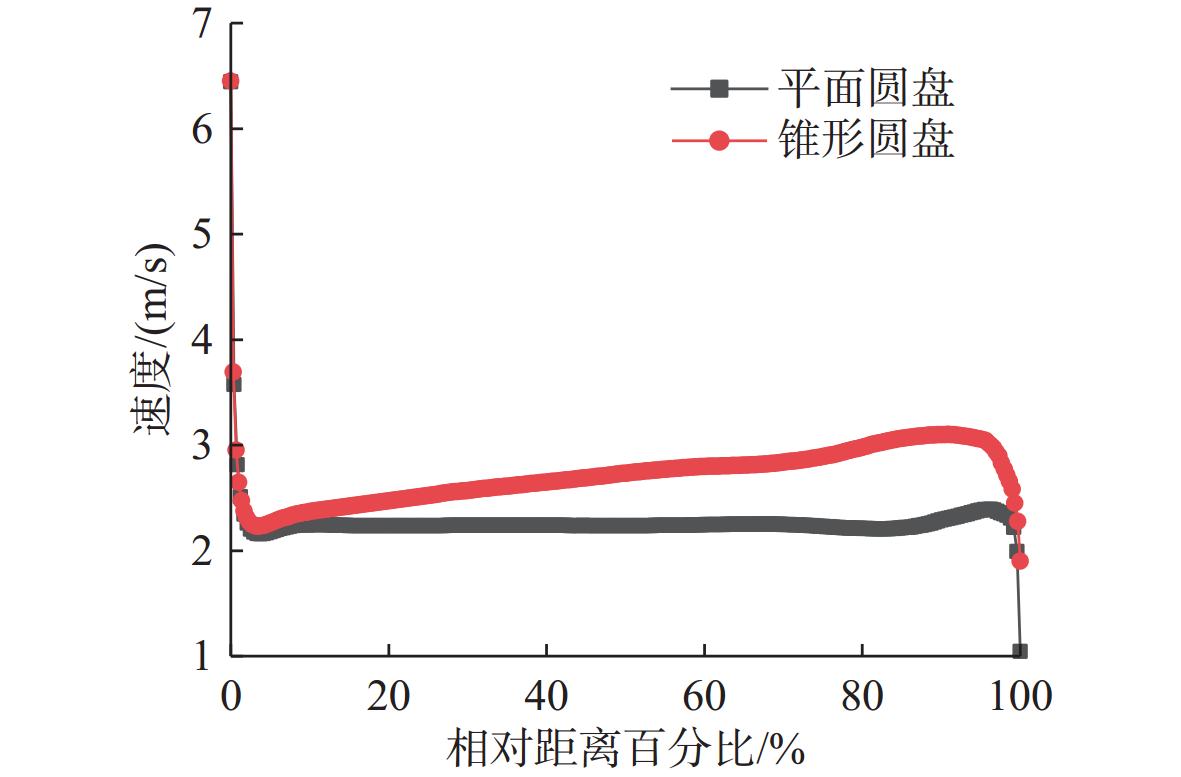
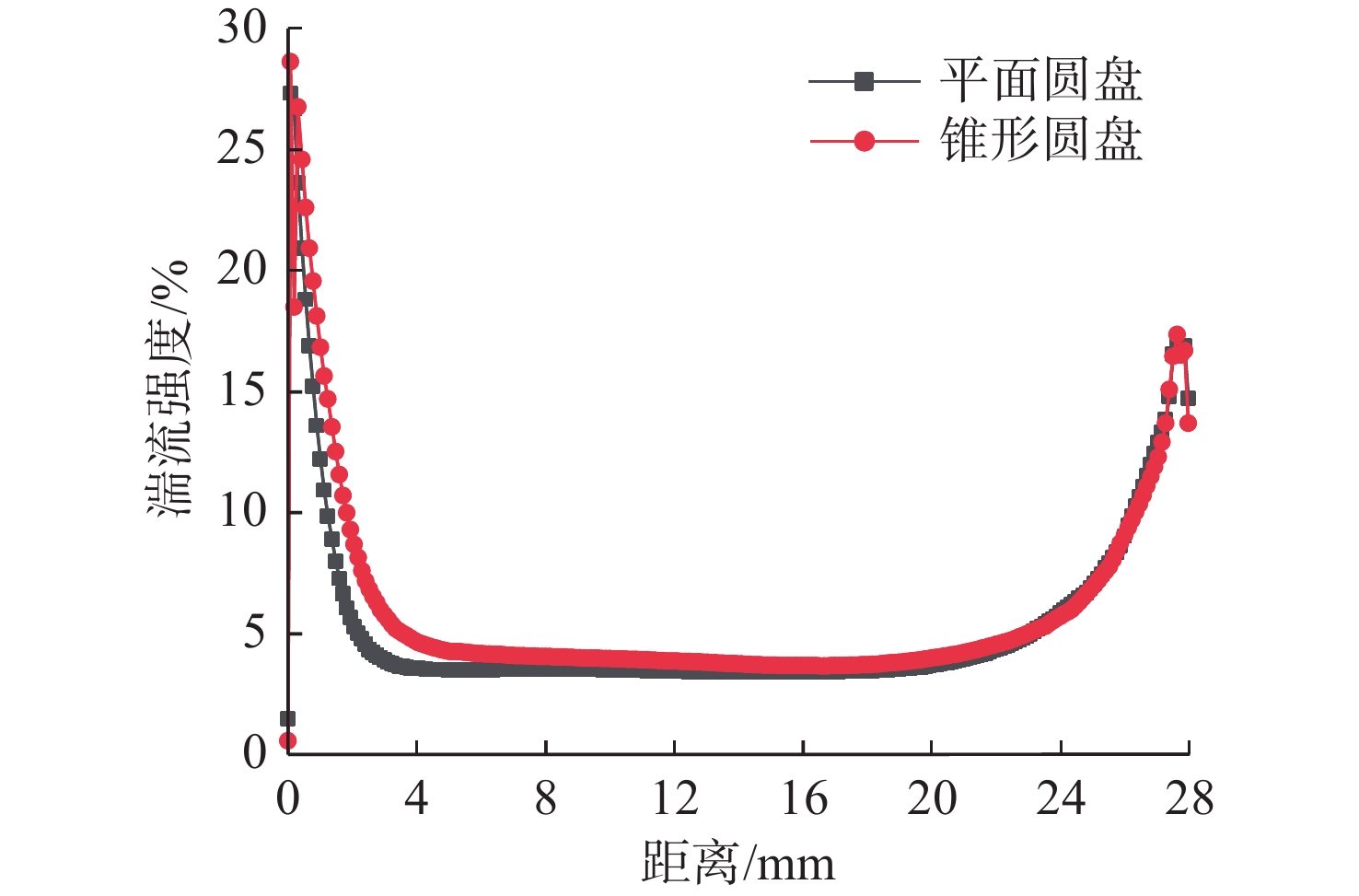
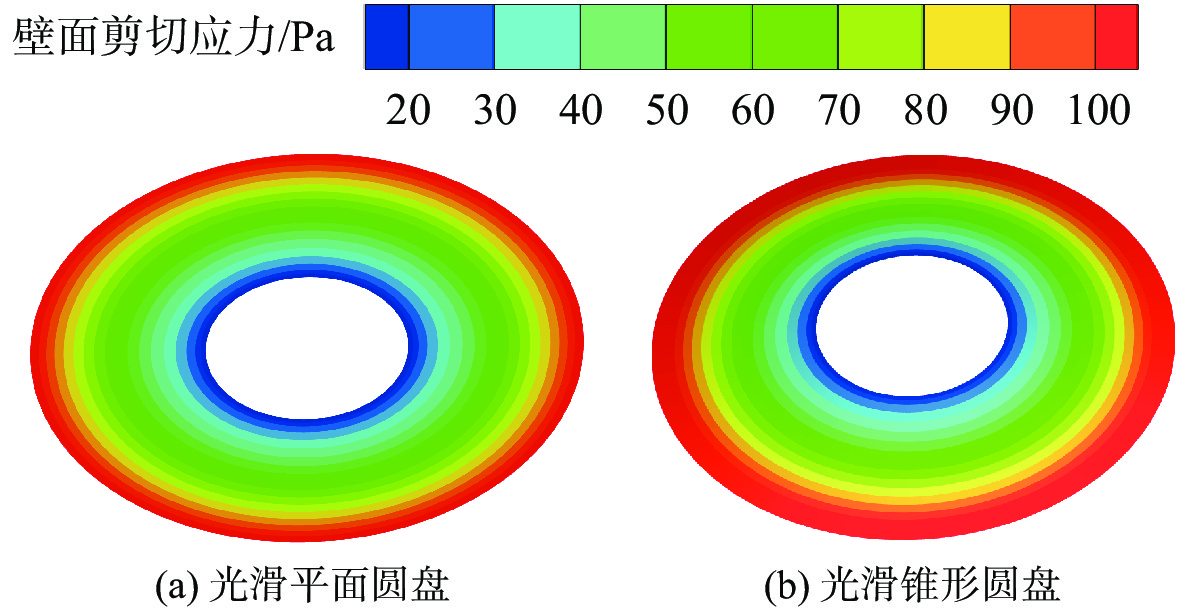
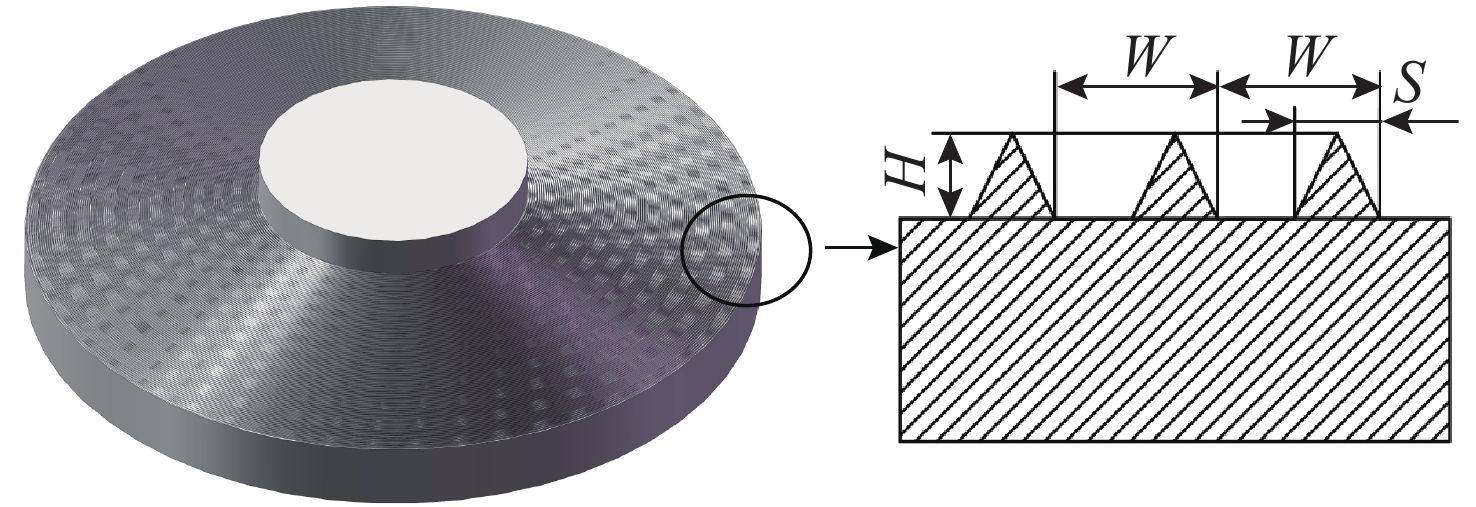
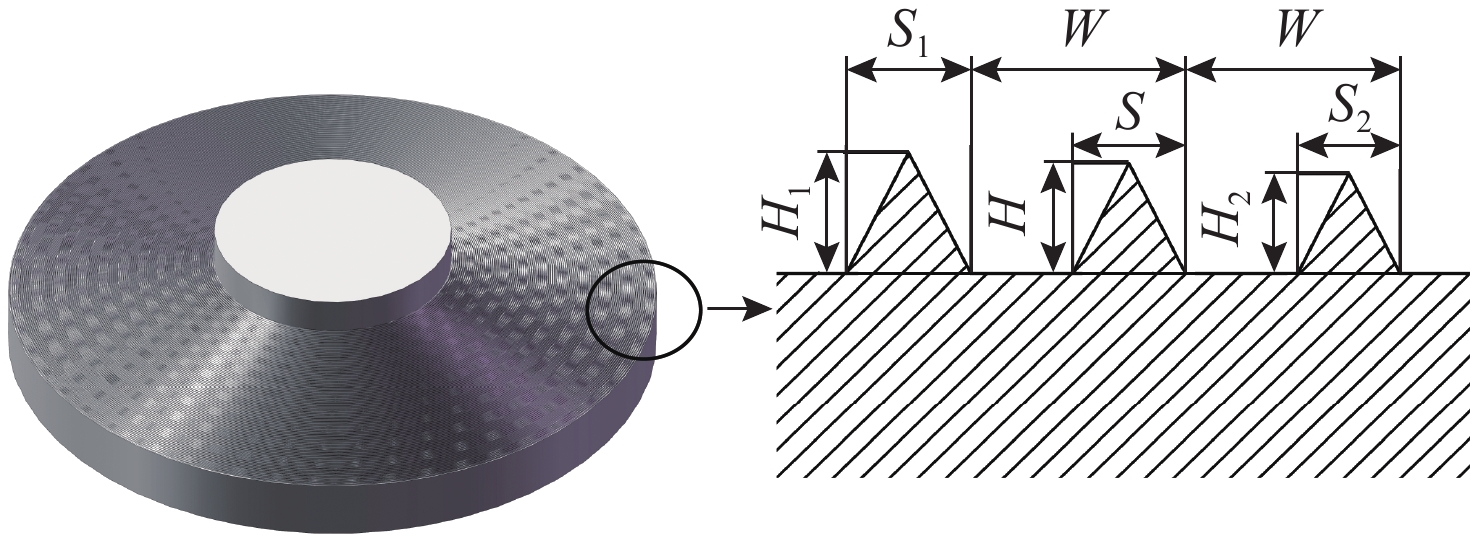
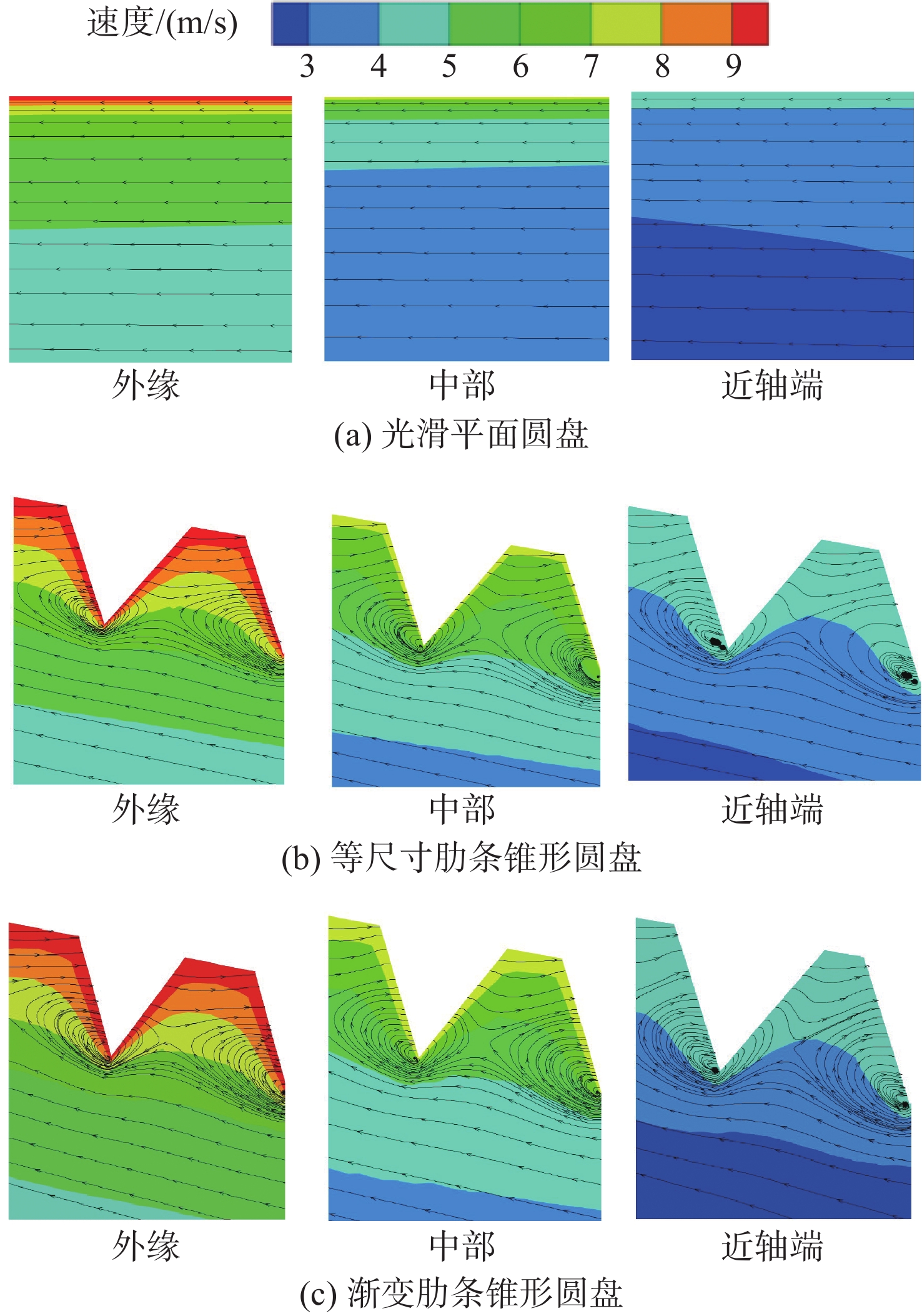
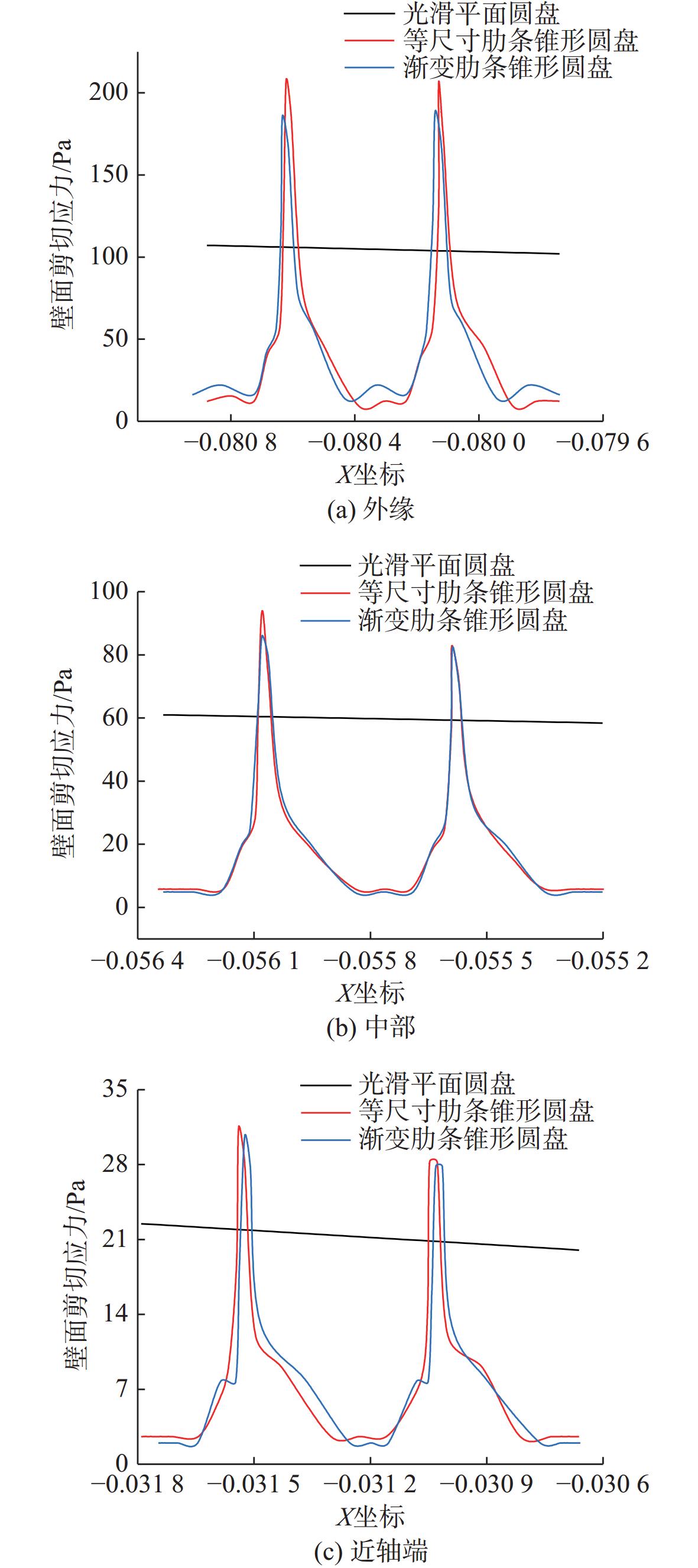
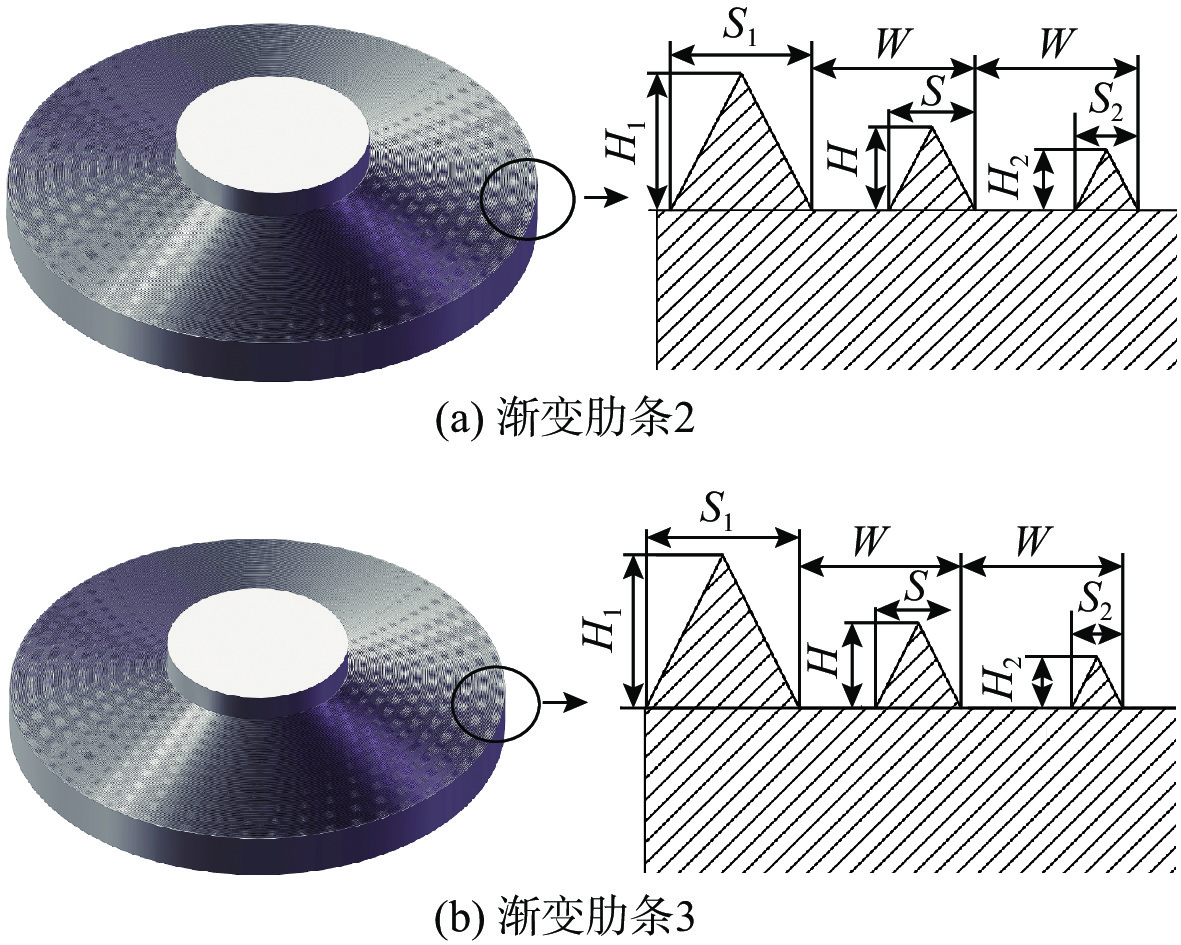
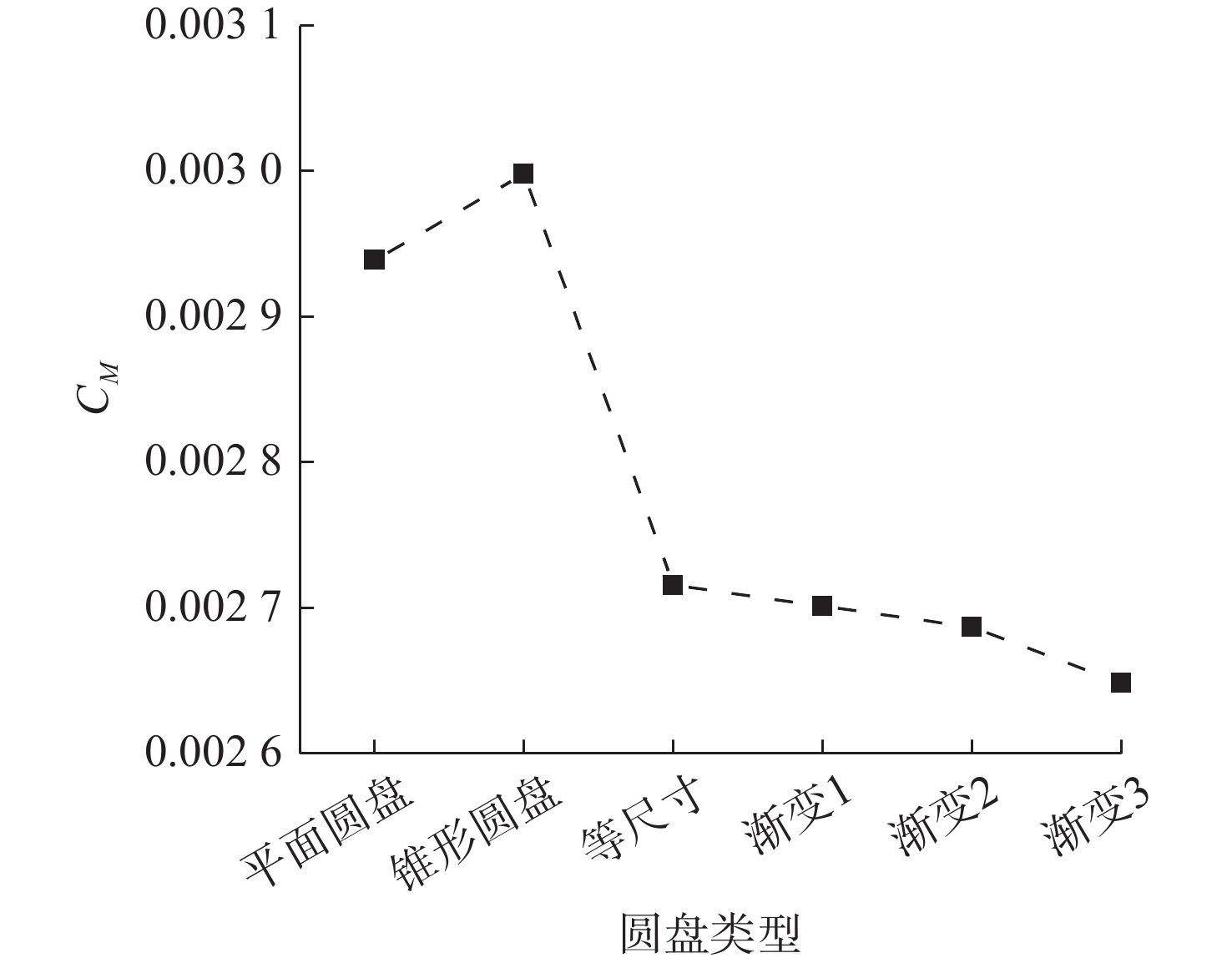
Based on the enclosed flow field conditions and optimized dynamic-static clearances, a gradually-varying riblet drag reduction structure was proposed by combining the drag reduction principle of uniform-sized riblets to address the problem of increased flow resistance and higher power consumption of the conical front shroud region of the impeller in permanent magnet integrated centrifugal pumps. The drag reduction effect of the gradually-varying riblet structure was investigated and compared with that of a smooth flat disk, a smooth conical disk, and a conical disk with uniform-sized riblets. The results indicate that by adjusting its geometric dimensions along the radial direction, the gradually-varying riblets can more effectively reorganize the near-wall flow structure and alter streamline patterns and velocity distributions, thereby optimizing the wall shear stress field and achieving effective control over flow separation and turbulent dissipation. For the conical rotating disk, arranging gradually-varying riblets on the conical surface can reduce the drag torque below that of both the smooth flat disk and the disk with uniform-sized riblets. Specifically, at the rated rotational speed, the torque coefficient decreases by 9.9% compared to the smooth flat disk and by 2.31% compared to the conical disk with uniform-sized riblets. This study can provide a theoretical reference for the low-resistance design and performance improvement of centrifugal pump impellers.
Dynamic Obstacle Avoidance for Autonomous Undersea Vehicles via VO-PPO
ZHANG Tao, ZENG Xiangguang, LI Min, XIE Dijie, REN Wenzhe, PENG Bei
2026, 34(2): 326-337, 362. doi: 10.11993/j.issn.2096-3920.2025-0154
Abstract:
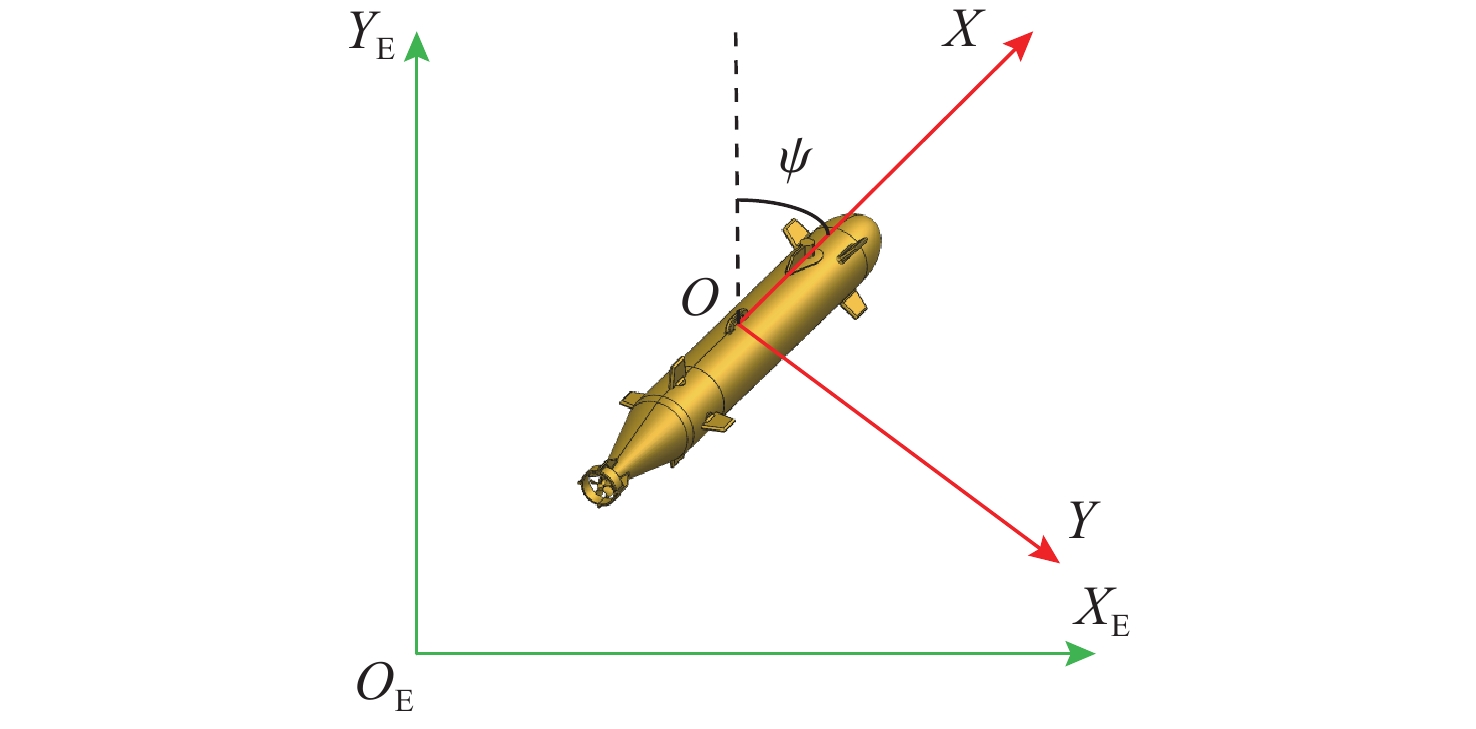
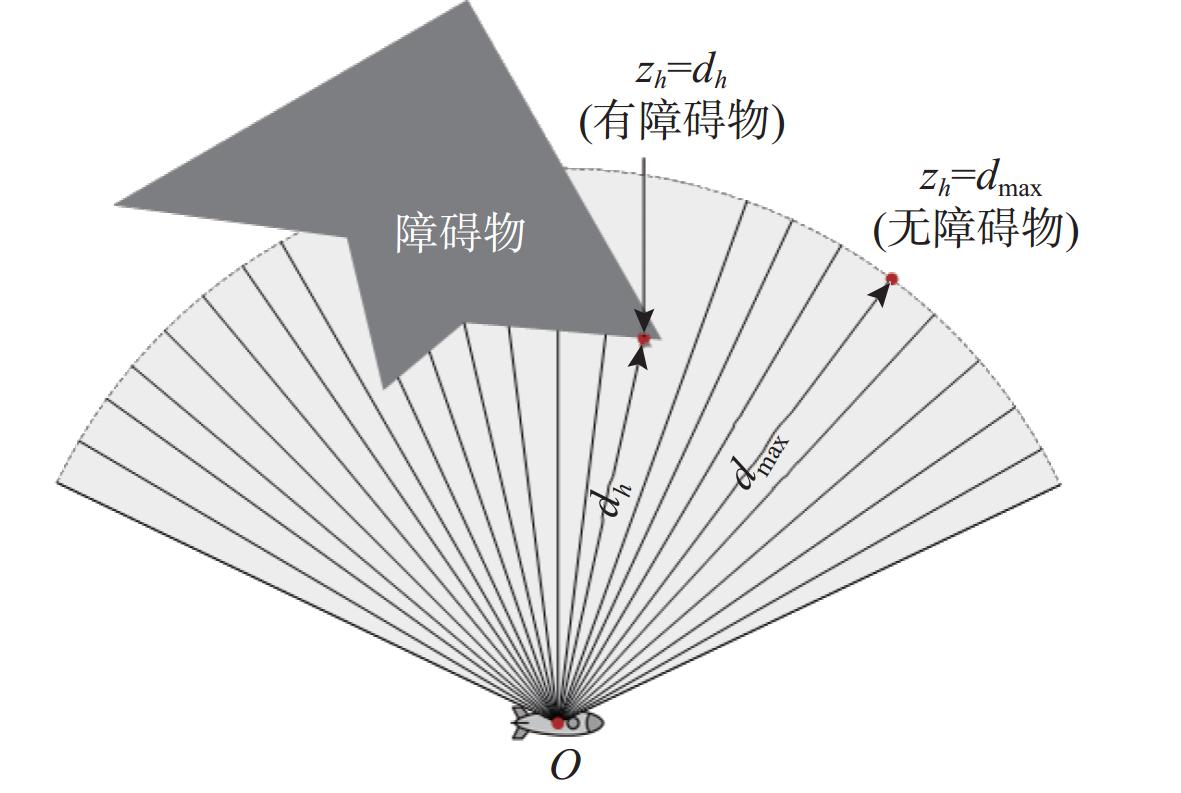
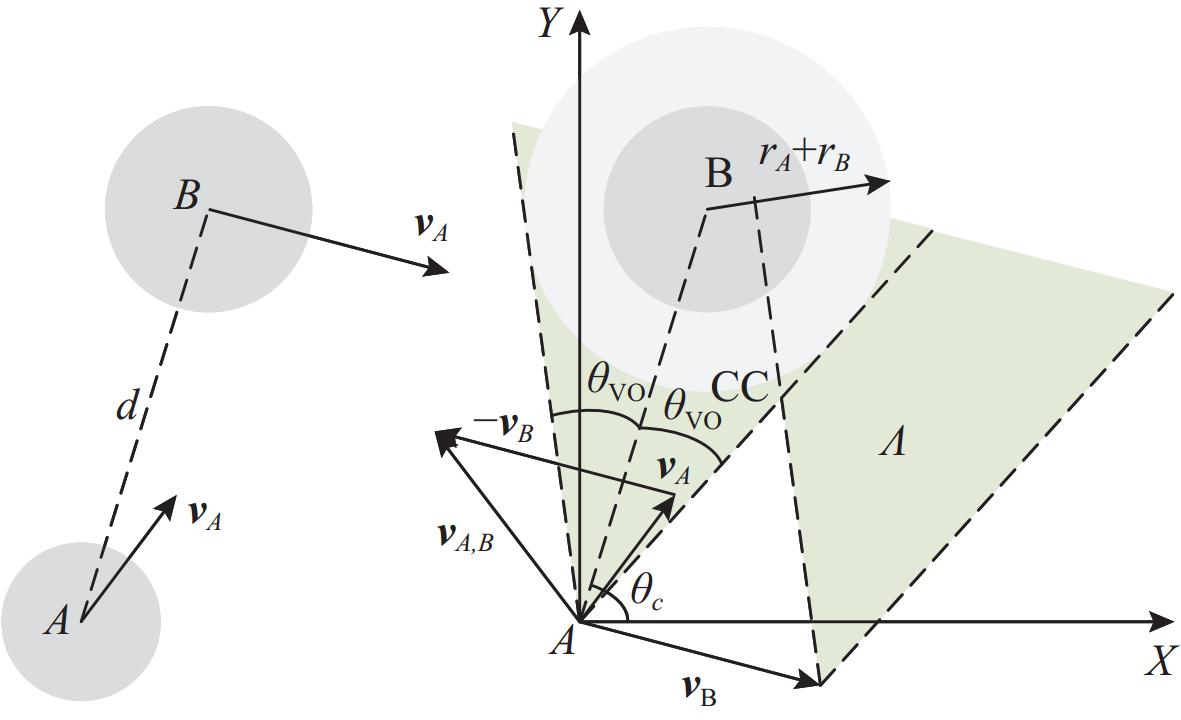
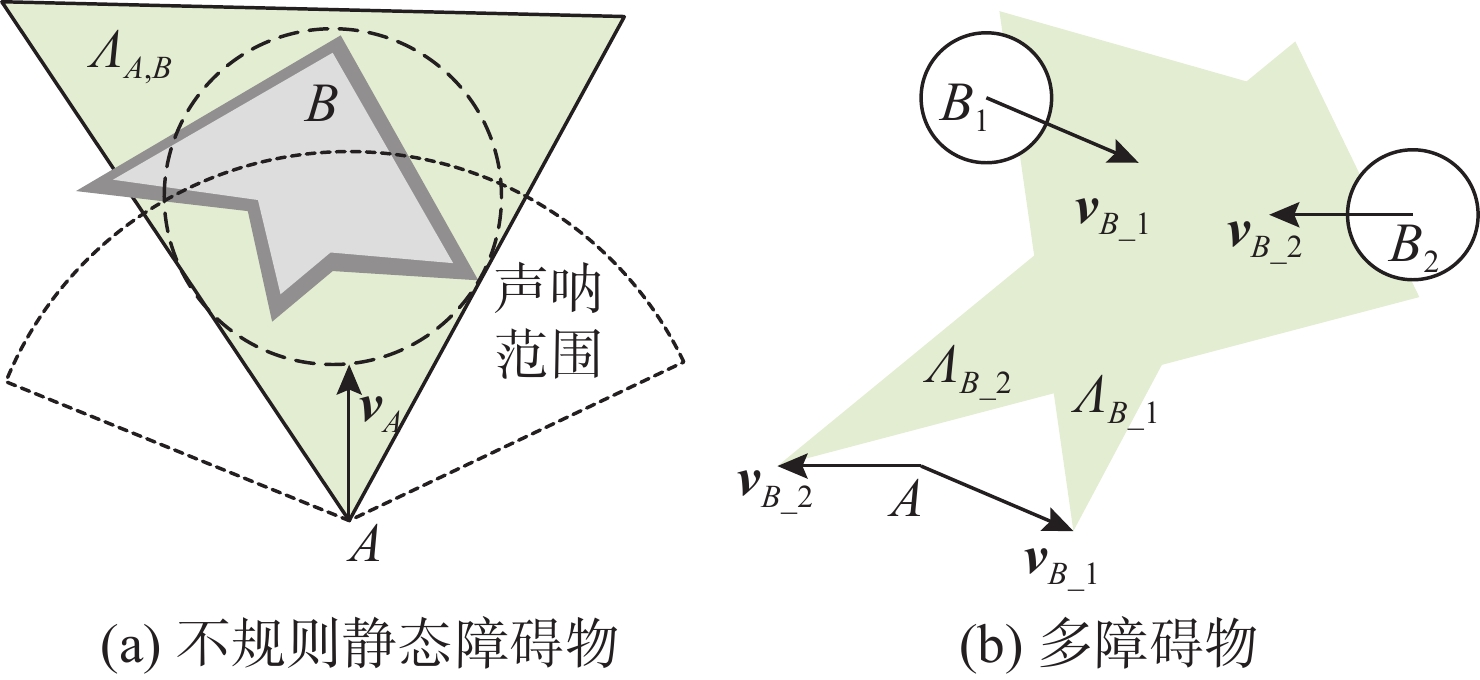
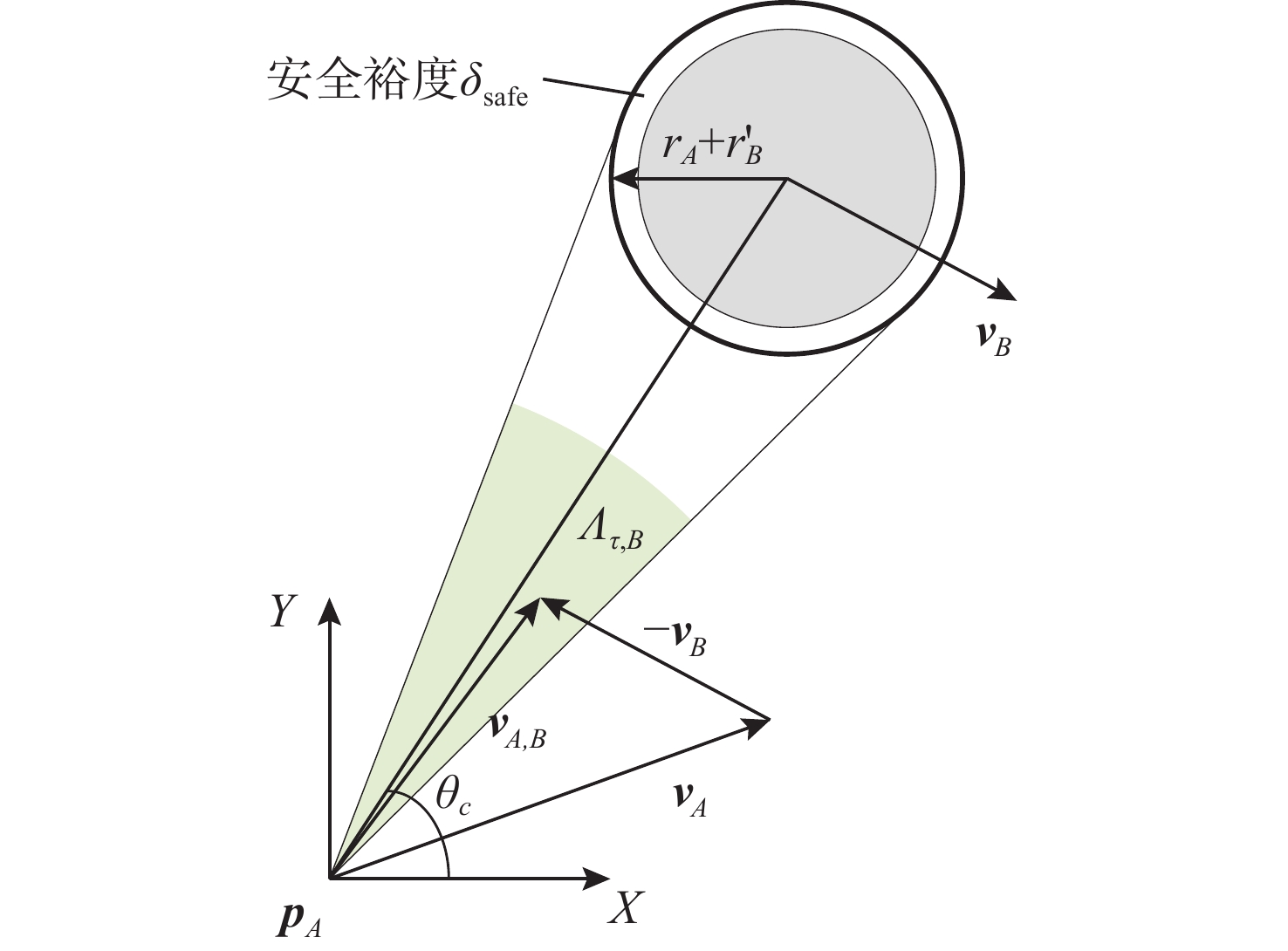
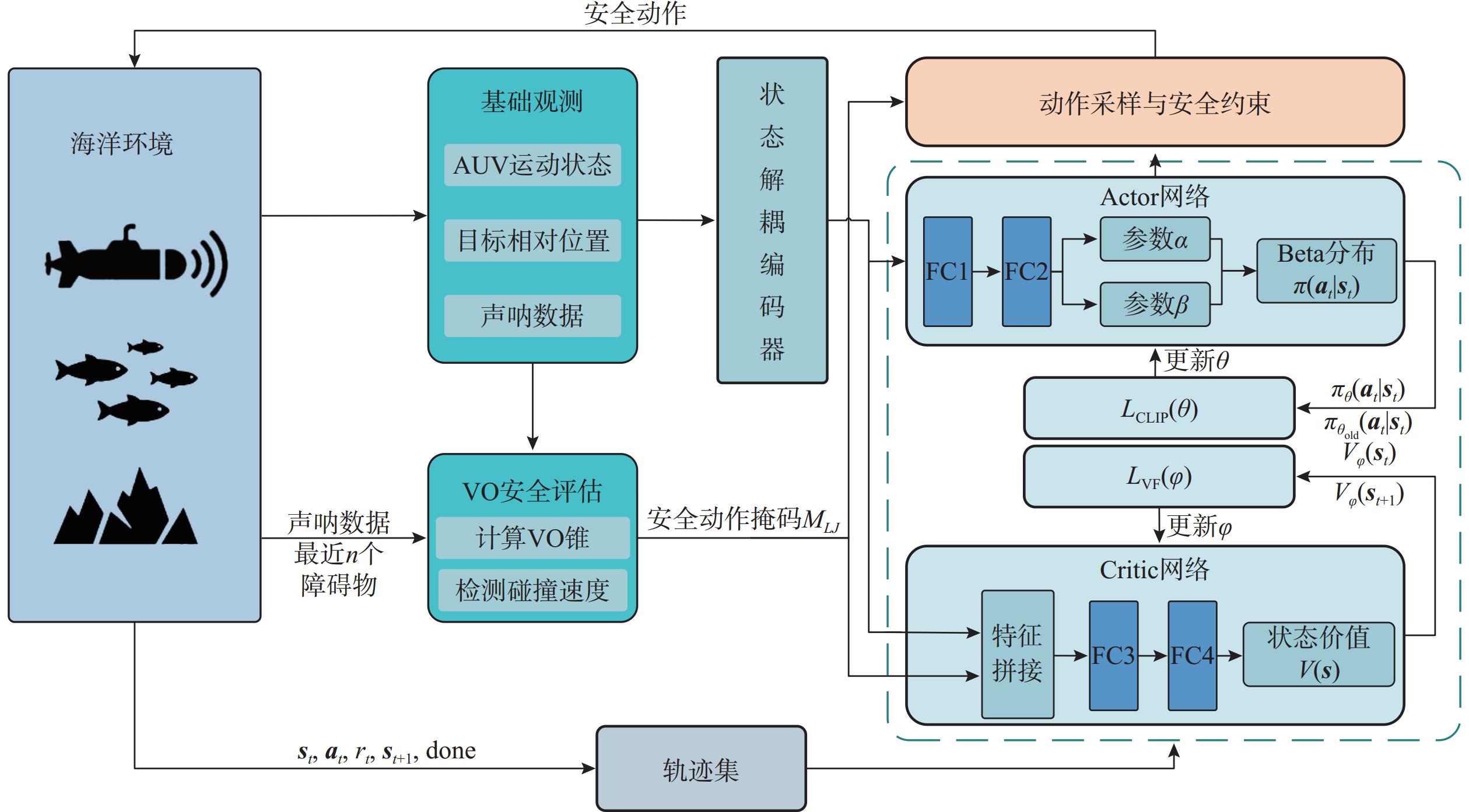
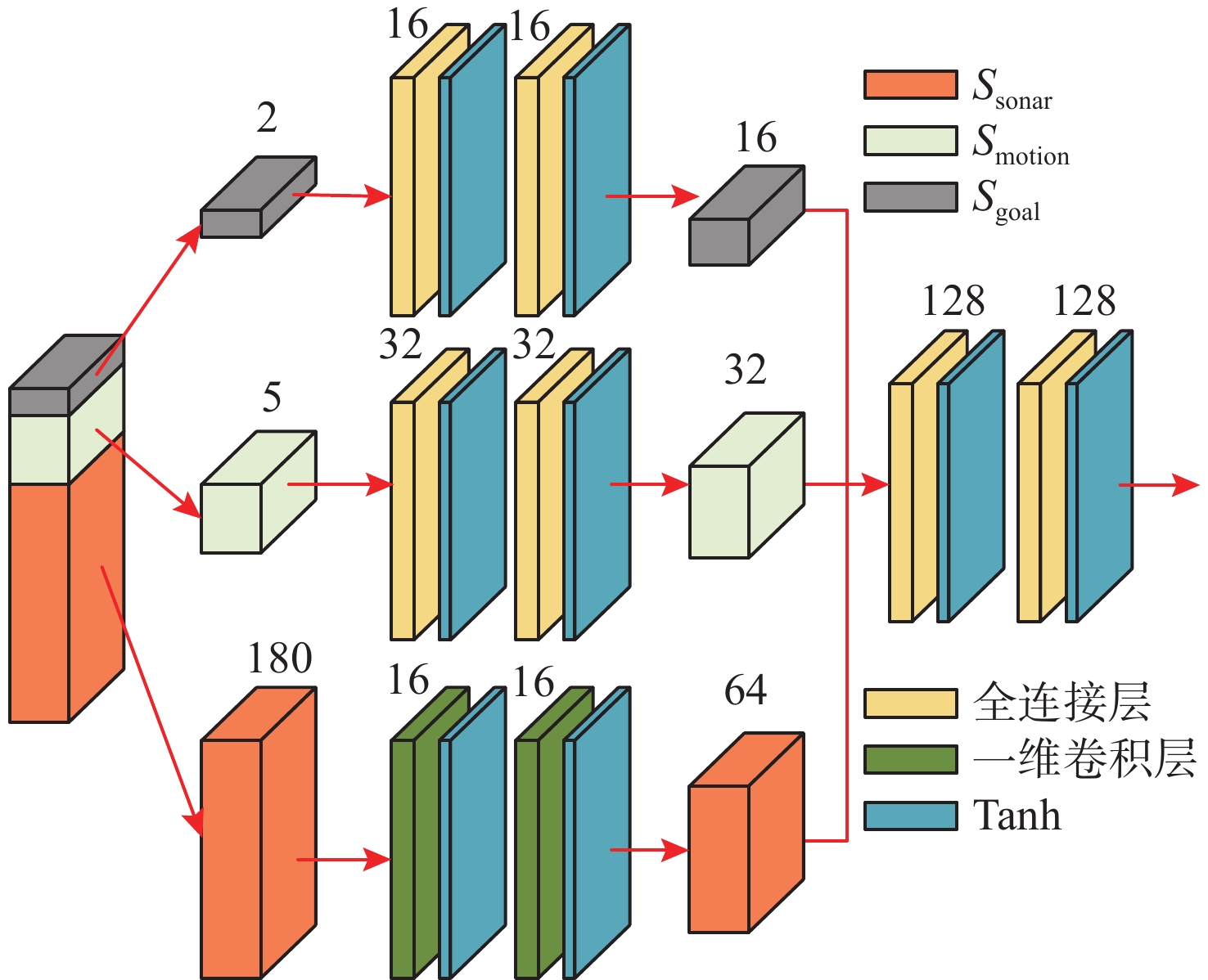
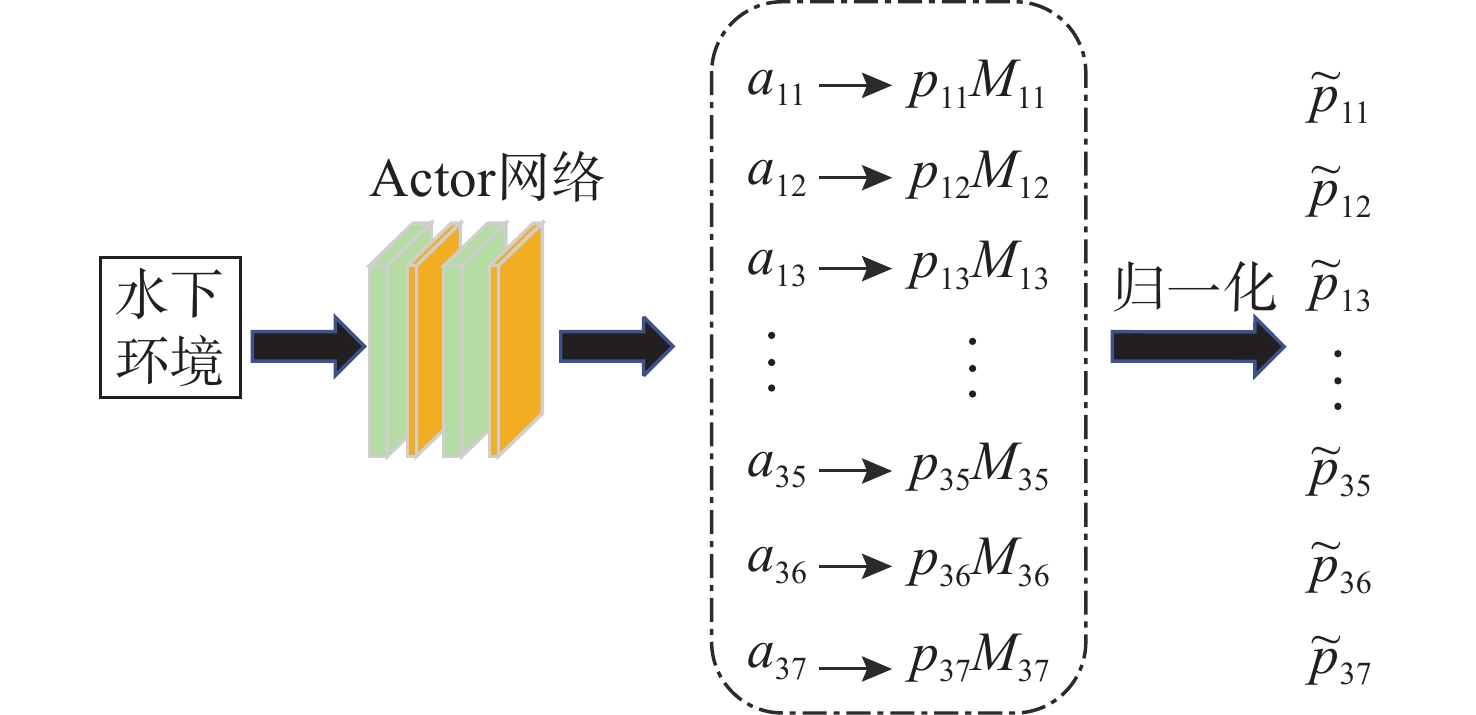
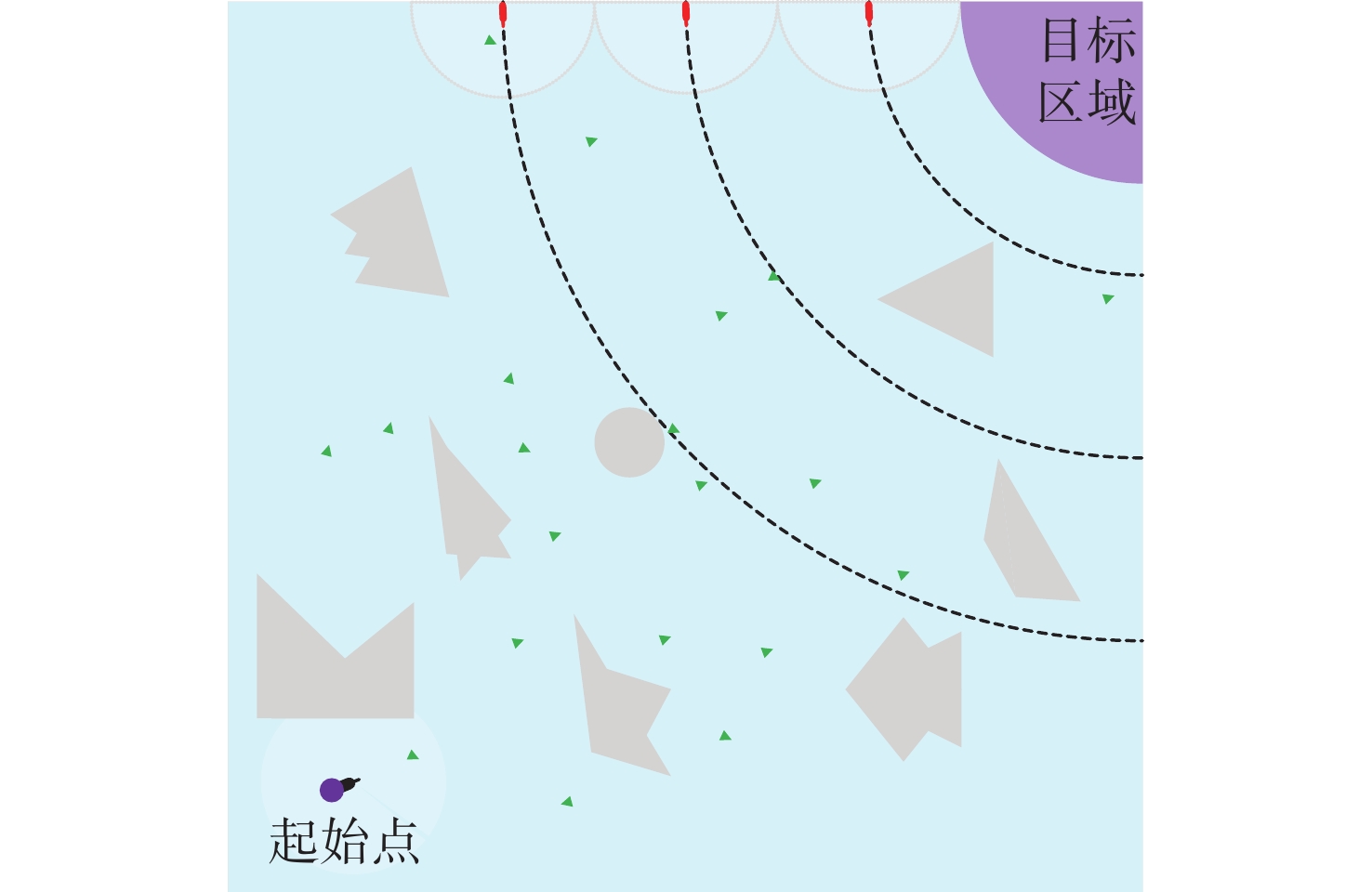
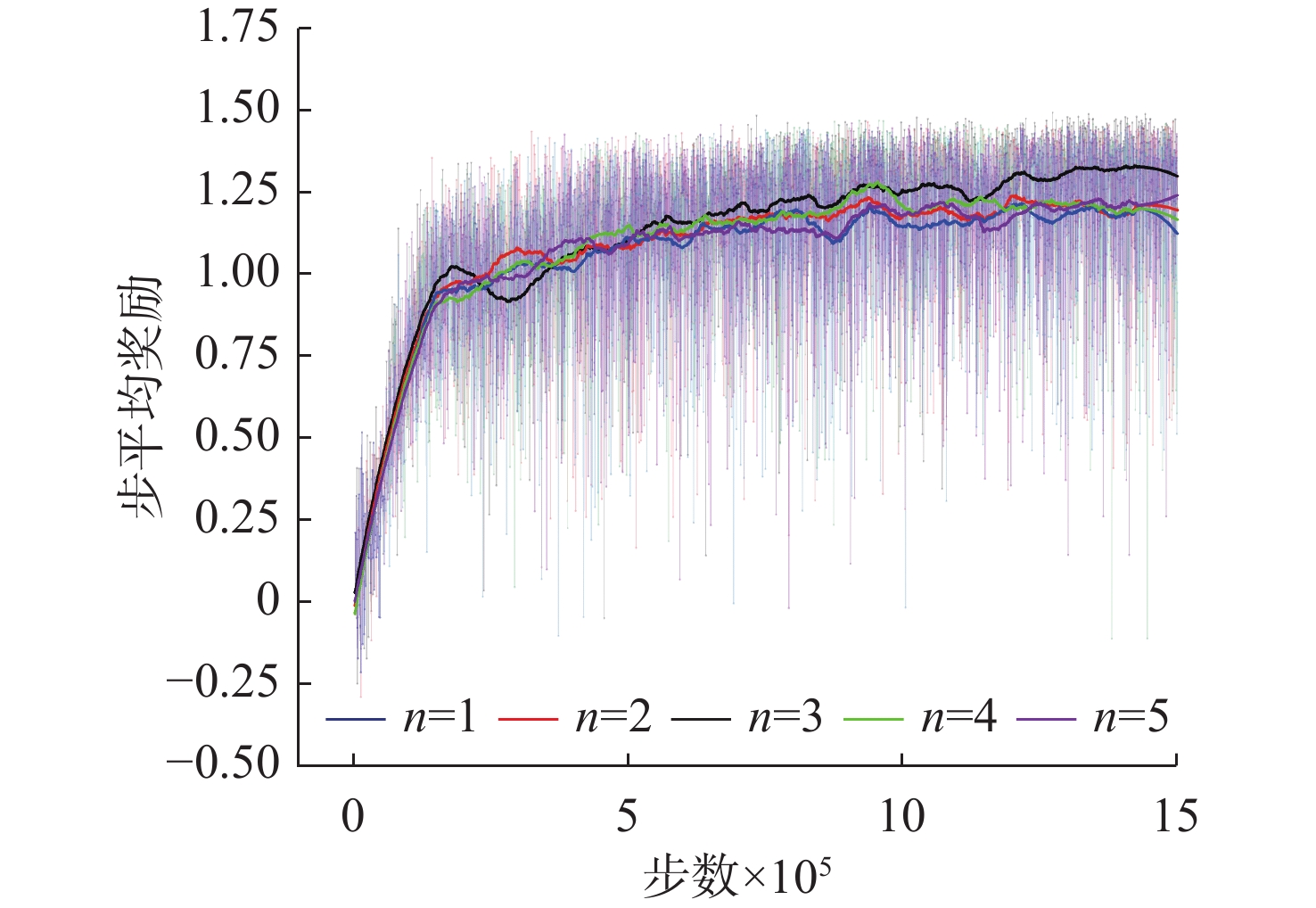
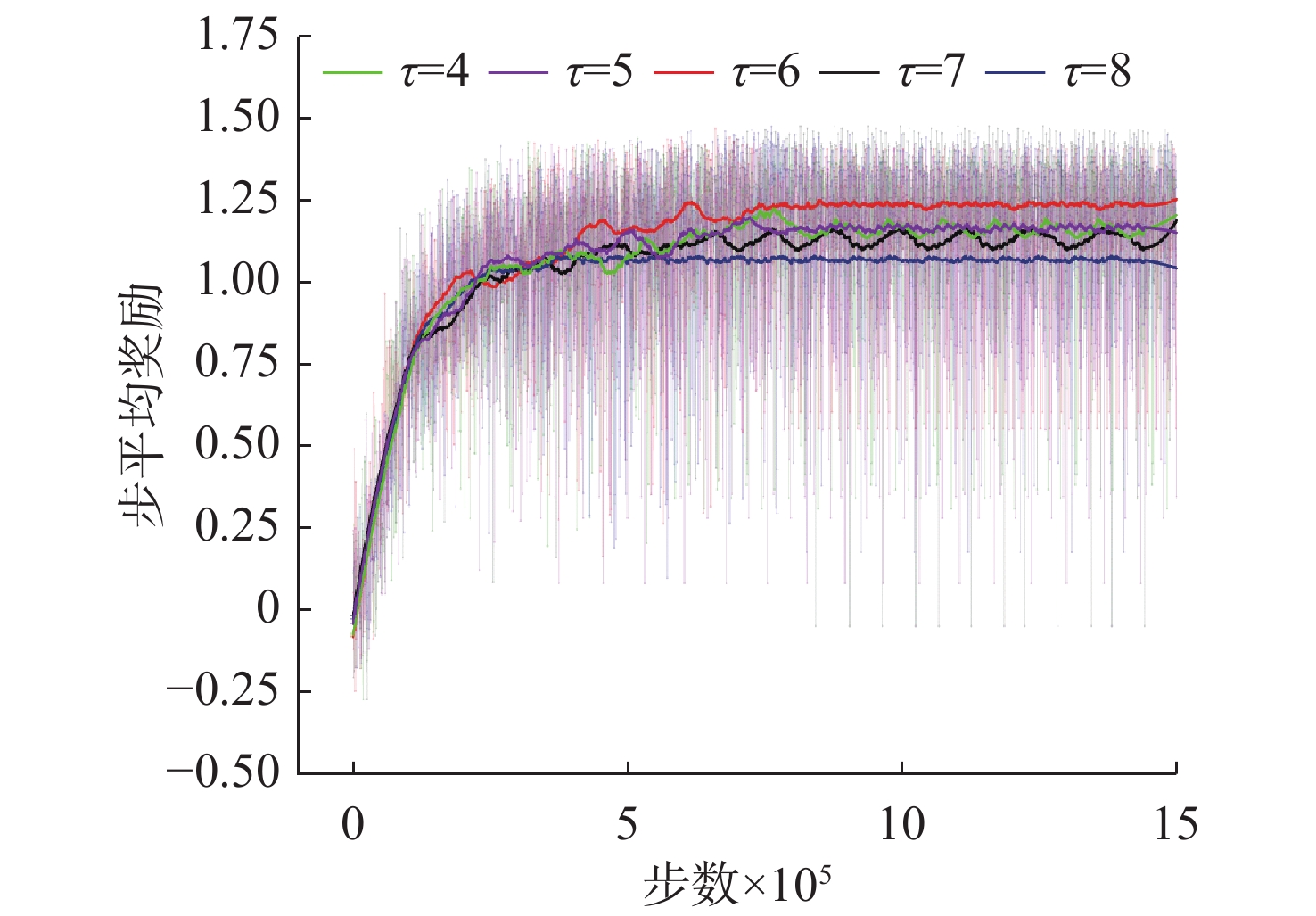
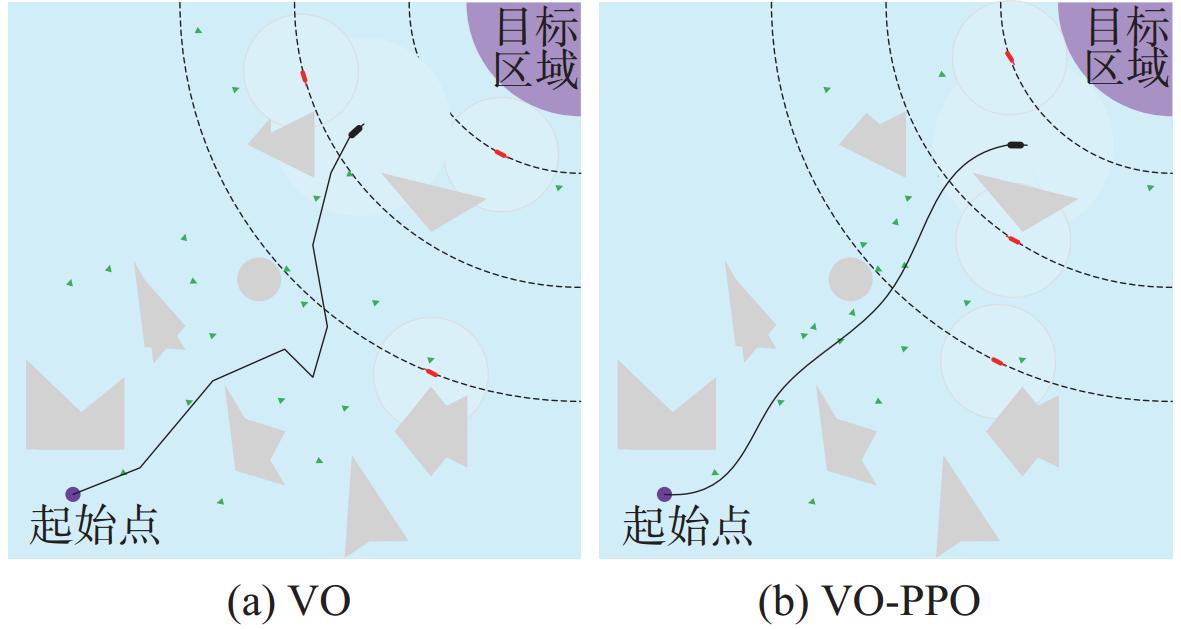
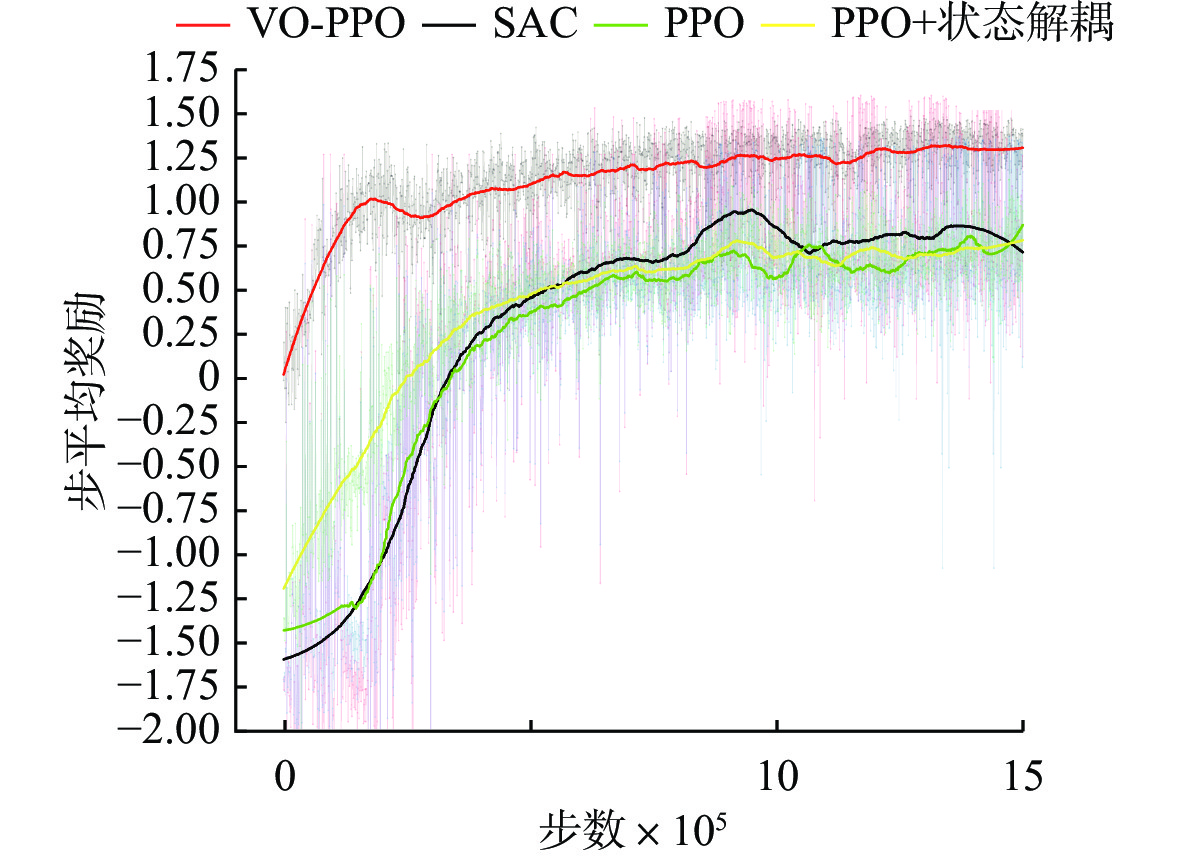
Efficient and safe dynamic obstacle avoidance is crucial for autonomous underwater vehicles(AUV) performing military missions. To address the high collision risk and slow convergence of conventional reinforcement learning-based approaches in AUV obstacle-avoidance training, this paper proposes a dynamic obstacle-avoidance algorithm for AUV, termed VO-PPO, which integrates an improved velocity obstacle(VO) method with proximal policy optimization(PPO). In the traditional VO framework, the algorithm introduces a safety margin and a time-window mechanism to enhance the safety and efficiency of obstacle-avoidance decisions. Meanwhile, by constructing a “discrete-check-continuous-execution” safe action mask, it embeds geometric safety constraints into the policy optimization process. Combined with state-space decoupling and a multi-objective reward design, the proposed method guides the learned policy to balance safety, efficiency, and trajectory smoothness. Simulation results show that, compared with the traditional VO method, VO-PPO generates smoother obstacle-avoidance paths that better match the motion characteristics of AUV; compared with a baseline PPO algorithm, it improves the obstacle-avoidance success rate by 53%, accelerates training convergence by 67.5%, and increases the accumulated reward by 56.7%, effectively mitigating the problems of high collision risk and slow convergence.
Experimental Study on Sailing Resistance and Attitude of Amphibious Unmanned Vehicles Under Still Water Towing Conditions
ZHANG Guoqing, FENG Yikun, WANG Jiancheng, ZHANG Zhewei, XU Xiaojun
2026, 34(2): 338-344. doi: 10.11993/j.issn.2096-3920.2025-0121
Abstract:
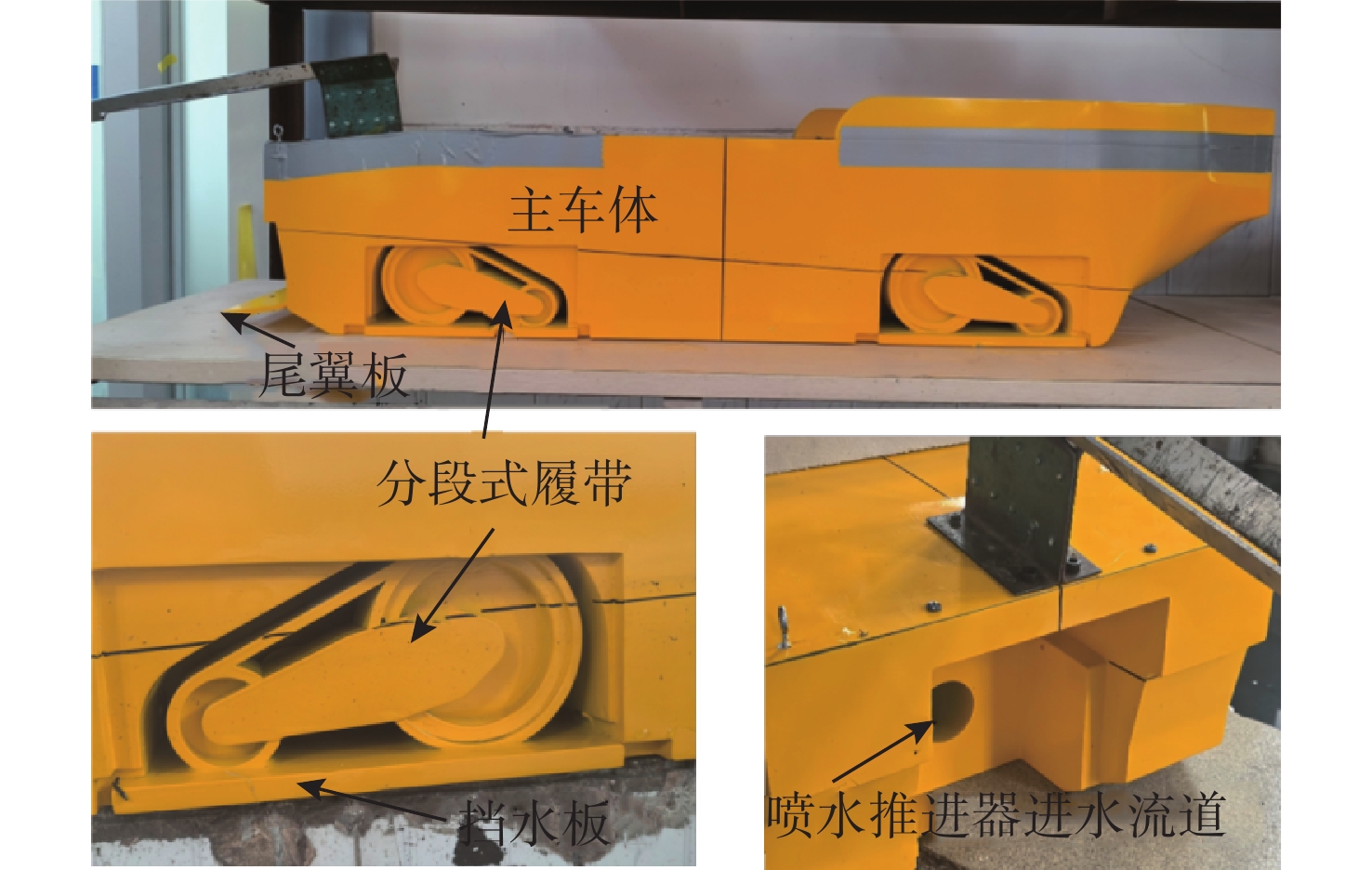
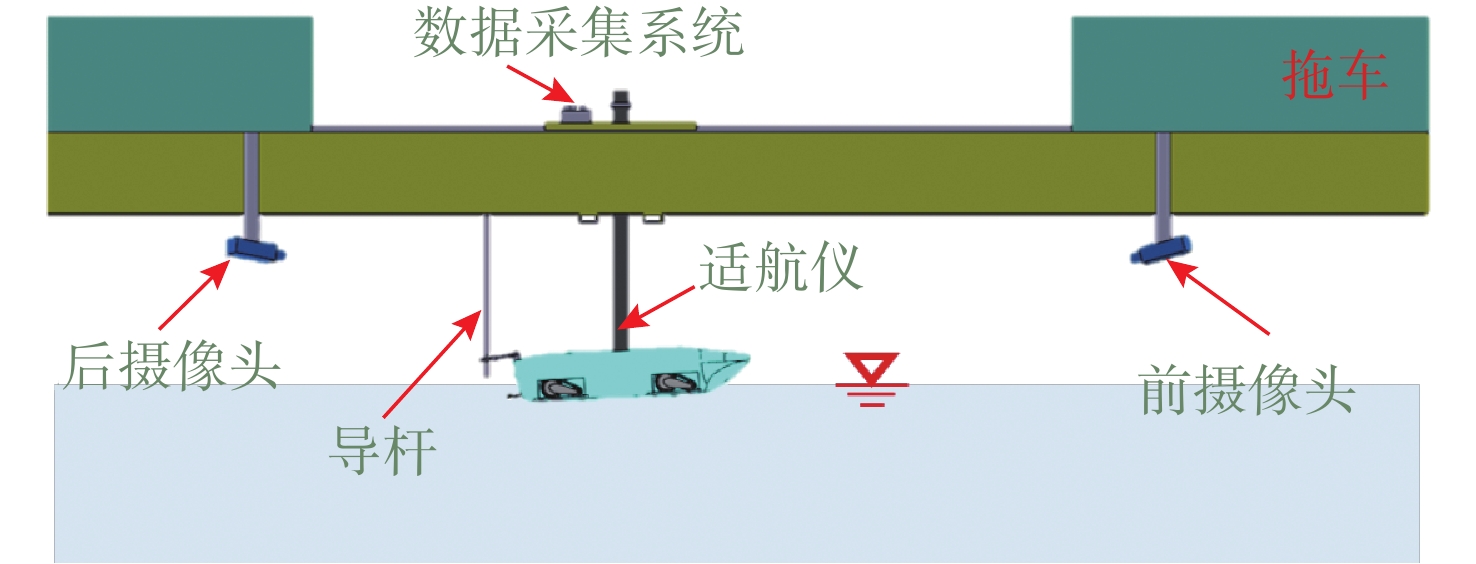
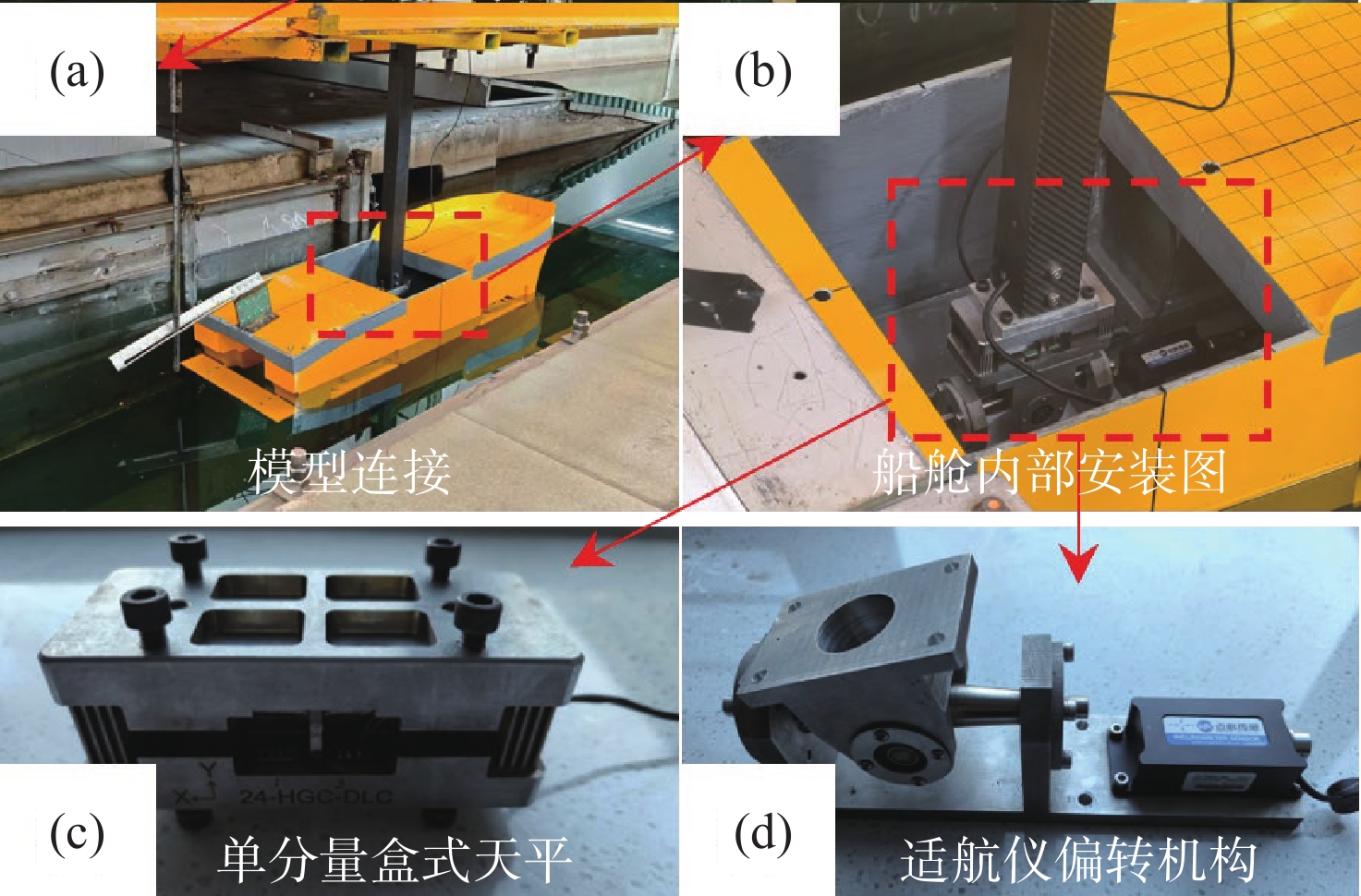
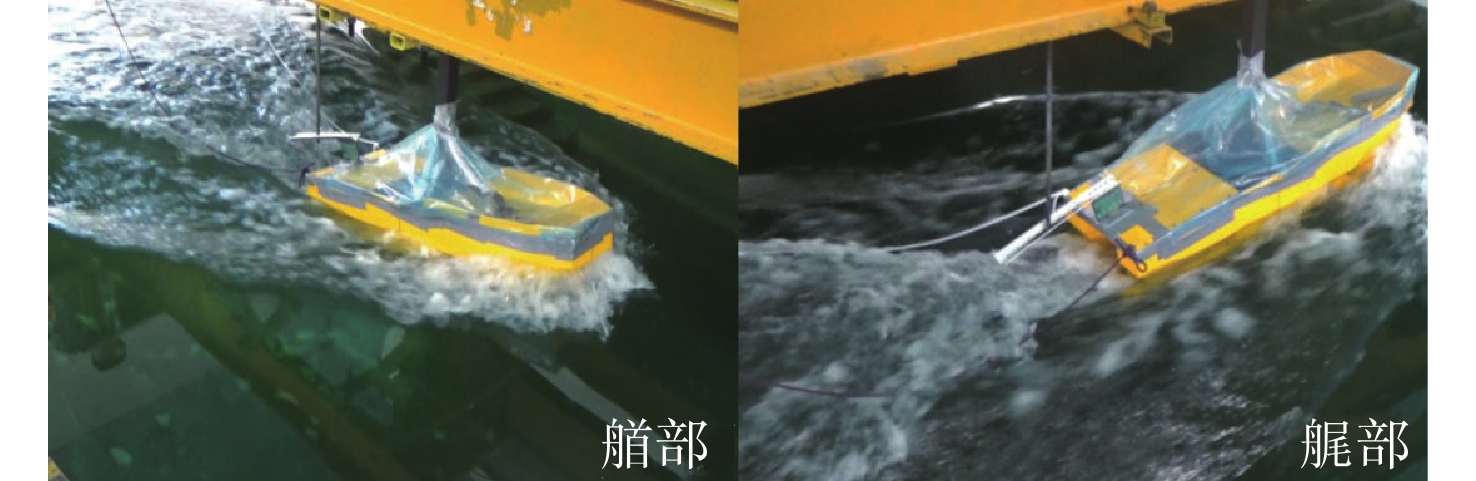
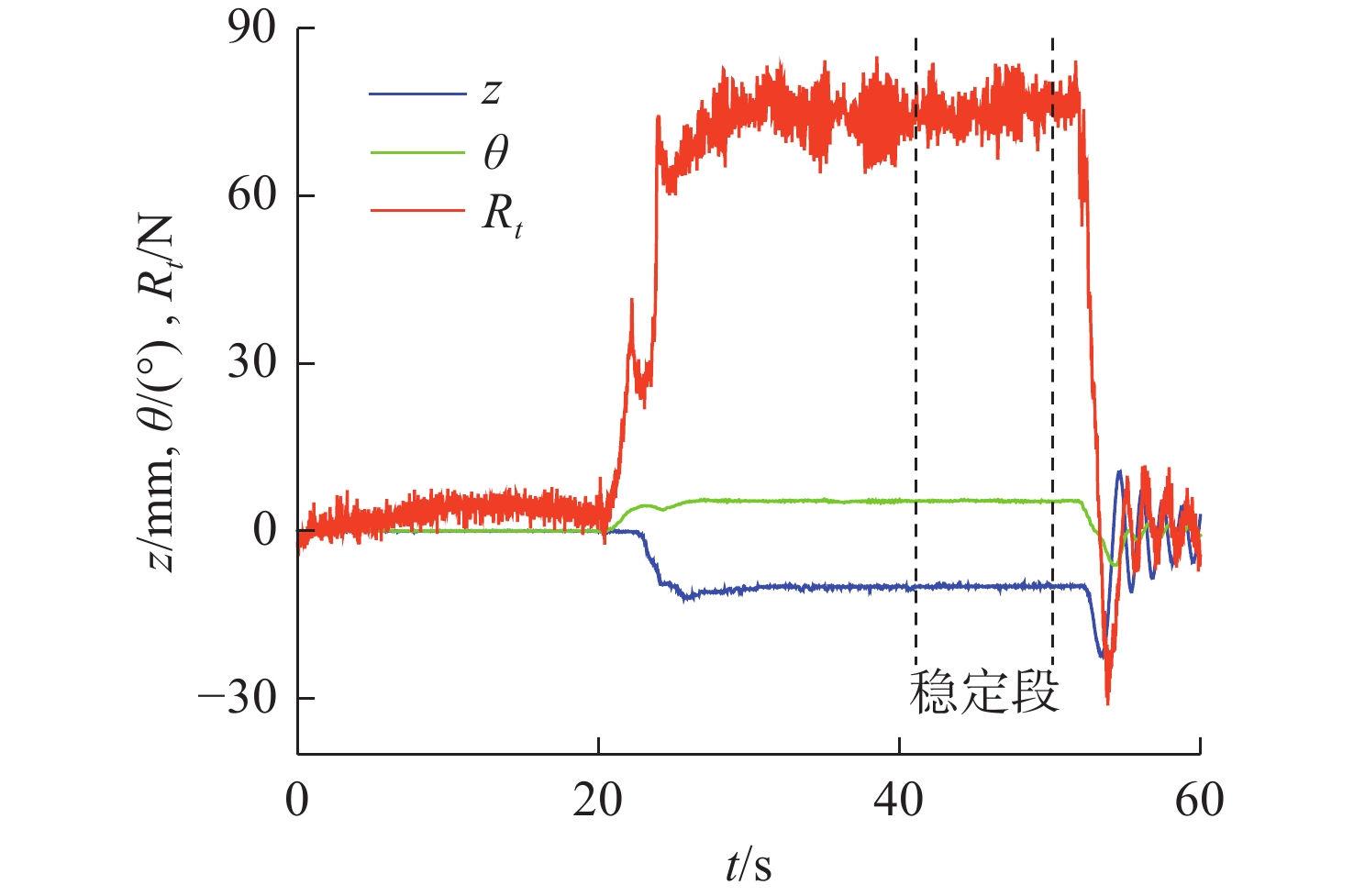
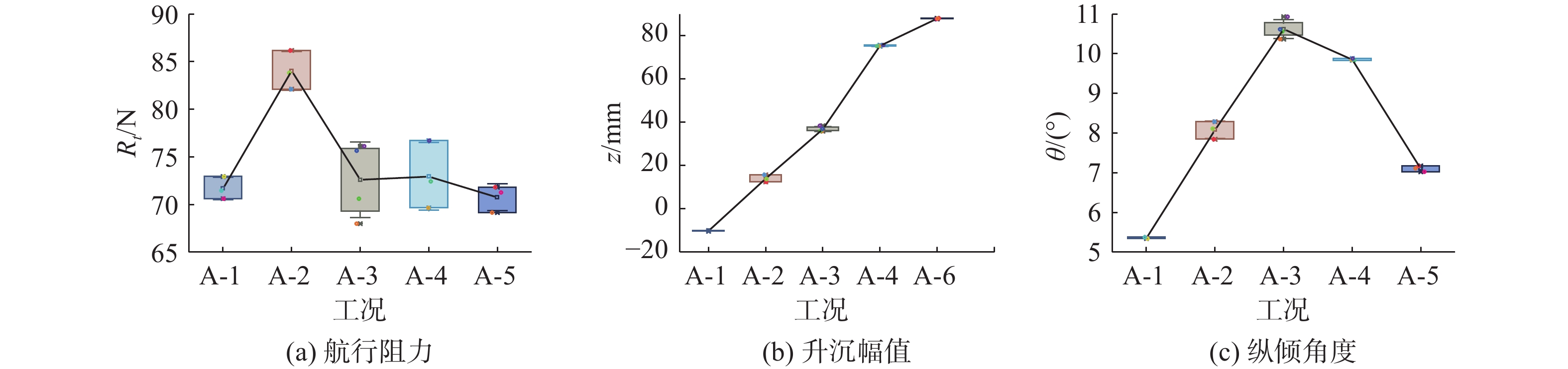
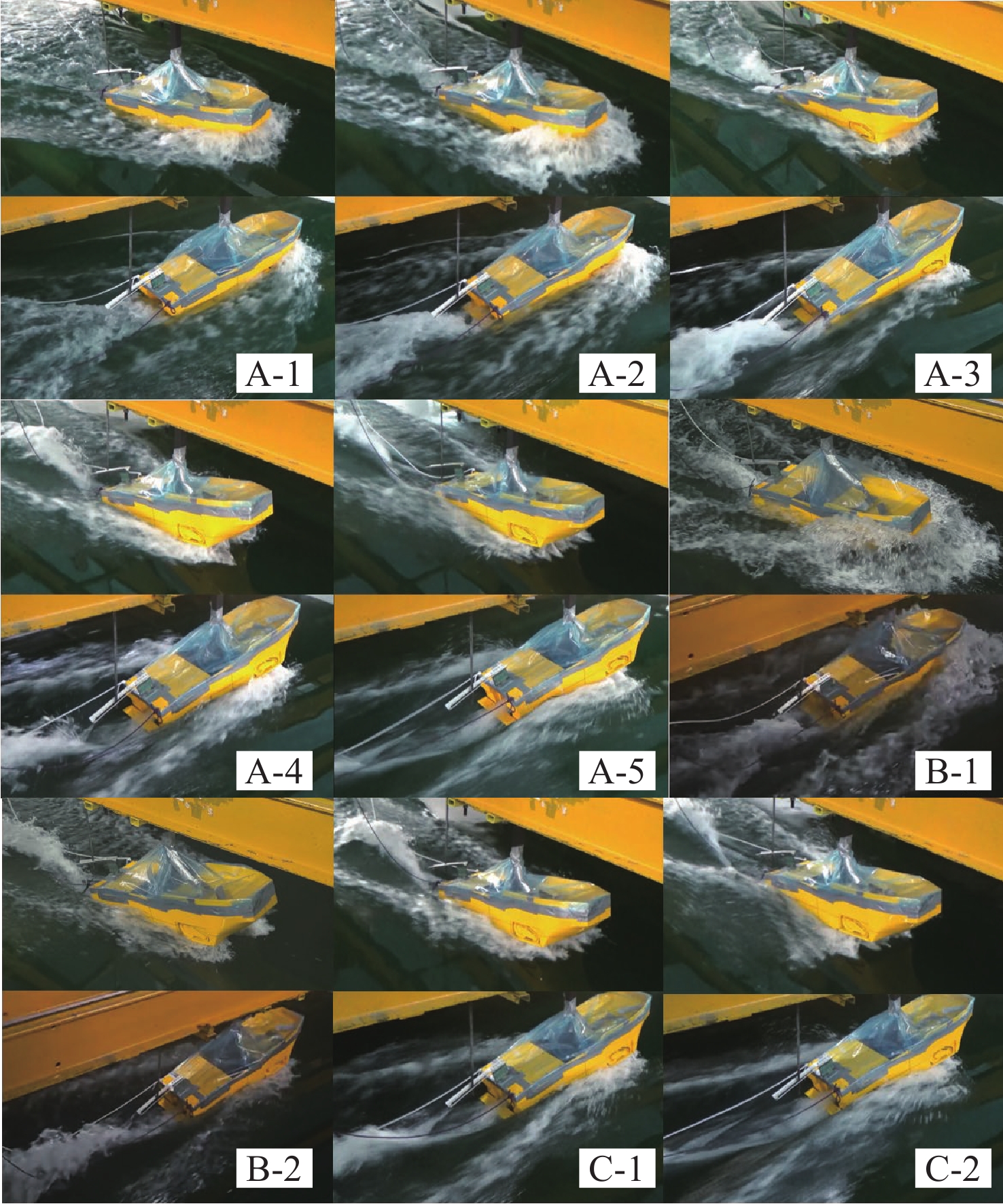
The still water resistance towing test is an important method for evaluating the hydrodynamic performance of amphibious unmanned vehicles. Currently, there is a lack of systematic research on the still water towing test procedure and the underlying mechanisms of sailing resistance for amphibious vehicles. In this paper, a certain type of amphibious unmanned vehicle was taken as the test object. Based on its geometric parameters and the defined test conditions, a standardized test procedure was established using a ship model towing tank facility, and the hydrodynamic performance under different towing speeds and different stern flap installation angles was quantitatively characterized. Based on the observed experimental phenomena and the dataset, the effects of variations in speed and stern flap installation angle on sailing resistance characteristics, heave motion response, and trim attitude were analyzed in detail, providing experimental evidence and engineering reference for the hydrodynamic performance optimization of amphibious unmanned vehicles.
Optimization of Underwater Mapping Based on EKF-FastSLAM and Gaussian Process Regression
CUI Peng, LI Xinda, ZHANG Feihu, DU Peng
2026, 34(2): 345-352. doi: 10.11993/j.issn.2096-3920.2025-0122
Abstract:
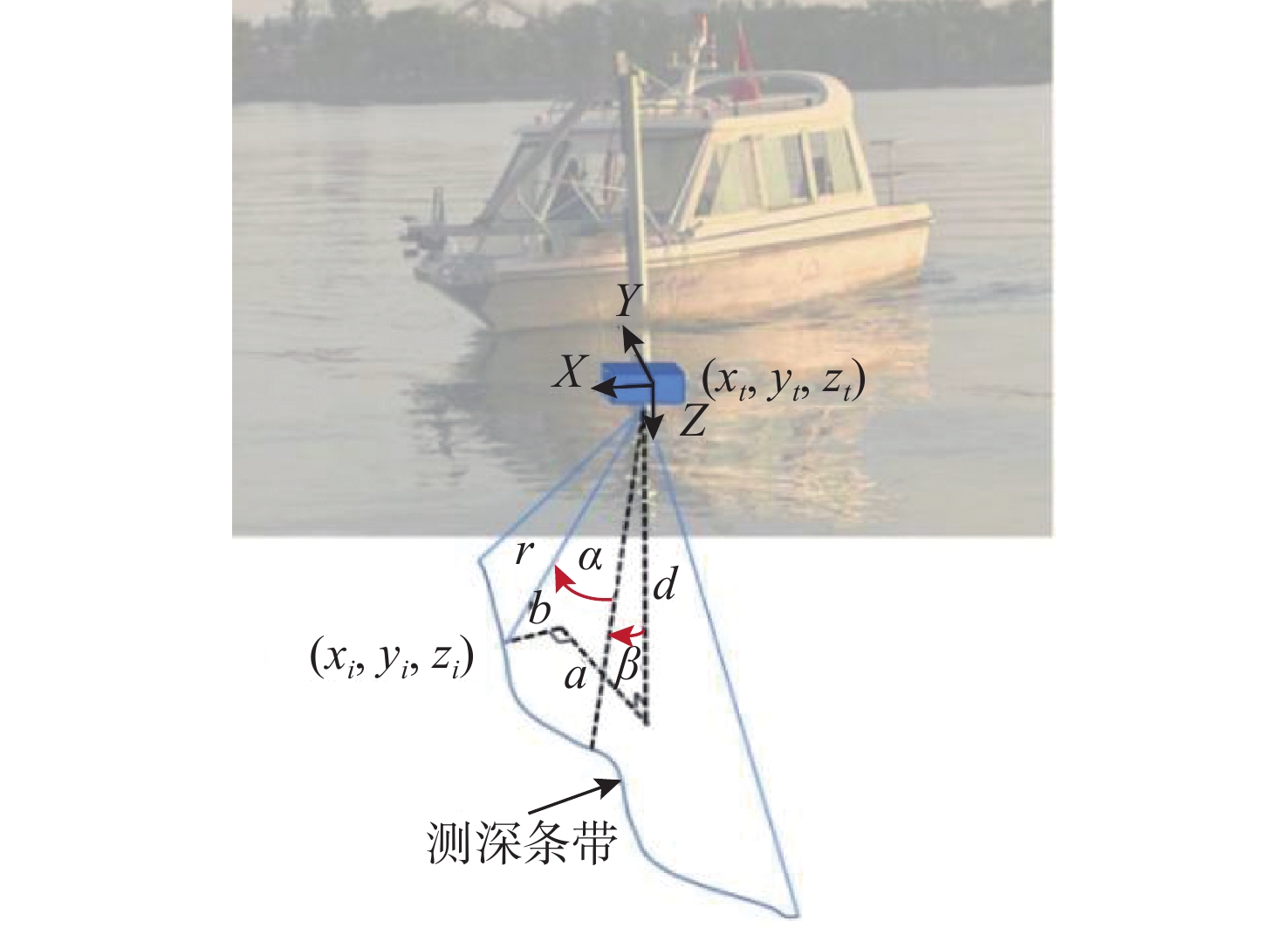
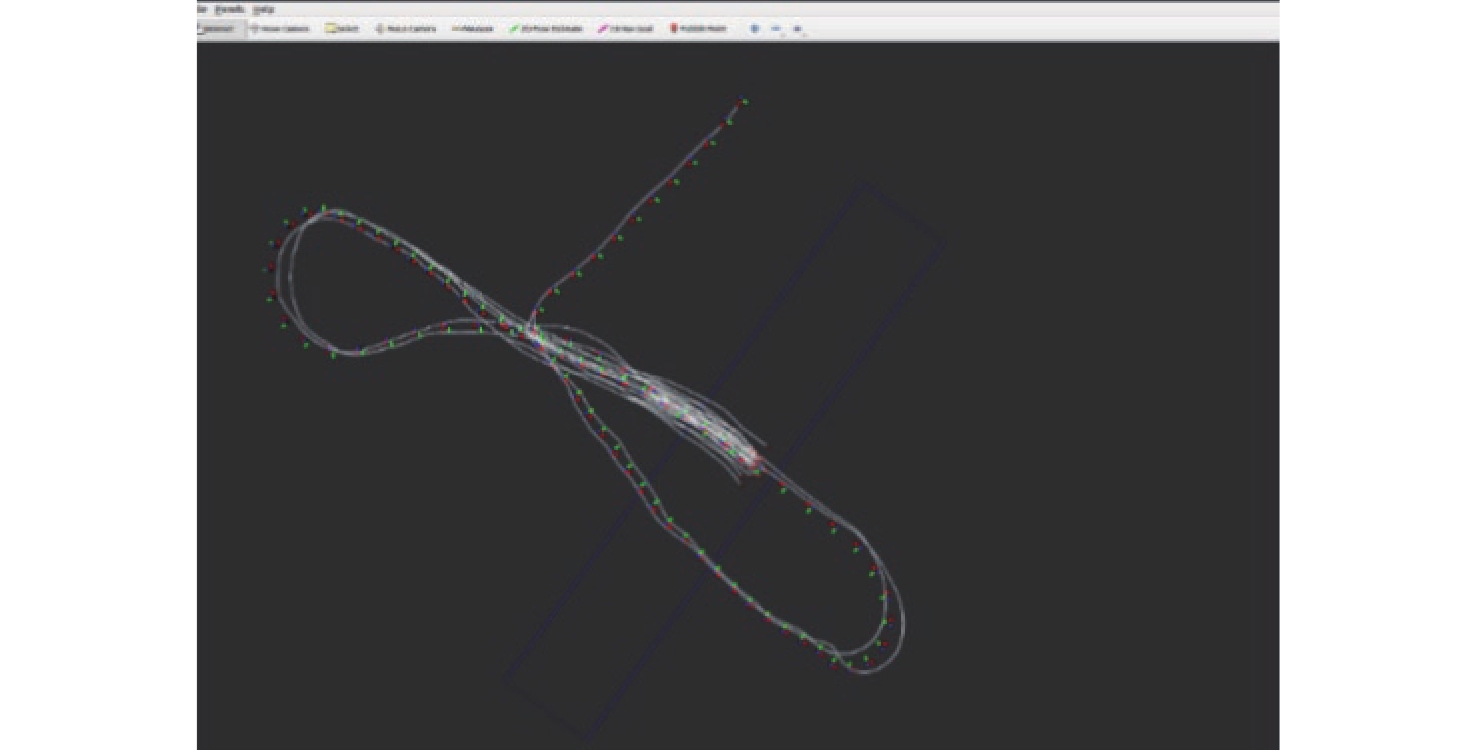
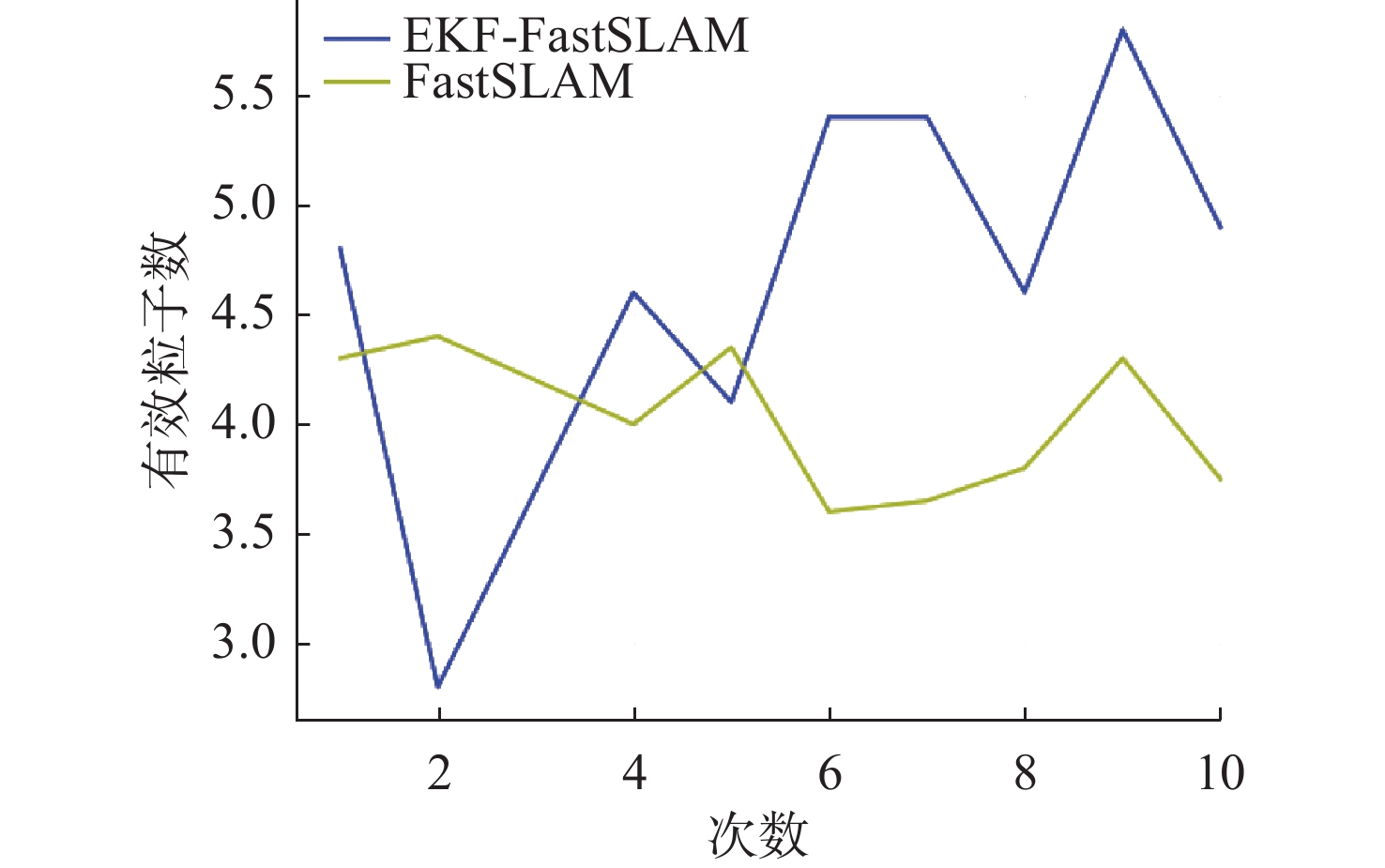
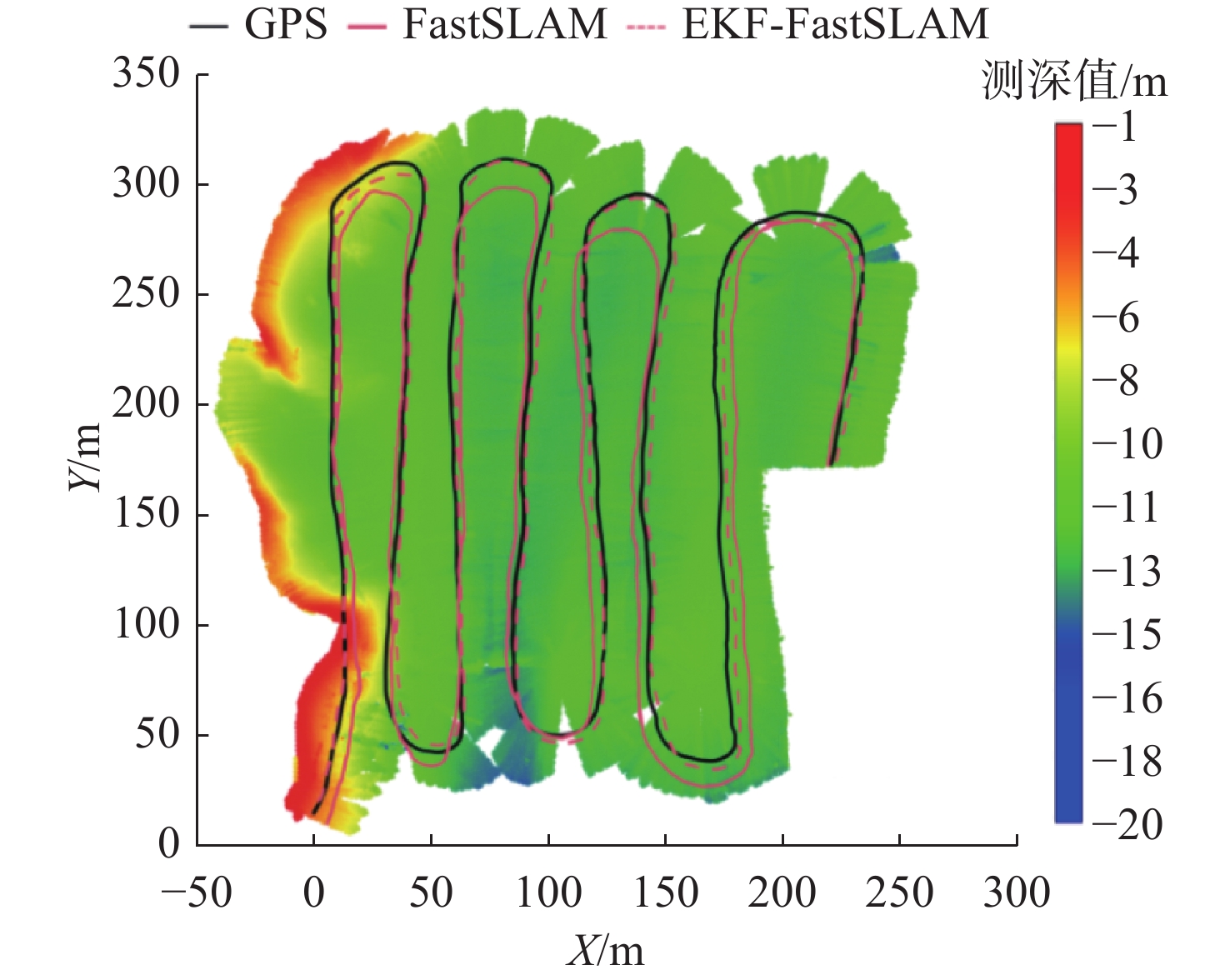
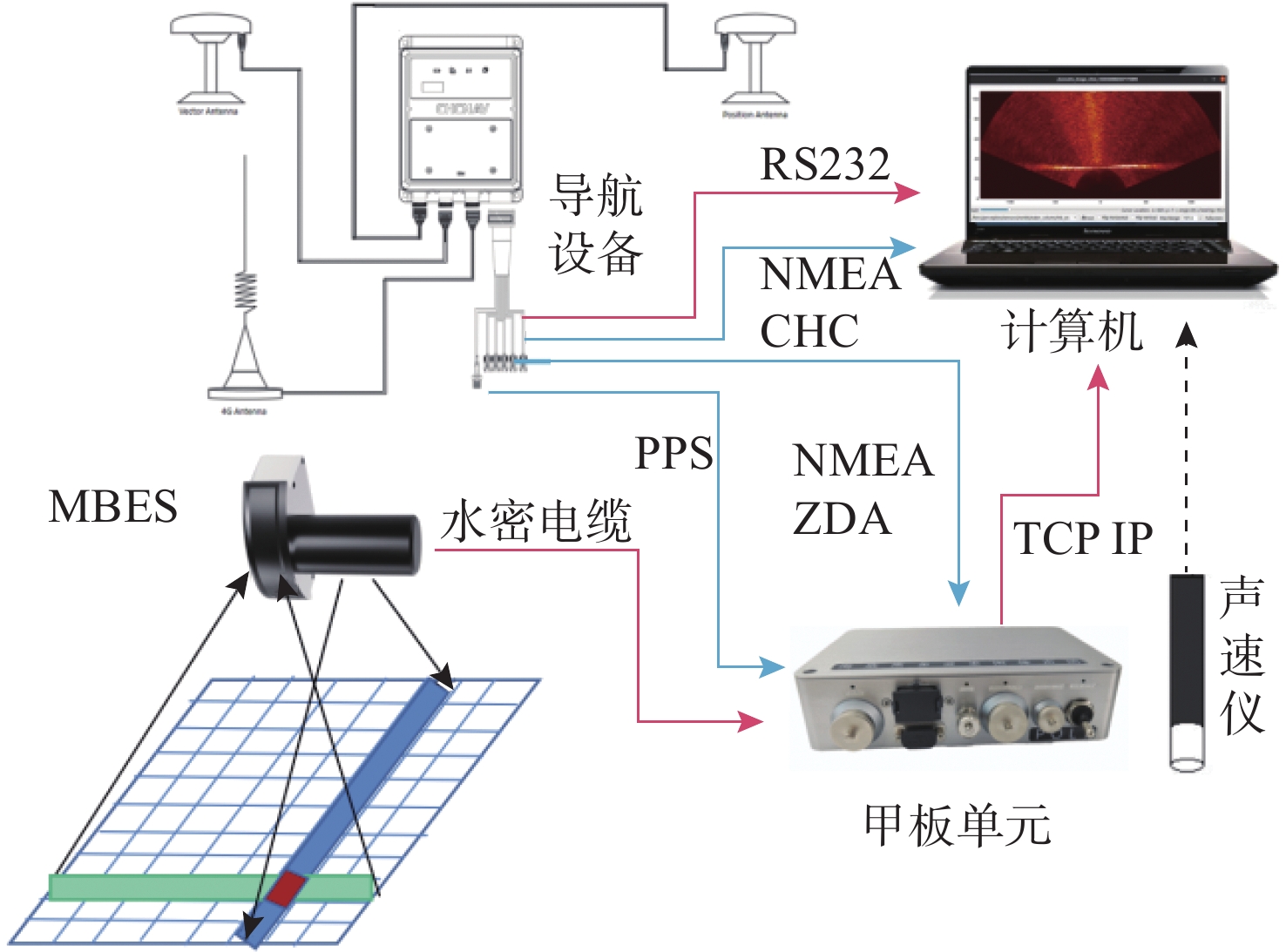
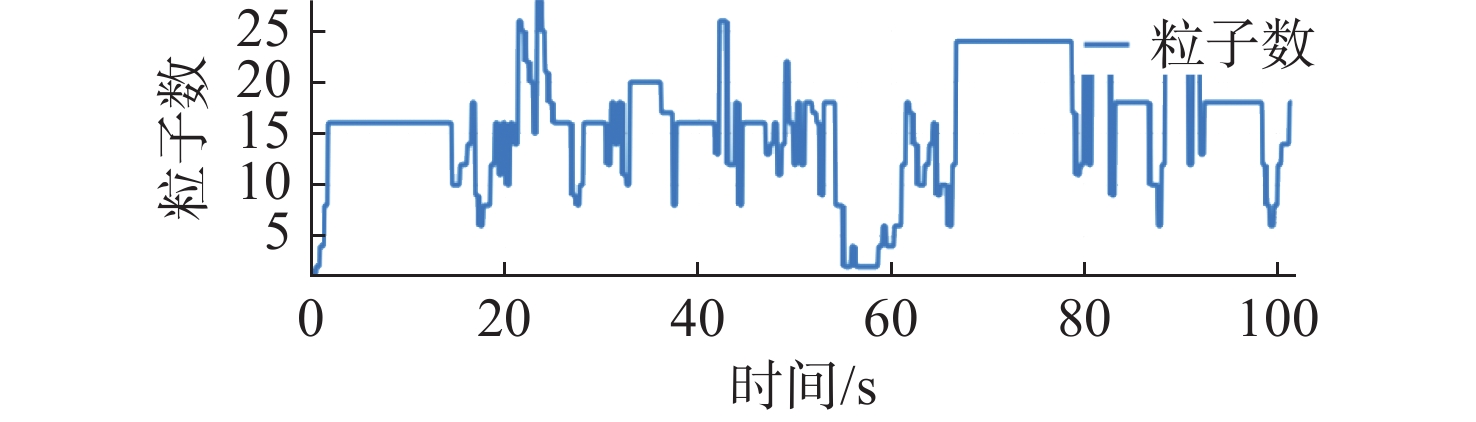
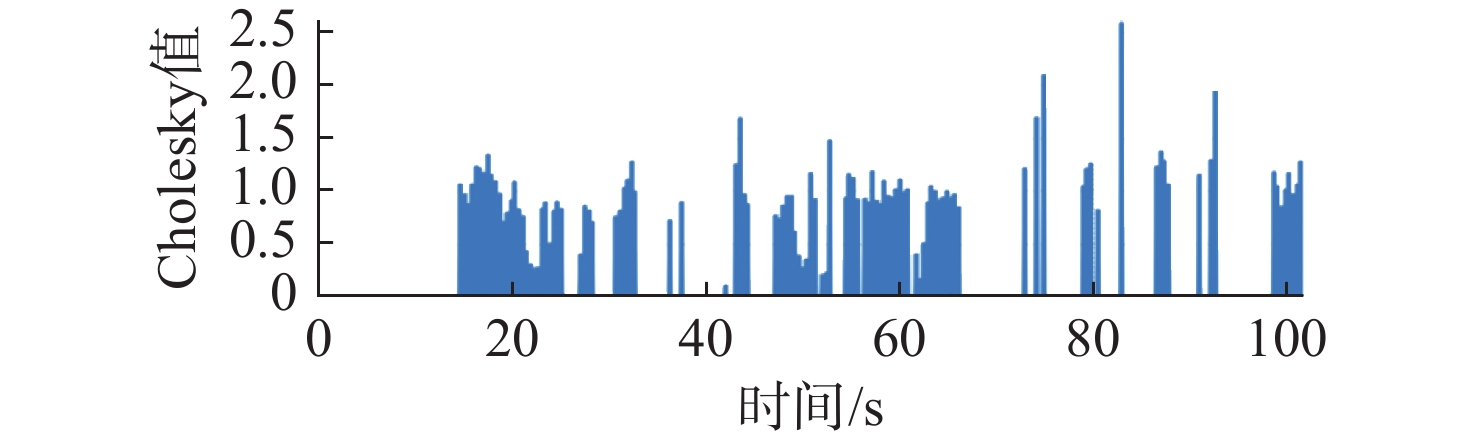
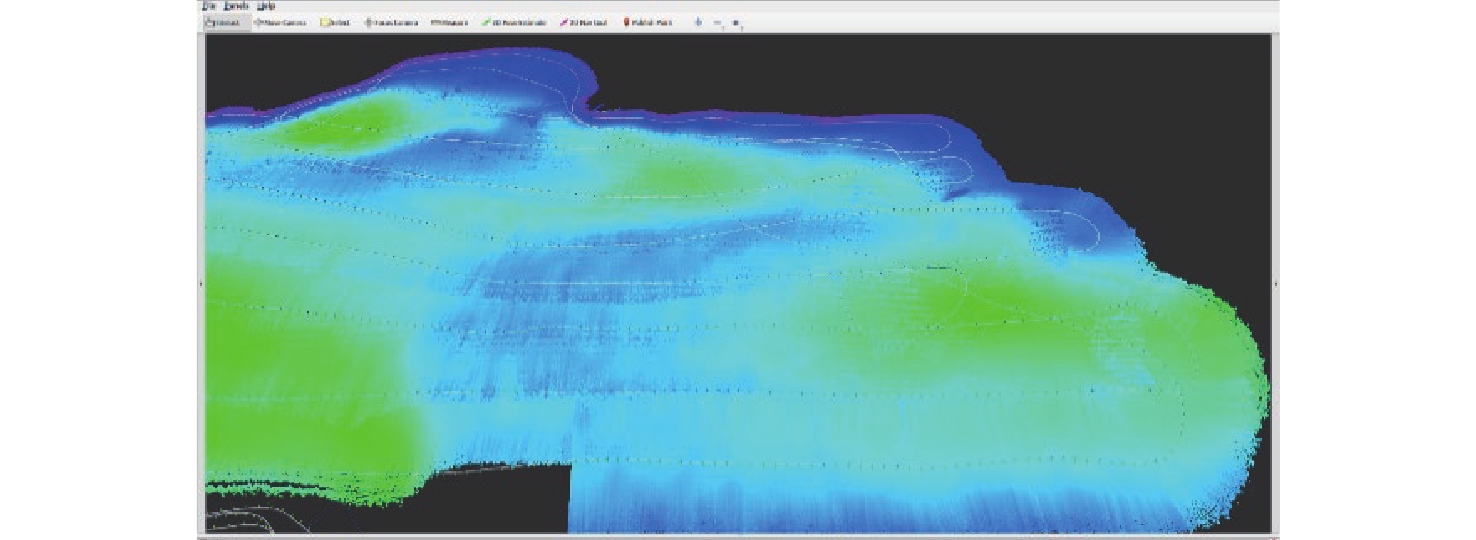
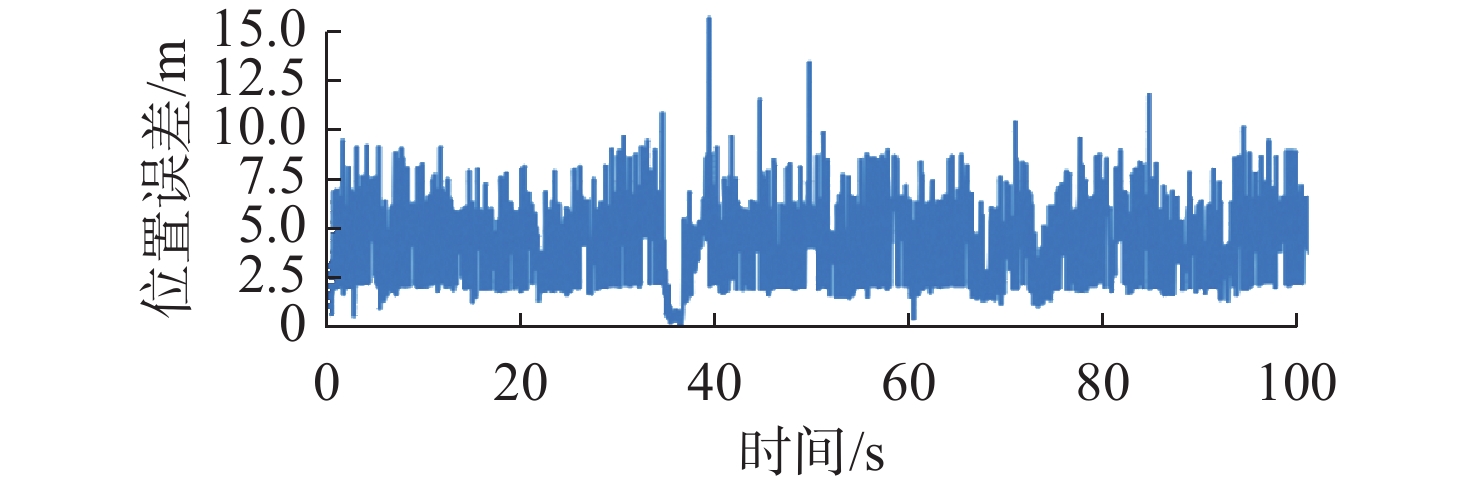
With the advancement of underwater exploration technologies, multibeam echo sounders(MBES) have become a key tool for underwater terrain scanning due to their efficient measurement capabilities and high resolution. However, constructing high-precision maps from sonar data in complex and dynamic aquatic environments remains a significant challenge. To address the issue of particle degradation commonly encountered in traditional fast simultaneous localization and mapping(FastSLAM) algorithms under such conditions, this paper proposed an optimized FastSLAM method based on the extended Kalman filter(EKF). By incorporating EKF as a proposal distribution within the particle filtering process, the method effectively integrated the latest observation data, mitigated particle degeneration, and enhanced the stability and accuracy of the filter. Furthermore, considering the data sparsity and lack of overlap in underwater measurements, Gaussian process regression(GPR) was introduced to perform nonlinear modeling and map extrapolation, thereby compensating for the discontinuities in MBES-based mapping. Simulation results demonstrate that the proposed EKF-FastSLAM significantly reduces trajectory errors compared to standard FastSLAM. The integration of GPR further enhances the overall mapping performance. The lake test confirmed that the proposed method achieves meter-level mapping precision.
Technical Research on Underwater Piston-Type Ejection Pyrotechnic Nozzle Device
ZHANG Jinhui, SUN Guorui
2026, 34(2): 353-362. doi: 10.11993/j.issn.2096-3920.2025-0108
Abstract:
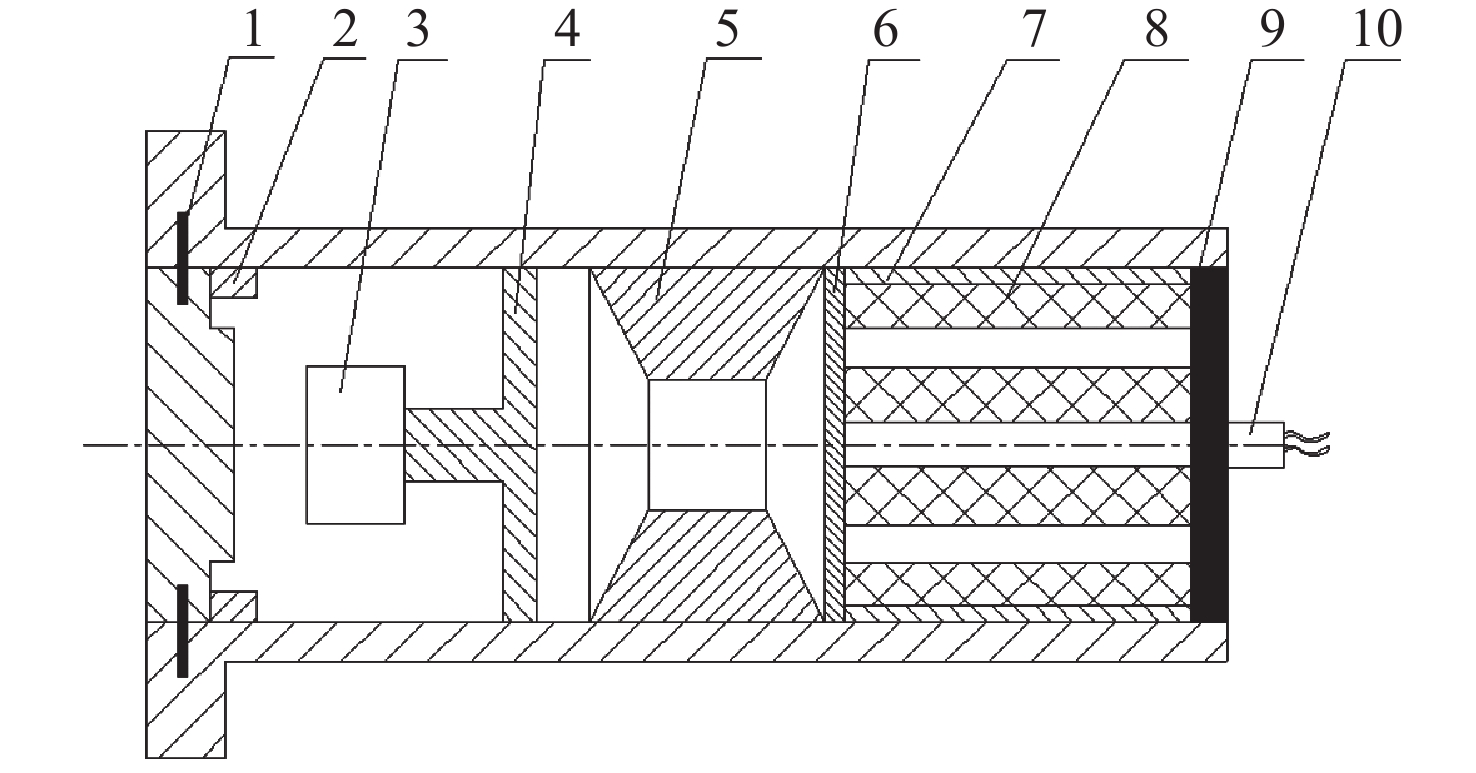
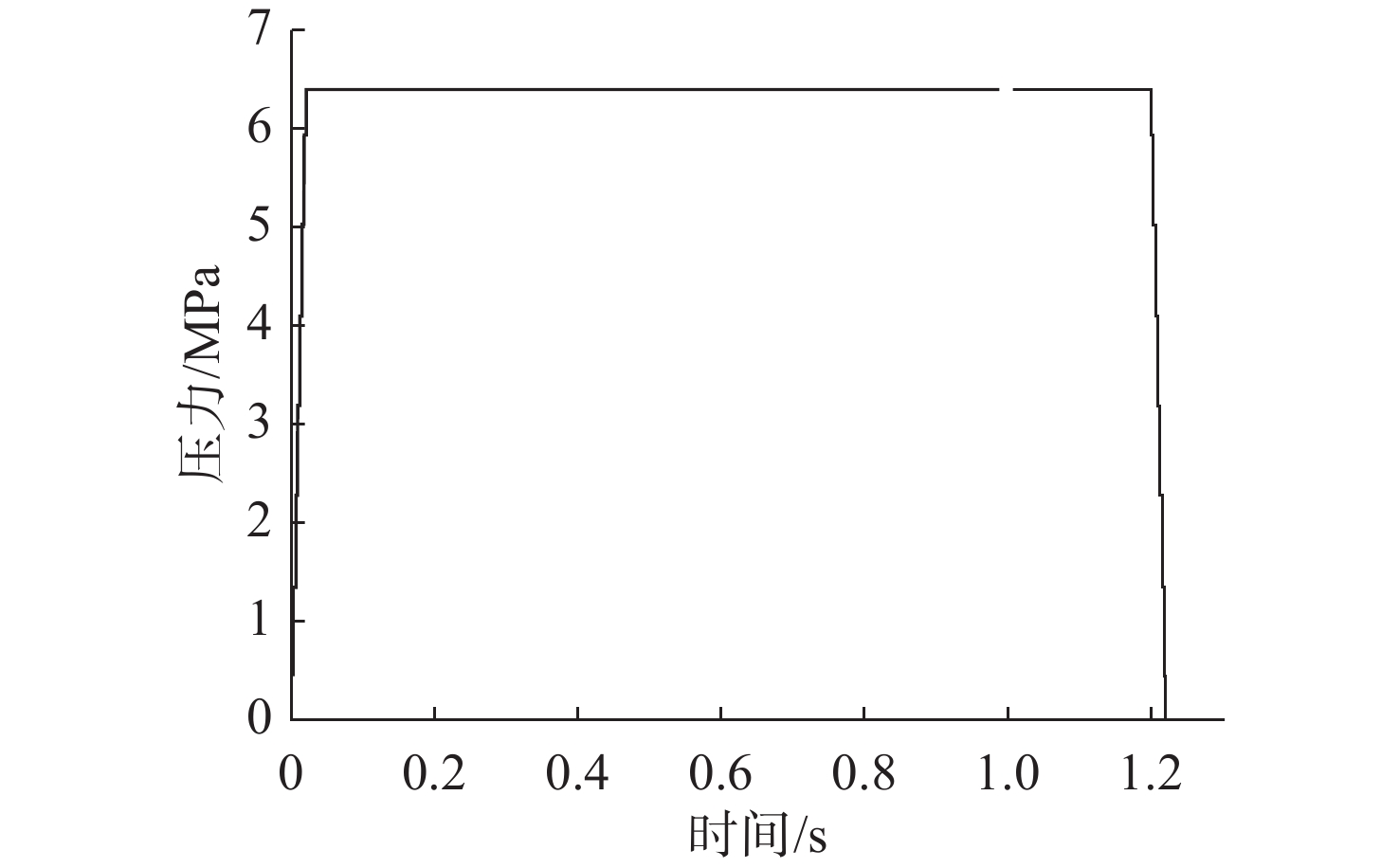
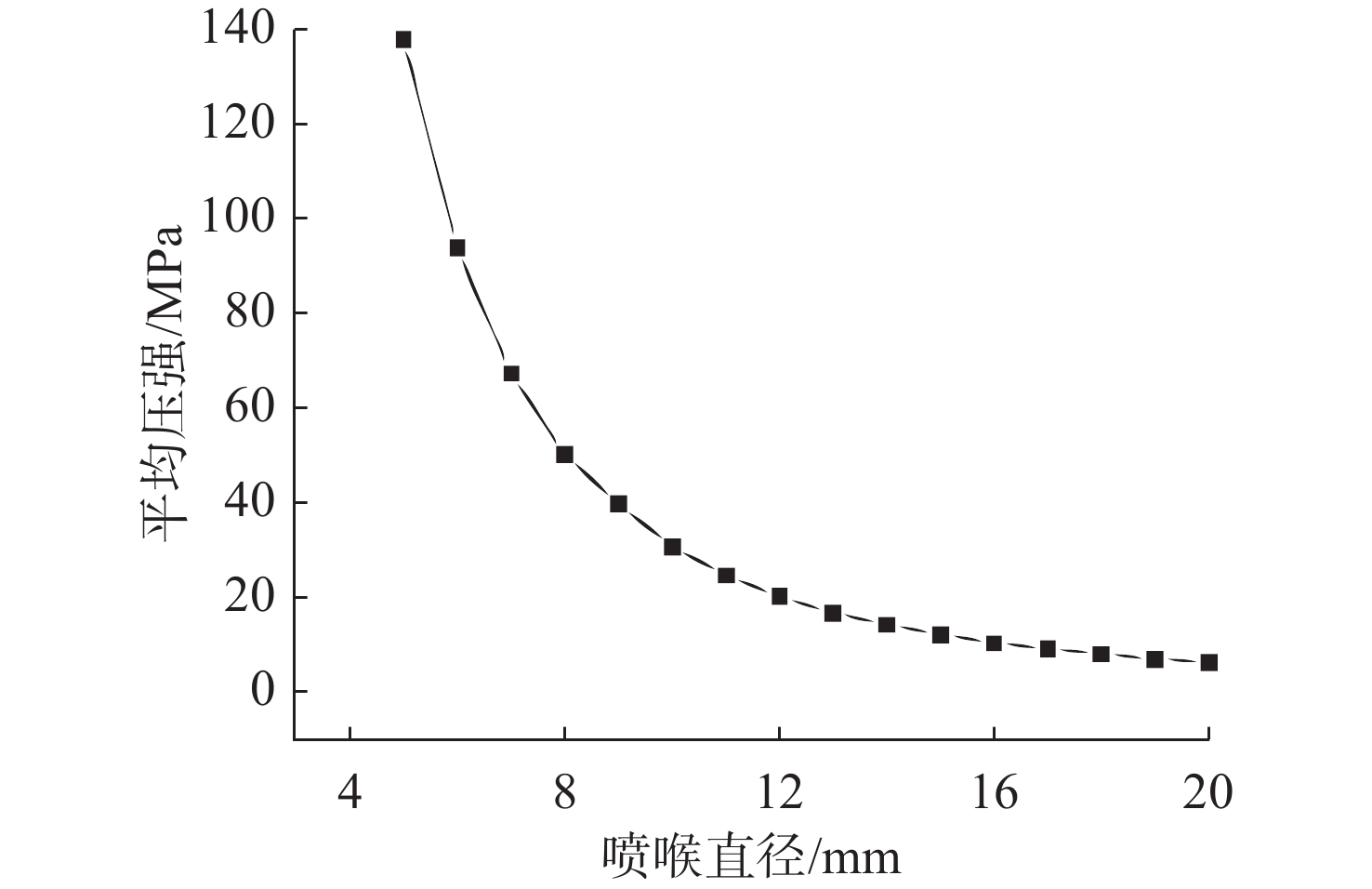
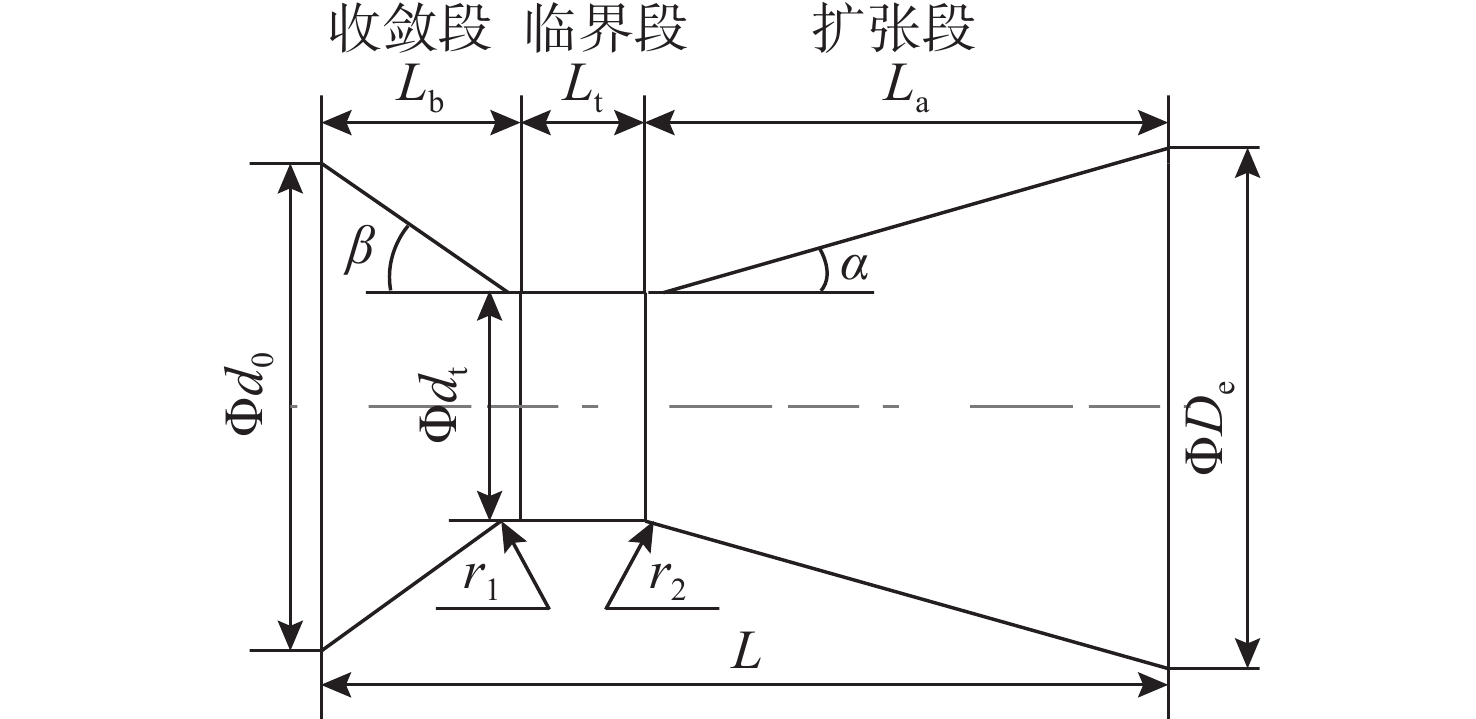
With the development of undersea vehicle technology, higher design requirements of small volume, light weight, low disturbance, and low noise have been put forward for its ejection and separation device. In this paper, a systematic study was carried out on the key technologies of the piston-type ejection pyrotechnic nozzle device. The working principle of the device and the operational process of projectile ejection were clarified through principle analysis. Based on the zero-dimensional internal ballistic model, the pressure and time characteristics of the combustion chamber were numerically simulated and calculated. The two-dimensional steady-state numerical simulation of the Laval nozzle flow field was conducted by using FLUENT software, and the design scheme was verified through land-based and underwater ejection tests. The research results show that the design scheme adopting the convergent-divergent Laval nozzle can significantly improve the energy conversion efficiency and effectively reduce the device volume and the propellant charge amount, thus enhancing the system safety. By innovatively applying the Laval nozzle to the piston-type ejection pyrotechnic device, the key problems of large energy loss, large system volume, and insufficient safety in the traditional underwater ejection technology are successfully solved, which provides a theoretical basis and technical reference for the optimal design and multi-platform application of underwater ejection devices.
Ocean Thermal Energy Conversion Systems Based on Supercooled Thermal Energy Storage
LU Henglin, SHA Haonan, JIANG Dongyue
2026, 34(2): 363-372. doi: 10.11993/j.issn.2096-3920.2025-0155
Abstract:
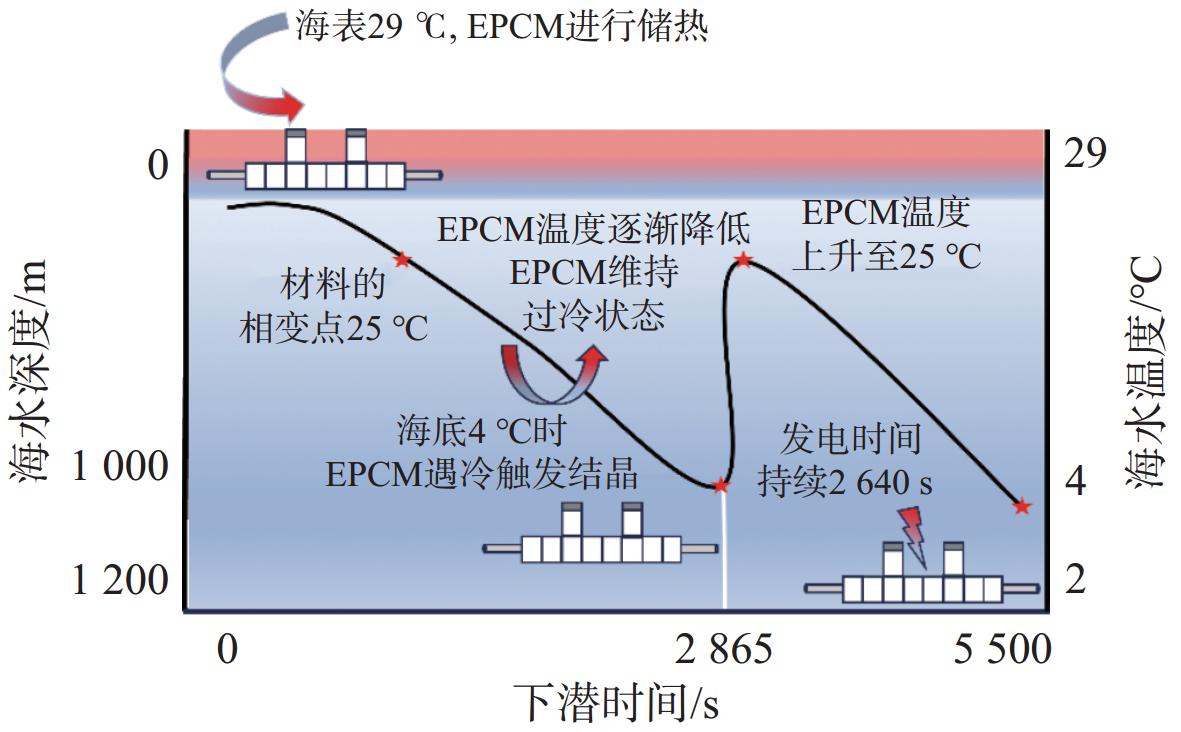
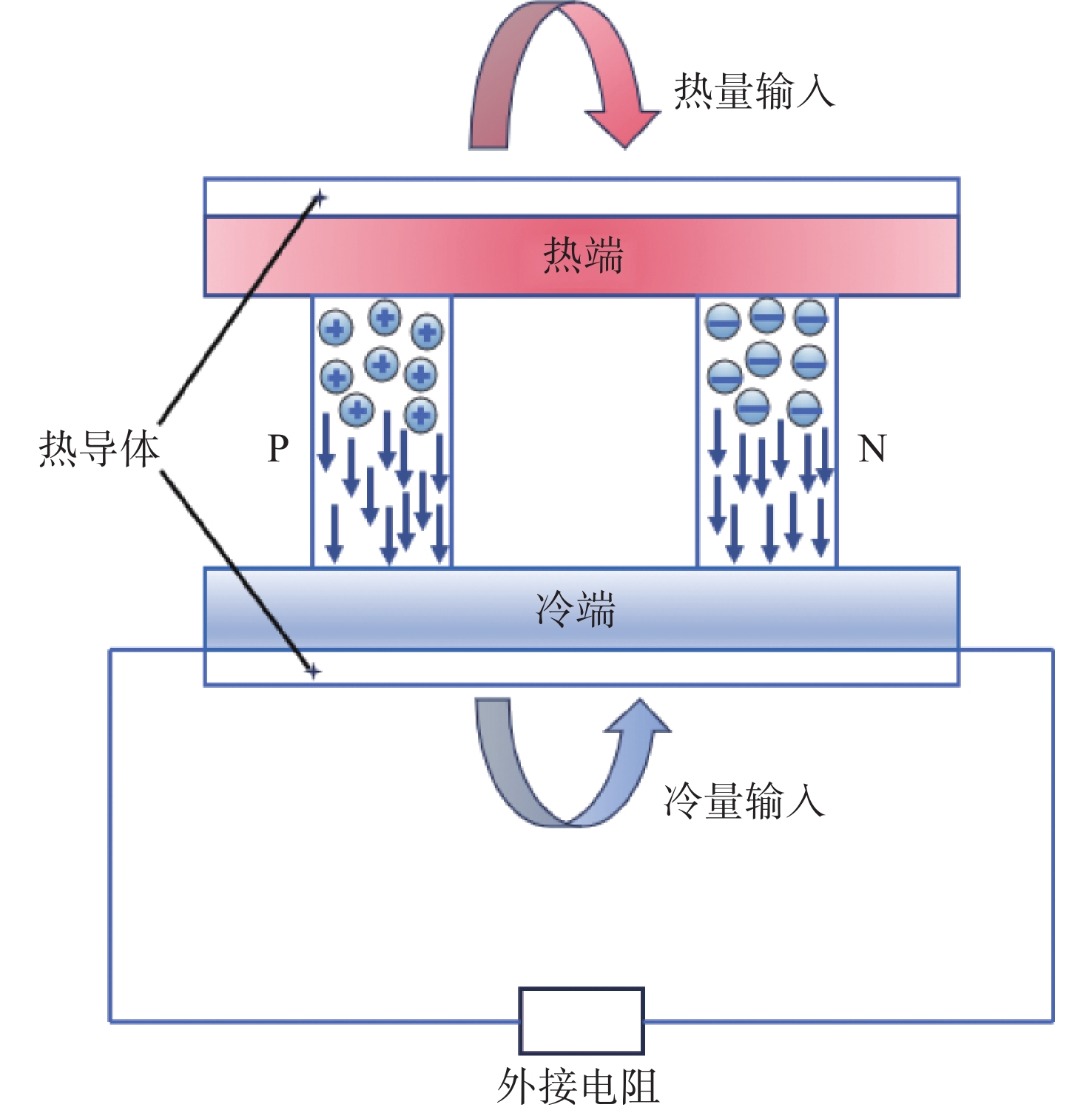
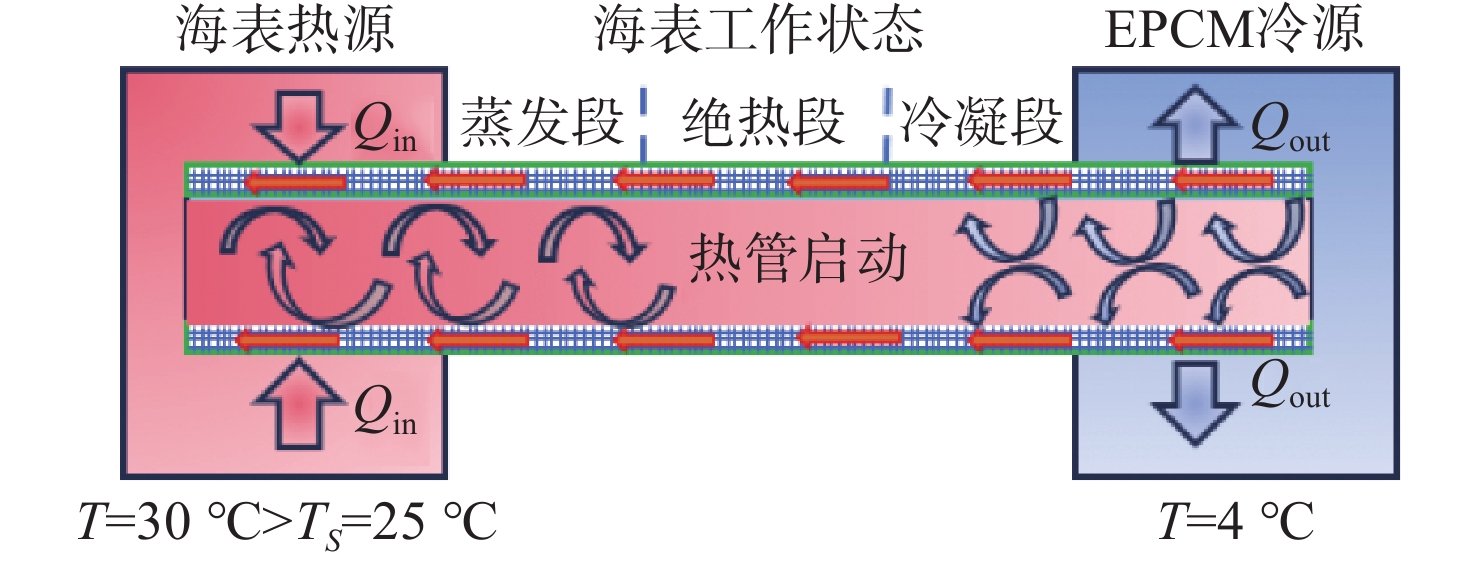
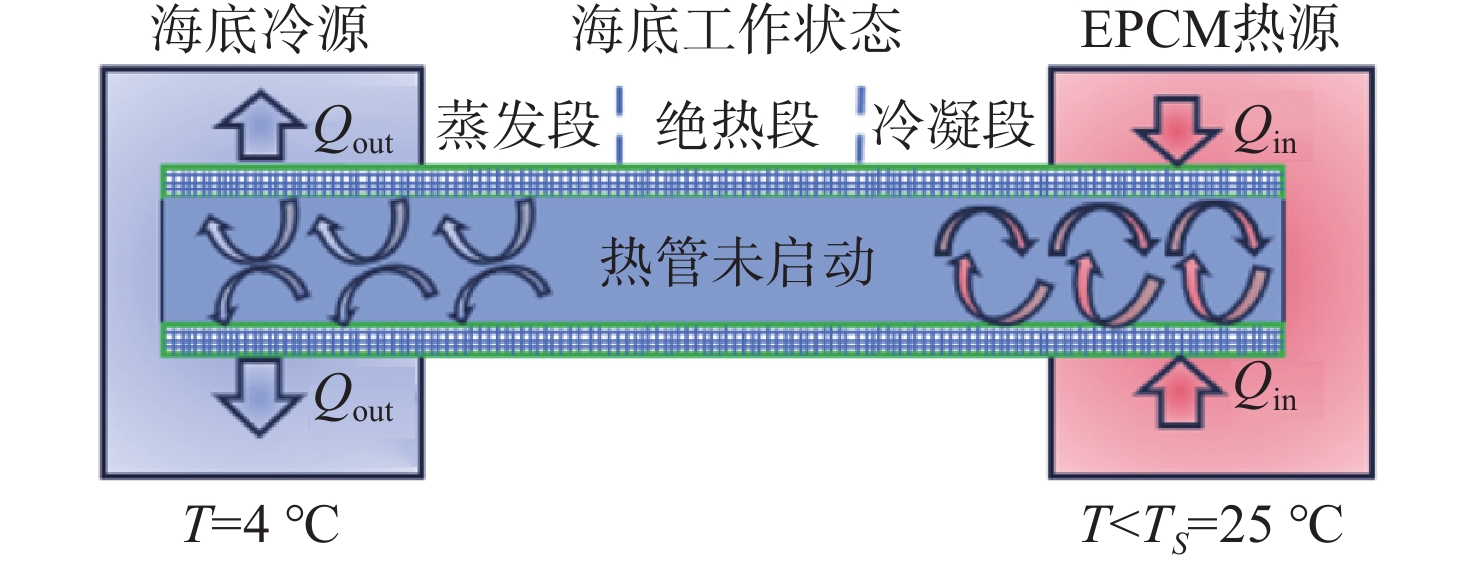
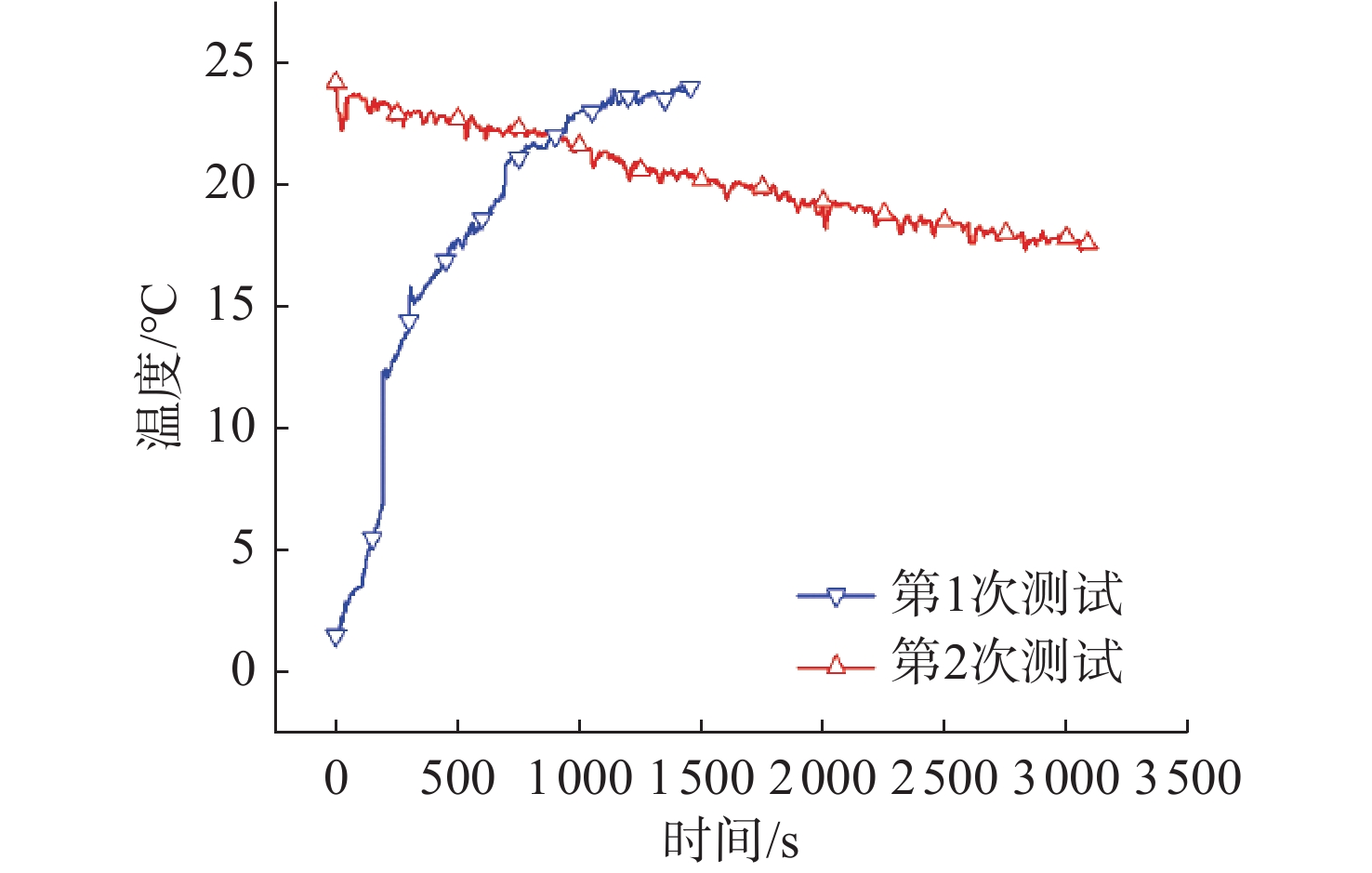
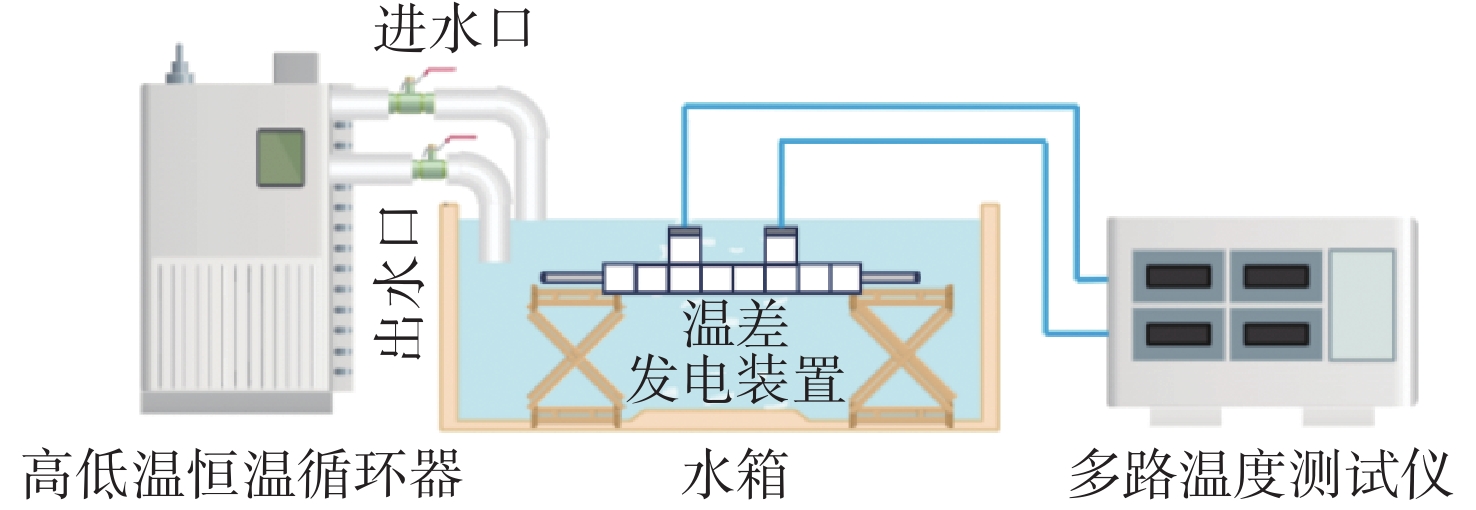
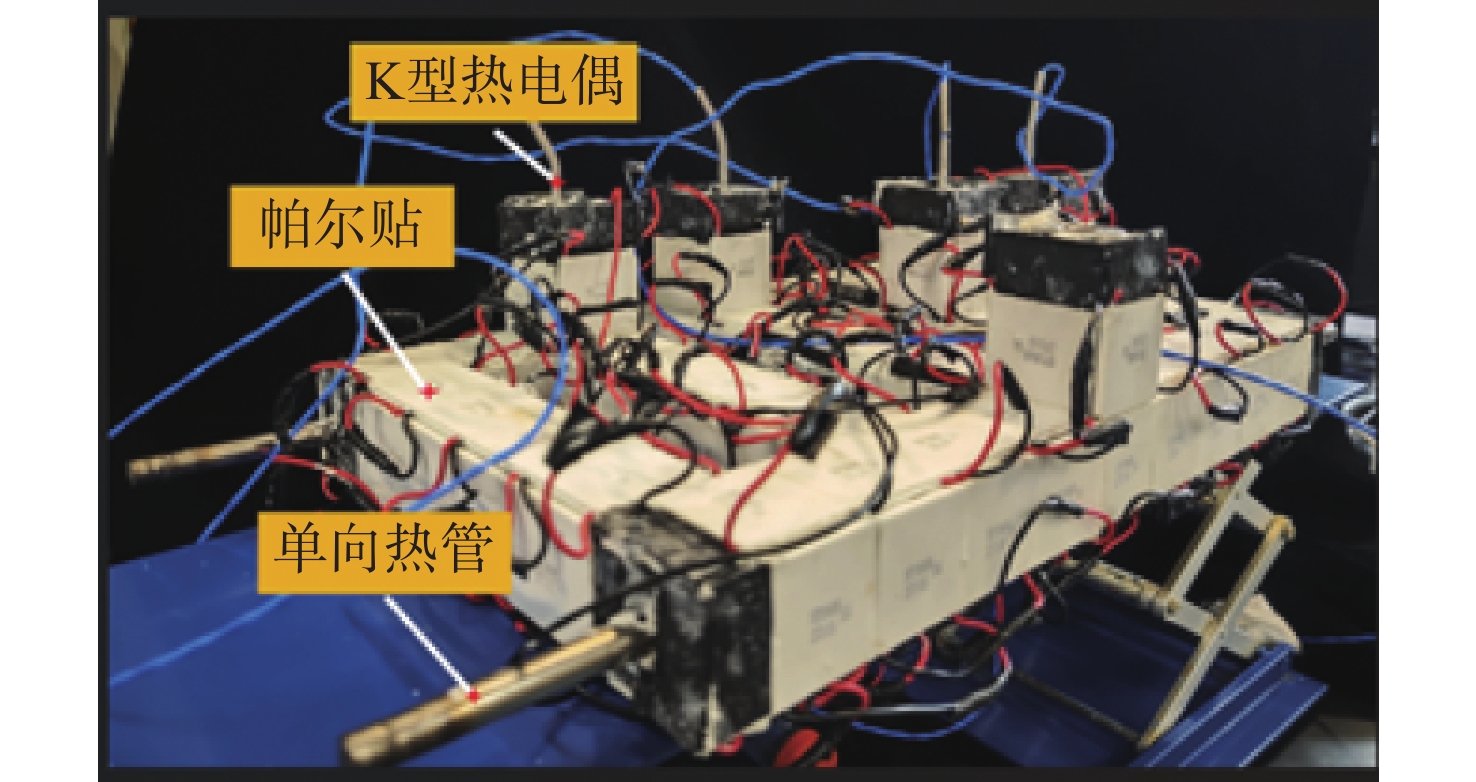
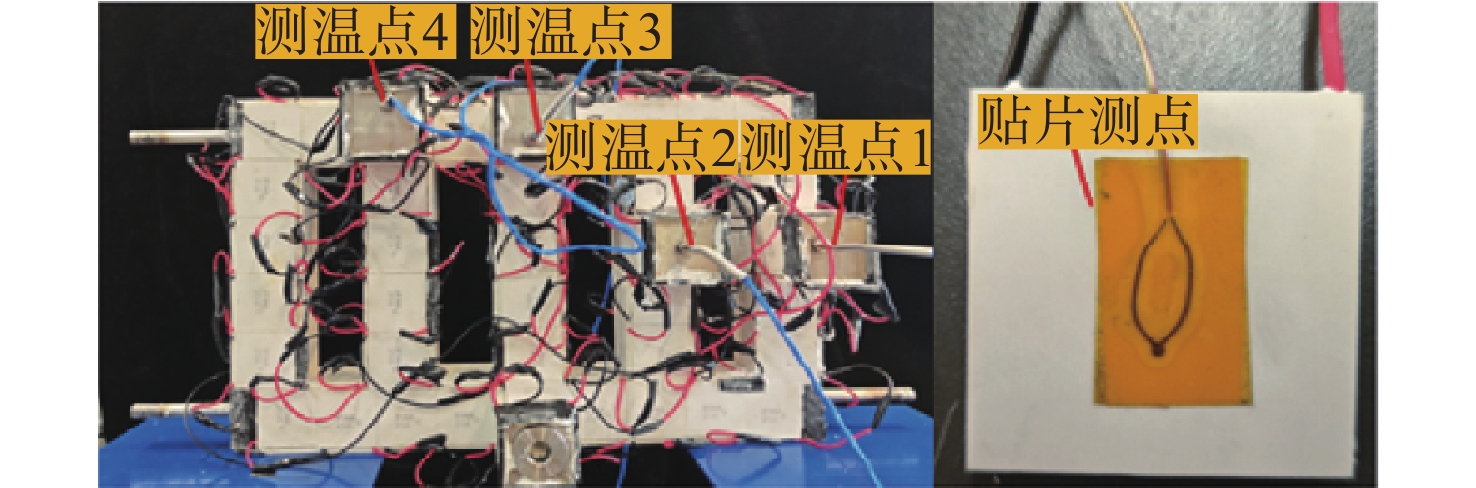
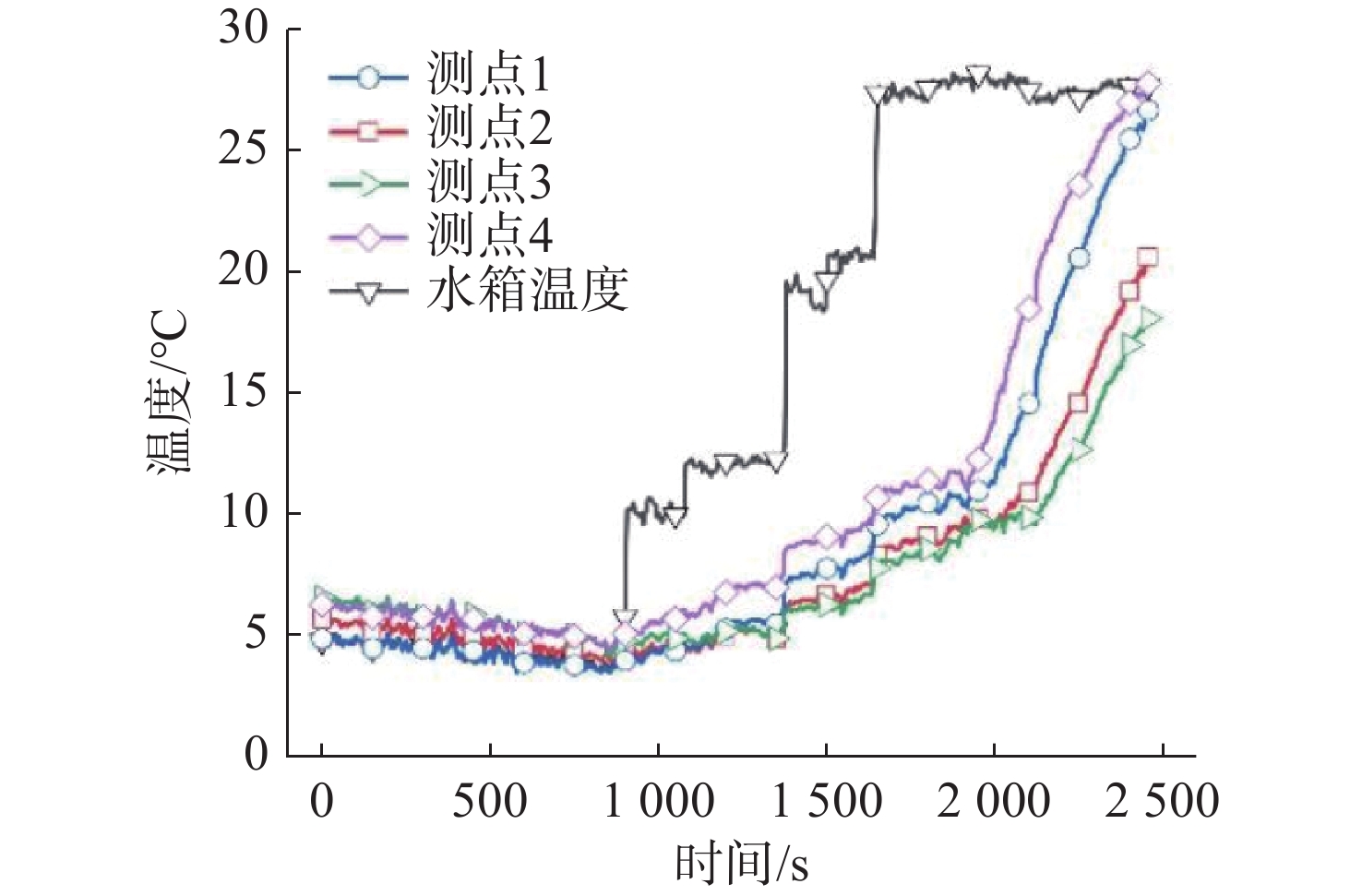
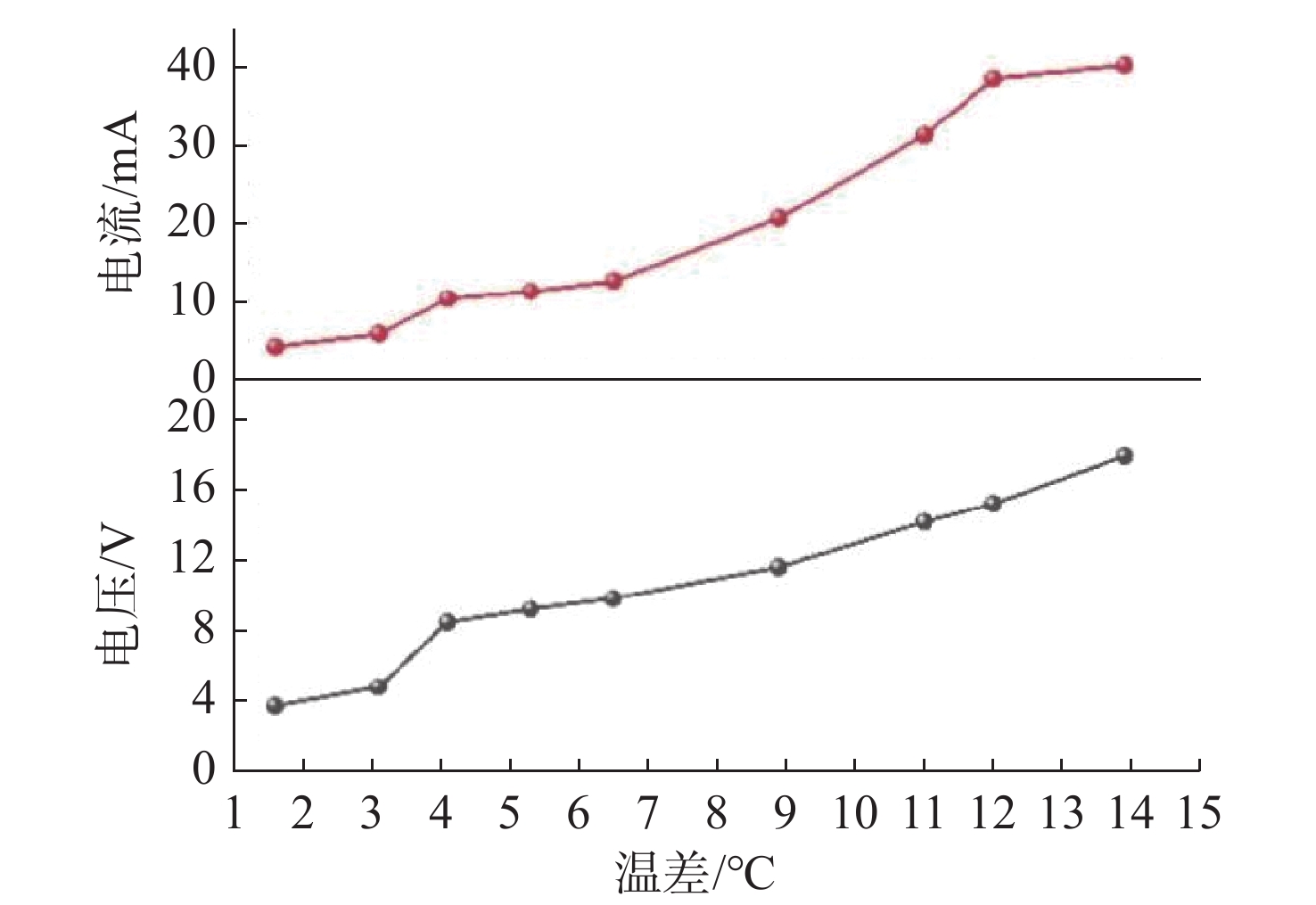
An ocean thermal energy conversion system coupling the encapsulated phase change material(EPCM) with thermoelectric module(TEM) was proposed and experimentally validated to address the limited endurance of underwater unmanned systems such as the underwater glider(UG). By maintaining EPCM in a supercooled liquid state during the descent and triggering spontaneous crystallization with latent heat release in cold seawater, a stable temperature difference was established between the hot and cold ends of TEM, enabling direct conversion of ocean thermal energy into electrical energy. Three EPCMs with different compositions and a mass of 2.5 kg were prepared, and their supercooling stability and power generation performance were evaluated in simulated sea surface-deep sea thermal conditions. The results show that EPCM composed of 98% calcium chloride hexahydrate(CCH) and 2% PEG200 exhibits more stable supercooling and latent heat release behavior. In deep-sea conditions, the system achieves a maximum open-circuit voltage of 15.2 V, a maximum short-circuit current of 43.06 mA, a single power generation duration of approximately 2 640 s, and output electric energy of 518.09 J. During a complete descent-ascent profile, the cumulative electric energy output reaches 821.44 J, corresponding to a volumetric energy density of 547.63 kJ·m−3. The results demonstrate that the proposed system can achieve stable energy output within a single descent-ascent profile and shows promising engineering application potential.
Construction and Validation of a Real-Time Ocean Temperature and Salinity Prediction System Based on Holt-DI-EnKF
ZHANG Siwen, SHI Wentao, JING Lianyou, TU Nan, WEI Chengpeng
2026, 34(2): 373-382. doi: 10.11993/j.issn.2096-3920.2025-0149
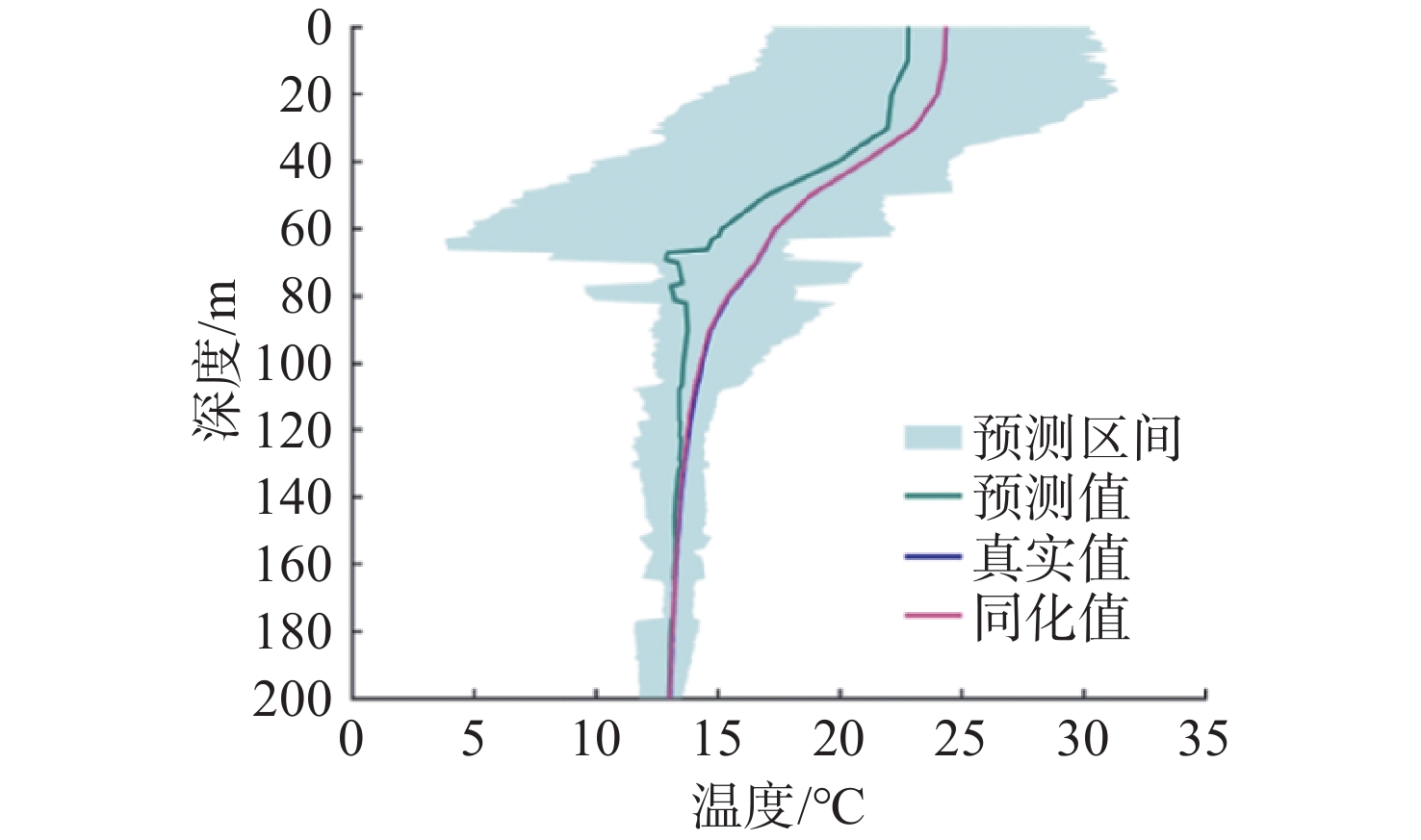
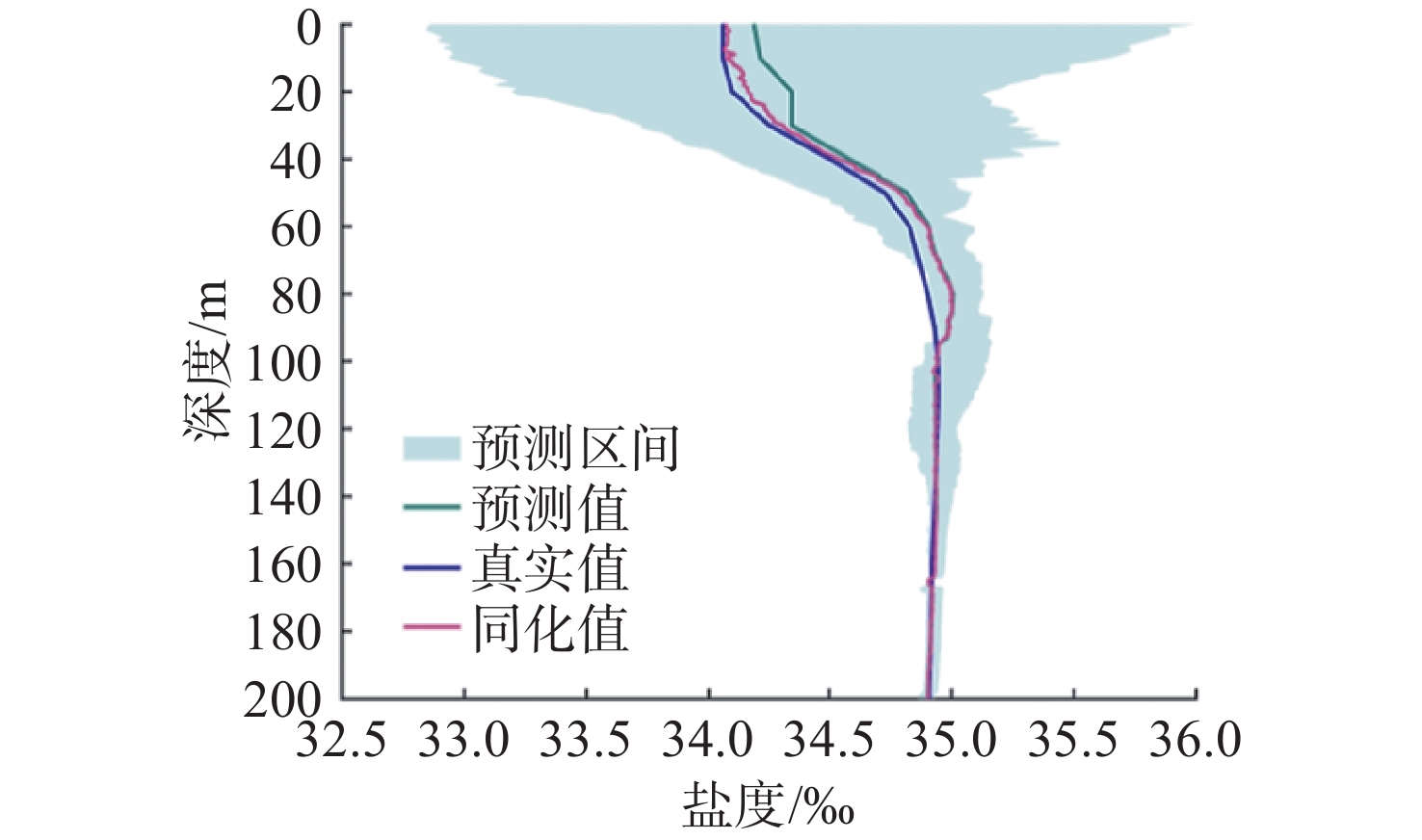
Abstract:
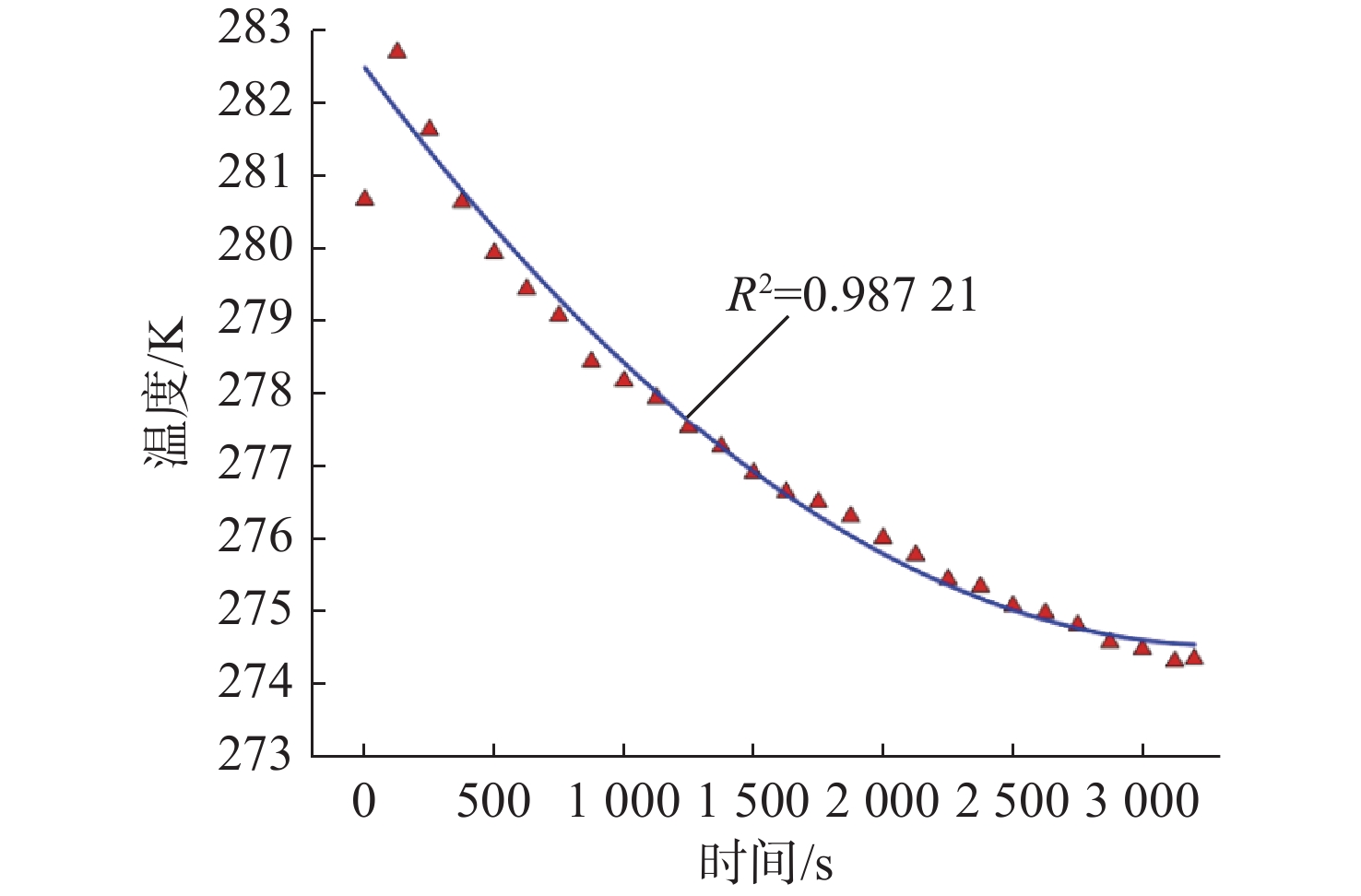
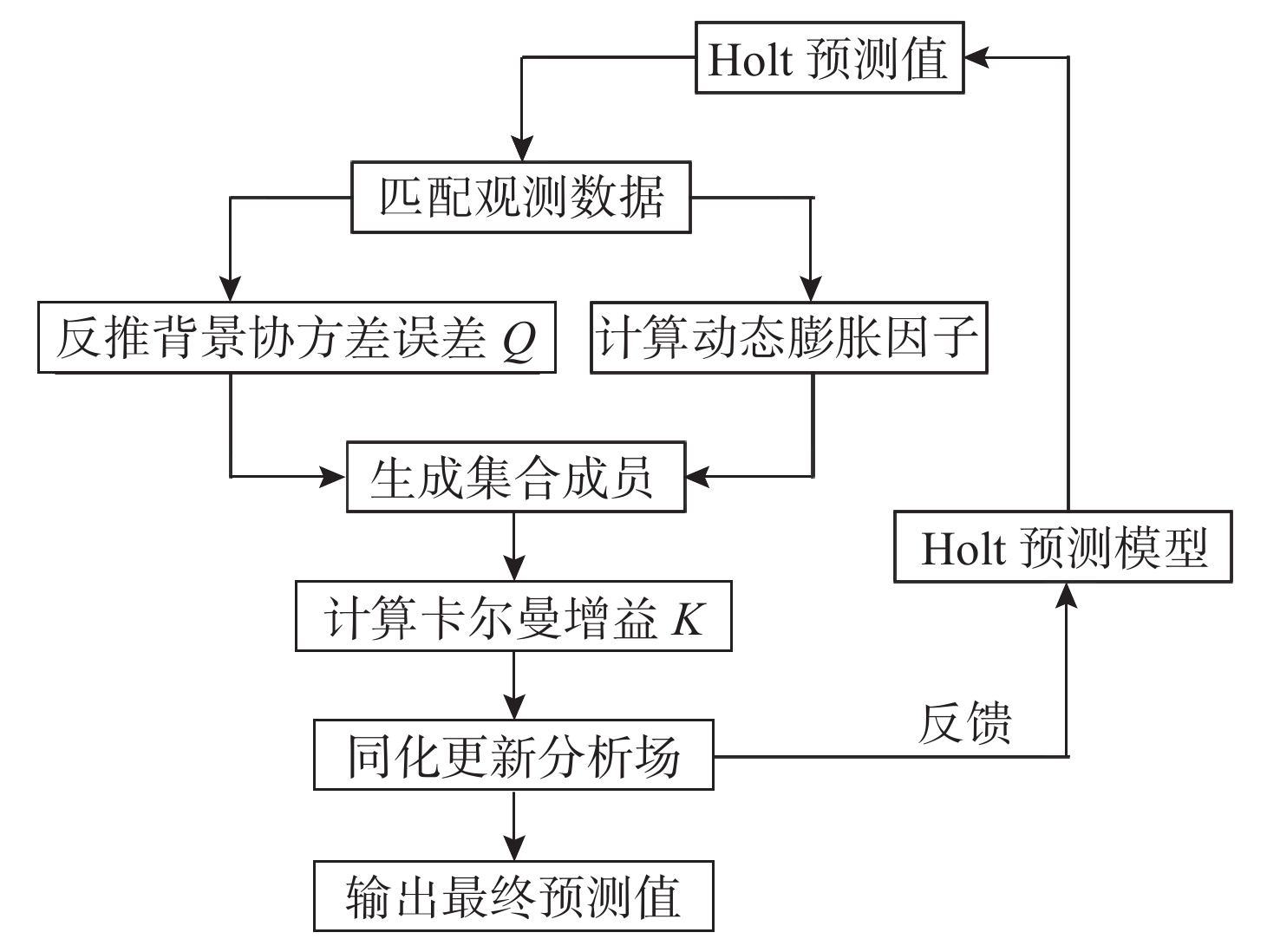
To address the limitations of traditional ocean temperature and salinity prediction methods, such as weak dynamic update capability, distribution-dependent uncertainty quantification, and disjointed data assimilation and prediction models, this study focused on real-time prediction of monthly average temperature and salinity time series at a single point to develop a lightweight prediction framework balancing accuracy, dynamic adaptability, and engineering practicality. It integrated and advanced classic time series prediction, uncertainty estimation, and data assimilation methods, proposing a hybrid framework of Holt’s double exponential smoothing, Bootstrap confidence intervals, and dynamically inflated ensemble Kalman filter(DI-EnKF). Specifically, the Holt model decomposed sequences and optimized parameters; Bootstrap quantified prediction uncertainty, and DI-EnKF assimilated real-time observation data to correct errors, forming a “prediction-assimilation” closed loop. Tests on global Argo temperature and salinity data demonstrate that the framework outperforms hybrid models such as autoregressive integrated moving average-long short-term memory(ARIMA-LSTM) network and autoregressive integrated moving average-back propagation(ARIMA-BP) neural network in temperature prediction, with salinity prediction accuracy close to the optimal comparison model. The effectiveness and robustness of the framework are verified.
Energy Evolution of Ocean Wave Spectrum and Distribution of Induced Magnetic Field Intensity
WANG Xintong, ZHANG Jiansheng, WANG Xiangjin, YAN Linbo, LAN Qing
2026, 34(2): 383-390. doi: 10.11993/j.issn.2096-3920.2025-0134
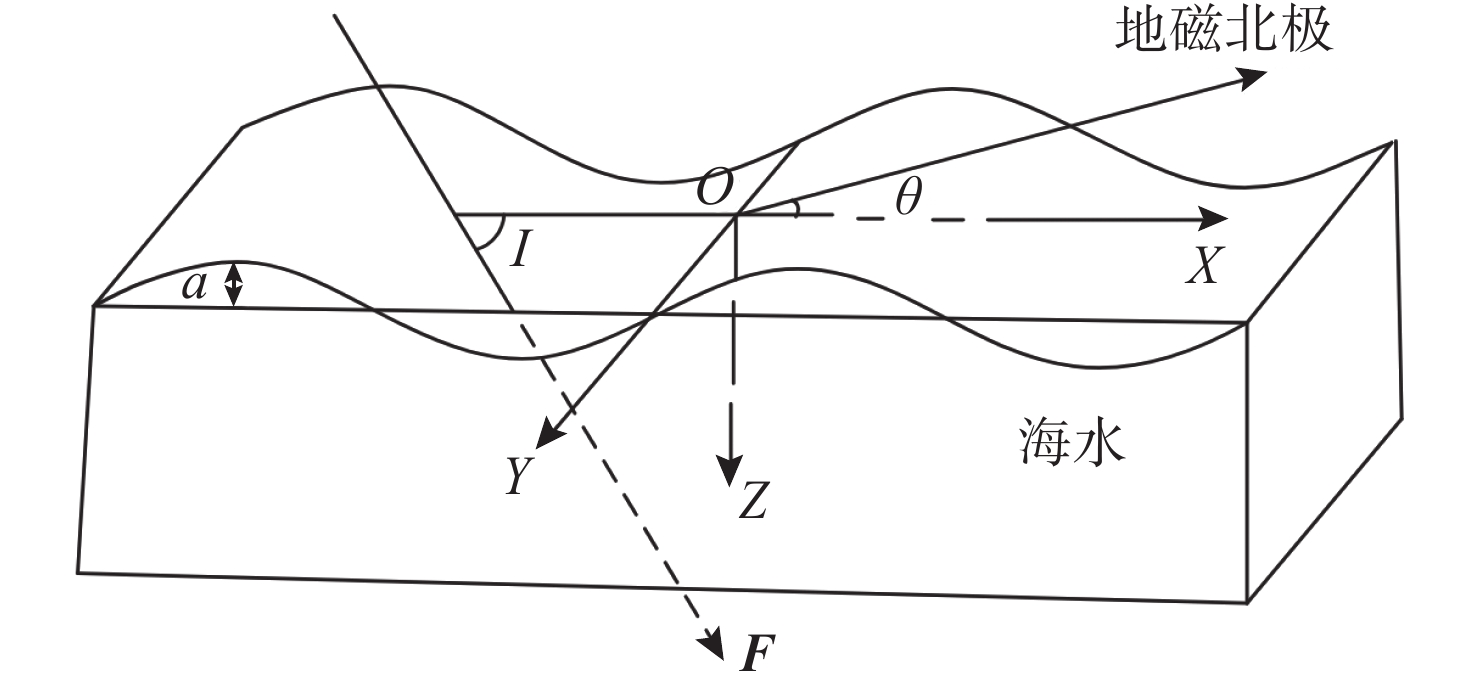
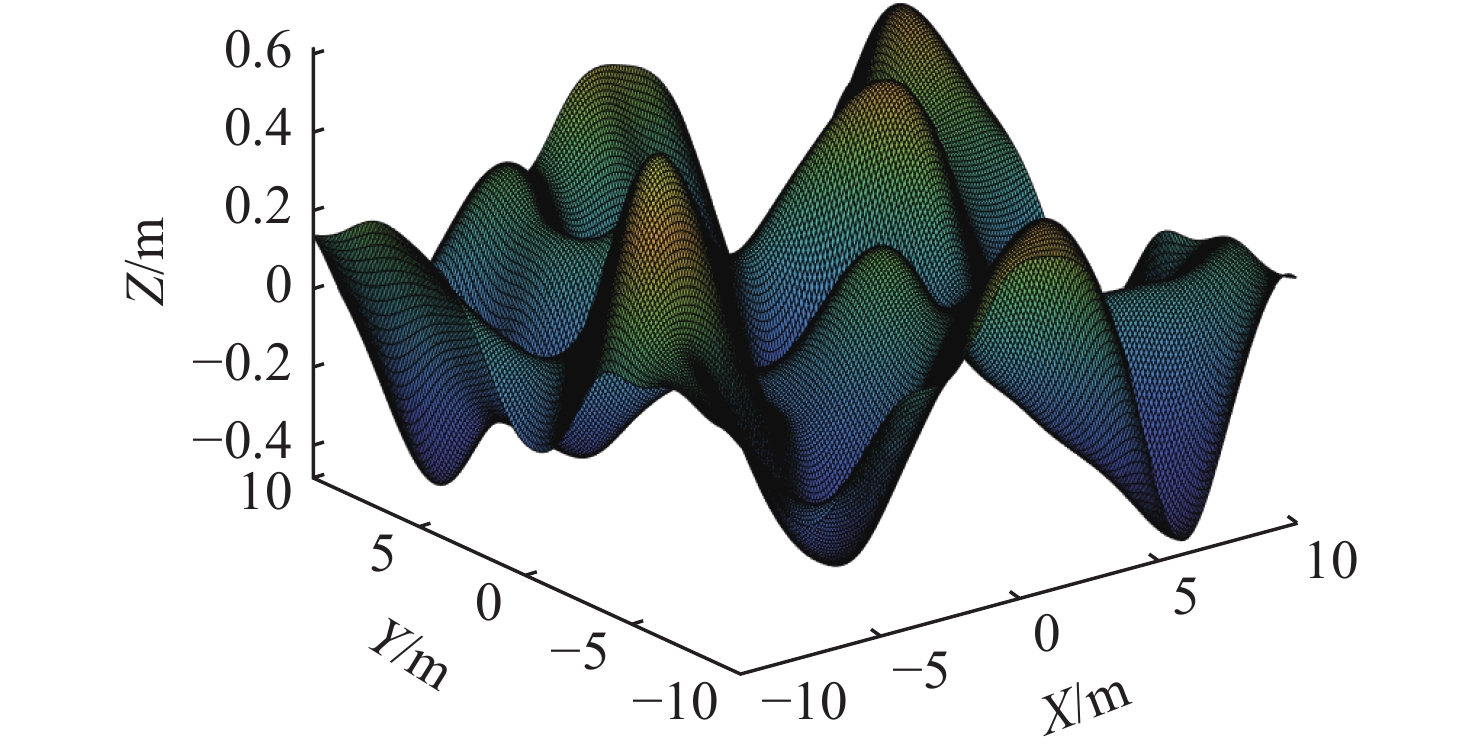
Abstract:
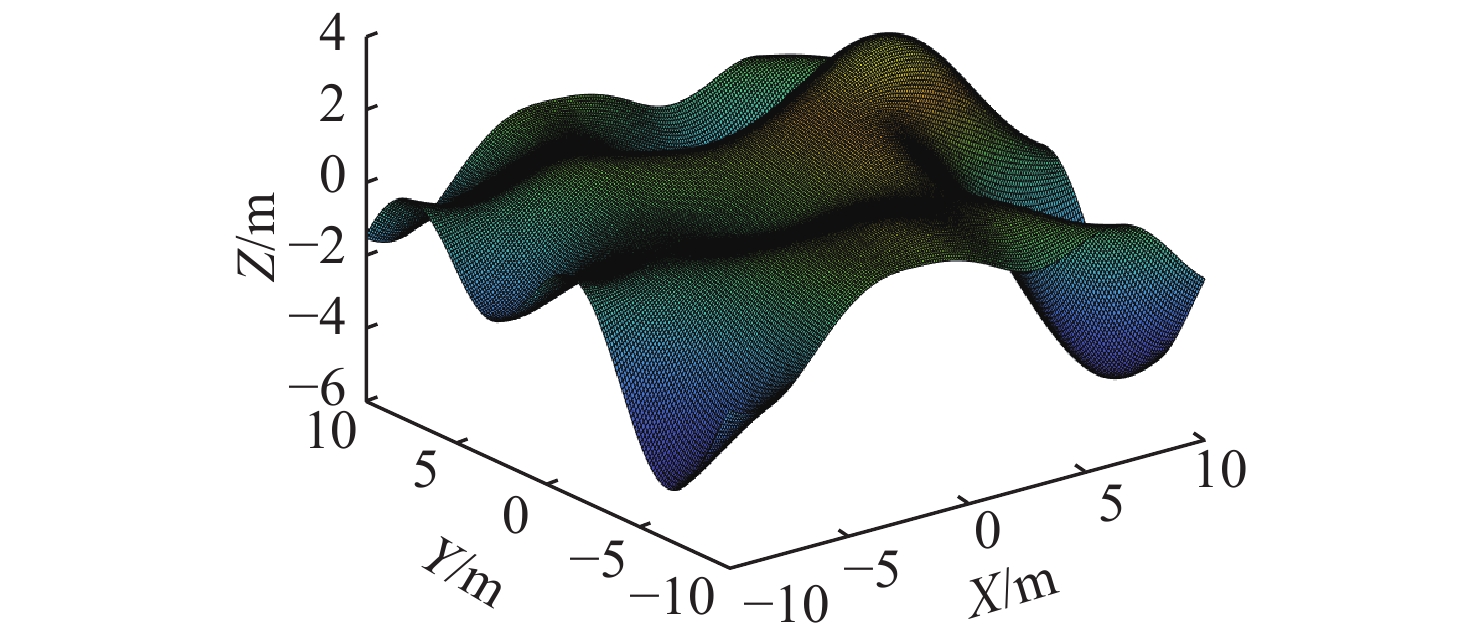
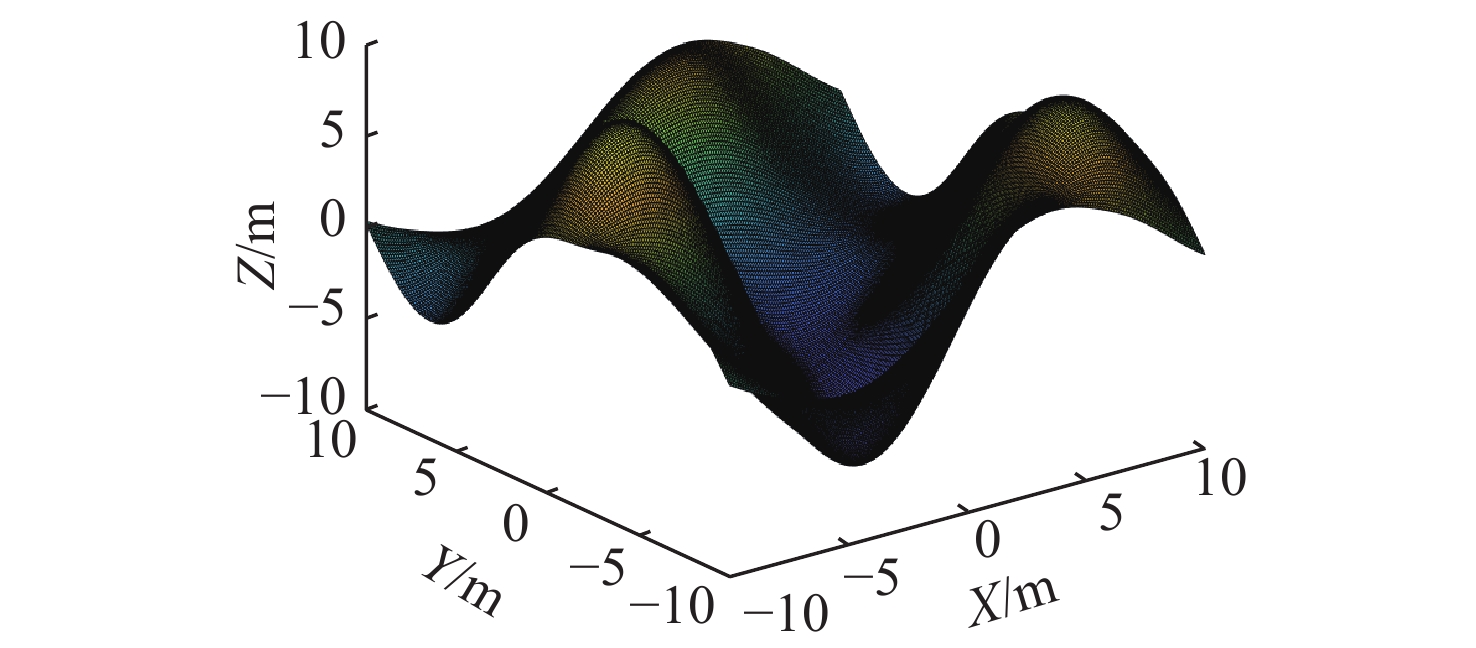
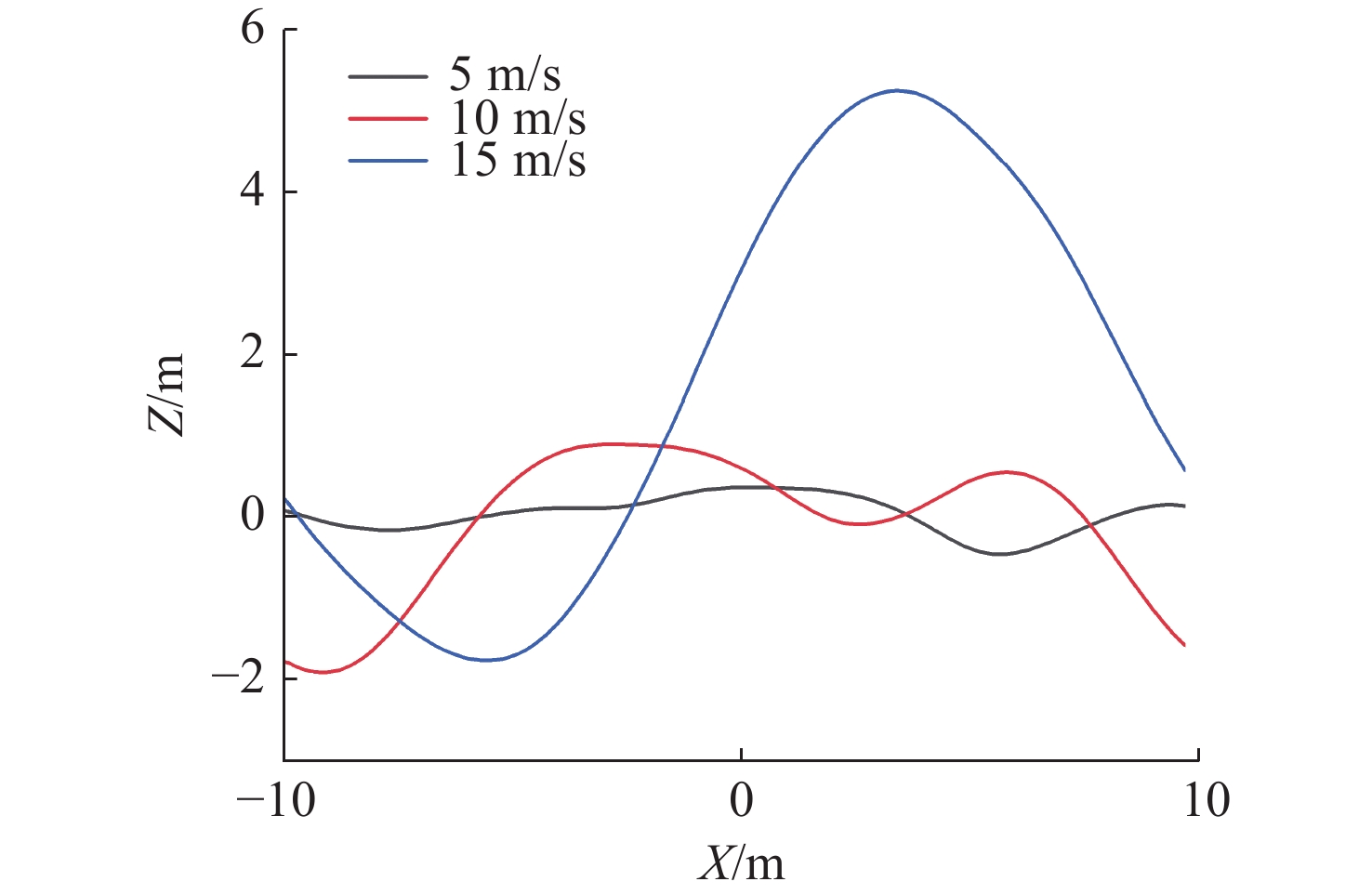
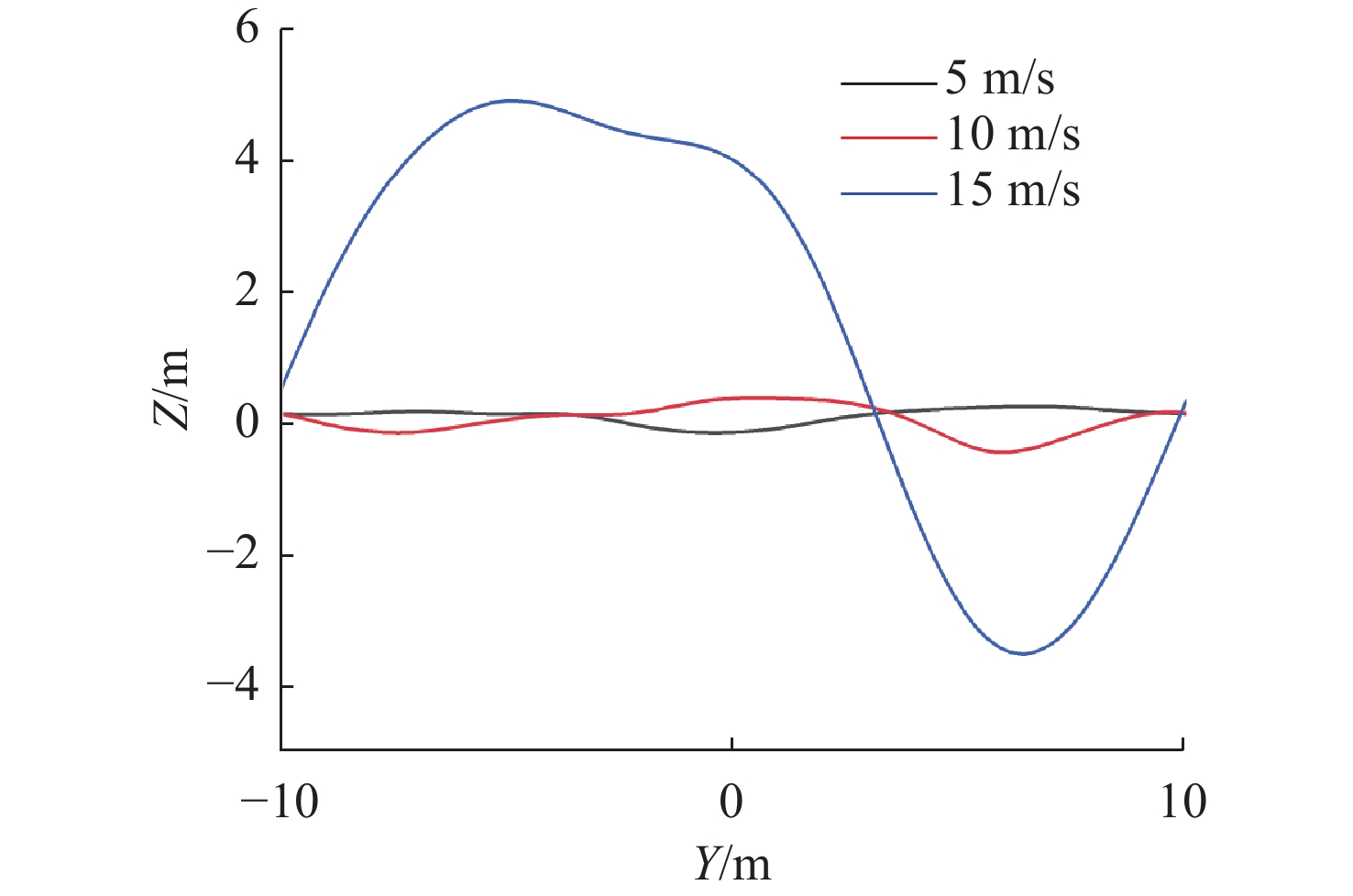
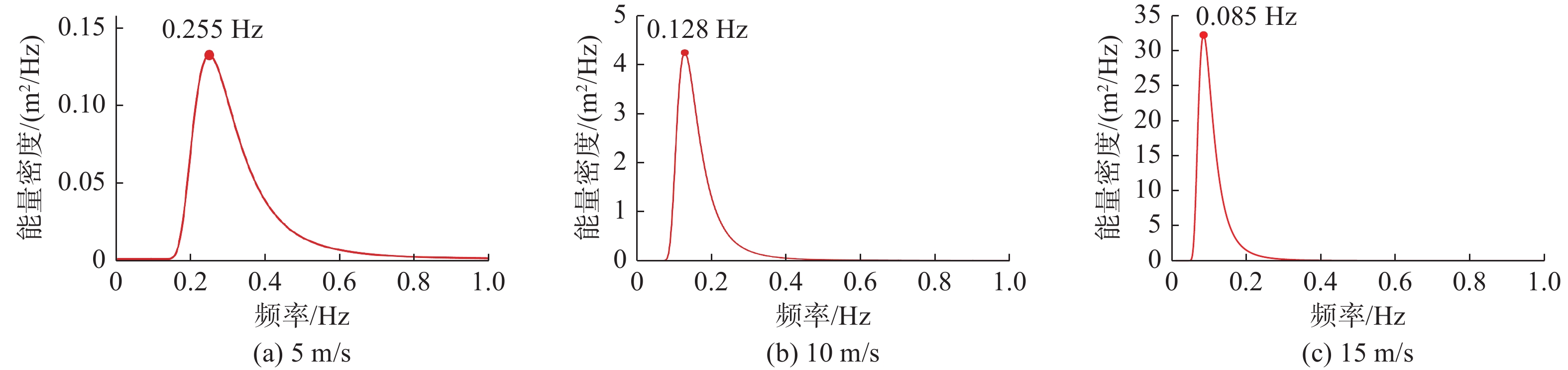
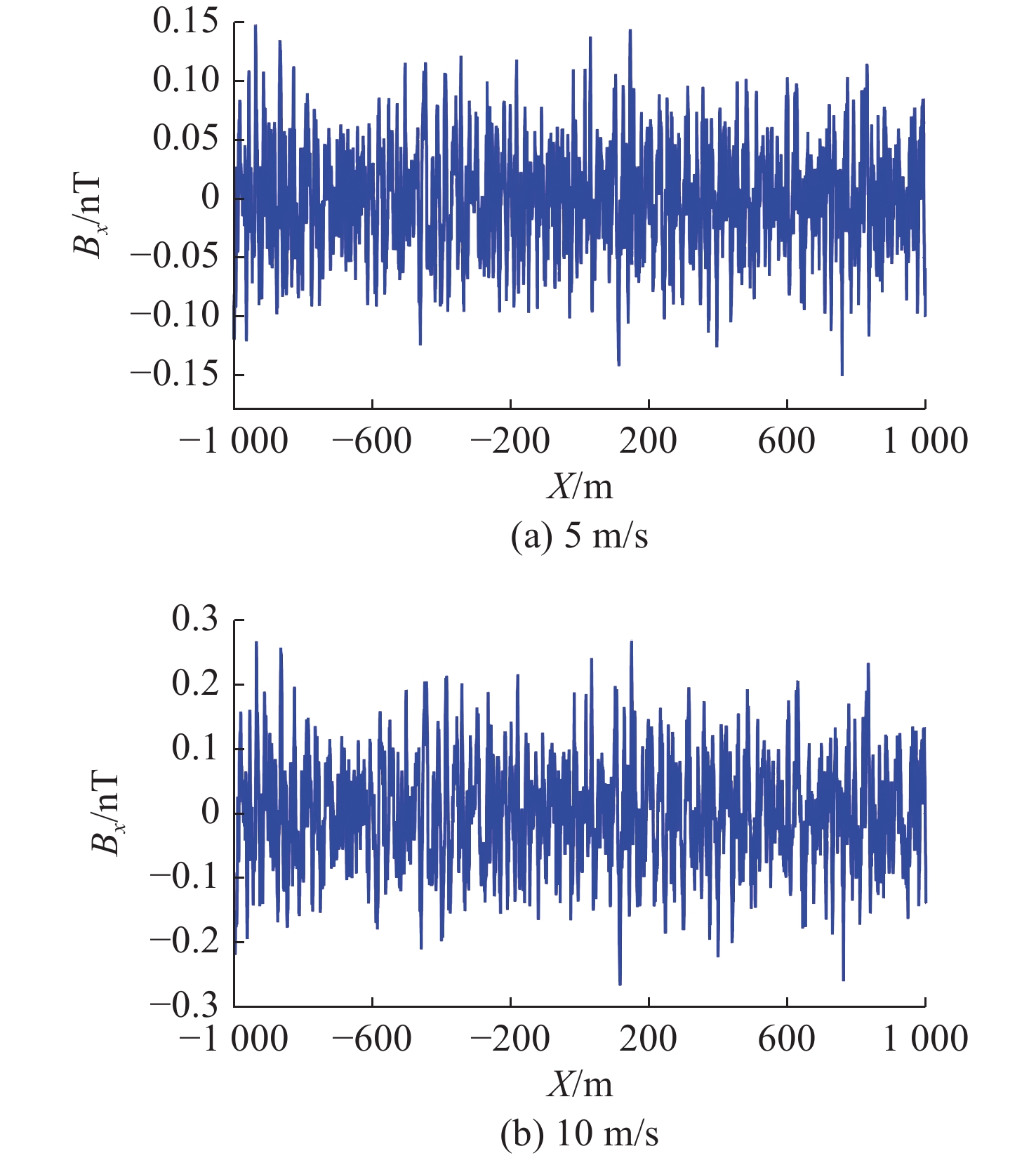
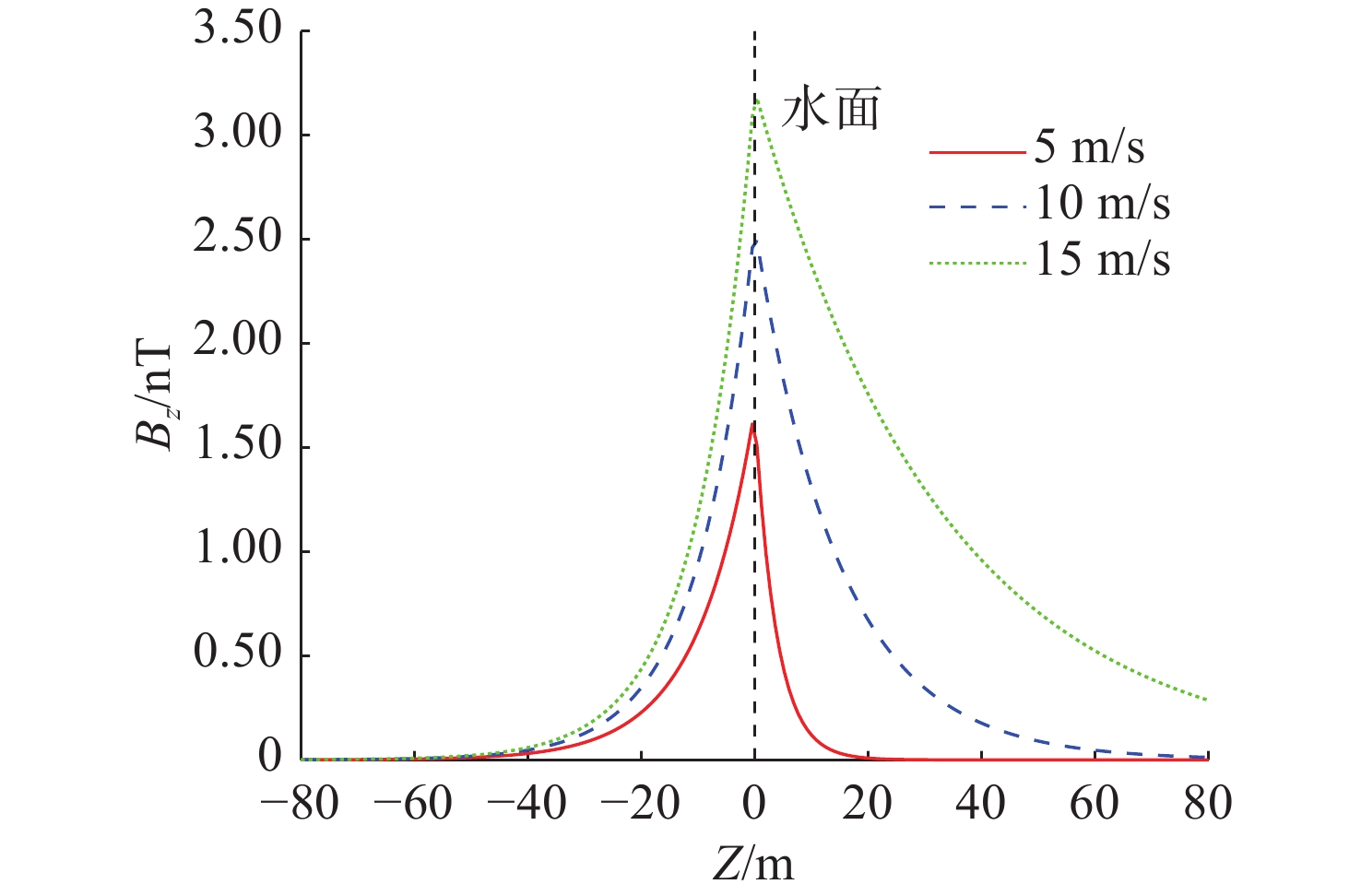
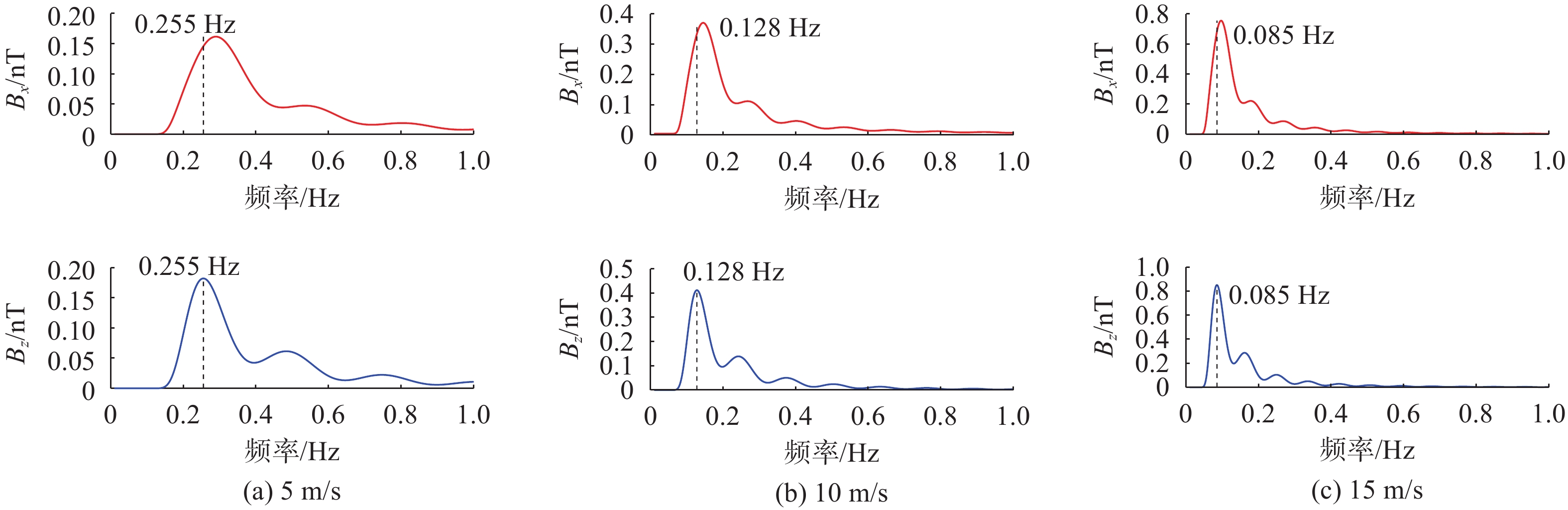
The performance of marine electromagnetic detection is significantly affected by the ambient electromagnetic noise in the ocean, among which the magnetic field induced by ocean waves moving through the Earth’s magnetic field constitutes a core noise source. To further investigate the formation mechanism, distribution characteristics, and patterns of this wave-induced magnetic field, this study employed the Pierson-Moskowitz wave spectrum combined with Weaver’s electromagnetic theory framework. The dynamic characteristics of a two-dimensional sea surface under varying wind speeds were simulated using the Monte Carlo random sampling method, and the wave-induced magnetic field was formulated analytically via Maxwell’s equations. The research focus was to simulate the three-dimensional spatial distribution and spectral properties of the induced magnetic field under different wind scenarios. Simulation results indicate that as wind speed increases, wave evolution progresses from a low-amplitude and underdeveloped state to a complex and fully developed condition. Concurrently, the magnetic induction intensity exhibits a positive correlation with wave activity. Spectrally, the induced magnetic field demonstrates a narrowband concentration characteristic. With increasing wind speed, the dominant frequency shifts towards the lower frequency domain, accompanied by energy aggregation near the primary frequency. In the frequency band below the dominant frequency, the magnetic field intensity increases approximately linearly with frequency, while in the band above the dominant frequency, it decays exponentially with increasing frequency. The findings of this study provide theoretical and simulation support for noise modeling and signal extraction in the field of marine electromagnetic detection.
A High-Precision Motion Control Strategy for Valve-Controlled Cylinders
LIU Guoqing, WANG Jianxin, PING Zilong, ZHANG Xiaoming
2026, 34(2): 391-397. doi: 10.11993/j.issn.2096-3920.2025-0110
Abstract:
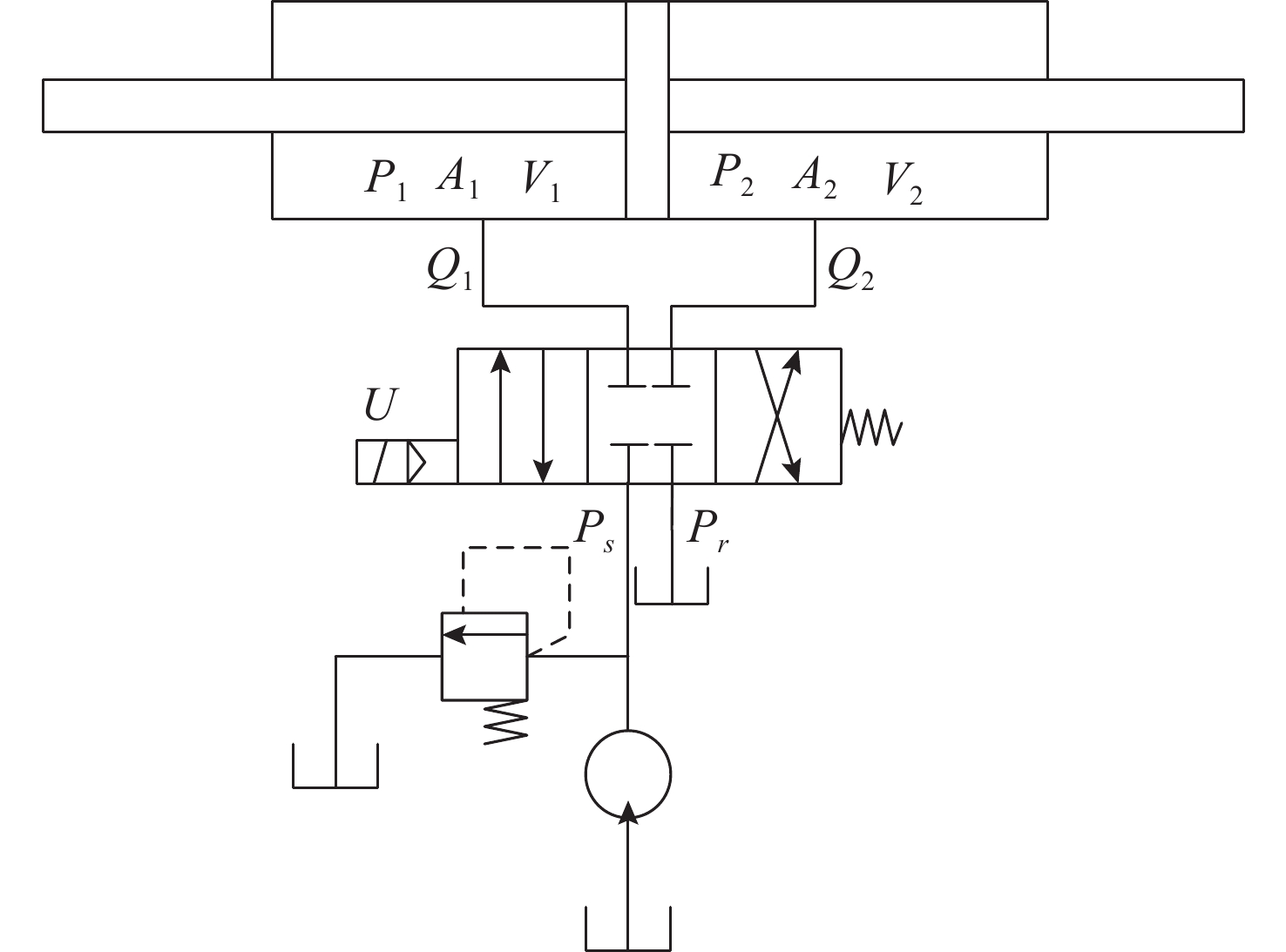
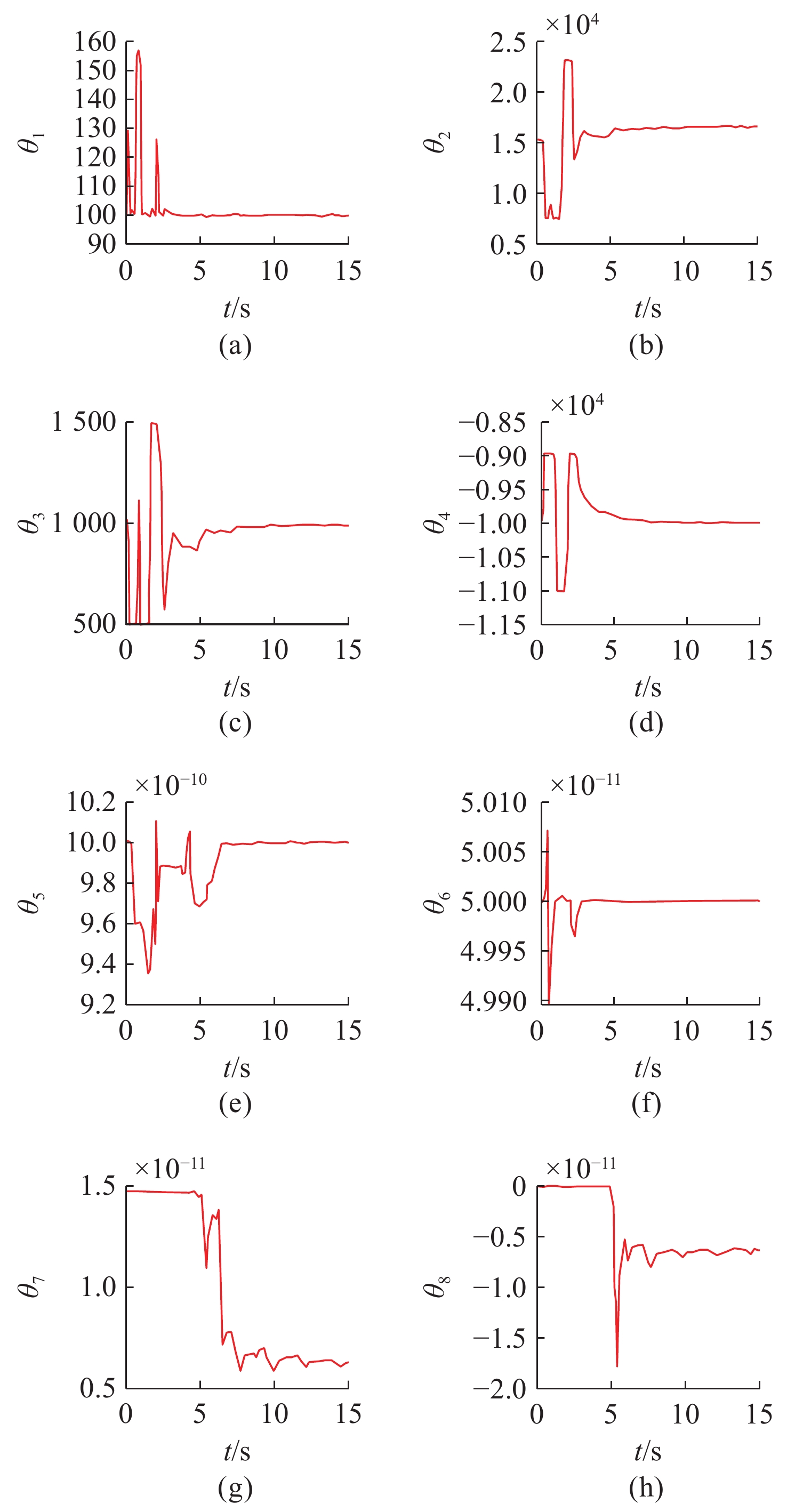
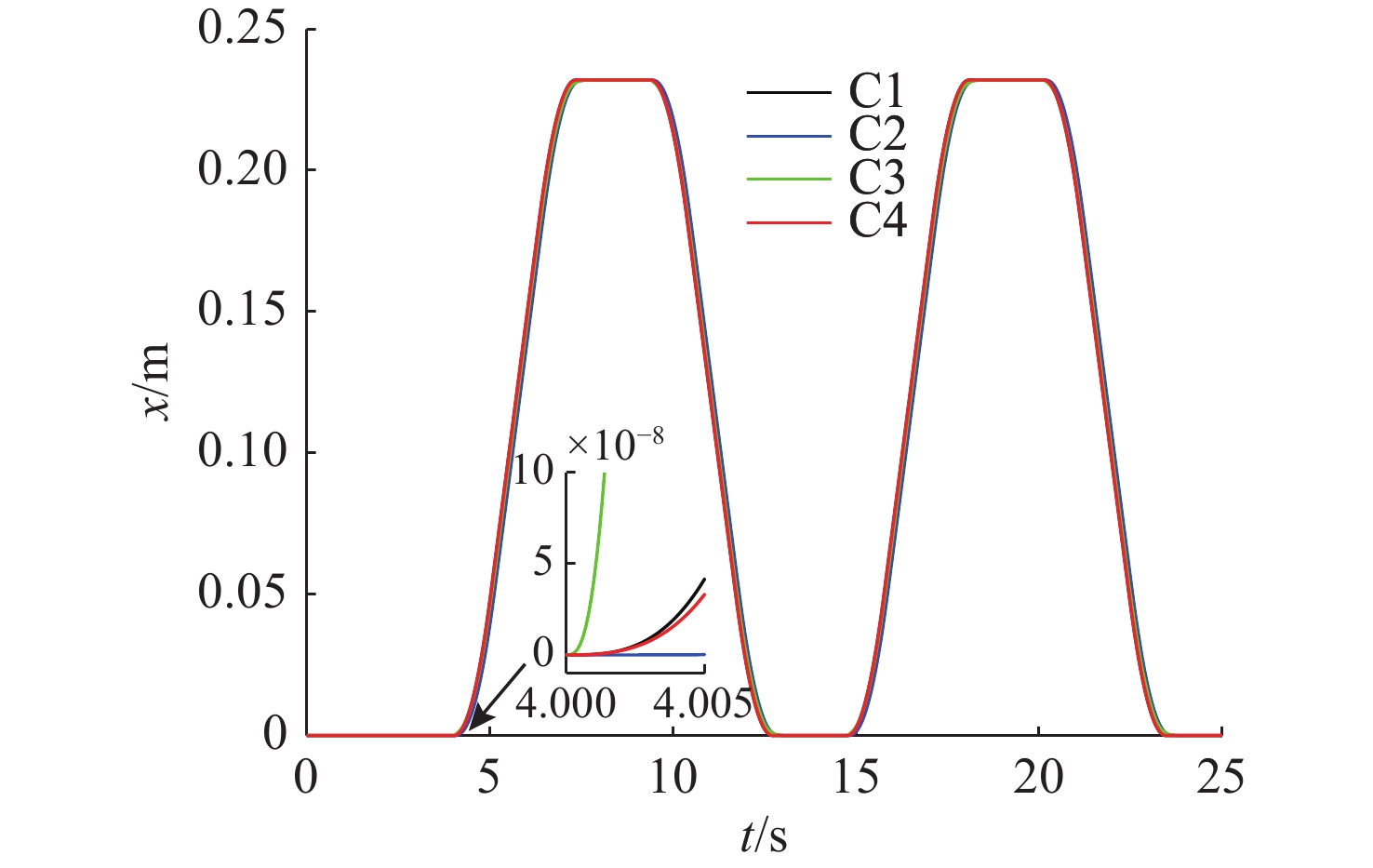
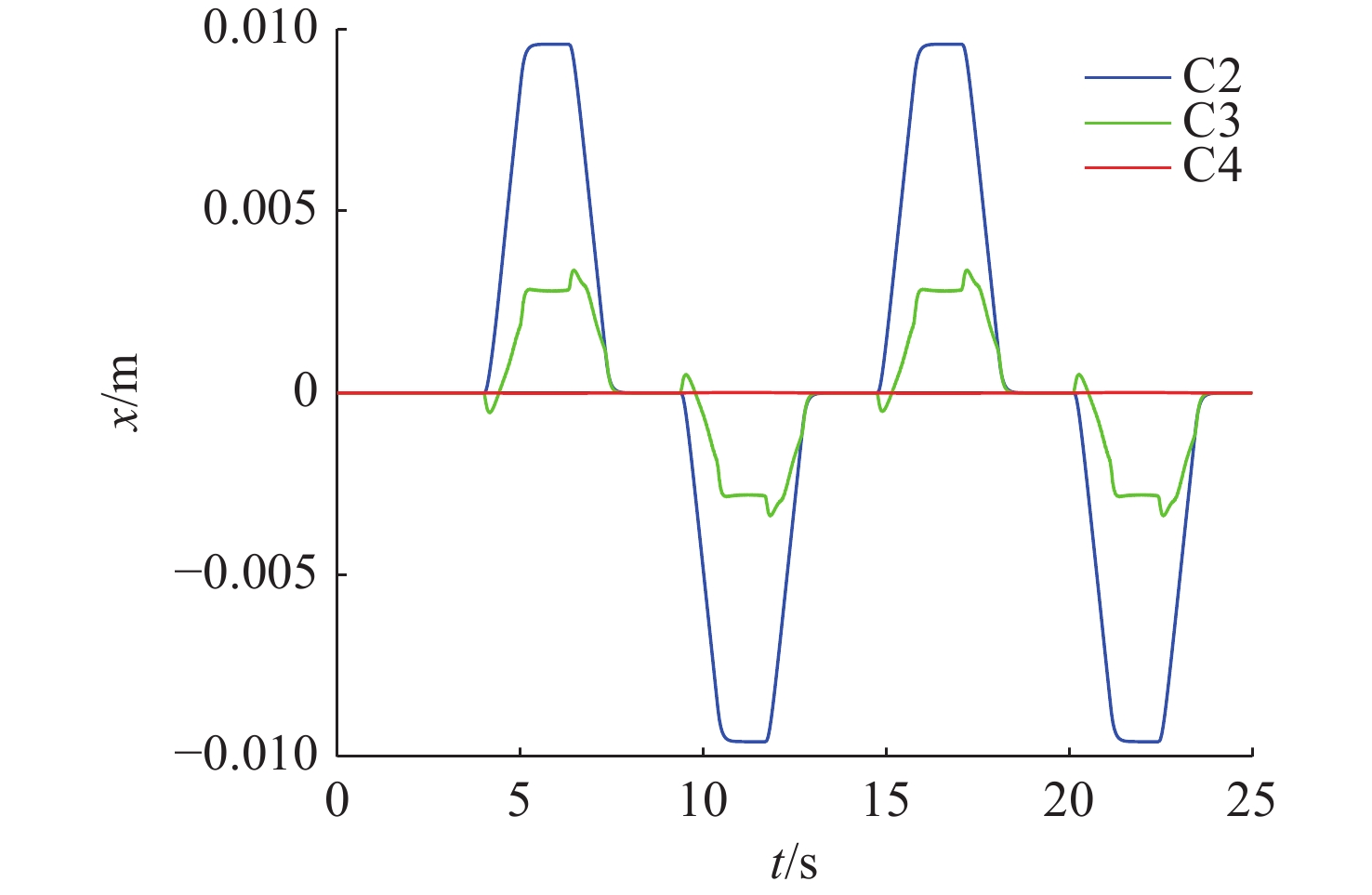
Valve-controlled cylinder serves as a key component in electro-hydraulic servo systems, and its motion precision is pivotal to the system’s stability, responsiveness, and final positioning accuracy. However, valve-controlled cylinder systems often encounter challenges in practical operation, such as complex nonlinear friction, parameter uncertainties, and external load disturbances, which make it difficult for conventional control strategies to meet the stringent requirements of high-precision positioning. Proportional-integral-derivative(PID) control suffers from insufficient robustness when dealing with strong nonlinearities and parameter variations, making it prone to overshoot or steady-state errors. In contrast, although sliding mode control(SMC) offers strong robustness, its inherent chattering phenomenon exacerbates mechanical wear and impairs positioning accuracy. To overcome this technical bottleneck, this paper proposed an advanced adaptive robust control(ARC) strategy incorporating a fast dynamics compensation term and a nonlinear robust feedback term. To validate the effectiveness and superiority of the proposed strategy, comprehensive comparative simulation analyses were conducted. The results demonstrate that compared with traditional PID control and SMC, the designed adaptive robust controller significantly improves the trajectory tracking accuracy, dynamic response, and disturbance rejection capability of the valve-controlled cylinder system, achieving superior control performance.
Research Status and Development Trends of Foreign Submarine Detection Technologies
DONG Xinxin, ZHANG Zhexuan, ZHANG Weiye
2026, 34(2): 398-406. doi: 10.11993/j.issn.2096-3920.2025-0133
Abstract:
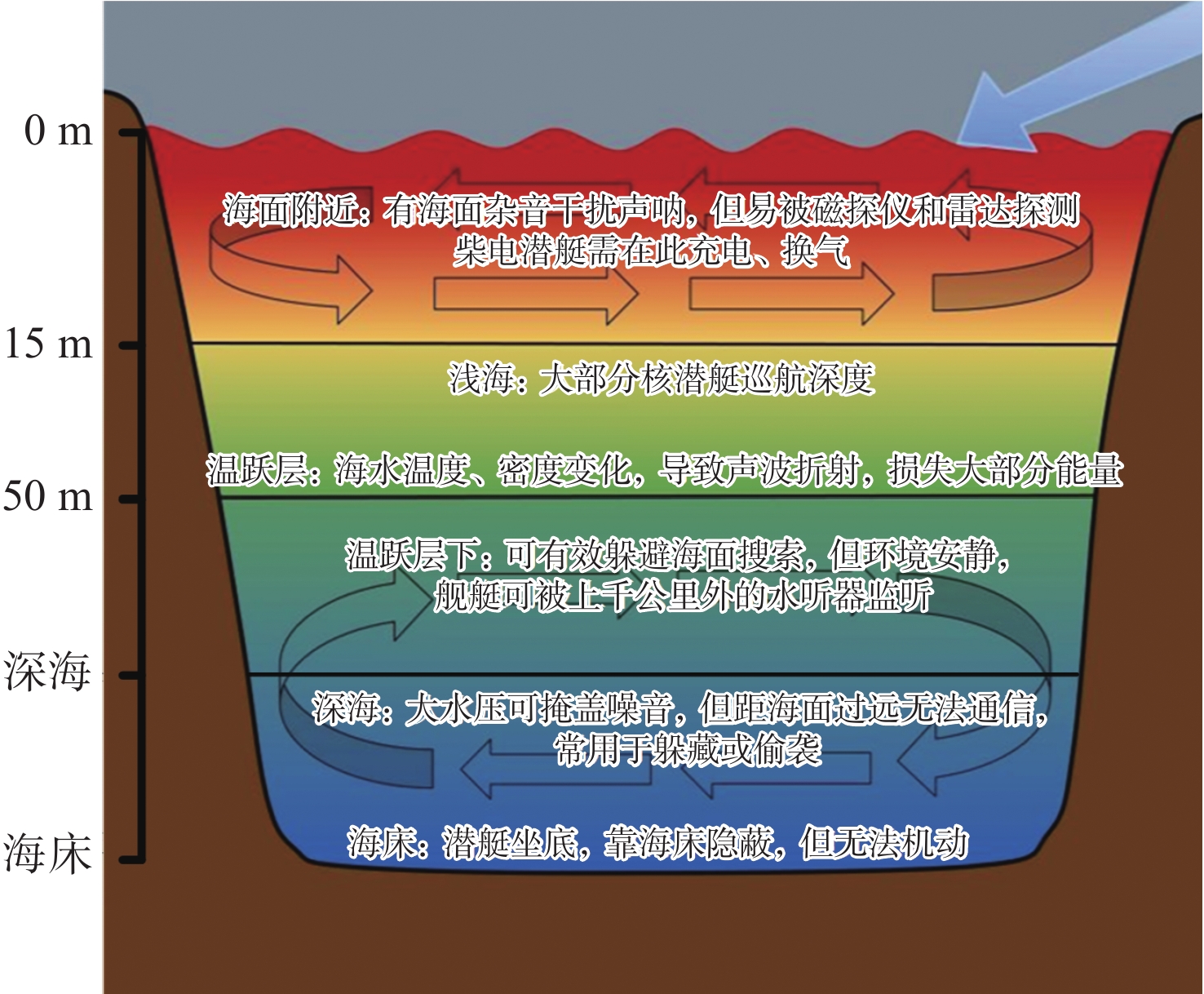
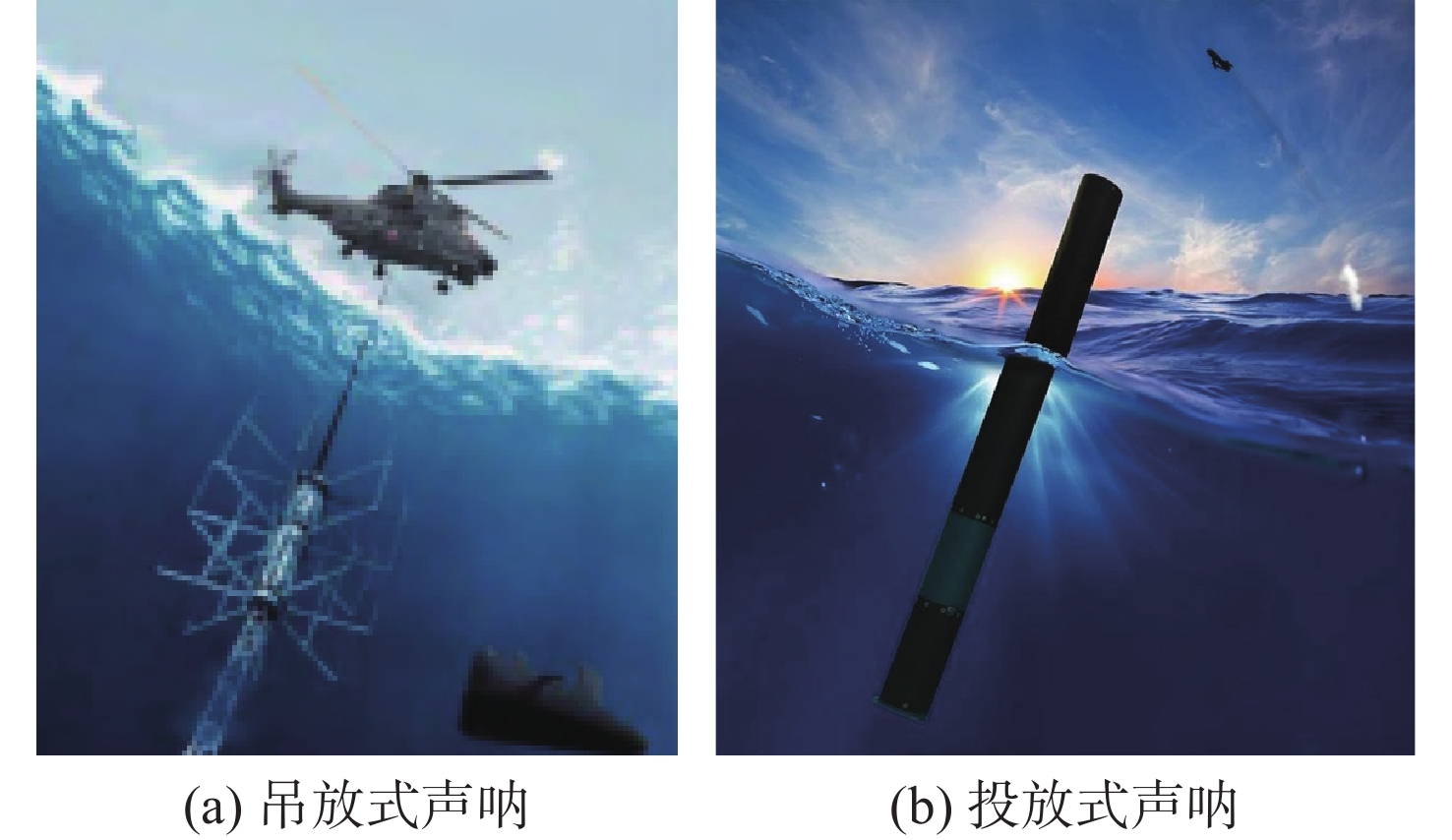
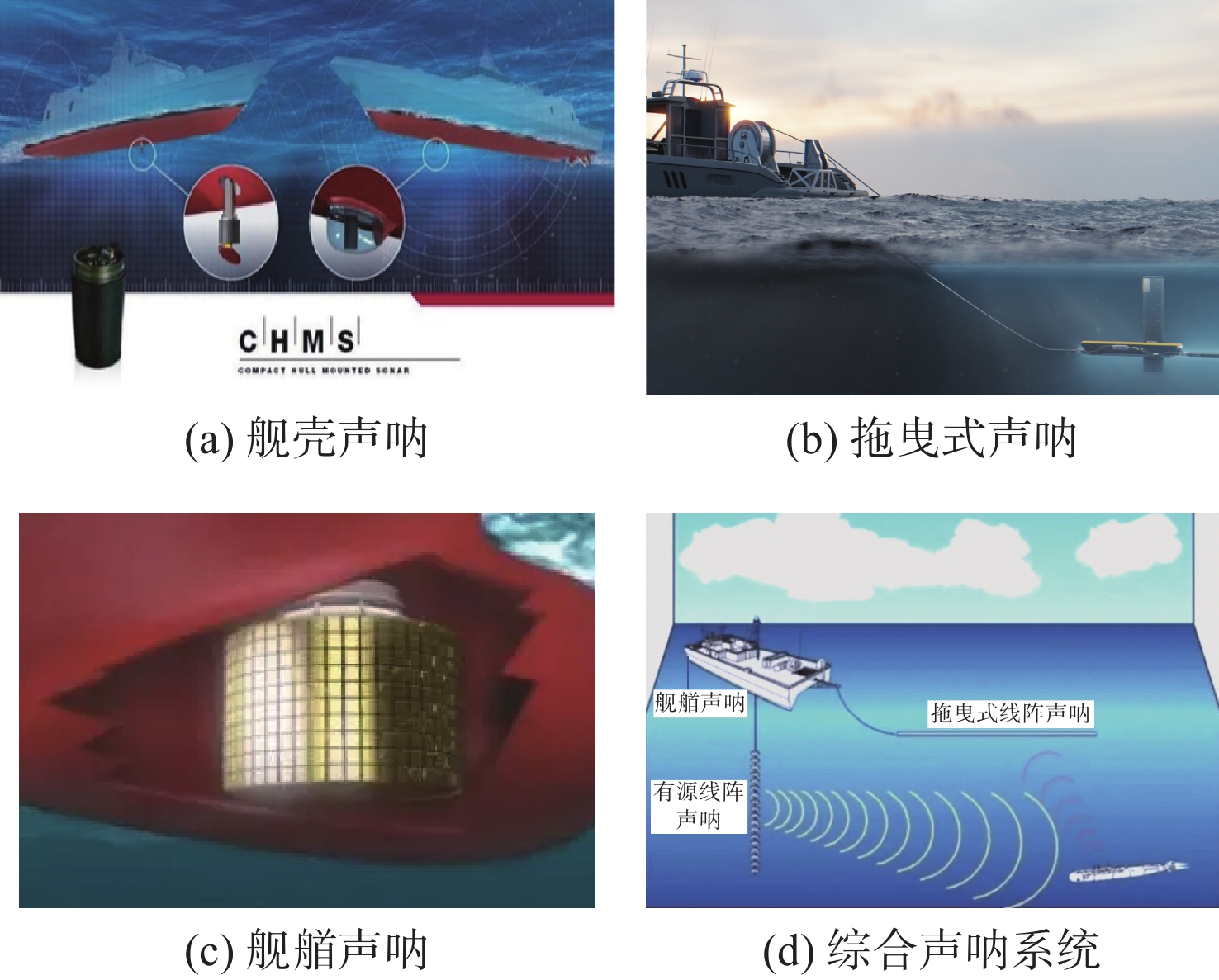
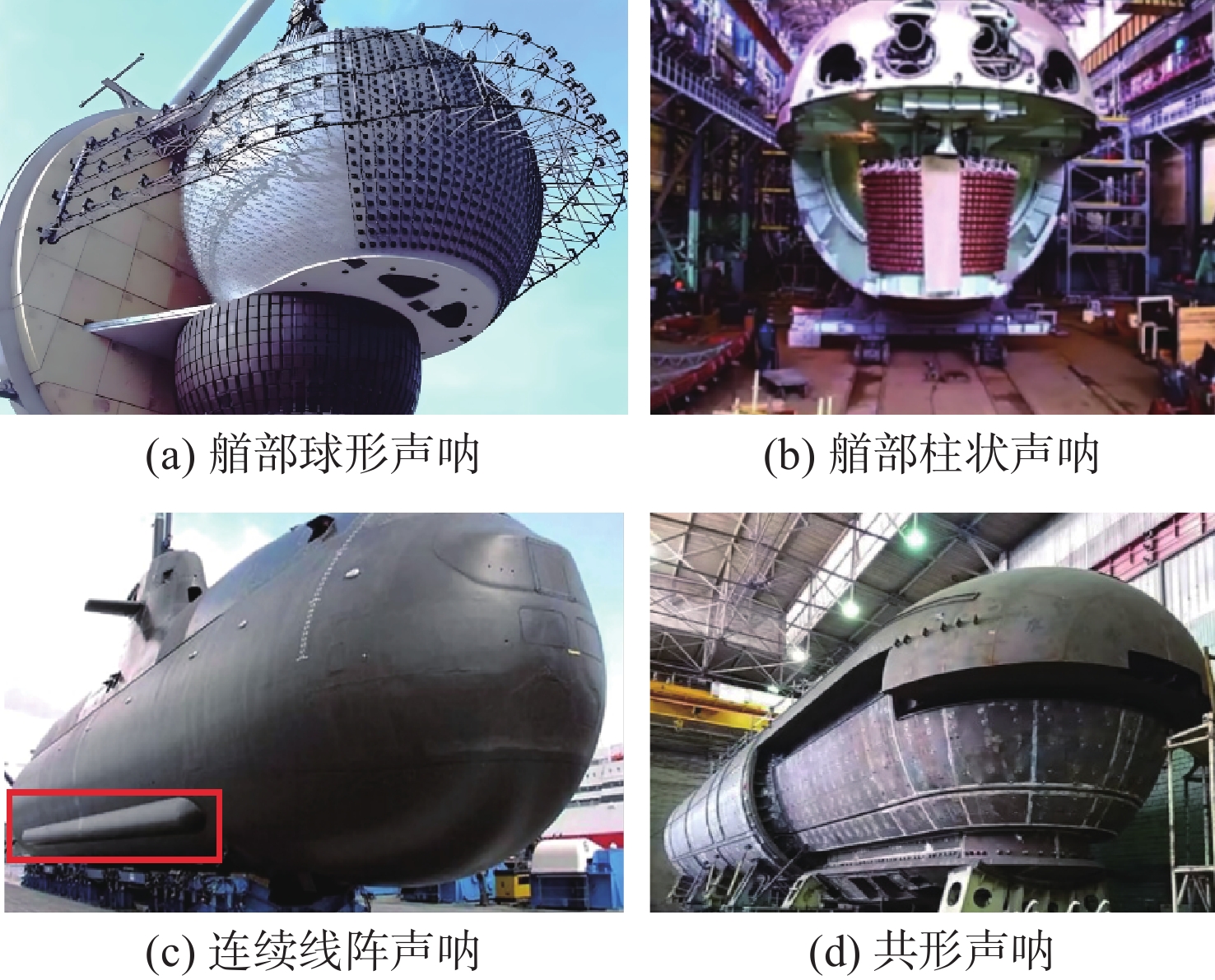
The primary threat of submarines stems from their concealment. In recent years, with the advancement of submarine noise reduction technologies and the intensification of electronic countermeasures, enhancing submarine detection methods and capabilities has become increasingly urgent. This paper reviewed the operational characteristics(including noise, magnetic field, wake, and gravitational field) and typical combat modes of submarines, expounded on the advantages and limitations of different anti-submarine platforms and detection approaches, and summarized the development status of mainstream detection methods(such as acoustic detection and magnetic anomaly detection), as well as representative foreign models. It analyzed the key technologies for submarine detection from three aspects: anti-jamming capability, real-time data processing and information fusion, and unmanned system collaboration and autonomous decision-making. The analysis indicates that the integration of new-type detection means with multi-source information fusion can effectively improve detection performance, while the development of capabilities like unmanned system collaboration and autonomous decision-making may serve as a breakthrough for the transformation of anti-submarine modes. This study provides valuable references for future research and development efforts in the field of submarine detection.
Service
Subscribe