

Study on Flow-Induced Vibration and Acoustic Radiation Characteristics of LUUV with Internal Frame-Stiffened Thin-Shell Wet Compartments
-
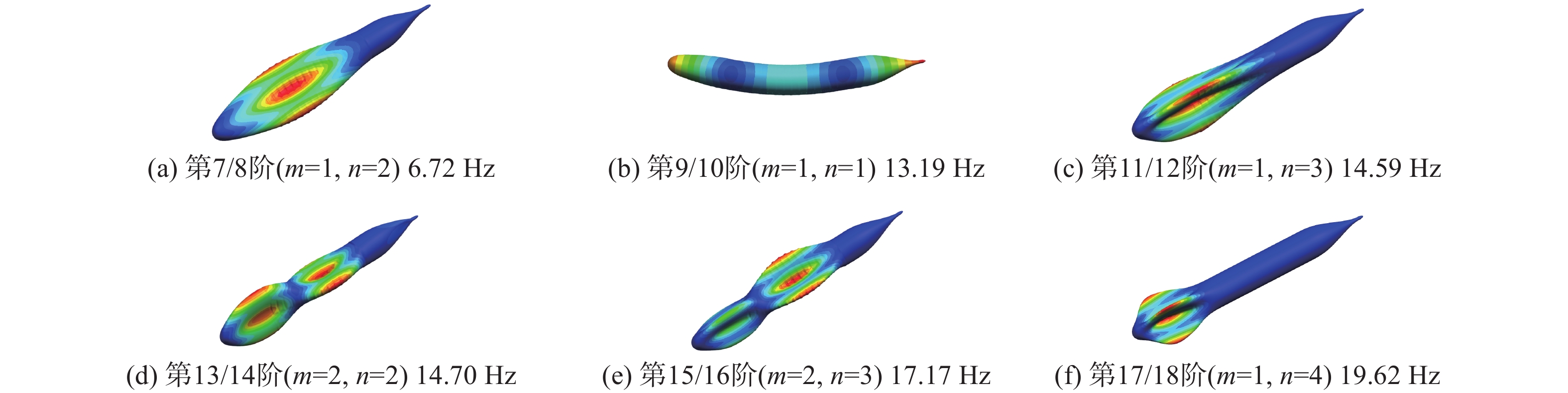
摘要: 大型无人水下航行器(LUUV)正逐渐成为各国争相发展的重点装备, 并且LUUV普遍采用薄壳框架式湿舱结构, 其在航行过程由脉动压力激发壳体振动所产生的辐射噪声具有能量高、衰减慢的特点。为了支撑此类航行器的减振降噪设计, 有必要对其流激振动声辐射特性进行研究。文中基于改进延迟分离涡模拟(IDDES)模型和有限元/自动匹配层(FEM/AML)耦合法, 构建了针对薄壳框架湿舱LUUV的低频噪声分析方法, 研究了航行器在1 000 Hz内的流激振动声辐射特性。研究表明: 航行器在航行时, 其壁面脉动压力能量主要集中在低频部分; 由于湿舱受到双面附加水质量的影响, 航行器的低频振型主要表现为湿舱的局部模态; 随着航速增加, 航行器的辐射声功率整体抬升; 增加湿舱壳体厚度可降低部分低频振动响应, 但可能因为湿舱壳体双面水负载产生的附加质量, 导致辐射声功率总级的降幅有限; 相较于金属材料, 湿舱壳体采用碳纤维时的LUUV拥有较高的辐射声功率水平。文中研究分析了航速、湿舱壳体厚度和材料变化对航行器辐射噪声的影响规律, 可为LUUV的隐身设计提供参考。Abstract: Large unmanned underwater vehicle(LUUV) are receiving increasing attention and often use wet compartments with thin, frame-stiffened shells. During navigation, fluctuating wall pressure excites shell vibration and generates energetic, slowly attenuating radiated noise. To support noise control, this study combines improved delayed detached-eddy simulation(IDDES) and finite element/automatic matching layer(FEM/AML) to analyze flow-induced vibration and sound radiation up to 1 kHz. Results indicate that wall pressure fluctuation energy concentrates in the low-frequency range. Due to bilateral added water mass, low-frequency vibration primarily manifests as local compartment modes. Overall radiated sound power increases with speed. Increasing wet-compartment shell thickness suppresses some low-frequency vibration but only slightly reduces the overall radiated sound power level, possibly owing to added-mass effects from two-sided water loading. Compared with the metallic shells considered, the low-density carbon-fiber shell exhibits the higher mean-square vibration and radiated sound power. These findings clarify the effects of speed, shell thickness, and material on LUUV noise and inform acoustic stealth design.
-
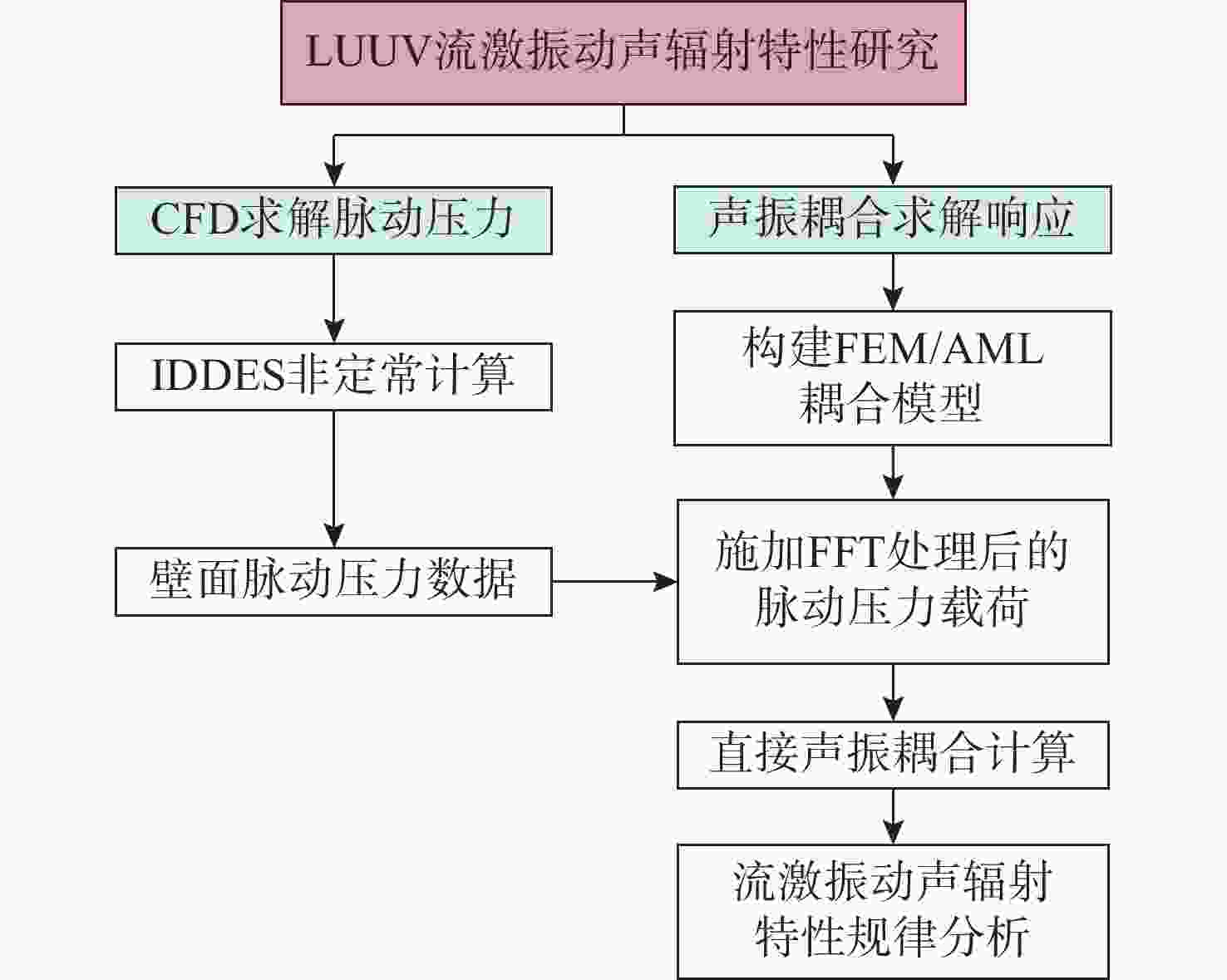
图 1 LUUV流激振动声辐射特性研究流程图
Figure 1. Flow chart of research on acoustic radiation characteristics of luuv flow induced vibration
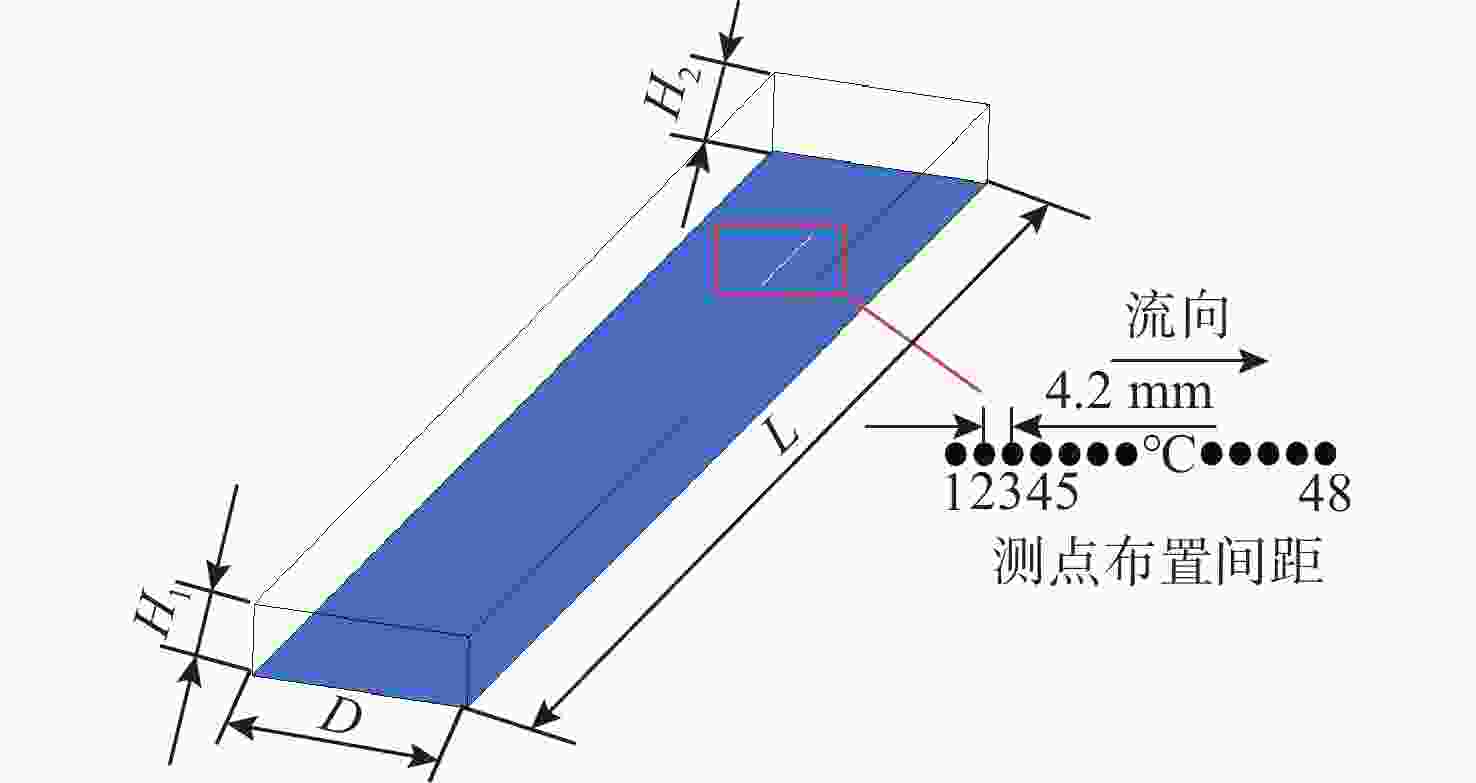
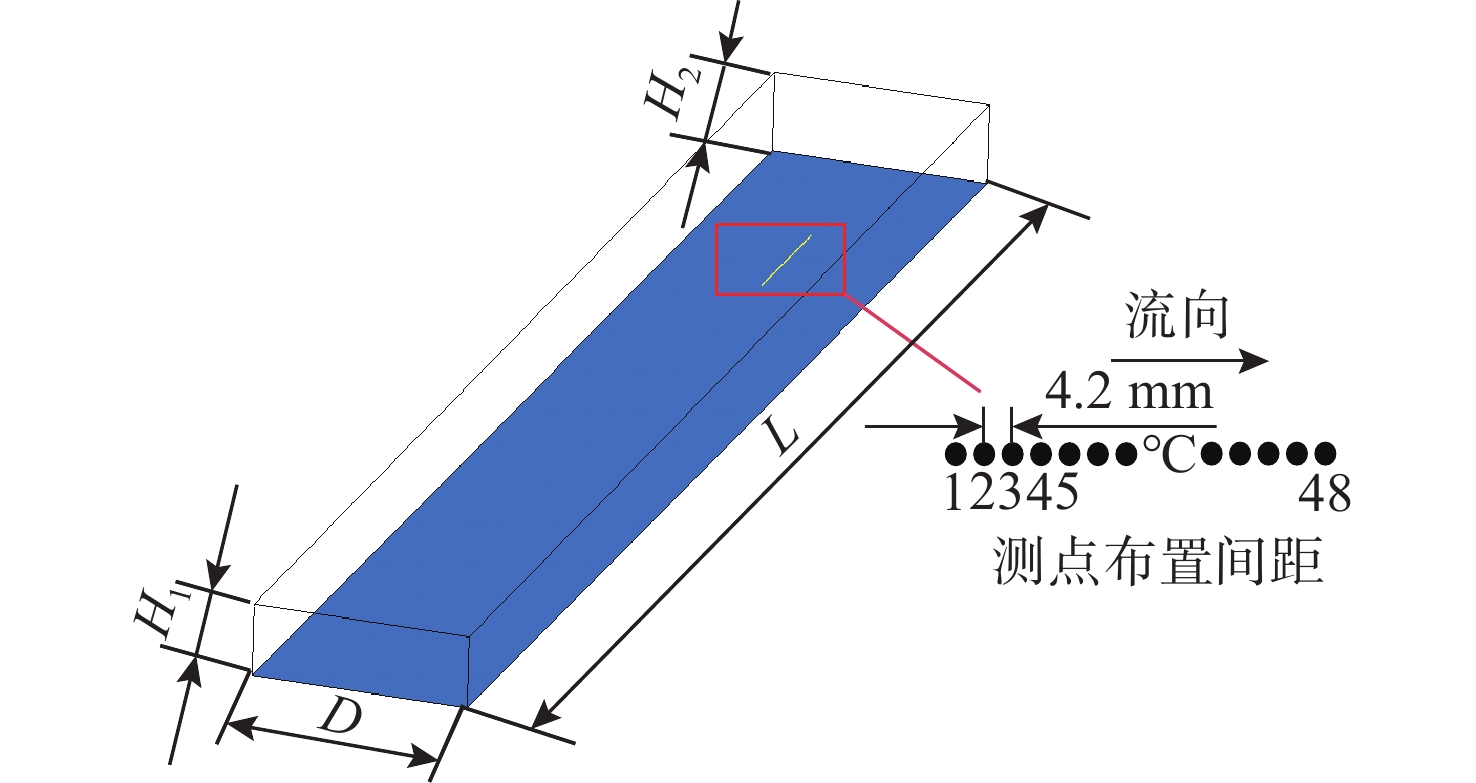
图 2 矩形试验段尺寸与测点布置示意图
Figure 2. Dimensions and measurement point layout of the rectangular test section
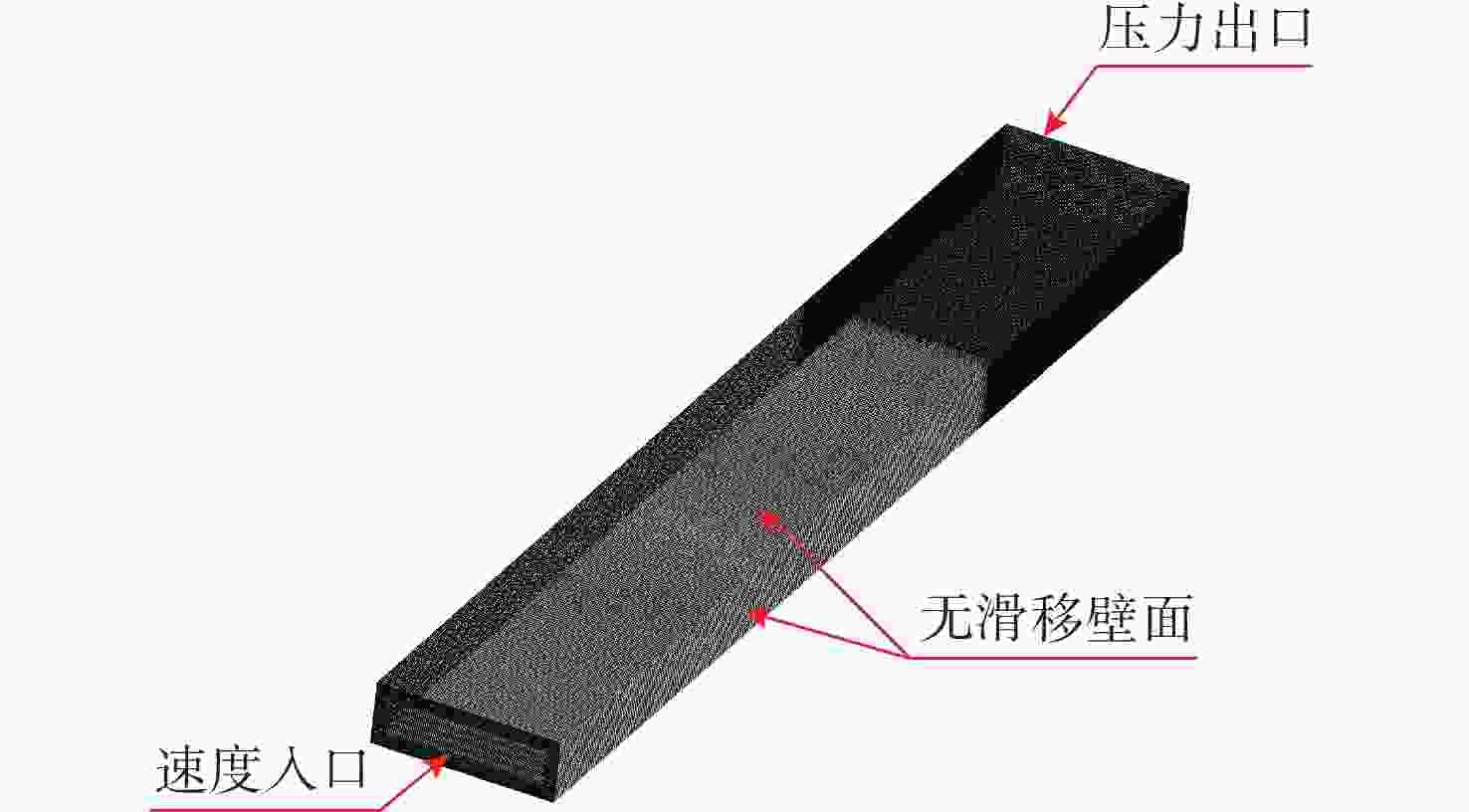
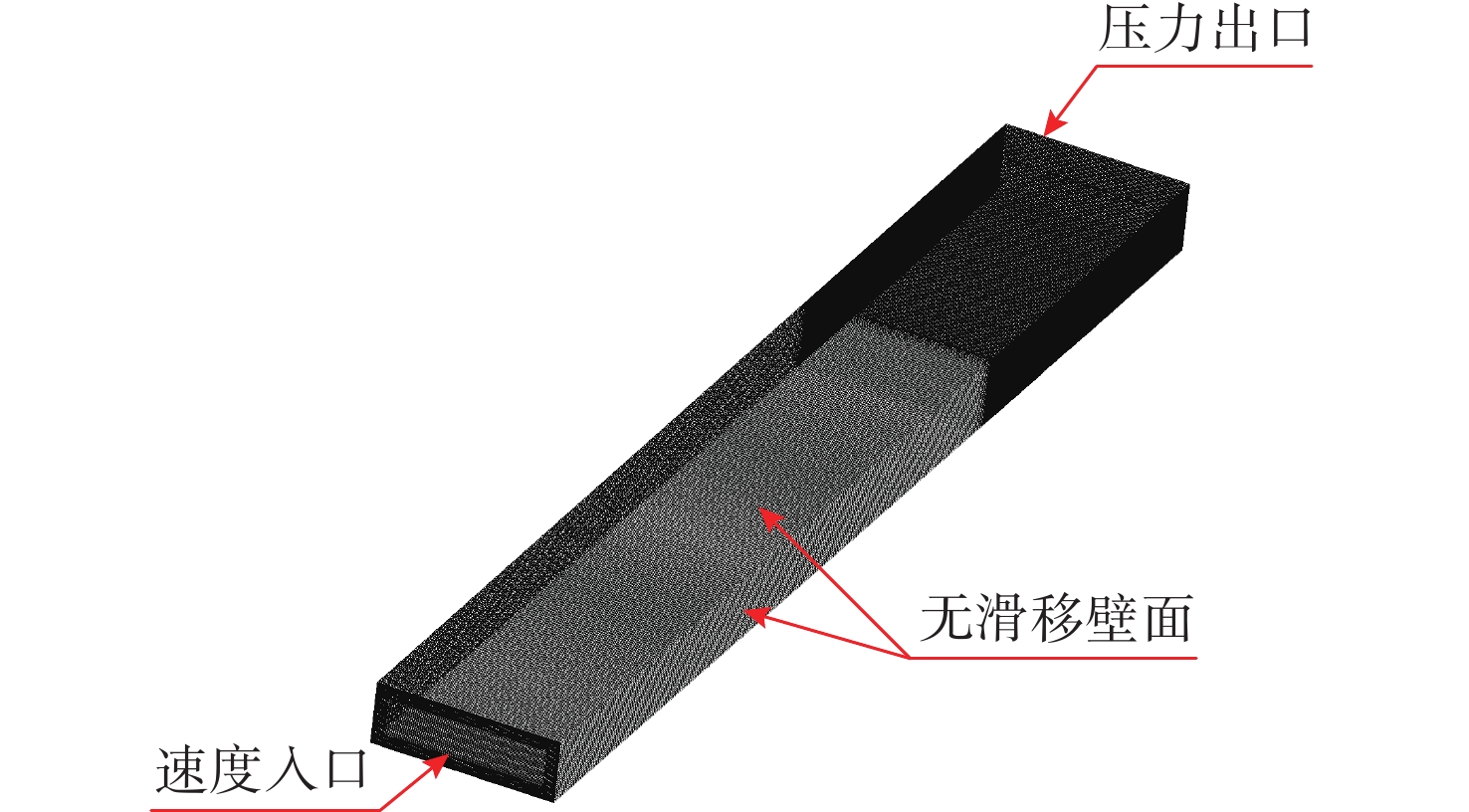
图 3 矩形试验段CFD网格与边界条件设置
Figure 3. CFD grid and boundary condition settings for rectangular test section
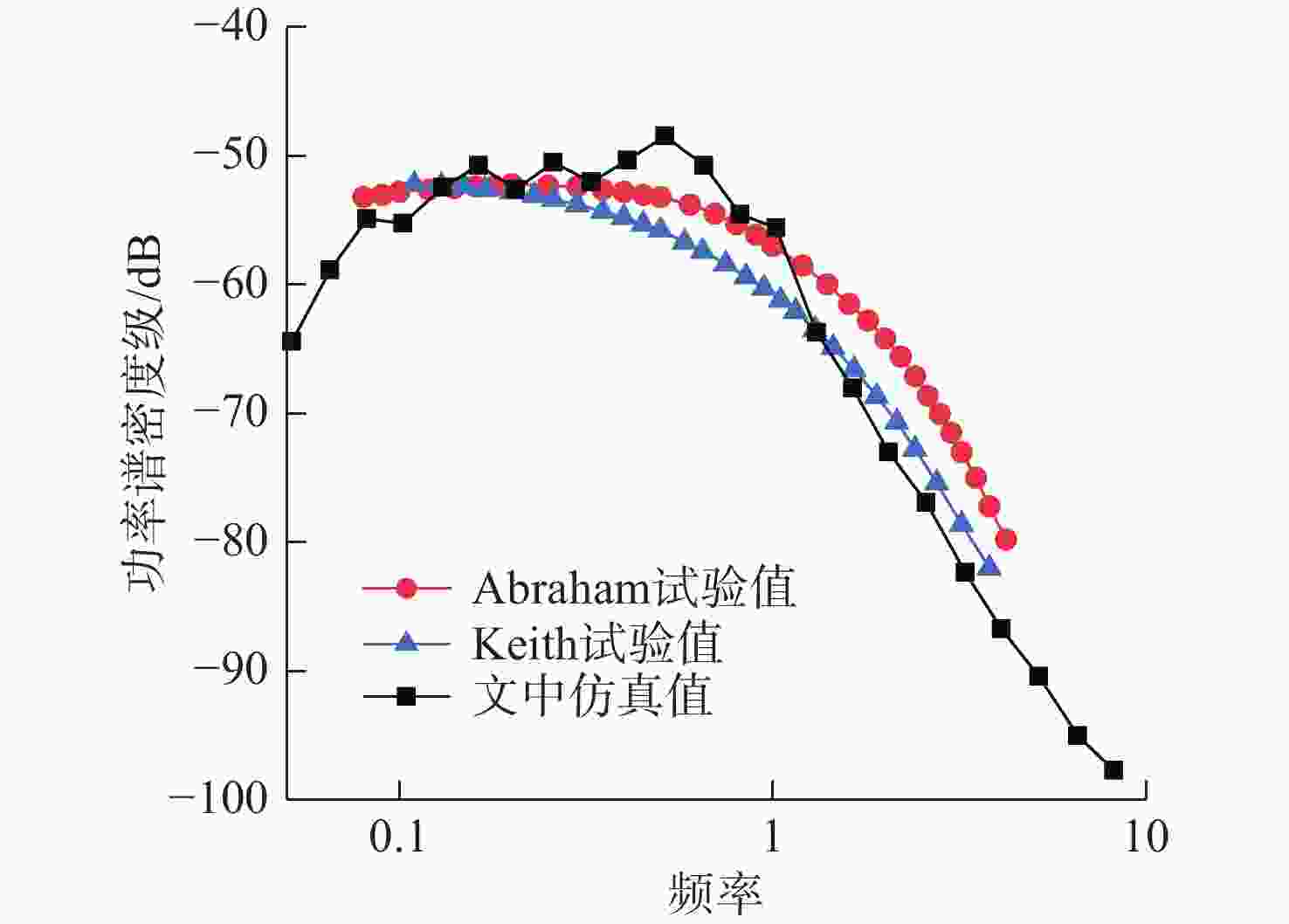
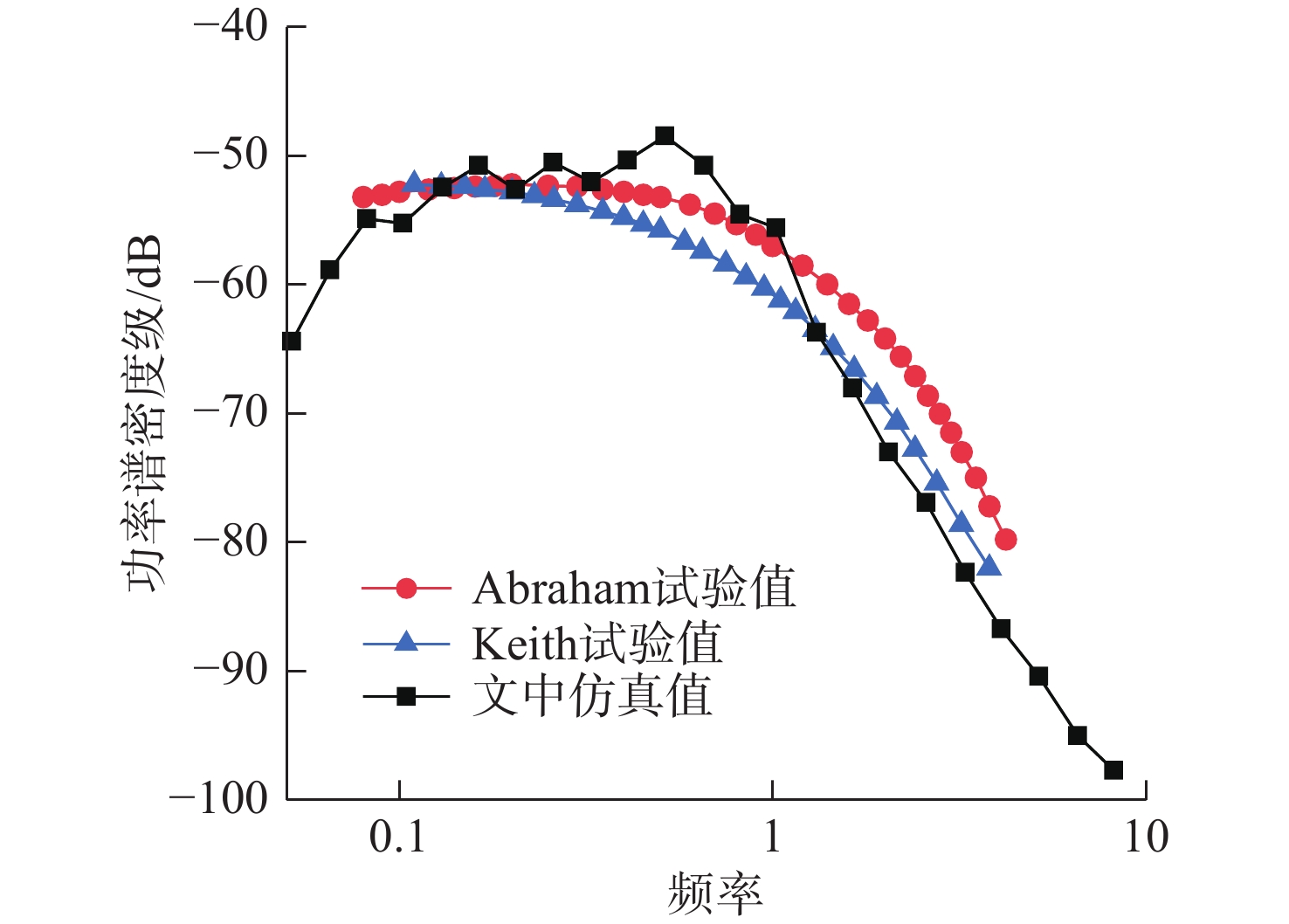
图 4 矩形试验段壁面脉动压力谱的试验与仿真对比
Figure 4. Comparison of experiment and simulation of wall pulsating pressure spectrum in rectangular test section
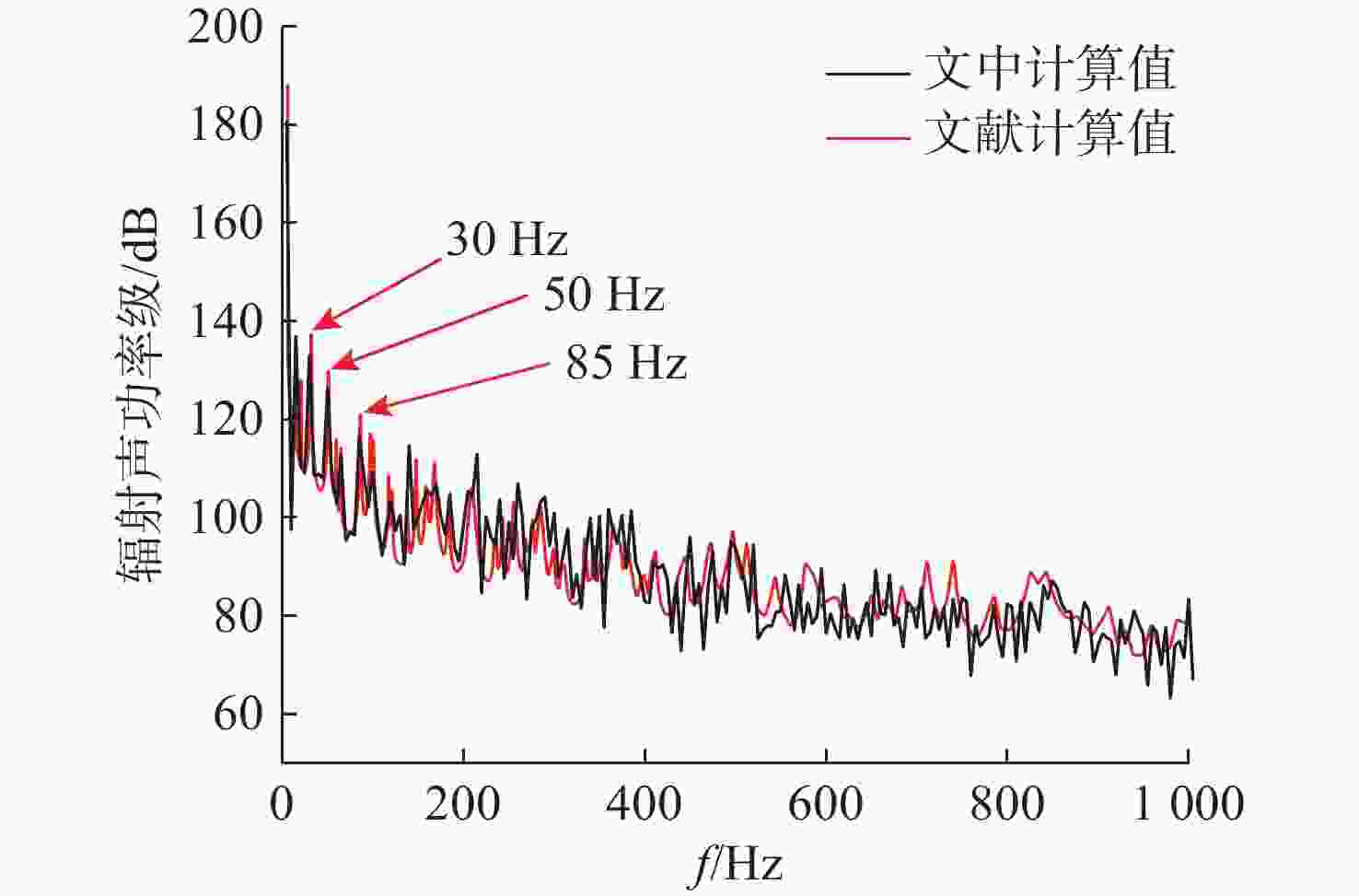
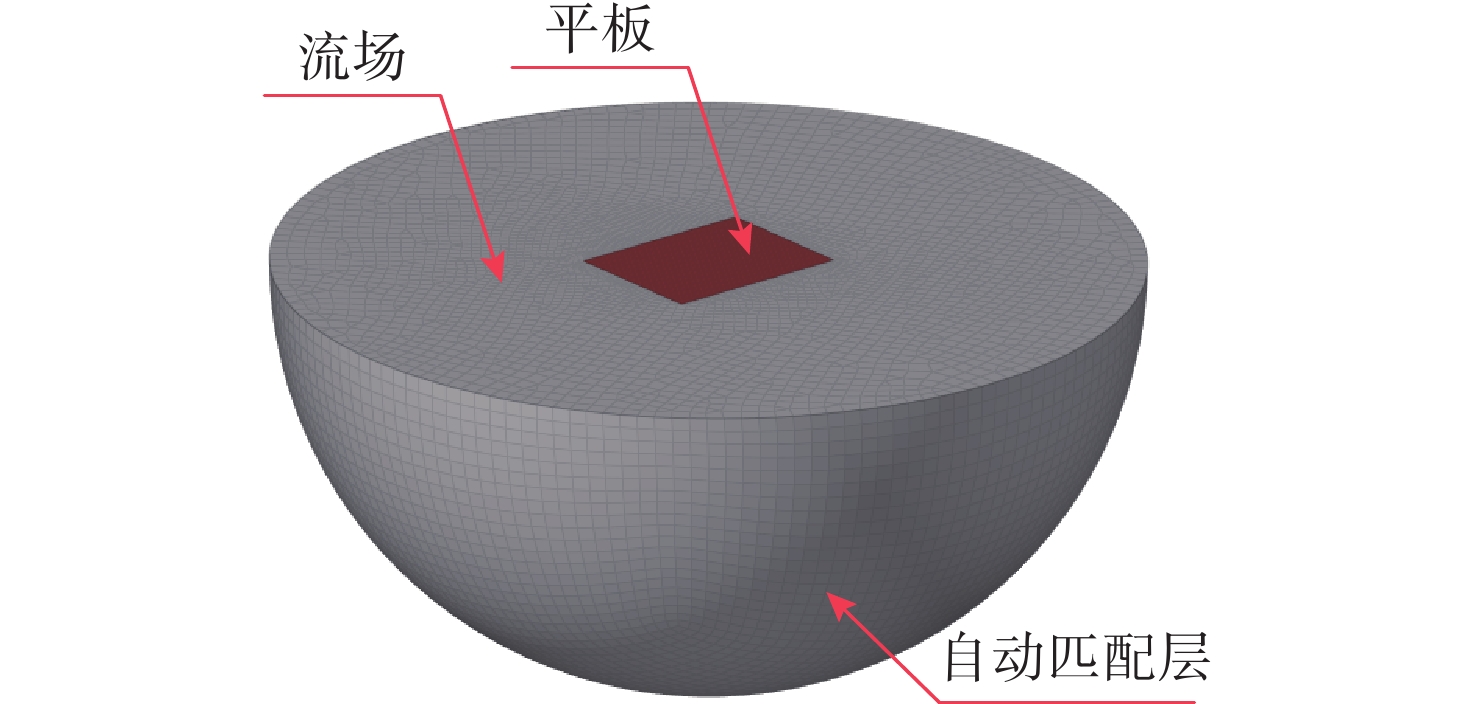
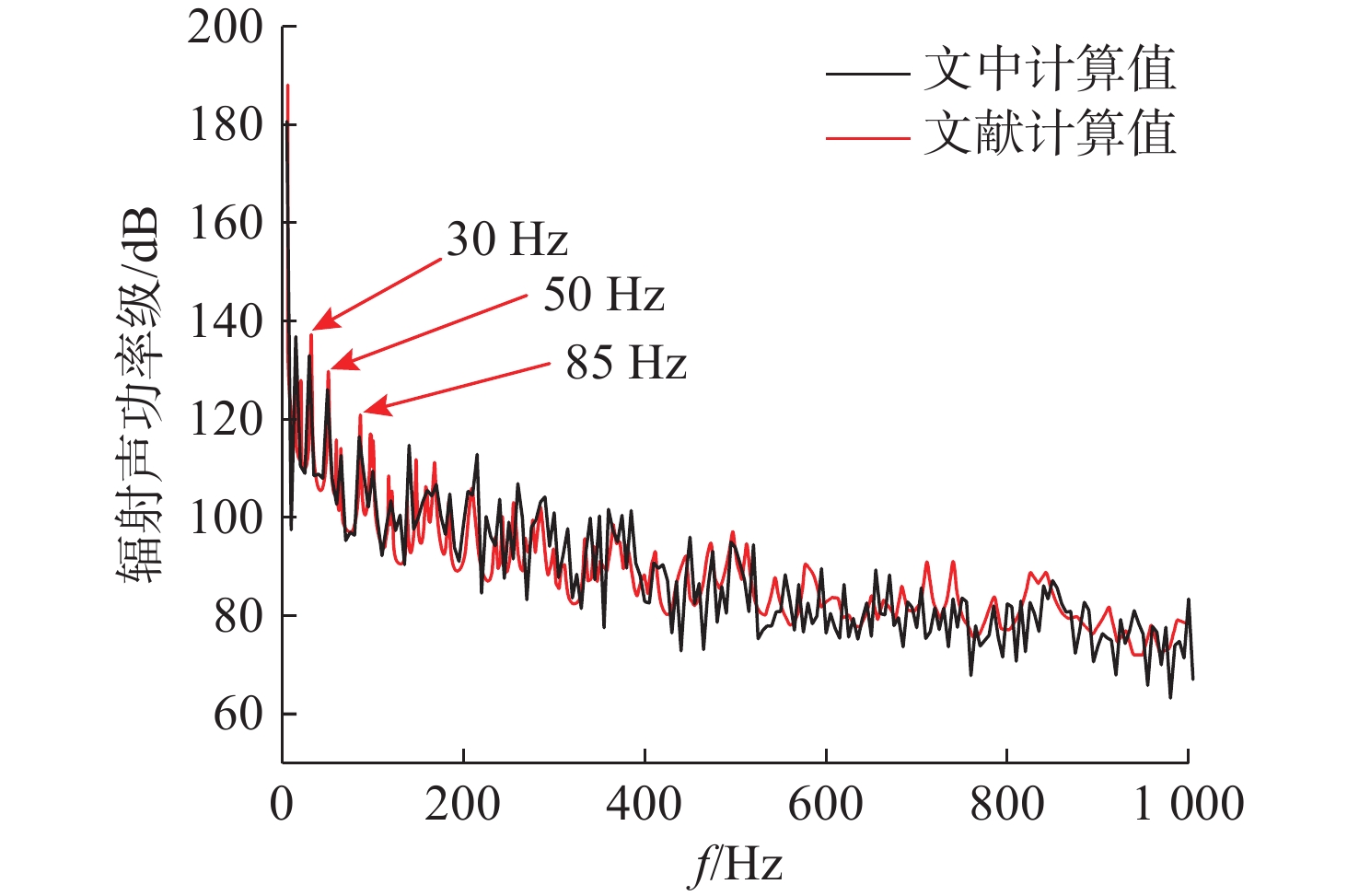
图 7 湍流激励平板的辐射声功率级文中计算值与文献计算值对比
Figure 7. Comparison of the calculated radiated sound power level of a turbulent flow-excited flat plate between the values in this paper and those in the literature
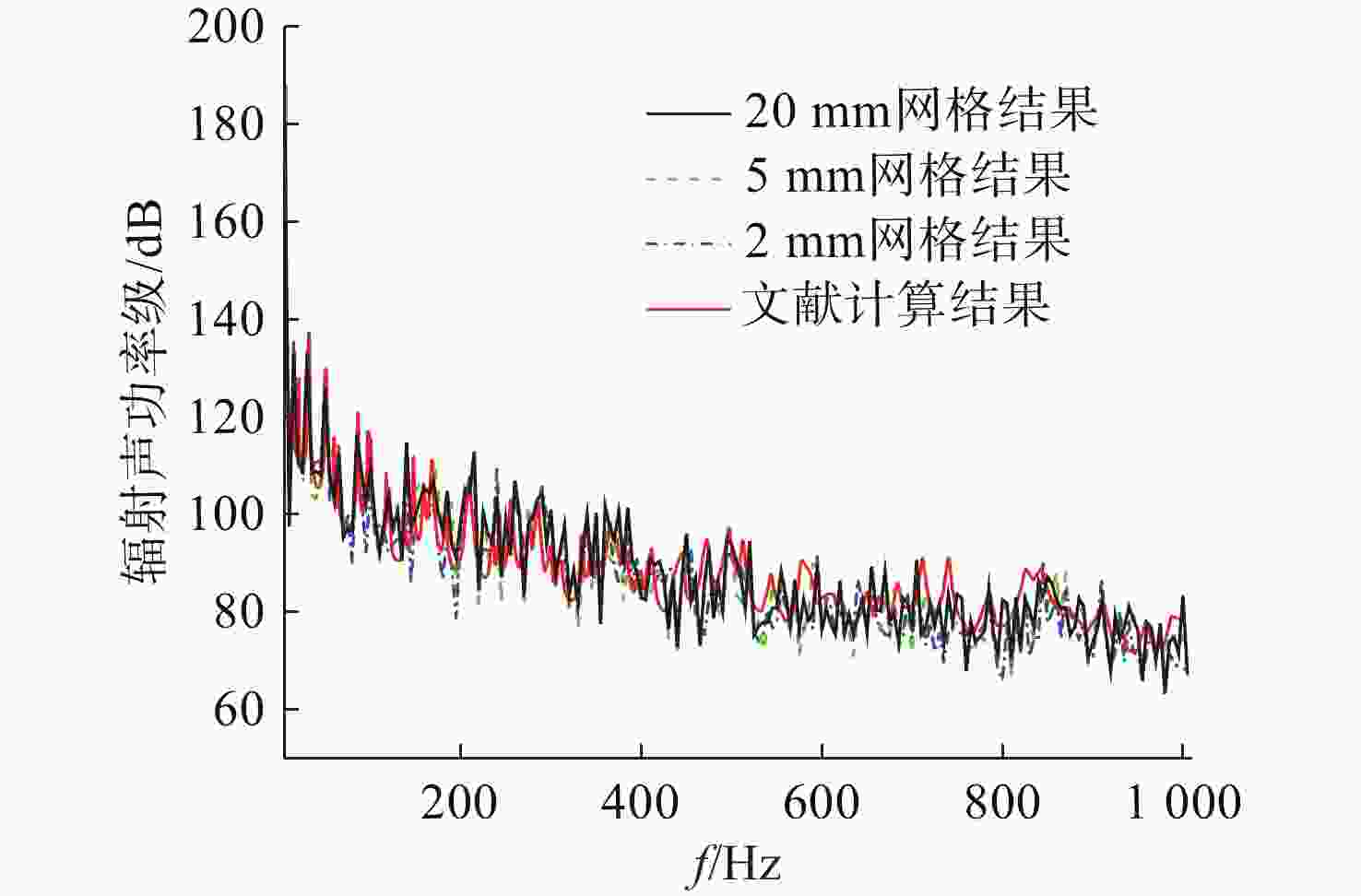
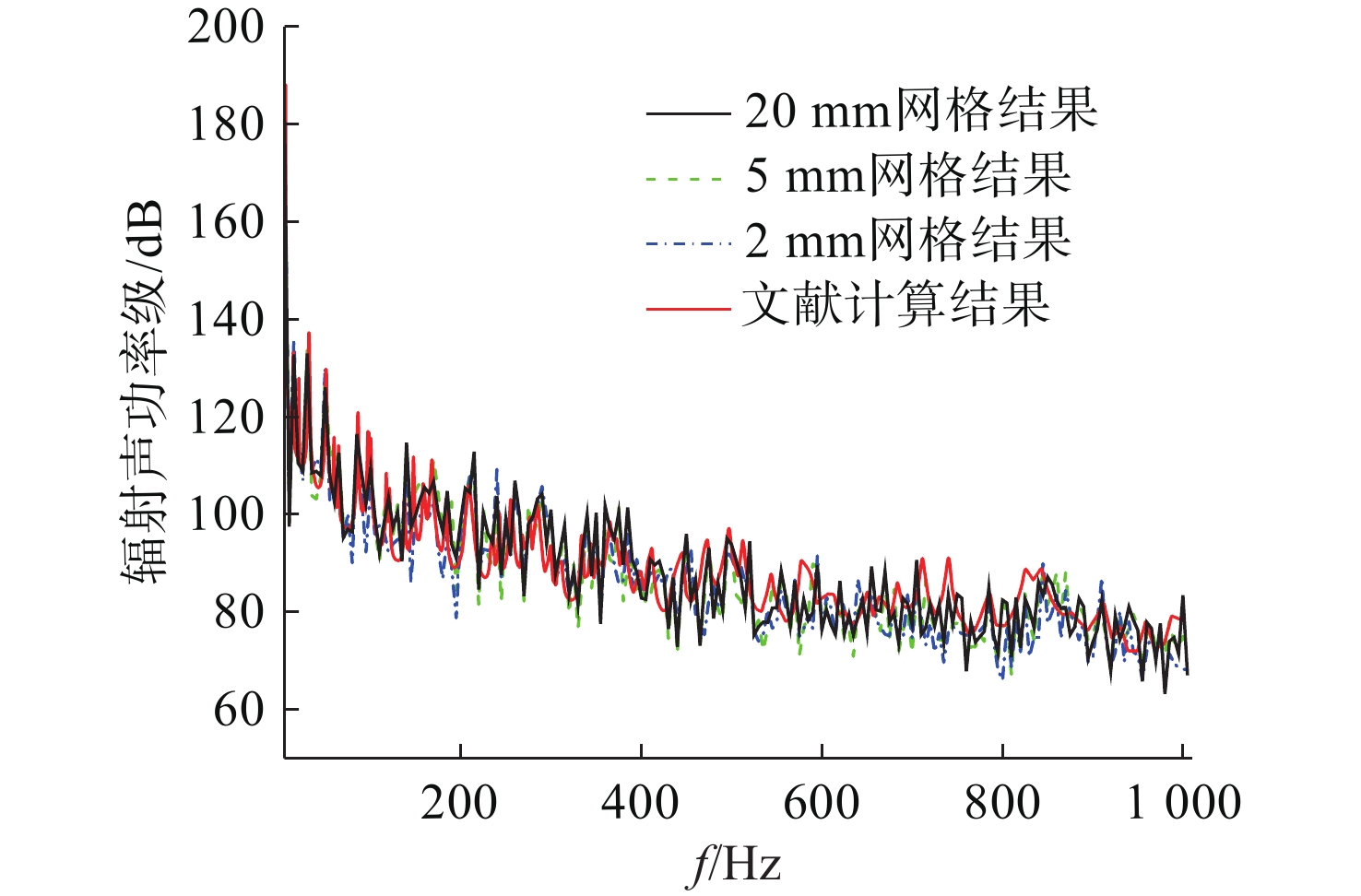
图 8 不同结构网格尺寸的平板流激振动辐射声功率级
Figure 8. Radiated sound power levels of flow-induced vibration of a flat plate with different structural grid sizes
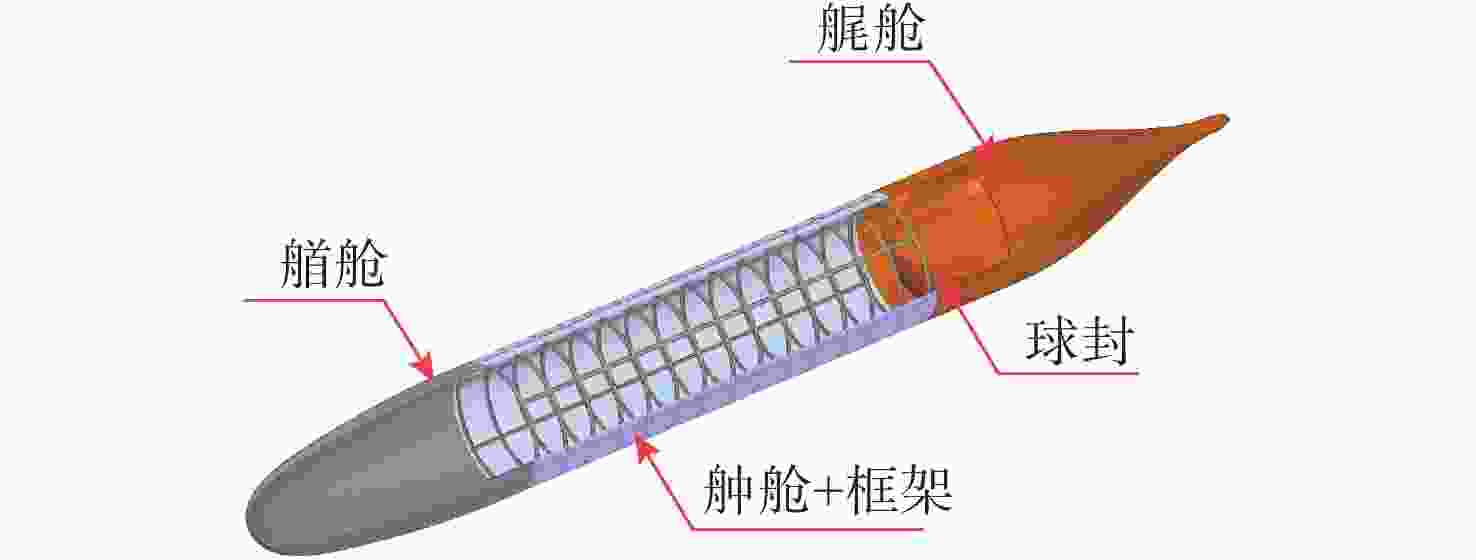
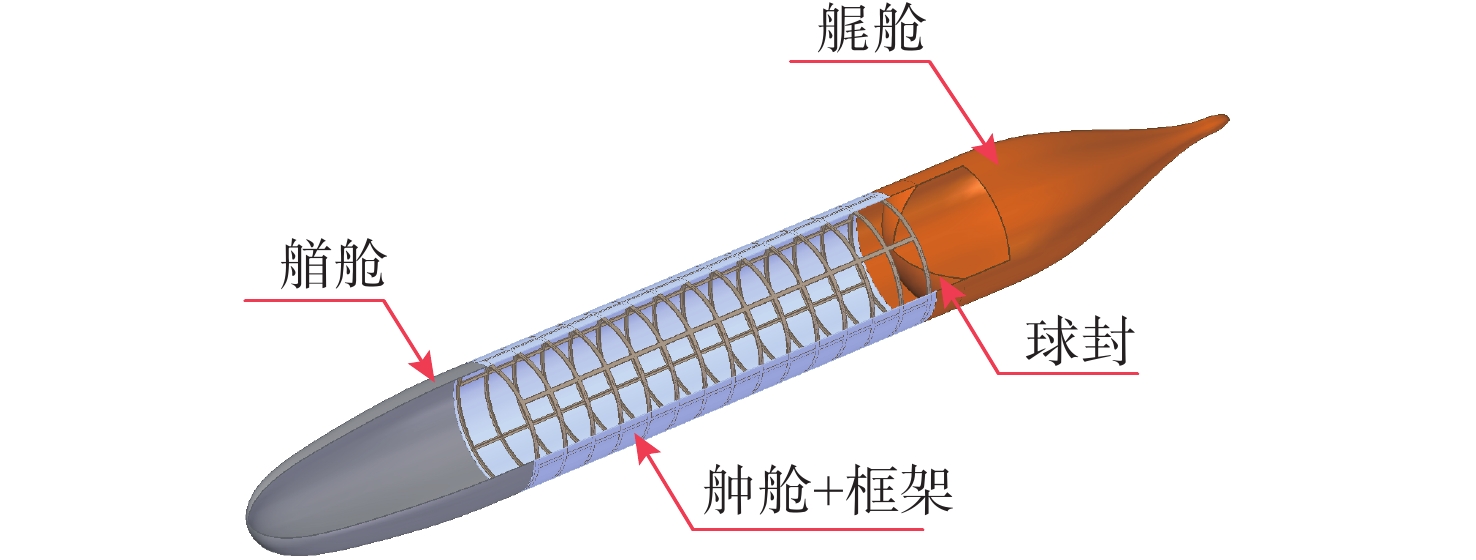
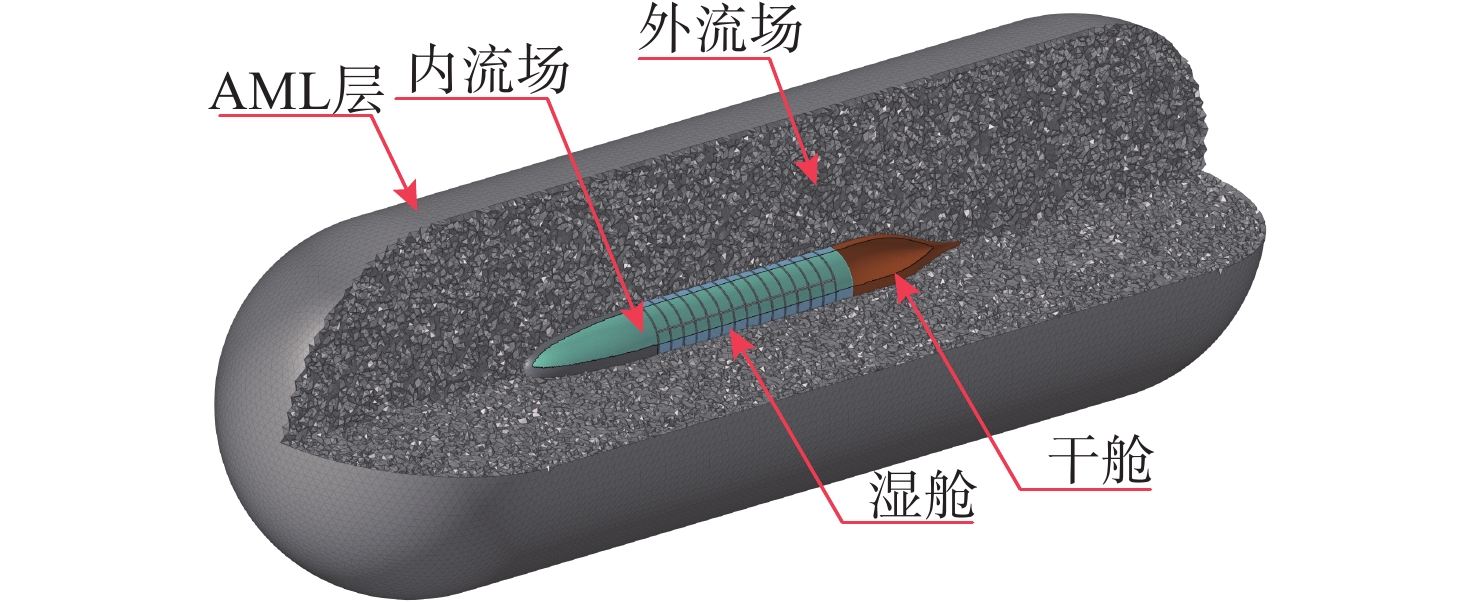
图 9 文中所研究LUUV的结构示意图
Figure 9. The structural schematic diagram of the LUUV studied in the article
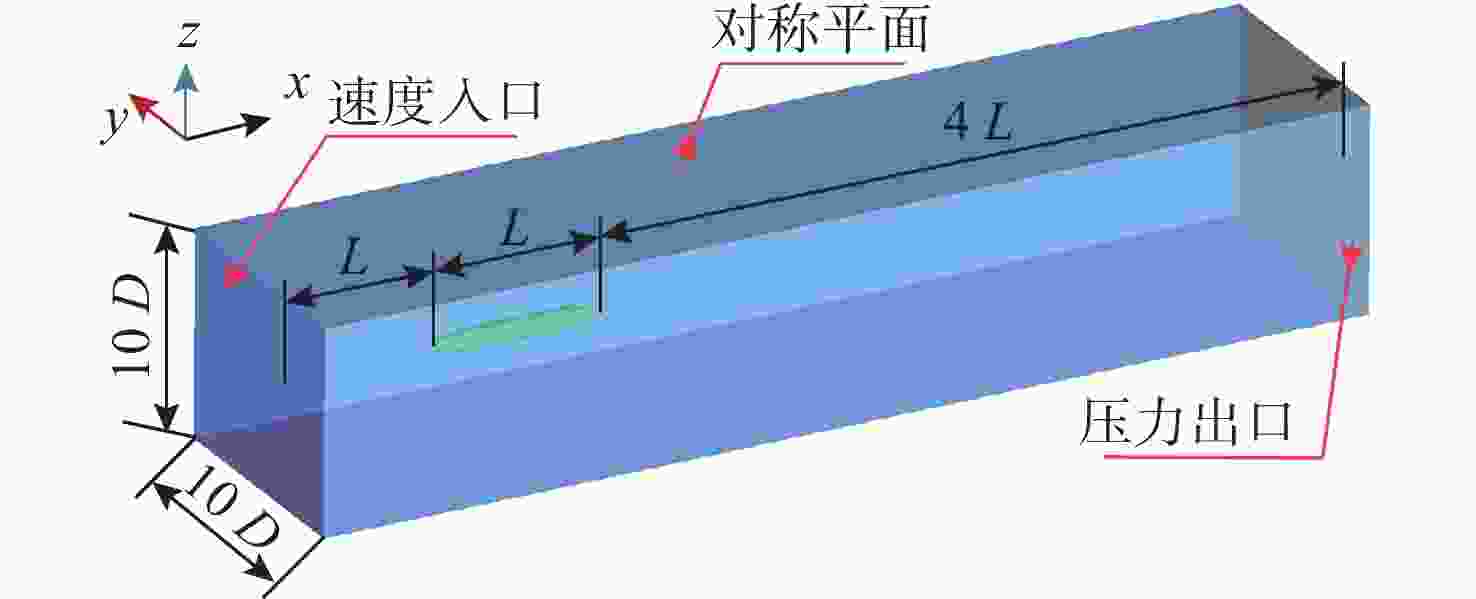
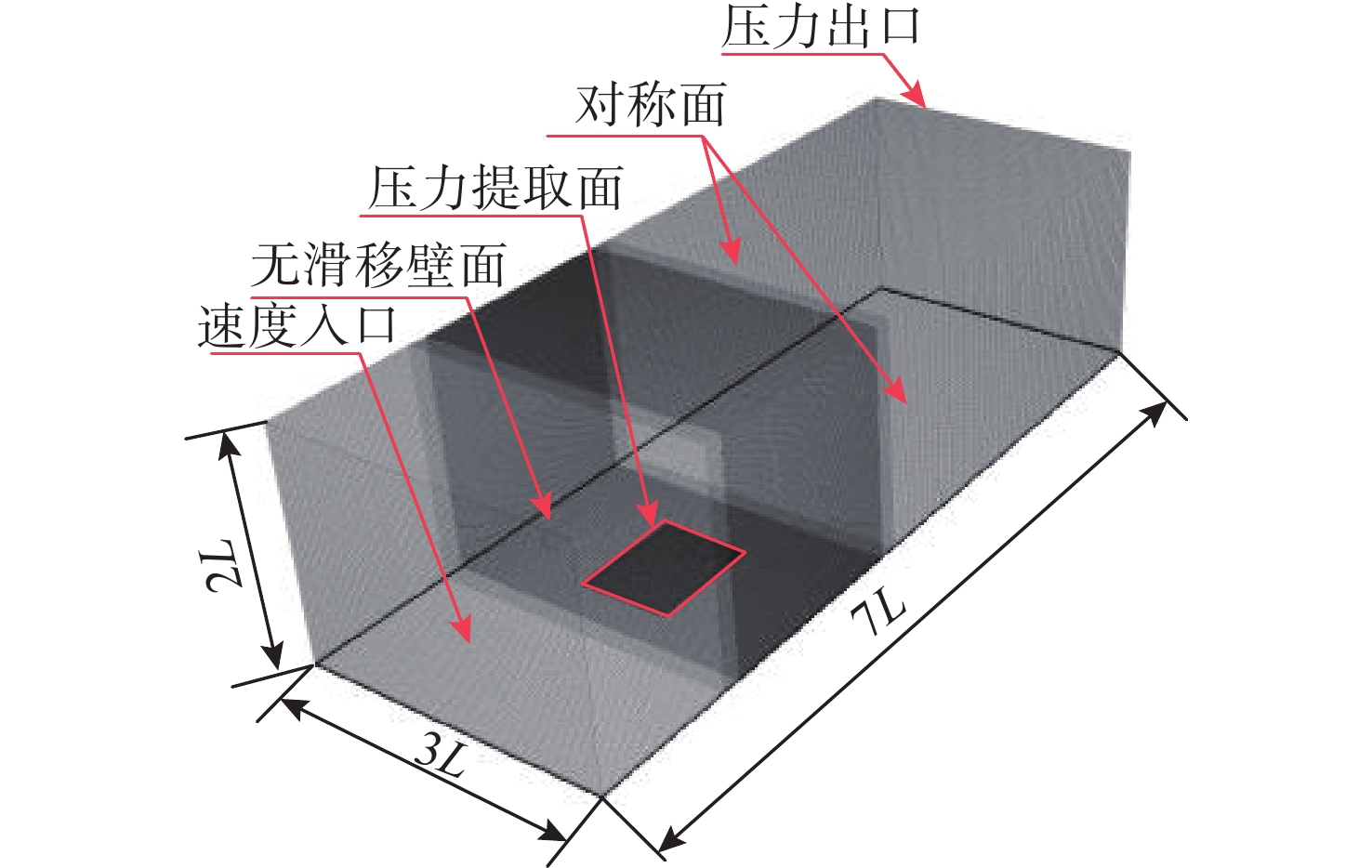
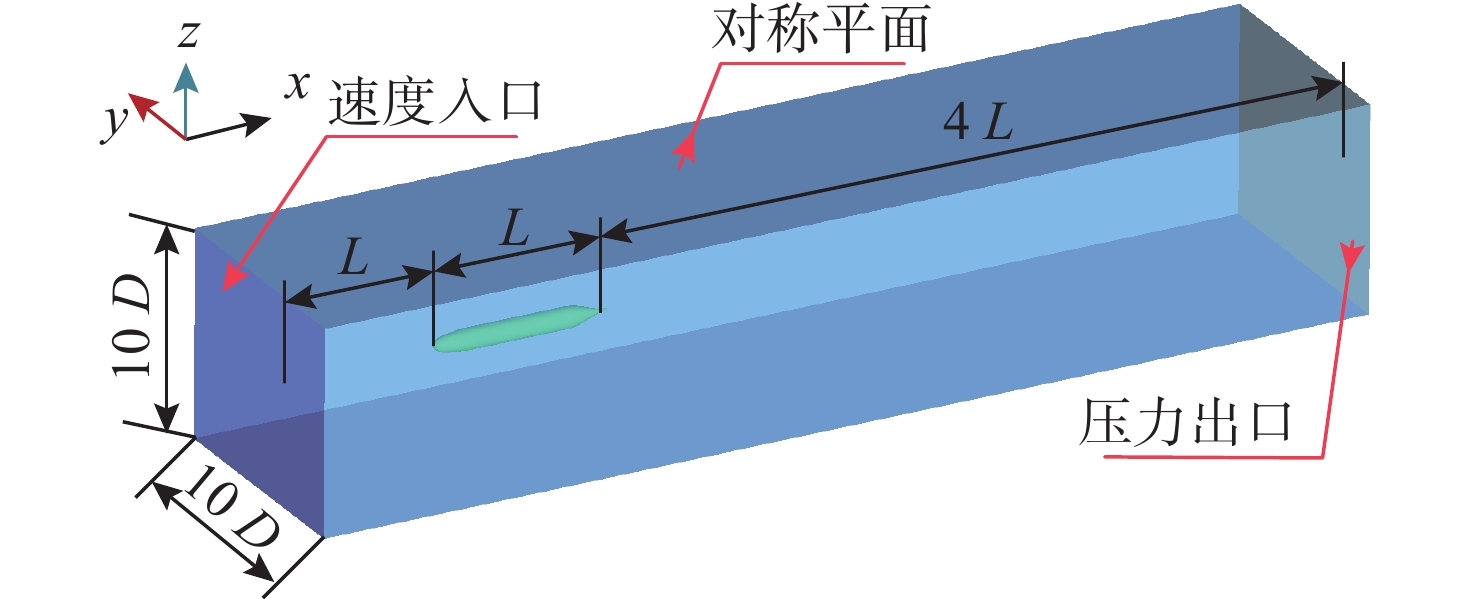
图 10 LUUV CFD流场尺寸与边界条件
Figure 10. LUUV CFD flow field dimensions and boundary conditions

图 12 LUUV壁面脉动压力测点位置
Figure 12. LUUV wall pulsating pressure measurement point location
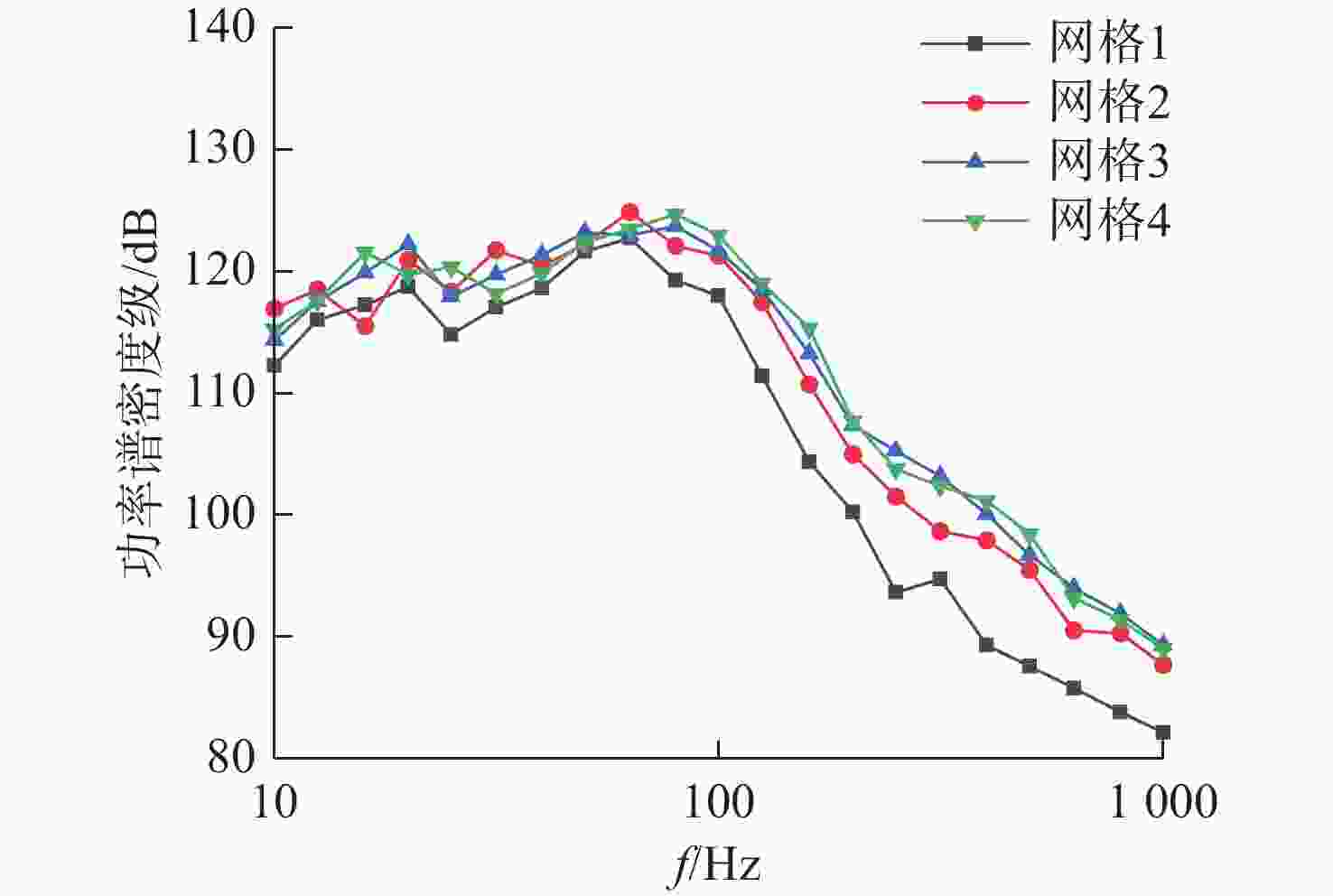
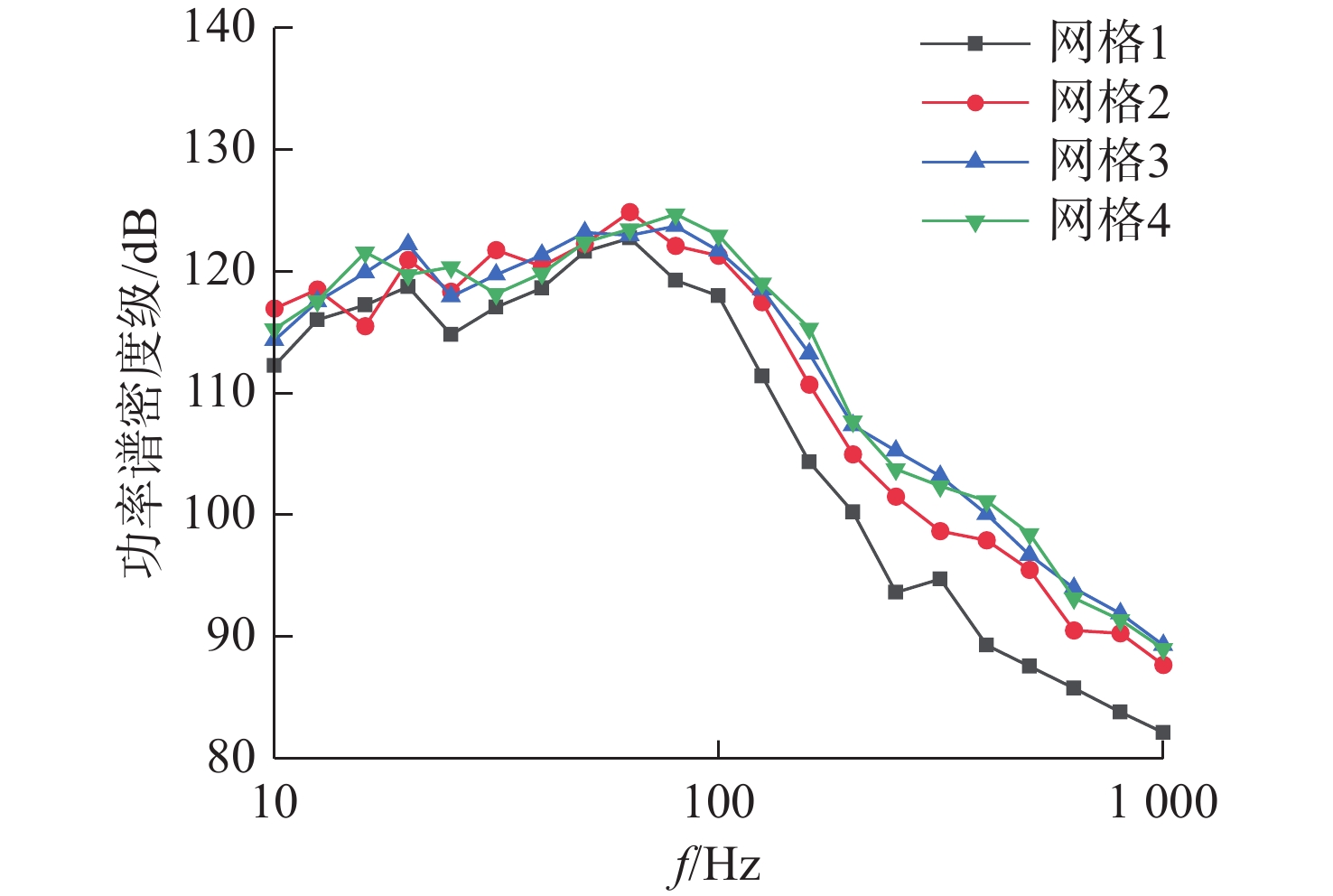
图 13 不同网格方案下2#测点脉动压力功率谱密度级
Figure 13. Pulsating pressure power spectral density level at measuring point 2# under different grid schemes
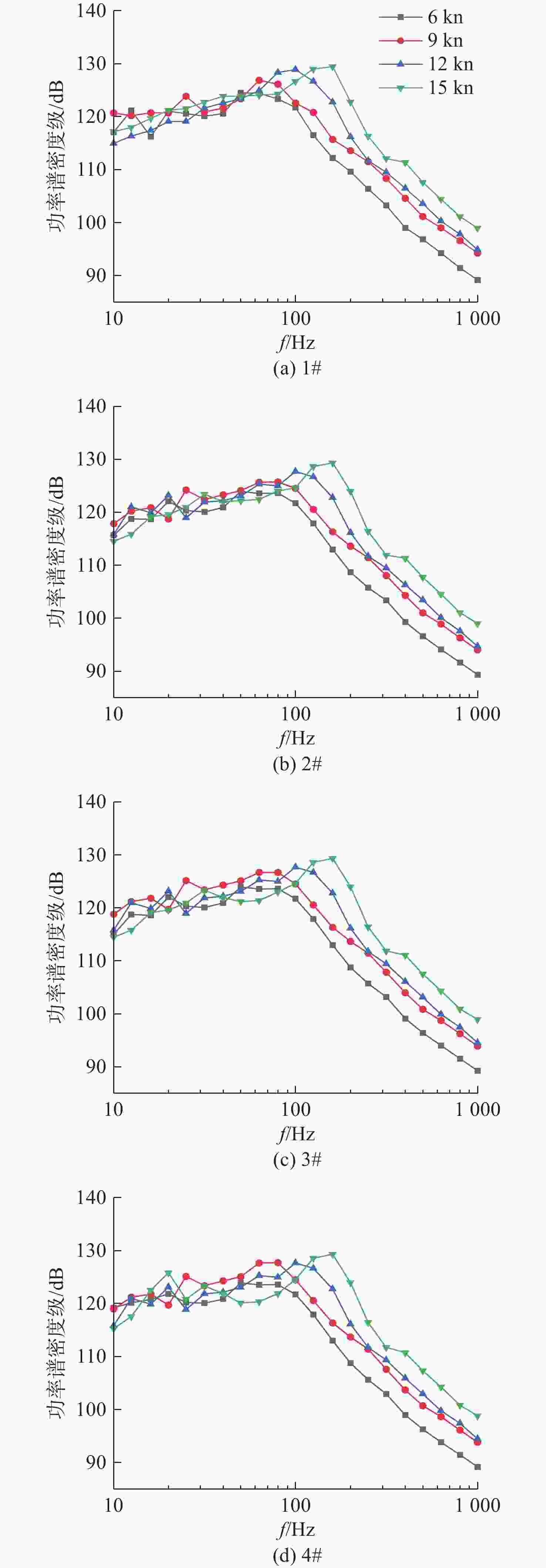
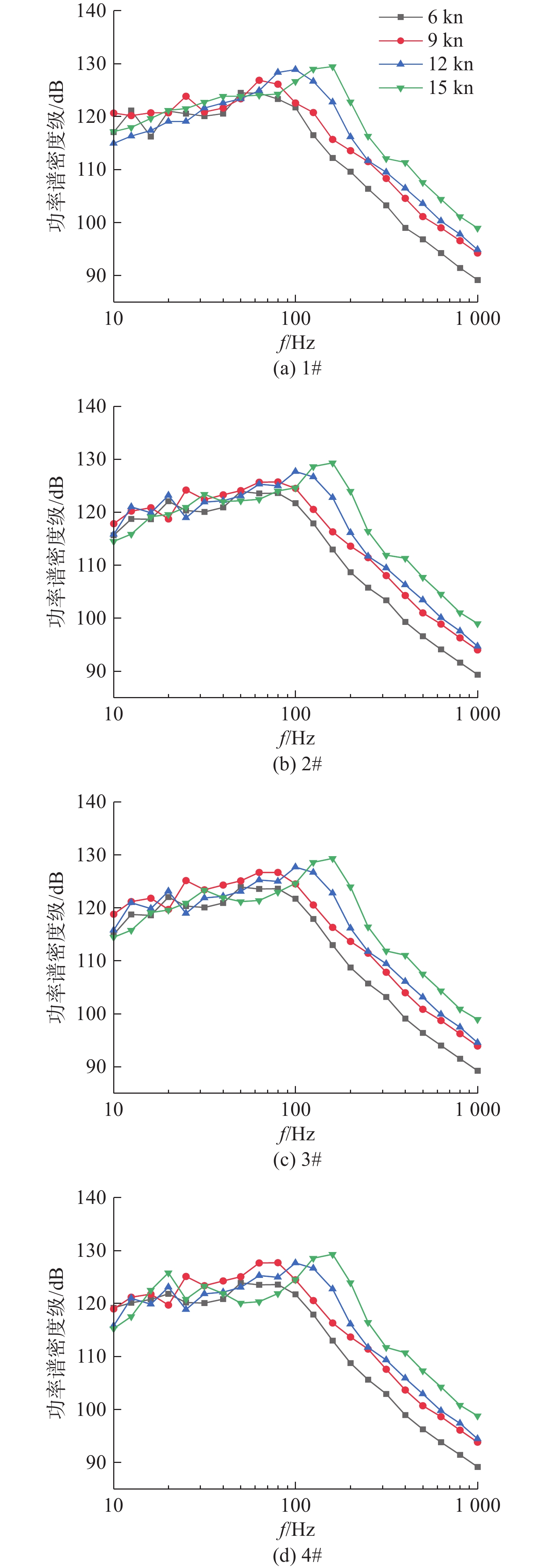
图 14 不同壁面测点在各航速下的PSD级
Figure 14. PSD levels at different wall measurement points under various speeds
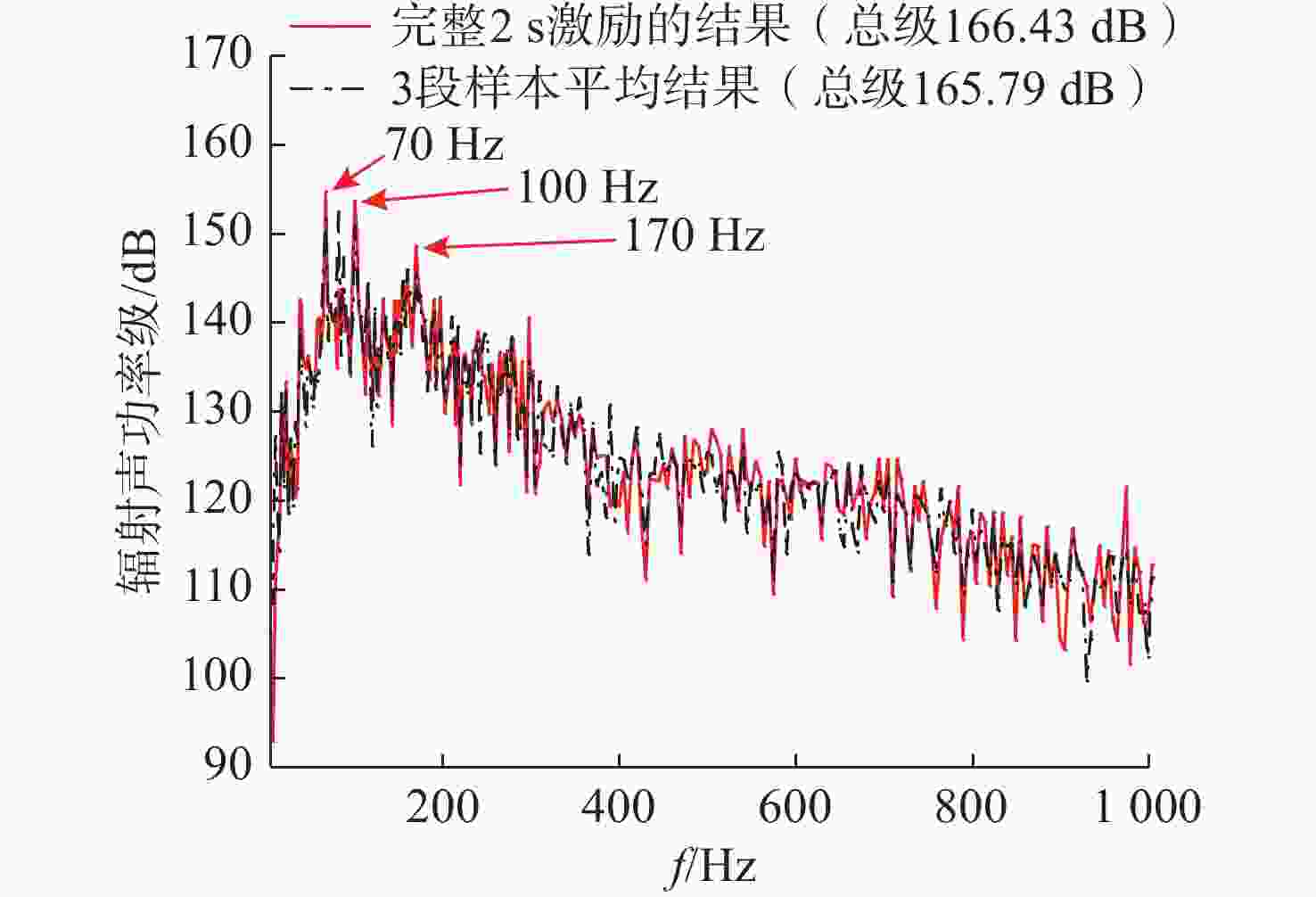
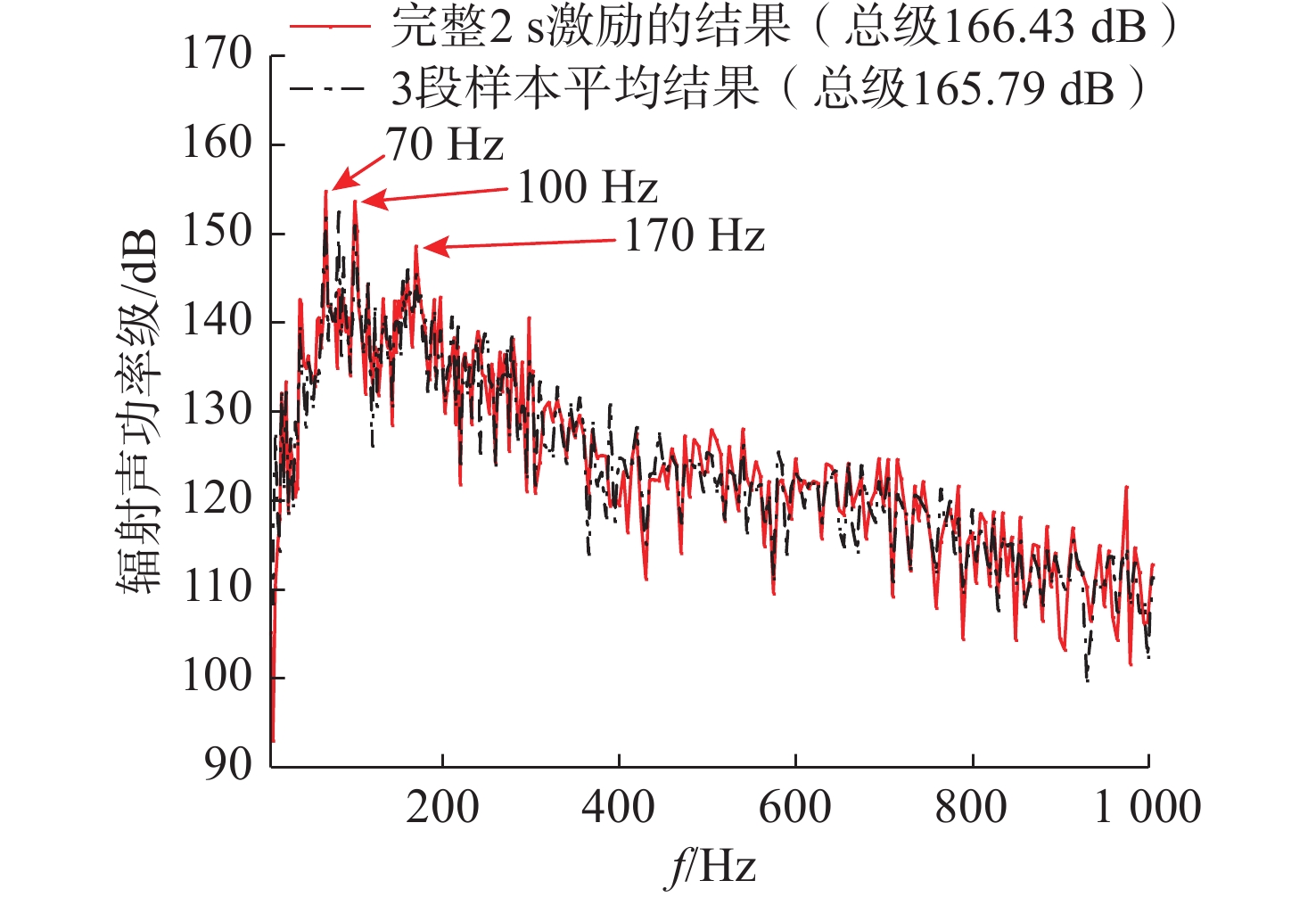
图 15 完整2s样本与3段重叠样本平均的辐射声功率级
Figure 15. The average radiated sound power level of the complete 2 s sample and the 3 s overlapping sample
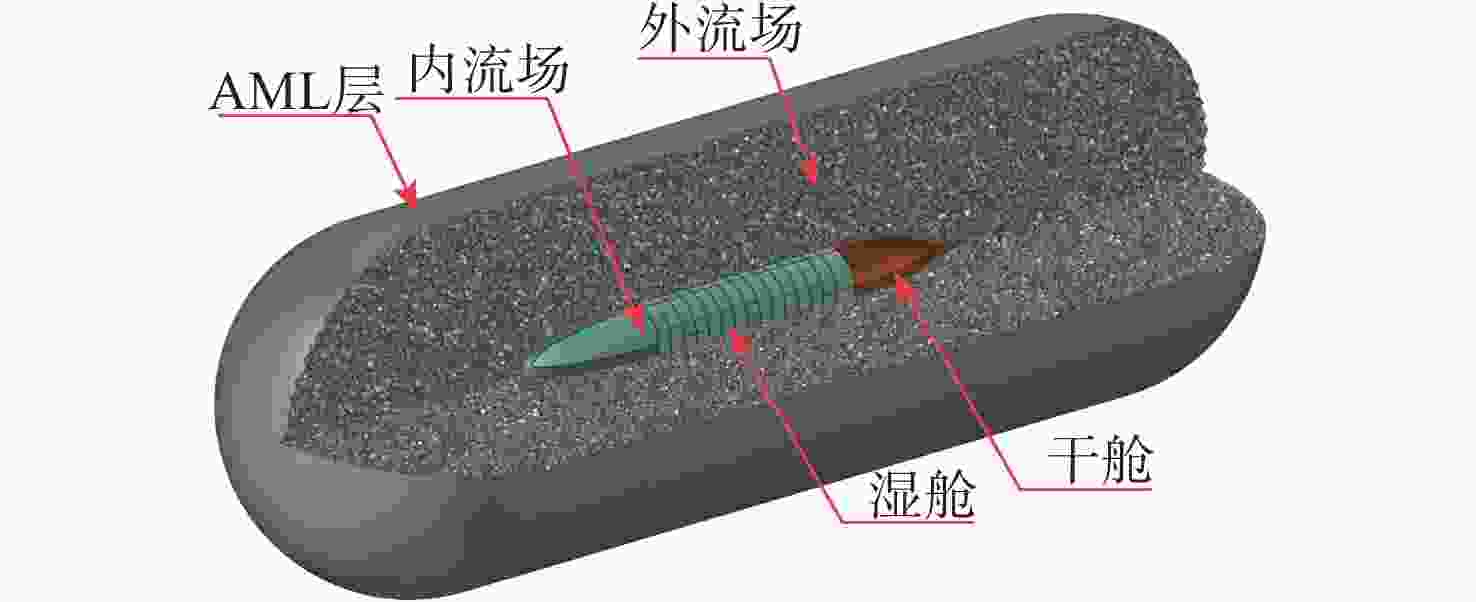
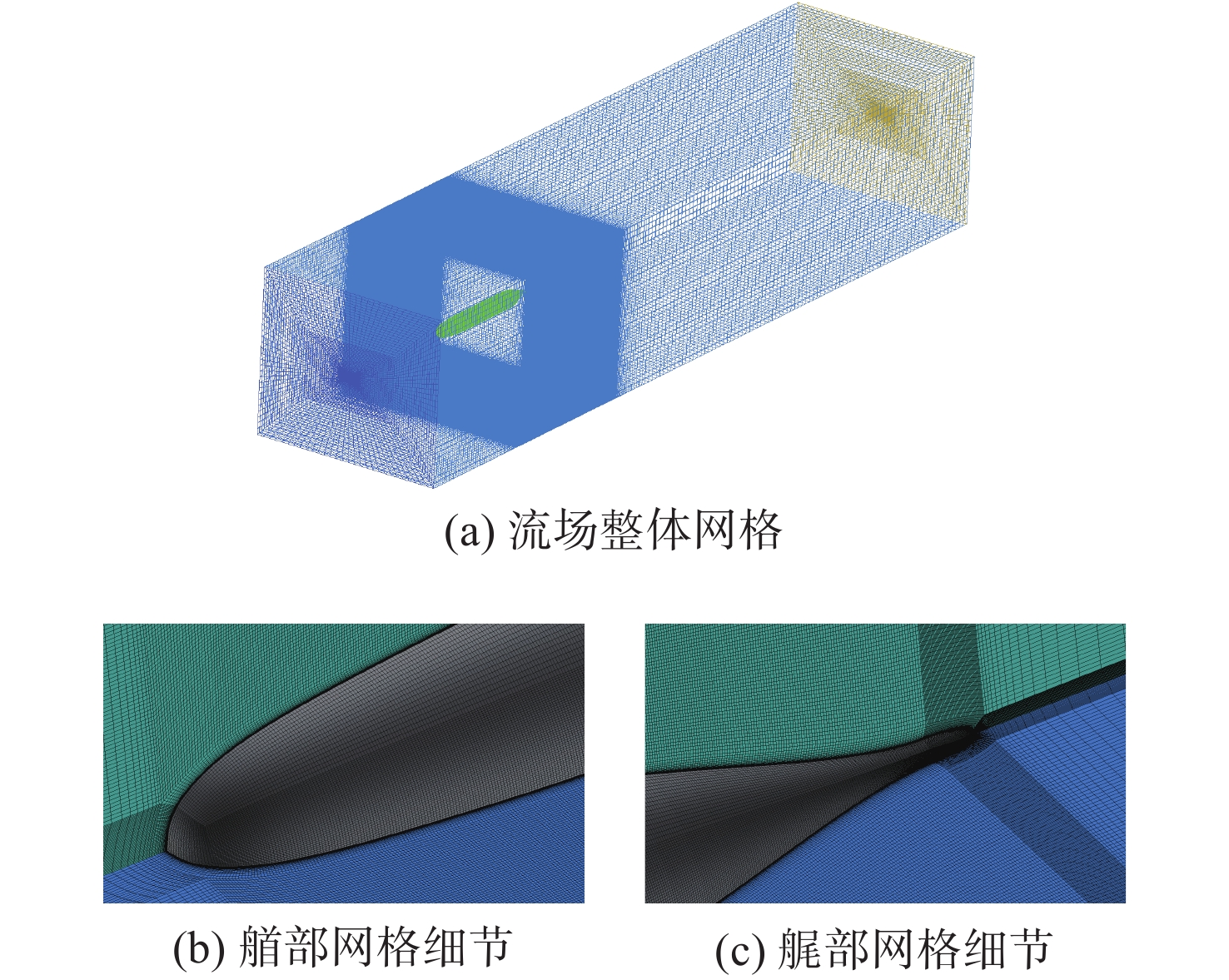
图 16 LUUV声学与结构有限元网格
Figure 16. Acoustic and structural finite element mesh of the LUUV
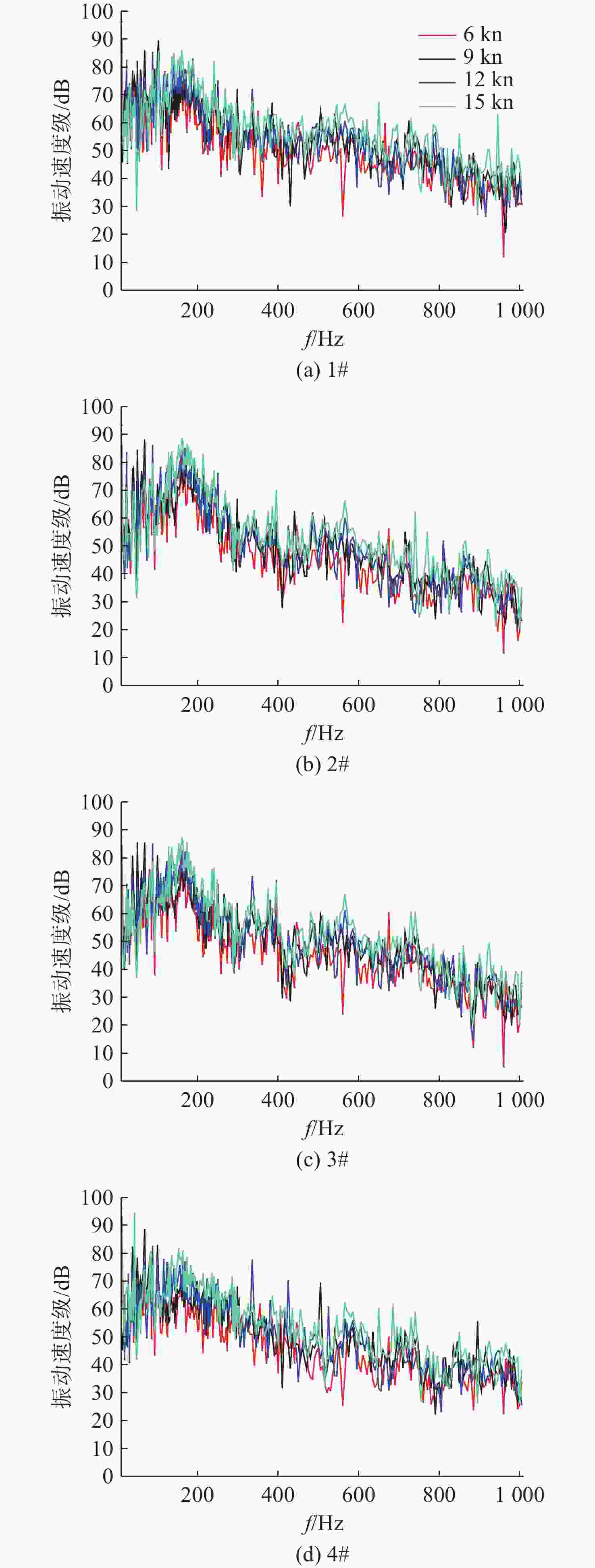
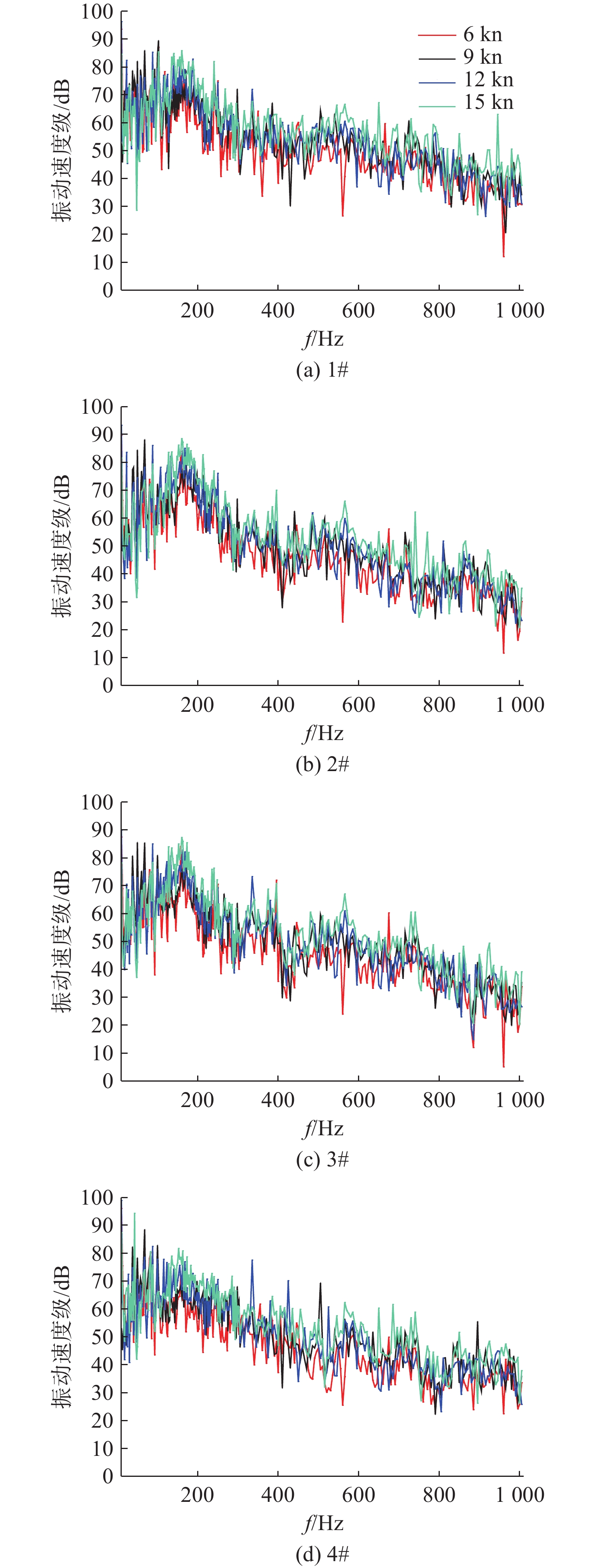
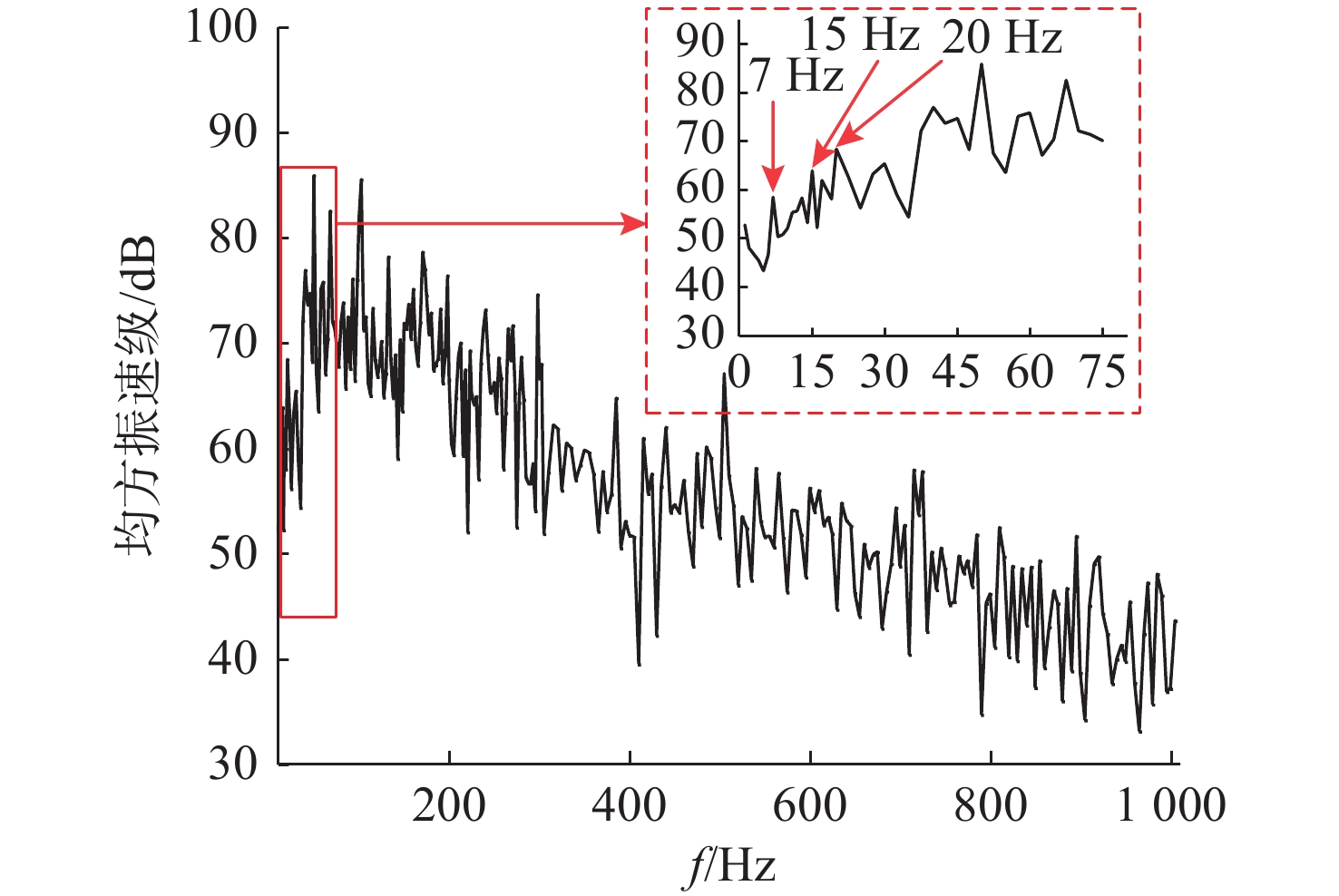
图 18 不同航速下各测点壳体表面的振动速度级
Figure 18. Vibration velocity levels on the hull surface at various measurement points under different navigation speeds
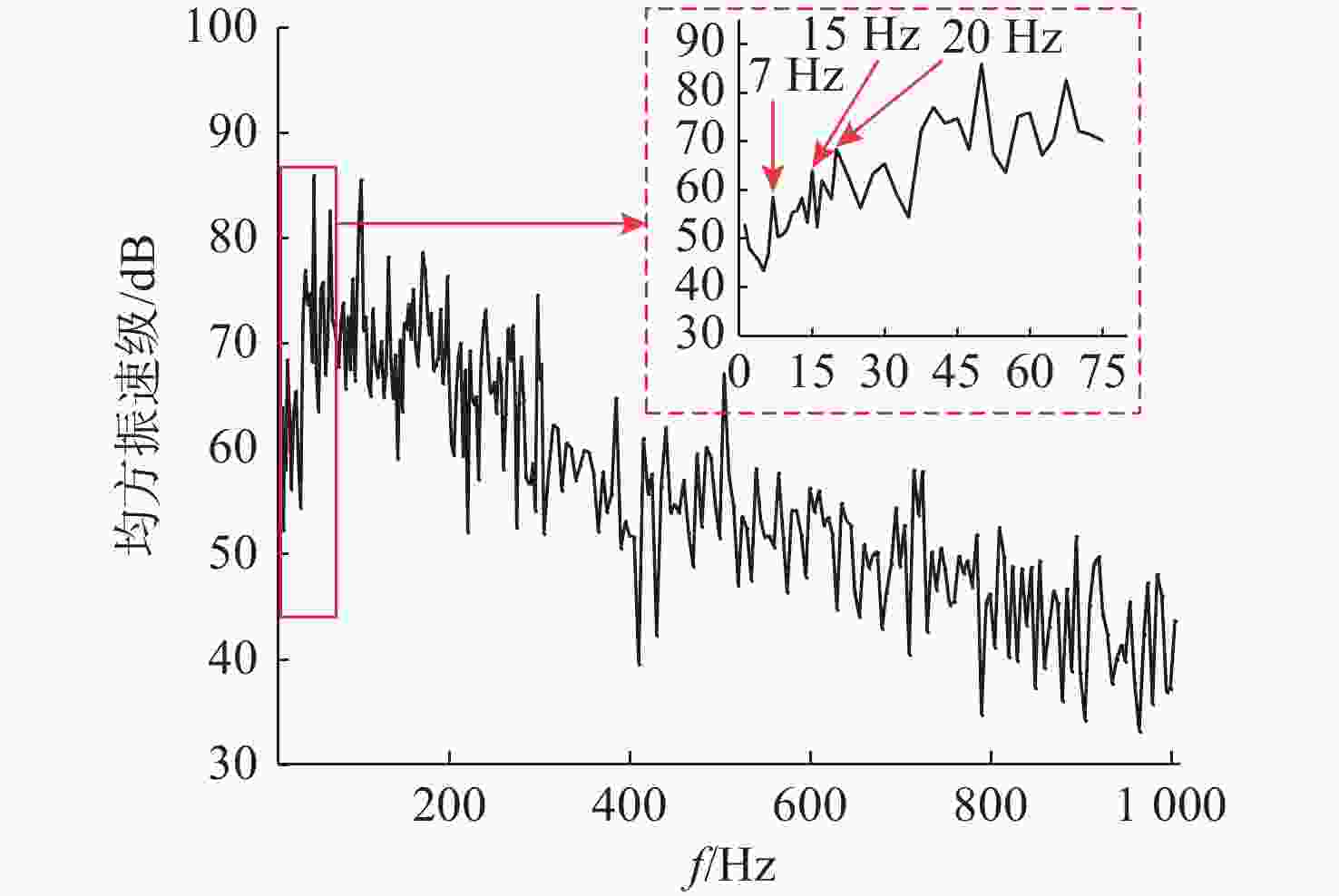
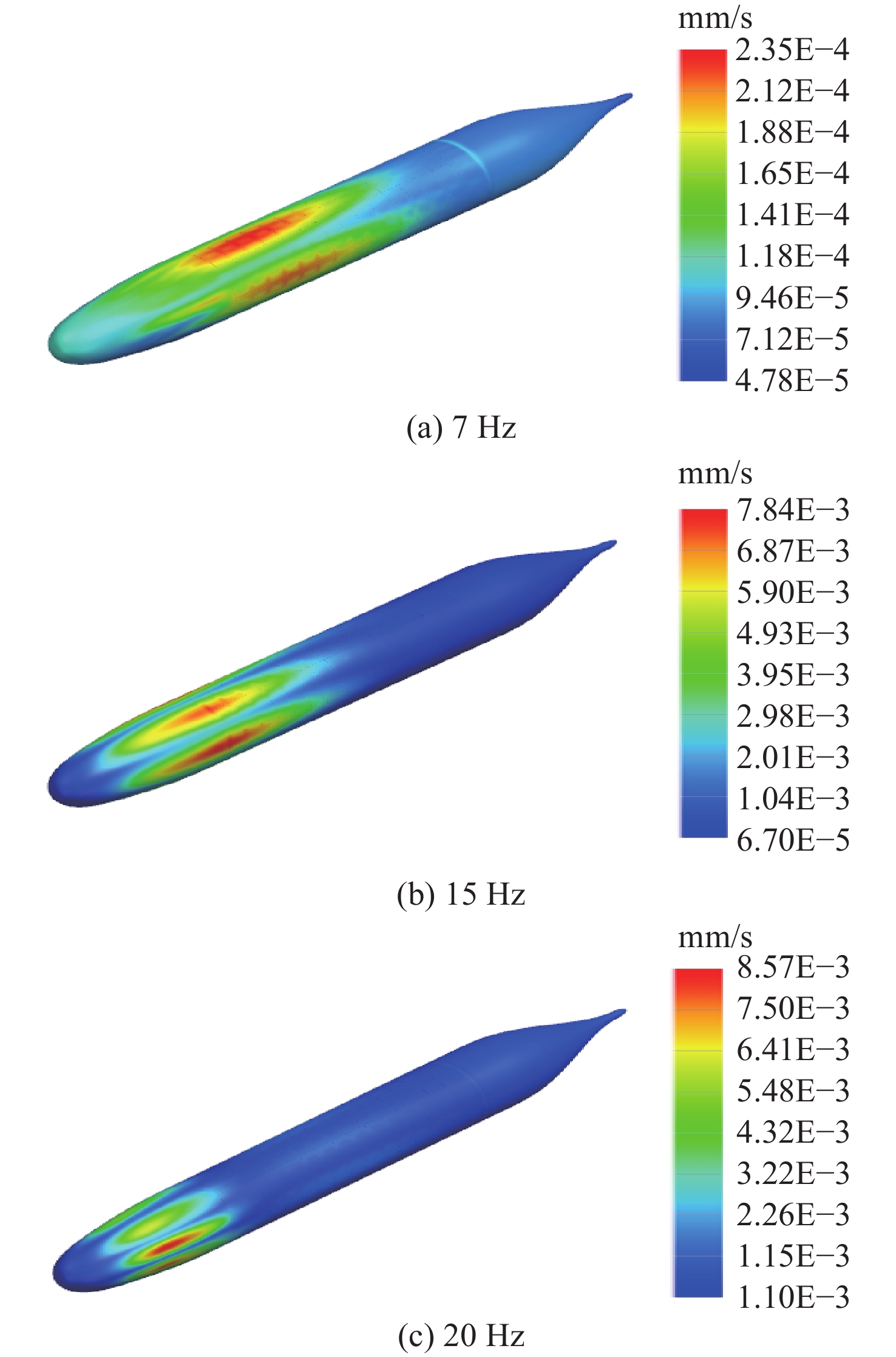
图 19 9 kn航速下壳体均方振速级
Figure 19. Mean square vibration velocity level of the hull at a speed of 9 kn
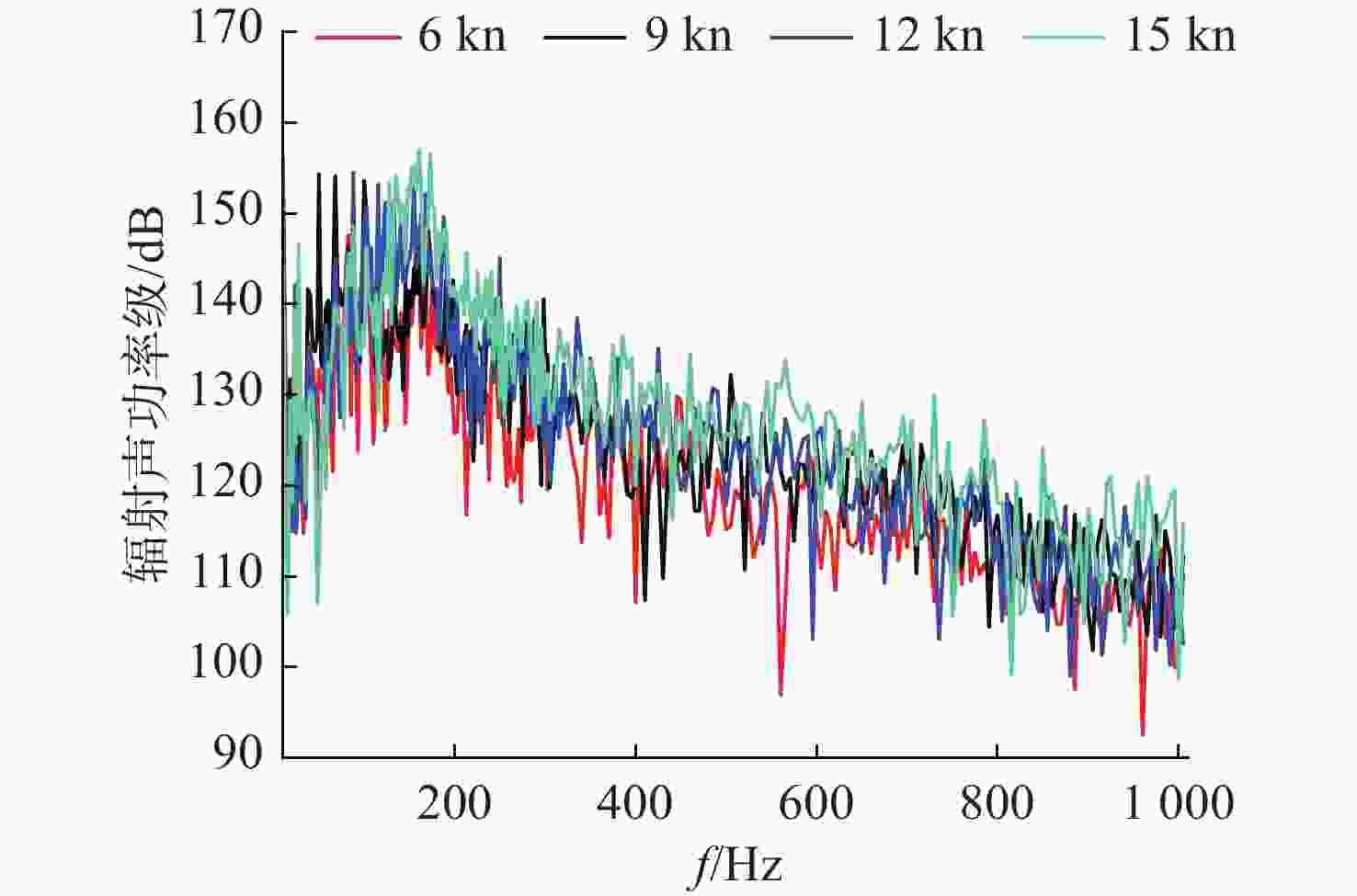
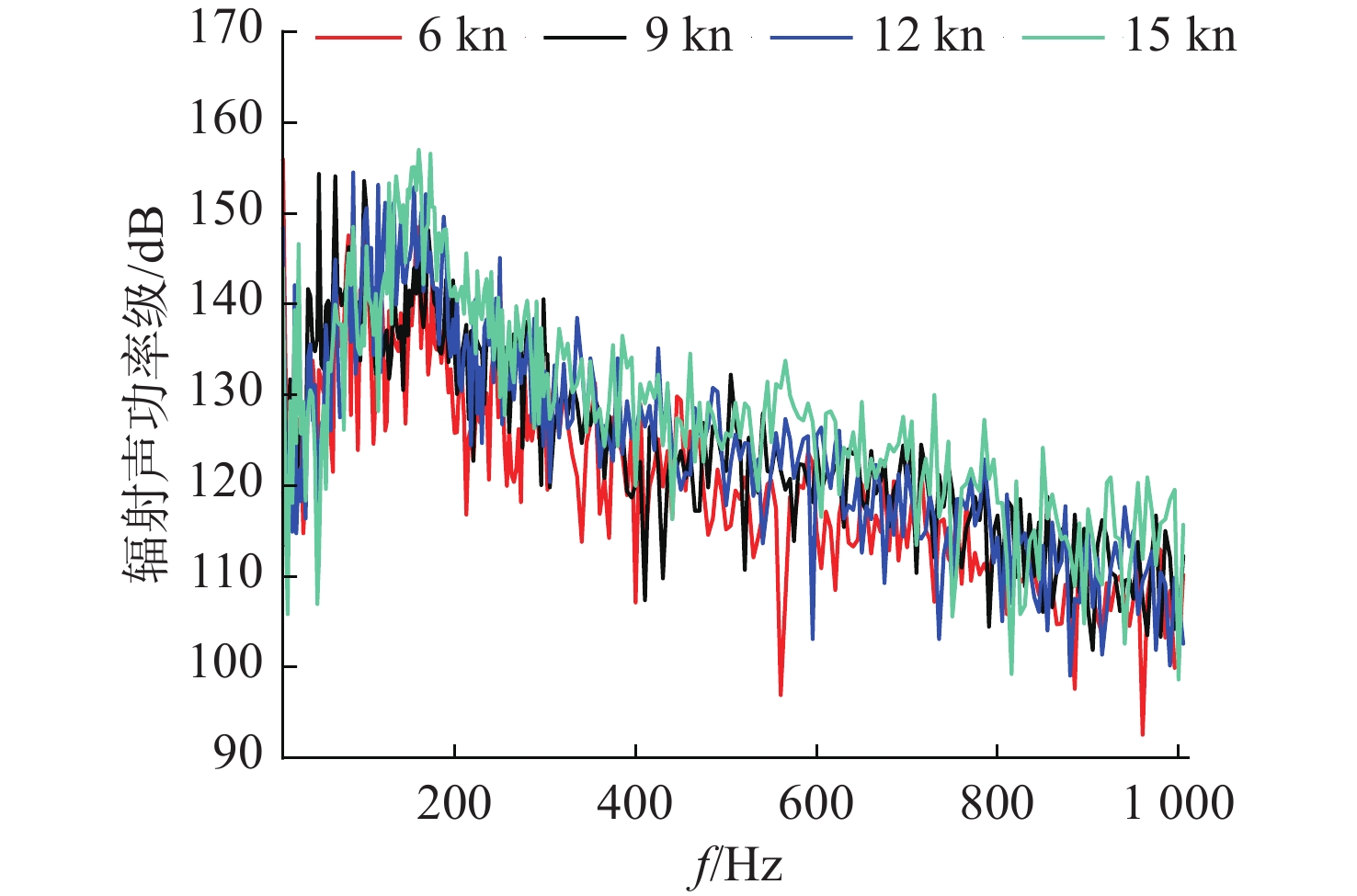
图 21 不同航速下的LUUV流激振动辐射声功率级
Figure 21. Acoustic power level of flow-induced vibration radiation of LUUV at different speeds
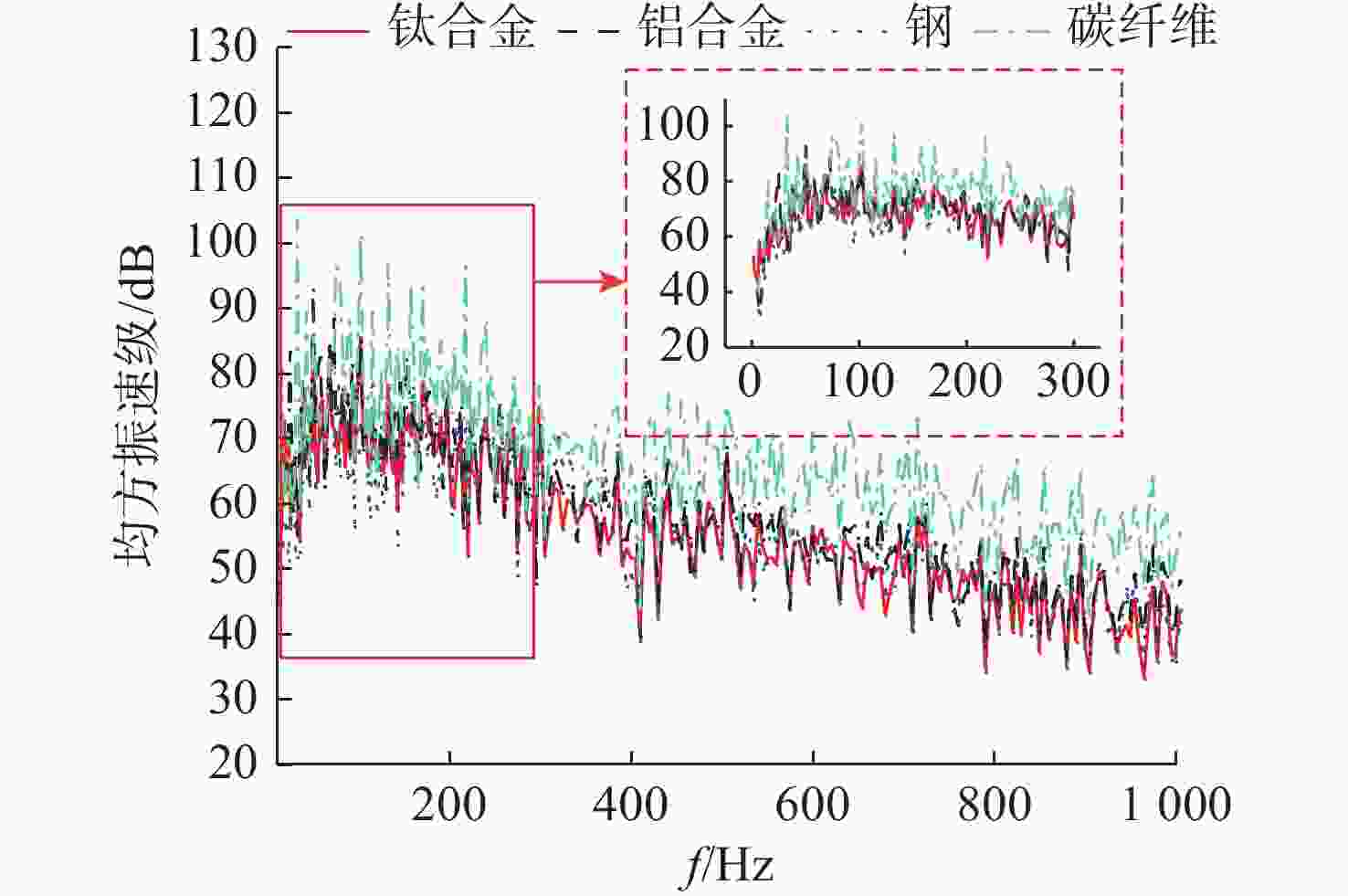
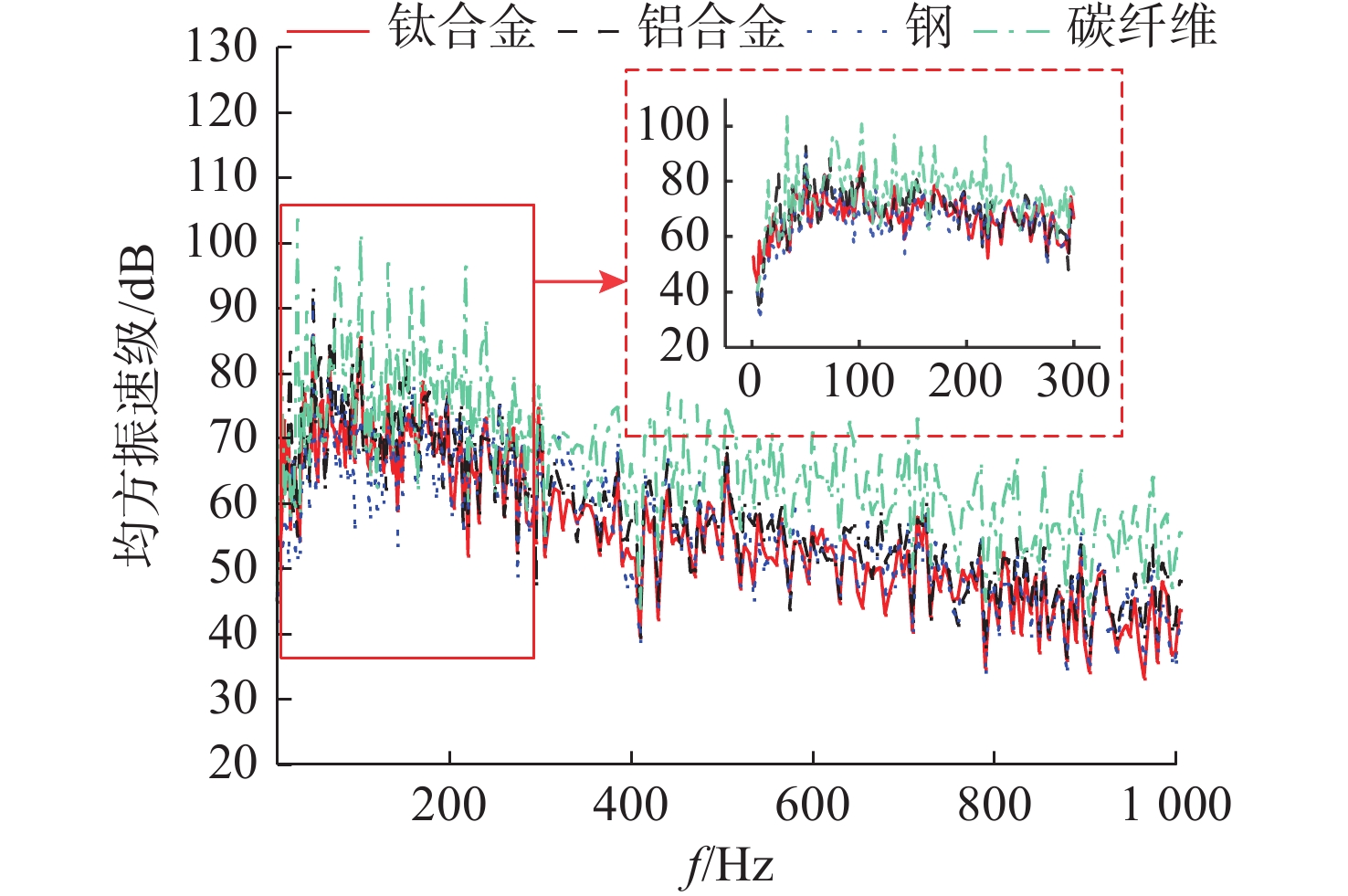
图 22 不同湿舱壳体材料下LUUV的均方振速级
Figure 22. Mean square vibration velocity level of LUUV under different wet cabin hull materials
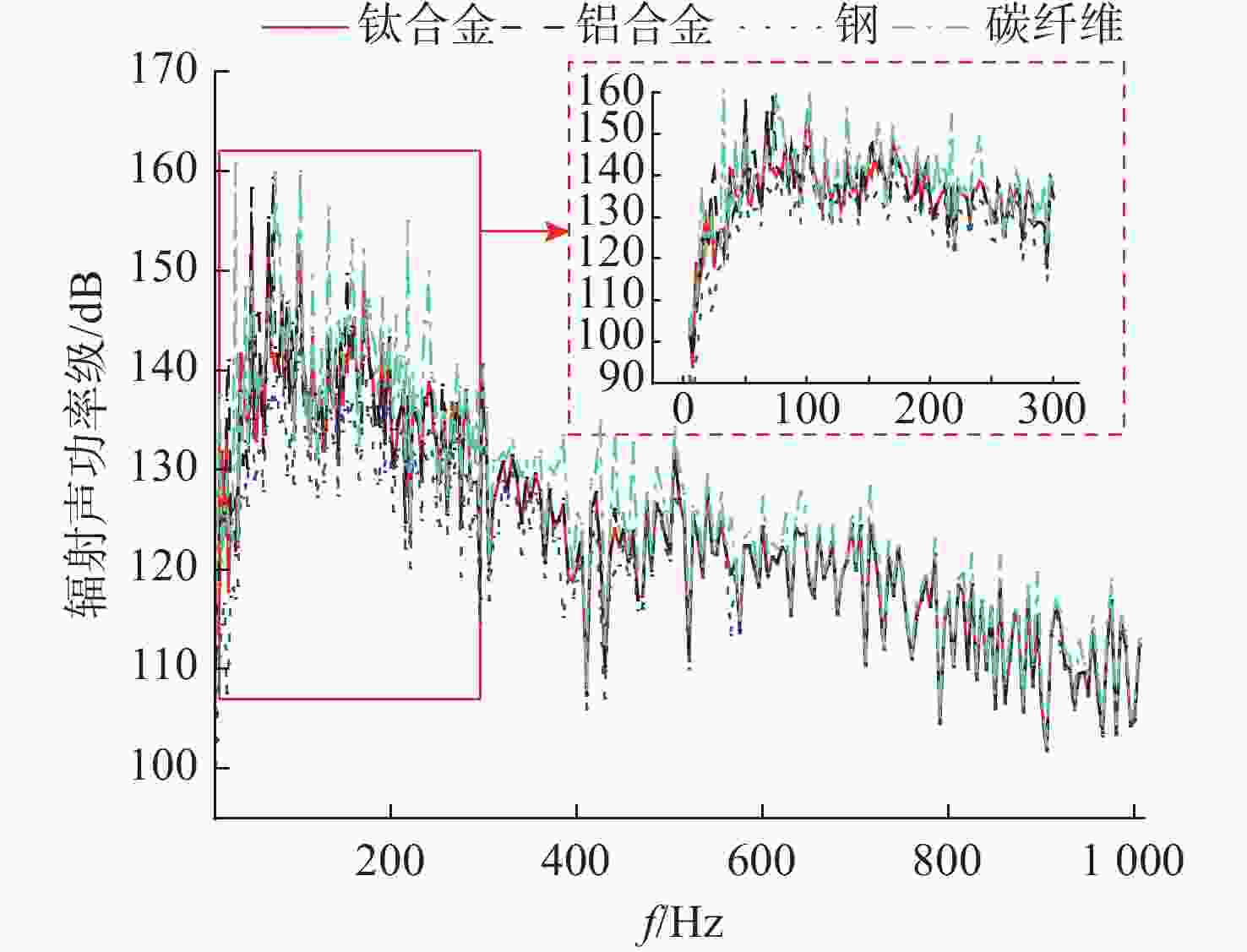
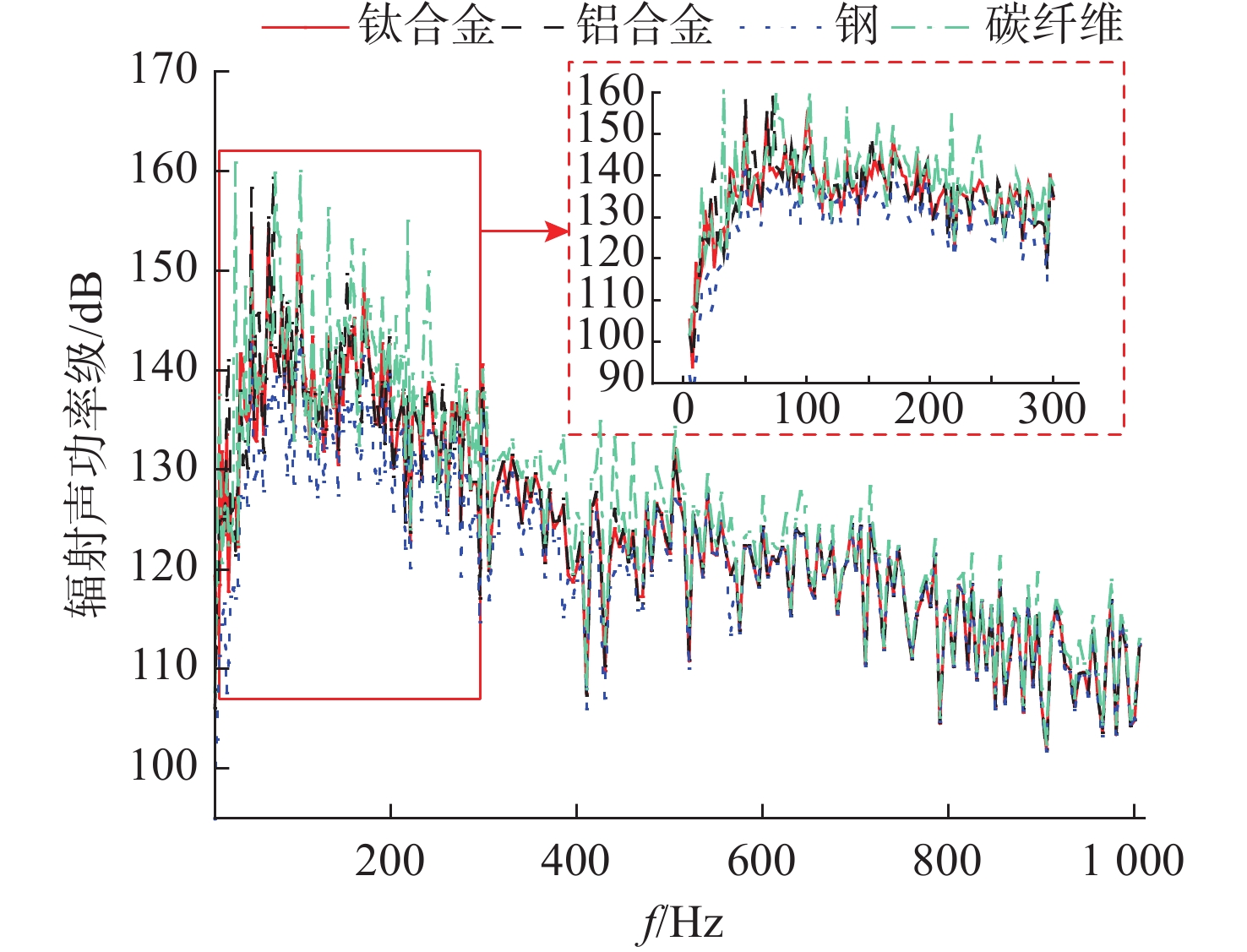
图 23 不同湿舱壳体材料下LUUV的辐射声功率级
Figure 23. Radiated sound power level of LUUV under different wet cabin hull materials
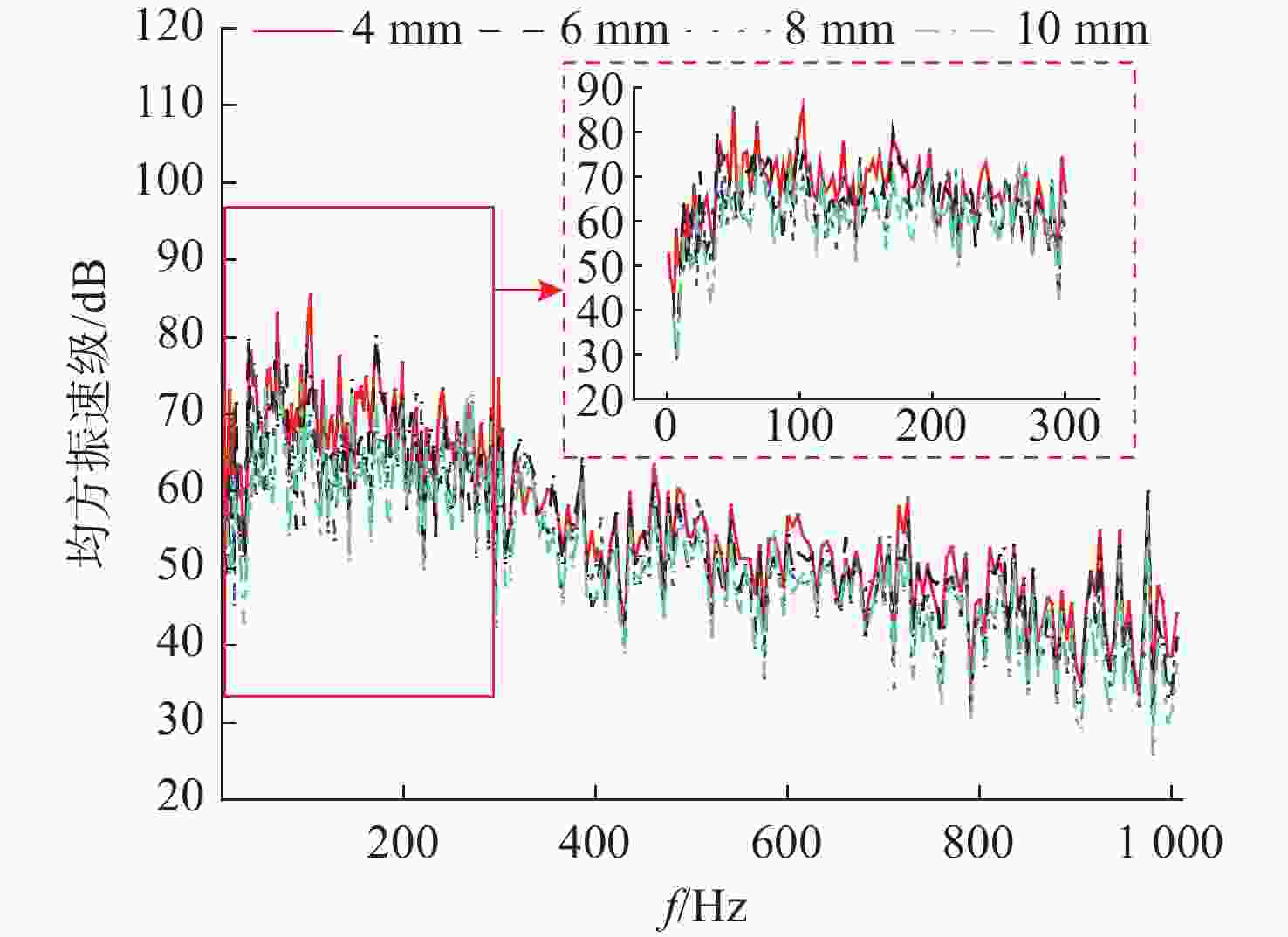
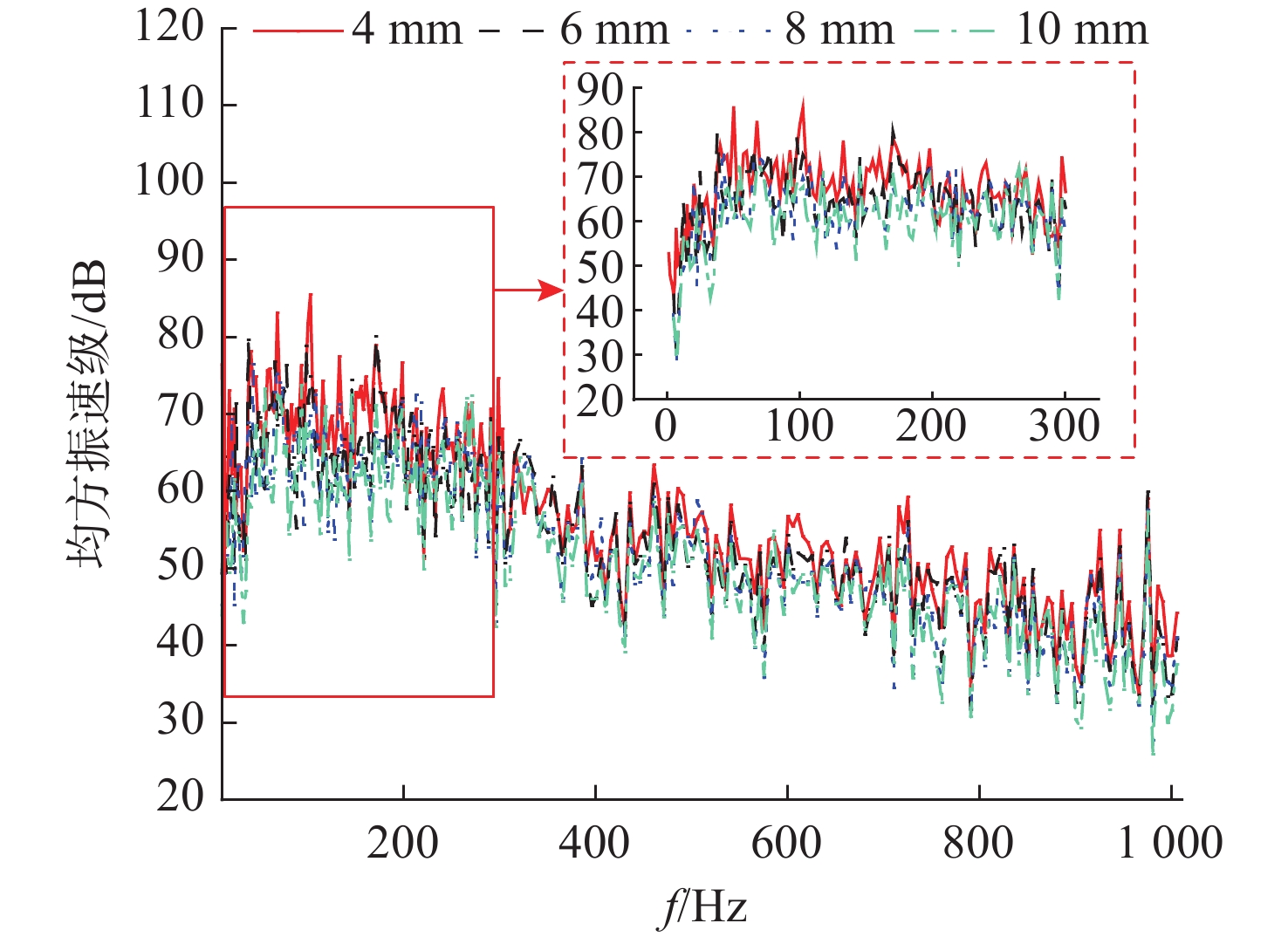
图 24 不同湿舱壳体厚度下LUUV的均方振速级
Figure 24. Mean square vibration velocity level of LUUV under different wet cabin shell thicknesses
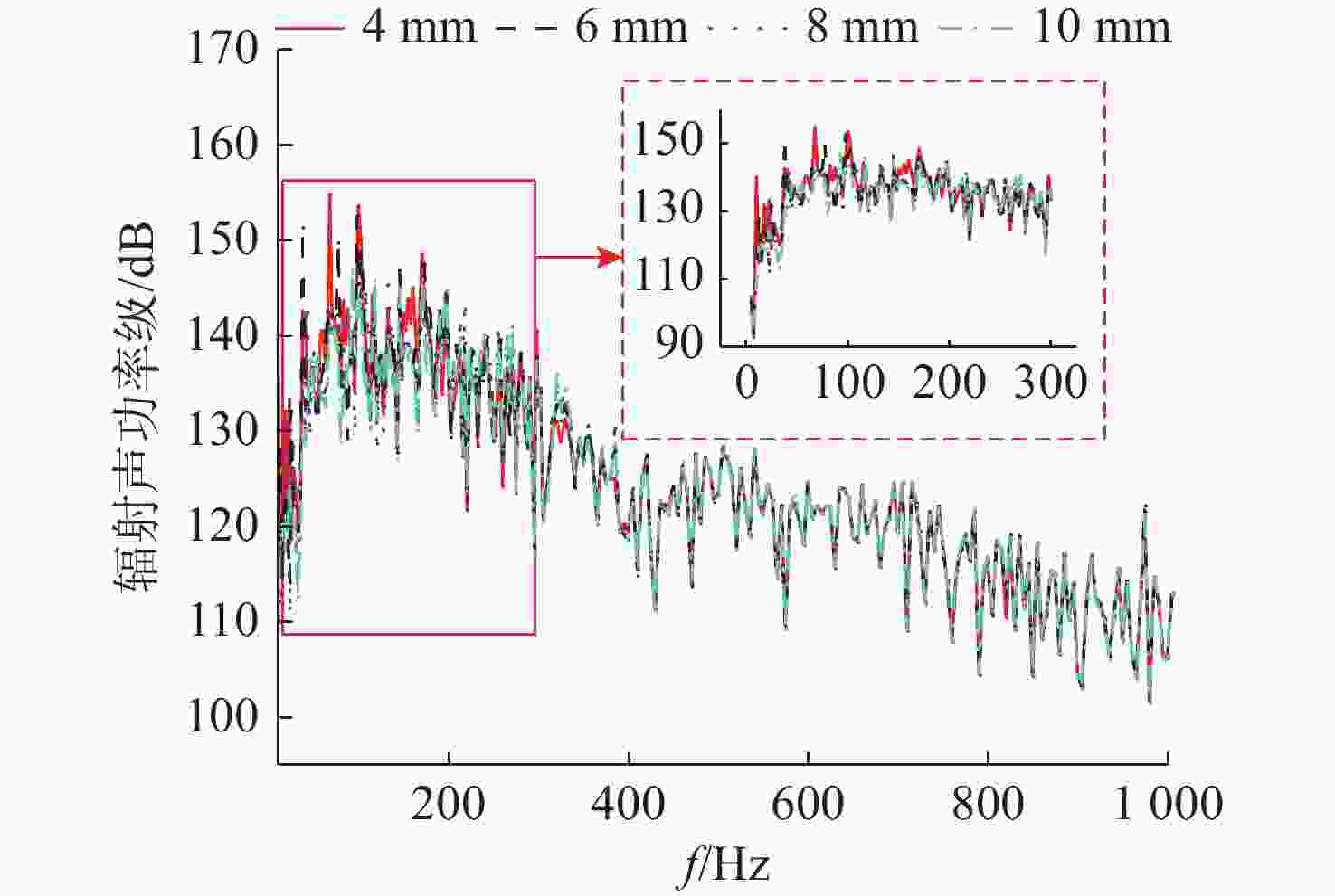
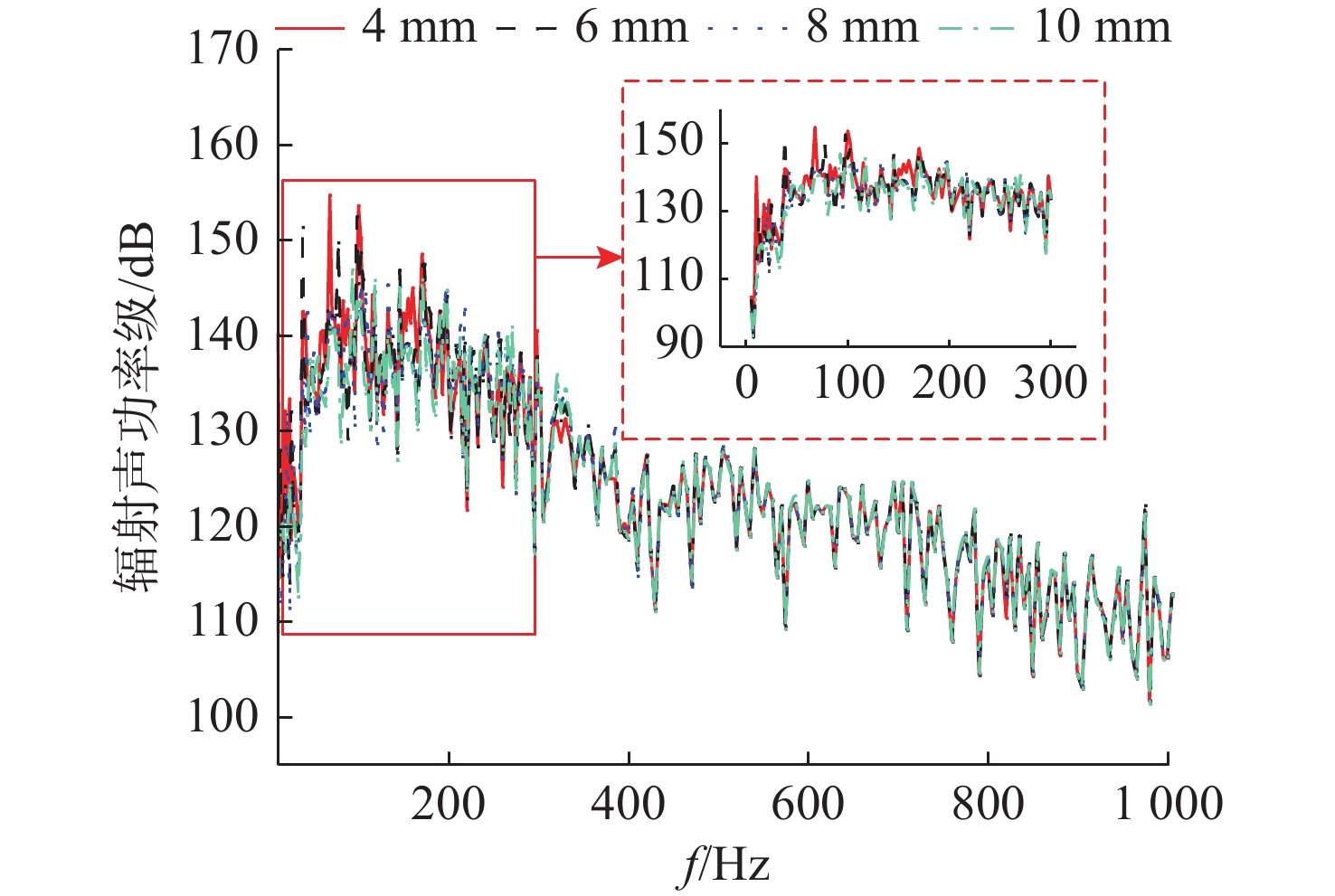
图 25 不同湿舱壳体厚度下LUUV的辐射声功率级
Figure 25. Radiated sound power level of LUUV under different wet cabin shell thicknesses
表 1 LUUV器初始结构参数
Table 1. Initial structural parameters of the UUV
参数 数值 航行器总长/m 17.424 湿舱长度/m 12.5 艉舱长度/m 4.924 舯舱直径/m 2.032 T型材框架尺寸/mm 50×60×5×5 T型材框架数量 轴向15根, 周向6根  下载: 导出CSV
表 2 不同网格数量下的艇体阻力计算结果
Table 2. Calculation results of hull resistance under different grid numbers
网格方案 艇体阻力/N 相对偏差/% 网格1 1 131.961 4 — 网格2 1 132.288 9 0.029 网格3 1 136.202 1 0.346 网格4 1 136.3628 0.014
下载: 导出CSV
表 3 代表频率处的声功率级对比
Table 3. Comparison of sound power levels at representative frequencies
频率/Hz 完整2 s/dB 3段平均/dB 差值/dB 70 154.73 151.74 2.99 100 153.65 150.86 2.79 170 148.56 145.38 3.18
下载: 导出CSV
表 4 LUUV结构与材料参数
Table 4. Structural and material parameters of the LUUV
名称 数值 艏舱壳体厚度h1/mm 4 舯舱壳体厚度h2/mm 4 艉舱壳体厚度h3/mm 10 ρ/kg/m3 4510 E/GPa 110 μ 0.34 η 0.005
下载: 导出CSV
表 5 不同航速下的LUUV辐射声功率总级
Table 5. Total sound power level radiated by LUUV at different speeds
航速/kn 辐射声功率总级/dB 6 164.72 9 166.43 12 168.31 15 170.87
下载: 导出CSV
表 6 仿真研究的合金材料参数
Table 6. Alloy material parameters for simulation studies
钛合金 铝合金 钢 Ρ/(kg/m3) 4 510 2 660 7 850 E/GPa 110 70.5 210 μ 0.34 0.33 0.3 η 0.005 0.002 0.004
下载: 导出CSV
表 7 仿真研究的碳纤维预浸布材料参数
Table 7. Simulation study parameters of carbon fiber prepreg material
参数 数值 参数 数值 $ {E}_{1}/\text{GPa} $ 150 $ {G}_{23}/\text{GPa} $ 3.4 $ {E}_{2}/\text{GPa} $ 9 $ \rho /(\text{kg}/{\text{m}}^{3}) $ 1 650 $ {G}_{12}/\text{GPa} $ 5.12 $ {\nu }_{12} $ 0.24 $ {G}_{13}/\text{GPa} $ 5.12 $ \eta $ 0.02
下载: 导出CSV
表 8 不同湿舱壳体材料下LUUV辐射声功率总级
Table 8. Total level of radiated sound power of LUUV under different wet cabin hull materials
材料 辐射声功率总级/dB 钛合金 166.43 铝合金 168.72 钢 159.35 碳纤维 172.11
下载: 导出CSV
表 9 不同湿舱壳体厚度下的LUUV辐射声功率总级
Table 9. Total level of radiated sound power of LUUV under different thicknesses of wet cabin hull
厚度/mm 辐射声功率总级/dB 4 166.43 6 164.84 8 163.22 10 162.90
下载: 导出CSV
-
[1] 汤渭霖, 俞孟萨, 王斌. 水动力噪声理论[M]. 北京: 科学出版社, 2019: 2. [2] 李环, 刘聪尉, 吴方良, 等. 水动力噪声计算方法综述[J]. 中国舰船研究, 2016, 11(2): 72-89. doi: 10.3969/j.issn.1673-3185.2016.02.011Li Huan, Liu C W, Wu F L, et al. A review of the progress for computational methods of hydrodynamic noise[J]. Chinese Journal of Ship Research, 2016, 11(2): 72-89. doi: 10.3969/j.issn.1673-3185.2016.02.011 [3] Ku B H, Yi Y W, Hong C S, et al. Numerical prediction of flow-induced noise in a simple cavity using random vibroacoustics and structural-acoustic reciprocity[J]. Physics of Fluids, 2025, 37(7): 075162. doi: 10.1063/5.0275074 [4] 张成, 李天匀, 朱翔, 等. 湍流激励下夹芯板-腔模型声振特性分析[J]. 振动工程学报, 2026, 39(4): 972-980. doi: 10.16385/j.cnki.issn.1004-4523.202403031Zhang C, Li T Y, Zhu X, et al. Analysis of vibration and acoustic characteristics of sandwich plate-cavity excited by turbulent boundary layer[J]. Journal of Vibration Engineering, 2026, 39(4): 972-980. doi: 10.16385/j.cnki.issn.1004-4523.202403031 [5] Jiang P, Liao S J, Liu L, et al. Effects of appendages on the turbulence and flow noise of a submarine model using high-order scheme[J]. Physics of Fluids, 2025, 37(9): 095199. doi: 10.1063/5.0288258 [6] Yuan H, Chen E Y, Liu X S, et al. Numerical study on the influence of rudder fillets on submarine wake field and noise characteristics[J]. Journal of Marine Science and Engineering, 2025, 13(5): 830. doi: 10.3390/jmse13050830 [7] Maxit L, Karimi M, Meyer V, et al. Vibroacoustic responses of a heavy fluid loaded cylindrical shell excited by a turbulent boundary layer[J]. Journal of Fluids and Structures, 2020, 92: 102758. doi: 10.1016/j.jfluidstructs.2019.102758 [8] Huang Z K, Yang C Z, Pan Z, et al. A semi-analytical method for vibroacoustic prediction of submerged cylindrical shells under a turbulent boundary layer excitation[J]. Ocean Engineering, 2026, 363: 126857. doi: 10.1016/j.oceaneng.2026.126857 [9] 楼京俊, 屈铎, 唐宇航, 等. 双层圆柱壳舷间声通道对壳体声振性能的影响[J]. 振动与冲击, 2019, 38(23): 165-170. doi: 10.13465/j.cnki.jvs.2019.23.024Lou J J, Qu D, Tang Y H, et al. Effects of double-layer cylindrical shell side to side sound channel on whole shell’s vibro-acoustic performance[J]. Journal of Vibration and Shock, 2019, 38(23): 165-170. doi: 10.13465/j.cnki.jvs.2019.23.024 [10] 王洪富. 湍流脉动诱发水下航行器振动声辐射研究[D]. 哈尔滨: 哈尔滨工程大学, 2022: 54. [11] Shur M L, Spalart P R, Strelets M K, et al. A hybrid RANS-LES approach with delayed-DES and wall-modelled LES capabilities[J]. International Journal of Heat and Fluid Flow, 2008, 29(6): 1638-1649. doi: 10.1016/j.ijheatfluidflow.2008.07.001 [12] Abraham B M, Keith W L. Direct measurements of turbulent boundary layer wall pressure wavenumber-frequency spectra[C]//Proceedings of the ASME 1996 International Mechanical Engineering Congress and Exposition. Atlanta, 1996: 177-187. [13] 沈琪, 刘进, 高岩, 等. 稀疏网格条件下的水下航行体低频水动力噪声计算[J]. 声学学报, 2023, 48(5): 989-995. doi: 10.12395/0371-0025.2022055Shen Q, Liu J, Gao Y, et al. Low-frequency hydrodynamic noise calculation of underwater vehicle with sparse grid conditions[J]. Acta Acustica, 2023, 48(5): 989-995. doi: 10.12395/0371-0025.2022055 [14] 李清, 杨德庆, 郁扬. 舰船低频水下辐射噪声的声固耦合数值计算方法[J]. 振动与冲击, 2018, 37(3): 174-179. doi: 10.13465/j.cnki.jvs.2018.03.028Li Q, Yang D Q, Yu Y. Numerical methods for ship underwater sound radiation in low frequency domain with vibro-acoustic coupling[J]. Journal of Vibration and Shock, 2018, 37(3): 174-179. doi: 10.13465/j.cnki.jvs.2018.03.028 [15] 温华兵. 船舶振动噪声预报与结构声学设计[M]. 北京: 国防工业出版社, 2015: 15. [16] 陈建桥. 复合材料力学[M]. 武汉: 华中科技大学出版社, 2024: 66. [17] 毛戈, 张锦光, 李弋文, 等. 开孔对碳纤维复合材料层合板的阻尼性能影响研究[J]. 数字制造科学, 2020, 18(4): 257-261.Mao G, Zhang J G, Li Y W, et al. Study on the effect of holes on damping performance of carbon fiber composite laminates[J]. Digital Manufacture Science, 2020, 18(4): 257-261. -

 下载:


 点击查看大图
计量
- 文章访问数: 4
- HTML全文浏览量: 0
- PDF下载量: 0
- 被引次数: 0