

A PINN-based prediction method for the interior ballistics of underwater buoy deployment
-
摘要: 针对浮标水下布放出筒阶段高保真CFD多工况计算成本高、传统内弹道模型水动力闭合关系依赖特定构型的问题, 为满足设计阶段批量工况比较与方案筛选需求, 提出一种基于物理信息神经网络(PINN)的内弹道快速预报方法。采用参数化几何建模和自动化STAR-CCM+流程构建高保真样本; 区别于直接拟合终端指标或离散轨迹的传统代理模型, 由PINN预测附加质量系数、主体阻力系数、环隙流综合阻力系数及间隙流速比等闭合量, 并将其嵌入内弹道控制方程, 通过自适应自适应常微分方程(ODE)积分获得全过程响应; 同时引入Fourier特征编码和自适应多目标损失, 以提高强瞬态响应的表达与训练稳定性。10组独立盲测工况的平均出筒速度误差和平均出筒时间误差分别为1.58%和1.51%, 速度与加速度轨迹平均决定系数分别为
0.9960 和0.9652 。其四项精度指标均优于径向基函数(RBF), 并在出筒速度误差和加速度轨迹重构方面优于Kriging; 单工况完整推演平均耗时约0.138 s。结果表明, 所提方法在既定参数域内能够兼顾预测精度、连续过程推演和闭合量可解释性, 可为浮标水下布放的多工况比较、参数筛选与设计优化提供高效的内弹道评估工具。Abstract: To address the high computational cost of high-fidelity computational fluid dynamics(CFD) over multiple operating conditions and the dependence of hydrodynamic closure relations in conventional interior-ballistic models on specific configurations, a physics-informed neural network (PINN)-based rapid prediction method is proposed for the tube-exit stage of underwater buoy deployment, targeting batch condition comparison and design screening. High-fidelity samples are generated through parametric geometry modeling and an automated STAR-CCM+ workflow. Unlike conventional surrogate models that directly fit terminal metrics or discrete trajectories, the PINN predicts physically meaningful closure variables, including the added-mass coefficient, body-drag coefficient, annular-flow comprehensive resistance coefficient, and annular-flow velocity ratio. These outputs are embedded into the interior-ballistic governing equations, and the full-process response is obtained through adaptive ordinary differential equation(ODE) integration. Fourier feature encoding and an adaptive multi-objective loss are introduced to improve the representation and training stability of strongly transient responses. For 10 independent blind-test cases, the mean errors of exit velocity and exit time are 1.58% and 1.51%, respectively, while the mean coefficients of determination for the velocity and acceleration trajectories are0.9960 and 0.9652. The PINN outperforms radial basis function(RBF) in all four accuracy metrics and performs better than Kriging in exit-velocity error and acceleration-trajectory reconstruction. The average runtime for a complete single-case prediction is approximately 0.138 s. The results show that, within the prescribed parameter domain, the proposed method combines prediction accuracy, continuous-process inference, and interpretable closure variables, thereby providing an efficient interior-ballistic evaluation tool for multi-condition comparison, parameter screening, and design optimization of underwater buoy deployment. -
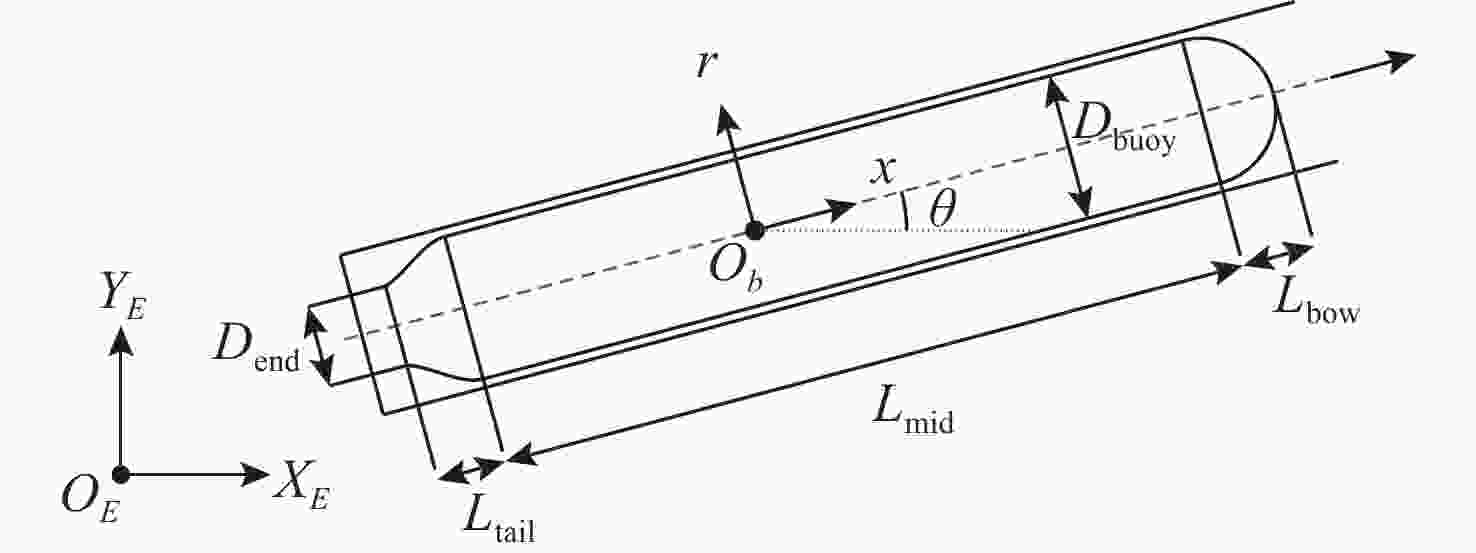
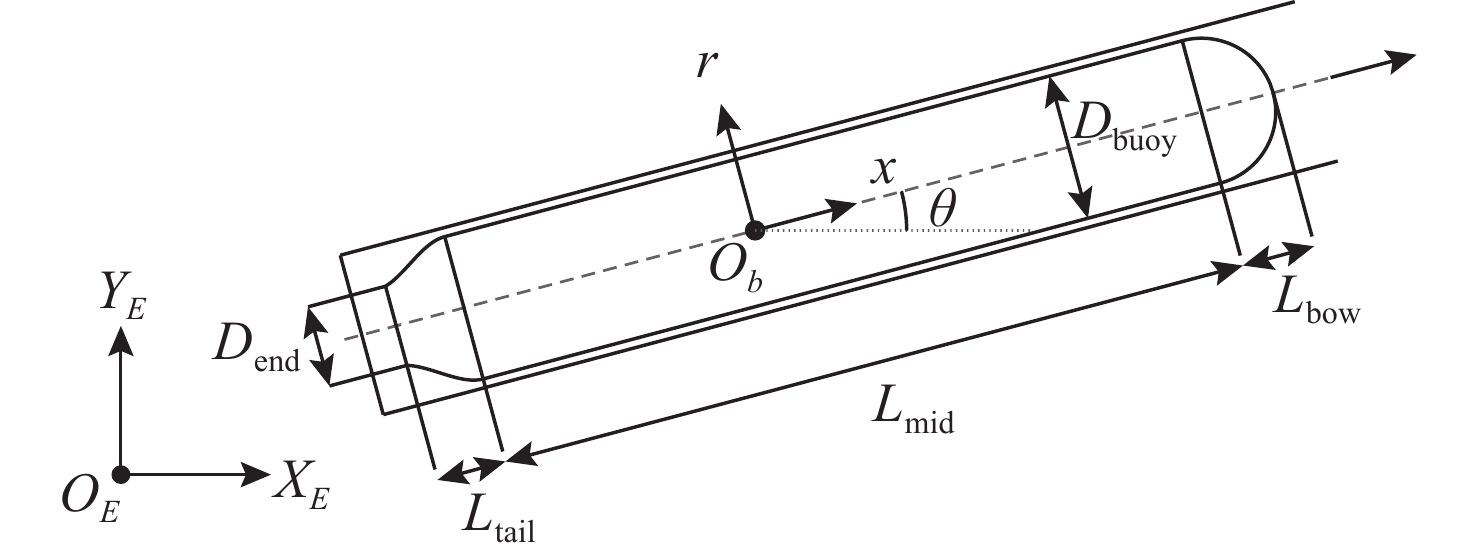
图 1 浮标参数化几何与出筒过程参考坐标系示意图
Figure 1. Schematic diagram of buoy parameterized geometry and reference coordinate system during the ejection process
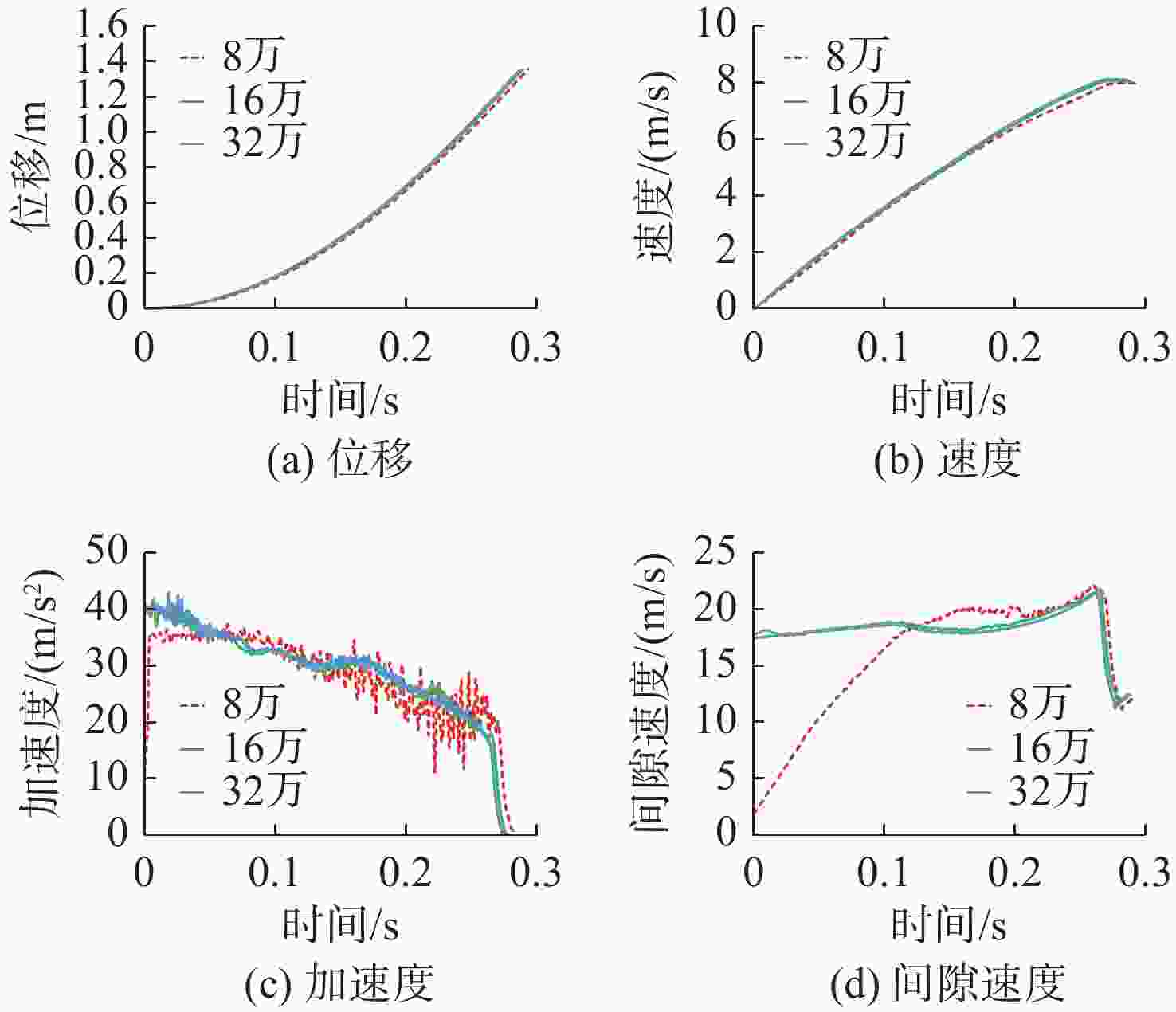
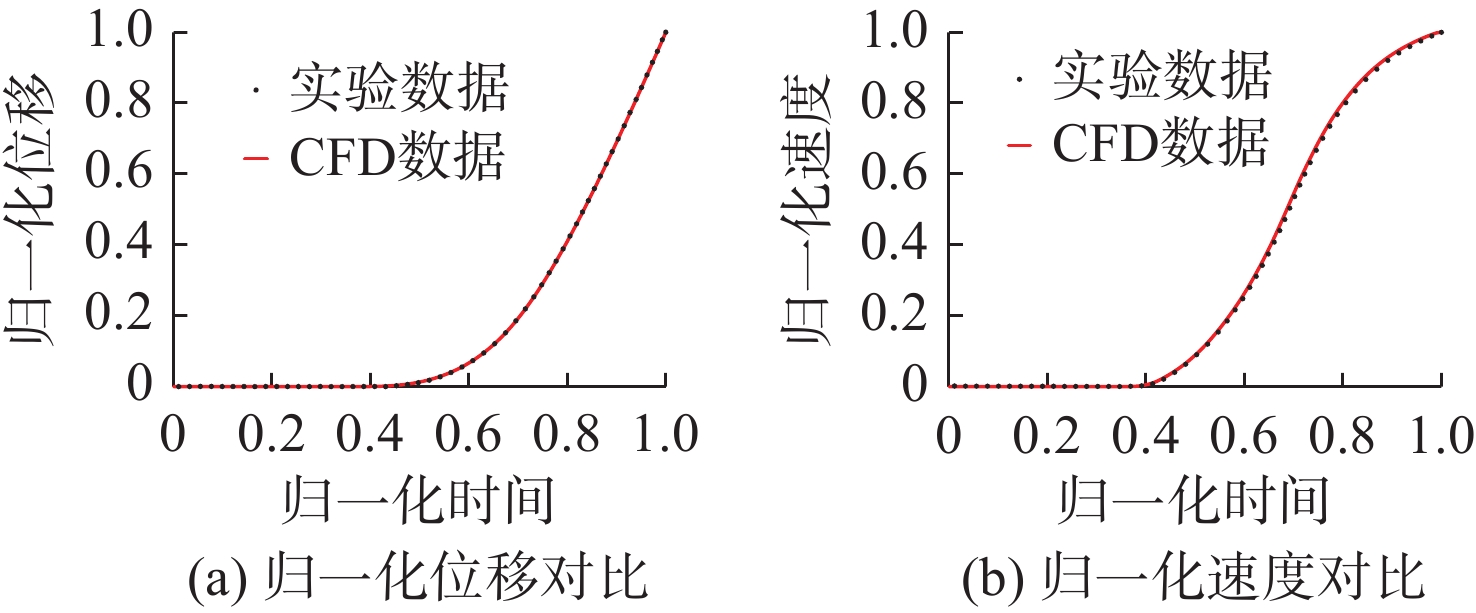
图 3 不同网格规模下浮标响应对比结果
Figure 3. Comparison results of buoy response under different grid sizes
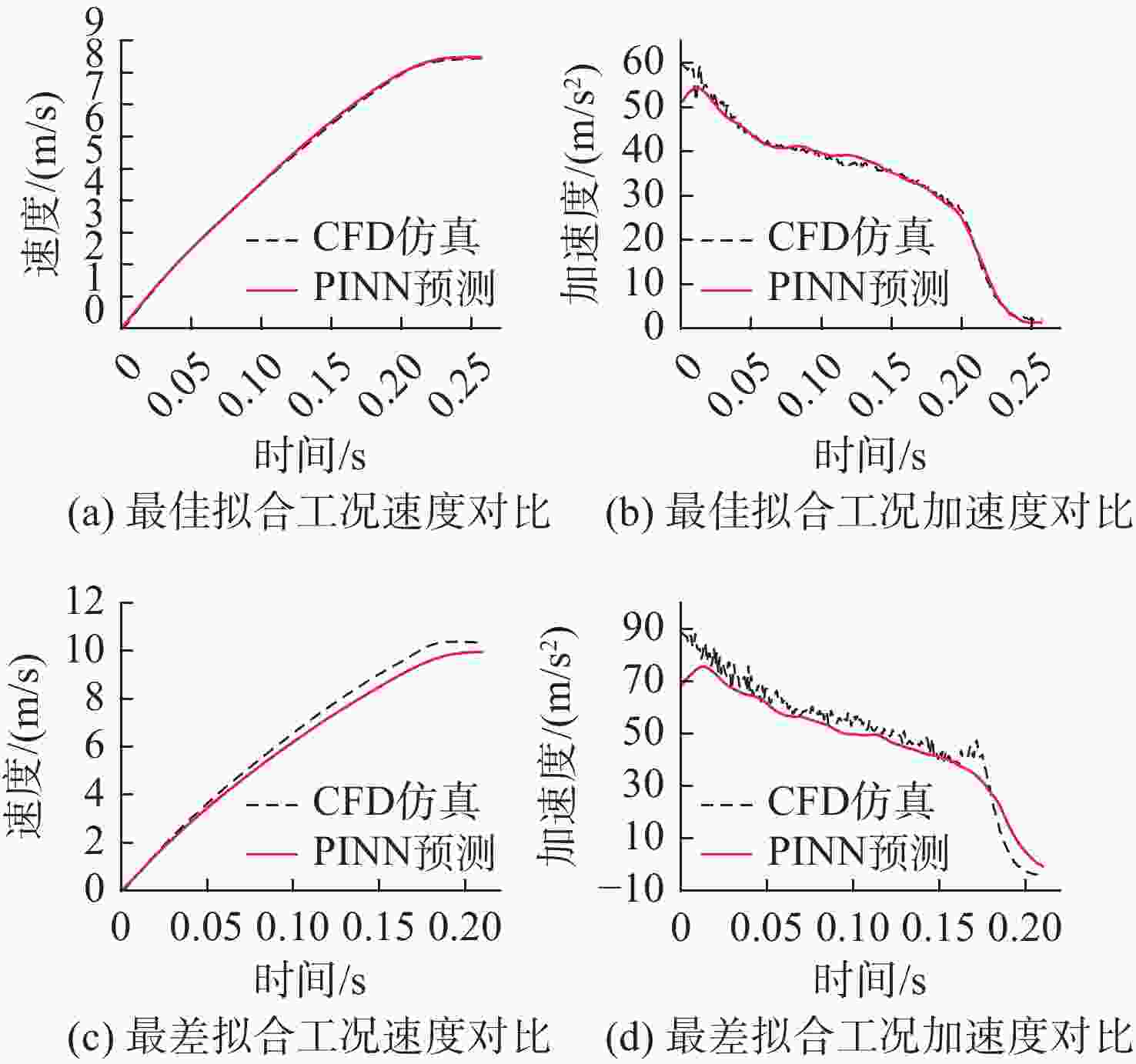
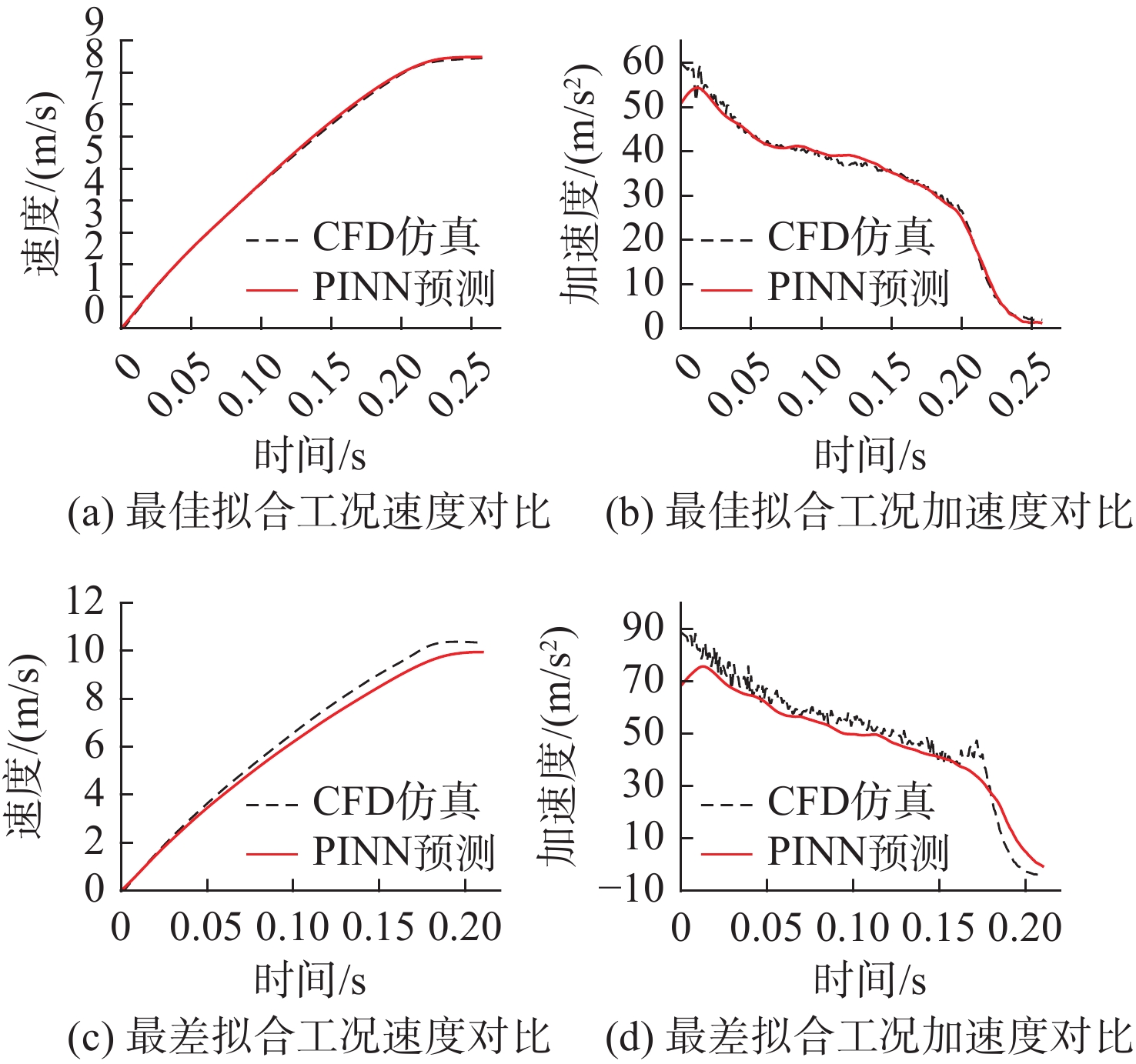
图 5 典型盲测工况的速度与加速度预测结果
Figure 5. Speed and acceleration prediction results under typical blind test conditions
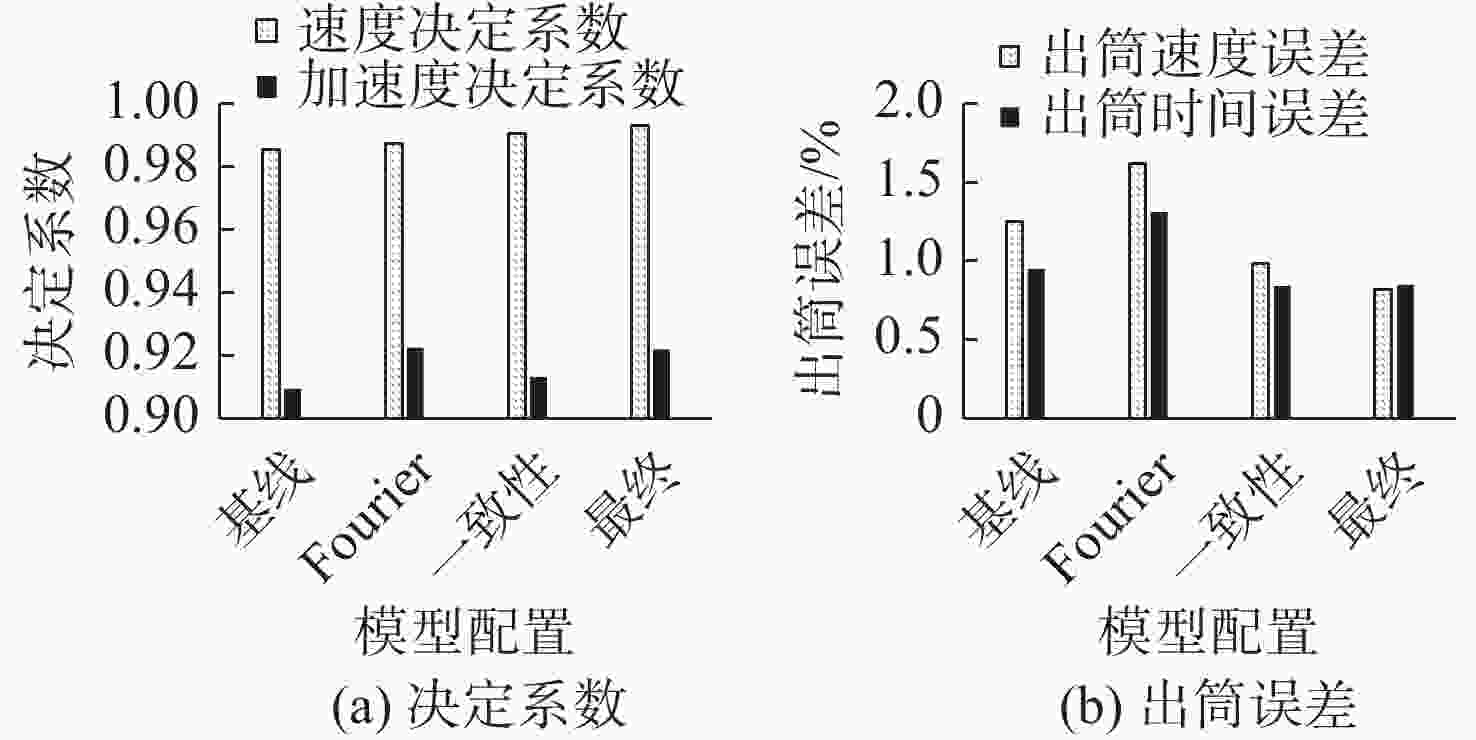
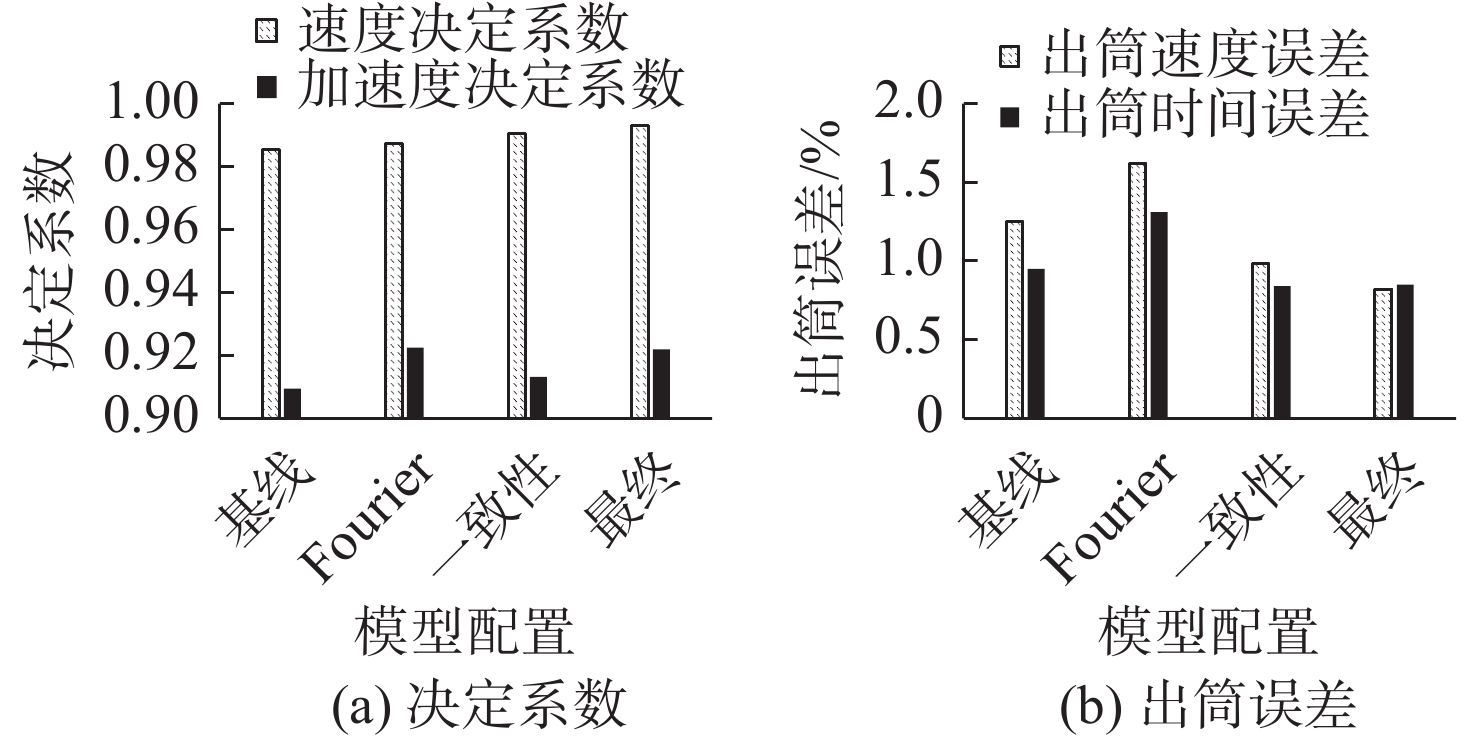
图 6 关键结构与损失项的消融对比结果
Figure 6. Ablation comparison results of key structures and loss terms
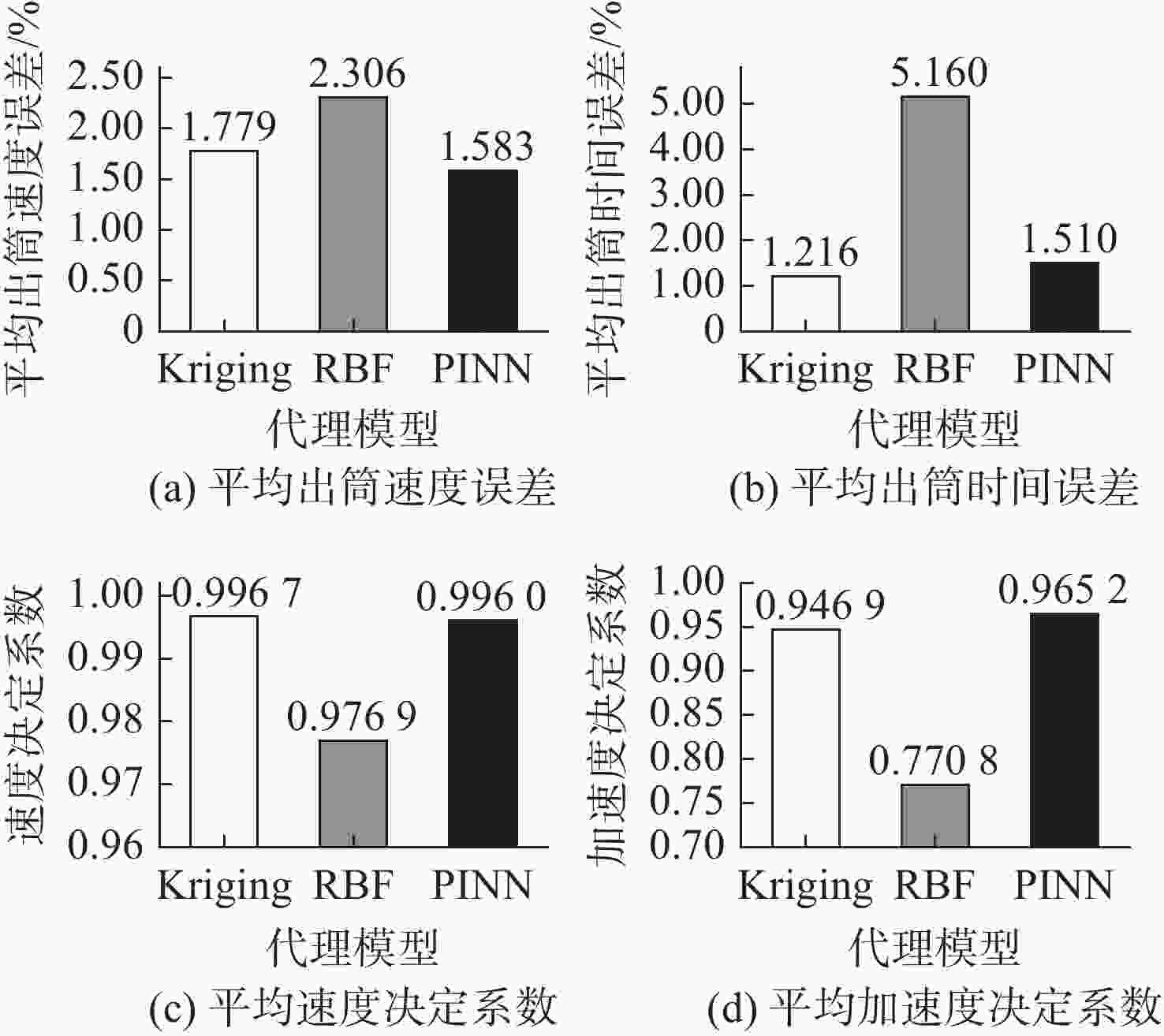
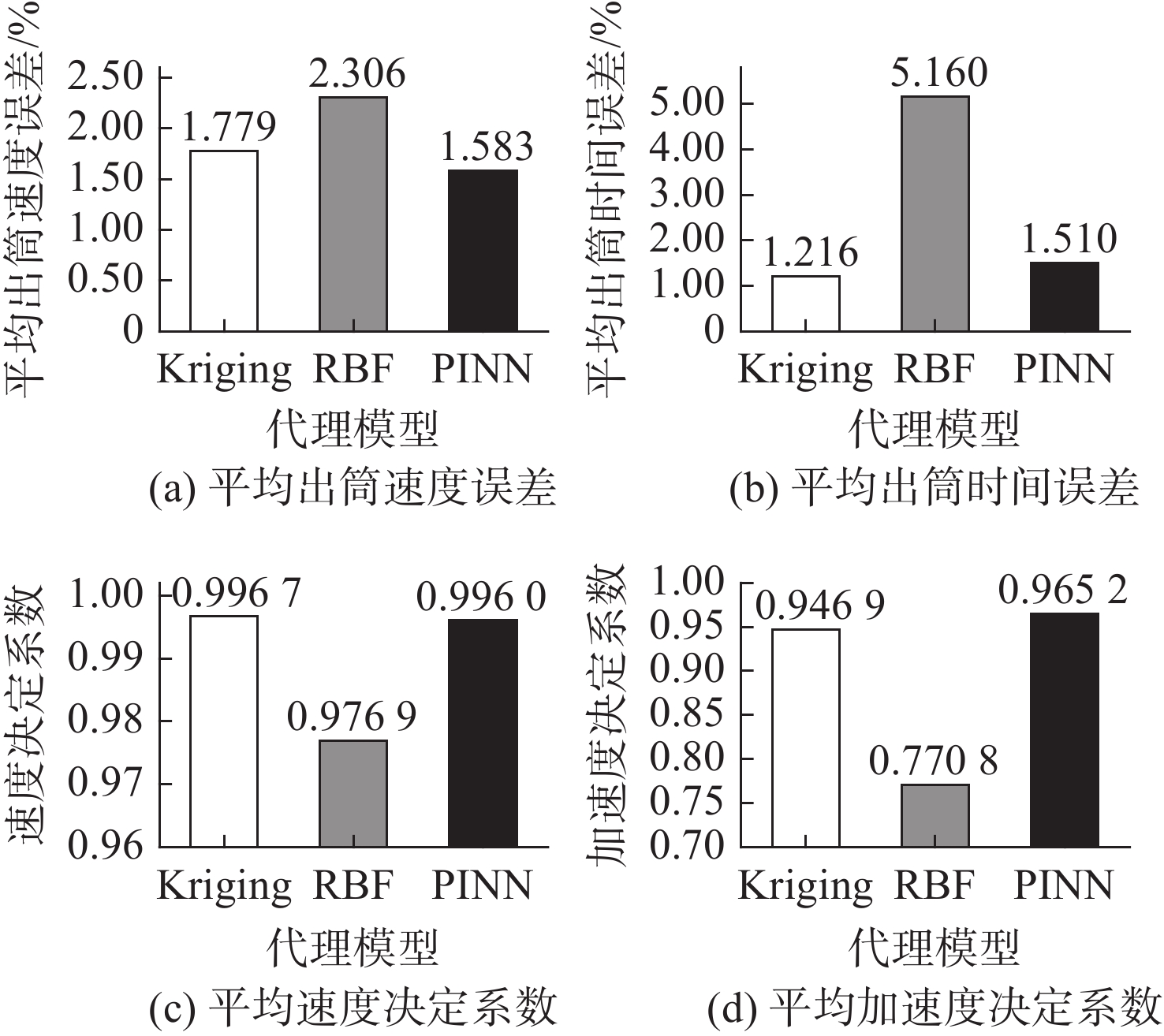
图 7 传统代理模型与PINN的盲测性能对比
Figure 7. Comparison of blind test performance between traditional surrogate models and PINN
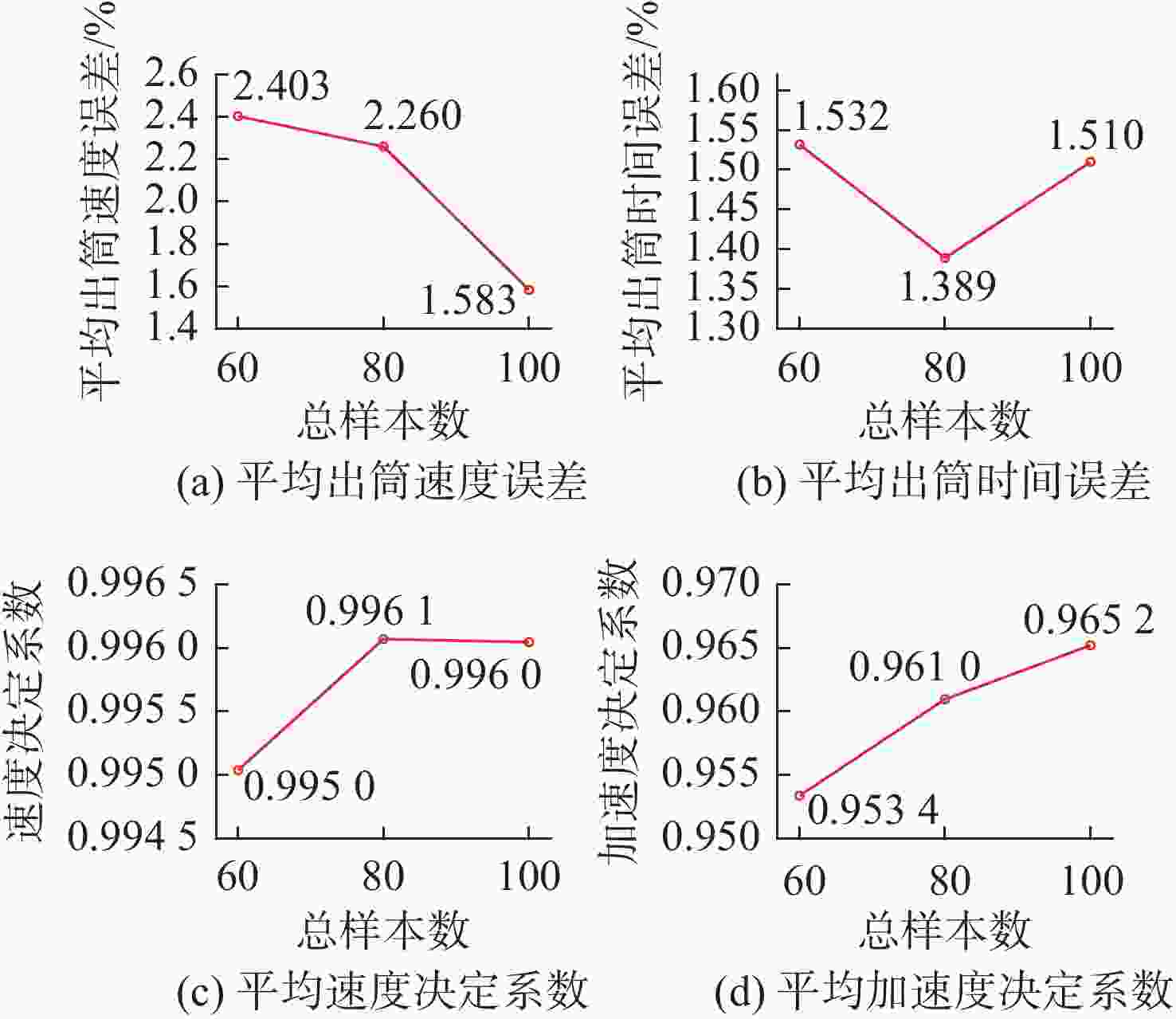
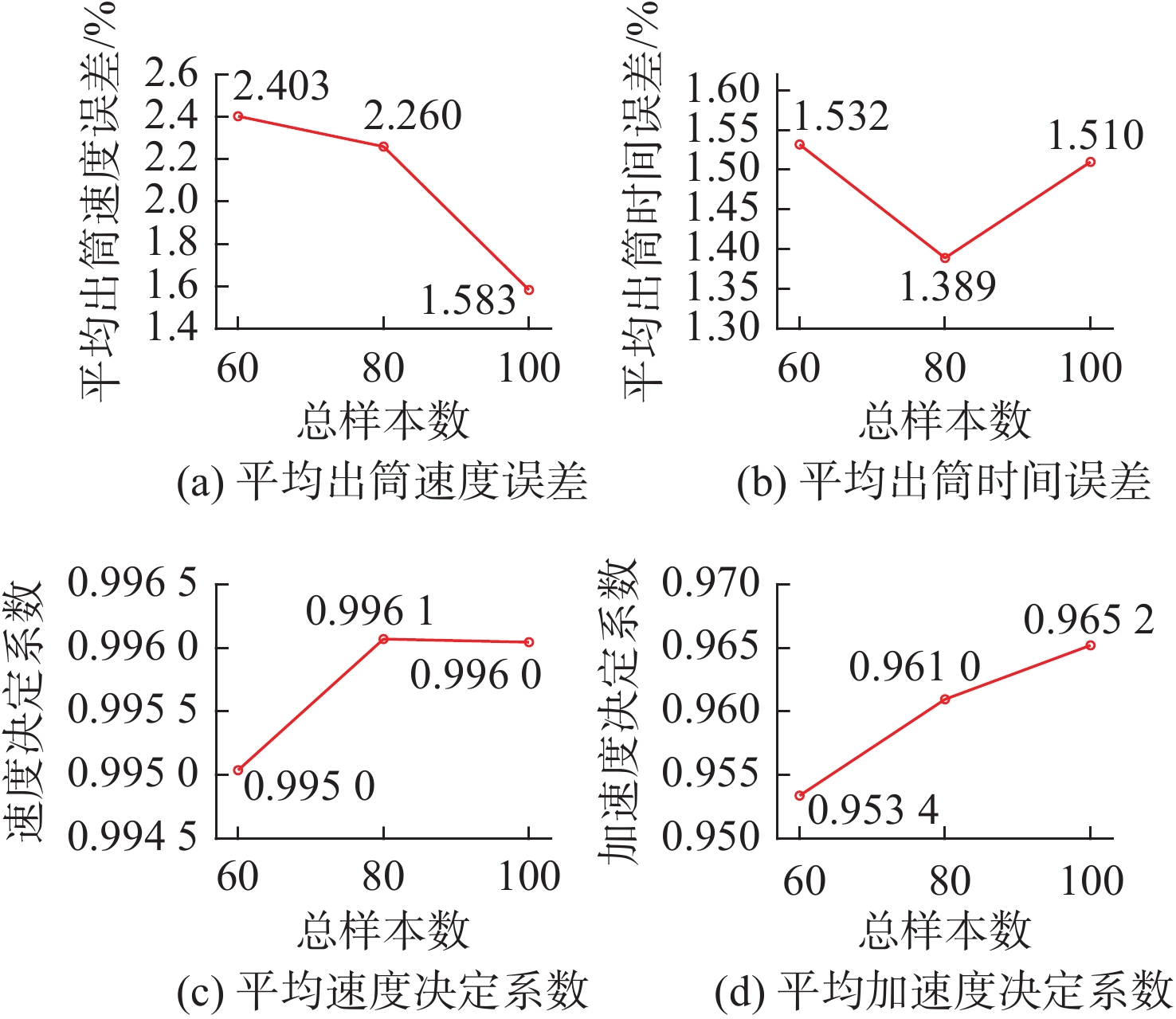
图 8 不同样本规模下PINN的盲测性能
Figure 8. Blind test performance of PINN under different sample sizes
表 1 浮标参数化设计变量
Table 1. Buoy parametric design variable
变量 符号 表达式 单位 压差 ∆P - MPa 发射角 θ - (°) 浮力储备系数 Km m / (ρV) - 浮标外径 Dbuoy - m 艏部长径比 λbow Lbow / Dbuoy - 艏部形状指数 n - - 艉部长径比 λtail Ltail / Dbuoy - 艉端截断比 λend Dend / Dbuoy - 艉部收缩角 θtail - (°)  下载: 导出CSV
表 2 数值模拟边界条件设置
Table 2. Numerical simulation boundary condition setting
位置 边界条件 发射筒底部 停滞进口 发射筒壁面 壁面 浮标表面 壁面 重叠域边界 重叠网格交界面 外部水域出口 压力出口 轴线位置 轴
下载: 导出CSV
表 3 盲测工况预测结果
Table 3. Blind test condition prediction results
工况
编号速度决
定系数加速度决
定系数出筒速度
误差/%出筒时间
误差/%004 0.995 0 0.973 3 3.877 1.537 014 0.999 5 0.968 9 0.003 0.648 015 0.999 6 0.988 8 0.699 0.352 018 0.996 9 0.912 6 0.620 1.319 029 0.999 1 0.979 3 0.255 0.992 032 0.994 4 0.979 9 2.233 2.357 036 0.997 0 0.964 7 0.388 1.434 082 0.984 9 0.929 6 4.049 3.563 087 0.996 0 0.992 8 1.686 1.960 095 0.998 2 0.962 4 2.020 0.938 平均 0.996 0 0.965 2 1.583 1.510
下载: 导出CSV
表 4 传统代理模型与PINN的盲测结果对比
Table 4. Comparison of blind test results between traditional surrogate models and PINN
模型 平均速度
决定系数平均加速度
决定系数平均出筒
速度误差/%平均出筒时
间误差/%平均推理
时间/msKriging 0.996 7 0.946 9 1.779 1.216 1.134 RBF 0.976 9 0.770 8 2.306 5.160 0.182 PINN 0.996 0 0.965 2 1.583 1.510 137.956 注: PINN推理时间包含网络前向、ODE积分及加速度轨迹重建; Kriging和RBF推理时间包含终端指标与离散速度、加速度轨迹预测。
下载: 导出CSV
表 5 不同样本规模下PINN的固定盲测结果
Table 5. Fixed blind test results of PINN under different sample sizes
总样
本数训练工
况数盲测工
况数平均速
度决定
系数平均加
速度决
定系数平均出
筒速度
误差/%平均出
筒时间
误差/%60 50 10 0.995 0 0.953 4 2.403 1.532 80 70 10 0.996 1 0.961 0 2.260 1.389 100 90 10 0.996 0 0.965 2 1.583 1.510
下载: 导出CSV
-
[1] Meindl A. Guide to moored buoys and other ocean data acquisition systems: DBCP Technical Document No. 8[R/OL]. Geneva: WMO & IOC Data Buoy Cooperation Panel, 1996: 1-40[2026-07-16]. https://doi.org/10.25607/OBP-1335. [2] 张华东, 赵国华, 张孝芳. 基于计算流体力学的武器水下发射过程仿真[J]. 水下无人系统学报, 2009, 17(5): 67-71.Zhang H D, Zhao G H, Zhang X F. Simulation of weapon underwater launching with computational fluid dynamics software[J]. Journal of Unmanned Undersea Systems, 2009, 17(5): 67-71. [3] Zhang X, Wang S, Yu D. 2D axisymmetric CFD simulation of underwater torpedo launch tube flow[C]//2009 International Conference on Information Engineering and Computer Science. IEEE, 2009: 1-4. [4] Gong H, Ping Z, Meng F, et al. Modeling and optimization of interior ballistics within pneumatic underwater launchers[J]. Inventions, 2024, 9(2): 30. doi: 10.3390/inventions9020030 [5] Li M, Xu J, Wang Y, et al. Accurate analytical model for interior ballistics trajectory prediction in piston-pump-driven underwater launch systems[J]. Journal of Engineering Research, 2025, 13(4): 3885-3895. i [6] Li M, Xu J, Wang Y, et al. Accurate analytical model for interior ballistics trajectory prediction in piston-pump-driven underwater launch systems[J]. Journal of Engineering Research, 2025, 13(4): 3885-3895. doi: 10.1016/j.jer.2025.04.003 [7] Raissi M, Perdikaris P, Karniadakis G E. Physics-informed neural networks: a deep learning framework for solving forward and inverse problems involving nonlinear partial differential equations[J]. Journal of Computational Physics, 2019, 378: 686-707. doi: 10.1016/j.jcp.2018.10.045 [8] Cai S, Mao Z, Wang Z, et al. Physics-informed neural networks(PINNs) for fluid mechanics: a review[J]. Acta Mechanica Sinica, 2021, 37(12): 1727-1738. doi: 10.1007/s10409-021-01148-1 [9] Karniadakis G E, Kevrekidis I G, Lu L, et al. Physics-informed machine learning[J]. Nature Reviews Physics, 2021, 3(6): 422-440. doi: 10.1038/s42254-021-00314-5 [10] Tancik M, Srinivasan P P, Mildenhall B, et al. Fourier features let networks learn high frequency functions in low dimensional domains[C]//Advances in Neural Information Processing Systems 33, 2020: 7537-7547. [11] Wang S, Teng Y, Perdikaris P. Understanding and mitigating gradient flow pathologies in physics-informed neural networks[J]. SIAM Journal on Scientific Computing, 2021, 43(5): A3055-A3081. doi: 10.1137/20m1318043 [12] Myring D F. A theoretical study of body drag in subcritical axisymmetric flow[J]. Aeronautical Quarterly, 1976, 27(3): 186-194. doi: 10.1017/S000192590000768X [13] Dantas J L D, De Barros E A. Numerical analysis of control surface effects on AUV manoeuvrability[J]. Applied Ocean Research, 2013, 42: 168-181. doi: 10.1016/j.apor.2013.06.002 [14] Shi Y, Lu J, Gao S, et al. Experimental study on the cavitation flow and motion characteristics of the vehicle launched underwater[J]. International Journal of Naval Architecture and Ocean Engineering, 2023, 15: 100492. doi: 10.1016/j.ijnaoe.2022.100492 [15] Zhang S, Chen Q H, Liu C, et al. Transient interactions between bubbles and a high-speed cylinder in underwater launches: an experimental and numerical study[J]. Journal of Hydrodynamics, 2023, 35(1): 36-45. doi: 10.1007/s42241-023-0003-5 [16] Loeppky J L, Sacks J, Welch W J. Choosing the sample size of a computer experiment: a practical guide[J]. Technometrics, 2009, 51(4): 366-376. doi: 10.1198/TECH.2009.08040 [17] 王燕飞, 张振山, 张萌. 自航发射鱼雷内弹道模型与仿真研究[J]. 系统仿真学报, 2006, 18(2): 316-318,326. doi: 10.3969/j.issn.1004-731X.2006.02.013Wang Y F, Zhang Z S, Zhang M. Modeling and simulation of interior trajectory model for torpedo swim-out launching[J]. Journal of System Simulation, 2006, 18(2): 316-318,326. doi: 10.3969/j.issn.1004-731X.2006.02.013 [18] 许智生, 郭彬, 郑立捷, 等. 潜载无人水下航行器自航布放内弹道模型与仿真[J]. 中国舰船研究, 2014, 9(1): 111-115. doi: 10.3969/j.issn.1673-3185.2014.01.016Xu Z S, Guo B, Zheng L J, et al. Modeling and simulation of the interior trajectory for unmanned underwater vehicles during swim-out launching[J]. Chinese Journal of Ship Research, 2014, 9(1): 111-115. doi: 10.3969/j.issn.1673-3185.2014.01.016 [19] Kendall A, Gal Y, Cipolla R. Multi-task learning using uncertainty to weigh losses for scene geometry and semantics[C]//2018 IEEE/CVF Conference on Computer Vision and Pattern Recognition. 2018: 7482-7491. [20] Wang S, Yu X, Perdikaris P. When and why PINNs fail to train: a neural tangent kernel perspective[J]. Journal of Computational Physics, 2022, 449: 110768. doi: 10.1016/j.jcp.2021.110768 [21] Rasmussen C E, Williams C K I. Gaussian processes for machine learning[M]. Cambridge, MA: MIT Press, 2006: 79-106. [22] Buhmann M D. Radial basis functions: theory and implementations[M]. Cambridge: Cambridge University Press, 2003: 99-146. -

 下载:


 点击查看大图
计量
- 文章访问数: 1
- HTML全文浏览量: 0
- PDF下载量: 0
- 被引次数: 0