

Factors Influencing Leakage Current in Lithium Reserve Battery Packs
-
摘要: 针对集中注液模式下锂贮备电池组共用电解液引发的内部漏电流问题, 采用等效电路仿真计算方法研究了电池组漏电流分布规律, 分析了串联单体数量、电解液电导率、注液管路结构特征对漏电流的影响机理。组建了电池模组漏电流实验装置, 将实测结果与仿真结果进行对比, 证实该等效电路仿真方法的合理性。研究表明: 锂贮备电池组漏电流整体处于毫安级, 漏电流分布呈中间高、两端低的抛物线形态; 可通过减小串联单体数、提升电解液液相阻抗、优化注液总管-支管阻抗匹配实现漏电流抑制, 为锂贮备电池组成组设计提供理论支撑。Abstract: To address the internal leakage current caused by the shared electrolyte under the centralized liquid-injection mode of lithium reserve battery packs, an equivalent-circuit simulation method was adopted to investigate the distribution of leakage current. The effects of the number of cells connected in series, electrolyte conductivity, and the structural characteristics of the injection pipeline on leakage current were analyzed. A leakage-current test setup for battery modules was developed, and the experimental results were compared with the simulation results, thus validating the equivalent-circuit simulation method. The results show that the leakage current in lithium reserve battery packs is generally in the milliampere range and exhibits a parabolic distribution, with higher values in the middle and lower values at both ends. Leakage current can be suppressed by reducing the number of cells connected in series, increasing the liquid-phase impedance of the electrolyte, and optimizing impedance matching between the main and branch injection pipes. These findings provide a theoretical basis for the pack-level design of lithium reserve battery systems.
-
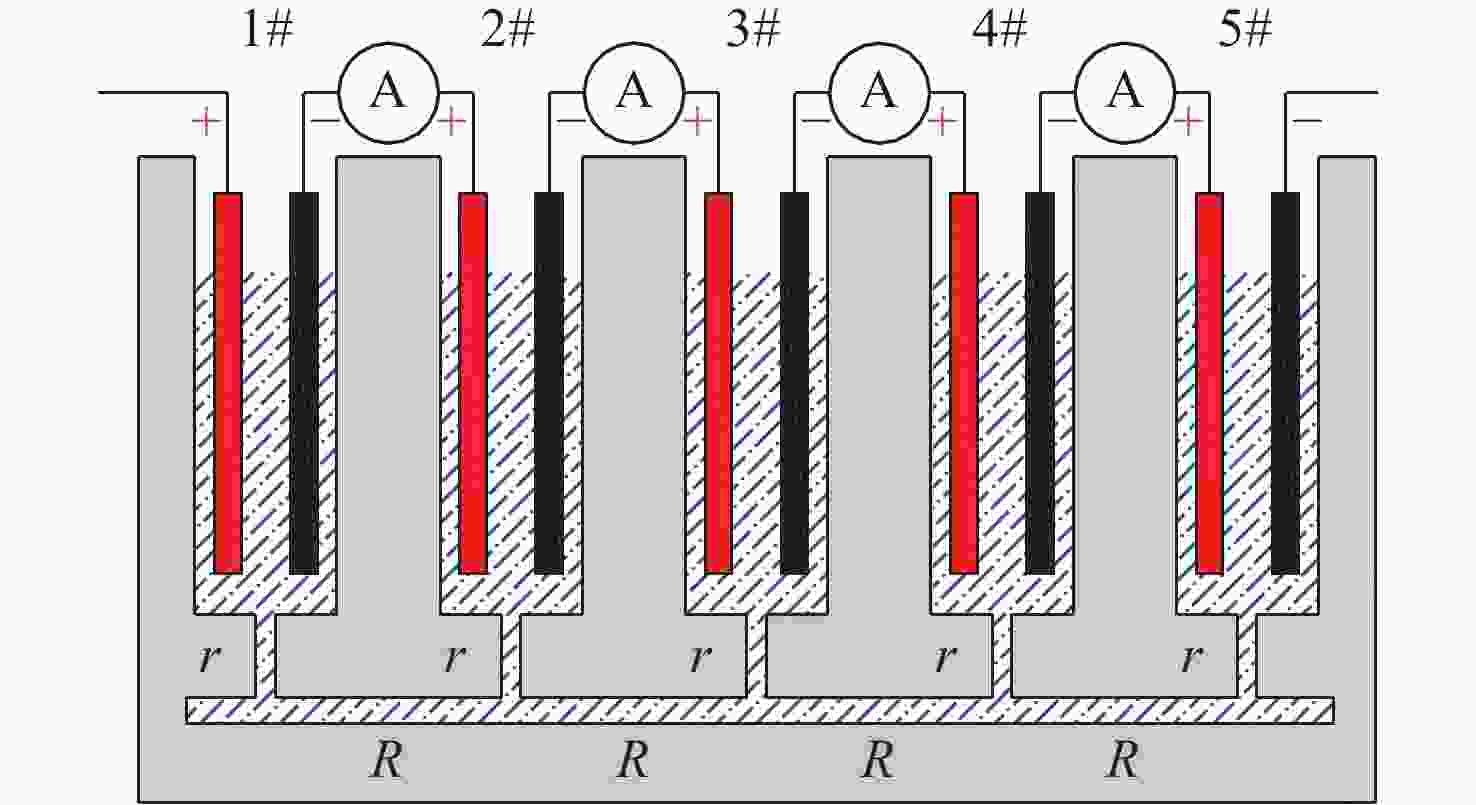
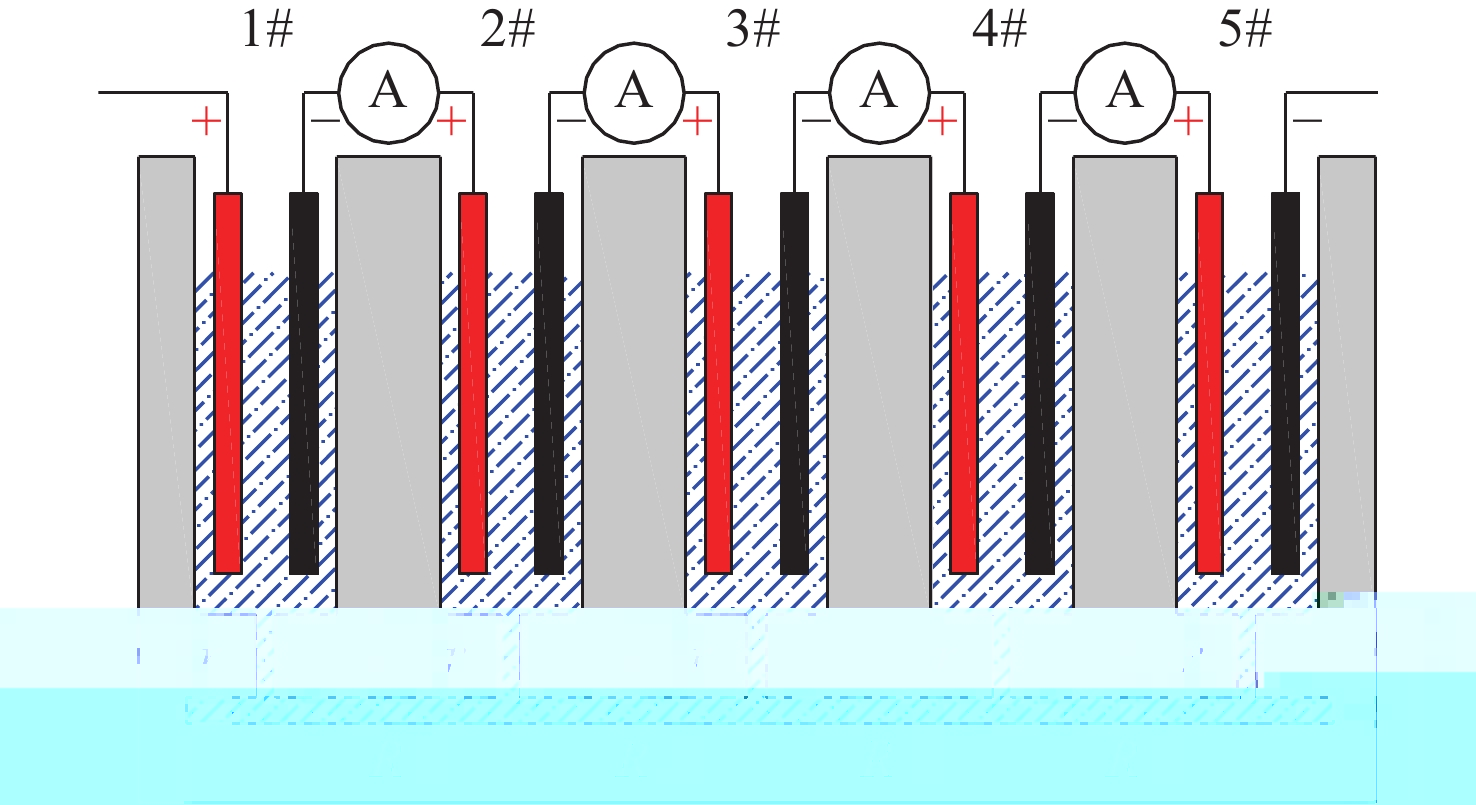
图 1 共用电解液的锂贮备电池组模型
Figure 1. Model of lithium reserve battery pack with shared electrolyte
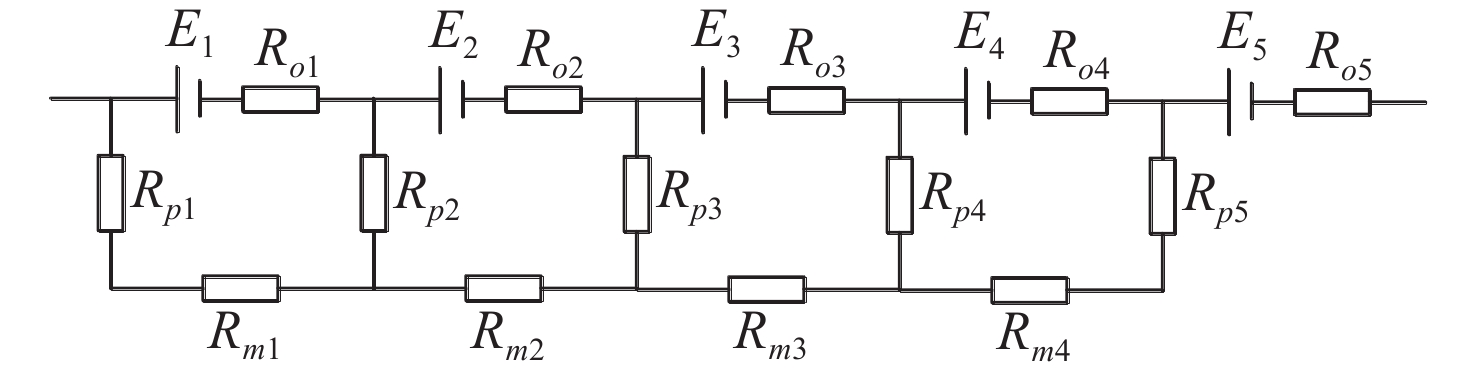
图 2 5串锂贮备电池模组漏电流等效电路模型
Figure 2. Equivalent circuit model for leakage current of 5-series lithium reserve battery module
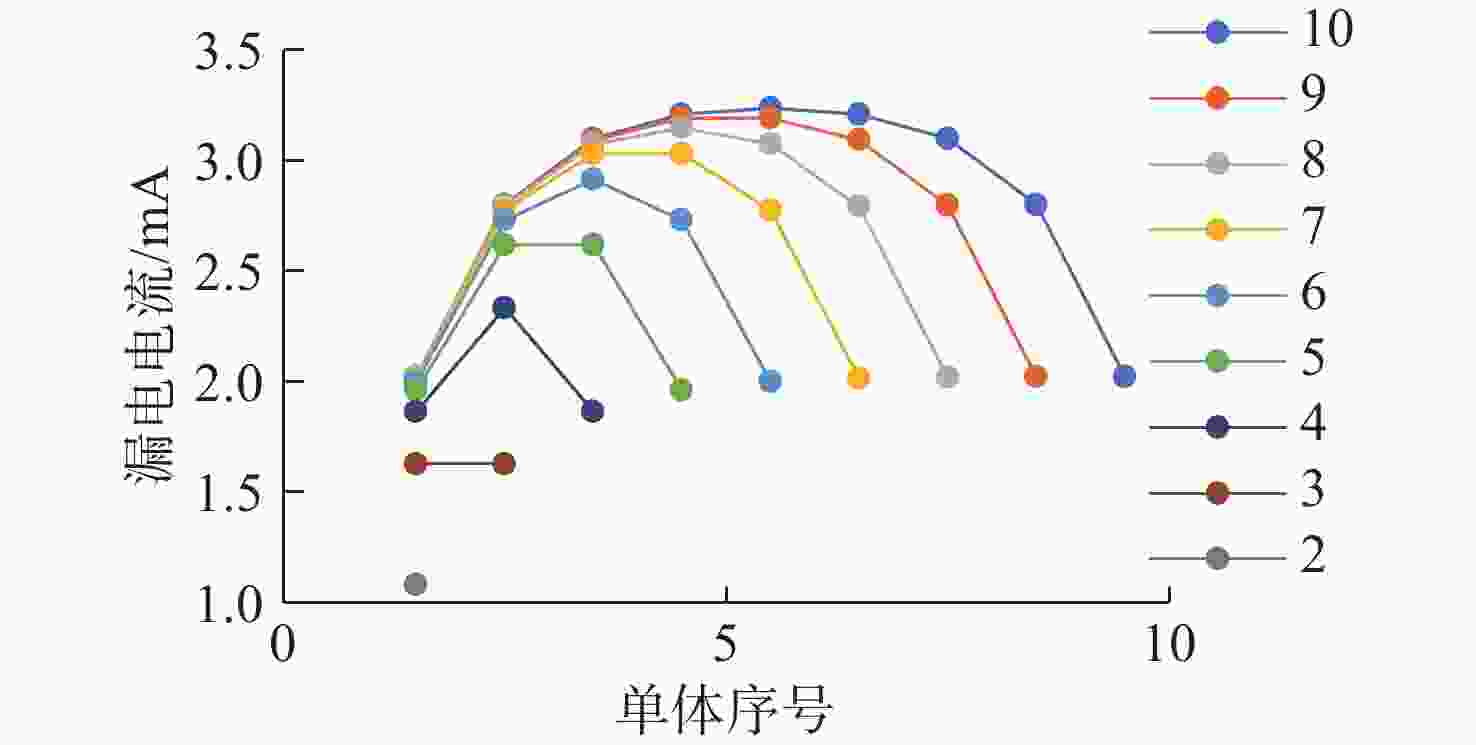
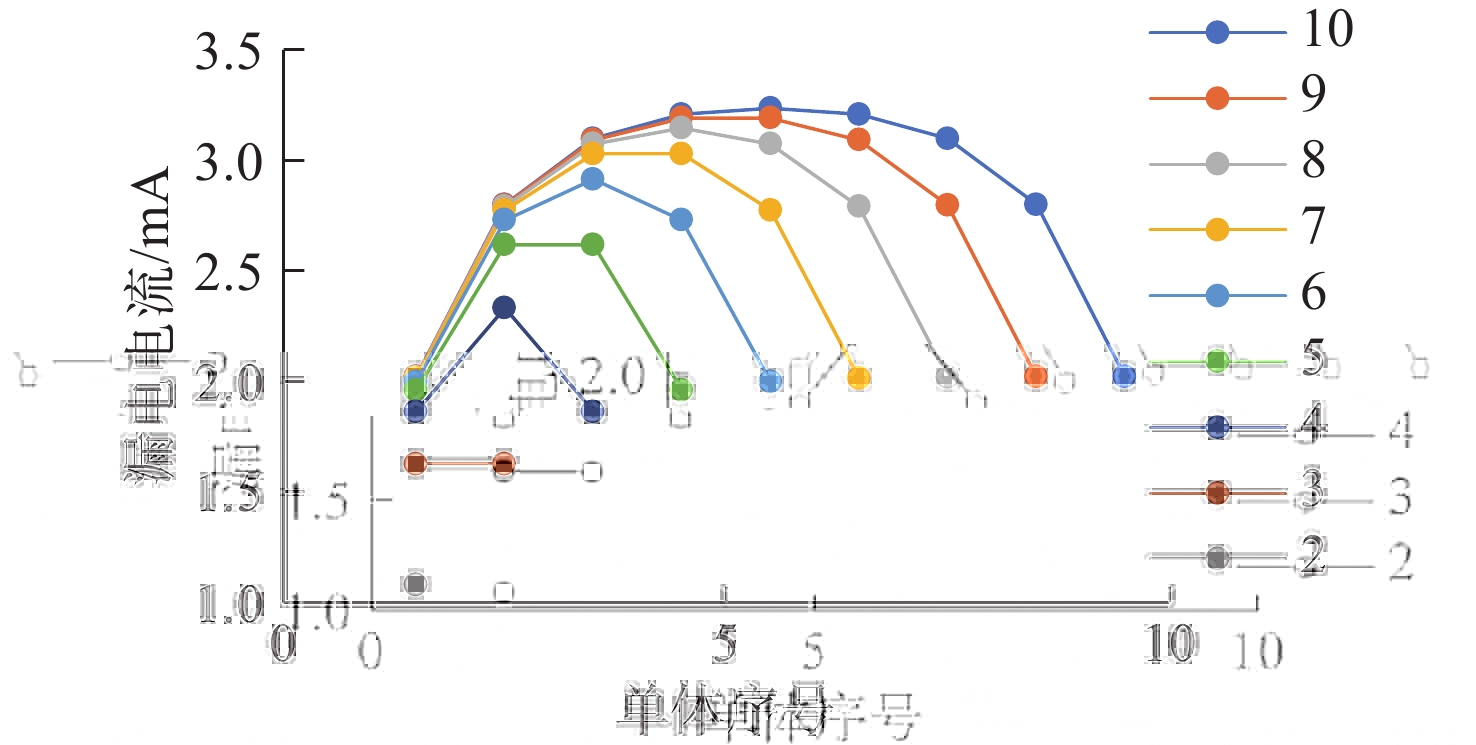
图 3 串联单体数对漏电电流分布的影响
Figure 3. Effects of the number of series-connected cells on leakage current distribution
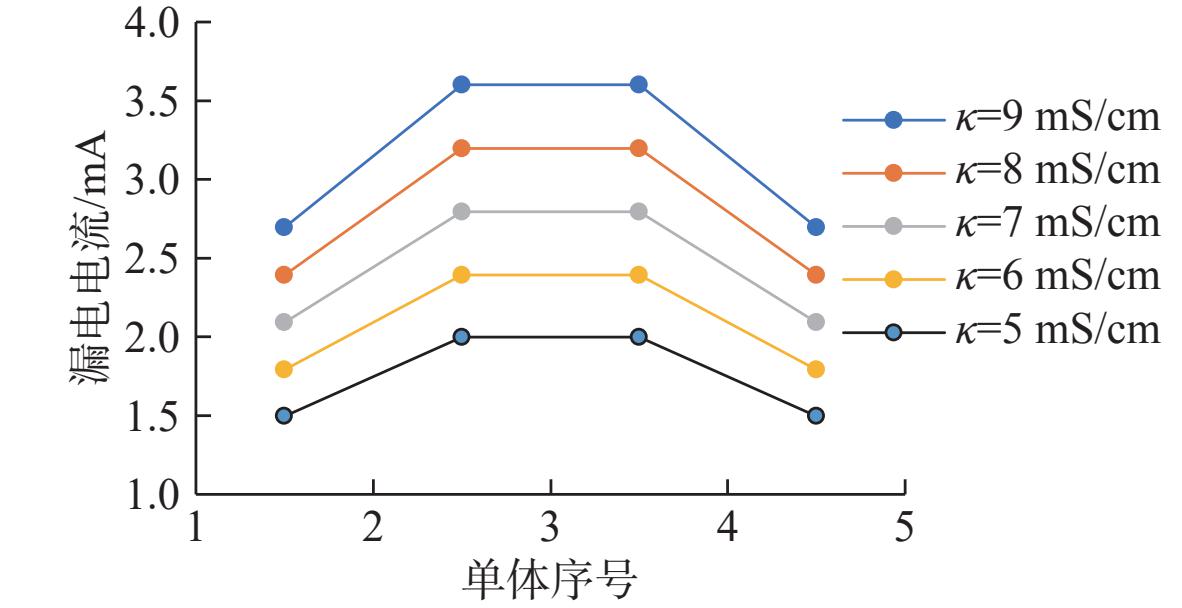
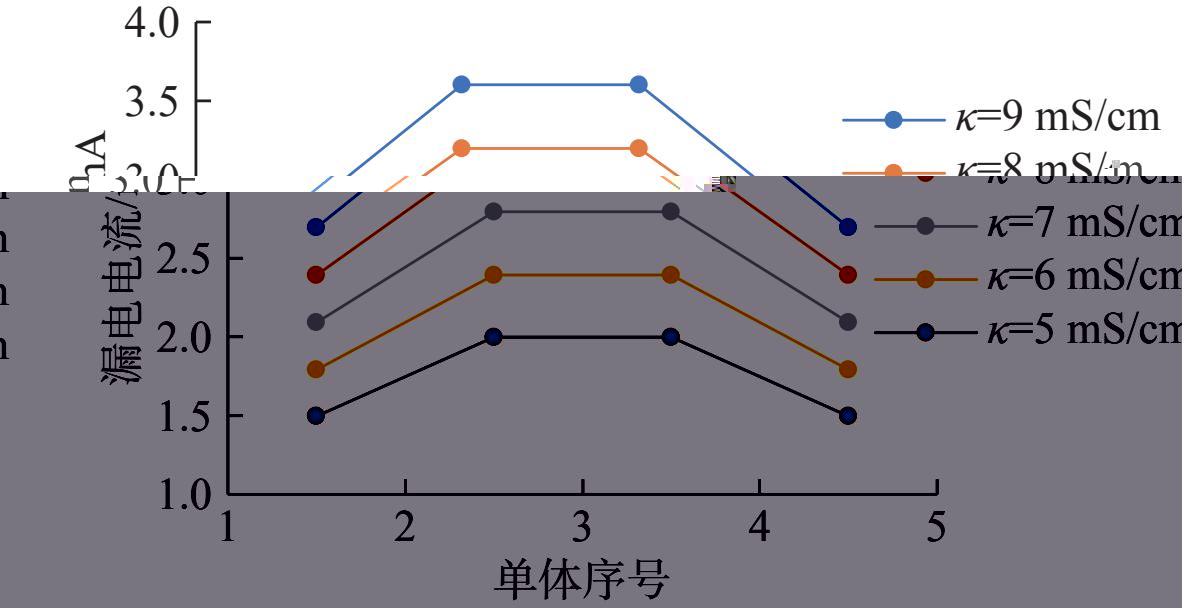
图 4 电解液电导率对漏电电流分布的影响
Figure 4. Effects of electrolyte conductivity on leakage current distribution
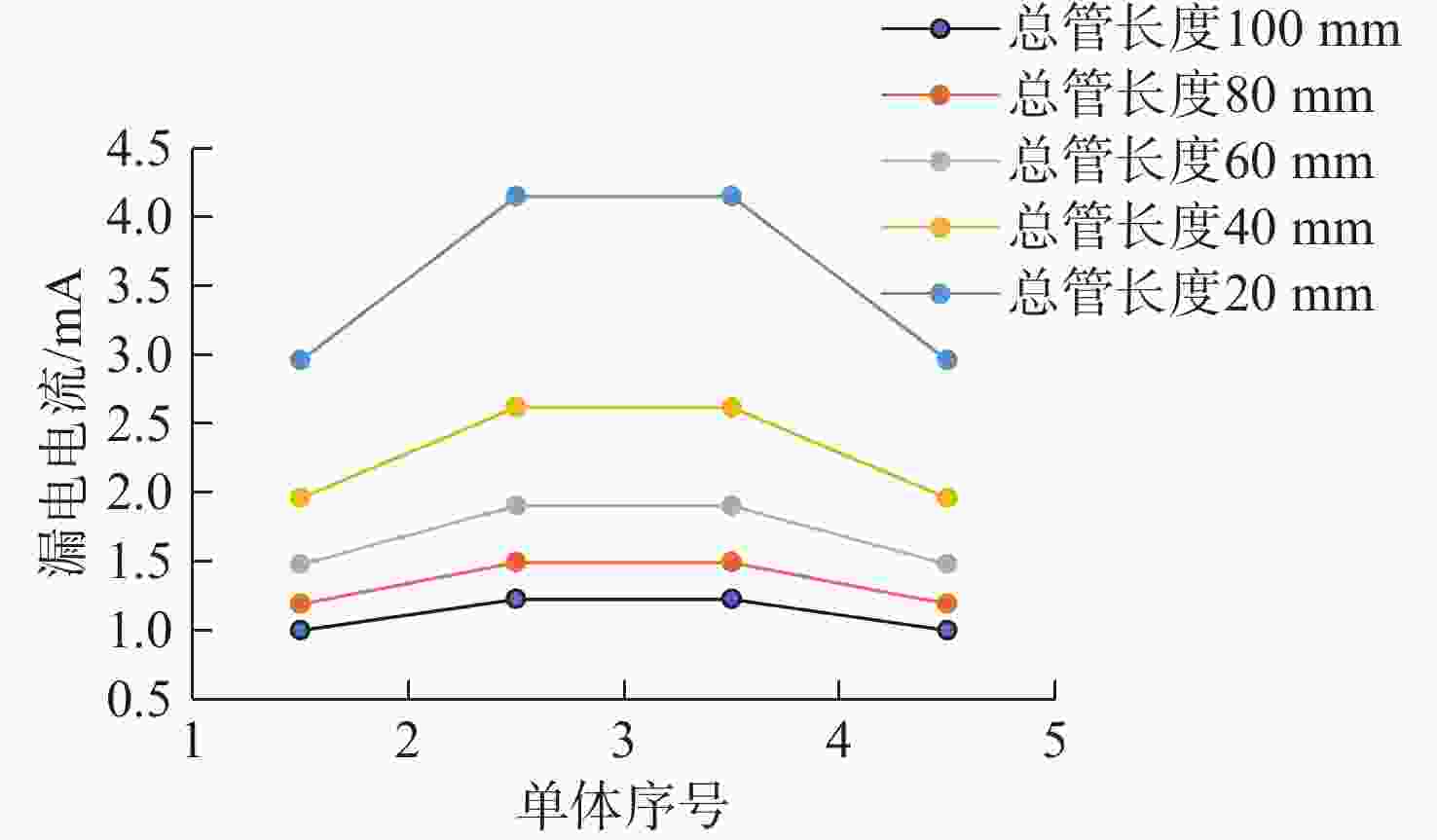
图 5 总管长度对漏电电流分布的影响
Figure 5. Effects of main pipe length on leakage current distribution
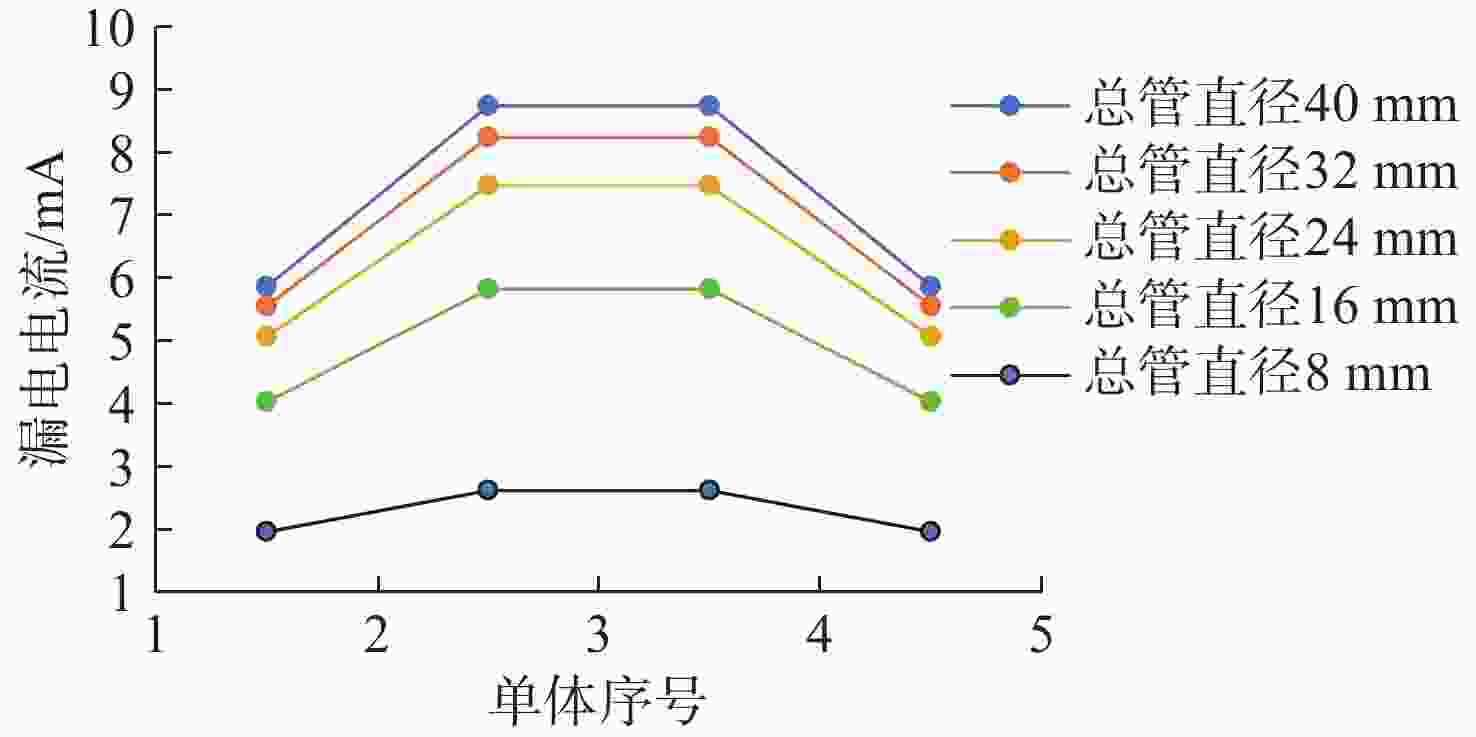
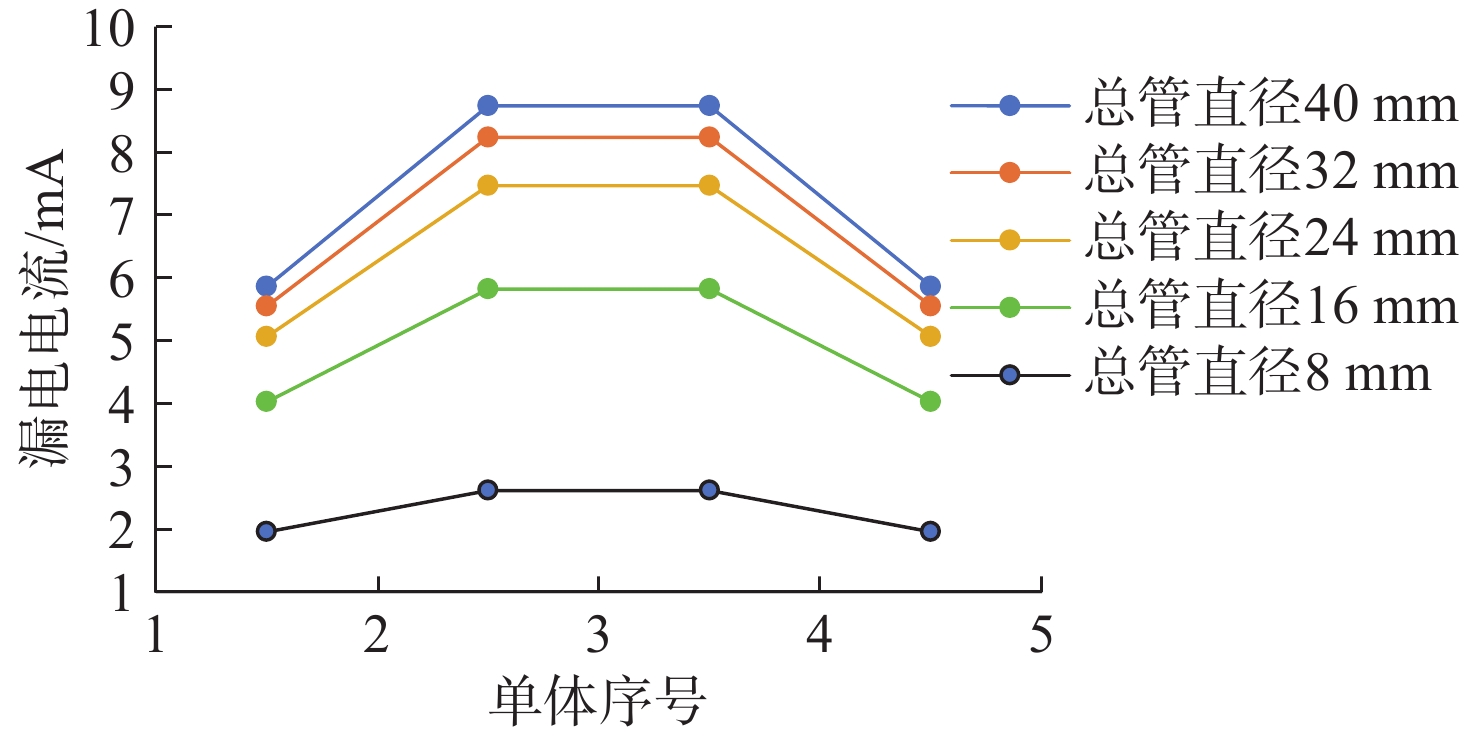
图 6 总管内径对漏电电流分布的影响
Figure 6. Effects of main pipe inner diameter on leakage current distribution
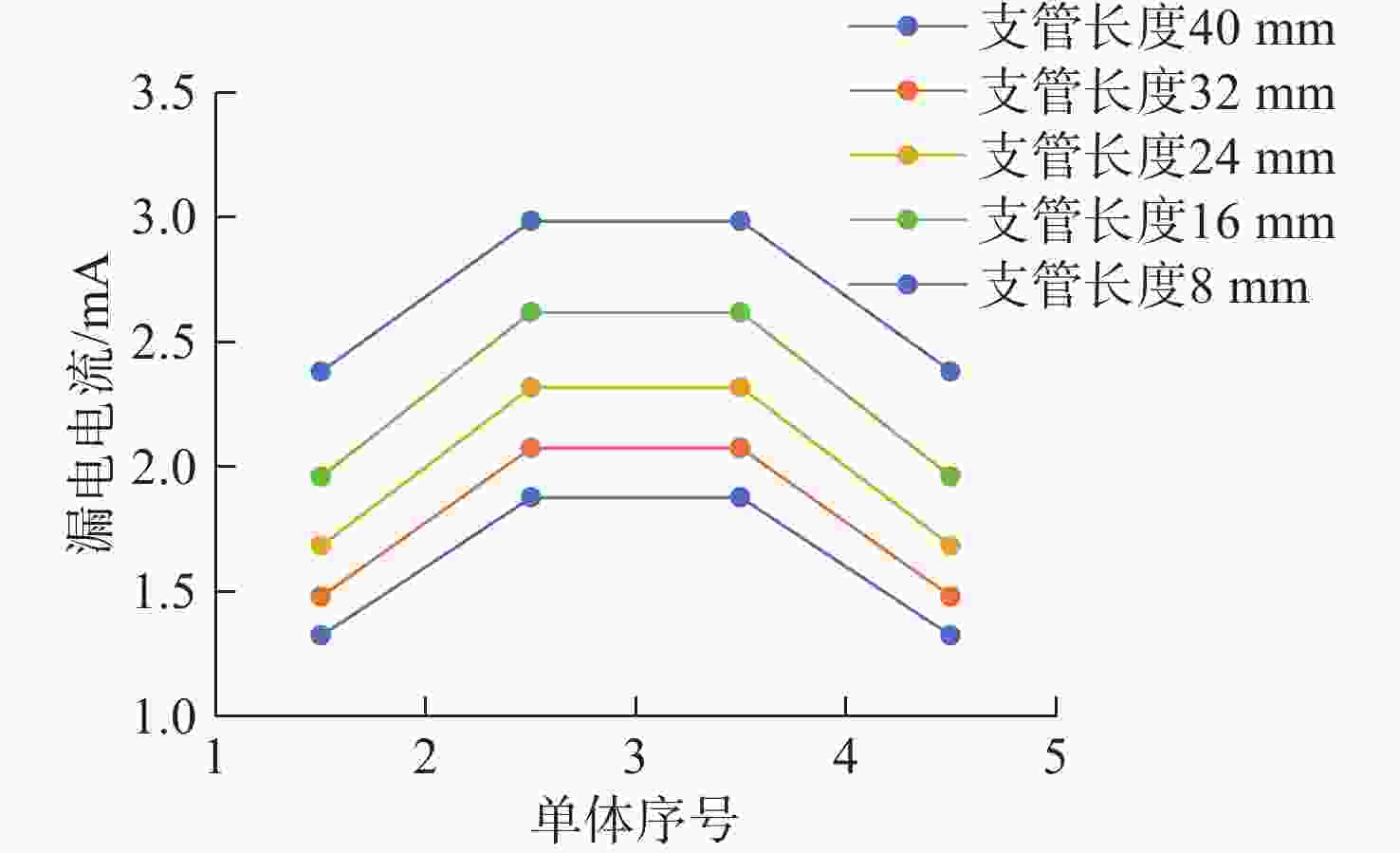
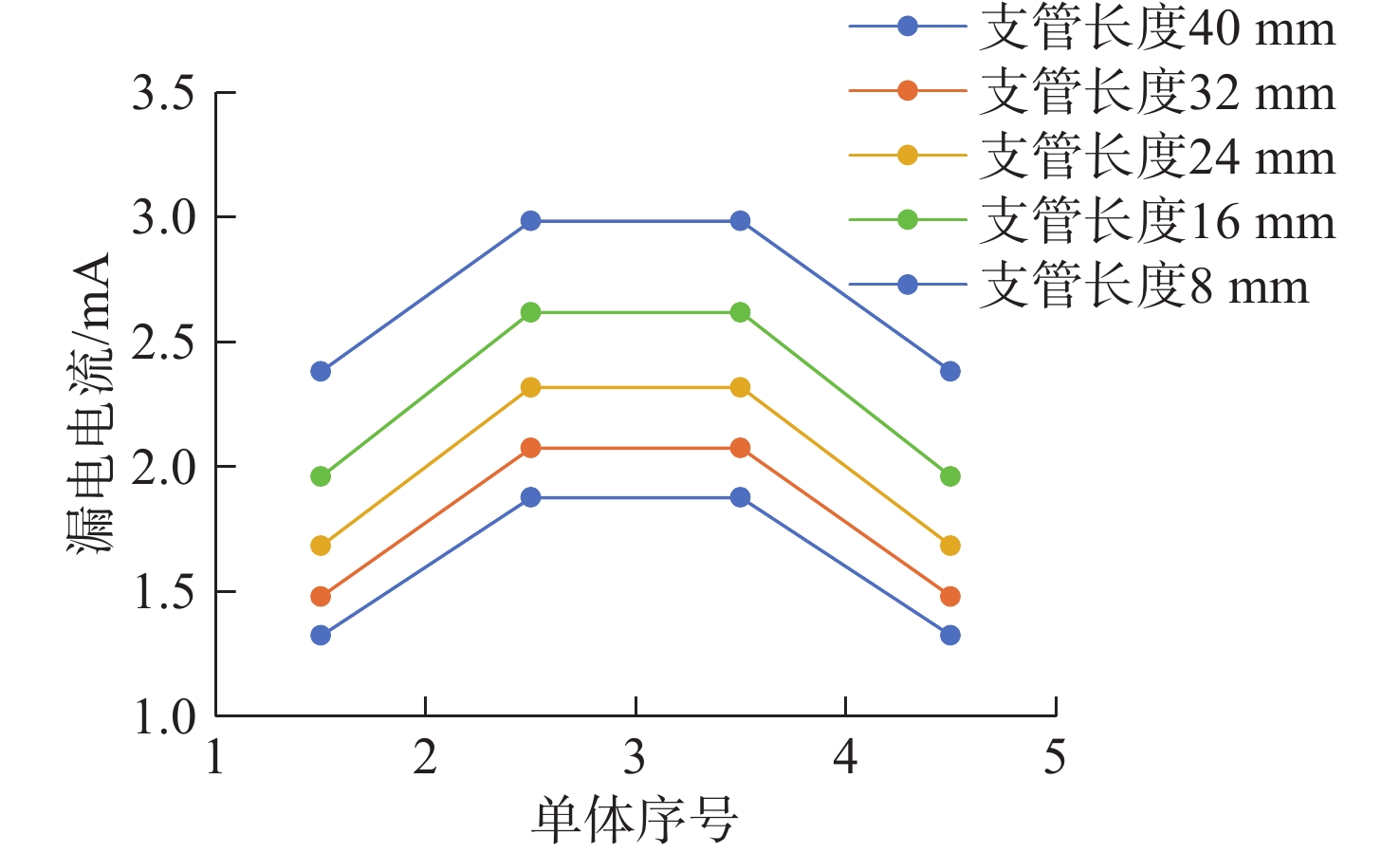
图 7 支管长度对漏电电流分布的影响
Figure 7. Effects of branch pipe length on leakage current distribution
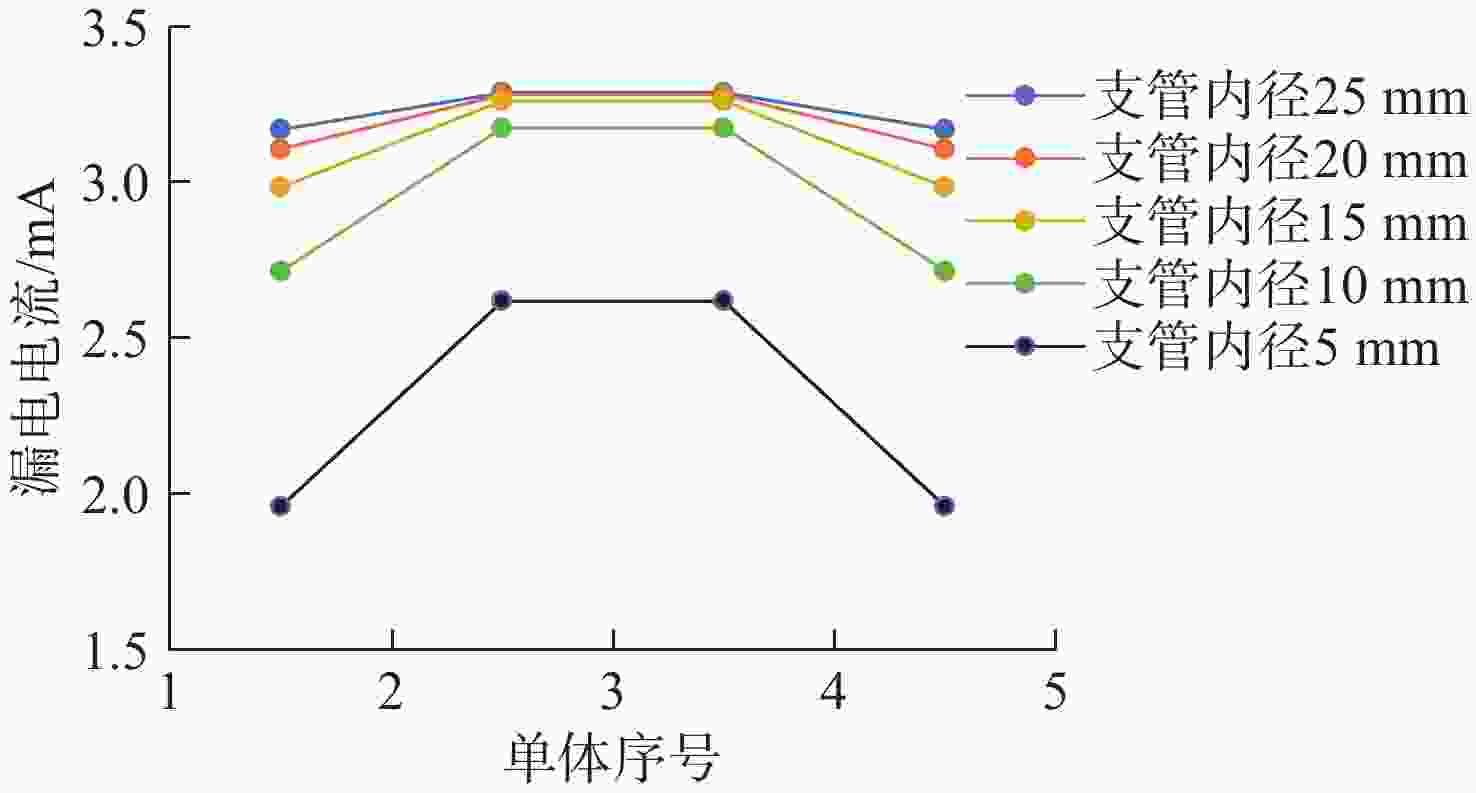
图 8 支管内径对漏电电流分布的影响
Figure 8. Effects of branch pipe inner diameter on leakage current distribution
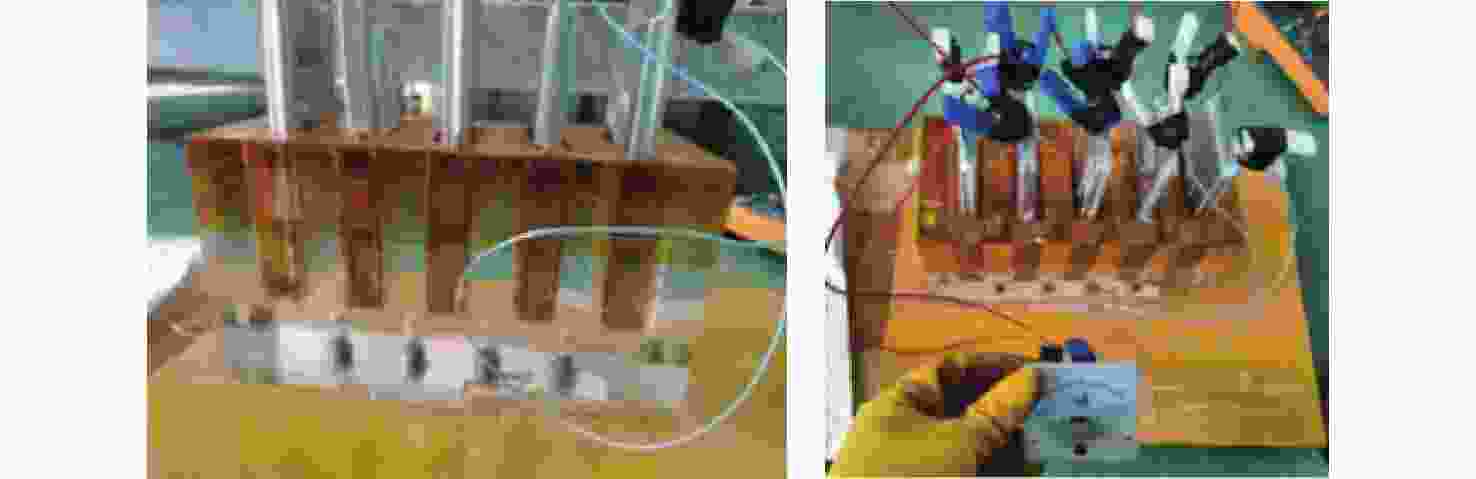
图 9 5串锂贮备电池模组漏电试验装置
Figure 9. Leakage current experimental device for 5-series lithium reserve battery module
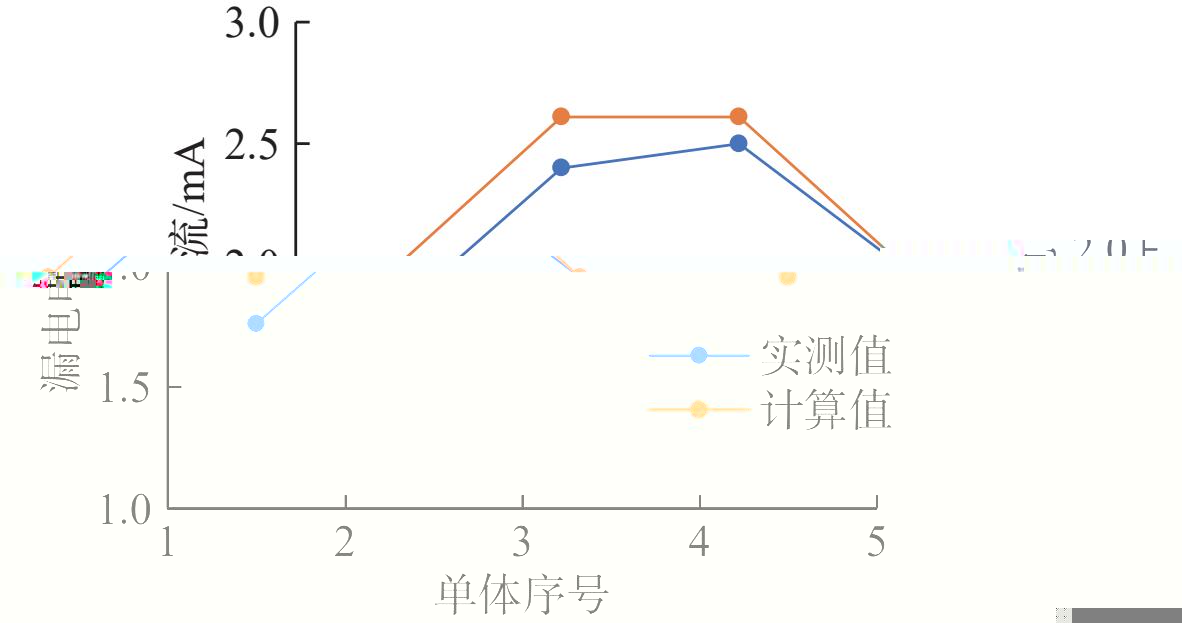
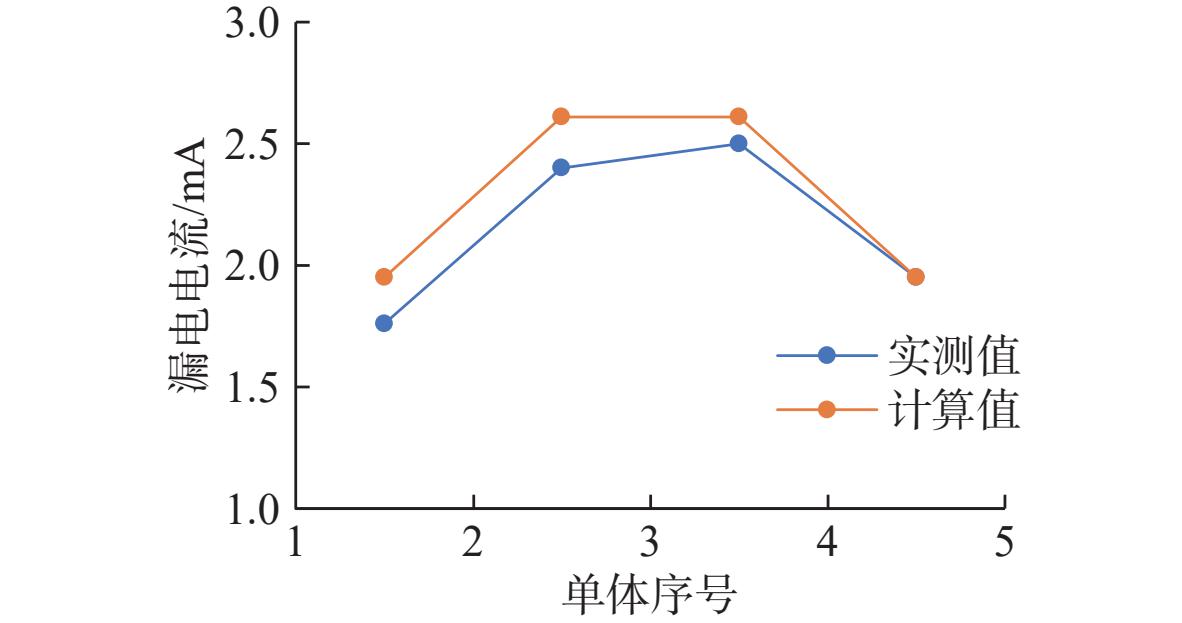
图 10 5串电池模组仿真与实测漏电电流对比
Figure 10. Comparison between simulated and measured leakage-current for 5-series battery module
表 1 电路仿真边界参数
Table 1. Boundary parameters for circuit simulation
参数 符号 数值 单体电压/V E 4.2 电解液电导率/(mS/cm) κ 7.6 总管电阻/Ω Rm 1215 支管电阻/Ω Rp 1245  下载: 导出CSV
-
[1] 谭思平. 高能量密度锂贮备电池关键材料改性及性能研究[D]. 哈尔滨: 哈尔滨工业大学, 2023: 1-6. [2] 杨芳凝, 王九洲, 刘雪省, 等. 锂铬基金属氧化物贮备式电池激活性能研究[J]. 电源技术, 2024, 48(11): 2280-2288. doi: 10.3969/j.issn.1002-087X.2024.11.023Yang F N, Wang J Z, Liu X S, et al. Study on activation performance of lithium chromium oxide reserve batteries[J]. Chinese Journal of Power Sources, 2024, 48(11): 2280-2288. doi: 10.3969/j.issn.1002-087X.2024.11.023 [3] 高新龙, 林沛, 贾宾, 等. 一种贮备式锂电池: 202311755331.1[P]. 2023-12-19: 4-9. [4] 高新龙, 王宇轩, 李学海. 从装备需求看鱼雷动力电池发展[J]. 鱼雷技术, 2016, 24(3): 206-210, 234. doi: 10.11993/j.issn.1673-1948.2016.03.009Gao X L, Wang Y X, Li X H. The development trend of power source for torpedo based on the equipment demand[J]. Torpedo Technology, 2016, 24(3): 206-210, 234. doi: 10.11993/j.issn.1673-1948.2016.03.009 [5] 蒋洪一, 白瑞发, 房哲飞, 等. 鱼雷动力电池研究进展综述[J]. 船电技术, 2023, 43(5): 57-61. doi: 10.13632/j.meee.2023.05.009Jiang H Y, Bai R F, Fang Z F, et al. A review on development trend of power battery for torpedo[J]. Marine Electric & Electronic Engineering, 2023, 43(5): 57-61. doi: 10.13632/j.meee.2023.05.009 [6] 李学海, 王宇轩, 黄雯. 双极性电堆中漏电电流简化计算模型[J]. 电源技术, 2011, 35(9): 1082-1085.Li X H, Wang Y X, Huang W. A simplified model for leakage current in bipolar cell stacks[J]. Chinese Journal of Power Sources, 2011, 35(9): 1082-1085. [7] 蔡年生. 双极堆式电池中的漏电电流[J]. 电池, 1993(5): 234-237. [8] 孙昕昊, 韩超. 铝氧化银电池漏电电流计算[J]. 电气时代, 2016(8): 78-81. [9] 杨朝蓬, 陈永杰, 王兴贺, 等. 锌银一次电池横置激活漏电分析研究[J]. 电源技术, 2019, 43(11): 1860-1862, 1900. doi: 10.3969/j.issn.1002-087X.2019.11.031Yang Z P, Chen Y J, Wang X H, et al. Leakage analysis of Zn-AgO reserve batteries with horizontal activation[J]. Chinese Journal of Power Sources, 2019, 43(11): 1860-1862, 1900. doi: 10.3969/j.issn.1002-087X.2019.11.031 [10] 吕志勇, 杨卫华. 铝燃料电池堆漏电电流的研究[J]. 电源技术, 2019, 43(3): 477-479.Lü Z Y, Yang W H. et al. Study on leakage current of aluminum fuel cell stack[J]. Chinese Journal of Power Sources, 2019, 43(3): 477-479. [11] 薛慧婷, 郑谦, 梁君, 等. 全钒氧化还原液流电池漏电电流影响因素的研究[J]. 东方汽轮机, 2012(4): 41-44, 55. doi: 10.13808/j.cnki.issn1674-9987.2012.04.001Xue H T, Zheng Q, Liang J, et al. Research on influencing factors of leaked current in all-vanadium redox flow battery[J]. Dongfang Turbine, 2012(4): 41-44, 55. doi: 10.13808/j.cnki.issn1674-9987.2012.04.001 [12] 尤东江, 张华民. 氧化还原电池组等效电路模型[J]. 电化学, 2014, 20(2): 156-163. doi: 10.13208/j.electrochem.130417 -

 下载:





 点击查看大图
计量
- 文章访问数: 666
- HTML全文浏览量: 383
- PDF下载量: 82
- 被引次数: 0