

Physics-Driven Trajectory Backtracking Method for Drifting Buoys Based on Uncertainty Quantification
-
摘要: 海上搜救与污染溯源任务对高精度漂流浮标轨迹回溯技术存在迫切需求, 但传统拉格朗日模型在复杂海洋环境中存在较大误差。文中提出一种物理驱动的海上漂流浮标轨迹溯源模型, 创新性地引入基于风流场时间序列自相关分析的动态扩散系数, 优化随机游走模型的次网格速度补偿机制。该模型融合风致驱动力、海流拖曳力及科氏力的漂移动力学模型, 并结合蒙特卡洛仿真与核密度估计量化轨迹回溯的时空不确定性。基于北大西洋“海洋物联网”浮标数据, 选取热带开放海区、洋流汇合区、温带西风带及近岸复杂地形等4类典型海洋环境, 完成72 h反向溯源验证。试验结果表明: 文中所提模型实现浮标72 h轨迹回溯误差仅3.9~5.8 km, 相较于传统拉格朗日模型, 4类海区精度分别提升74%、55%、59%和22%, 显著改善了复杂海洋环境下的轨迹溯源精度, 为海上应急救援和污染源定位提供了可靠的技术支撑。Abstract: High-precision trajectory backtracking technology for drifting buoys is urgently needed for maritime search and rescue and pollution source tracing, yet traditional Lagrangian models exhibit significant errors in complex marine environments. A physics-driven trajectory backtracking model was proposed for marine drifting buoys. A dynamic diffusion coefficient based on autocorrelation analysis of wind flow field time series was innovatively introduced to optimize the subgrid velocity compensation mechanism in random walk models. The model integrates a drift kinetics framework incorporating wind driving force, ocean current drag force, and Coriolis force, and combines Monte Carlo simulation with kernel density estimation to quantify the spatio-temporal uncertainties in trajectory backtracking. Based on buoy data from the North Atlantic Ocean Internet of Things, four typical marine environments were selected, namely, tropical open ocean, current convergence zones, temperate westerlies, and nearshore complex terrains, to complete 72-hour trajectory backtracking validation. According to the result, the proposed model achieves 72-hour trajectory backtracking errors of only 3.9~5.8 km. Compared with the traditional Lagrangian models, accuracy improvements of 74%, 55%, 59%, and 22% are achieved in the four sea areas, respectively. The trajectory backtracking accuracy in complex marine environments is significantly improved, providing reliable technical support for maritime emergency rescue and pollution source localization.
-
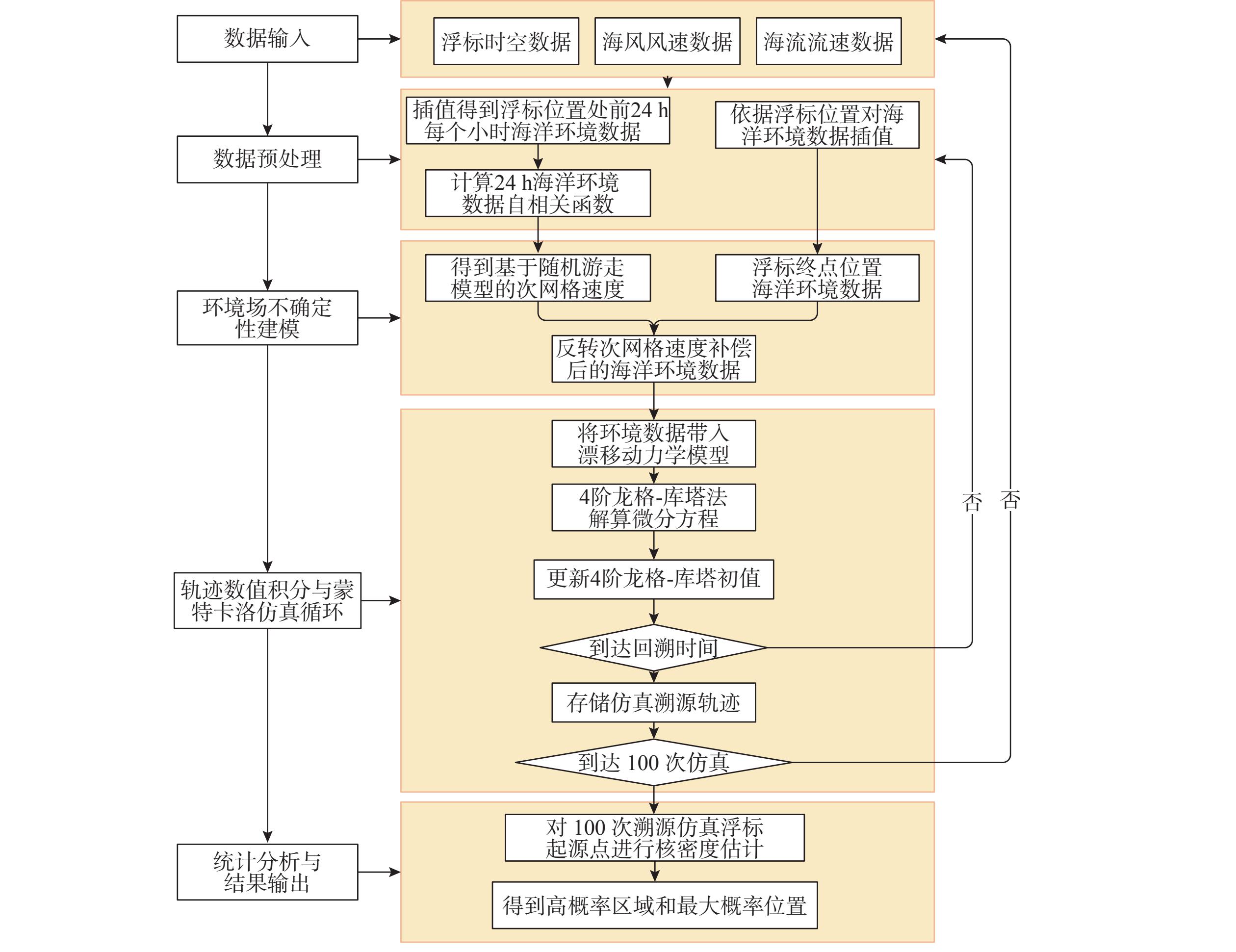
图 1 海上漂流浮标轨迹溯源流程
Figure 1. Flow chart of trajectory backtracking for offshore drifting buoys
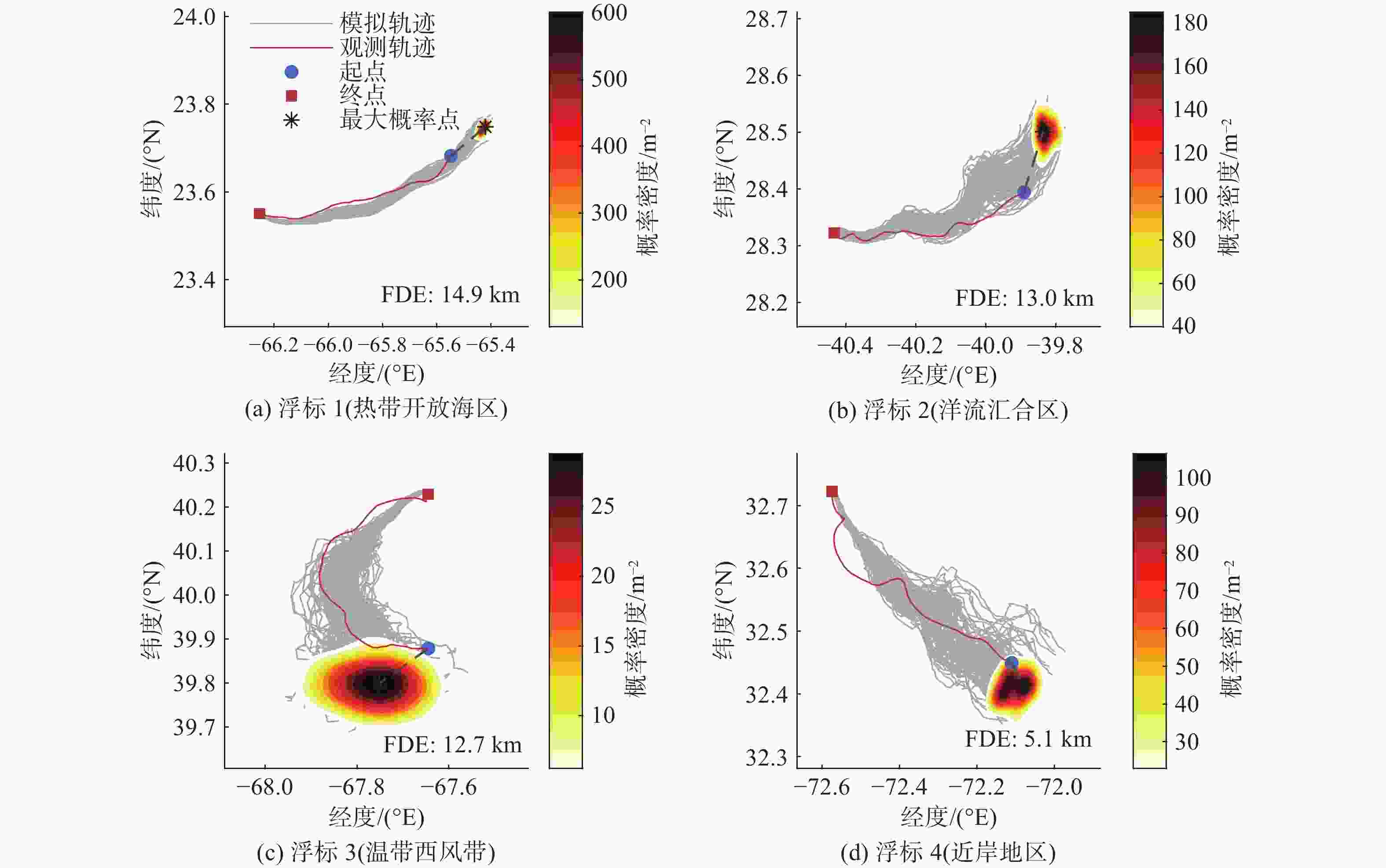
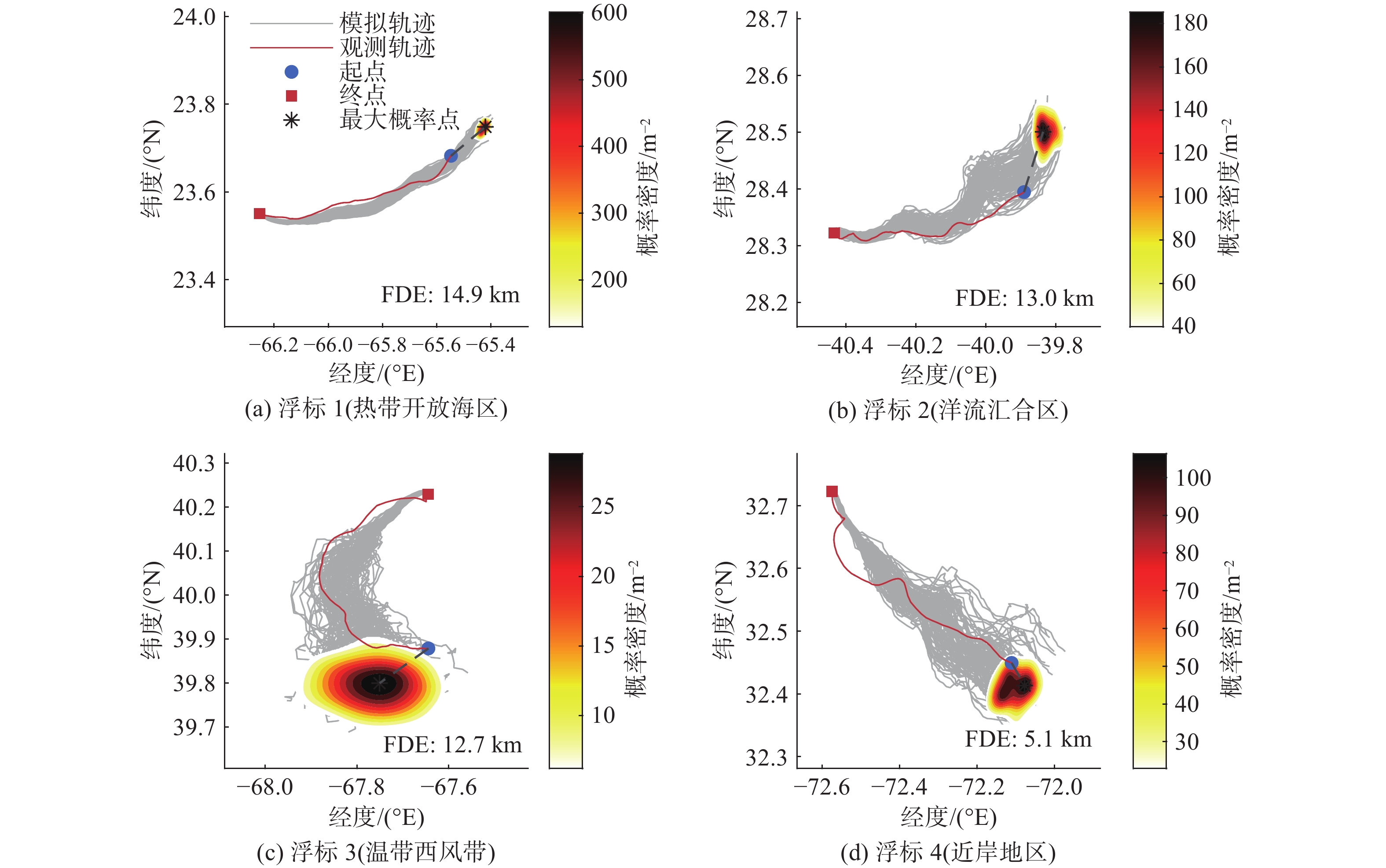
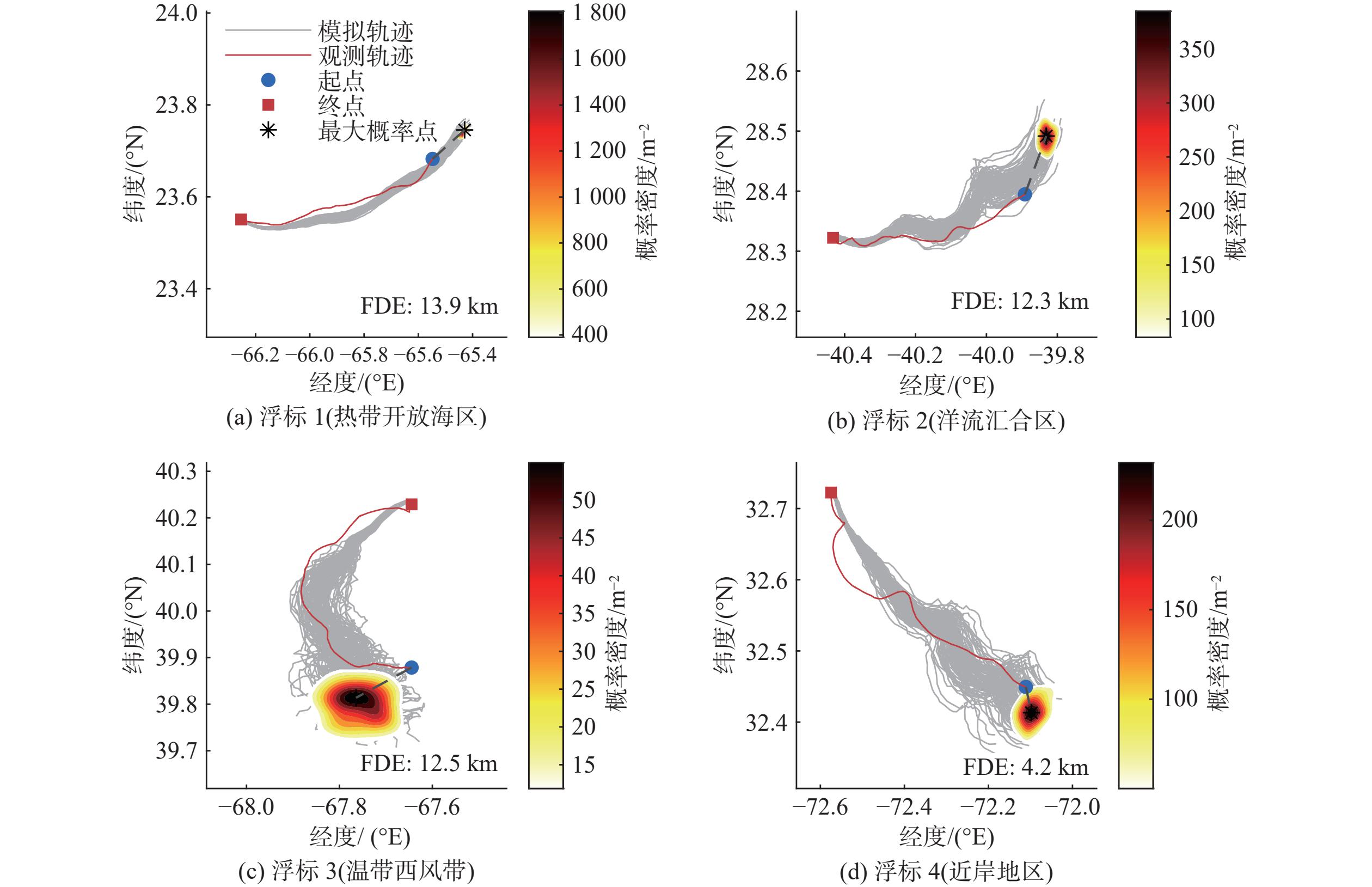
图 2 基于拉格朗日模型的72 h浮标轨迹回溯
Figure 2. 72-hour buoy trajectory backtracking based on the Lagrangian model
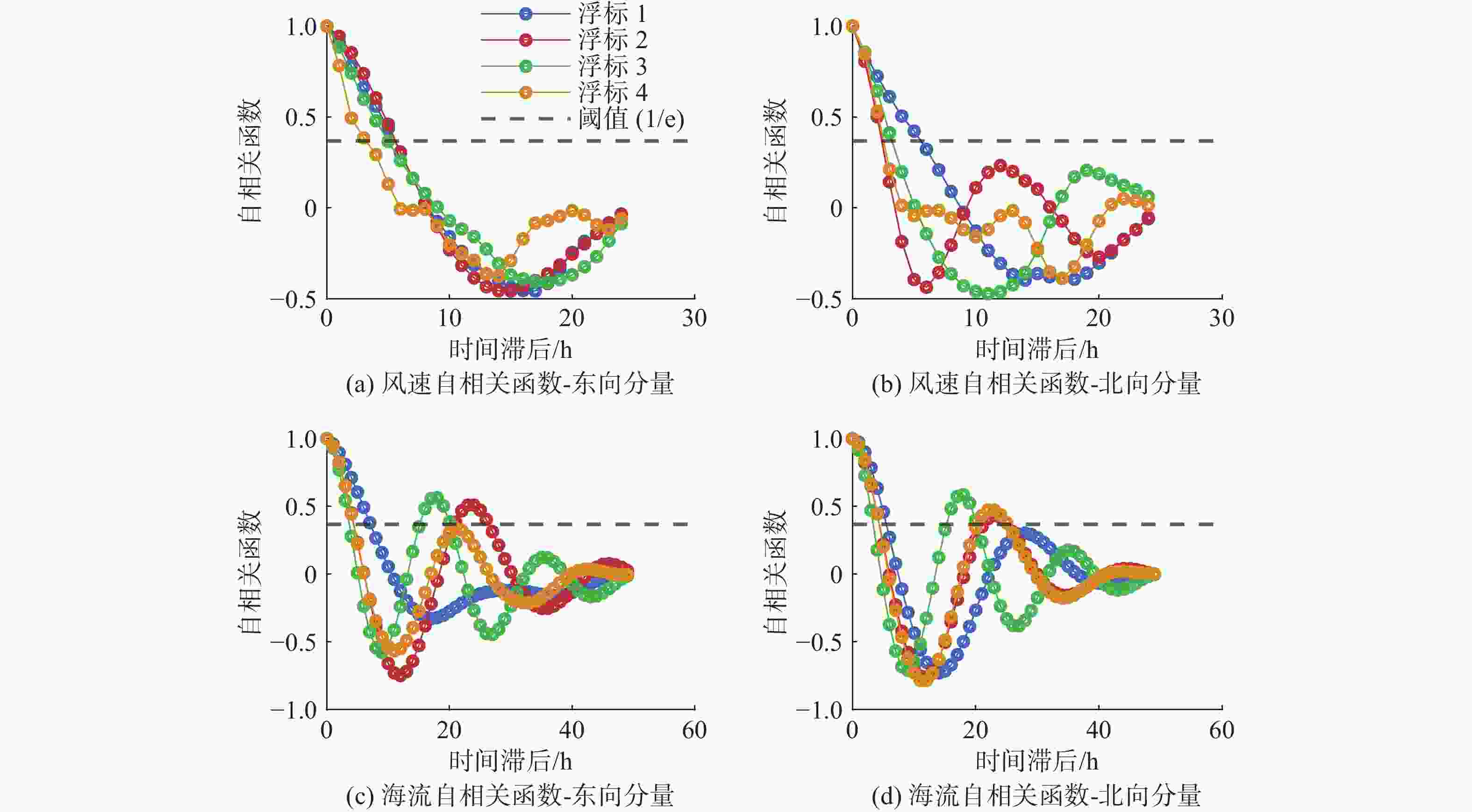
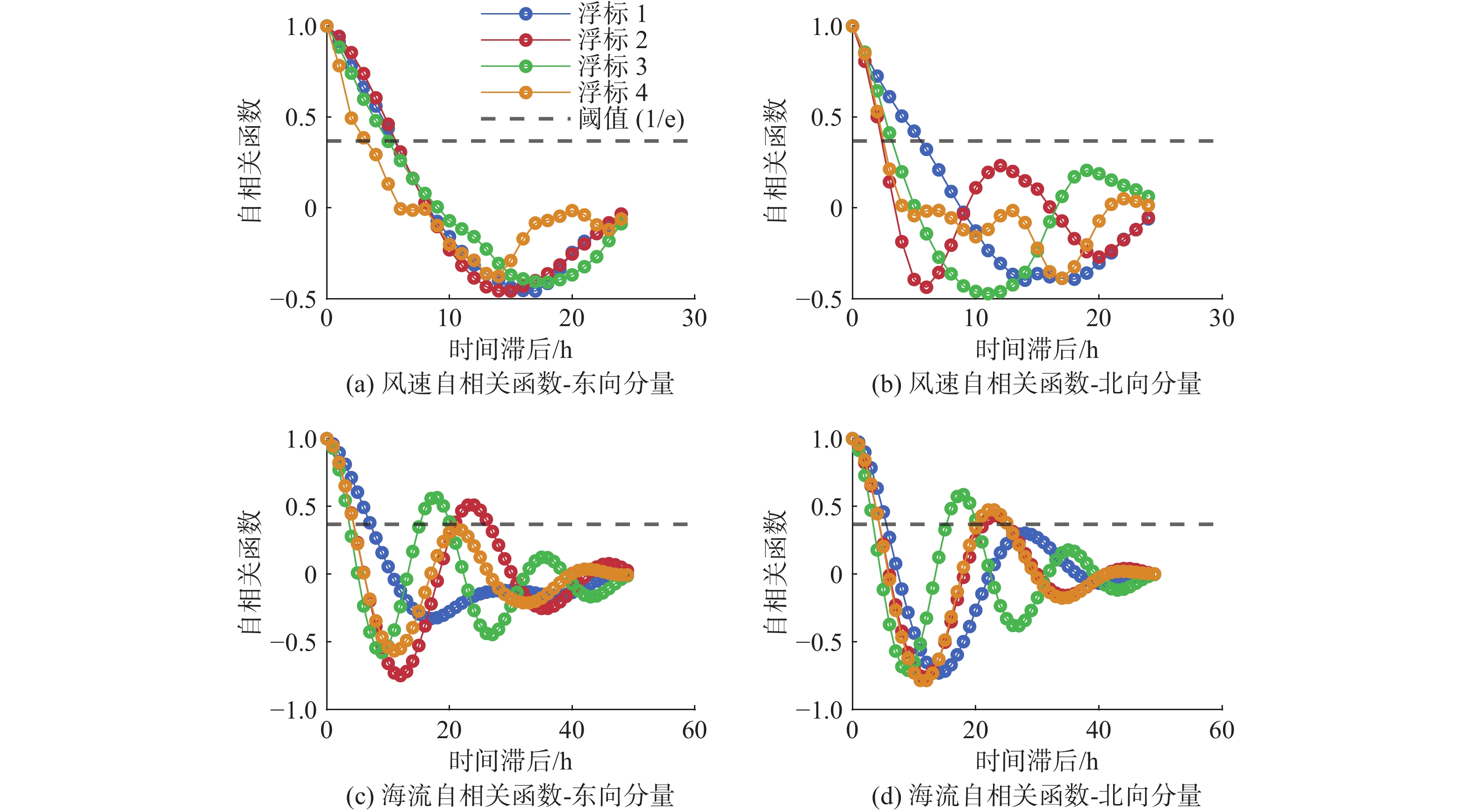
图 3 不同海域风流场自相关函数曲线
Figure 3. Autocorrelation function curves of wind and flow fields in different sea zones
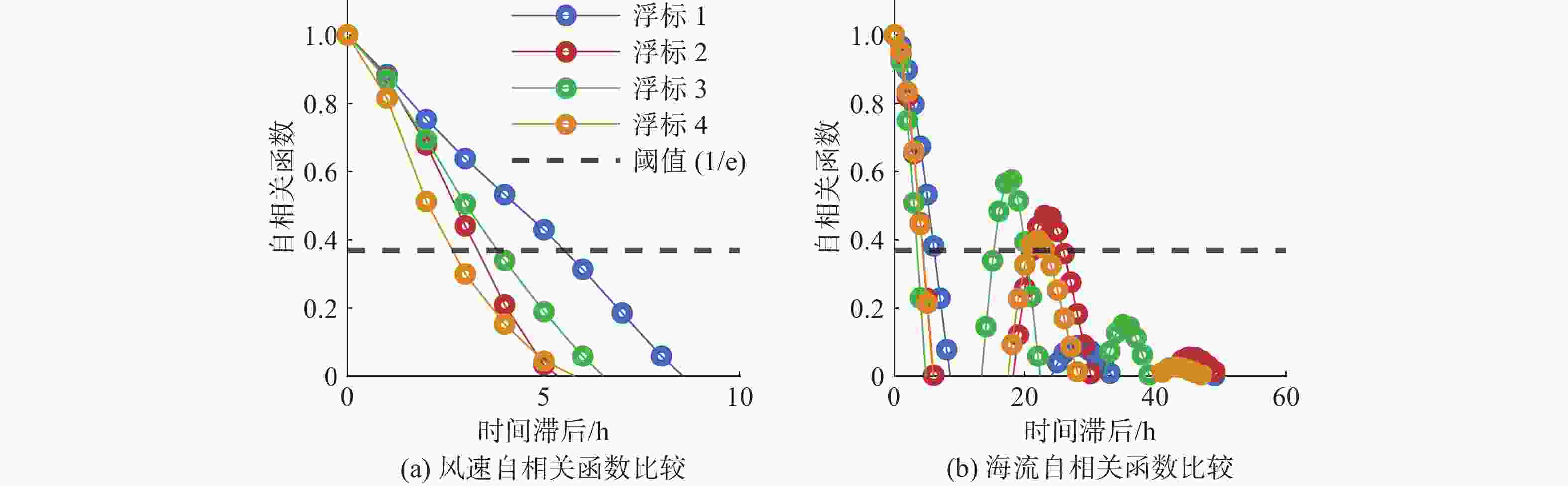
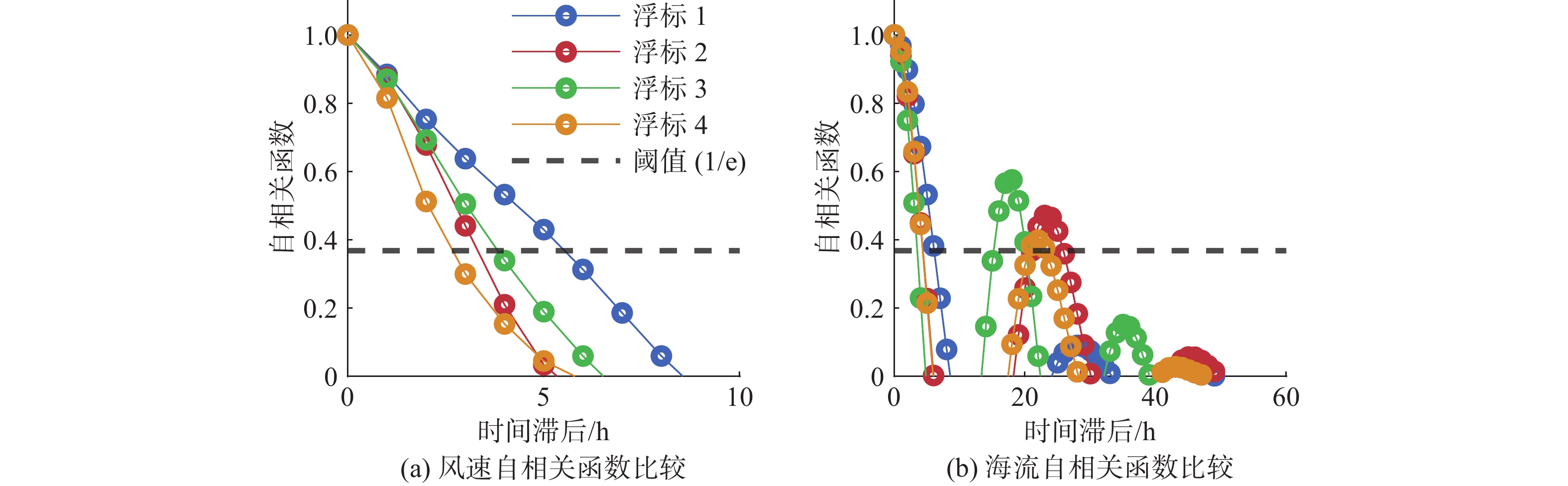
图 4 不同海域风流场自相关函数曲线(方向融合后)
Figure 4. Autocorrelation function curves of wind and flow fields in different sea zones(after direction fusion)
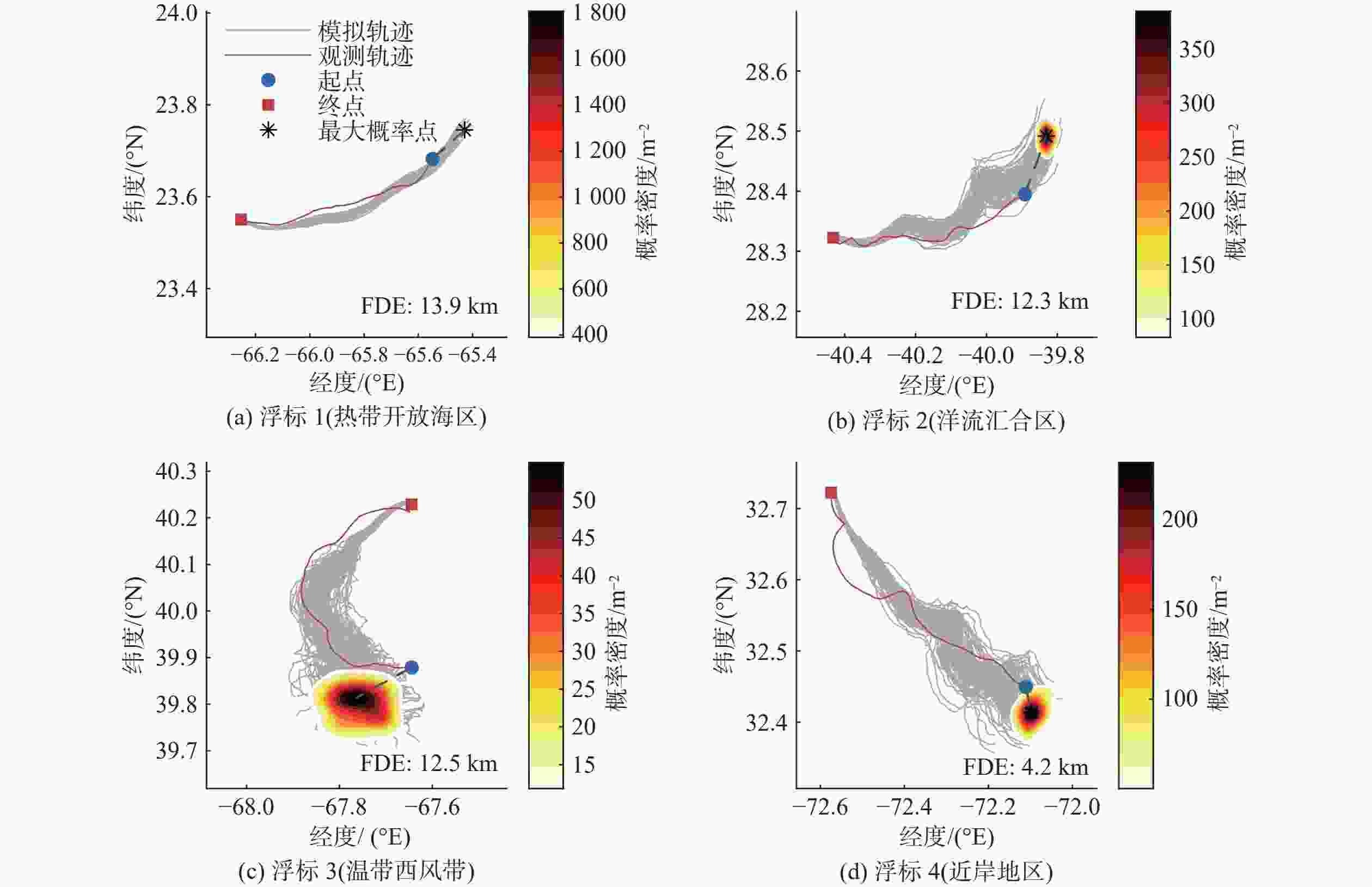
图 5 基于动态扩散系数-拉格朗日模型的72 h轨迹回溯
Figure 5. 72-hour trajectory backtracing based on dynamic diffusion coefficient-Lagrange model
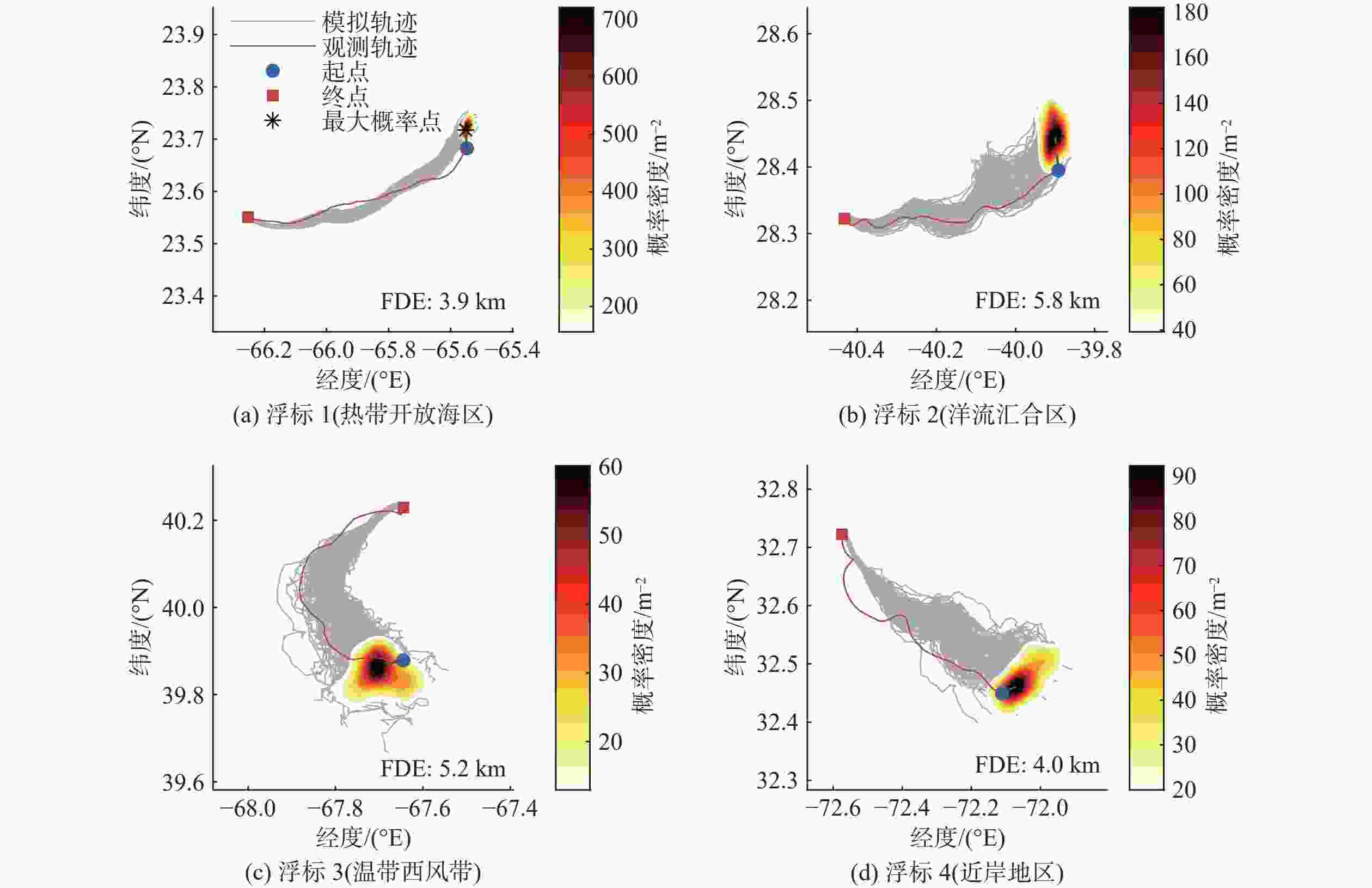
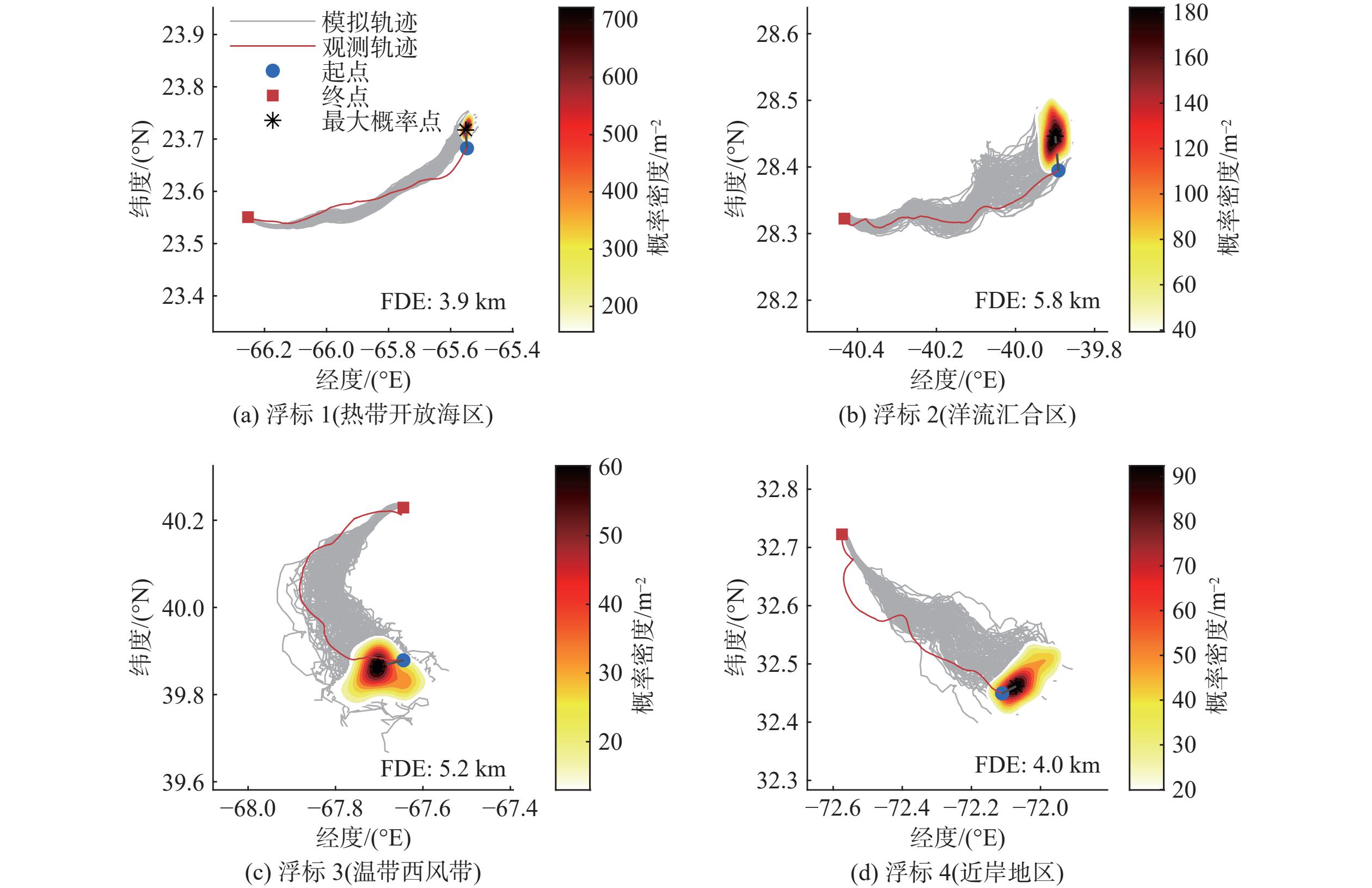
图 6 基于动态扩散系数-动力学模型的72 h轨迹回溯
Figure 6. 72-hour trajectory backtracing based on dynamic diffusion coefficient-kinetic model
表 1 Spotter漂流浮标物理属性
Table 1. Physical properties of Spotter drifting buoy
参数 规格 制造商 Sofar Ocean 型号 Spotter 形状 扁平球体 直径/cm 42 总高度/cm 31 水面以上高度/cm 约 16 质量/kg 约 7.5  下载: 导出CSV
表 2 不同模型误差统计表
Table 2. Error statistics of different models
浮标编号 传统模型误差/km 文中模型误差/km 误差降低幅度/% 1 14.9 3.9 74 2 13.0 5.8 55 3 12.7 5.2 59 4 5.1 4.0 22
下载: 导出CSV
表 3 不同回溯时长下误差统计
Table 3. Error statistics under different tracebacking durations
浮标编号 误差/km 回溯时长/h 96 72 48 24 12 1 5.3 3.9 4.6 2.4 1.5 2 5.9 5.8 4.0 1.7 2.6 3 11.3 5.2 4.3 5.3 3.7 4 17.3 4.0 10.9 9.2 1.2
下载: 导出CSV
-
[1] Zhou X, Cheng L, Min K, et al. A framework for assessing the capability of maritime search and rescue in the South China Sea[J]. International Journal of Disaster Risk Reduction, 2020, 47: 101568. doi: 10.1016/j.ijdrr.2020.101568 [2] Zhu K, Mu L, Xia X. An ensemble trajectory prediction model for maritime search and rescue and oil spill based on sub-grid velocity model[J]. Ocean Engineering, 2021, 236(7): 109513. doi: 10.1016/j.oceaneng.2021.109513 [3] Xi M, Yang J, Wen J, et al. Comprehensive ocean information-enabled AUV path planning via reinforcement learning[J]. IEEE Internet of Things Journal, 2022, 9(18): 17440-17451. doi: 10.1109/JIOT.2022.3155697 [4] Chen H. Performance of a simple backtracking method for marine oil source searching in a 3D ocean[J]. Marine Pollution Bulletin, 2019, 142: 321-334. doi: 10.1016/j.marpolbul.2019.03.045 [5] Zodiatis G, Lardner R, Solovyov D, et al. Predictions for oil slicks detected from satellite images using MyOcean forecasting data[J]. Ocean Science, 2012, 8(6): 1-11. [6] Ambjorn C. Seatrack web forecasts and backtracking of oil spills-an efficient tool to find illegal spills using AIS[C]//2008 IEEE/OES US/EU-Baltic International Symposium, 2008: 1-9. [7] Cucco A, Ribotti A, Olita A, et al. Support to oil spill emergencies in the Bonifacio Strait, western Mediterranean[J]. Ocean Science, 2012, 8: 443-454. doi: 10.5194/os-8-443-2012 [8] Breivik Ø, Allen A A. An operational search and rescue model for the Norwegian Sea and the North Sea[J]. Journal of Marine Systems, 2008, 69(1-2): 99-113. doi: 10.1016/j.jmarsys.2007.02.010 [9] Hackett B, Breivik Ø, Wettre C. Forecasting the drift of objects and substances in the ocean[M]//Hackett B, BreiviK Ø, Wettre C. Ocean Weather Forecasting: An Integrated View of Oceanography. Dordrecht: Springer, 2006: 507-523. [10] Zhang S, Wang L, Zhu M, et al. A bi-directional LSTM ship trajectory prediction method based on attention mechanism[C]//2021 IEEE 5th Advanced Information Technology, Electronic and Automation Control Conference (IAEAC), 2021: 1987-1993. [11] Gao M, Shi G, Li S. Online prediction of ship behavior with automatic identification system sensor data using bidirectional long short-term memory recurrent neural network[J]. Sensors, 2018, 18(12): 1-16. doi: 10.3390/s18124211 [12] Dagestad K, Breivik Ø, Ådlandsvik B. OpenDrift, an open source framework for ocean trajectory modeling[C]//EGU General Assembly Conference Abstracts, 2016: 7282. [13] Lumpkin R, Pazos M. Measuring surface currents with surface velocity program drifters: the instrument, its data, and some recent results[M]//Griffa A, Kirwanjr A D, Mariano A J, et al. Lagrangian Analysis and Prediction of Coastal and Ocean Dynamics. Cambridge: Cambridge University Press, 2007: 39-67. [14] 刘同木, 张炜, 曹永港, 等. 基于受力分析的落水人员漂移轨迹预测研究[J]. 海洋预报, 2017, 34(1): 66-71. doi: 10.11737/j.issn.1003-0239.2017.01.008Liu T M, Zhang W, Cao Y G, et al. Research on prediction of drifting trajectory of persons falling into water based on force analysis[J]. Marine Forecasts, 2017, 34(1): 66-71. doi: 10.11737/j.issn.1003-0239.2017.01.008 [15] Chassignet E P, Hulburt H E, Smedstad O M, et al. The HYCOM (HYbrid Coordinate Ocean Model) data assimilative system[J]. Journal of Marine Systems, 2007, 65(1-4): 60-83. doi: 10.1016/j.jmarsys.2005.09.016 [16] Shchepetkin A F, McWilliams J C. The regional oceanic modeling system(ROMS): a split-explicit, free-surface, topography-following-coordinate oceanic model[J]. Ocean Modelling, 2005, 9(4): 347-404. doi: 10.1016/j.ocemod.2004.08.002 [17] Fox-Kemper B, Adcroft A, Böning C W, et al. Challenges and prospects in ocean circulation models[J]. Frontiers in Marine Science, 2019, 6: 65. doi: 10.3389/fmars.2019.00065 [18] Griffa A. Applications of stochastic particle models to oceanographic problems[M]//Stochastic Modelling in Physical Oceanography. Boston: Birkhäuser Boston, 1996: 113-140. [19] Lacasce J H. Statistics from Lagrangian observations[J]. Progress in Oceanography, 2008, 77(1): 1-29. [20] Van Sebille E, Griffies S M, Abernathey R, et al. Lagrangian ocean analysis: fundamentals and practices[J]. Ocean Modelling, 2018, 121: 49-75. doi: 10.1016/j.ocemod.2017.11.008 [21] Abascal A J, Castanedo S, Mendez F J, et al. Calibration of a lagrangian transport model using drifting buoys deployed during the prestige oil spill[J]. Journal of Coastal Research, 2009, 25(1): 80-90. [22] Zhang J, Teixeira A P, Soares G C. Probabilistic modelling of the drifting trajectory of an object under the effect of wind and current for maritime search and rescue[J]. Ocean Engineering, 2017, 129: 253-264. doi: 10.1016/j.oceaneng.2016.11.002 [23] Scott C N, Bonjean F, Nolan G, et al. Estimates of surface drifter trajectories in the equatorial Atlantic: a multi-model ensemble approach[J]. Ocean Dynamics, 2012, 62: 1091-1109. doi: 10.1007/s10236-012-0548-2 [24] Reich S, Cotter C. Probabilistic forecasting and Bayesian data assimilation[M]. Cambridge: Cambridge University Press, 2015. [25] Särkkä S. Bayesian filtering and smoothing[M]. Cambridge: Cambridge University Press, 2013. [26] 袁理, 任虹, 鲁佩仪, 等. 海上浮标漂移轨迹预测分析系统研究[J]. 航海, 2020(3): 24-28. doi: 10.3969/j.issn.1000-0356.2020.03.011Yuan L, Ren H, Lu P Y, et al. Research on prediction and analysis system for maritime buoy drift trajectory[J]. Navigation, 2020(3): 24-28. doi: 10.3969/j.issn.1000-0356.2020.03.011 [27] Mariano A J, Ryan E H, Laurindo L C. Lagrangian simulation of oil trajectories in the Florida Straits[J]. Marine Pollution Bulletin, 2019, 140: 204-218. doi: 10.1016/j.marpolbul.2019.01.031 [28] Abascal A J, Castanedo S, Fernandez V, et al. Backtracking drifting objects using surface currents from high-frequency(HF) radar technology[J]. Ocean Dynamics, 2012, 62: 1073-1089. doi: 10.1007/s10236-012-0546-4 [29] Alahi A, Goel K, Ramanathan V, et al. Social LSTM: Human trajectory prediction in crowded spaces[C]//Proceedings of the IEEE Conference on Computer Vision and Pattern Recognition(CVPR), 2016: 961-971. [30] Haller G. Lagrangian coherent structures[J]. Annual Review of Fluid Mechanics, 2015, 47(1): 137-162. doi: 10.1146/annurev-fluid-010313-141322 -

 下载:
下载:

 点击查看大图
计量
- 文章访问数: 635
- HTML全文浏览量: 311
- PDF下载量: 72
- 被引次数: 0