

Cross-media Oblique Ice-Breaking Load and Motion Characteristics of Water-Exiting Vehicles
-
摘要: 现有针对具备出水破冰能力航行体的研究多聚焦于垂直破冰, 缺乏探讨倾斜角度对破冰性能的影响。为此, 文中基于任意拉格朗日-欧拉(ALE)流固耦合算法建立了航行体倾斜出水破冰数值模型, 系统分析了倾斜角度、初速度及冰层厚度对航行体载荷及运动特性的影响规律。结果表明: 在破冰初期, 航行体尖锥形头部撞击冰层导致冰层局部产生剧烈的应力集中, 其顶部率先萌生径向裂纹并从中部开始破碎失效; 航行体所受合力中心偏离轴线方向, 导致其沿初始倾斜方向偏转加剧, 且该趋势随初速度和冰厚增大愈加明显; 在随后穿冰过程中, 倾斜角度θ=10°工况低速和厚冰条件下, 航行体姿态呈“偏转-回正”模式; 高速和薄冰条件下, 姿态则呈“偏转-直航”模式。研究结果可为极地跨介质航行体设计发展提供参考。Abstract: Most existing studies on vehicles with water-exit ice-breaking capabilities primarily focus on vertical ice-breaking, lacking investigations into the influence of oblique angles on ice-breaking performance. Therefore, a numerical model for the oblique water-exit and ice-breaking process of a vehicle was built based on the arbitrary Lagrangian-Eulerian(ALE) fluid-solid coupling algorithm. The effects of the oblique angle, initial velocity, and ice thickness on the load and motion characteristics of the vehicle were systematically analyzed. The results indicate that during the initial ice-breaking stage, the impact of the vehicle’s conical head induces intense local stress concentration in the ice. This leads to the early initiation of radial cracks at the top surface, followed by failure originating from the center. The center of the resultant force on the vehicle deviates from its axis, causing an exacerbated deflection along the initial oblique direction. Additionally, this trend becomes more pronounced as the initial velocity and ice thickness increase. During the subsequent ice-breaking process, in low velocity and thick ice conditions for the θ=10° case, the vehicle’s attitude follows a “deflection-recovery” pattern. In high velocity and thin ice conditions, it transitions to a “deflection-steady flight” pattern. The research findings provide reference for the design and development of polar cross-media vehicles.
-
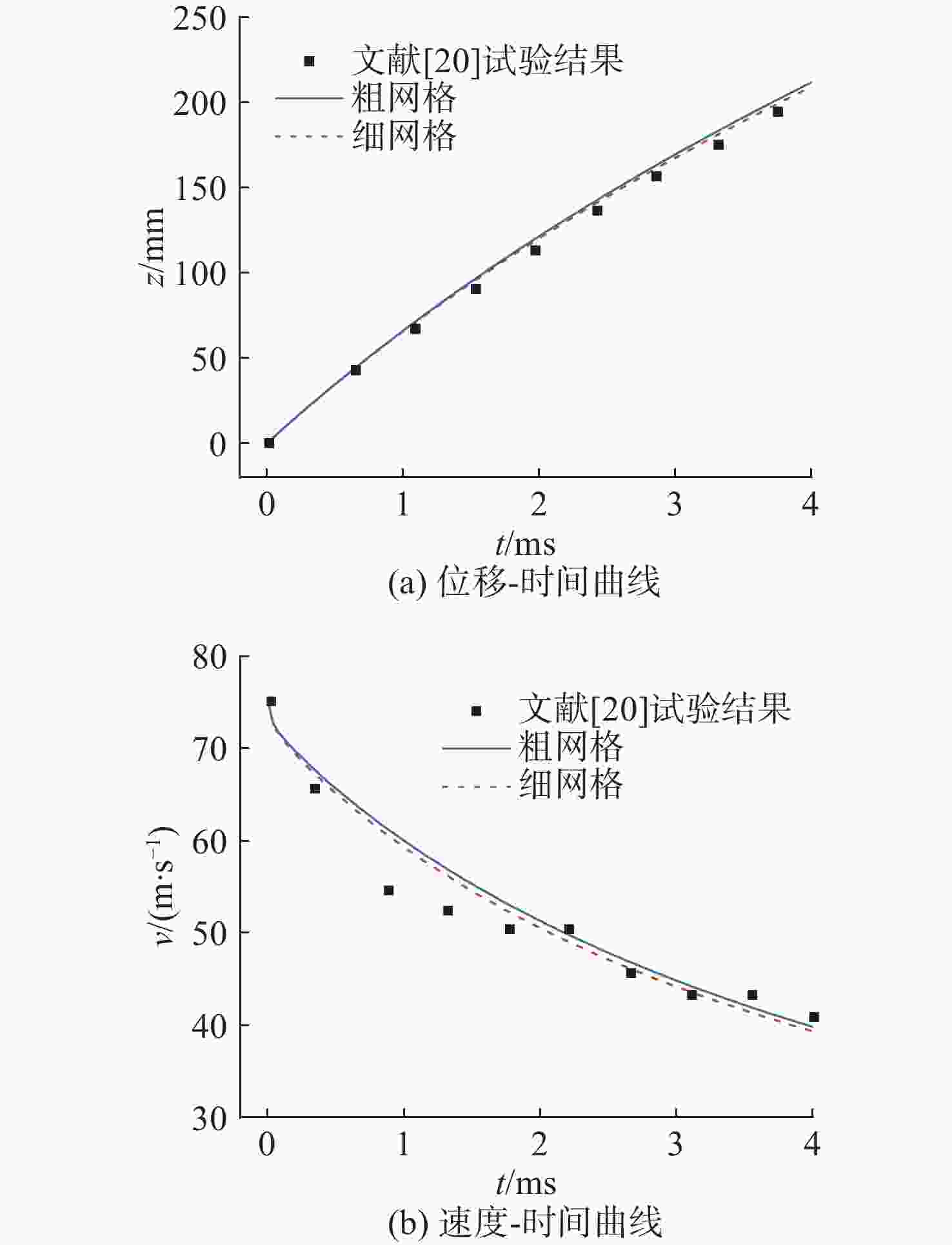
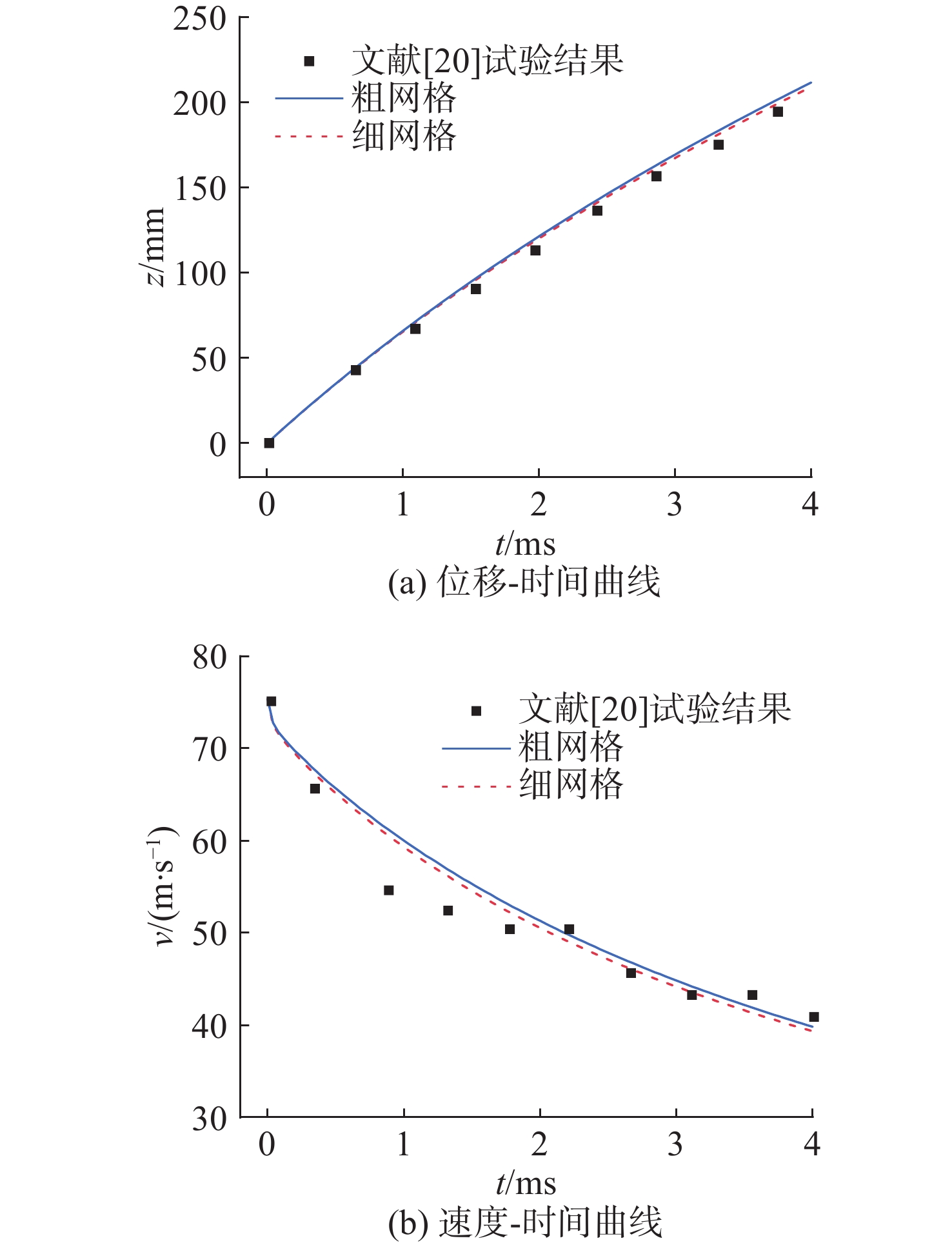
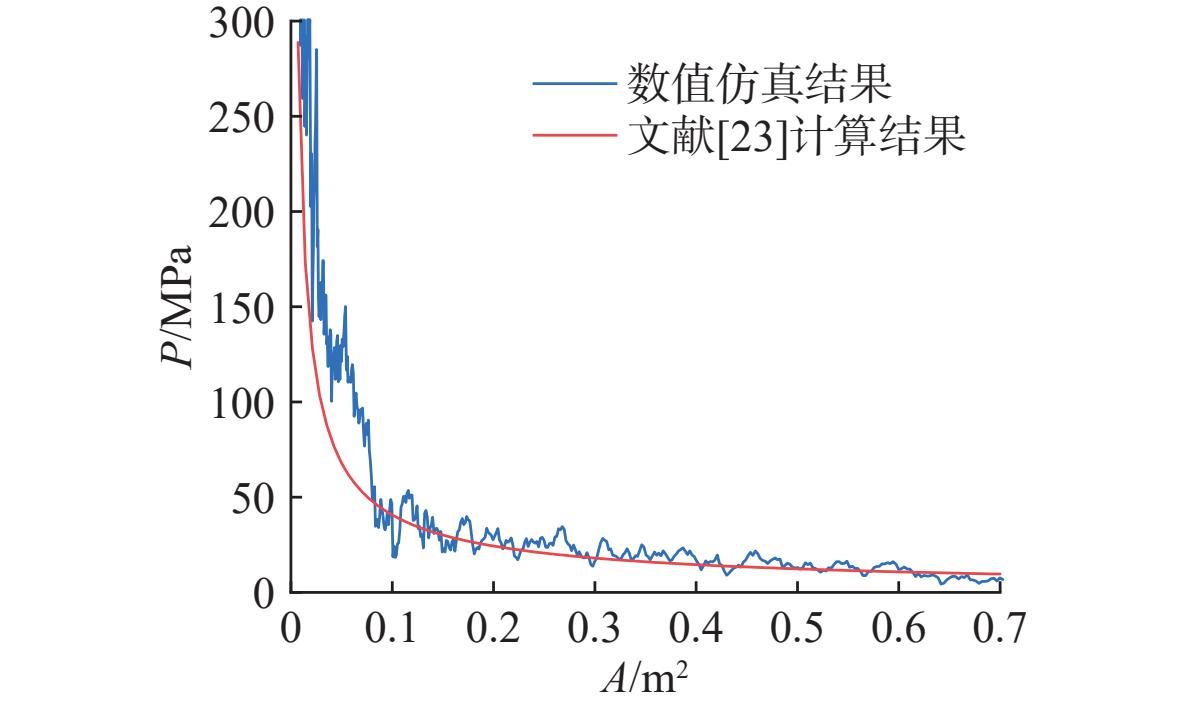
图 5 圆柱位移和速度随时间变化曲线
Figure 5. Curves of cylinder displacement and velocity changing with time
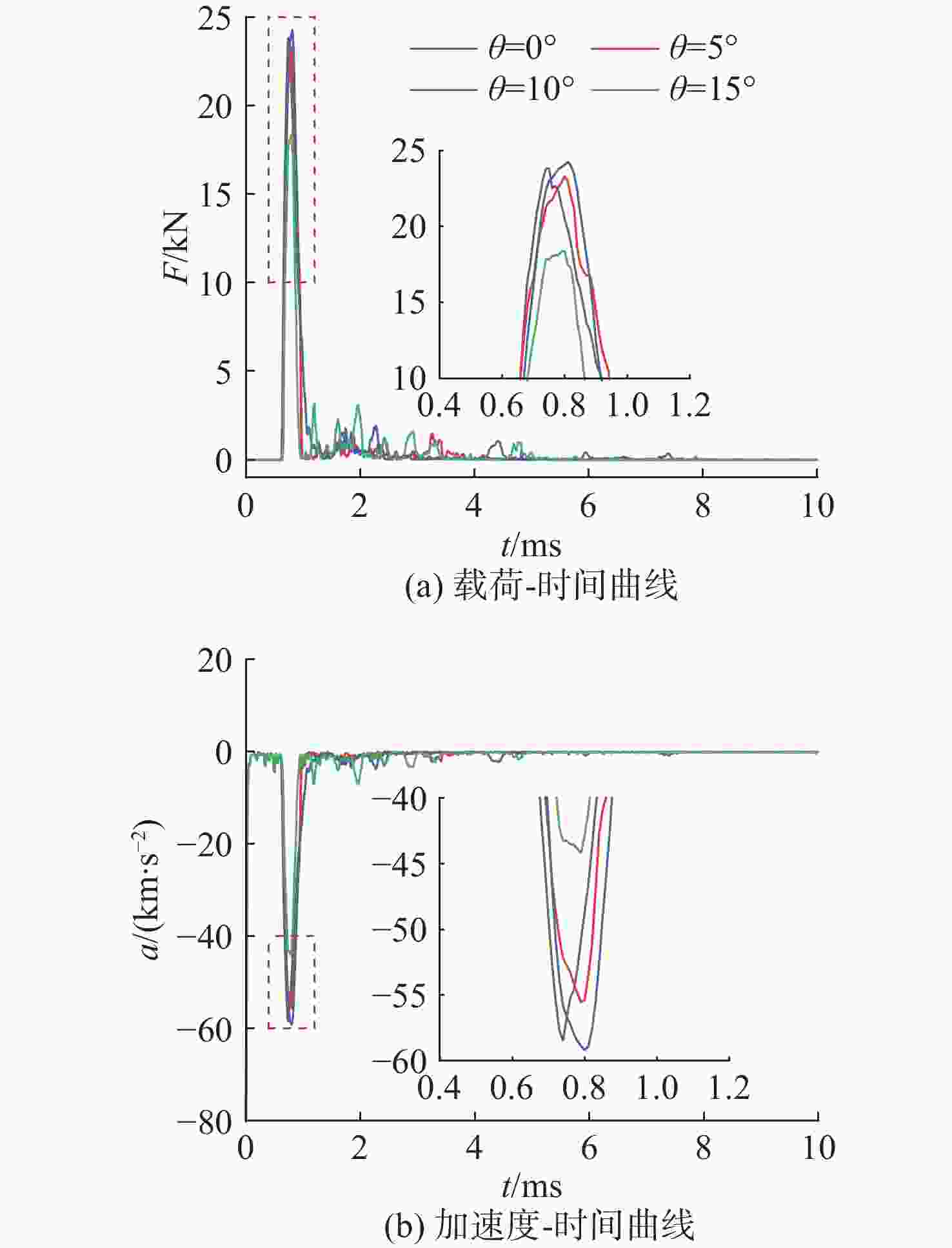
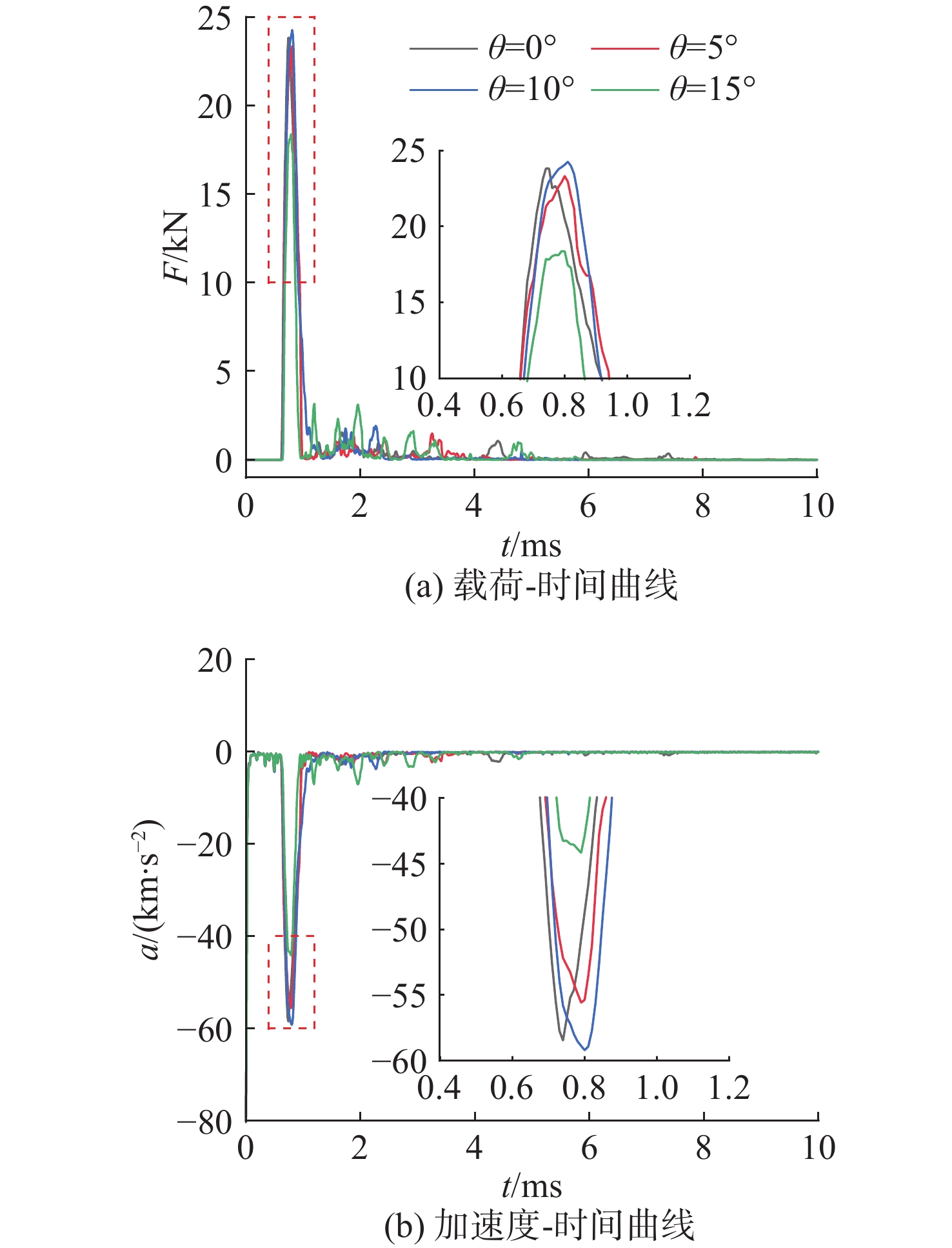
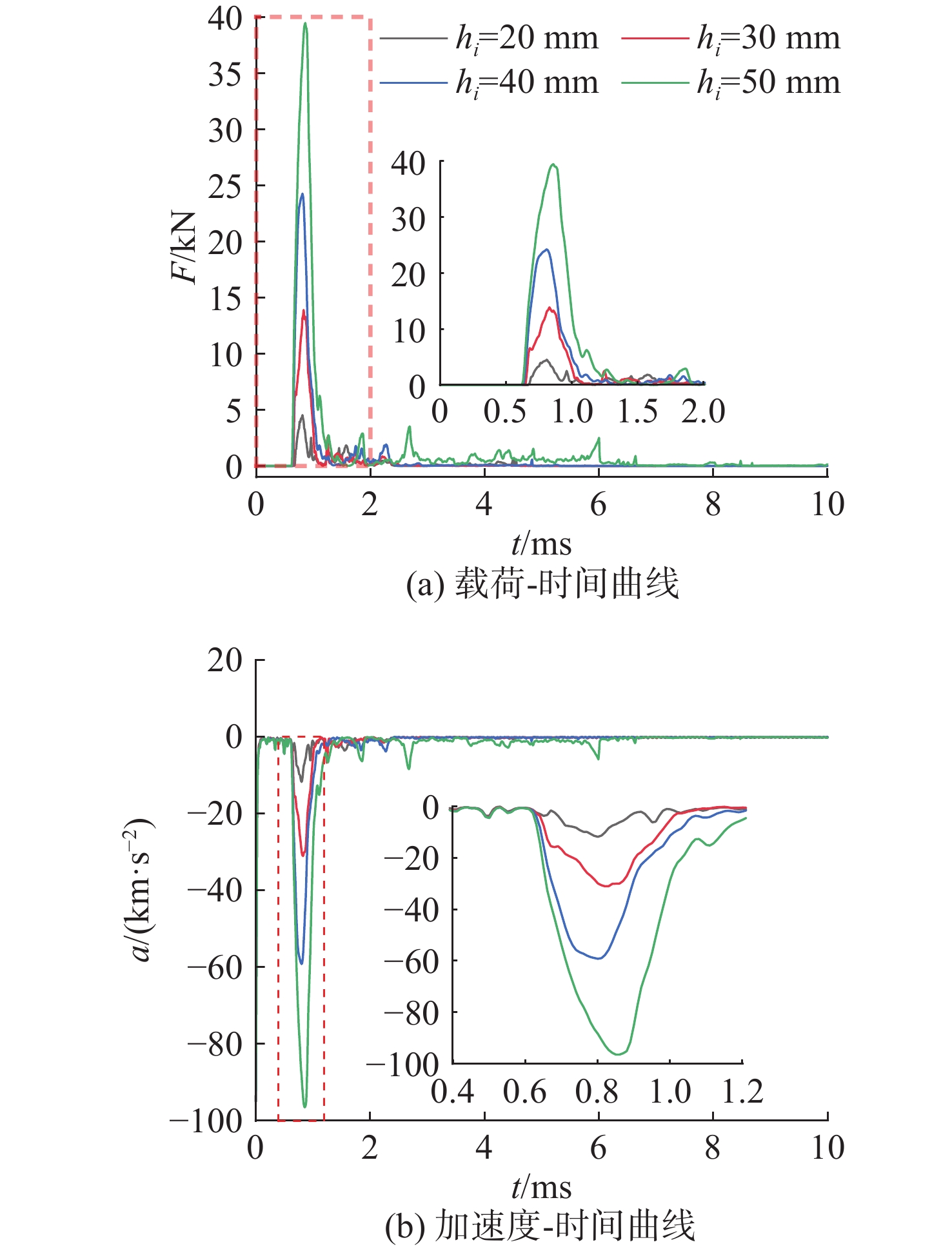
图 11 不同倾斜角度下航行体载荷和加速度变化曲线
Figure 11. Variation curves of vehicle load and acceleration under different oblique angles
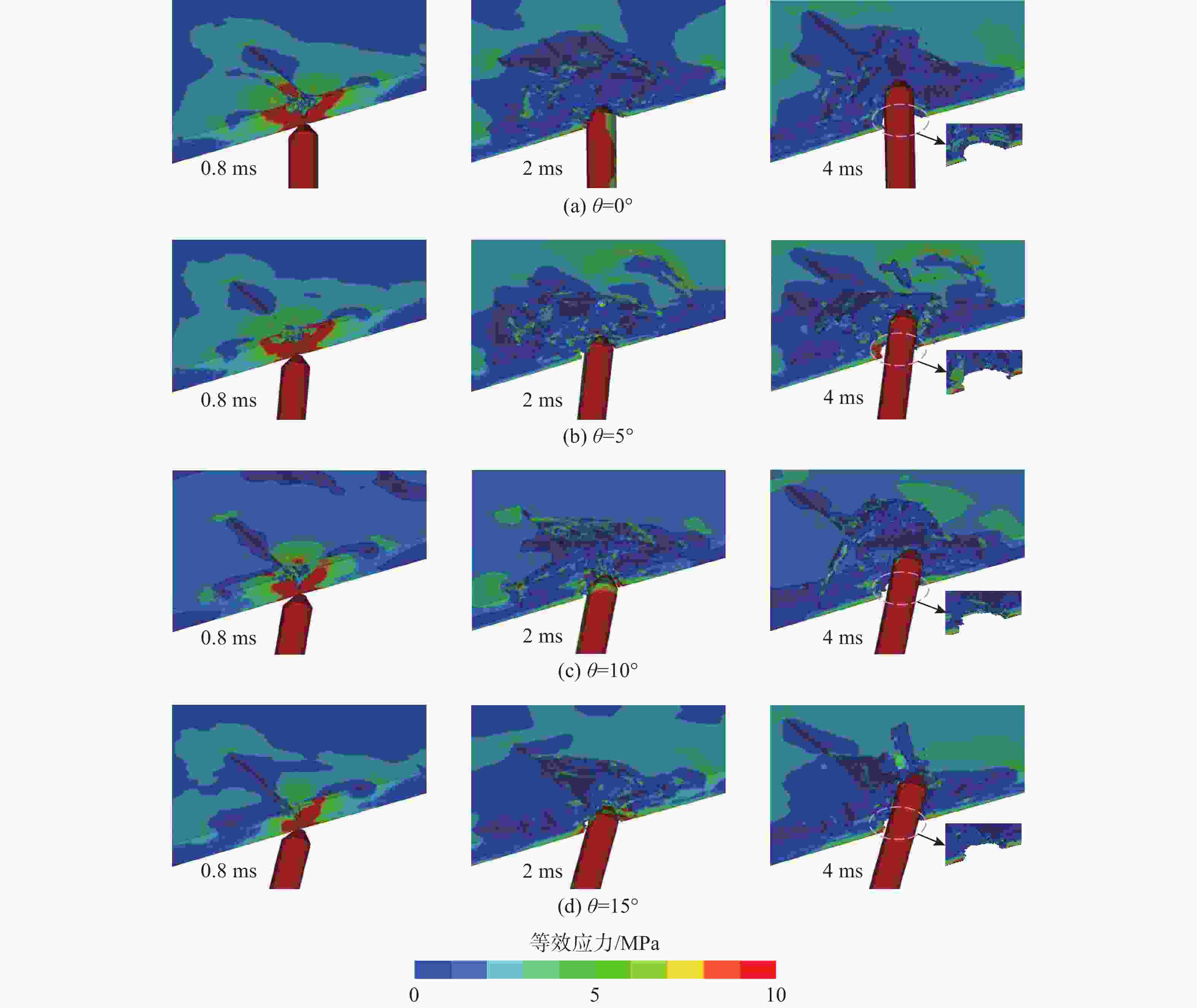
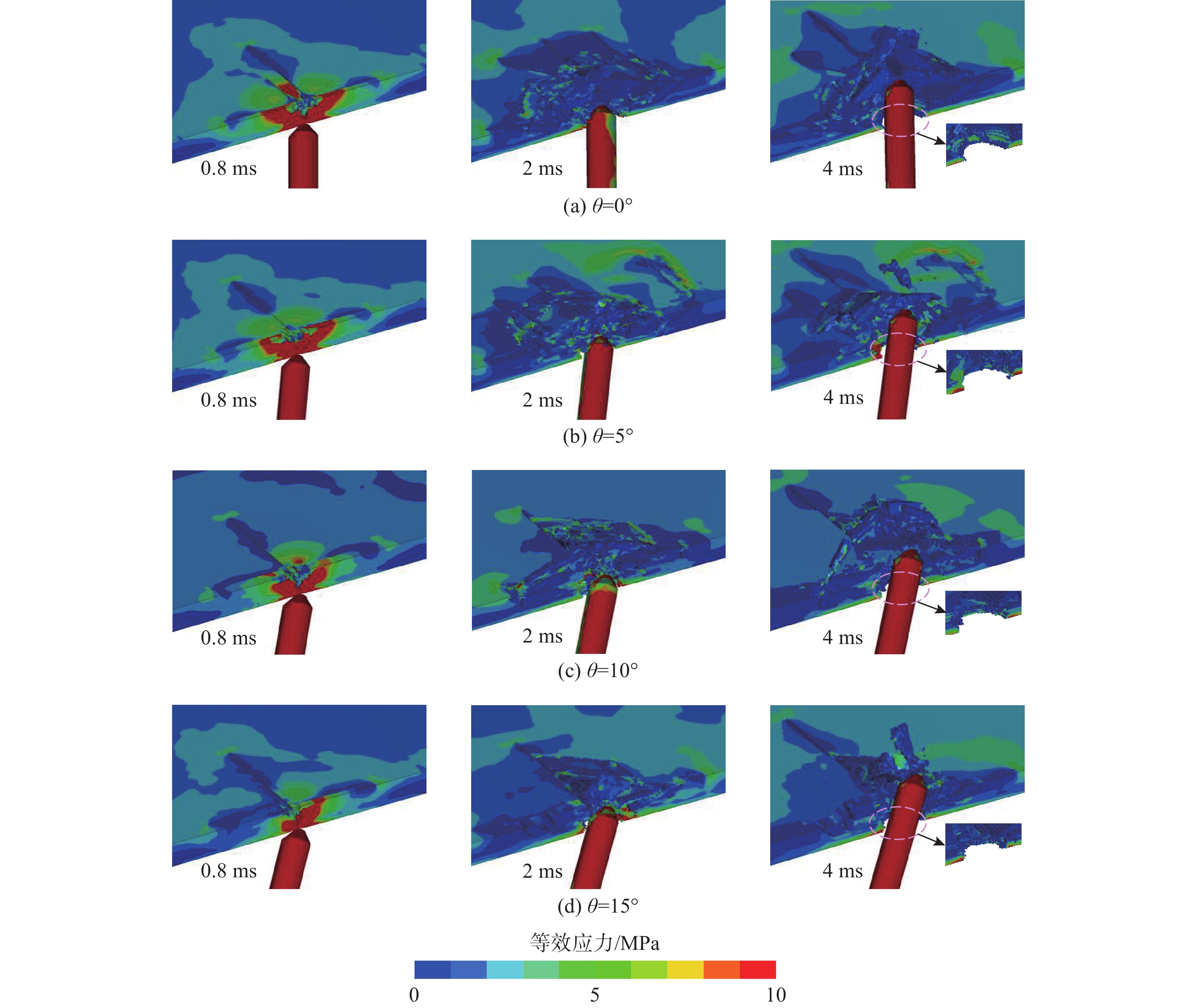
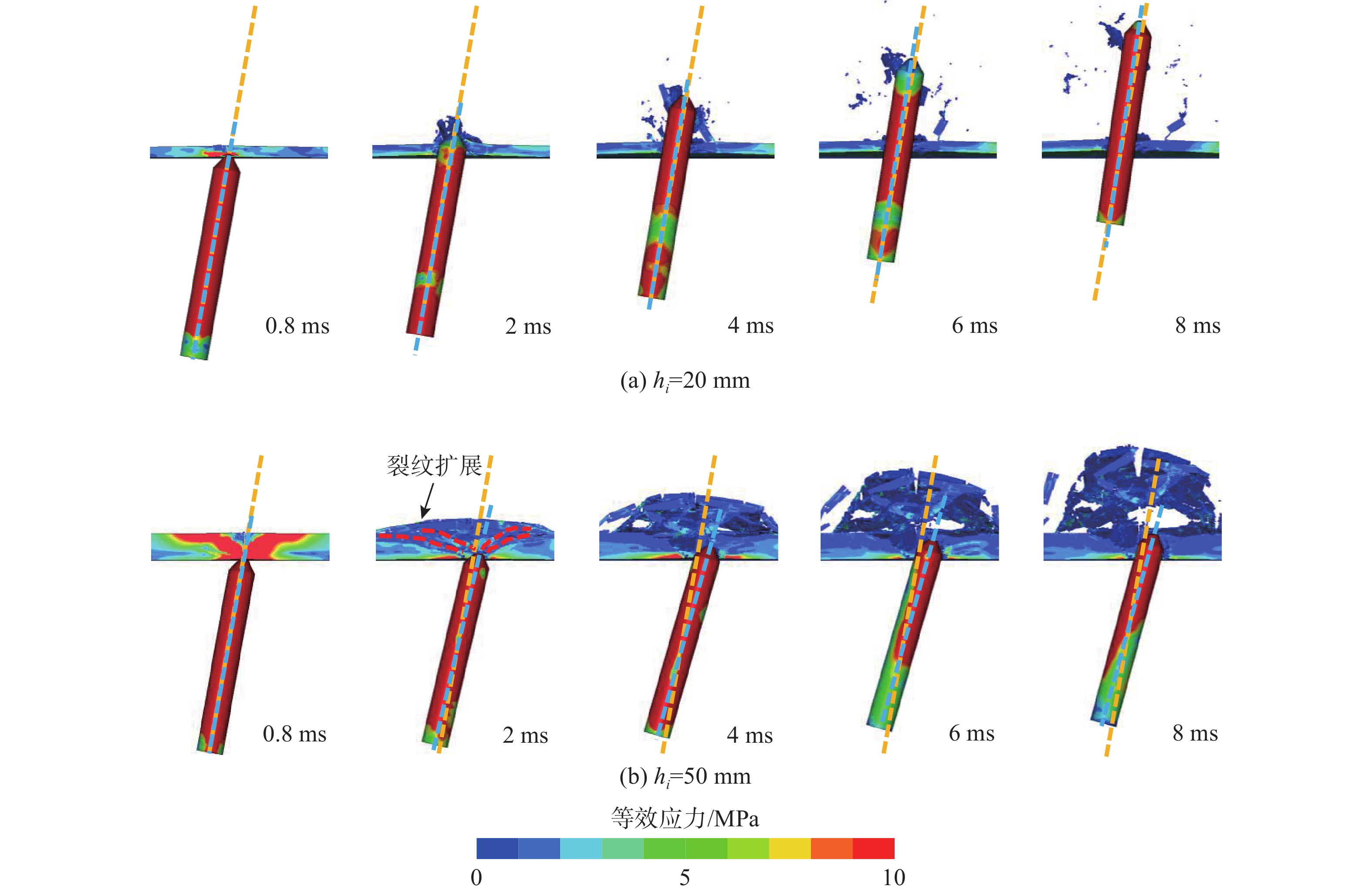
图 12 不同倾斜角度条件下等效应力云图
Figure 12. Equivalent stress contours under different oblique angles
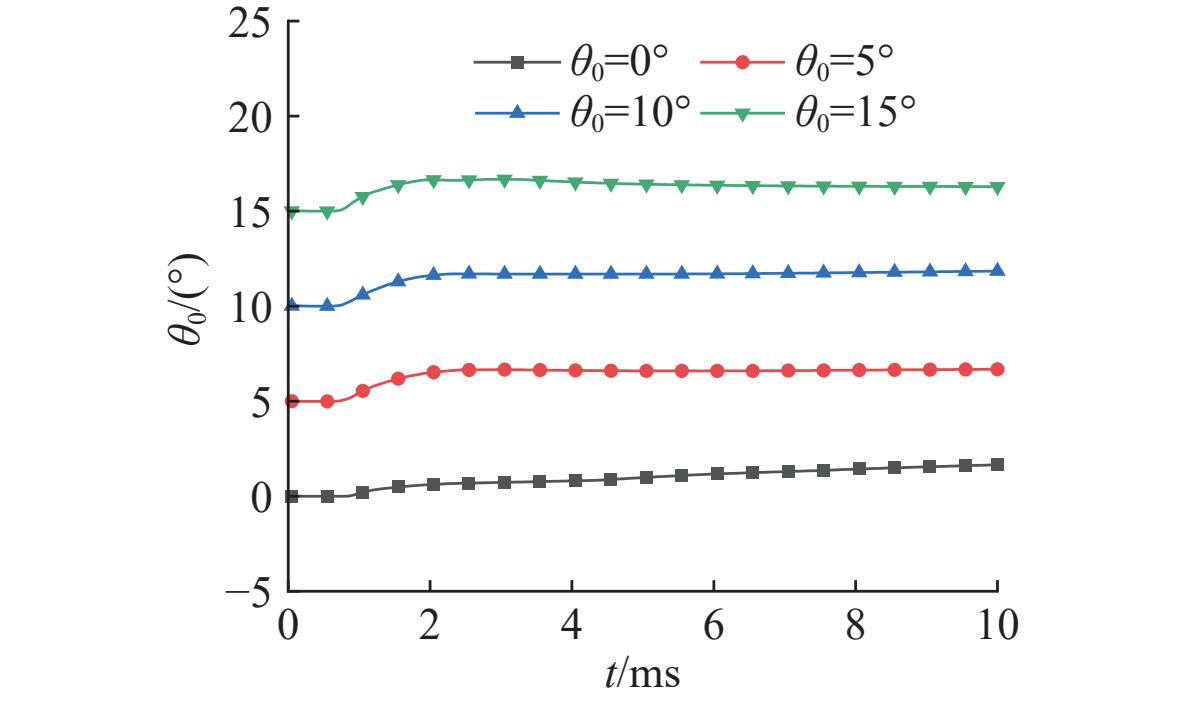
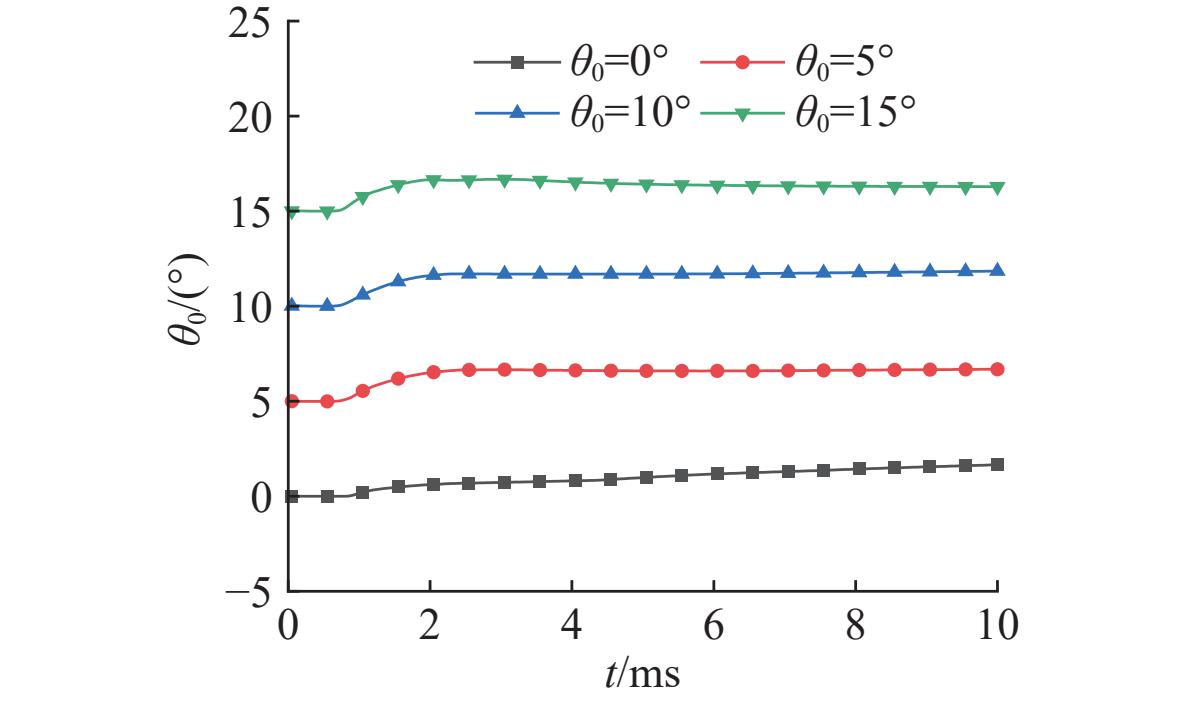
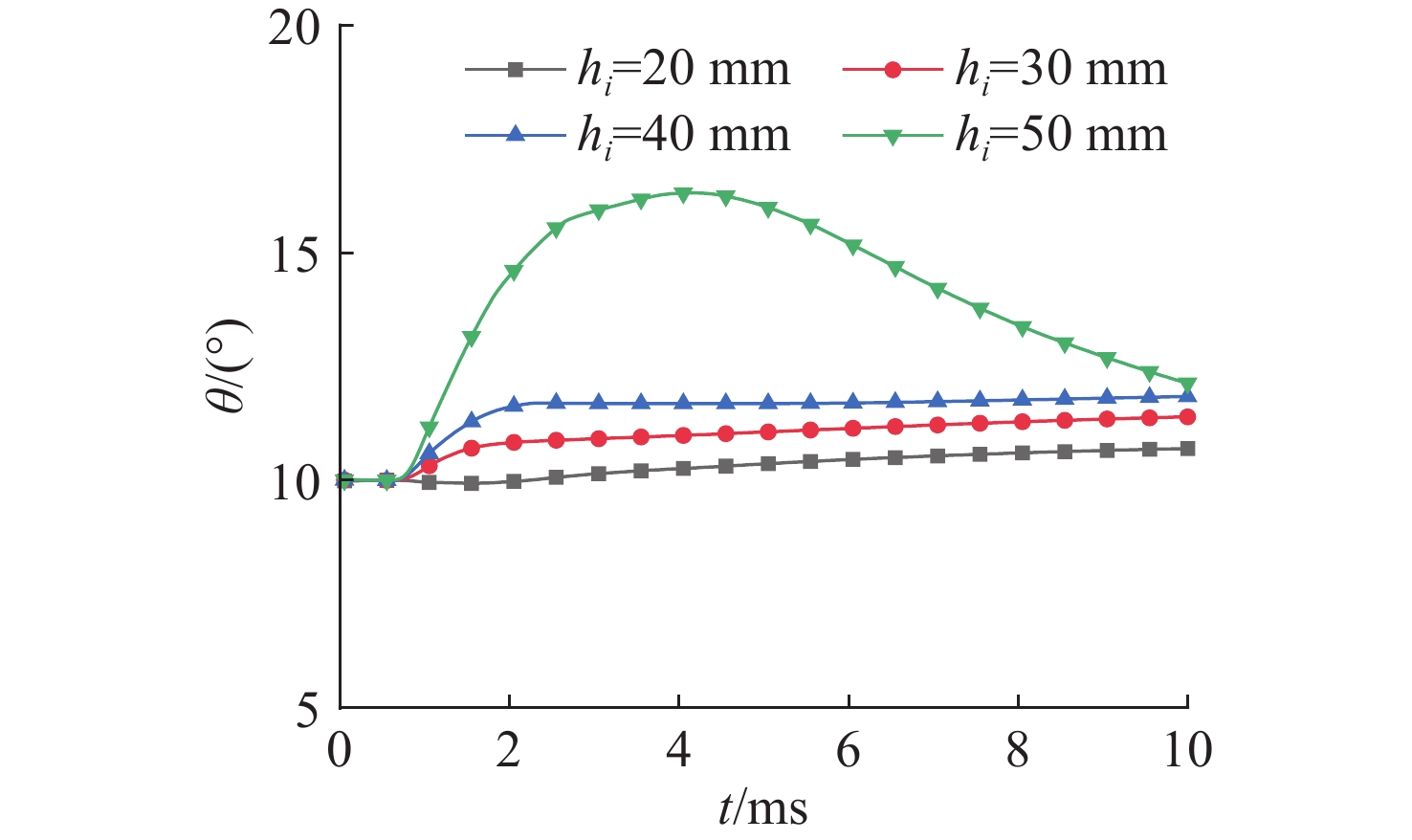
图 13 破冰过程航行体倾斜角度变化曲线
Figure 13. Variation curves of the vehicle’s oblique angle during the ice-breaking process
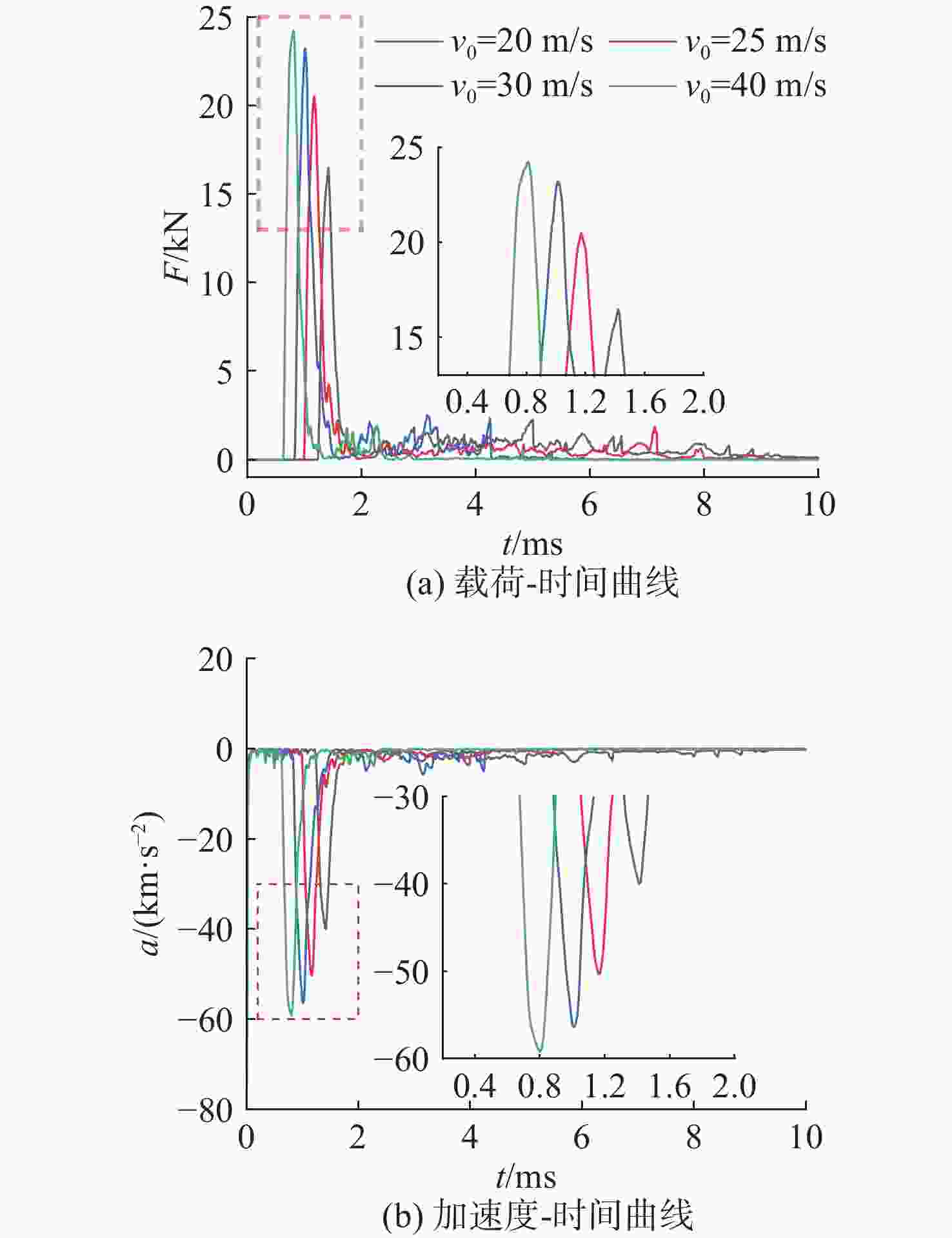
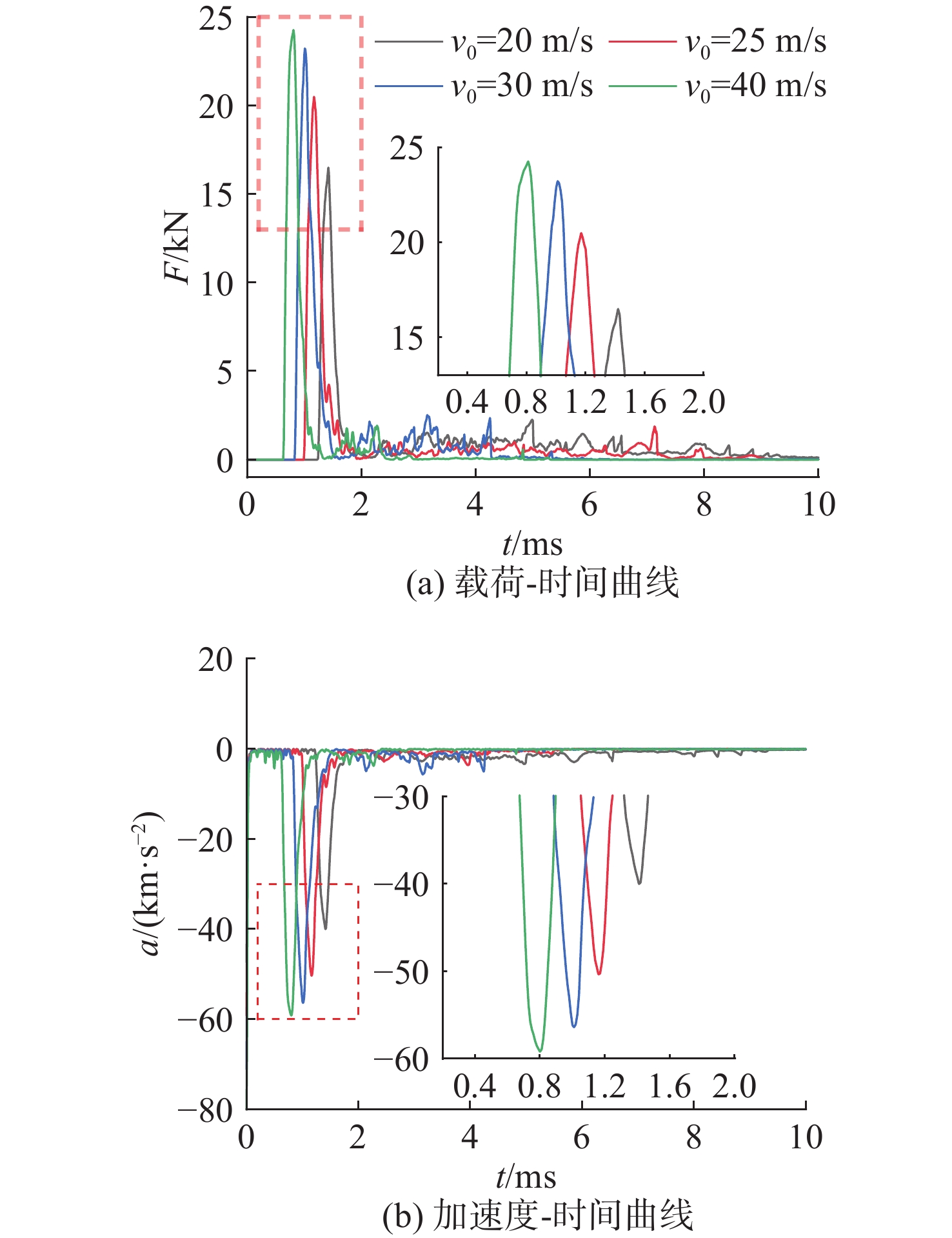
图 14 不同初速度下航行体载荷和加速度变化曲线
Figure 14. Variation curves of load and acceleration under different initial velocities
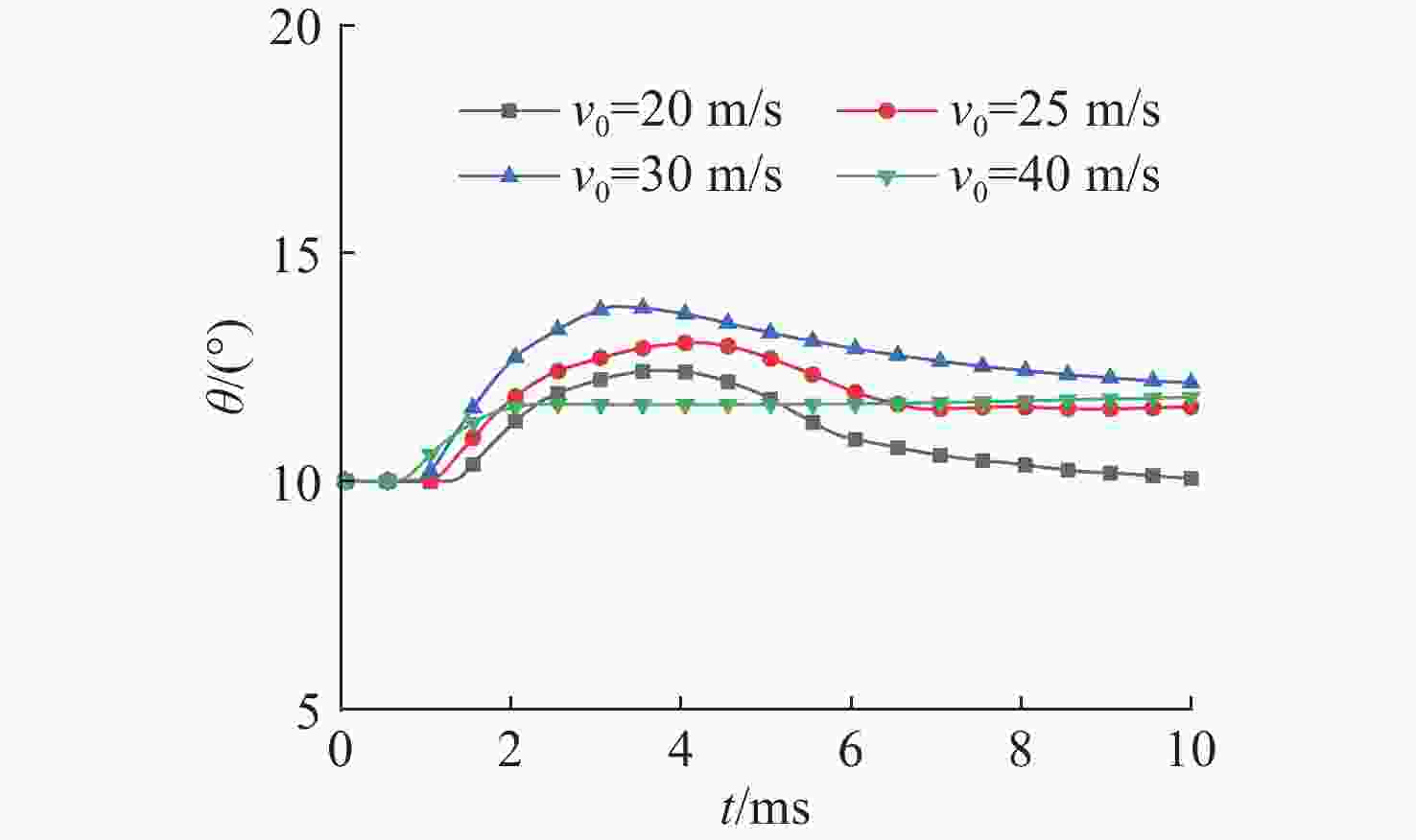
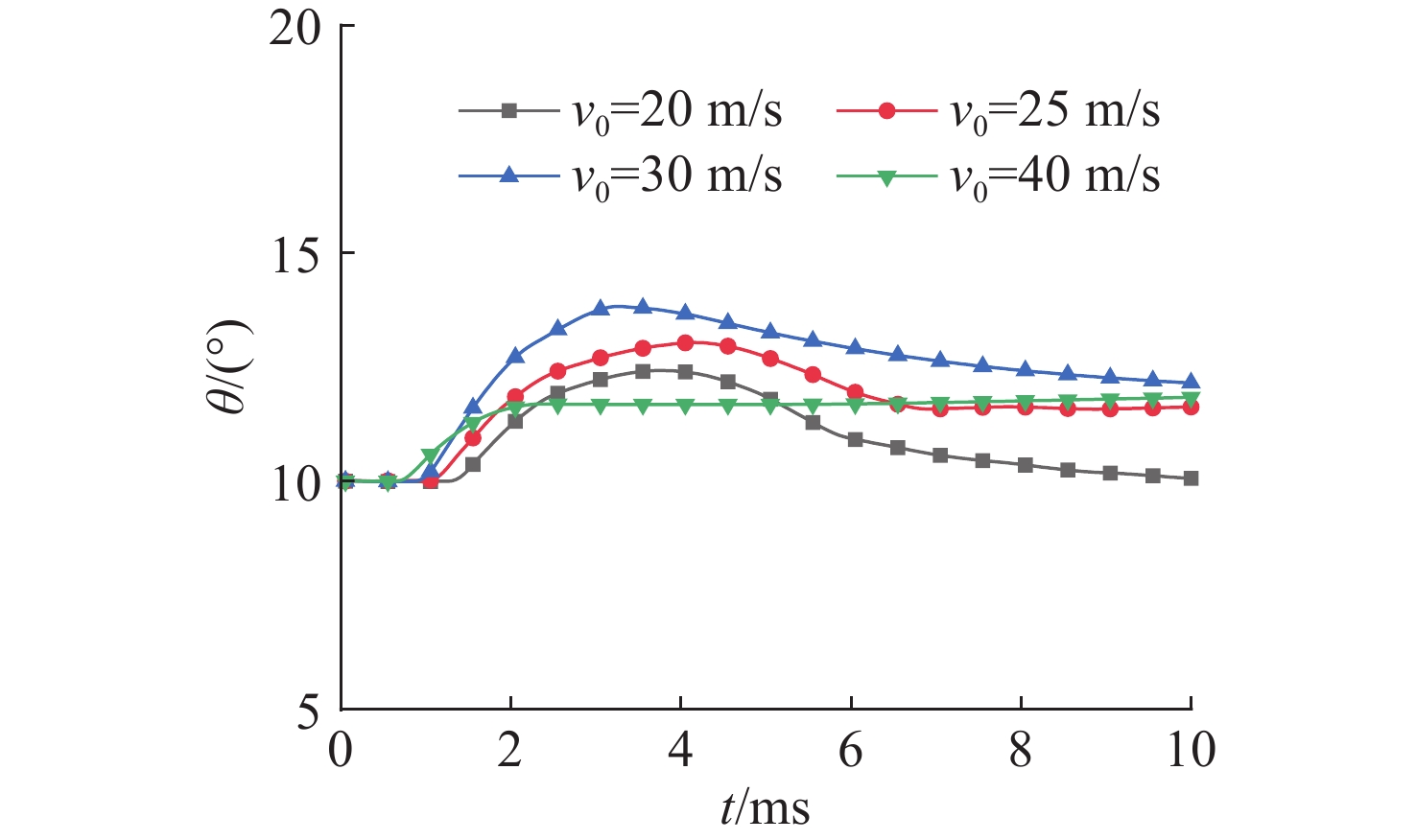
图 15 破冰过程航行体倾斜角度变化曲线
Figure 15. Variation curves of the vehicle’s oblique angles during the ice-breaking process
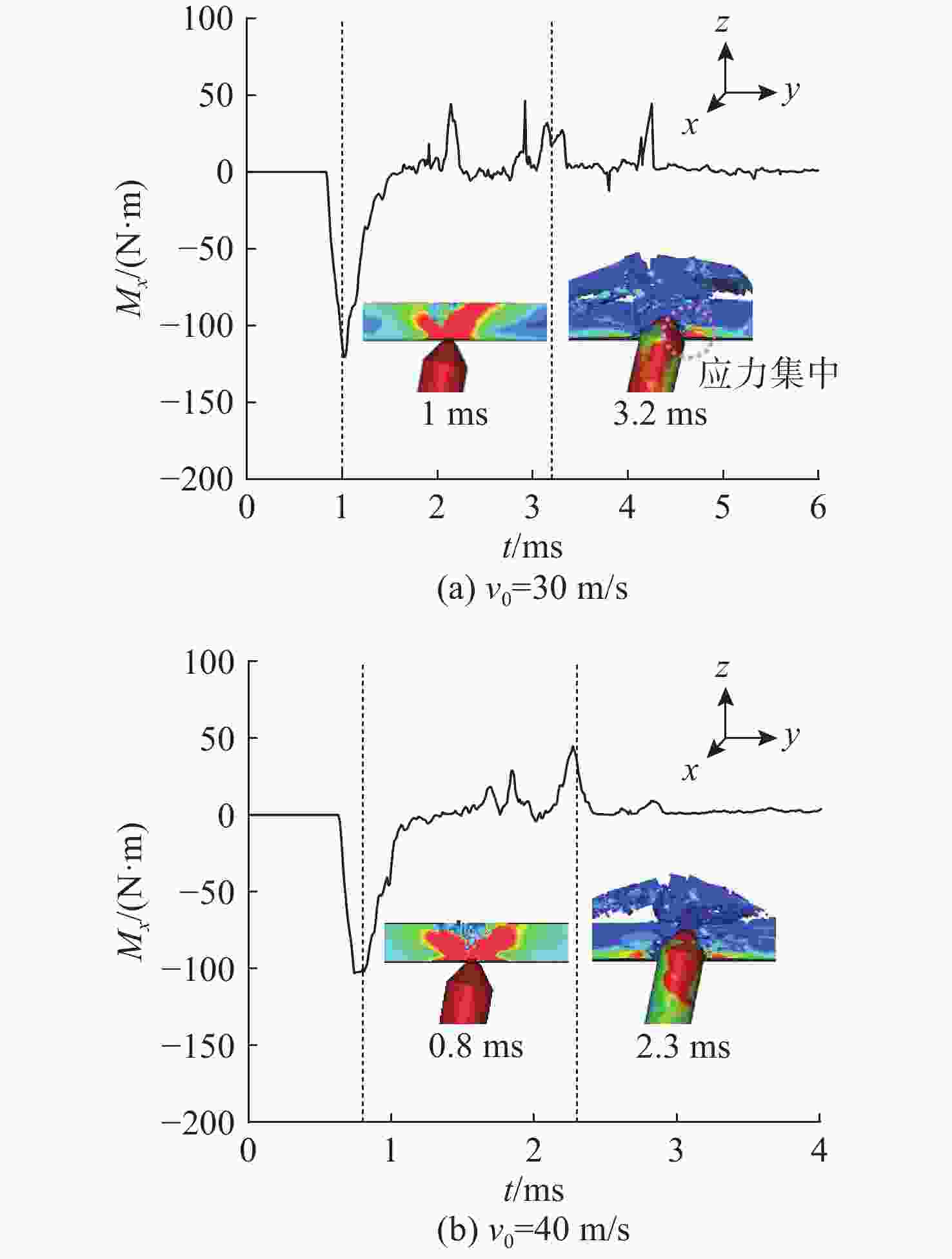
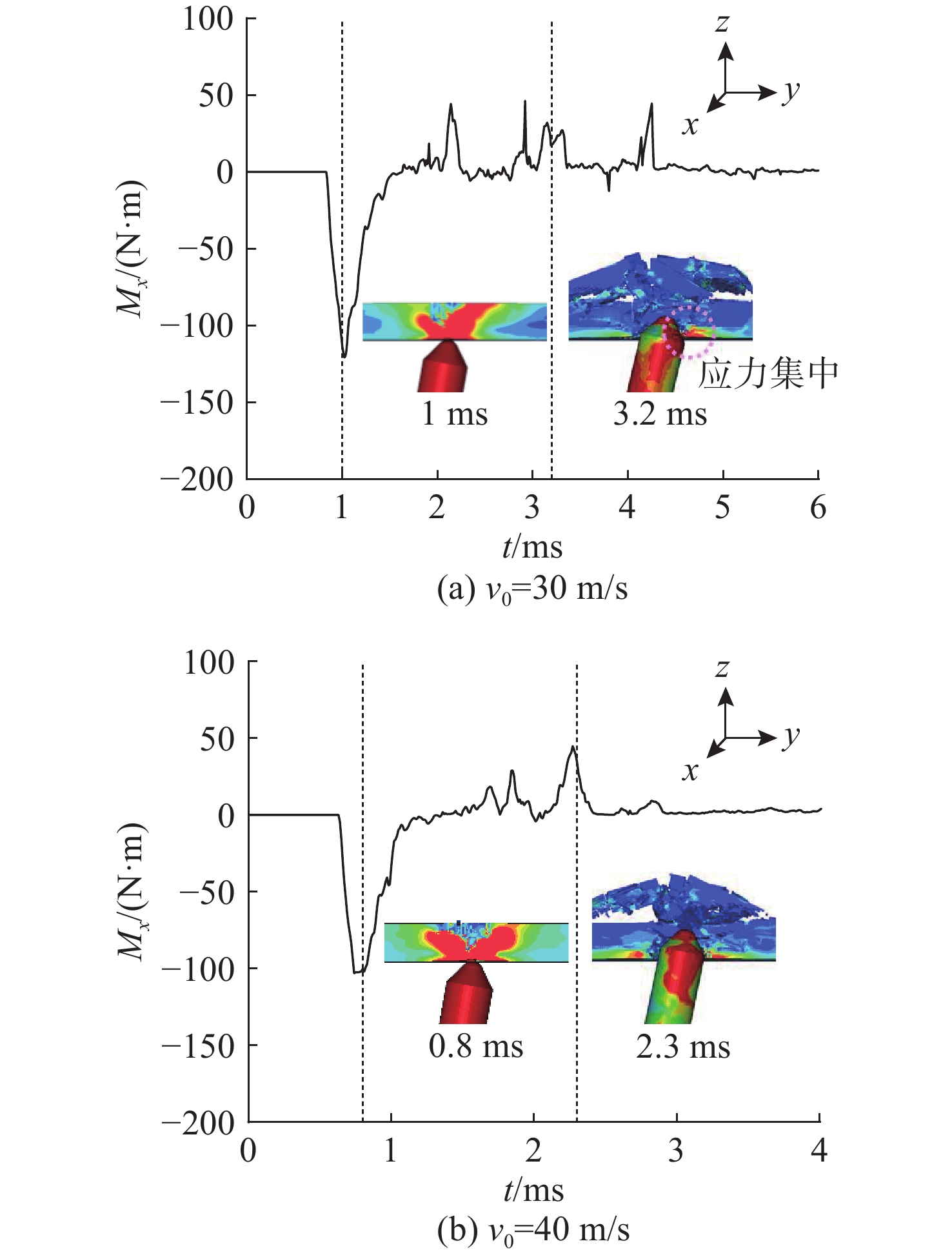
图 16 不同初速度下x方向力矩变化曲线
Figure 16. Variation curves of x-direction moment at different initial velocities
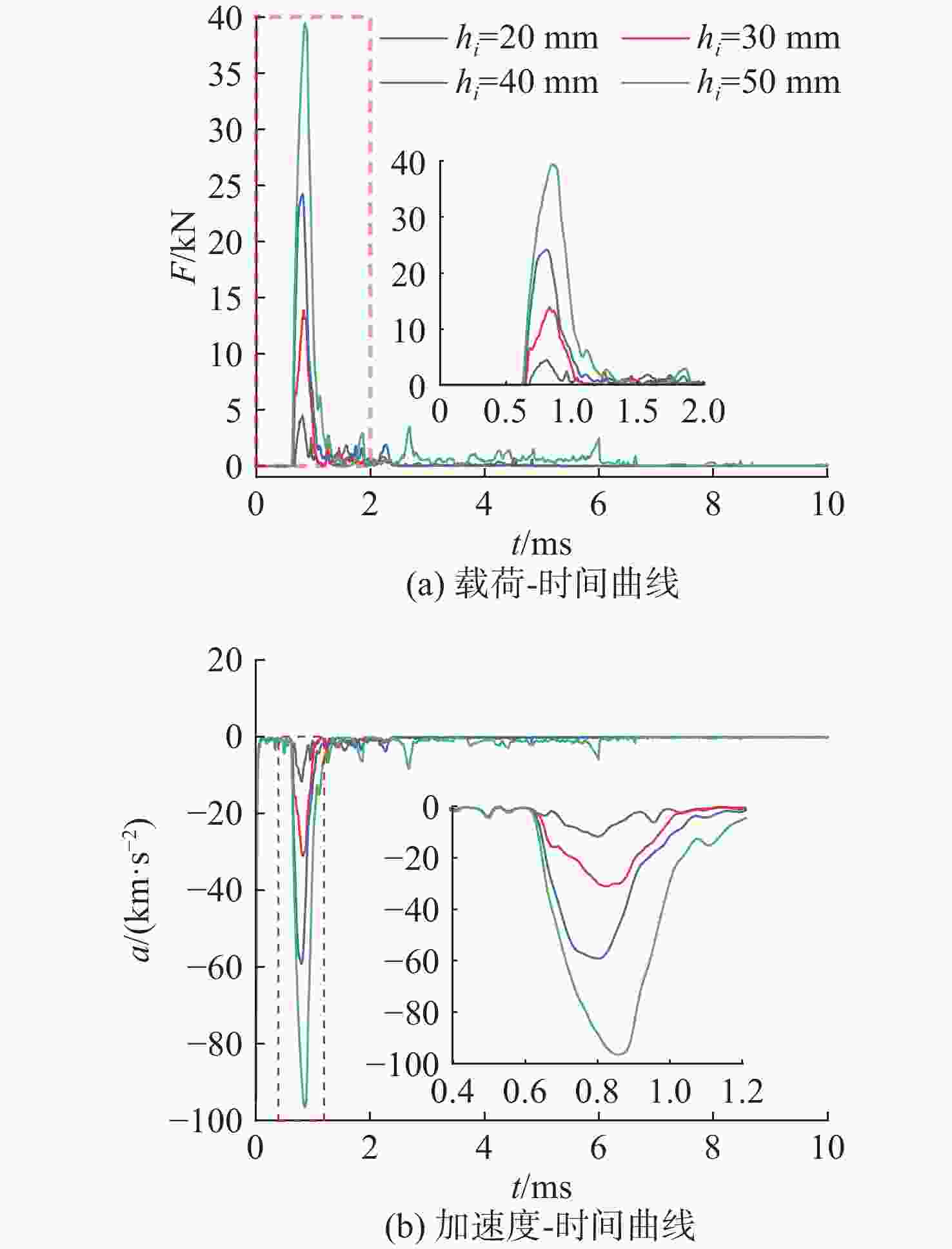
图 17 不同冰厚下航行体载荷和加速度变化曲线
Figure 17. Variation curves of vehicle load and acceleration under different ice thicknesses
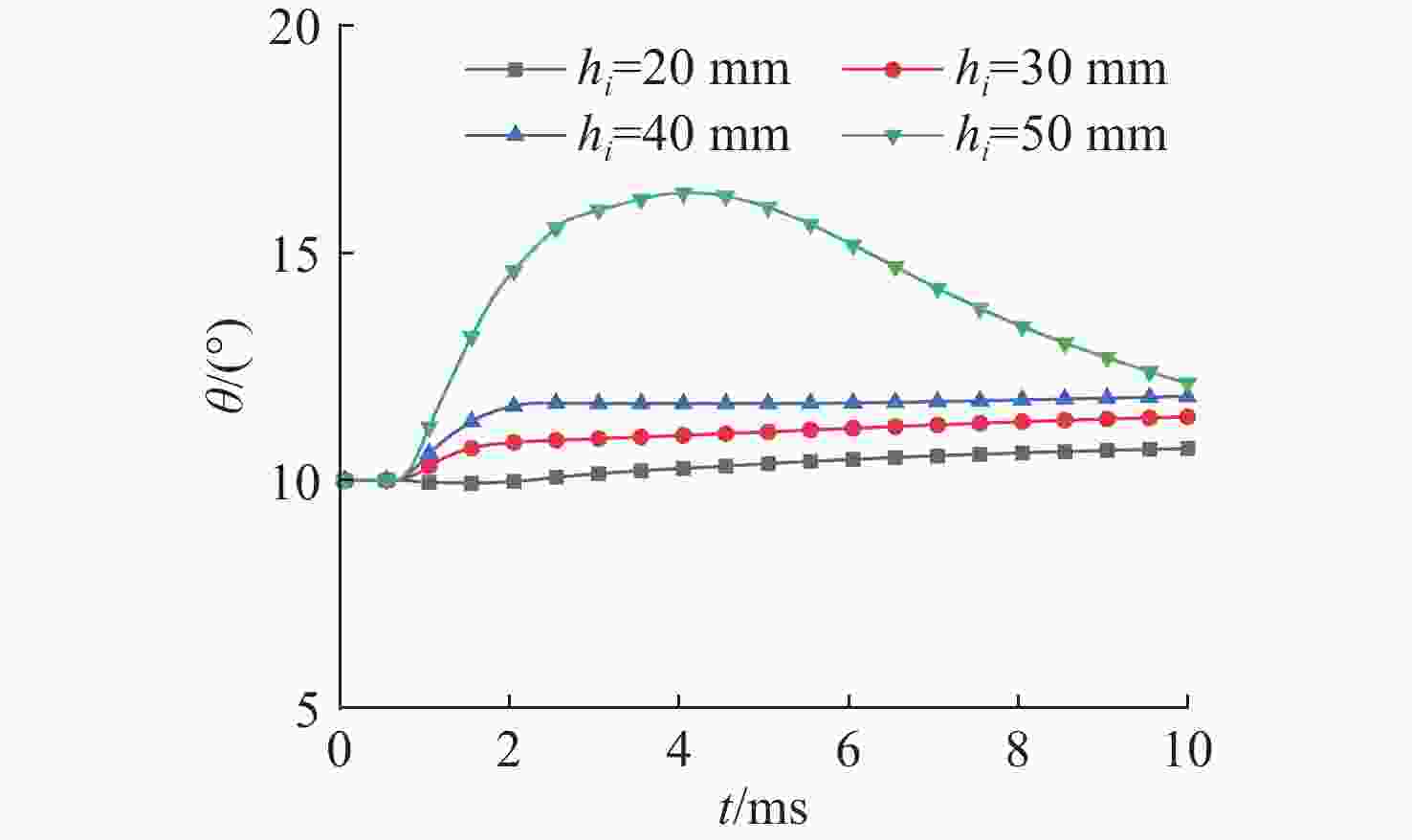
图 18 破冰过程航行体倾斜角度变化曲线
Figure 18. Variation curves of the vehicle’s oblique angle during the ice-breaking process
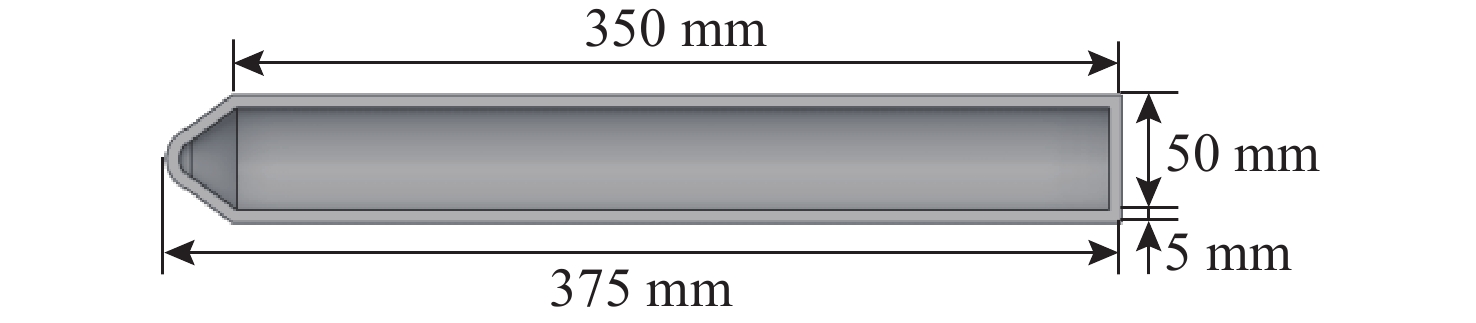
表 1 航行体模型参数
Table 1. Parameters of vehicle
参数 规格 密度/(kg/m3) 2700 弹性模量/GPa 69 屈服强度/MPa 270 泊松比 0.33 单元类型 *SECTION_SHELL 材料模型 *MAT_PLASTIC_KINEMATIC  下载: 导出CSV
表 2 冰模型参数
Table 2. Parameters of ice
参数 规格 密度/(kg/m3) 910 剪切模量/GPa 2.2 屈服应力/MPa 2.12 塑性硬化模量/GPa 4.26 体积模量/GPa 5.26 塑性失效应变 0.35 截断压力/MPa −4 单元类型 *SECTION_SOLID 材料模型 *MAT_ISOTROPIC_ELASTIC_FAILURE
下载: 导出CSV
表 3 水模型参数
Table 3. Parameters of water
参数 规格 密度/(kg/m3) 1000 单元类型 *SECTION_SOLID 材料模型 *MAT_NULL 状态方程 *EOS_GRUNEISEN
下载: 导出CSV
表 4 空气模型参数
Table 4. Parameters of air
参数 规格 密度/(kg/m3) 1.25 单元类型 *SECTION_SOLID 材料模型 *MAT_NULL 状态方程 *EOS_LINEAR_POLYNOMIAL
下载: 导出CSV
表 5 不同工况计算条件
Table 5. Calculation conditions of different working cases
工况 倾斜角度/(°) 初速度/(m·s−1) 冰厚/(mm) 1 0 40 40 2 5 40 40 3 10 40 40 4 15 40 40 5 10 20 40 6 10 25 40 7 10 30 40 8 10 40 20 9 10 40 30 10 10 40 50
下载: 导出CSV
表 6 圆柱材料参数
Table 6. Parameters of cylinder
参数 规格 密度/(kg/m3) 7850 弹性模量/GPa 211 屈服强度/MPa 355 泊松比 0.3 单元类型 *SECTION_SOLID 材料模型 *MAT_PLASTIC_KINEMATIC
下载: 导出CSV
-
[1] 刘惠荣. 海洋战略新疆域的法治思考[J]. 亚太安全与海洋研究, 2018(4): 16-18. doi: 10.19780/j.cnki.2096-0484.2018.04.006Liu H R. Legal thinking on the new marine territory[J]. Asia-Pacific Security and Maritime Affairs, 2018(4): 16-18. doi: 10.19780/j.cnki.2096-0484.2018.04.006 [2] Vance G P. Analysis of the performance of a 140-foot Great Lakes icebreaker: USCGC Katmai Bay: CRREL-80-8[R]. 1980. [3] Zahn P B, Phillips L. Towed resistance trials in ice of the USCGC Mobile bay(WTGB 103): 1252C-2[R]. 1987: 32-34. [4] Myland D, Ehlers S. Influence of bow design on ice breaking resistance[J]. Ocean Engineering, 2016, 119: 217-232. doi: 10.1016/j.oceaneng.2016.02.021 [5] Gao Y, Hu Z, Ringsberg J W, et al. An elastic-plastic ice material model for ship-iceberg collision simulations[J]. Ocean Engineering, 2015, 102: 27-39. [6] 郭春雨, 李夏炎, 王帅. 冰区航行船舶碎冰阻力预报数值模拟方法[J]. 哈尔滨工程大学学报, 2016, 37(2): 145-150.Guo C Y, Li X Y, Wang S. A numerical simulation method for resistance prediction of ship in pack ice[J]. Journal of Harbin Engineering University, 2016, 37(2): 145-150. [7] 王思强. 碎冰和层冰下航行体出水破冰动力学特性试验研究[D]. 哈尔滨: 哈尔滨工程大学, 2023: 23-30. [8] 付志强, 李志鹏, 孙龙泉, 等. 出水航行体与冰-水耦合作用特性研究[J]. 力学学报, 2026, 58(1): 244-258.Fu Z Q, Li Z P, Sun L Q, et al. Investigation on the coupling characteristics among ice-water-vehicle during the process of water-exit[J]. Chinese Journal of Theoretical and Applied Mechanics, 2026, 58(1): 244-258. [9] 汪春辉, 朱广元, 王超, 等. 垂向载荷作用下的冰层破裂及其影响因素分析[J]. 振动与冲击, 2022, 41(2): 11-19.Wang C H, Zhu G Y, Wang C, et al. Analysis of ice breaking under vertical loads and its influencing factors[J]. Journal of Vibration and Shock, 2022, 41(2): 11-19. [10] Dong Q, Xue W, Liu T, et al. A numerical simulation method for ice-breaking and cavitation effects on the water-exiting vehicle[J]. Ocean Engineering, 2024, 314: 119659. [11] 蔡晓伟, 宣建明, 王宝寿, 等. 细长体穿越冰-水混合物的出水流场数值模拟[J]. 兵工学报, 2020, 41(S1): 79-90.Cai X W, Xuan J M, Wang B S, et al. Numerical simulation of thin body passing through the ice-water mixture flow field[J]. Acta Armamentarii, 2020, 41(S1): 79-90. [12] Wang H, Huang Z, Cai X, et al. Analysis of the water-exit cavity evolution and motion characteristics of an underwater vehicle under the effect of floating ice[J]. Ocean Engineering, 2024, 300: 117374. [13] 岳军政, 吴先前, 黄晨光. 航行体出水破冰的多场耦合效应与相似律[J]. 力学学报, 2021, 53(7): 1930-1939.Yue J Z, Wu X Q, Huang C G. Multi-field coupling effect and similarity law of floating ice break by vehicle launched underwater[J]. Chinese Journal of Theoretical and Applied Mechanics, 2021, 53(7): 1930-1939. [14] 黄润航, 黄彪, 刘涛涛, 等. 航行体水下垂直发射破冰出水数值模拟研究[J]. 哈尔滨工程大学学报, 2025, 46(1): 157-165.Huang R H, Huang B, Liu T T, et al. Numerical simulation of an underwater vehicle’s vertical launch and ice-breaking surfacing[J]. Journal of Harbin Engineering University, 2025, 46(1): 157-165. [15] 赵洁, 蔡晓伟, 吴祥清, 等. 水下航行体出水破冰载荷特性数值模拟[J]. 兵工学报, 2025, 46(5): 385-396.Zhao J, Cai X W, Wu X Q, et al. Numerical study on ice-breaking load characteristics of underwater vehicles[J]. Acta Armamentarii, 2025, 46(5): 385-396. [16] 方登建, 刁震霆, 金凯. 冲击载荷作用下航行体典型部段结构力学分析[J]. 海军工程大学学报, 2024, 36(2): 93-100.Fang D J, Diao Z T, Jin K. Structural mechanical analysis of typical sections of vehicle launched underwater under impact loading[J]. Journal of Naval University of Engineering, 2024, 36(2): 93-100. [17] 刁震霆, 方登建, 王少蕾. 航行体垂向破冰数值分析与试验研究[J]. 兵工学报, 2025, 46(5): 112-128.Diao Z T, Fang D J, Wang S L. Numerical analysis and experimental study of a underwater-launched projectile breaking through ice vertically[J]. Acta Armamentarii, 2025, 46(5): 112-128. [18] 宋祖厂, 陈建民. 海冰与独腿简易平台碰撞动力分析[J]. 中国海洋平台, 2009, 24(2): 19-22.Song Z C, Chen J M. Dynamic analysis of the collision between sea-ice and single-pile simple platform[J]. China Offshore Platform, 2009, 24(2): 19-22. [19] Gagnon R E, Wang J. Numerical simulations of a tanker collision with a bergy bit incorporating hydrodynamics, a validated ice model and damage to the vessel[J]. Cold Regions Science and Technology, 2012, 81: 26-35. [20] 张伟, 郭子涛, 肖新科, 等. 弹体高速入水特性实验研究[J]. 爆炸与冲击, 2011, 31(6): 579-584.Zhang W, Guo Z T, Xiao X K, et al. Experimental investigations on behaviors of projectile high-speed water entry[J]. Explosion and Shock Waves, 2011, 31(6): 579-584. [21] 张礼智. 基于LS-DYNA极地船舶冰载计算及首尾部构型优化设计[D]. 大连: 大连海事大学, 2024: 14-17. [22] 刘德让. 基于S-ALE法流固耦合的船舶碎冰区航行多轴疲劳分析[D]. 大连: 大连理工大学, 2024: 12-14. [23] ISO 19906-2019. Petroleum and natural gas industries-Arctic offshore structures[S]. [24] 彭程研. 航行体撞冰出水破冰特性及载荷分布研究[D]. 哈尔滨: 哈尔滨工程大学, 2024: 47-52. -

 下载:
下载:

 点击查看大图
计量
- 文章访问数: 712
- HTML全文浏览量: 369
- PDF下载量: 58
- 被引次数: 0